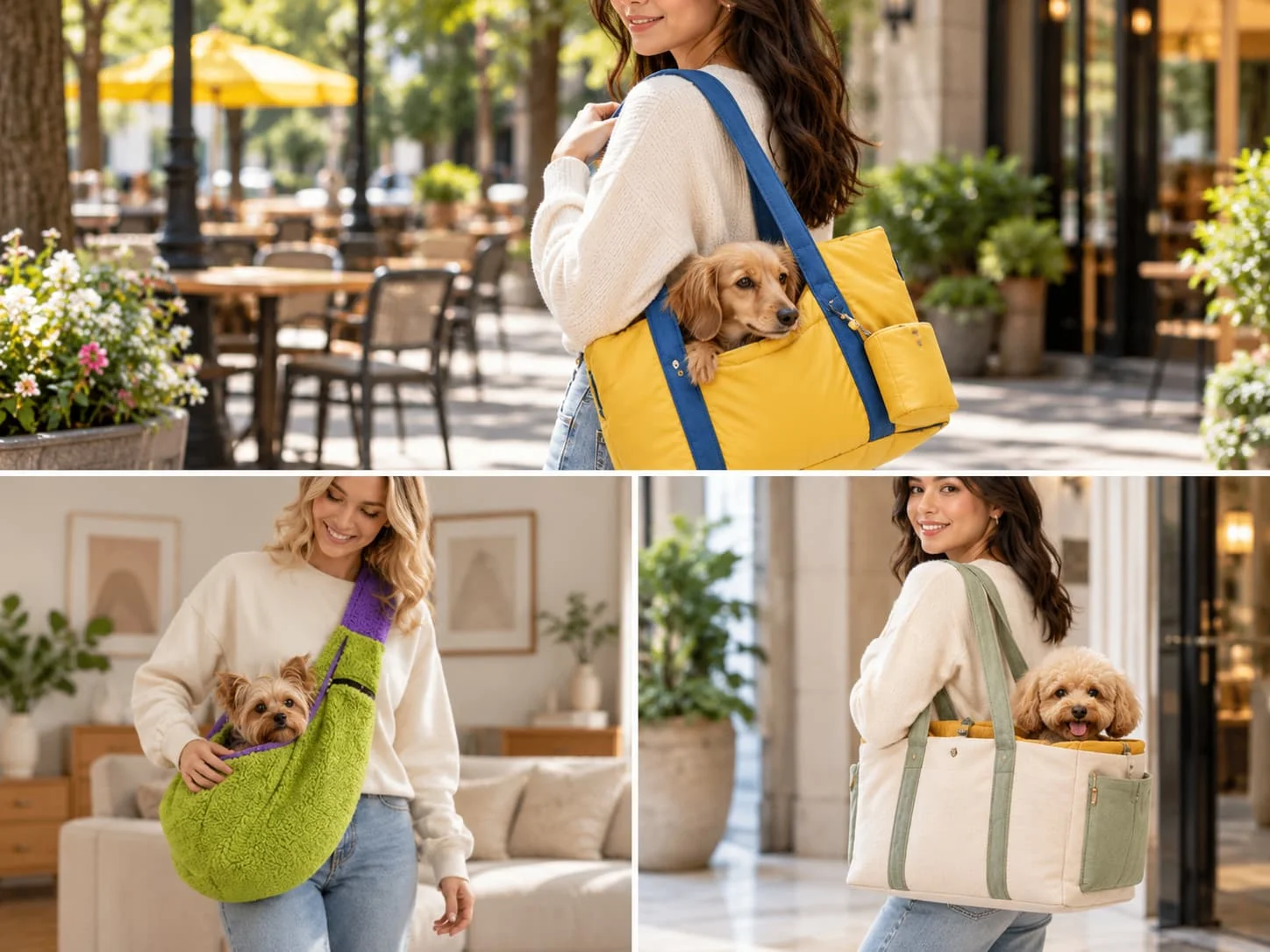
Discover seven essential pet carrier bag features, from comfort and ventilation to safety and durability, to help you choose the right carrier for your pet.

A pet carrier bag might look comfortable in a product photo, but that doesn't mean it will work well for your dog or cat. Some bags have weak bottoms, limited airflow, or narrow openings that make getting a nervous pet inside harder than it should be.
Choosing a good pet carrier bag means looking beyond its color, shape, or price. Your pet needs enough room to move, a stable place to sit, and a secure space during travel. You also need something that's comfortable to carry and easy to keep clean.
Here are seven design features worth checking before you buy.
7 Design Features to Look for in a Good Pet Carrier Bag
Not every pet carrier works the same way. A bag that's fine for a quick walk to the vet might be uncomfortable during a longer trip, so it's worth understanding what each design feature actually does.
1. Enough Space for Your Pet to Move Comfortably
Size should be your first consideration. A carrier that's too small can restrict movement, while one that's much too large may let your pet slide around when you lift or move it.
Your dog or cat should be able to stand naturally, turn around, and lie down without being squeezed against the sides.
Before buying, measure your pet's body length and standing height. Compare those measurements with the bag's internal dimensions, not just the outside measurements.
Remember that padding takes up space, too. A thick cushion might look comfortable but leave less room for your pet's head.
2. Good Ventilation Without Weakening the Bag
Pets need fresh air inside a closed carrier, particularly during warm weather or longer trips. A bag with only one small mesh window may not provide enough airflow.
Look for ventilation panels on more than one side. Multiple openings allow air to circulate, even when one side faces your body.
Pay attention to the mesh material as well. Thin mesh can tear if a frightened cat scratches at it or a dog pushes against it.
Check whether the ventilation stays open when the bag is fully zipped. A soft side that folds inward can partly block a mesh panel.
More mesh isn't always better, though. Some nervous pets prefer a little visual cover while still having good airflow.
3. A Firm, Supportive Bottom
A carrier's bottom supports your pet's weight whenever you lift the bag. If the base bends too much, your pet may struggle to find a stable position.
Imagine carrying a cat in a soft bag that droops in the middle. Every step changes the surface beneath its paws, making it harder to stay balanced.
A good carrier should have a firm bottom panel that stays reasonably level during movement.
Look for:
A reinforced base that doesn't sag under your pet's weight.
A removable pad for comfort.
A flat surface without exposed hard edges.
Test the carrier with a safe weight similar to your pet's before using it. Hold it by the handles and check whether the bottom remains stable.
4. Strong Zippers and Secure Closures
Even a comfortable carrier becomes unsafe if your pet can push through an opening.
Check the zippers carefully, especially around curved corners where they may catch or leave gaps. They should close smoothly without separating when gentle pressure is applied.
Some bags have zipper locks or clips that help prevent accidental opening. These can be useful for curious dogs and cats that push against the door.
Also inspect how the openings meet the main body of the bag. Loose stitching near a zipper can become a weak point over time.
A secure closure shouldn't make the carrier difficult to open when you need to reach your pet quickly.
5. Durable Fabric and Strong Stitching
The outer material needs to handle regular lifting, rubbing, cleaning, and occasional scratching. A carrier made from thin fabric may look attractive but wear quickly around its handles or corners.
Check the stitching where the shoulder straps meet the bag. These areas carry much of the weight, so reinforced seams are particularly useful.
Fabric choice also affects weight and cleaning. A lightweight material can make carrying easier, but it still needs enough strength to support the intended pet.
For businesses sourcing their own carrier designs, a custom pet bag manufacturer should be able to explain the fabric options, reinforced seams, and weight limits of a proposed design.
Whether you're buying one bag or comparing several designs, focus on construction quality rather than decorative details.
6. A Removable, Easy-to-Clean Interior
Pet carriers get dirty. Fur collects in corners, paws bring in dirt, and some animals may have accidents during stressful trips.
A removable bottom pad makes everyday cleaning much simpler. You can take it out, wash it according to the care label, and clean the base underneath.
Water-resistant lining can help prevent small spills from soaking through the fabric. However, don't assume that water-resistant means completely leak-proof.
Check whether the inside has folds or narrow gaps that trap dirt. Smooth, accessible surfaces are easier to wipe clean.
For longer trips, an absorbent liner beneath the bedding can also help manage unexpected accidents.
7. Comfortable Handles and Easy Access
Your comfort matters because an unstable grip can make the carrier swing or tilt while your pet is inside.
Look for padded handles, secure shoulder straps, and strong attachment points. Adjustable straps can help you hold the carrier close to your body.
Access is just as important. A front opening lets pets walk inside, while a top opening can make it easier to lower a nervous cat gently into the bag.
Try opening and closing the carrier with one hand while keeping it steady with the other.
Be careful with backpack-style carriers, particularly for cats. Some designs offer little room to change position, and the movement while walking can feel unstable. A firm handheld carrier may be a better choice.
Match the Carrier to How You'll Travel
A carrier that feels comfortable at home might not be suitable for every type of transport. Think about where you'll use it most and whether that setting has specific safety requirements.
For Air Travel
Airlines have different rules covering carrier dimensions, weight limits, and construction. Many require in-cabin carriers to fit beneath the seat in front of you.
Don't assume a bag labeled "airline-approved" will be accepted on every flight. Confirm its measurements and the airline's current rules. Remember that cargo travel may require a rigid crate instead of a soft carrier bag.
For Car Rides
A regular soft pet carrier isn't automatically safe in a car crash. Some models have been designed and tested for vehicle travel, while others are intended mainly for carrying pets by hand.
Check the manufacturer's instructions for securing the carrier inside a vehicle. Avoid placing it somewhere it could slide, tip over, or distract the driver.
How to Check a Pet Carrier Bag Before Buying
Once you've narrowed down your options, a few simple checks can reveal problems that product descriptions don't always show. Take a closer look at the bag's structure rather than relying only on customer photos.
Before making your choice:
Check the fit: Make sure your pet can change position comfortably.
Inspect the base: It should support the intended weight without excessive bending.
Test the openings: Zippers and doors should close securely.
Examine the handles: Look for strong attachment points and comfortable grips.
Check the cleaning instructions: Removable, washable parts are easier to maintain.
After buying, let your pet explore the carrier at home before using it for travel. Leave it open with familiar bedding and allow your pet to enter without being forced.
Choosing a Pet Carrier Bag That Works for Your Pet
A good pet carrier bag doesn't need lots of pockets, unusual shapes, or expensive extras. What matters most is how safely and comfortably it holds your pet during normal use.
Start with the right size, then check ventilation, base support, closures, fabric strength, cleaning, and carrying comfort. Think about your pet's behavior as well. A calm little dog and a nervous cat may need different carrier designs.
The best choice is a bag that suits your pet's body, handles the trips you actually take, and remains comfortable to use over time.
Stay up to date with our latest ideas!