Pet-Friendly Pest Control and What to Ask Before the Technician Arrives
Learn how to prepare for pet-friendly pest control, including questions to ask your technician about treatment safety, products, precautions, and follow-up care.

Pet-friendly pest control uses targeted treatments instead of spraying everything. Baits go into tamper-resistant stations, products are applied where dogs and cats cannot reach, the label directions are followed exactly, and pets stay off treated areas until the product has dried. No pesticide is risk-free, so the goal is to keep the exposure as low as possible.
Pet owners are often told to choose between a pest problem and a worried evening. In practice, a careful technician and a few questions before the visit remove most of the risk. This guide covers the treatments, the precautions for each, and what to ask.
What pet friendly pest control means
Every pesticide sold in the United States carries a label, and the label is a legal document. It lists the active ingredient, where the product may be used, and how long people and pets must stay away from the treated area. Pet friendly pest control starts with following that label and choosing products and placements that limit what a dog or cat can touch, lick or eat.
The approach is also about targeting. Gel baits placed in cracks, granules worked into the soil and sealed entry points treat the pest where it lives. A broad spray across floors and lawns treats the space where pets walk and lie down. The National Pesticide Information Center has a practical page on pesticides and pets that explains how exposure happens and how to reduce it.
Treatments and their risk to pets
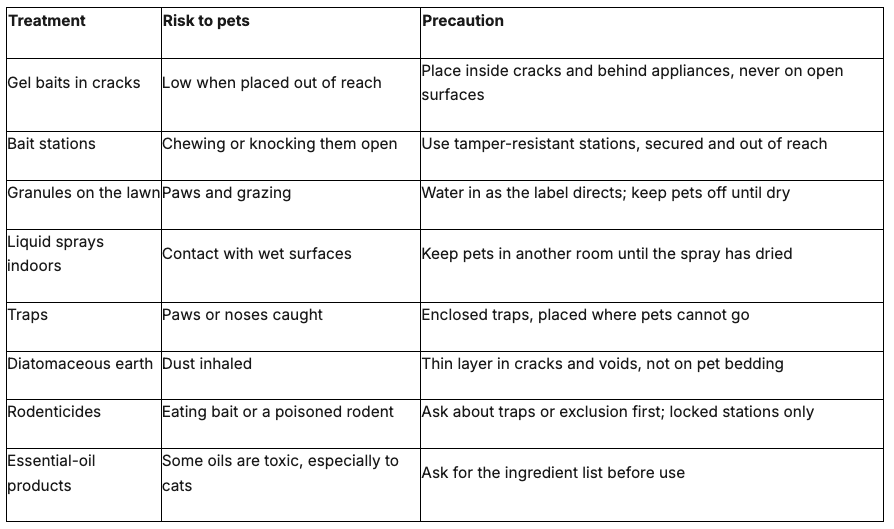
The table lists common pest treatments, how they can reach a pet, and the precaution that matters most. Use it to ask the technician which method they plan to use in each area.
Extra care for cats
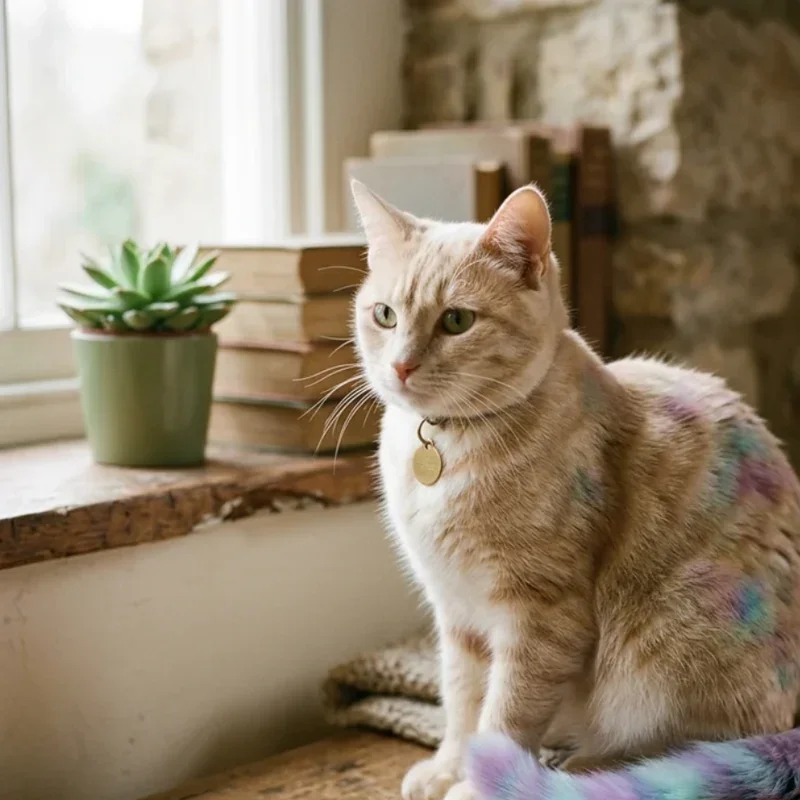
Cats need more care than dogs for two reasons. They groom constantly, so anything on their fur ends up in their mouth. And their liver handles some chemicals poorly. Permethrin, a common insecticide in some dog flea products and outdoor sprays, is highly toxic to cats, and several essential oils that are sold as natural repellents can harm them too.
Tell the technician you have cats, and ask whether any product in the plan contains permethrin or essential oils. Keep cats indoors and away from treated areas until the product has dried, and never use a dog flea product on a cat.
What to ask before the visit
A good pest control company will answer these questions without hesitation.
Which products will you use, and can I see the labels?
Where exactly will you apply them, inside and outside?
How long should my dogs and cats stay away from the treated areas?
Will baits or traps be placed anywhere my pets can reach?
Is there a lower-risk option, such as exclusion or traps, for this pest?
After the visit, ask for the service record. It should list each product, its EPA registration number, the active ingredient, where it was applied and the amount used. If your pet reacts, that record is what your veterinarian or a poison control center will ask for. Many pest control companies keep this record on the customer's account in their field software, such as Smarfle, so they can send it to you the same day.
If you suspect your pet has been exposed, call your veterinarian or the ASPCA Animal Poison Control Center and have the product name and registration number ready.
Keeping pests away between visits
Fewer pests mean fewer treatments. Store pet food in sealed containers and pick up bowls overnight, since kibble attracts ants, cockroaches and rodents. Fix dripping taps and empty standing water outside, which cuts down on mosquitoes. Seal gaps around pipes, doors and vents, the entry points most insects and mice use.
Fleas deserve their own plan. Treating the pet with a vet-recommended product, washing bedding in hot water and vacuuming often usually controls fleas indoors. A yard treatment is only needed when fleas keep coming back from outside.
Choosing a pest control company
When you compare companies, look at how they talk about pets before you call. A company with a clear pet policy, published treatment options and reviews from other pet owners is easier to trust than one that promises "safe" results with no details. For pest control businesses, explaining these options openly on their website is some of the most effective pest control marketing they can do, because pet owners search these exact questions before they book.
FAQ
Is pest control safe for pets?
It can be done with low risk when the technician uses targeted treatments, follows the label and keeps baits out of reach, and when pets stay away from treated areas until they dry. No pesticide is risk-free, so ask questions and keep the service record.
How long should pets stay off a treated area?
Follow the product label, which sets the re-entry time. For most sprays that means until the product has completely dried, and for lawn granules until they have been watered in and the surface is dry.
Are natural pest products better for pets?
Not always. Some natural products, including several essential oils, are toxic to cats and dogs. A natural label does not replace reading the ingredients and asking your veterinarian.
Stay up to date with our latest ideas!