Turn your barn into a dreamy workspace with 15 stylish barn office ideas that boost focus, comfort, and rustic charm.
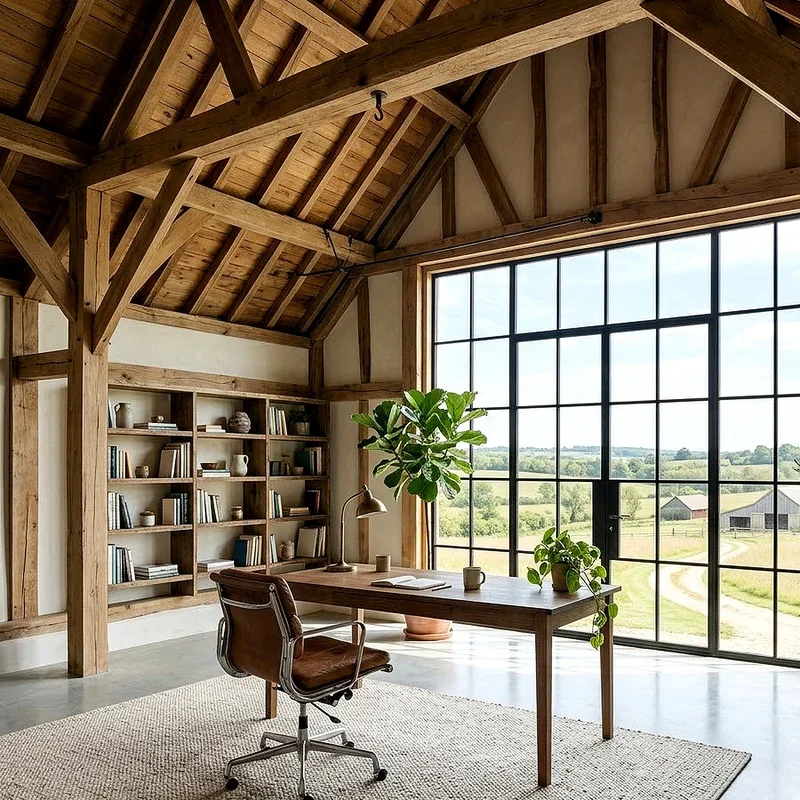
So you've got a barn sitting there, and your laptop keeps ending up on the kitchen counter next to the cereal boxes. Doesn't that feel like a waste of good square footage? A barn office solves two problems at once: it gets your work out of your living space, and it gives those weathered beams a second life. I've watched plenty of people turn dusty hay lofts into rooms they actually look forward to walking into every morning. The trick isn't spending a fortune. It's knowing which details matter, which ones you can skip, and how to keep that barn feeling like a barn while still functioning like a real office. Let's walk through fifteen ideas that do exactly that.
1. Keep the Original Beams Exposed
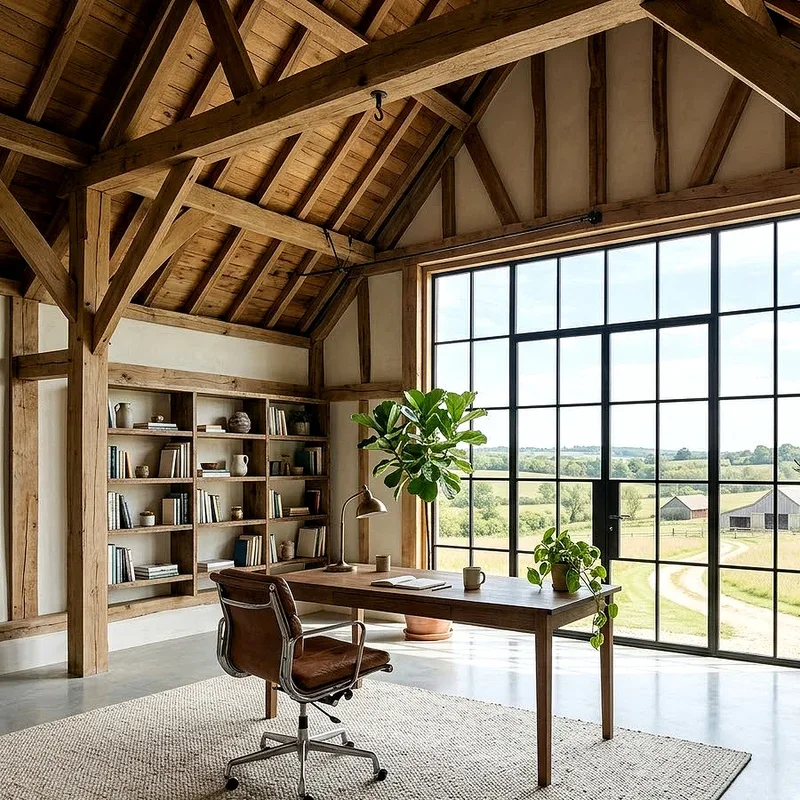
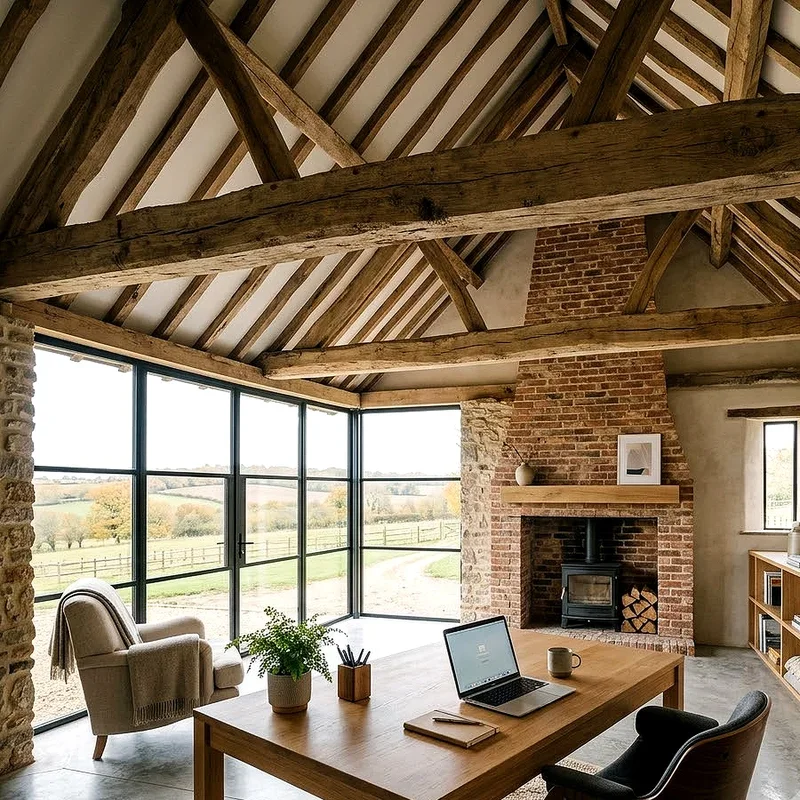
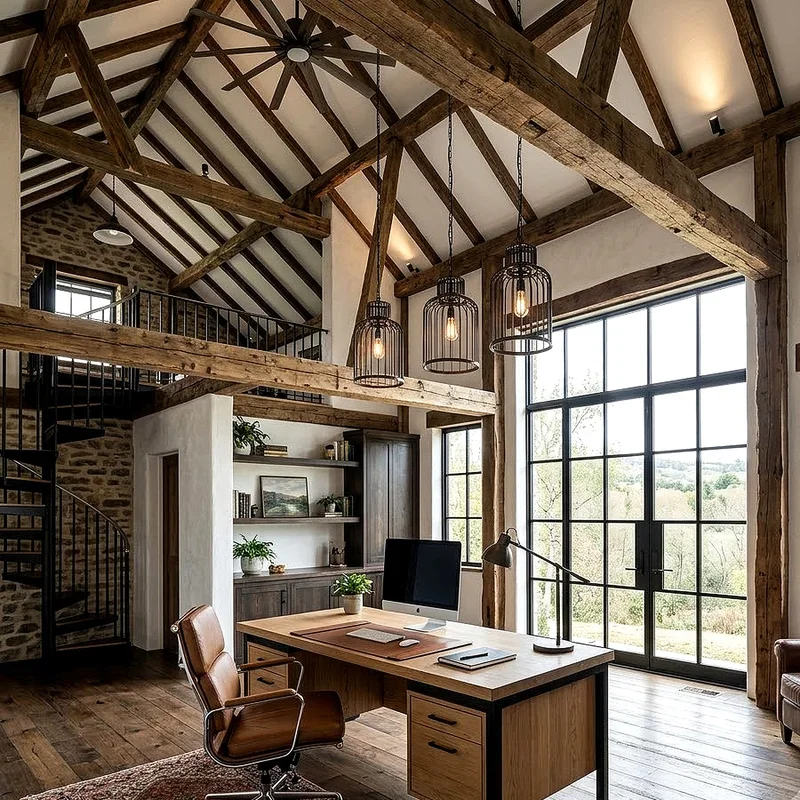
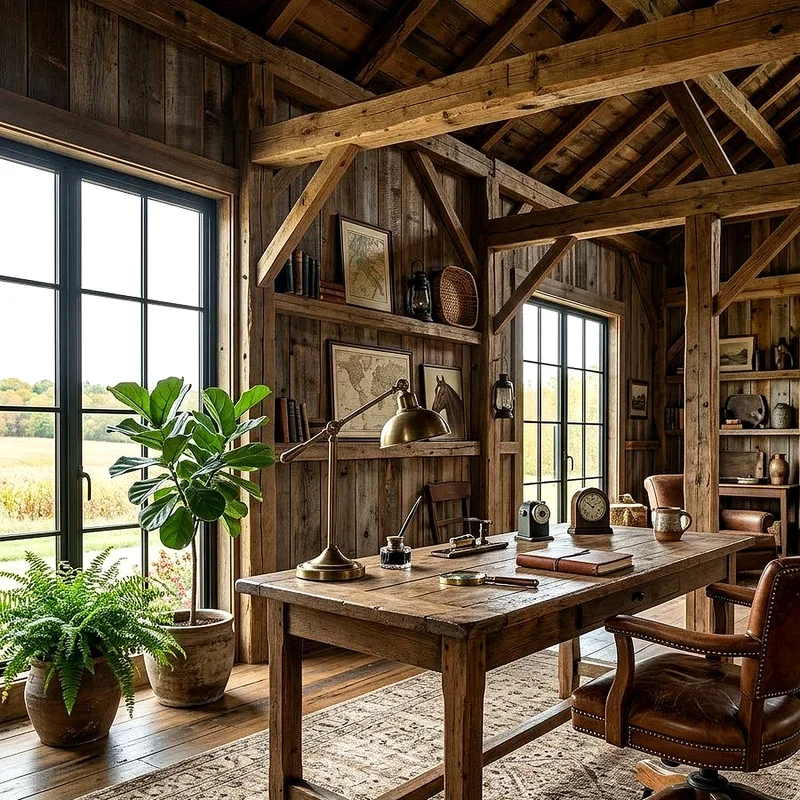
Those old beams overhead are the whole reason a barn office feels different from a spare bedroom, so why on earth would you cover them up? Leave them exposed and you keep a hundred years of character hanging right above your keyboard. Give them a gentle clean, treat them for pests, and seal them with a matte finish that protects without turning them shiny and fake. If the wood looks tired, a light sanding wakes up the grain beautifully. I'd avoid painting them white unless your barn feels genuinely cave like, because paint strips away the texture that makes the room special. Think of the beams as the bones of the space. Everything else you add hangs off that structure, visually speaking, so let them lead.
2. Install a Wall of Windows for Natural Light
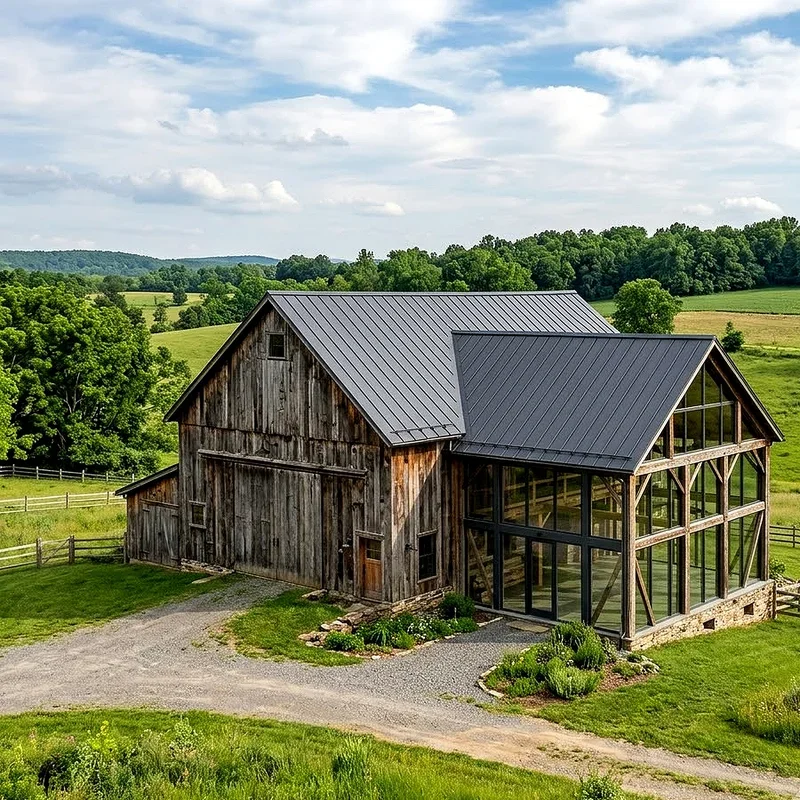
Barns were built for livestock, not spreadsheets, which means most of them are darker than a movie theater at noon. Adding a generous run of windows changes everything about how the space feels and how well you work in it. Natural light keeps your energy steady through the afternoon slump and cuts your electricity bill at the same time. South facing glass grabs the most sun, though you'll want to think about glare on your screen. Have you considered a large sliding glass panel where the old equipment doors used to be? That opening is already framed out, which saves real money on structural work. Pair the glass with simple linen curtains so you can soften the light when the sun gets aggressive.
3. Build a Loft Workspace Above the Main Floor
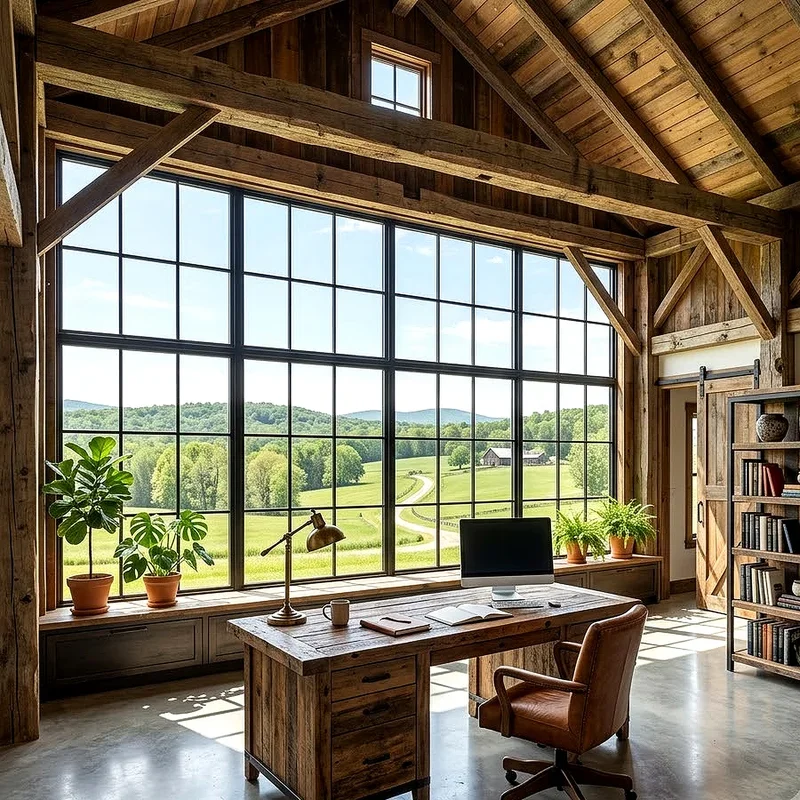
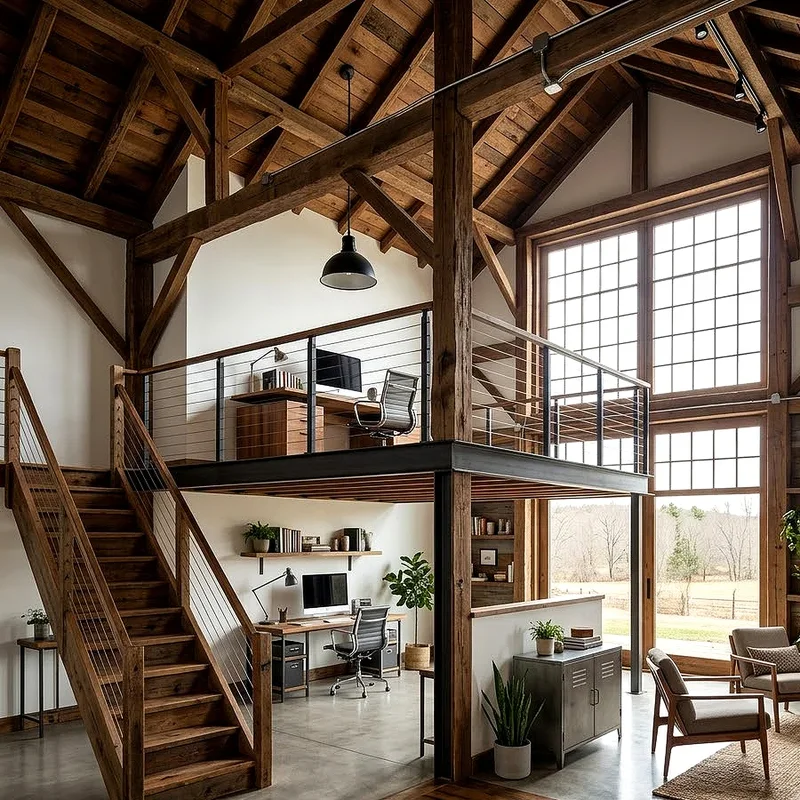
A hay loft is basically a second story waiting for a purpose. Turning it into your actual desk area gives you separation from whatever happens below, whether that's storage, a workshop, or a spot where the dog naps. You get a built in sense of retreat without constructing a single new wall. Check the floor joists first, since old lofts were rated for loose hay rather than filing cabinets and a person pacing during phone calls. A structural engineer will tell you in one visit whether you need reinforcement. Add a sturdy railing, run electricity up there properly, and suddenly you've got the best seat in the building. The view down into the open barn is genuinely lovely.
4. Choose a Reclaimed Wood Desk
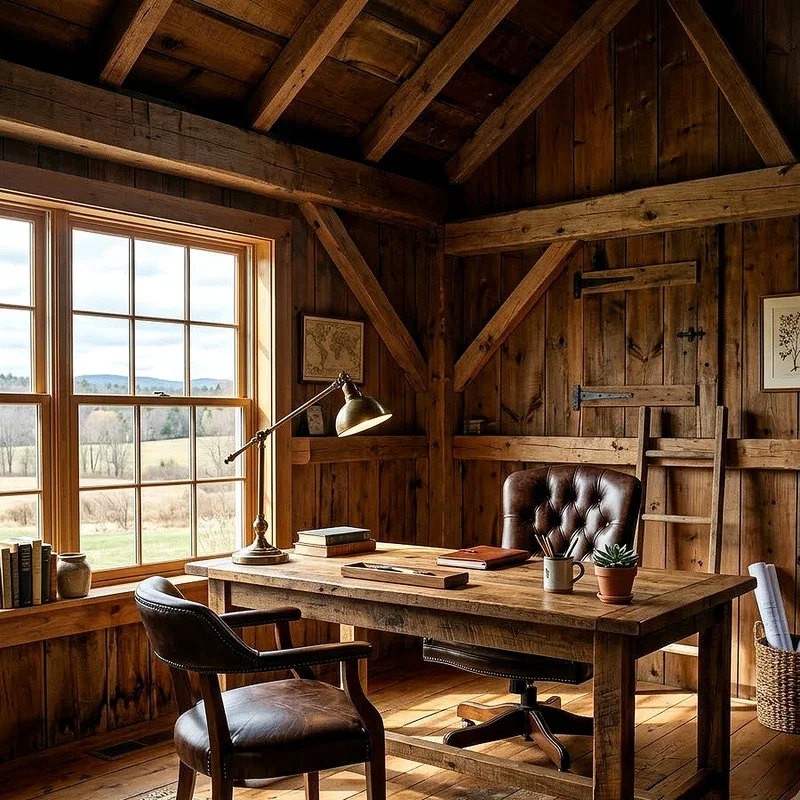
A slick glass desk in a barn looks about as natural as a tuxedo at a hayride. Reclaimed wood, on the other hand, belongs there immediately. Look for a slab with visible nail holes, saw marks, or old paint traces, because those imperfections are the point. Pair it with simple hairpin legs or a black steel base and you've got something that reads modern without fighting the building. Lots of small mills sell offcuts cheap if you're willing to sand and seal them yourself. Make sure the surface is smooth enough to write on without your pen catching every few inches. A good desk anchors the whole room, and in a barn, it should feel like it grew there.
5. Add Industrial Pendant Lighting
Overhead lighting in barns tends to be either nonexistent or a sad bare bulb dangling from a wire. Swapping in proper pendants fixes the mood instantly. Metal shades in black, brass, or galvanized finishes echo the agricultural roots without looking like costume pieces. Hang a row of three above a long desk, or one oversized fixture over a central table, and the ceiling stops feeling like empty space. Warm bulbs around 2700K keep things inviting, while a dimmer lets you shift from bright morning work to softer evening reading. Don't rely on pendants alone, though. Add a desk lamp for focused tasks, because shadows from overhead fixtures will have you squinting at documents by three o'clock.
6. Insulate Properly Before Anything Else
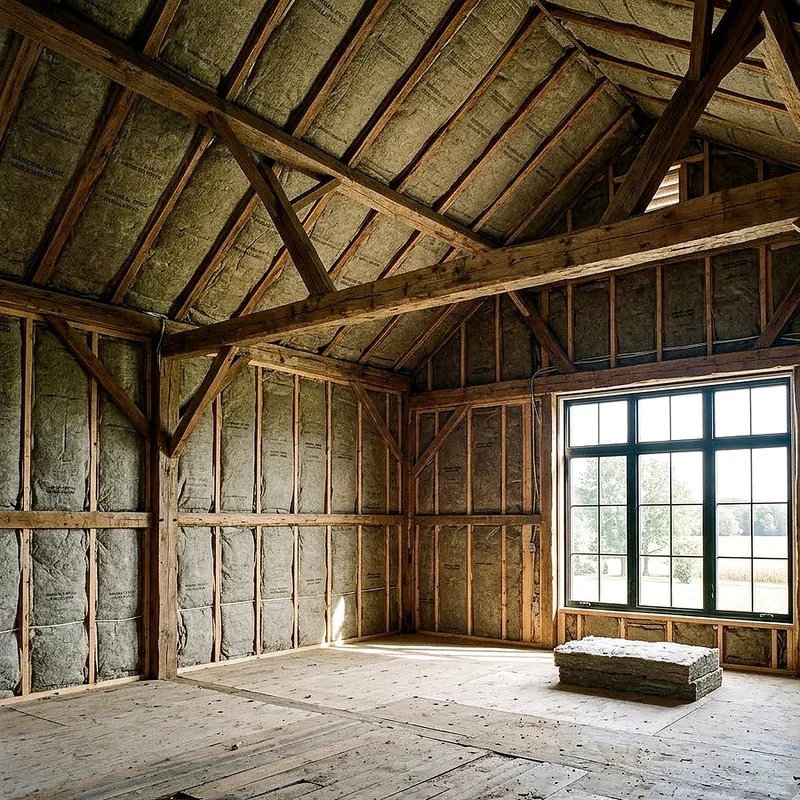
This is the unglamorous step everyone wants to skip, and it's the one that determines whether you actually use the space. An uninsulated barn is a giant refrigerator in January and an oven in July. Spray foam handles irregular framing well and seals air leaks that would otherwise eat your heating budget alive. Rigid foam boards work too and cost less if the walls are reasonably flat. Don't forget the roof, since that's where most heat escapes. Add a vapor barrier so moisture doesn't rot the structure you just spent money preserving. Yes, insulation hides behind the walls where nobody admires it. But you'll appreciate it every single day, which is more than you can say for a pretty light fixture.
7. Create a Cozy Reading Nook
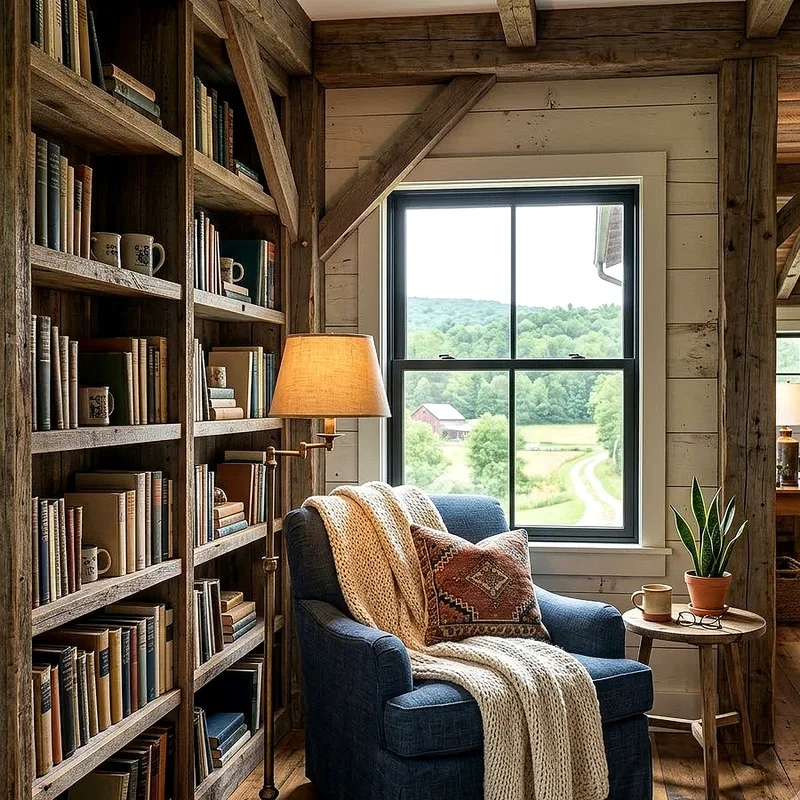
Working in the same chair for nine hours straight is a fast track to a sore back and a stale brain. Carve out a corner with a comfortable armchair, a small side table, and a floor lamp, and you've given yourself somewhere to think differently. Tuck it under a window if you can, or into a dormer if your barn has one. Throw in a sheepskin, a couple of textured cushions, and a basket of the books you keep meaning to finish. This spot handles phone calls, sketching, and those moments when a problem needs pacing rather than typing. Isn't it strange how moving twelve feet across a room can unstick an idea that wouldn't budge at your desk?
8. Use Sliding Barn Doors as Room Dividers
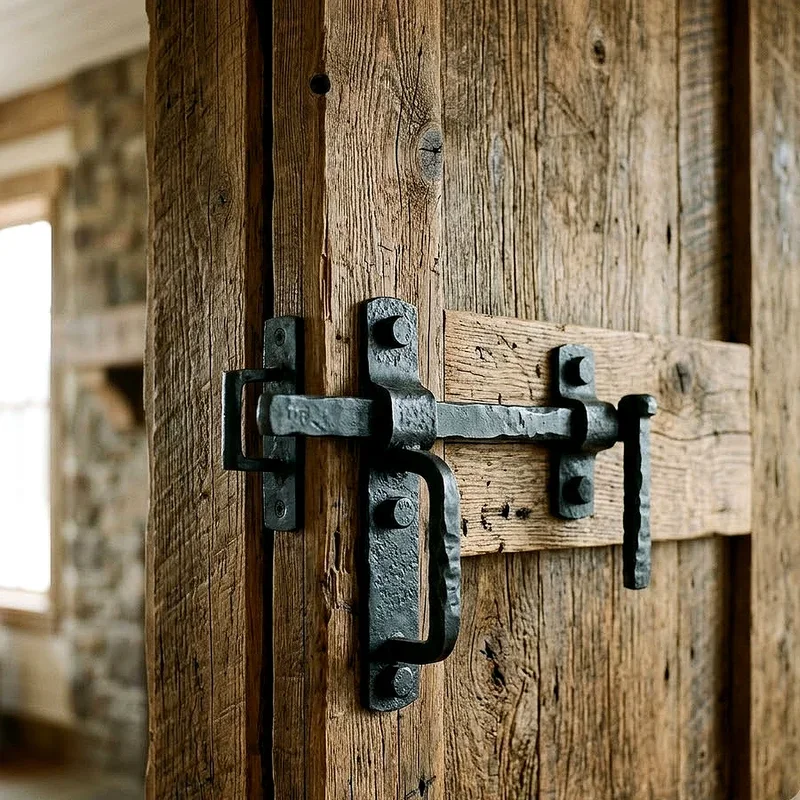
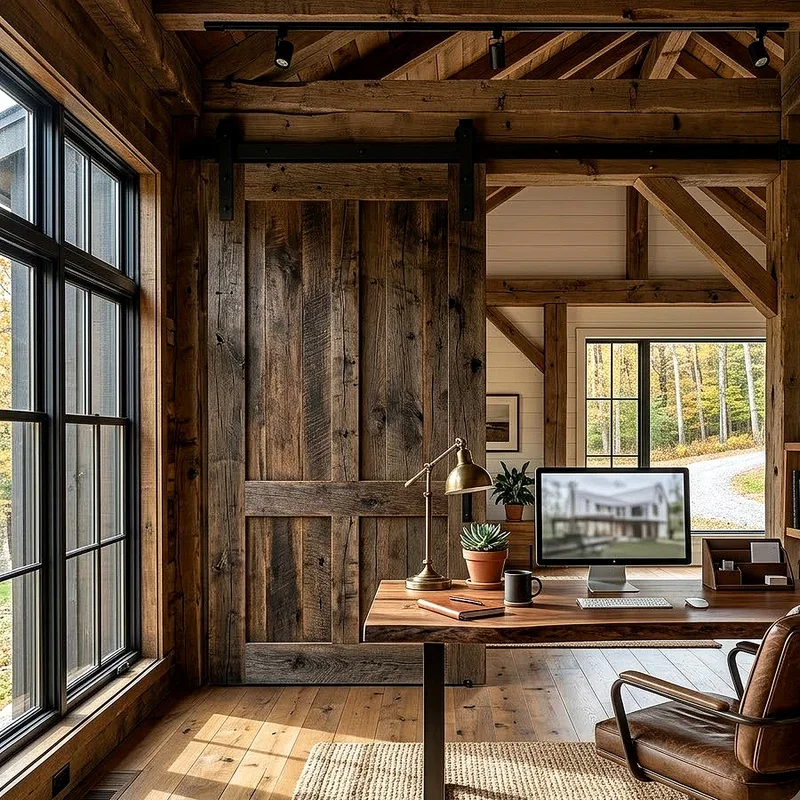
Sliding doors are practically obligatory here, and for good reason beyond the obvious pun. They eat zero floor space when they open, which matters when you're arranging furniture in a long narrow structure. Use them to separate your work zone from storage, or to close off a meeting area when a video call needs quiet. Heavy timber doors on exposed black track hardware look right at home against rough walls. If you want light to pass through, choose a design with glass panels set into the frame. A soft close mechanism is worth the extra cost, because a two hundred pound door slamming shut mid sentence on a client call is genuinely embarrassing.
9. Mix Black Metal Accents With Warm Wood
Wood everywhere gets monotonous fast, like eating bread for every meal. Black metal cuts through all that warmth and gives your eye somewhere to rest. Use it on shelf brackets, window frames, chair legs, door hardware, and light fixtures. The contrast makes the wood look warmer by comparison, which is a neat trick of perception rather than anything you actually bought. Matte black works better than glossy in a rustic setting since it doesn't reflect every stray beam of light. Keep the palette disciplined: pick one metal finish and repeat it rather than mixing black, brass, and chrome in the same room. Consistency is what separates a designed space from a collection of separate purchases.
10. Design a Standing Desk Station
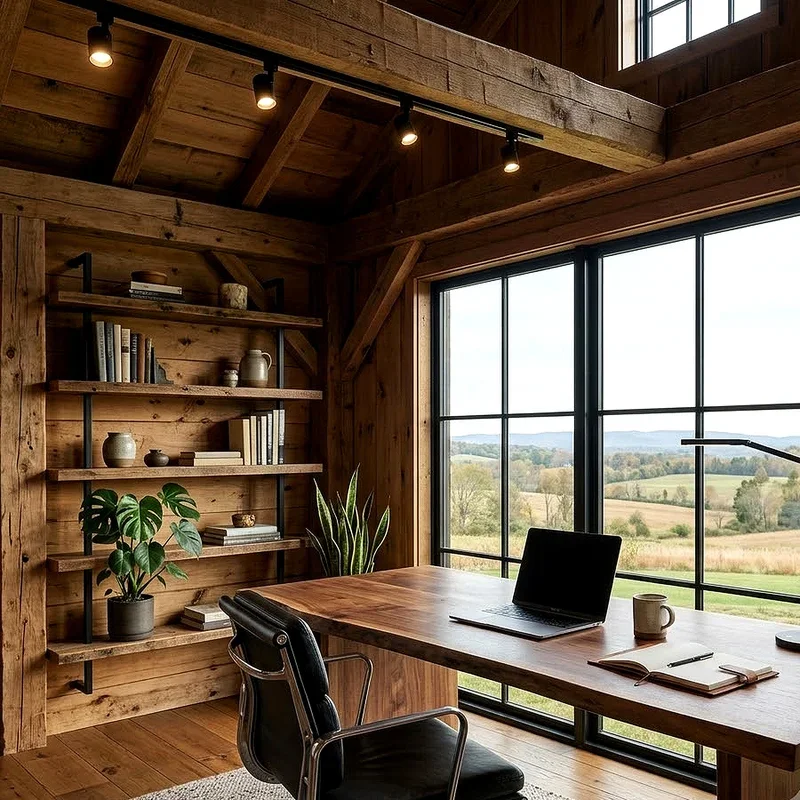
Sitting all day in a beautiful barn is still sitting all day, and your body doesn't care how nice the beams look. A standing station gives you somewhere to shift to when your legs get restless. You could install a fixed height counter along one wall using the same reclaimed timber as your main desk, or go with an adjustable electric frame if you want flexibility. Position it near a window so the change of posture comes with a change of view. Add an anti fatigue mat, because standing on a hard floor for two hours is its own kind of punishment. Alternating between sitting and standing every hour keeps your focus sharper than either position sustained alone.
11. Bring in Plenty of Greenery
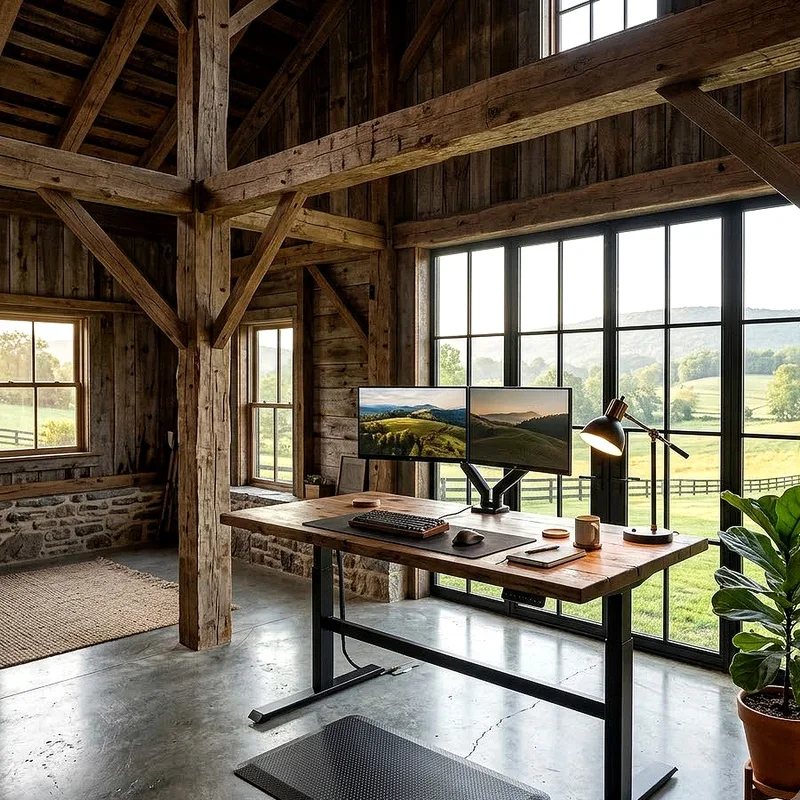
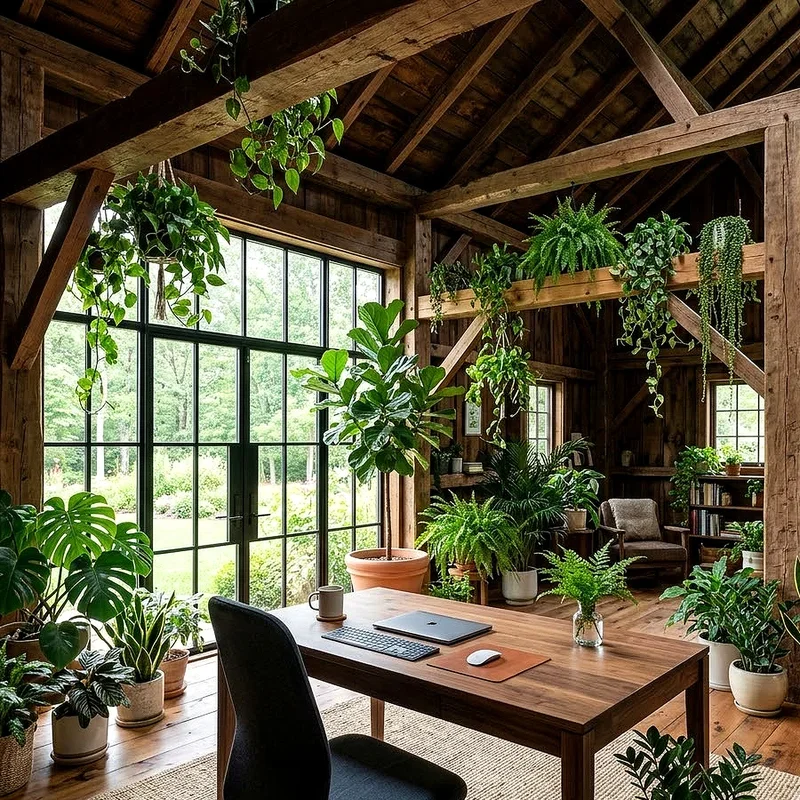
Plants soften hard surfaces the way a rug softens a bare floor, and barns have plenty of hard surfaces to soften. Choose species that match your actual light conditions rather than what looks good in a catalog. Pothos and snake plants survive shade and neglect. Fiddle leaf figs need bright indirect light and a fair amount of attention. A large potted olive tree near a window makes a statement without demanding daily care. Hanging planters work brilliantly in barns since the ceiling height gives them room to cascade. Beyond looks, greenery genuinely improves how a room feels to sit in for long stretches. Why work in a box when you can work in something closer to a garden?
12. Add a Wood Burning Stove for Winter
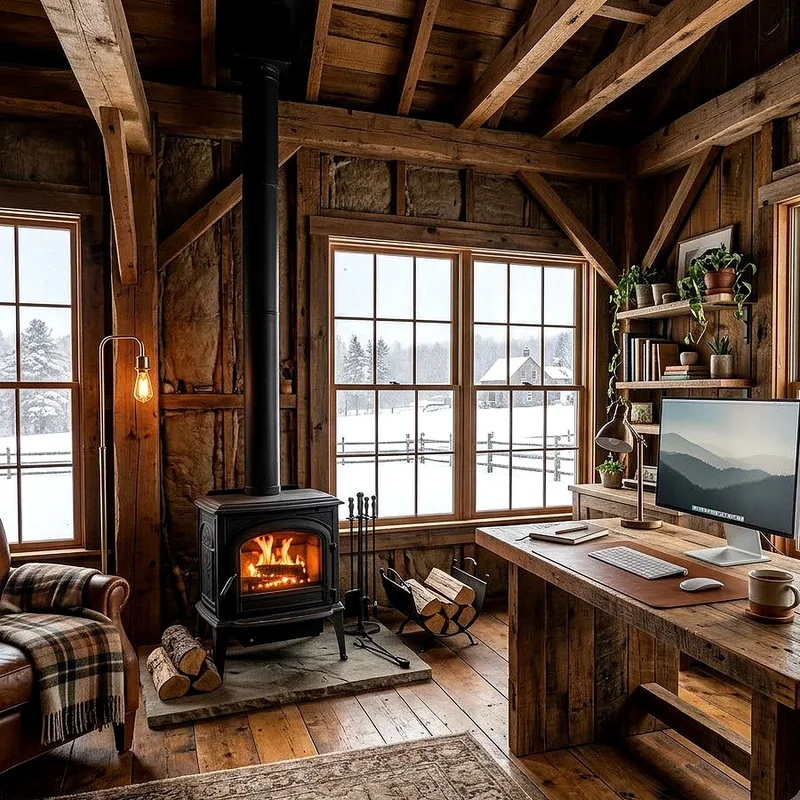
Nothing warms a big open space quite like a stove, and nothing matches a barn's character better either. A cast iron wood burner throws serious heat, costs little to run if you've got access to firewood, and keeps working when the power goes out. Install it on a proper hearth pad with the clearances your local code requires, and have the flue fitted by someone who does it for a living. The upfront expense stings, but the payoff arrives every cold morning for the next twenty years. There's also something about the sound and smell of a real fire that no radiator reproduces. Just keep a fire extinguisher nearby and clean the chimney annually without fail.
13. Hide Cables and Tech Clutter Smartly
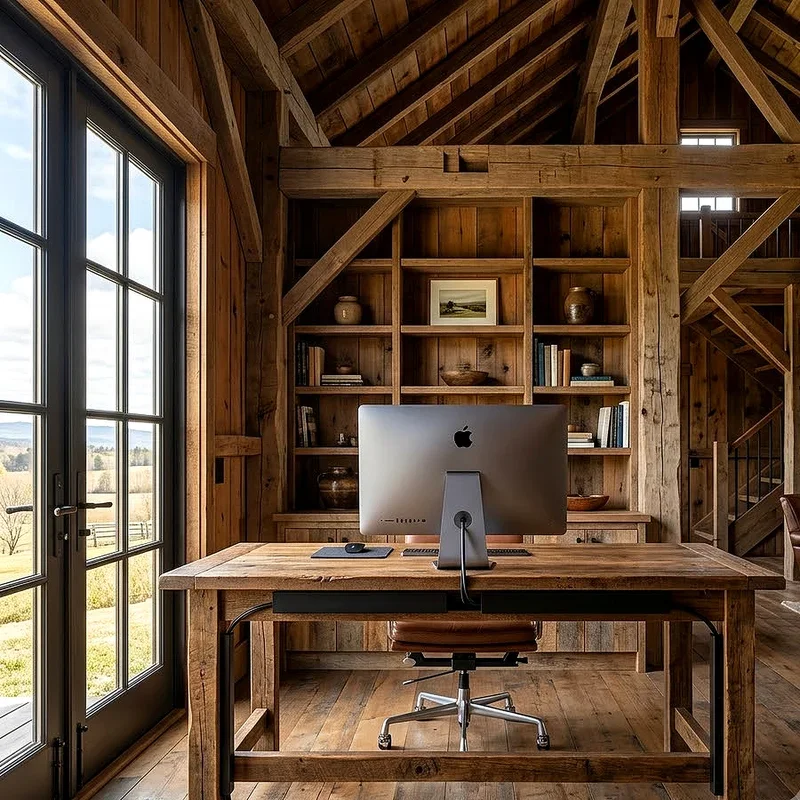
A tangle of black cables snaking across reclaimed oak ruins the effect you worked so hard to build. Plan your power before the walls close up: run conduit to where the desk will actually sit, add floor outlets if the desk floats in the middle of the room, and install more sockets than you think you need. Use cable trays mounted under the desktop to keep cords off the floor entirely. A closed cabinet hides your router, backup drives, and printer. For anything that must stay visible, braided sleeves in a neutral color blend far better than glossy black plastic. The goal is a room where the technology serves you without announcing itself in every sightline.
14. Use Area Rugs to Define Zones
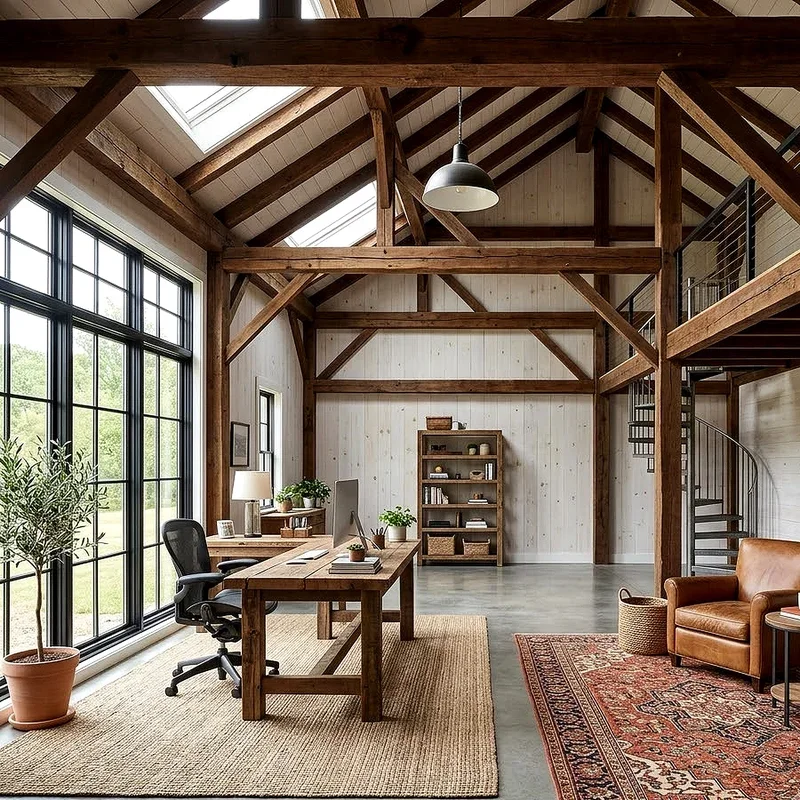
Open barn floors are wonderfully spacious and completely undefined, which can leave furniture floating like driftwood. Rugs fix that instantly by drawing invisible borders around each activity. Put a large flat weave under the desk area, a softer wool one in the reading corner, and maybe a runner along a walkway. Suddenly the eye reads three purposeful areas rather than one vague expanse. Rugs also cut echo dramatically, which matters more than you'd guess in a room with high ceilings and hard surfaces. Your video calls will sound noticeably better. Choose durable fibers like jute or wool since barn floors track in dirt, and stick to a shared color family so the zones still feel connected.
15. Add Personal Touches and Vintage Finds
A barn office built entirely from catalog purchases feels oddly hollow, like a stage set waiting for actors. The character comes from objects with a history: an old ladder repurposed as a blanket rack, vintage farm tools mounted on a wall, a battered metal locker holding supplies. Flea markets and farm auctions are goldmines for this stuff, and the prices usually beat anything new. Frame a few photographs, hang a map of somewhere that matters to you, set out a piece of pottery you actually like. These details won't show up on a floor plan, but they're what make the room yours rather than generic. Collect slowly and let the space fill in over time.
Conclusion
A barn office rewards patience more than budget. Start with insulation and windows, since comfort and light decide whether you'll actually use the space day after day. Then layer in the character pieces: exposed beams, reclaimed wood, black metal, and finds with a story behind them. Define your zones with rugs, hide the cables, and give yourself a second spot to sit when your desk stops working. Do those things and you'll end up with a room that handles real work while still feeling like somewhere you chose to be.
Read next: 15 Sliding Barn Door Latch Ideas for a Stylish Home
Frequently Asked Questions
Q1: How much does converting a barn into an office typically cost?
A: Costs vary widely, but basic conversions often run between fifteen and sixty thousand dollars total.
Q2: Do I need planning permission for a barn office conversion?
A: Usually yes, since changing a building's use almost always requires local council or municipal approval.
Q3: What is the best insulation choice for an old barn?
A: Spray foam suits irregular framing best, sealing air leaks while conforming to uneven walls easily.
Q4: Can I run reliable internet out to a detached barn?
A: Yes, buried ethernet cable delivers far better speeds and stability than wireless mesh extenders do.
Q5: How do I stop condensation forming inside a converted barn?
A: Install a vapor barrier, insulate thoroughly, and add controlled ventilation to move moist air outside.
Stay up to date with our latest ideas!