15 Duck Feeder Ideas for Backyard Ducks and Poultry
Discover 15 clever duck feeder ideas for backyard ducks and poultry. Cut feed waste, stop rats, and keep every pellet dry all year long.
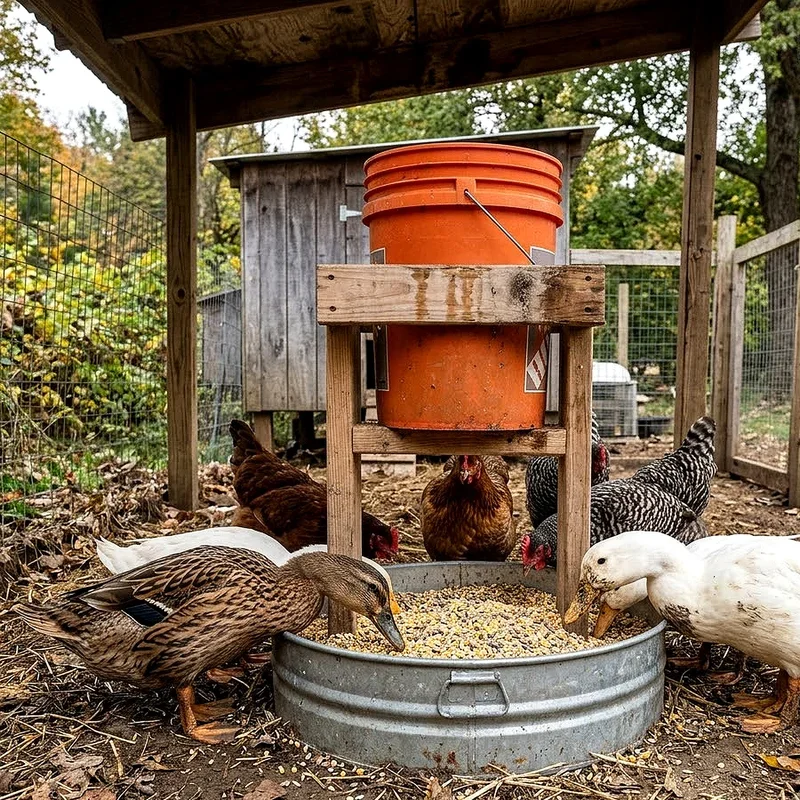
Let me guess. You tipped a scoop of pellets into a bowl, and within ten minutes your ducks had redecorated the yard with most of it. Welcome to the club. Ducks shovel rather than peck, so handing a duck a chicken feeder is like giving a shovel to someone who only owns a teaspoon. It simply does not fit. The good news? A better feeder is rarely expensive and almost never complicated. Most of the fifteen ideas below use buckets, pipe, gutter, scrap wood, or things already gathering dust in your shed. Grab a coffee, pick one that suits your run, and let us sort your feeding setup out properly.
1. The Classic Hanging Bucket Feeder
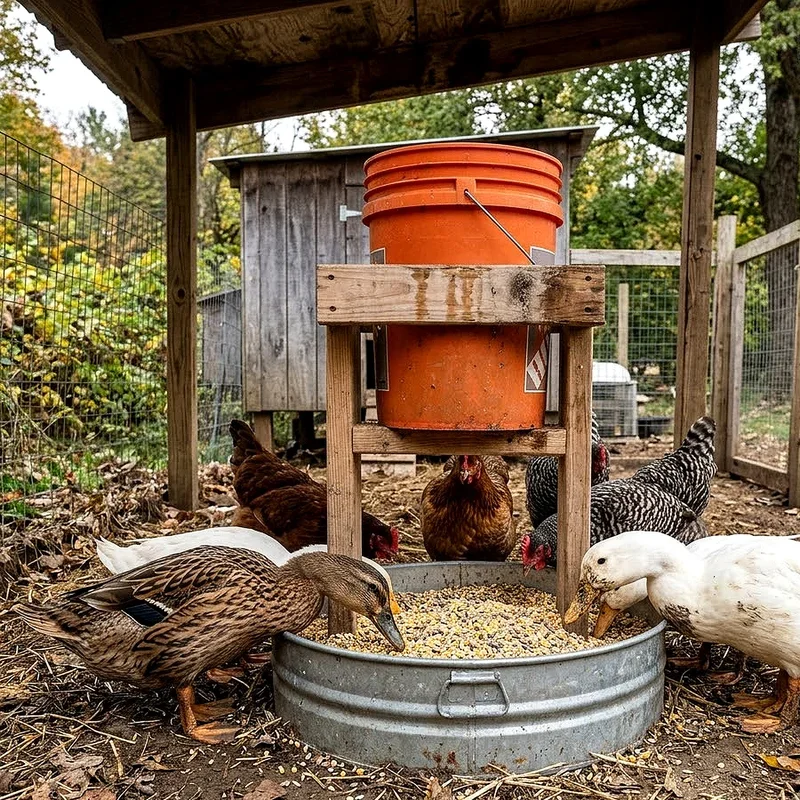
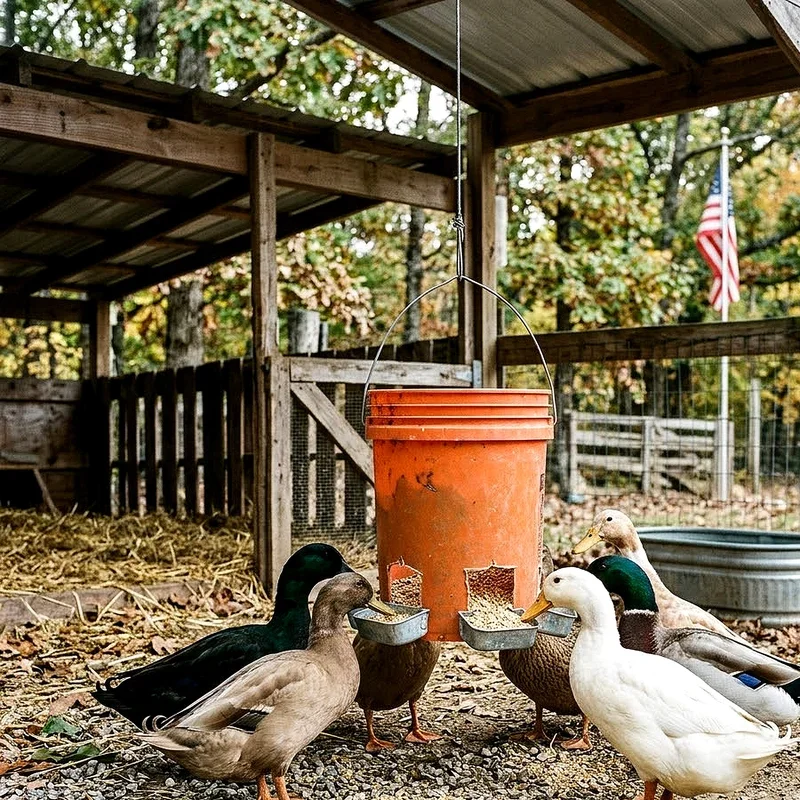
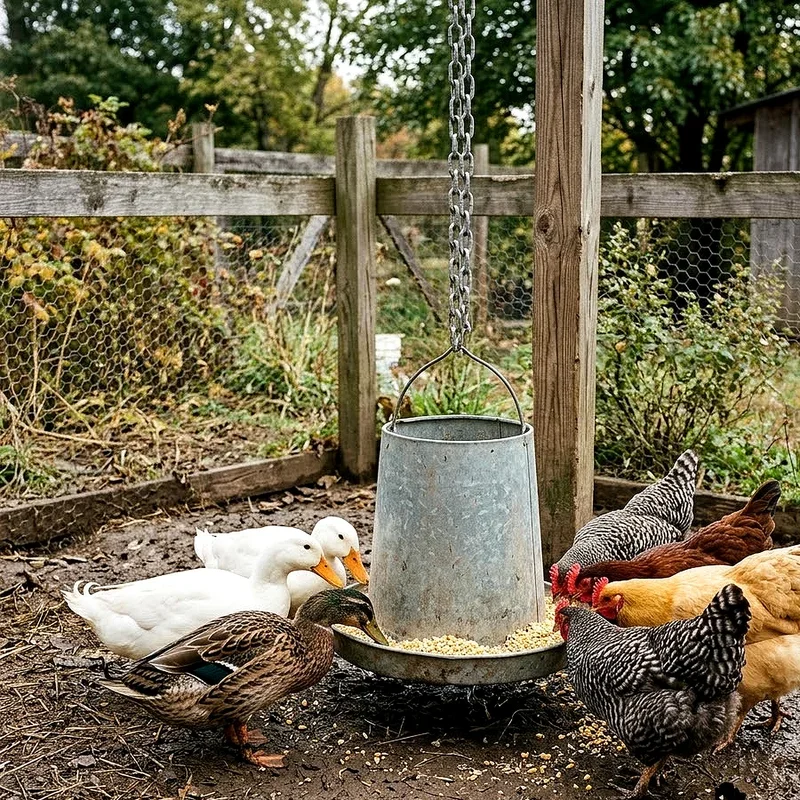
Hang a sturdy bucket from a beam and you solve half your feed problems in one afternoon. Cut generous rectangular windows near the base, wide enough for a bill to sweep through without scraping, then suspend the whole thing so the openings sit level with your ducks' chests. Why does height matter so much? Because a feeder that hangs too low collects mud, and one that hangs too high gets ignored completely. The swinging motion actually helps here, since rats hate unstable surfaces and usually give up within a night or two. Use a chain rather than rope, because ducks are curious and rope frays fast in wet weather. I like this build for small flocks of four to eight birds, and it costs almost nothing if you already own a spare feed bucket.
2. PVC Pipe Gravity Feeder
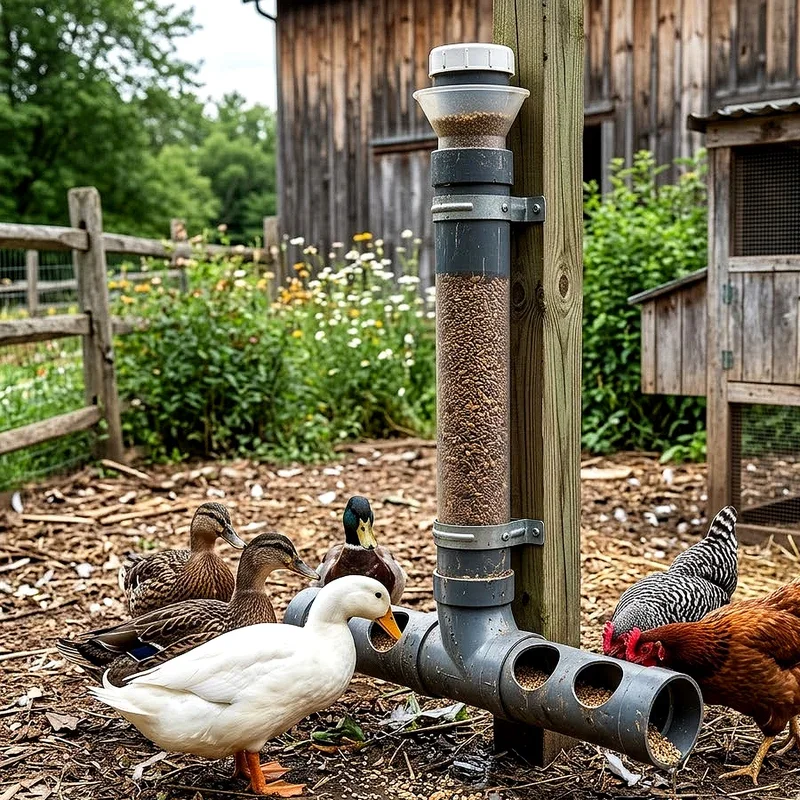
A length of four inch PVC pipe turns into a gravity feeder faster than you can finish a cup of coffee. Mount the pipe vertically against a fence post, cap the top to keep rain out, and fit a wide elbow at the bottom so feed pools where bills can reach it. Gravity does the refilling for you, which feels a little like having a vending machine in the run. The trick with ducks is widening that bottom opening, because a standard elbow is too tight for a broad bill. Sand the cut edges smooth so nobody scratches a nostril. One pipe holds several days of pellets, so weekend trips stop being stressful. Two pipes side by side keep bossy drakes from guarding the only station, and the whole build takes barely twenty minutes.
3. Five Gallon Bucket Port Feeder
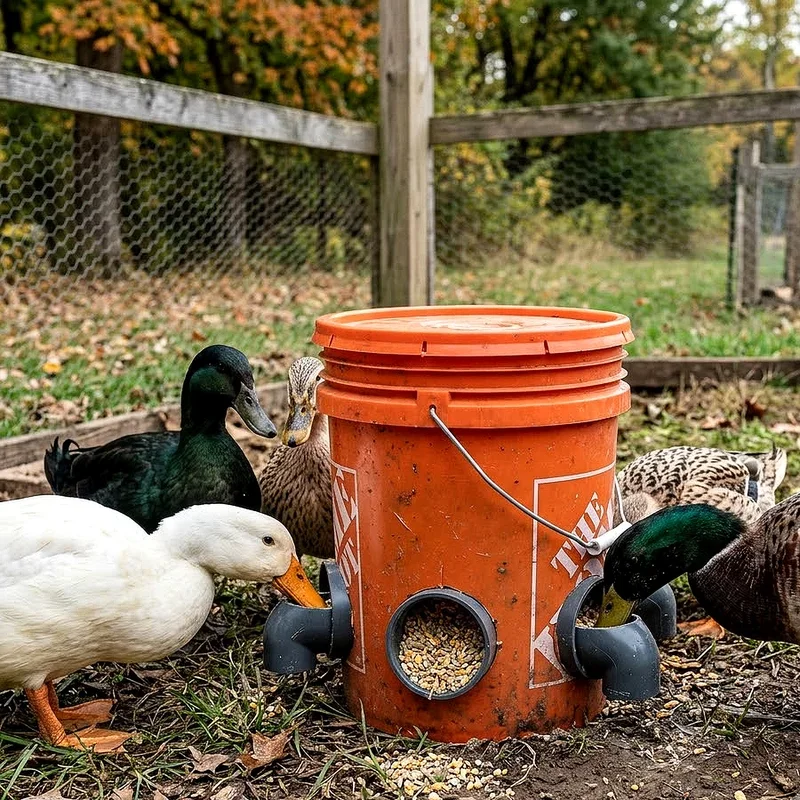
Sometimes the simplest ideas last the longest, and a bucket with side ports proves it. Drill several two inch holes around the lower rim of a food grade bucket, then push in poultry feeder ports designed for wide bills. Snap the lid on tight and rain stays outside where it belongs. Ducks quickly learn to dip into each port, and because the feed sits inside a sealed drum, sparrows and mice lose their free buffet. Have you ever poured half a bag into a tray only to sweep most of it up later? This design ends that waste. Set the bucket on two bricks so the ports line up with chest height, and consider a second bucket if your flock climbs past ten birds. Check the ports monthly, since sunlight makes cheap plastic brittle over time.
4. Rain Gutter Trough Feeder
A leftover section of vinyl rain gutter makes a trough feeder that seems custom built for ducks. The shallow curve matches the way a bill scoops, and the length lets six or seven birds eat shoulder to shoulder without squabbling. Cap both ends, screw the gutter to a low wooden frame, and drill a few tiny drainage holes so any splashed water escapes instead of souring the feed. Think of it as a family dinner table rather than a snack bar. I mount mine about six inches off the ground, high enough to stay clean and low enough for ducklings. Gutter costs pennies per foot at any hardware store, and if it warps after a few seasons you simply cut another piece. Rinse it out each week, because damp crumble likes to hide in the corners.
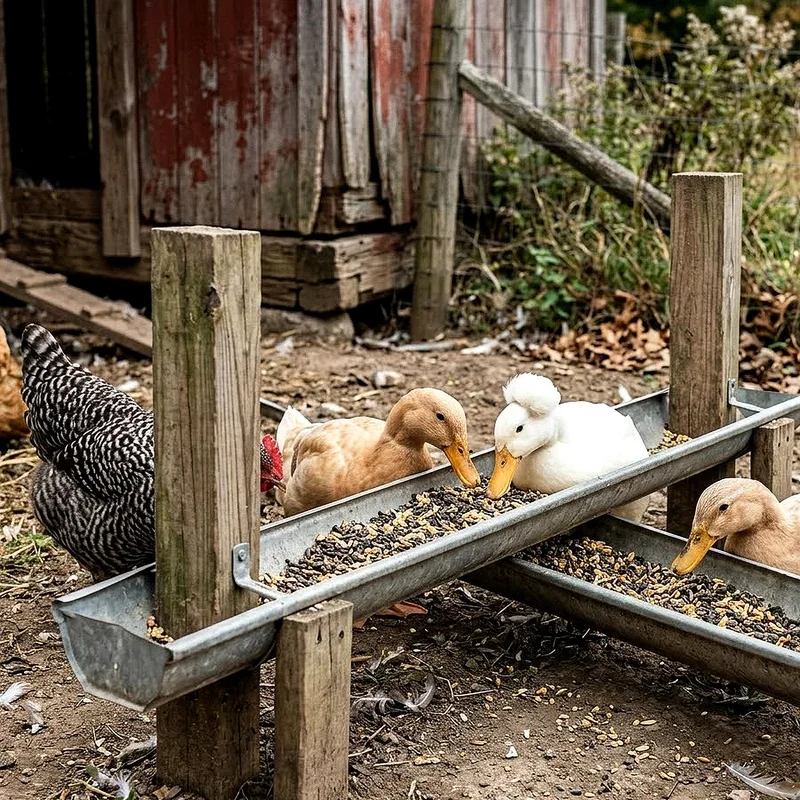
5. Treadle Feeder for Rodent Proof Meals
If rats have been throwing parties in your run, a treadle feeder is the bouncer you needed. The bird steps onto a metal plate, the counterweighted lid swings open, and dinner appears. Step off and the lid seals shut, locking out rodents, wild birds, and the neighbor's cat. Ducks take longer than chickens to learn the trick, so prop the lid open for a week and let curiosity do the teaching. Choose a model with a wide feeding trough, since narrow chicken versions frustrate broad bills. Yes, these cost more than a bucket, but do the math on wasted feed over a year. Most keepers recover the price in a single season. Set it on level, solid ground, otherwise the treadle plate sticks and your ducks lose confidence.
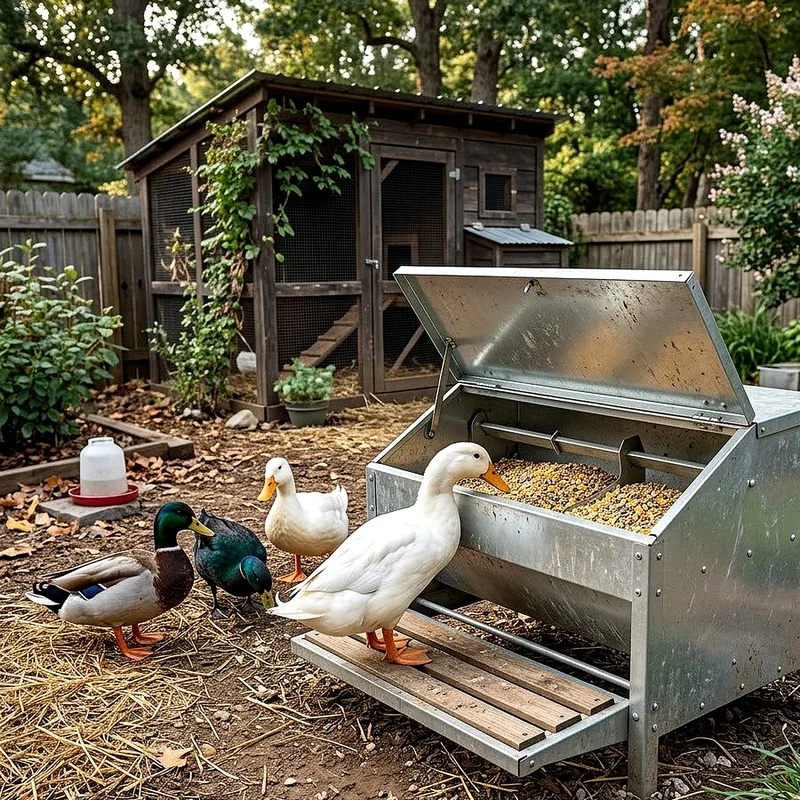
6. Floating Pond Feeder
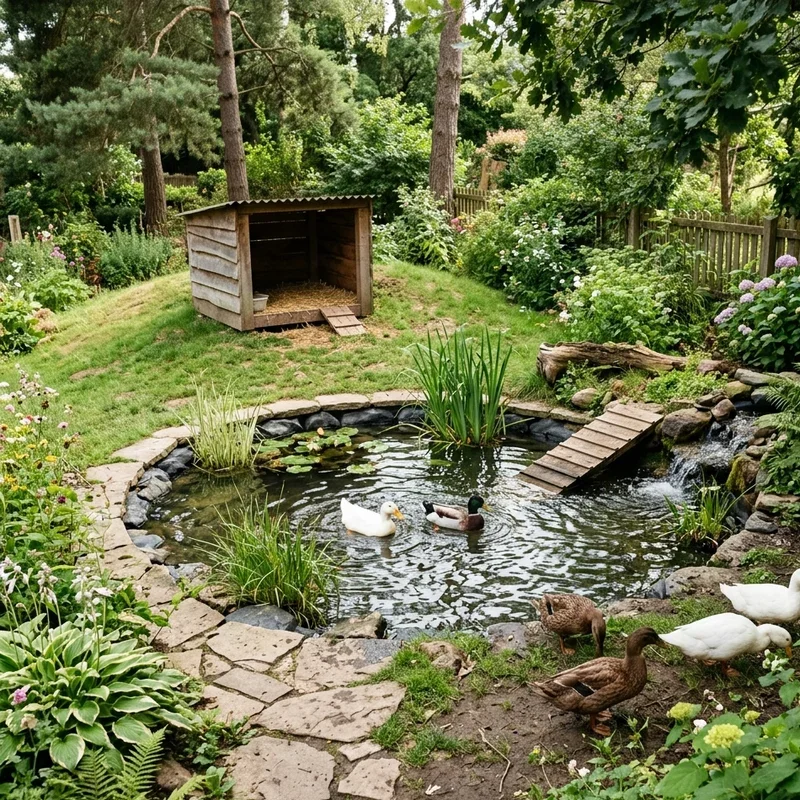
Do your ducks spend more time on the water than on land? Then bring the restaurant to them with a floating feeder. Take a shallow plastic tray, glue pool noodles or sealed foam blocks around the rim, and tether it to a stake with a length of cord. The tray bobs on the surface, ducks paddle up and eat, and nothing sinks into the muck below. It looks a bit like a lily pad loaded with pellets. Floating feeders shine for flocks that free range on a pond, since scattered grain otherwise vanishes into the bottom sludge. Keep the tether short so wind does not park your feeder in the reeds, and haul it out weekly for scrubbing. Choose a bright colour so it stays easy to spot from the bank.
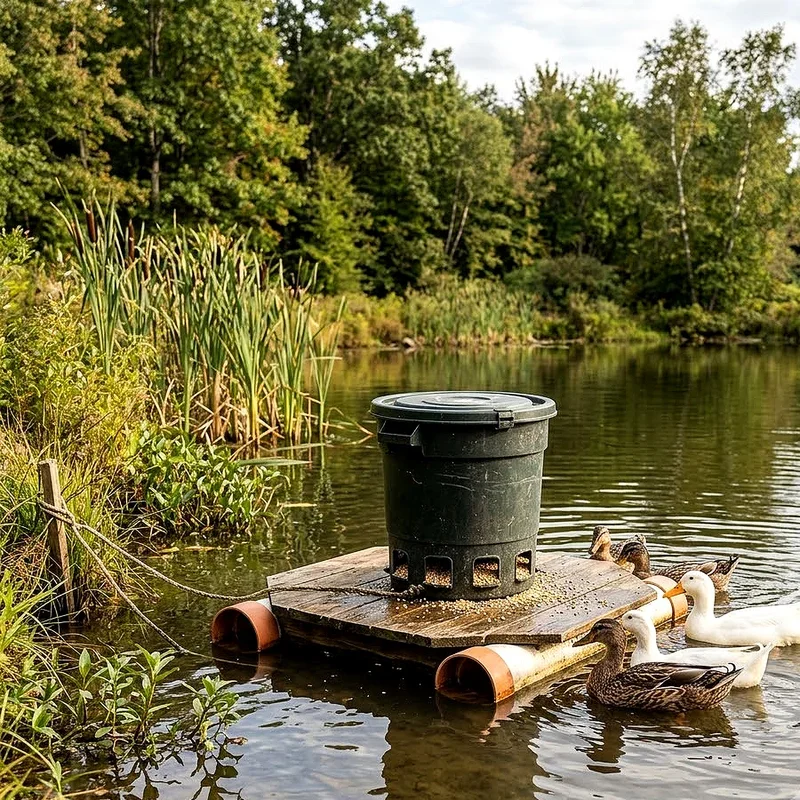
7. Deep Dish Pan Feeder with Water Station
Ducks need water within a bill's reach while they eat, so pair a deep rubber pan with a nearby drinker and watch the choking risk drop. Rubber feed pans flex in winter, refuse to crack, and pop free of frozen crud with one good stomp. Set the pan on a paver or a patch of gravel so the surrounding ground drains instead of turning into a swamp. Why not just use a bowl? Because shallow bowls tip, and a tipped bowl is a scattered breakfast. Fill the pan only with what your flock finishes in twenty minutes, then lift it away. This routine keeps mice hungry and keeps you honest about daily intake. Two pans placed apart also stop squabbling when a greedy drake decides to hog everything.
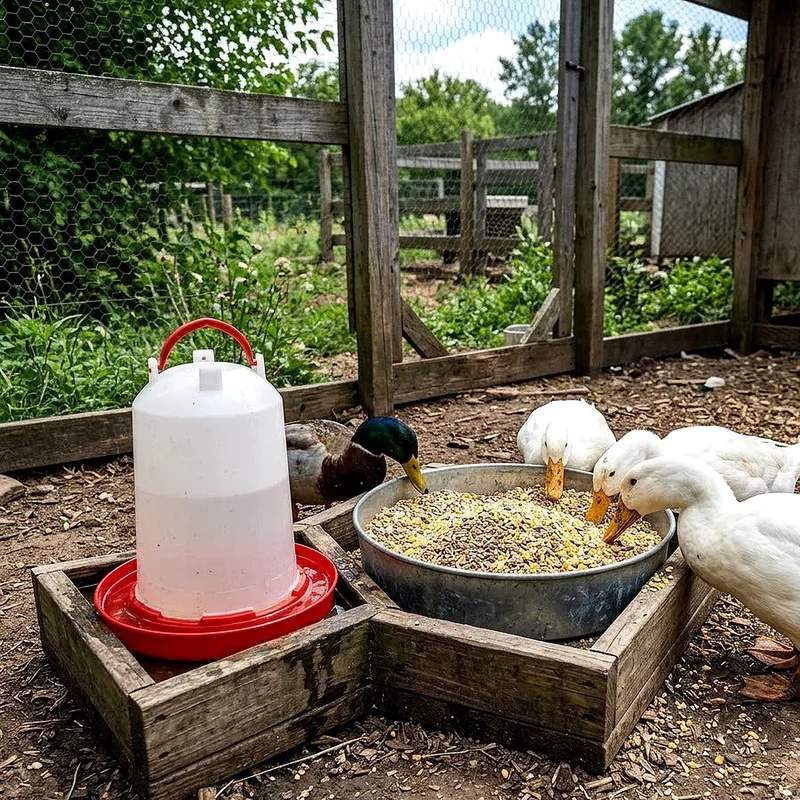
8. Wooden Box Feeder with a Rain Roof
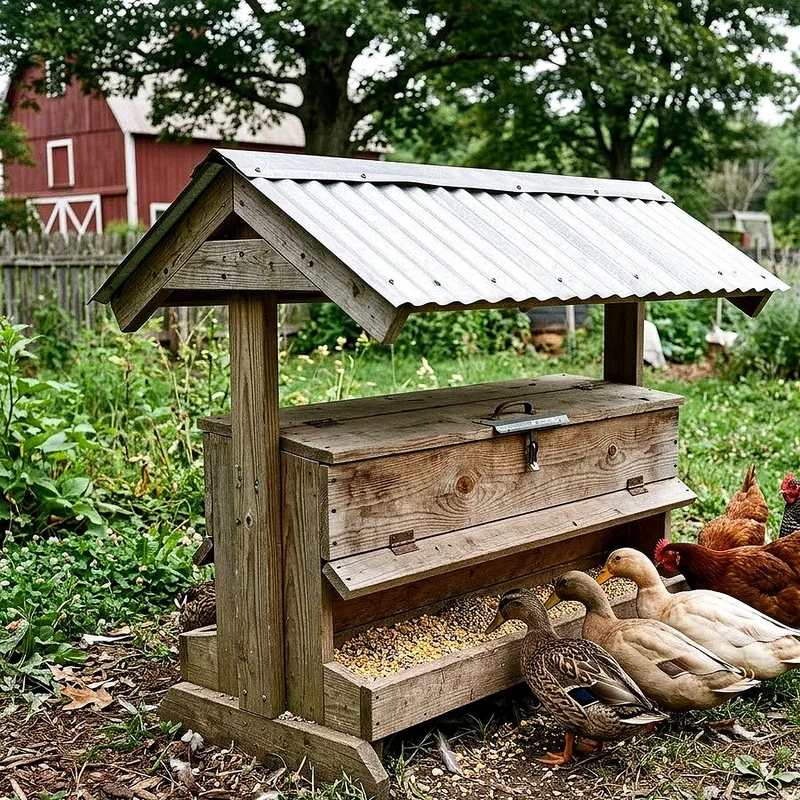
Rain ruins feed faster than any pest, which is why a covered wooden box earns its keep in soggy climates. Build a simple open fronted box from scrap lumber, slope a hinged plywood roof over the top, and let the overhang shed water away from the trough. Line the inside with a sheet of galvanized metal and cleaning becomes a two minute job. The hinged lid means you refill from above without bending double. Picture a mailbox for pellets, and you have the right idea. Ducks appreciate the shade in summer too, since nobody enjoys eating in blazing sun. Paint the exterior with livestock safe sealant, keep the raw wood inside untreated, and this feeder will outlast several flocks. Add a simple latch and raccoons will not help themselves after dark either.
9. Tire Feeder for the Budget Minded
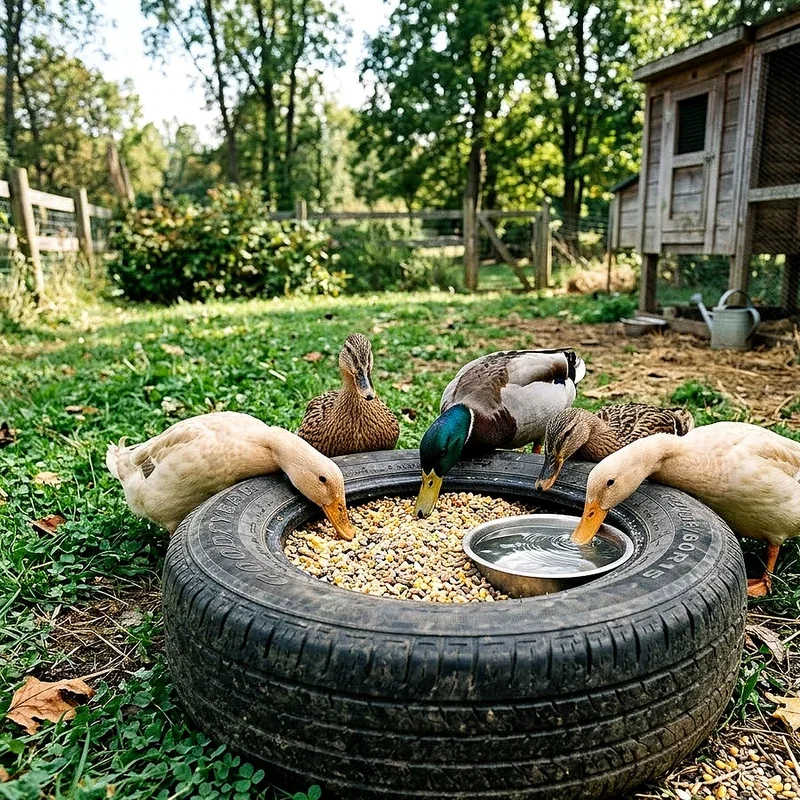
An old tire cut in half becomes a surprisingly good feeder, and the price is usually free. Slice a used tire around its circumference with a sturdy blade, lay one half flat with the tread down, and you have a heavy rimmed trough that no duck can flip. The rubber will not rust, will not splinter, and shrugs off a hard winter freeze. Sound too rough for your tidy yard? A quick coat of exterior paint smartens it up considerably. Wash the tire thoroughly before use so no road grime ends up in the feed. Ducks step right up to the low sidewall, and the curved shape keeps pellets pooled in the middle rather than scattered across the grass. Two halves from one tire give you two feeders.
10. Hanging Chain Feeder for Muddy Ground
Some runs turn into chocolate pudding every spring, and ground level feeders simply disappear into it. Hanging a wide shallow pan from three chains solves the problem beautifully. Drill three evenly spaced holes near the rim, clip on lightweight chain, and gather the ends at a single swivel hook. Now the feeder floats above the mud, swings clear of paddling feet, and lifts off in one motion for washing. Ever tried scrubbing a pan that has been buried in wet clay? Exactly. Adjust the hook height as your ducklings grow so the rim always sits at chest level. The swivel prevents twisted chains, and the whole rig takes about fifteen minutes to assemble. Choose stainless hardware if you live anywhere near salt air, since cheap steel rusts quickly.
11. Automatic Timed Feeder
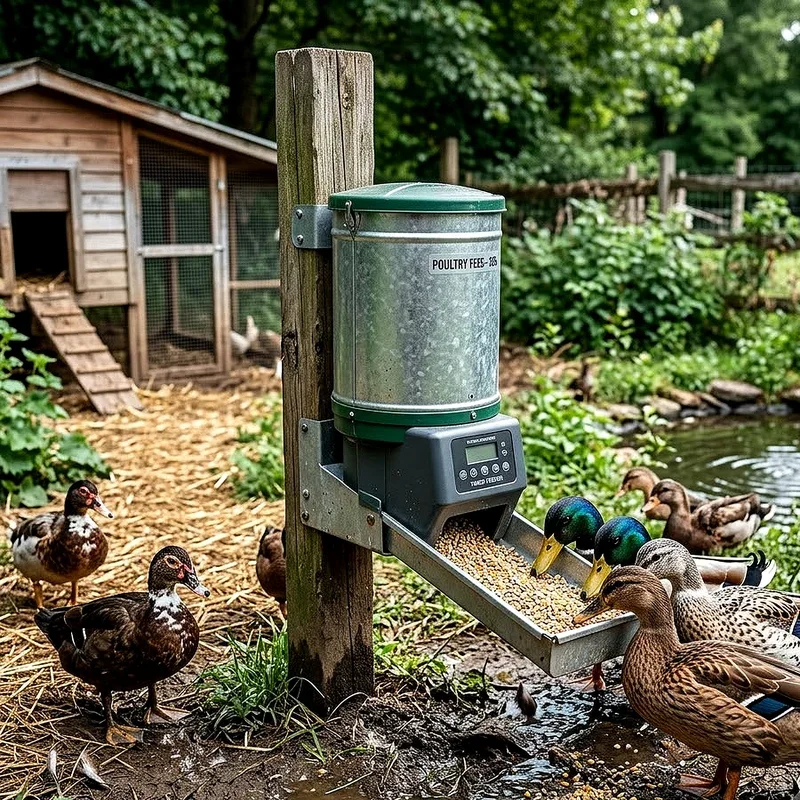
Technology has finally reached the duck run, and honestly it is about time. Battery powered timed feeders release a measured portion at set hours, which suits ducks beautifully because they thrive on routine. Program breakfast for sunrise and supper for late afternoon, then enjoy a lazy Saturday morning without guilt. The sealed hopper keeps rain and rodents out between servings, so nothing sits exposed overnight. Is it overkill for three backyard birds? Probably. For a flock of twenty, or for anyone who travels often, it is closer to essential. Look for a model with a wide dispensing tray, because standard chicken units drop feed into a narrow chute that broad bills cannot work. Test the timer indoors for a day before trusting it with real meals.
12. Wet Mash Station
Ducks adore wet mash, that porridge like mix of crumble and water they slurp with obvious joy. Give them a dedicated station and mealtime turns into a small celebration. Use a heavy ceramic or stainless dish set inside a shallow tub, so splashes land in the tub instead of the bedding. Mix only what the flock will finish quickly, because wet feed sours within hours in warm weather and can grow mold you do not want anywhere near your birds. Think of it as serving oatmeal rather than storing it. This station is brilliant for moulting birds, ducklings, and any duck recovering from illness. Rinse the dish after every serving. A splash of warm water on frosty mornings makes it even more welcome.
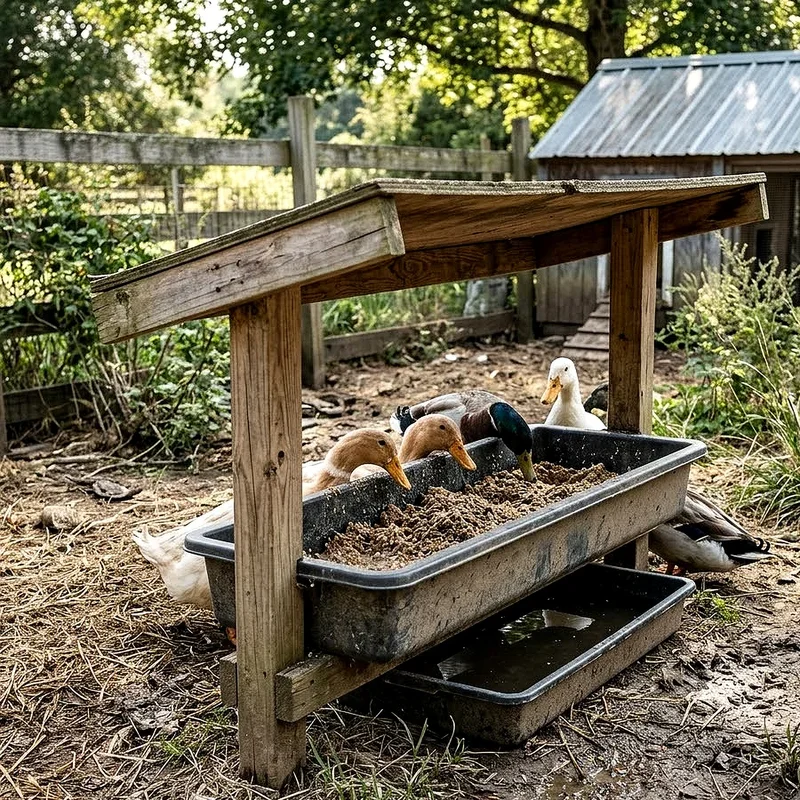
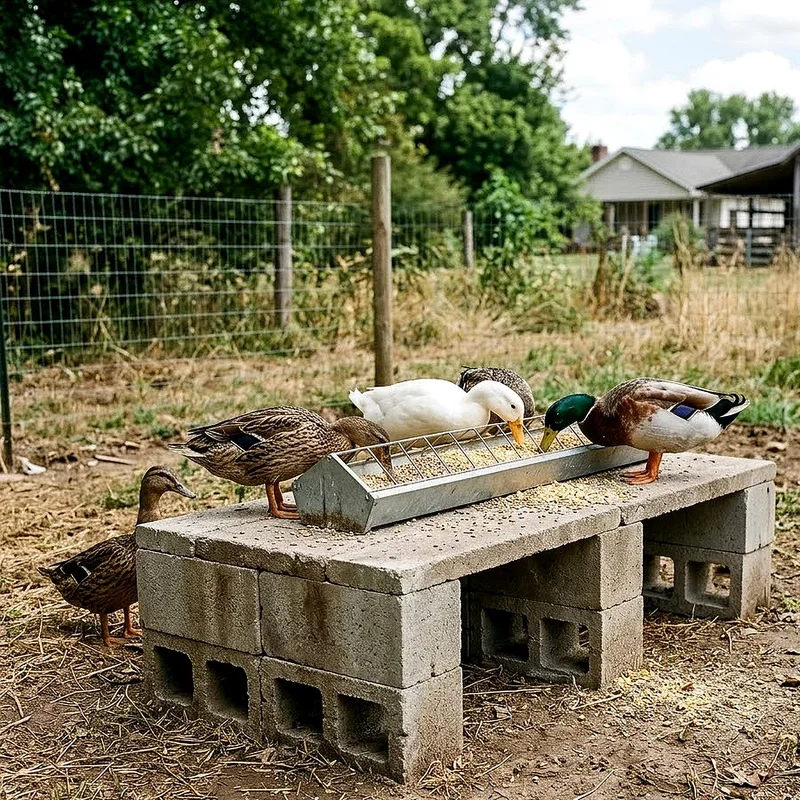
13. Cinder Block Feeding Bench
Here is a build so simple it barely counts as a project, yet it fixes a real problem. Stack two cinder blocks, lay a plank across them, and set your feed pans on top. Suddenly the feed sits above the mud, above the droppings, and above the reach of curious dogs. The blocks cost a couple of dollars each and will still be standing when everything else has rotted. Want it fancier? Cut circular holes in the plank so the pans drop in flush and cannot be tipped over. Keep the bench low, around eight inches, because ducks do not hop like chickens do. Bolt the plank down if your yard gets windy, because a flying board scares everybody for weeks afterwards.
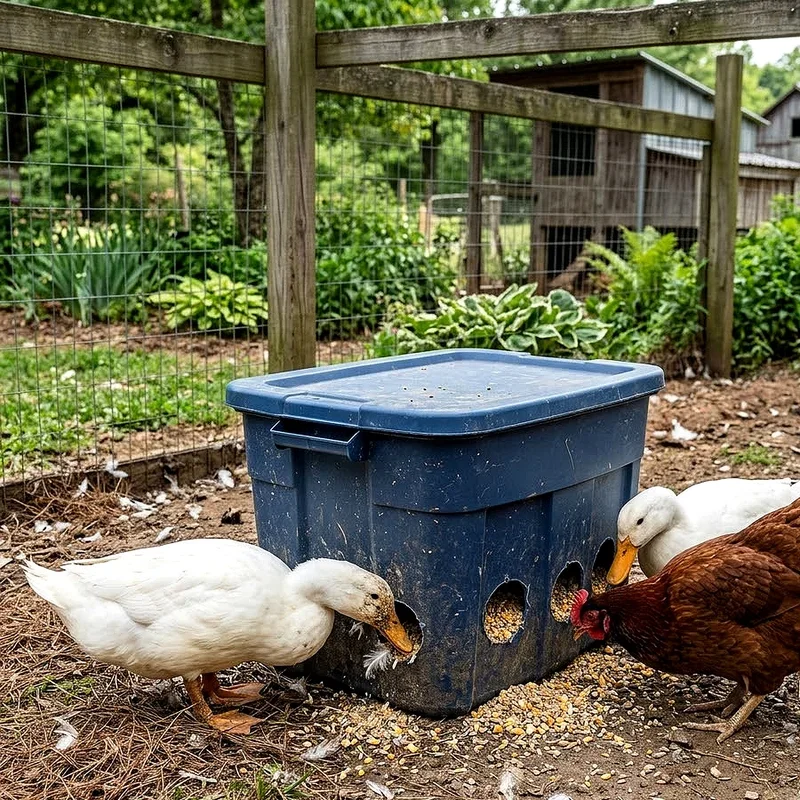
14. Repurposed Storage Tub Feeder
Those big plastic tubs that kitty litter and laundry pods come in make excellent feeders once you look past their origins. Cut a wide arched opening in one side, leaving three or four inches of wall at the bottom to hold pellets in place. Keep the lid, because a snapped lid means overnight rain never touches the contents. The handle lets you carry the whole thing to the tap for rinsing, which is more convenient than it sounds. Recycling something destined for landfill feels good too. Weigh the tub down with a brick inside the base, otherwise a windy afternoon will send it cartwheeling across the yard. Scrub out any leftover detergent residue first, since soap traces can upset sensitive stomachs.
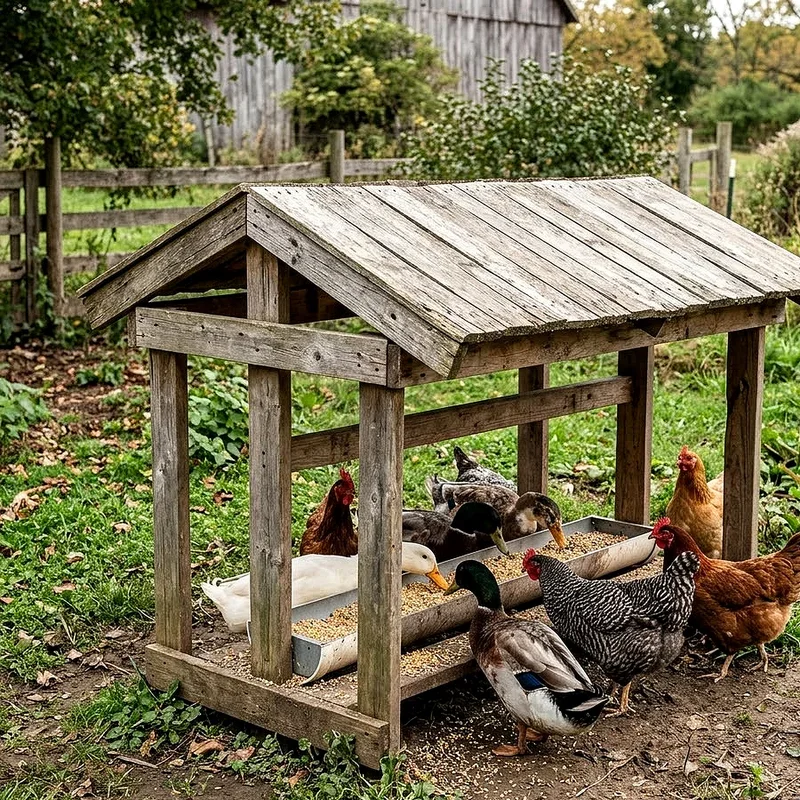
15. Pallet Wood Covered Feeding Station
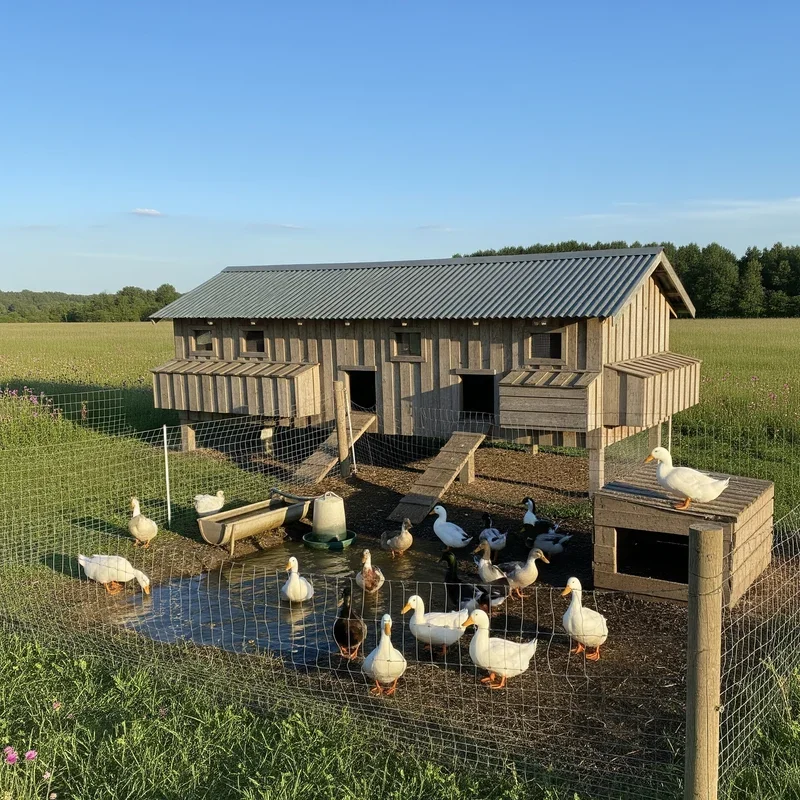
Free pallets are the backyard keeper's lumber yard, and they stack up into a covered feeding station with a weekend of work. Break down two pallets, use the runners as posts, and build a low three sided shelter with a sloped roof of corrugated sheet. Set a long trough underneath and your whole flock eats out of the weather. Ducks will crowd inside during drizzle, chickens will follow, and the feed stays dry through everything short of a hurricane. Check each pallet for the heat treatment stamp and avoid any marked with chemical fumigation. Leave the front fully open so no bird feels cornered by a bossy drake. Hang a spare tarp on the windward side and winter feeding becomes far more pleasant.
Conclusion
Feeding ducks well is not about spending money, it is about matching the feeder to the bird. Wide openings, water within reach, shelter from rain, and ground that drains will solve most problems you have been fighting all season. Pick one of these fifteen ideas, live with it for a fortnight, then adjust. Your ducks will tell you honestly whether it works, usually by ignoring it or by eating neatly for once. Build something simple this weekend and enjoy watching your feed bill shrink month after month.
Read next: 15 Duck Pool Ideas for Happy Backyard Ducks
Frequently Asked Questions
Q1: Can ducks use regular chicken feeders?
A: Usually not well, since narrow chicken ports frustrate wide duck bills and cause constant spillage.
Q2: How high should a duck feeder sit?
A: Roughly chest height, about six to ten inches off the ground for most adult ducks.
Q3: Do ducks need water beside their feeder?
A: Yes, always keep clean water within a few steps so ducks can swallow dry feed safely.
Q4: What stops rats from raiding my duck feeder?
A: Treadle feeders, sealed hoppers, and removing all leftover feed before dark stop most rodent problems.
Q5: How often should I clean duck feeders?
A: Rinse daily, scrub weekly with soapy water, and disinfect monthly to prevent mold and illness.
Stay up to date with our latest ideas!