What Seattle Pet Owners Get Wrong About Keeping Furniture Clean
For Seattle households with dogs and cats, furniture accumulates faster and differently than the industry average. Here's what actually works and what doesn't.
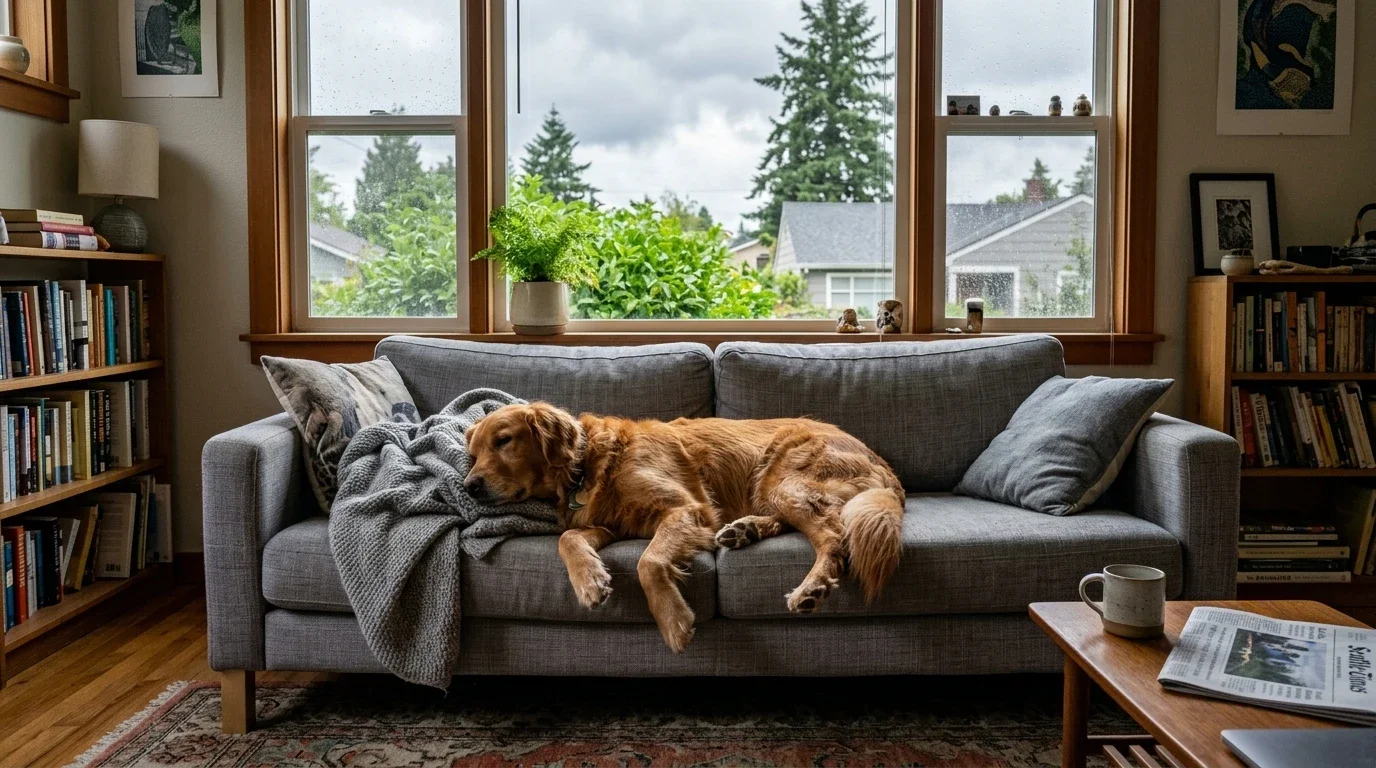
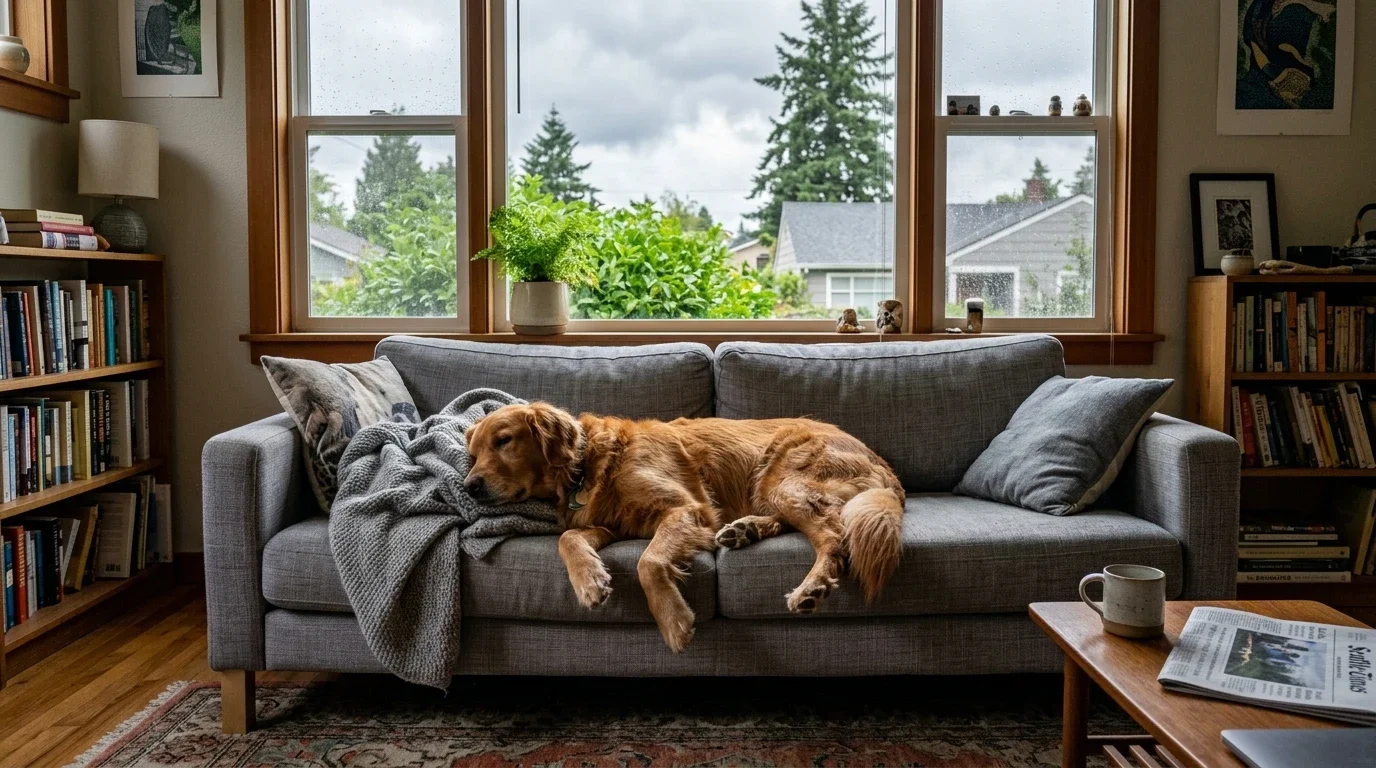
Most Seattle pet owners have worked out a routine for managing what their animals bring to the furniture. There's a throw blanket on the couch cushion the dog uses, a specific corner of the sectional that belongs to the cat, a ritual of vacuuming that happens with varying frequency depending on the week. The routine feels adequate until something disrupts it — a houseguest who mentions an odor, a visible stain that won't respond to the usual approaches, a veterinary visit where the vet asks about the home environment in a way that suggests the answer matters. At that point, the gap between what the routine actually manages and what the furniture has actually accumulated becomes apparent.
The gap is almost always larger than expected. This isn't a reflection of neglect — it's a reflection of how fabric furniture works in households with animals. The visible surface of upholstery is a poor indicator of what's inside it. A couch that looks clean, that passes a quick smell test when you put your face to the cushion, may have accumulated eighteen months of dander, hair, skin oil, and moisture in the foam substrate beneath the fabric. Seattle's climate — sealed homes through long wet winters, central heating running through November to March — keeps indoor humidity at levels that hold organic material in foam more effectively than a drier environment would. The result is that furniture in pet households here accumulates faster and holds it longer than the national averages that most cleaning schedules are based on.
Why the Standard Approaches Don't Reach the Problem
Vacuuming removes surface hair and some dander but doesn't penetrate the foam substrate where the majority of biological material concentrates over time. Baking soda treatments absorb some surface moisture and odor but don't address what's three inches into the cushion. Enzyme sprays applied to the fabric surface work on what they contact — they can't effectively reach the uric acid crystals that form when urine dries in the foam, which sit below the layer the spray saturates. Fabric freshener products address the perception of odor without addressing its source.
None of this means these approaches are useless. Surface maintenance matters — regular vacuuming slows the rate of accumulation, and addressing spills immediately prevents them from penetrating further. But they're surface interventions on a problem that lives inside the furniture, and they produce surface results. The smell that returns two weeks after a thorough baking soda treatment isn't evidence that the treatment failed — it's evidence that what's in the foam substrate wasn't reached.
The specific challenge with urine contamination — the issue that prompts more furniture cleaning calls in Seattle than any other — is that it requires enzyme treatment before extraction, not instead of it. When a cat or dog urinates on upholstery, the urine penetrates through the fabric and into the foam within seconds. As it dries, uric acid crystals form in the substrate. These crystals are essentially inert until they get wet again — from a cleaning attempt, from humidity, from a subsequent accident — at which point they reactivate and release the odor. Hot water extraction alone moves the crystals without neutralizing them. Enzyme solution applied before extraction, dwelled long enough for the biochemical reaction to complete, breaks the crystals down at the molecular level so they can be extracted rather than relocated. The sequence matters: enzyme dwell, then extraction. Reversed, or without the dwell time, the result is furniture that smells acceptable for two weeks and then progressively worse as reactivated crystals off-gas through the cleaned fabric.
What Seattle's Climate Adds to the Equation
Pacific Northwest households deal with a specific compounding factor that most pet care content doesn't account for: year-round indoor humidity. From October through April, Seattle homes run with windows closed and central heating cycling, which raises indoor relative humidity while simultaneously concentrating whatever's in the air — including what's off-gassing from furniture substrates. The result is that pet odor in upholstery becomes more noticeable in winter not because the furniture is dirtier than it was in August but because the conditions for perceiving it are amplified.
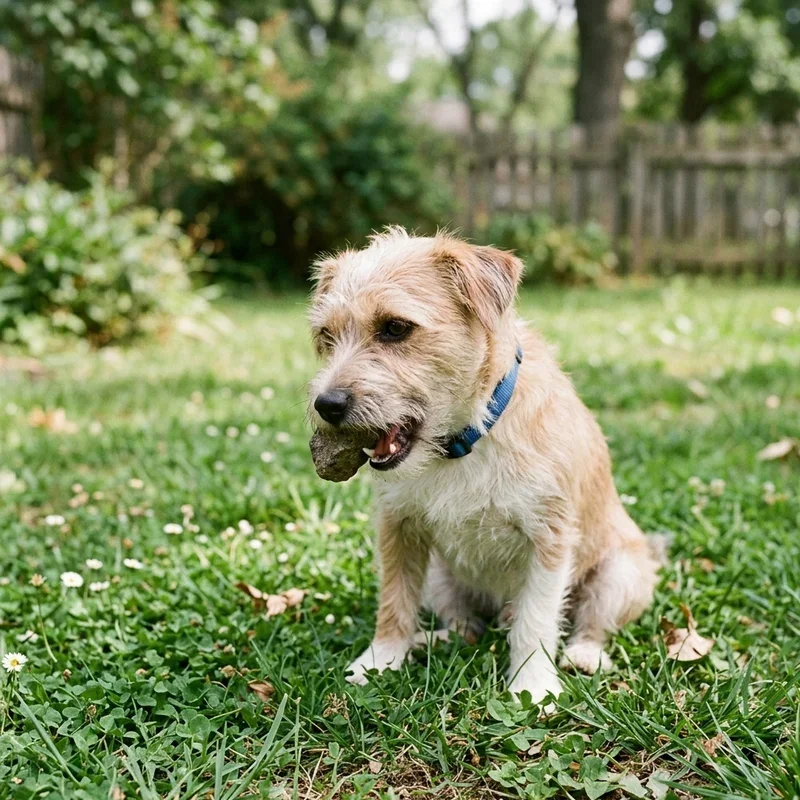
Damp outdoor environments also mean that dogs arriving home from walks are genuinely wet through much of the year. A dog that jumps on the couch after a rainy walk in Green Lake Park or along the Burke-Gilman Trail delivers moisture directly into the upholstery, and that moisture creates conditions for the biological activity — dust mite proliferation, mold development at the fabric-foam interface — that shows up later as odor and fiber degradation. The households that maintain furniture effectively in Seattle tend to have addressed the wet-dog entry point specifically, with designated drying areas near the door before the dog has access to the rest of the house.
What a Professional Cleaning Actually Does in a Pet Household
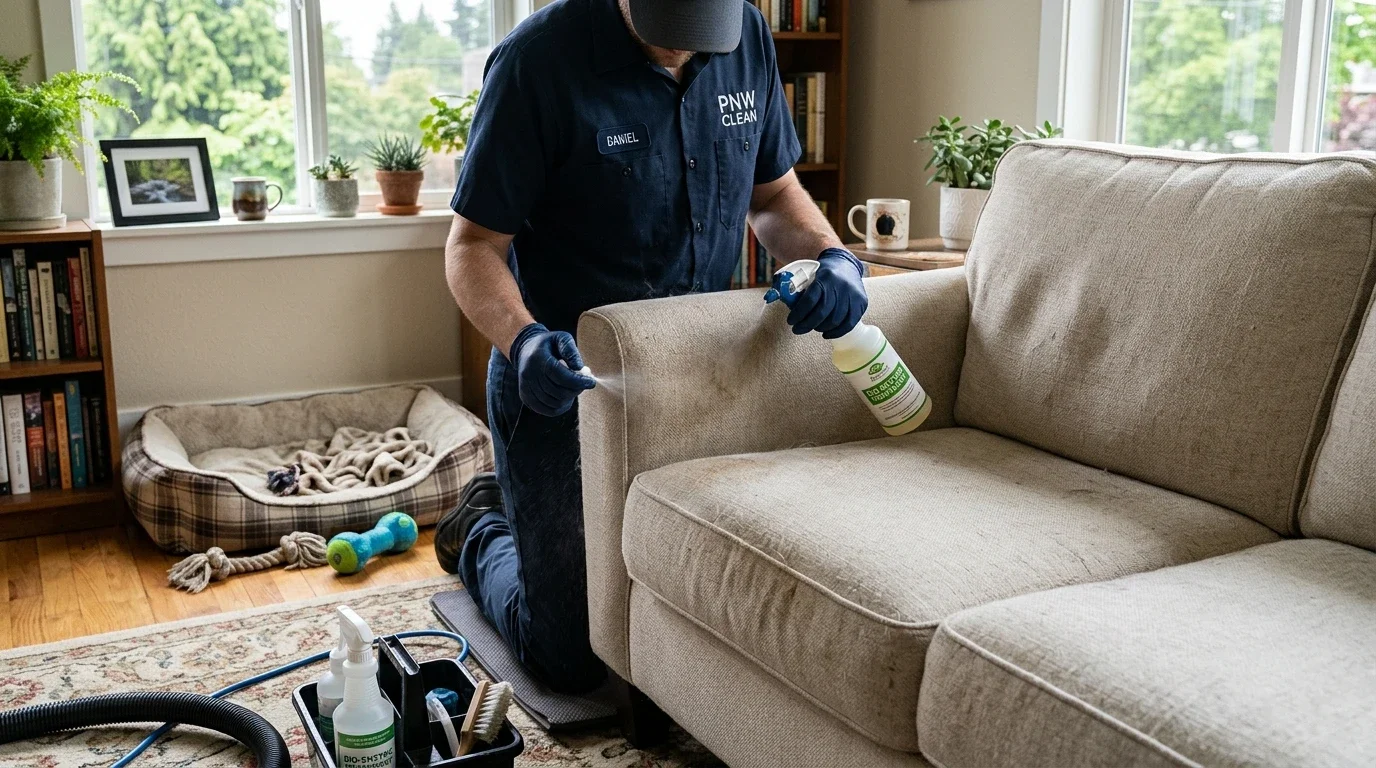
A professional extraction appointment in a household with pets begins differently than a standard appointment. Pre-inspection identifies areas with biological contamination beyond what's visible — the UV light step that reveals urine staining is standard practice for any service that works regularly in pet households. These areas receive enzyme pre-treatment matched to the contamination type, applied at a concentration appropriate for the foam depth, and dwelled for the time necessary for the reaction to complete. Only then does hot water extraction begin.
The extraction itself uses heated water delivered at pressure through the fabric and into the substrate, extracted simultaneously at high suction — clearing dissolved material from the foam, not just from the surface. A truck-mounted system generates substantially more extraction pressure than a portable unit, which is the primary equipment variable that determines how thoroughly the substrate is cleared and how quickly the furniture dries. Fabric dry to the touch within three to four hours indicates adequate substrate extraction. Fabric still damp after six hours suggests the substrate wasn't cleared — and a damp foam substrate in a pet household is a condition that creates new odor within a week.
The interval for professional cleaning in Seattle households with animals is shorter than the annual recommendation that works for pet-free homes. A household with one dog or one indoor cat that uses the furniture regularly should plan for professional treatment every eight to ten months. A household with multiple animals, or with animals that spend significant outdoor time during wet seasons, should plan for every six to eight months. The logic is maintenance rather than recovery: cleaning before the accumulation exceeds what extraction can fully address in a single appointment produces consistently better results than waiting until the furniture is visibly or noticeably compromised. For Seattle pet owners looking for reliable couch cleaning Seattle services that understand the specific demands of pet households in the Pacific Northwest climate, the scheduling question is really about whether to treat the furniture as a maintenance asset or a replacement item — and the math on maintenance, over a ten-year furniture lifespan, resolves clearly in one direction.
Stay up to date with our latest ideas!