15 Dog Playroom Ideas for a Fun and Cozy Space
Discover 15 dog playroom ideas that turn any spare room into a fun, cozy space your pup will love, from nap nooks to indoor agility fun.
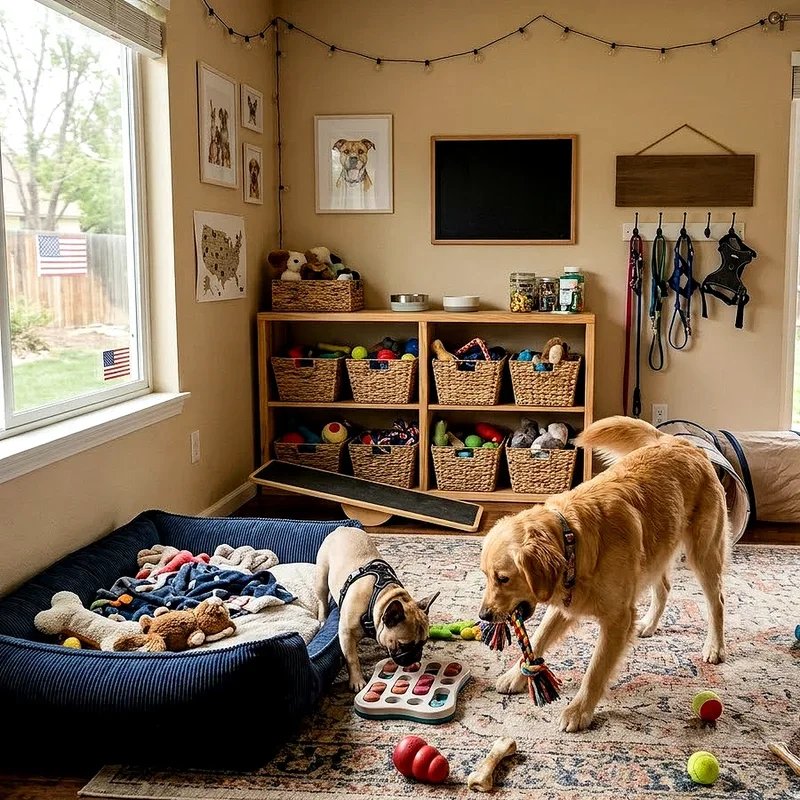
Your dog stares at you with that look. You know the one. Toys scattered across the living room, a chewed slipper by the couch, and enough energy to power a small city. Sound familiar? Giving your pup a dedicated playroom solves more problems than you might expect. It protects your furniture, gives your dog a place to burn off steam, and honestly, it makes your whole home feel calmer. You do not need a mansion or a designer budget either. A spare bedroom, a corner of the basement, or even a converted nook works beautifully. Ready to build a space your dog actually loves? These fifteen ideas cover comfort, play, storage, and safety, so let us dig in.
1. Choose the Right Room for Your Dog's Playroom
Where should all this fun actually live? Walk through your home like a real estate agent, except your client has four legs and zero patience. A spare bedroom, a finished basement, a wide hallway, or even half a den can work beautifully. Look for a space with decent natural light, a door you can close, and flooring you will not cry over. Avoid rooms packed with fragile shelving or tangled cords, because curious noses find trouble faster than we find our keys. Think about proximity too. If your pup panics when you disappear, a room near your kitchen or office beats a lonely corner of the basement. The best playroom feels like part of the household, not a storage closet with a squeaky toy tossed inside.
2. Lay Down Soft, Paw Friendly Flooring
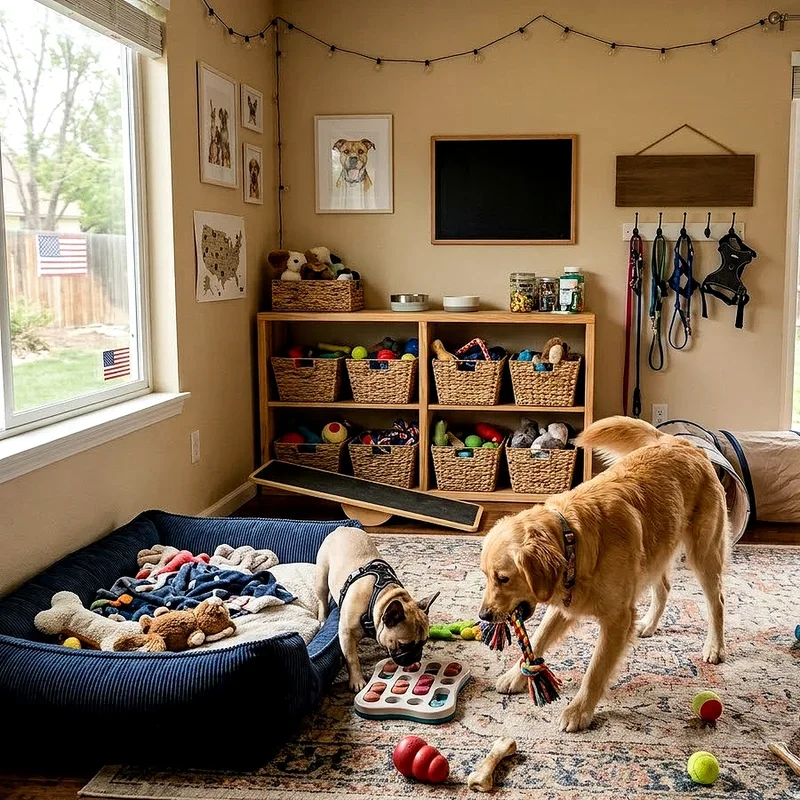
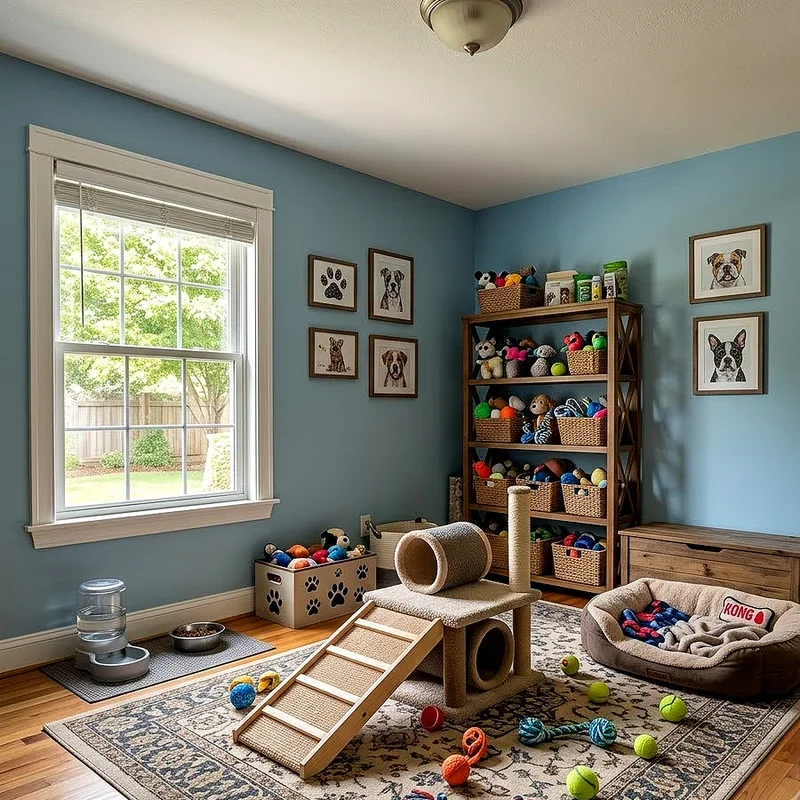
Hardwood may look gorgeous in photos, but it turns into an ice rink the second your dog sprints after a tennis ball. Give those paws something with grip. Cork, rubber gym tiles, and low pile carpet squares all cushion joints and absorb the thunder of zoomies. Interlocking foam mats work too, though heavy chewers treat them like giant crackers, so supervise at first. If you love your existing floor, layer washable runners along the main racing lanes. Think of it as putting sneakers on your house. Older dogs benefit most, since slippery surfaces make hips and elbows work overtime. Choose materials you can mop without panic, because accidents happen even to the most polished graduates of puppy school. Test a small sample first, since some dogs hate the feel of rubber underfoot.
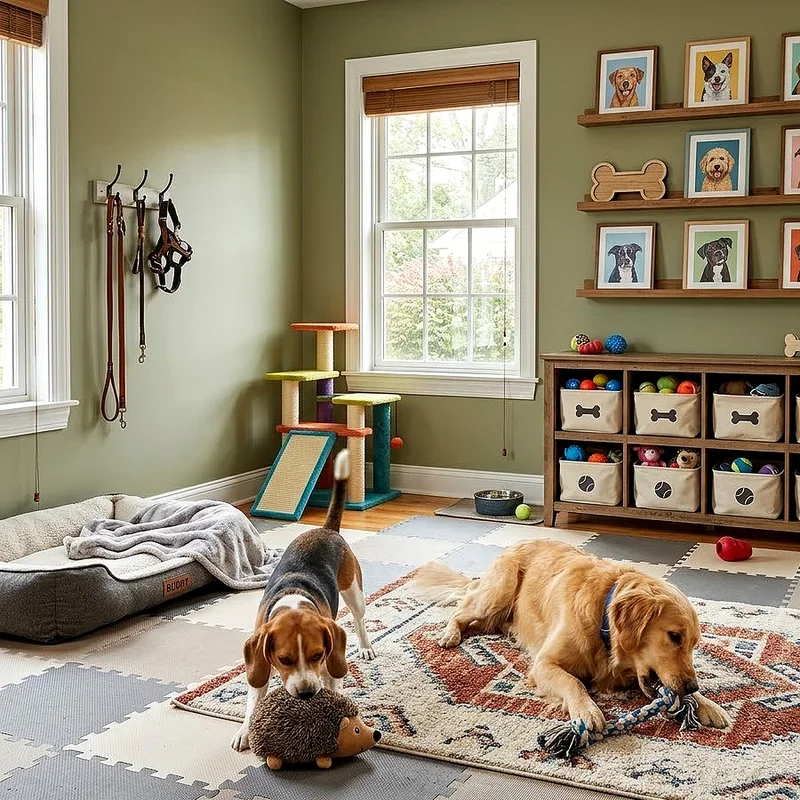
3. Build a Cozy Nap Nook in the Corner
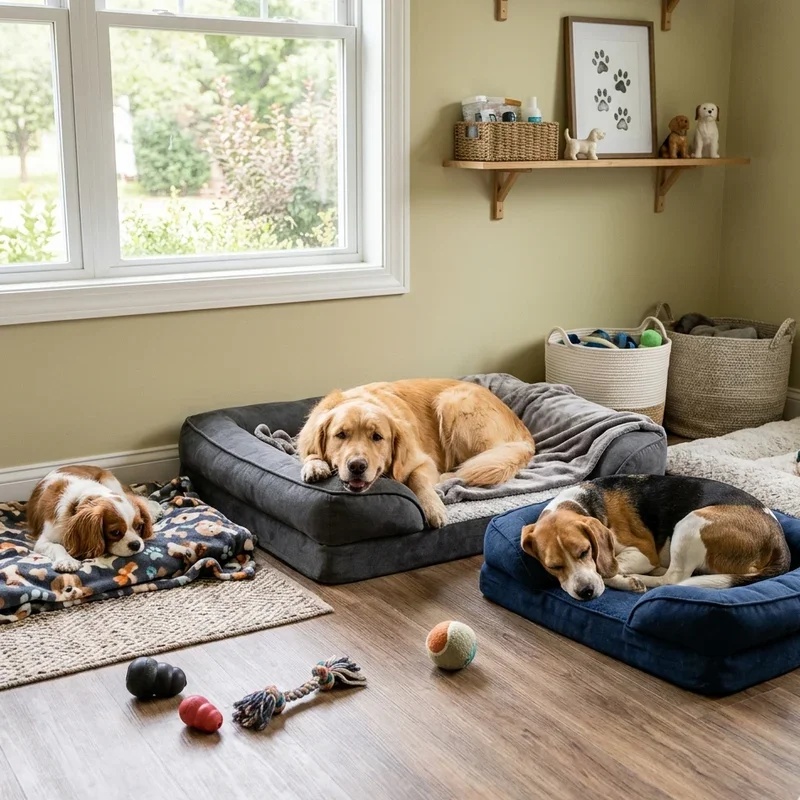
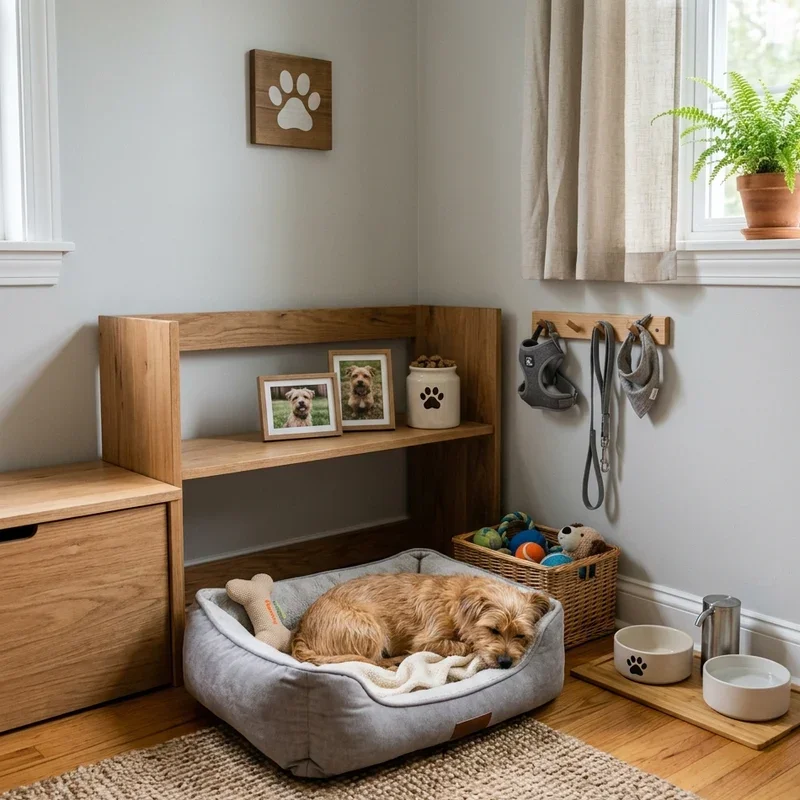
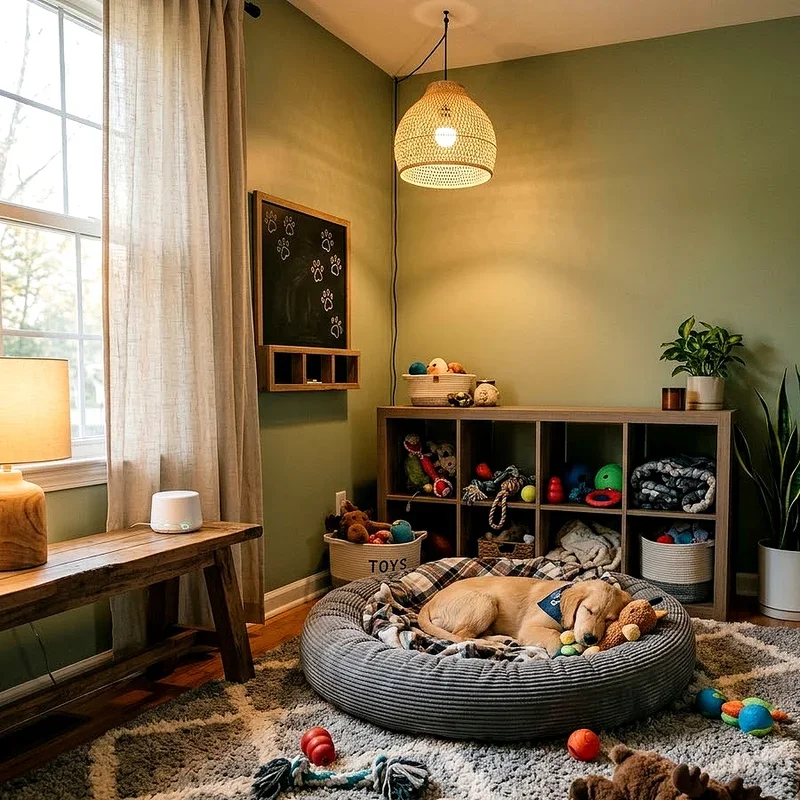
Every good playground needs a bench for catching your breath. Tuck a nap nook into the quietest corner, away from the door and the racing lane. A raised orthopedic bed, a couple of thick blankets, and a low canopy or open crate create instant den energy. Dogs descend from animals who slept in burrows, so walls on three sides feel safe rather than confining. Add something that smells like you, maybe an old sweatshirt you never wear anyway. Keep the nook off limits during rowdy games so it stays a calm zone instead of another wrestling mat. Have you noticed how your dog claims one specific spot? Build the nook there and you will win instantly. Soft lighting nearby helps too, signaling that this corner belongs to rest.
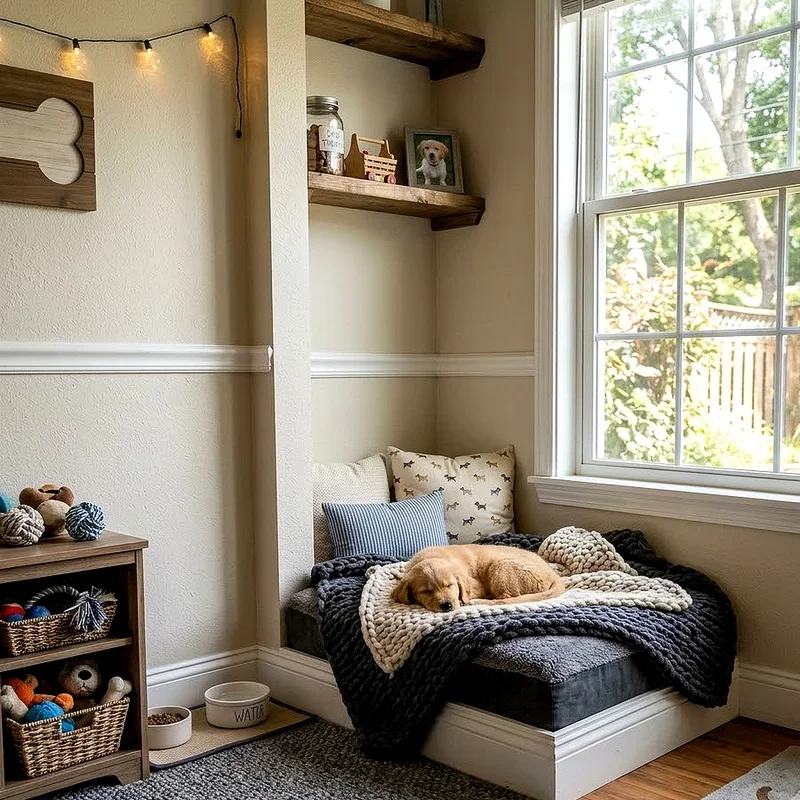
4. Add a Window Perch for Daily Dog Television
Dog television costs nothing and runs twenty four hours a day. Position a sturdy bench, ottoman, or wide window seat under a low window so your pup can watch squirrels commit crimes across the yard. Add a washable cushion and a couple of pillows for propping. For small breeds, a set of pet stairs prevents jarring jumps. Keep blind cords tied high and out of reach, since dangling strings tempt every mouth in the house. If your dog barks at every passing delivery driver, frosted film on the bottom half of the glass filters the chaos while still letting sunlight pour in. Sunbeams plus a view equal a happy dog and a surprisingly quiet afternoon for you. Place a small rug beneath the perch so landings stay soft.
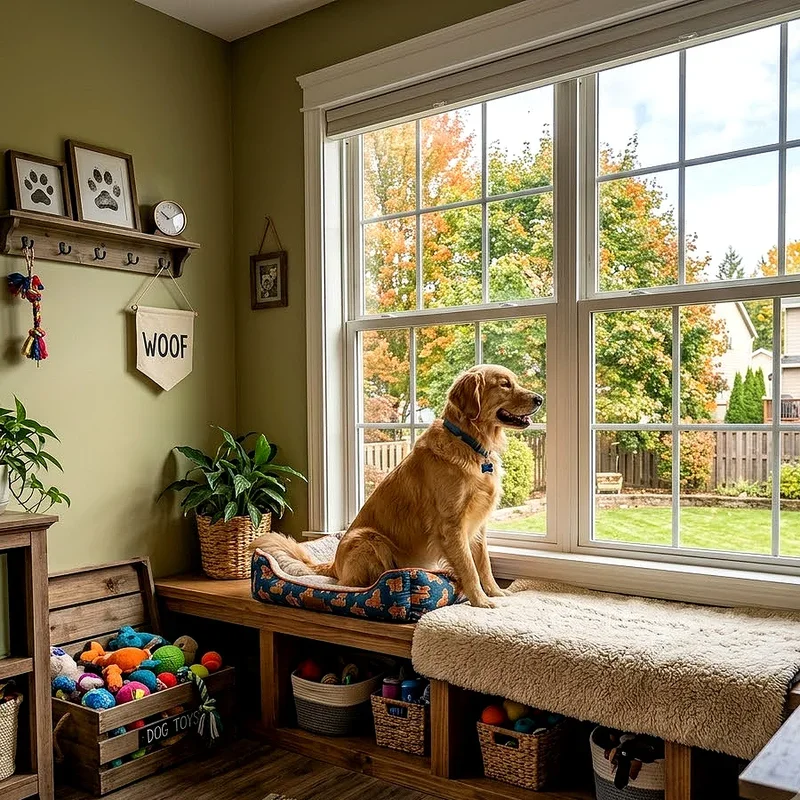
5. Create an Indoor Agility Course
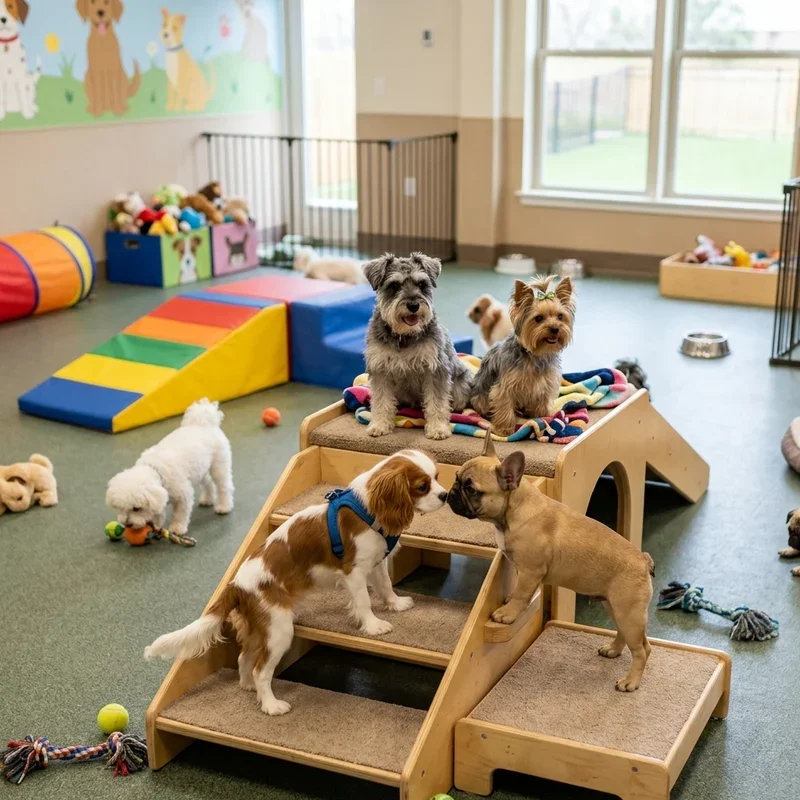
Why should the backyard get all the athletic glory? An indoor course turns a plain room into a canine obstacle park, and you do not need professional equipment. A broomstick balanced on two stacks of books becomes a jump. A laundry basket becomes a weave marker. Pool noodles taped to a base make soft poles that nobody gets hurt on. Keep jumps low, because indoor landings are harder than grass. Run your dog through the course two or three times, then reward with a treat and a belly rub. Five minutes of this drains more energy than a twenty minute walk, which explains why your dog naps so hard afterward. Rearrange the layout weekly to keep those clever brains guessing. Clear the floor first so nobody skids into a wall.
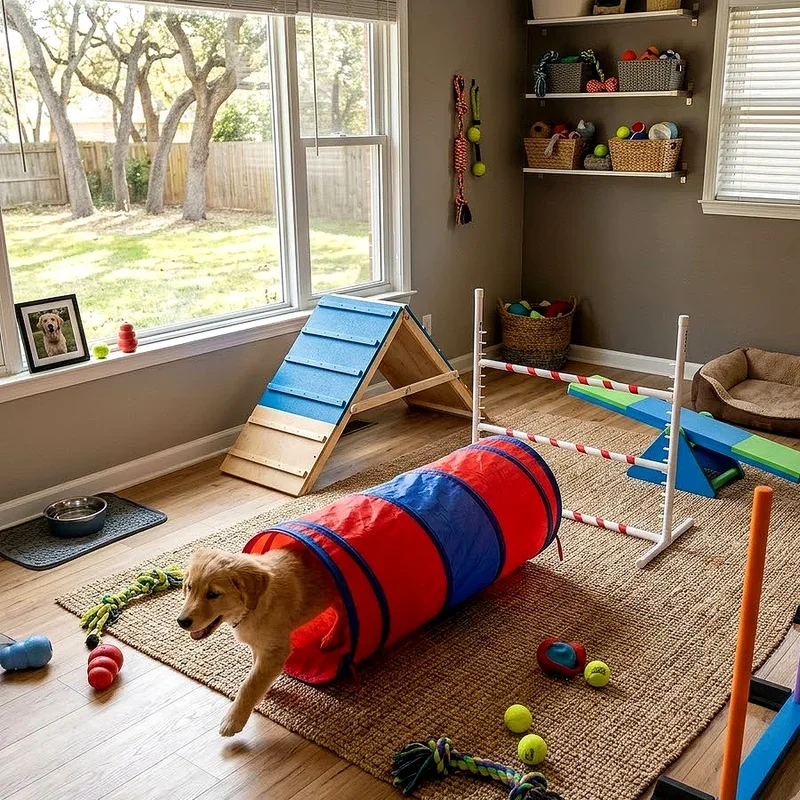
6. Install a Wall Mounted Toy Storage System
Toys multiply like socks in a dryer, except louder. Mount floating shelves, pegboards, or a row of hooks along one wall and suddenly the floor breathes again. Use open bins at dog height for the toys your pup may grab freely, and reserve higher shelves for supervised items like rope tugs and puzzle feeders. Label the bins if you enjoy that kind of order, or skip labels and embrace mild chaos. A pegboard shines here because you can rearrange hooks as the collection grows. Wall storage also protects your ankles during midnight trips to the kitchen. Have you ever stepped on a squeaky hedgehog at two in the morning? Once is enough to convert anyone into a vertical storage believer. Anchor everything into studs, since dogs lean on furniture without warning.
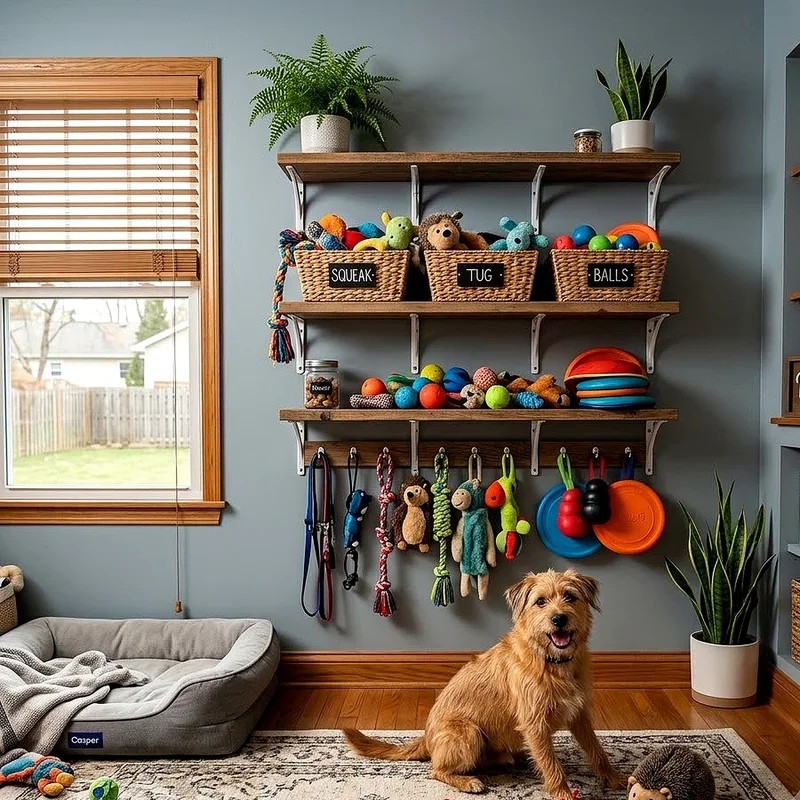
7. Set Up a Rotating Toy Library
Here is a trick borrowed from preschool teachers. Divide the toy collection into three or four groups, keep one group out, and store the rest in a closed bin. Swap them every week or two. Old toys feel brand new after a break, which saves you money and keeps boredom from turning into chewed baseboards. Novelty lights up a dog's brain the same way a new playlist wakes up a long drive. Wash the retired toys before they go back into rotation so everything returns fresh. Keep one comfort item permanently available, usually that ragged stuffed animal your dog carries around like a security blanket. Nobody should lose their favorite friend to a scheduling system, not even for a week. Track the rotation on a sticky note if your memory runs short.
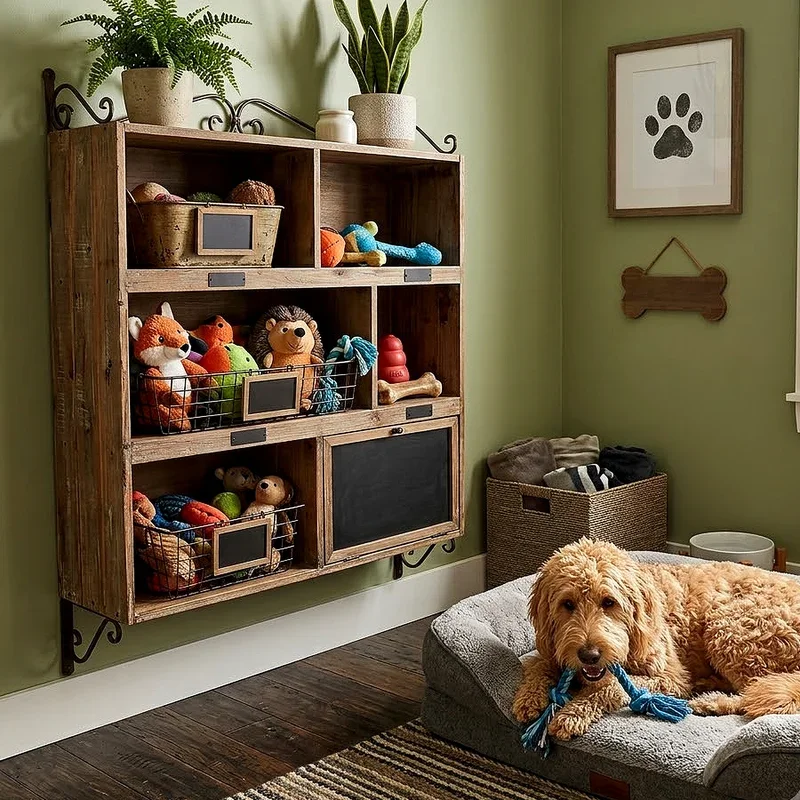
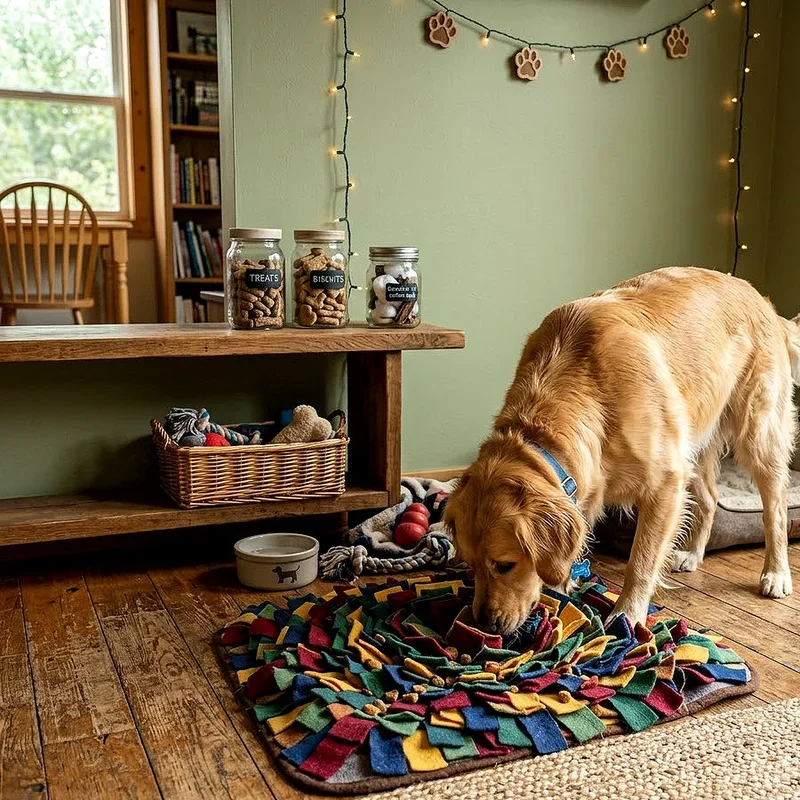
8. Design a Snuffle and Sniff Station
Dogs experience the world through their noses, so give that superpower a job. Dedicate one corner to sniffing games using a snuffle mat, a muffin tin with tennis balls hiding kibble underneath, or a shallow box filled with crumpled paper and scattered treats. Foraging burns mental energy fast, and a mentally tired dog behaves like a saint. Rotate the puzzles so your clever escape artist cannot memorize the solutions. Cardboard boxes work brilliantly here and cost nothing, though you will sweep up confetti afterward. Sprinkle a few treats into the mat before you leave for errands and watch separation stress soften. Ten minutes of sniffing equals roughly an hour of walking in terms of satisfaction, which feels like cheating in the best possible way.
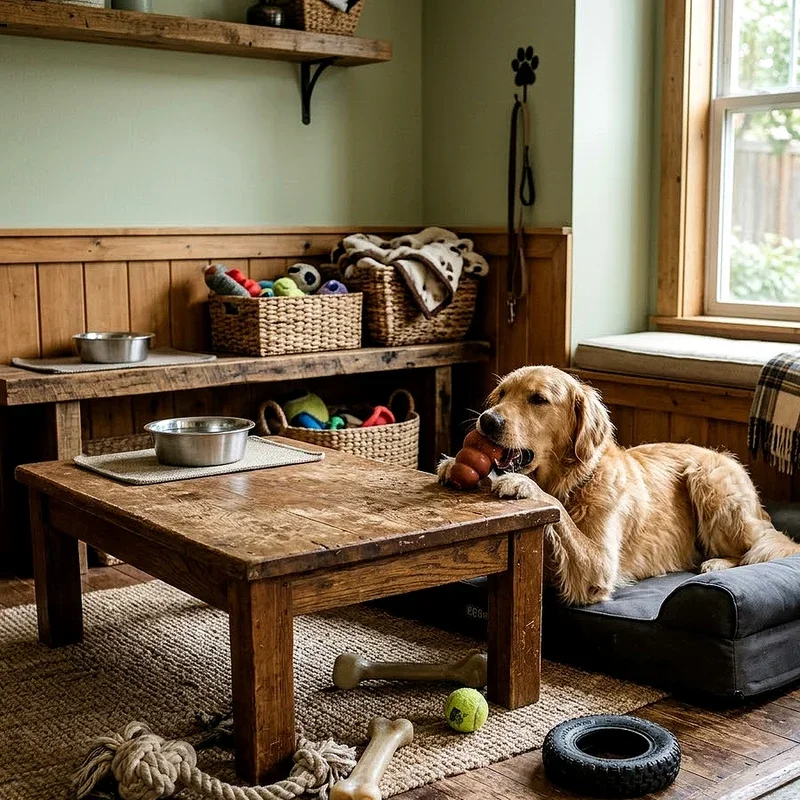
9. Add a Chew Friendly Furniture Zone
Some dogs chew the way we scroll our phones, constantly and without thinking. Instead of fighting biology, give it an address. Set up a low, sturdy bench or a durable ottoman surrounded by approved chew items like rubber toys, yak cheese chews, and thick rope knots. Skip delicate wicker, exposed cushion piping, and anything with buttons that pop off like candy. Look for furniture built from solid wood or metal with removable, washable covers. Secondhand pieces work great, since nobody weeps over scratches on a thrifted stool. When your pup grabs a table leg, redirect calmly toward the chew zone and praise the switch. Consistency teaches faster than scolding, and your baseboards will quietly thank you. Replace worn chews promptly, because ragged pieces break apart and cause trouble.
10. Paint the Walls with Calm, Dog Friendly Colors
Dogs see blues and yellows most clearly, while reds and greens blur into muddy tones. So that dramatic crimson accent wall? Your pup barely registers it. Soft blues, warm creams, sage, and buttery yellows create a calm backdrop that feels restful to both species. Choose zero VOC paint, since sensitive noses sit much closer to the wall than ours do. Semi gloss or satin finishes wipe clean when muddy paws leave abstract art behind. Want a playful touch? Paint a single wall in chalkboard paint and scribble your dog's name above the bed. Skip busy patterns that make a small room feel like a carnival. Calm walls plus bright toys put energy where it belongs. Test swatches in daylight before committing to a whole room.
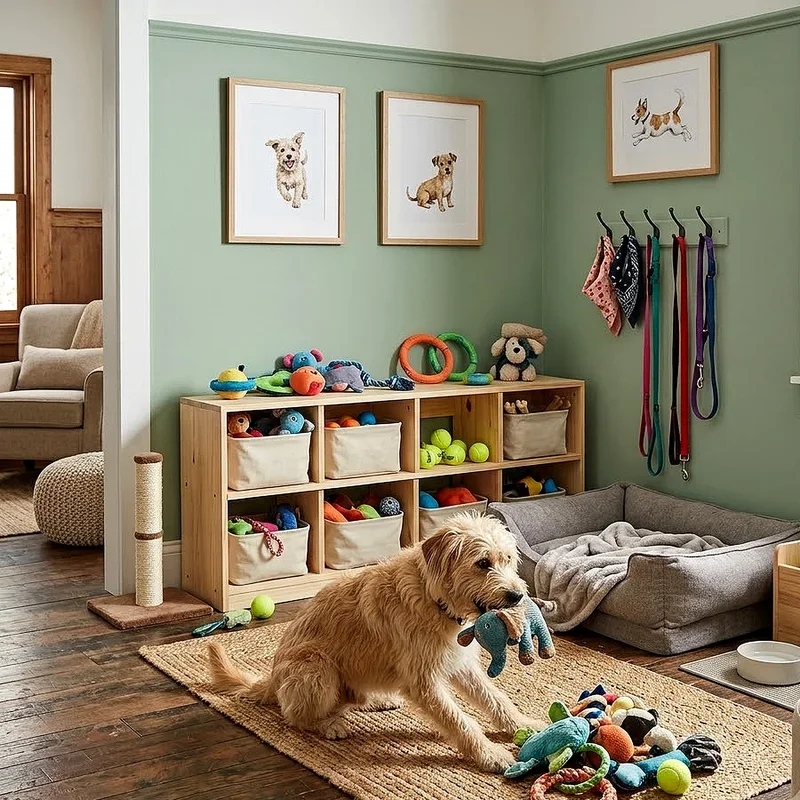
11. Layer Washable Rugs You Can Toss in the Laundry
Machine washable rugs changed the pet owner game entirely. Layer a few across the playroom to soften noise, cushion joints, and catch the inevitable mess. Look for low pile options with rubber backing, because that backing keeps rugs from sliding when your dog corners like a rally driver. Flat woven cotton styles fold right into the washer without wrestling. Choose busy patterns or mid tone colors that hide fur between washes, since solid cream announces every shed hair like a headline. Buy two sets and swap them while one runs through the laundry. Skip shag and anything with long fringe, which becomes a chew target within hours. Cheap rugs you can replace guilt free beat expensive ones you constantly protect. Vacuum them weekly so trapped fur never builds up.
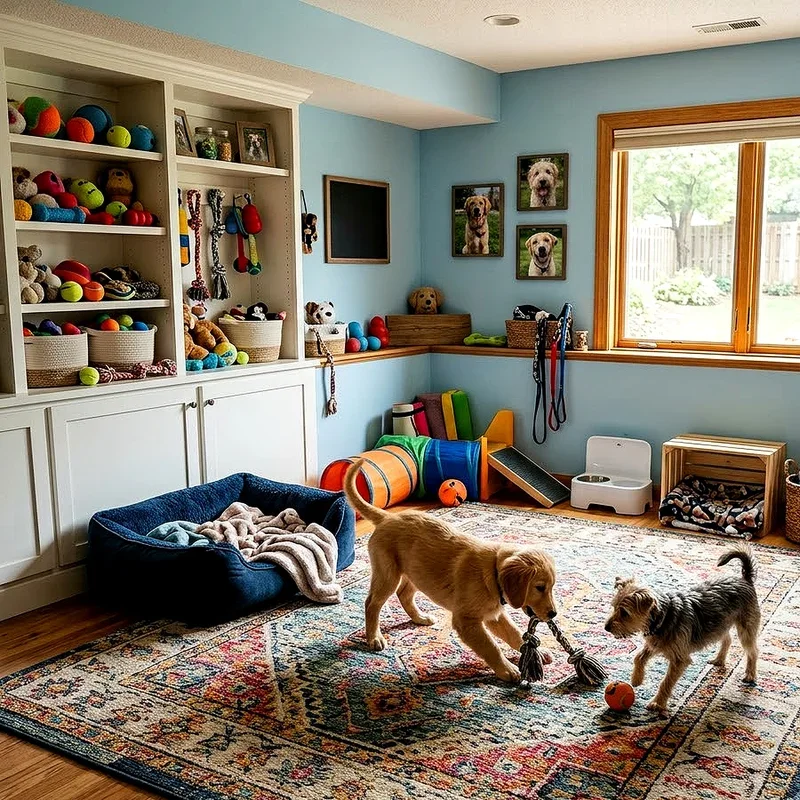
12. Include a Hydration and Snack Corner
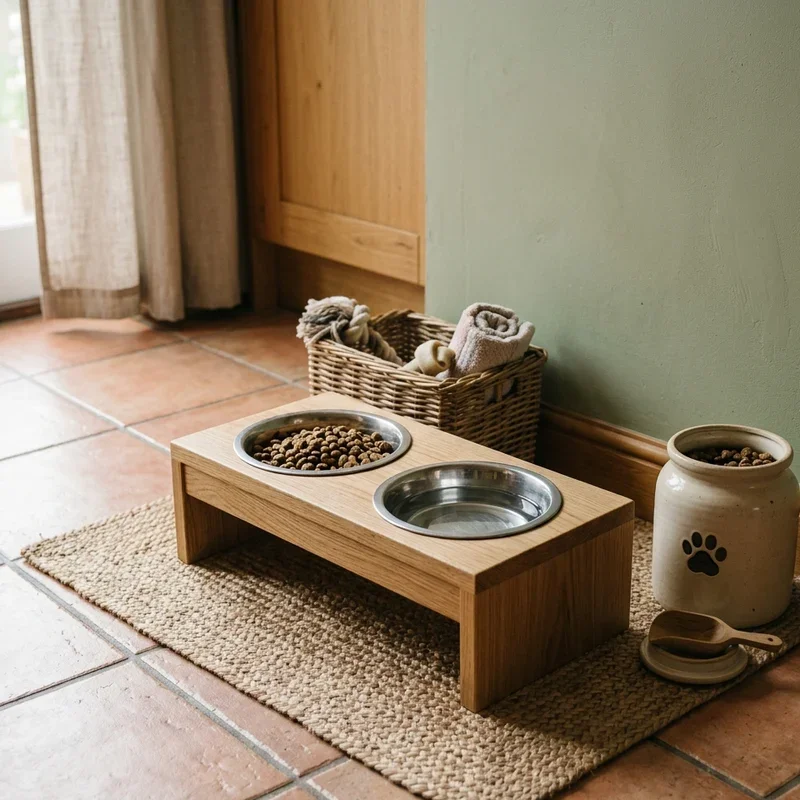
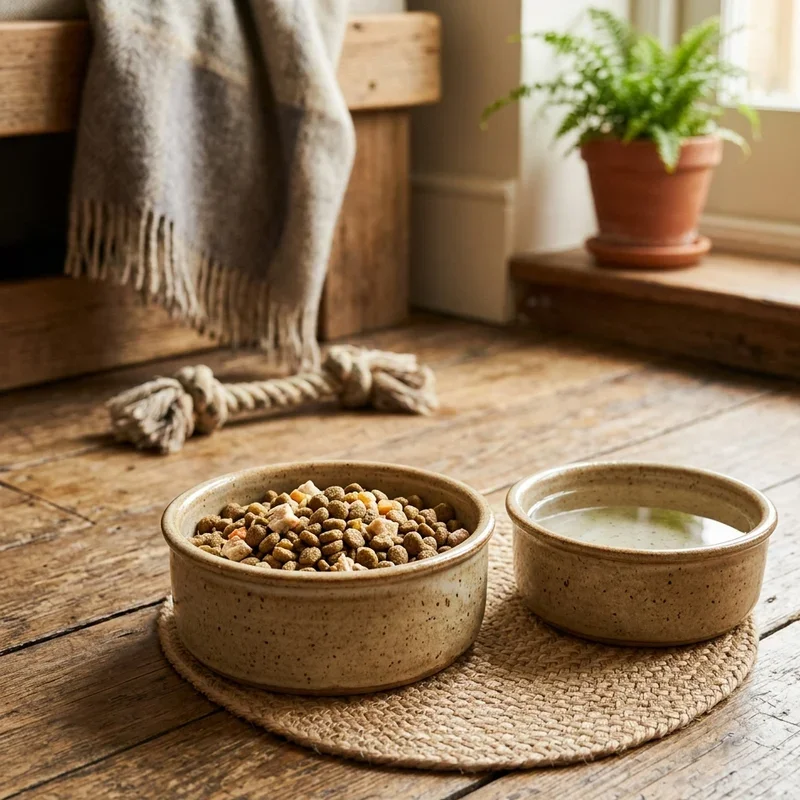
Play makes dogs thirsty, so water belongs in the room rather than down the hall. Set up a small station with a heavy ceramic bowl or a circulating fountain on a waterproof mat. Fountains tempt picky drinkers because moving water smells fresher to them. Add a sealed treat container nearby, ideally one your genius cannot open with a determined nose. Keep the station away from the racing lane, or you will mop the floor twice a day. A wall mounted shelf above holds leashes, wipes, and training treats without crowding the ground. Think of this corner as the concession stand at a stadium: small, practical, and absolutely essential once the game gets going. Wash bowls daily, since slime builds up faster than anyone expects.
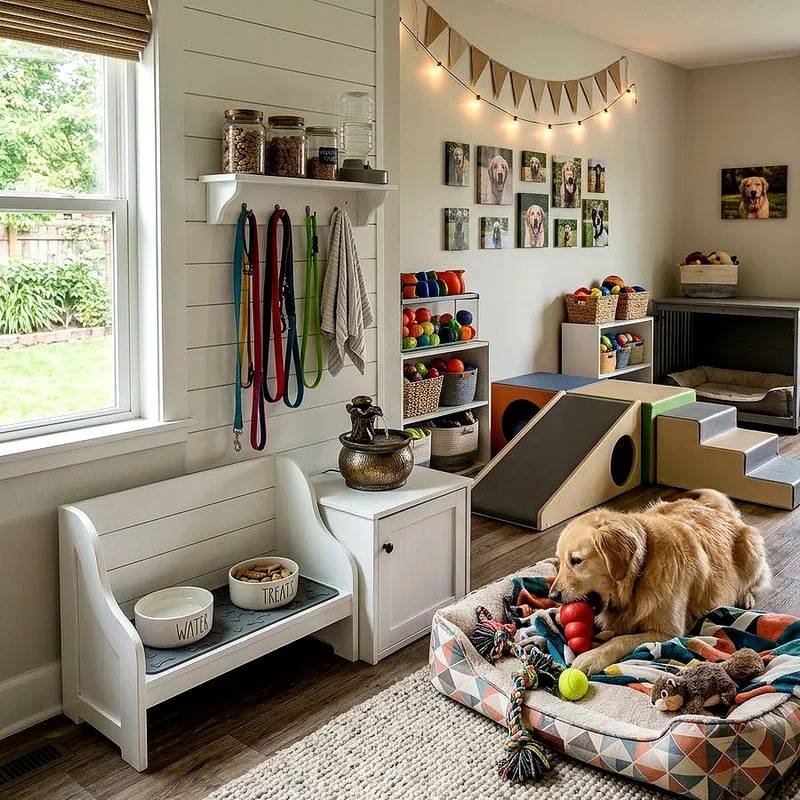
13. Build a Tunnel and Hideaway Playground
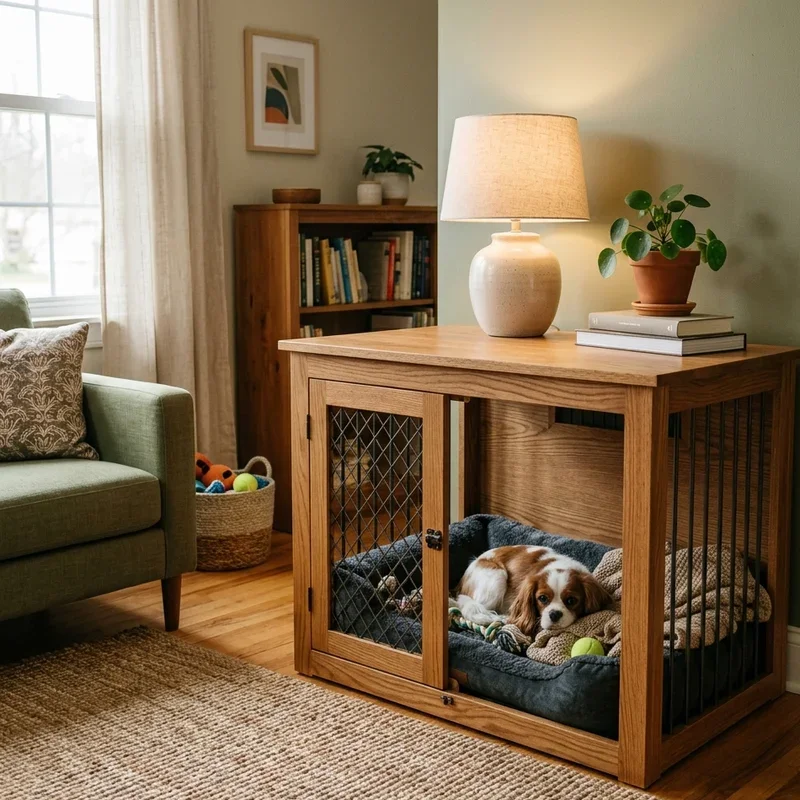
Remember building blanket forts as a kid? Dogs feel that same pull toward cozy hidden spaces. A collapsible fabric tunnel, the kind sold for cats or agility training, delivers hours of goofy entertainment. Pair it with a covered bed, a repurposed side table draped in fabric, or a wooden crate turned den. Small dogs adore tunnels, while big goofballs will happily army crawl through anything wide enough. Keep the entrances clear and never force your dog inside, because a hideaway only works when entering feels like a choice. Toss a treat through the opening to build confidence during the first few tries. Nervous pups especially benefit, since a retreat lowers stress during thunderstorms and noisy visits from relatives. Fold the tunnel away when playtime ends.
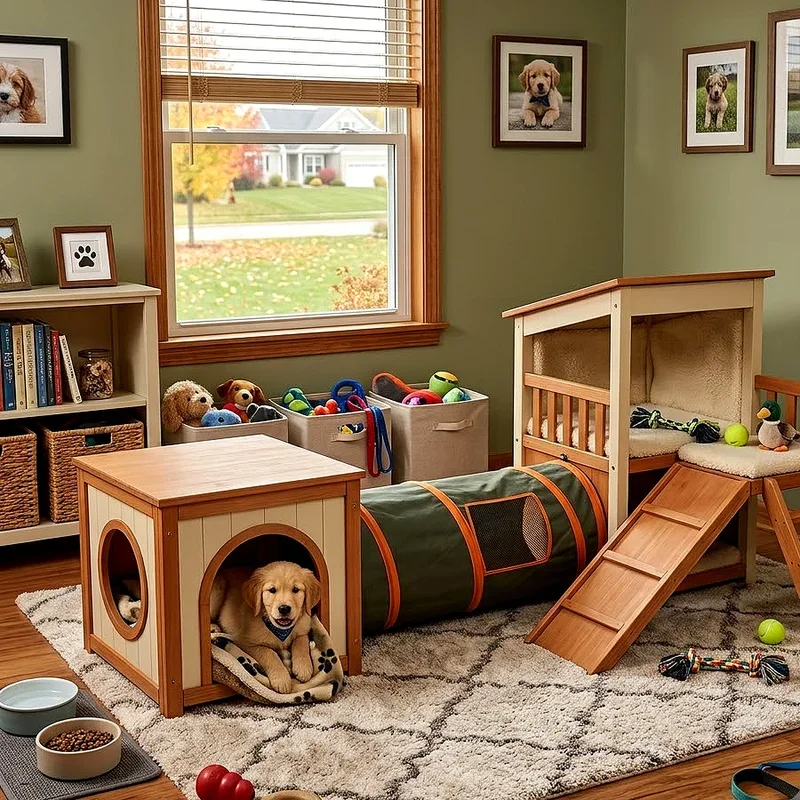
14. Add Soft Lighting and Soothing Sounds
Harsh overhead lighting makes any room feel like a waiting area at the dentist. Swap in warm bulbs, a dimmable lamp, or a string of battery powered lights placed well above curious teeth. Natural light matters most, so keep curtains open during the day and let sunbeams do their thing. For sound, a small speaker playing soft classical music or reggae genuinely lowers stress in shelter studies. White noise machines mask the doorbell, garbage trucks, and other daily villains. Set a timer so the music runs while you work and shuts off at bedtime. Combine soft light with steady sound and the playroom shifts from arena to sanctuary. Keep cords hidden behind furniture or run them through a cable channel.
15. Keep a Cleaning Caddy Within Arm's Reach
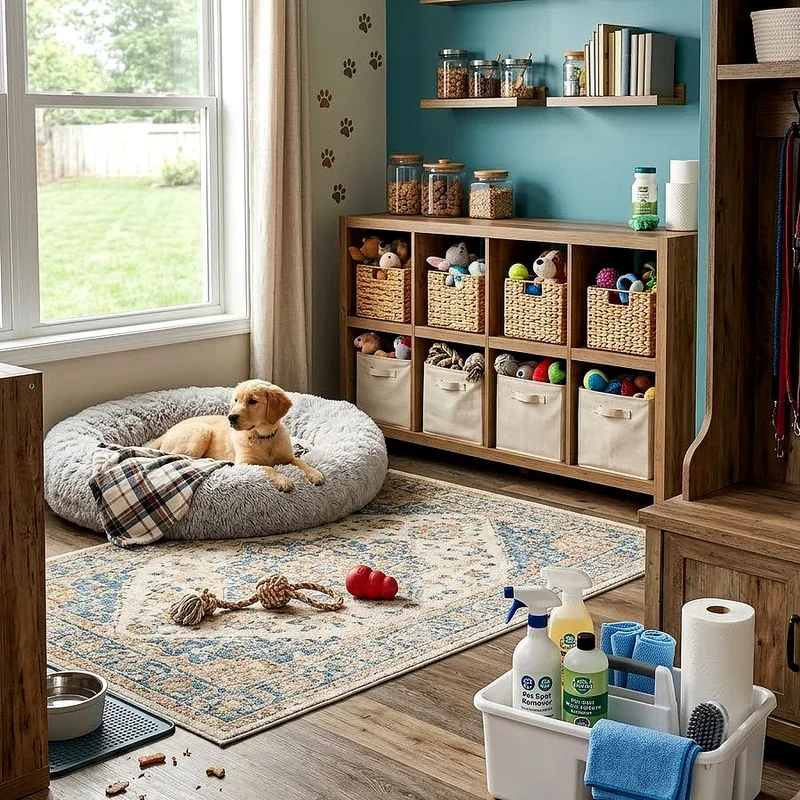
Nobody dreams about cleaning supplies, yet this single addition saves the whole setup. Keep a small caddy stocked with enzymatic cleaner, paper towels, a lint roller, waste bags, and a handheld vacuum right inside the room. Enzyme cleaners break down odors completely instead of masking them, which stops your dog from returning to the same spot. Store the caddy on a high shelf or inside a closed cabinet, because dogs investigate bottles with alarming enthusiasm. Quick cleanups take thirty seconds when supplies sit within reach, while walking to the garage guarantees you will postpone it. A tidy playroom stays a playroom. A neglected one slowly becomes the room you close the door on.
Conclusion
Building a dog playroom does not require a renovation budget or a design degree. Start with one or two ideas that fit your space, then add more as you notice what your dog actually enjoys. Some pups live for the agility course, while others spend every afternoon on the window perch watching the world. Pay attention, adjust, and let the room grow with your companion. The reward shows up quickly: a calmer house, happier paws, and a dog who finally has somewhere to be gloriously, joyfully himself.
Read next: 15 Dog Pregnancy Announcement Ideas Everyone Will Love
Frequently Asked Questions
Q1: How much space does a dog playroom actually need?
A: Even a ten by ten room works well, though hallway corners and basement nooks succeed too.
Q2: Can I set up a playroom in a small apartment?
A: Yes, a dedicated corner with a bed, rugs, and rotating toys delivers similar benefits.
Q3: What flooring works best for an active dog?
A: Cork, rubber tiles, and low pile carpet give grip, cushion joints, and clean easily.
Q4: Should I leave my dog alone in the playroom?
A: Yes, once you remove cords, small parts, and anything your dog might swallow accidentally.
Q5: How often should I rotate the toys?
A: Every week or two keeps interest high and makes familiar toys feel brand new.
Stay up to date with our latest ideas!