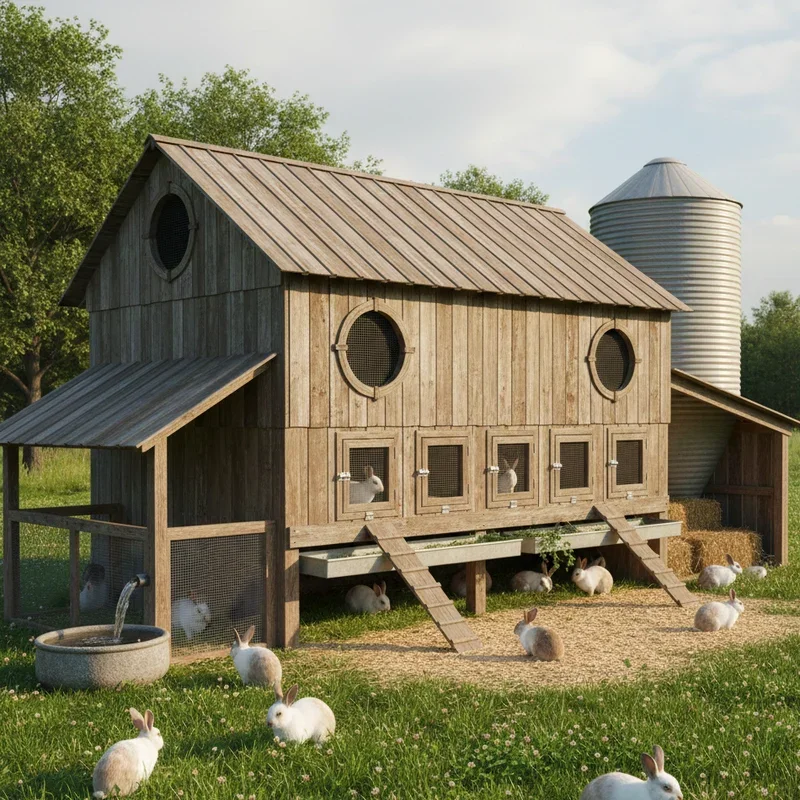
15 Chicken Coop Inside Barn Ideas for Smart Farm Layouts
Discover 15 clever chicken coop inside barn ideas for smart farm layouts. Maximize space and protect your flock efficiently!
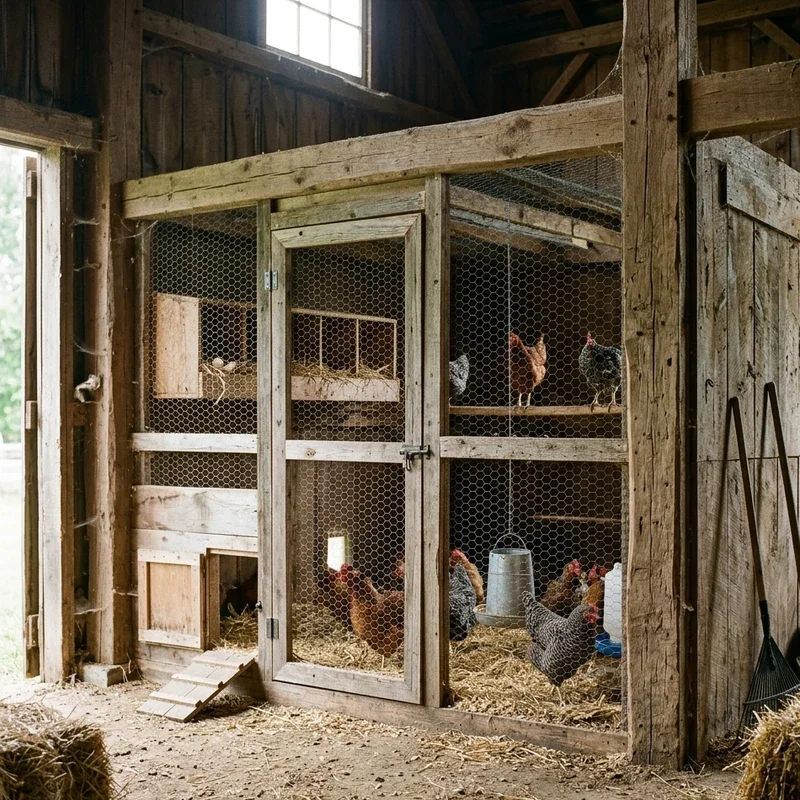
Housing chickens inside existing barns transforms underutilized structures into efficient poultry operations, eliminating the need for separate outbuildings while providing superior protection from predators and weather extremes throughout integrated farming. Barn-based chicken coops leverage existing infrastructure including roofing, walls, and often electricity, reducing construction costs compared to standalone coop building throughout budget-friendly solutions. The shared space arrangement allows farmers to care for multiple animals during single barn visits, streamlining daily chores and maximizing efficiency throughout simplified routines. Integrating chickens within barn ecosystems creates opportunities for symbiotic relationships where birds control pests and contribute to composting operations throughout beneficial partnerships. These inside-barn setups range from simple corner partitions to elaborate multi-level systems depending on flock size and barn configuration throughout scalable designs. Ready to optimize your barn space for poultry success?
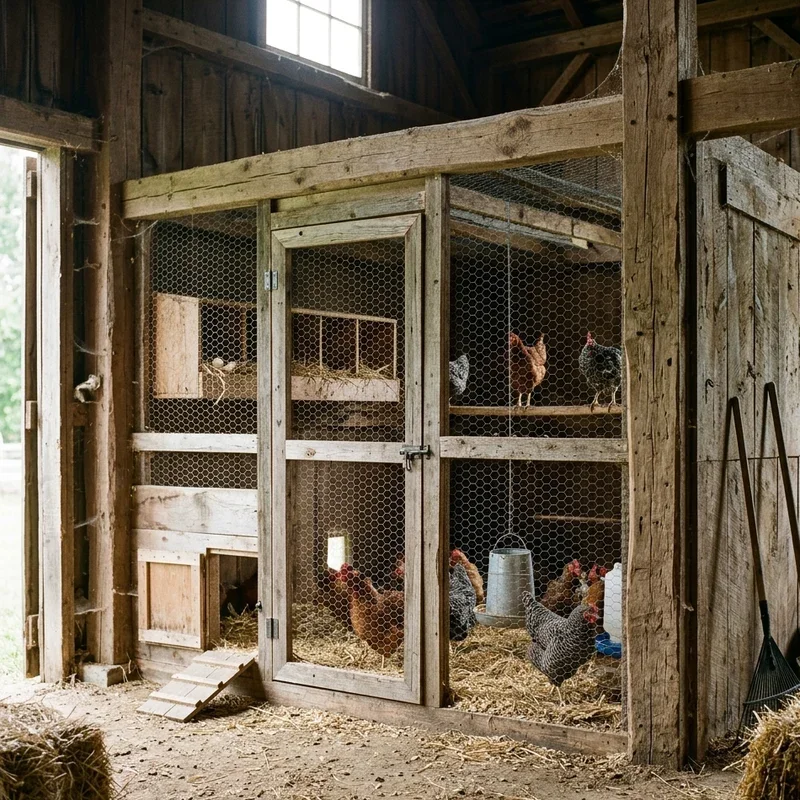
1. Corner Partition Setup
Designate efficiently through corner partition setup creation that angled walls provide while carving out dedicated chicken space from existing barn corners throughout simple division. Build partition walls connecting to existing corner structure that anchored construction enables through stable division throughout secure barriers. Use wire mesh allowing visibility while preventing escape that see-through material enables through monitored containment throughout observed chickens. Include access gates for human entry and chicken management that functional openings provide through easy access throughout convenient entry. Size corner areas appropriately for intended flock size that proper dimensions enable through adequate space throughout comfortable housing. Appreciate corner setups' minimal material requirements throughout budget-friendly construction.
2. Loft Space Conversion
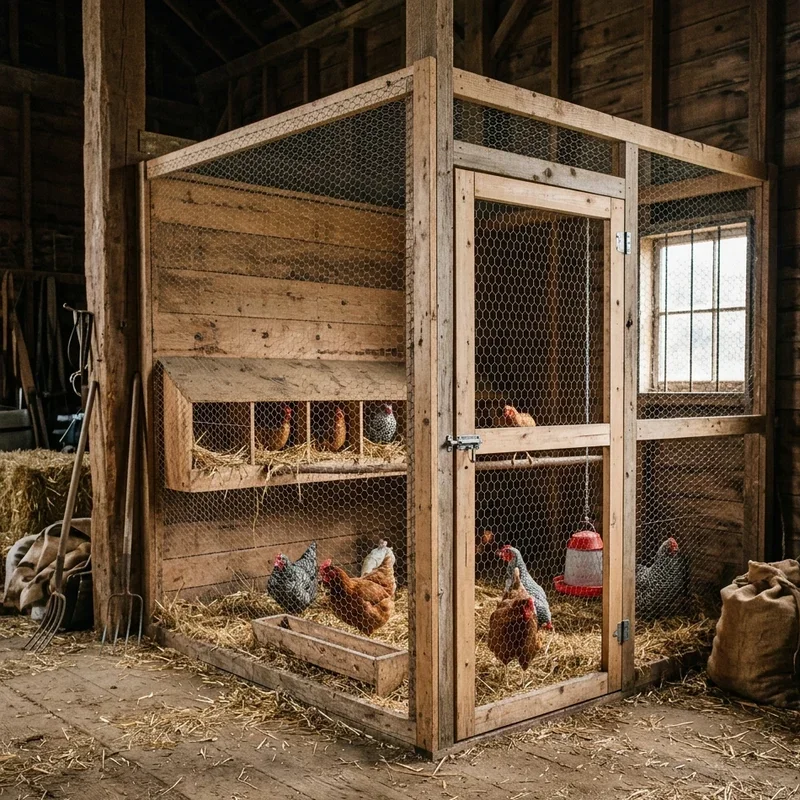
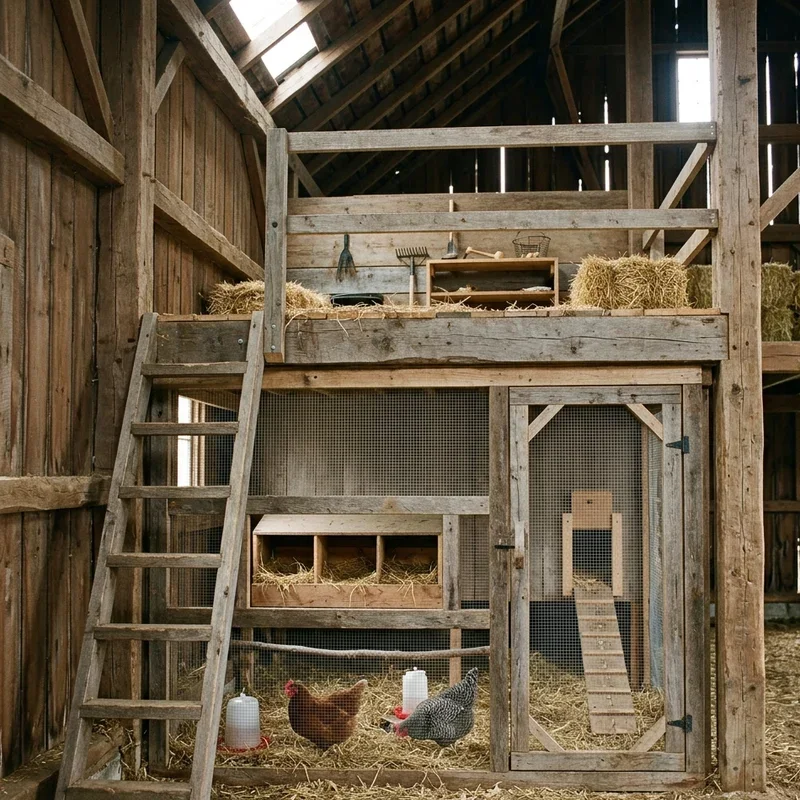
Elevate creatively through loft space conversion execution that overhead area provides while utilizing often-wasted barn upper sections for chicken housing throughout vertical optimization. Convert existing hay lofts or build new elevated platforms that raised structures enable through captured vertical space throughout elevated housing. Ensure structural integrity supporting chicken weight and activity that load consideration requires through safe elevation throughout secure platforms. Install ramps or ladders providing chicken access to loft areas that climbing access enables through reached elevation throughout accessible lofts. Consider heat rising benefits keeping loft chickens warmer that thermal physics provides through natural warmth throughout elevated comfort. Appreciate lofts' floor space preservation throughout maintained barn function.
3. Stall Transformation Design
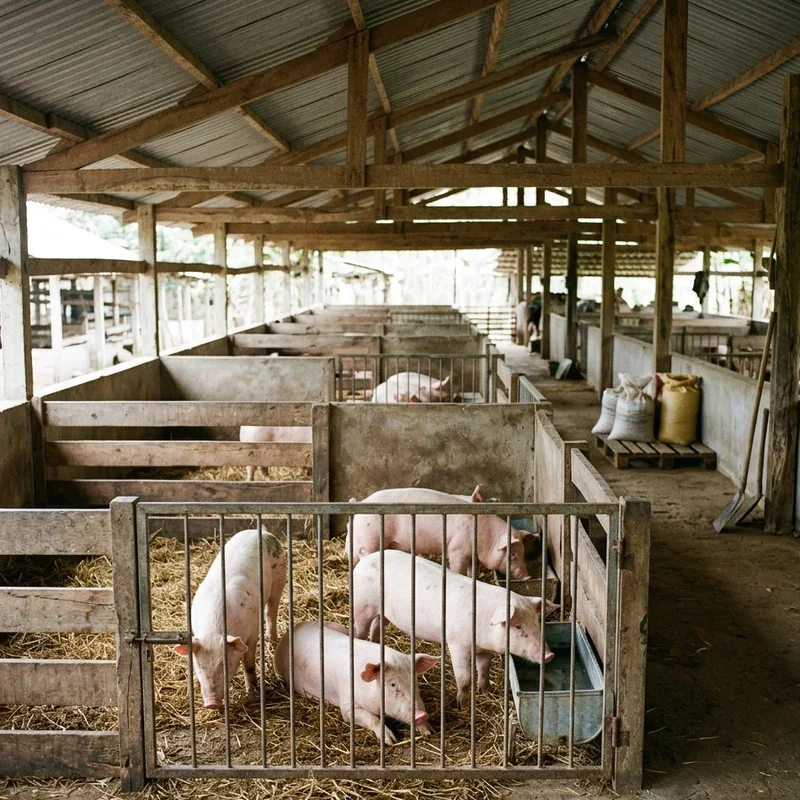
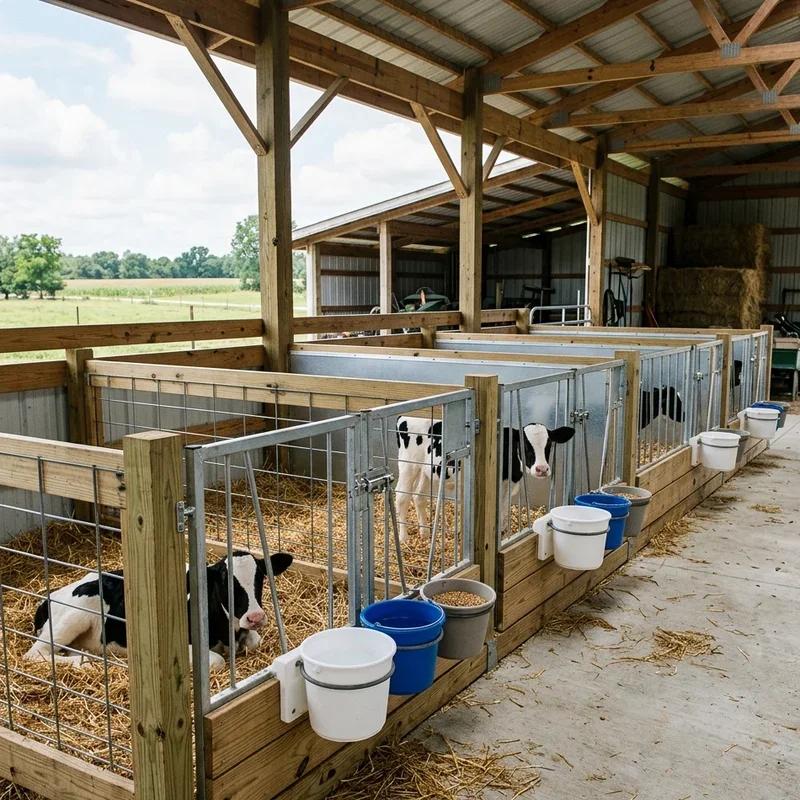
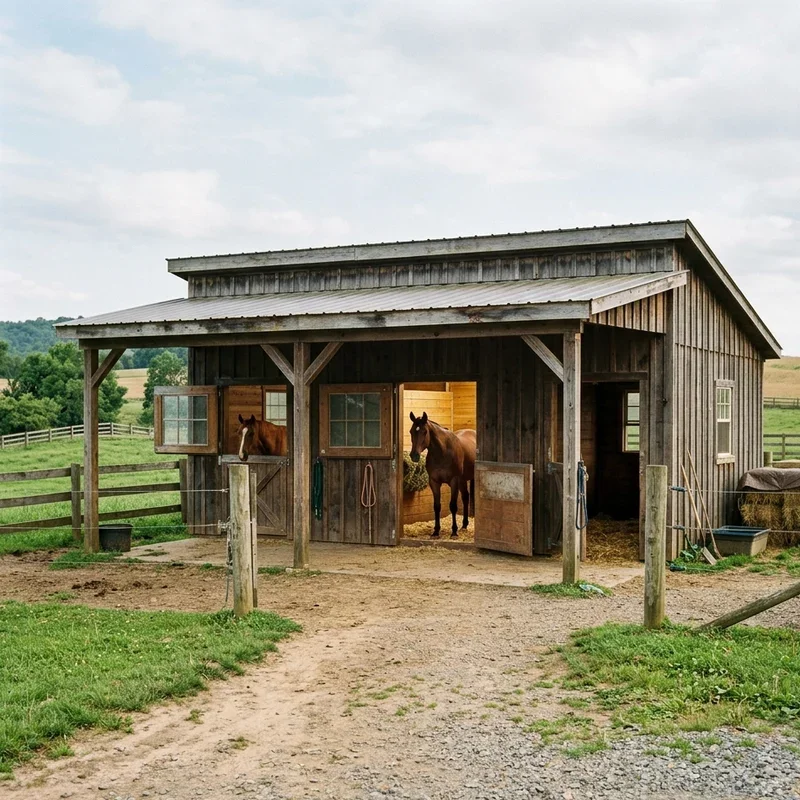
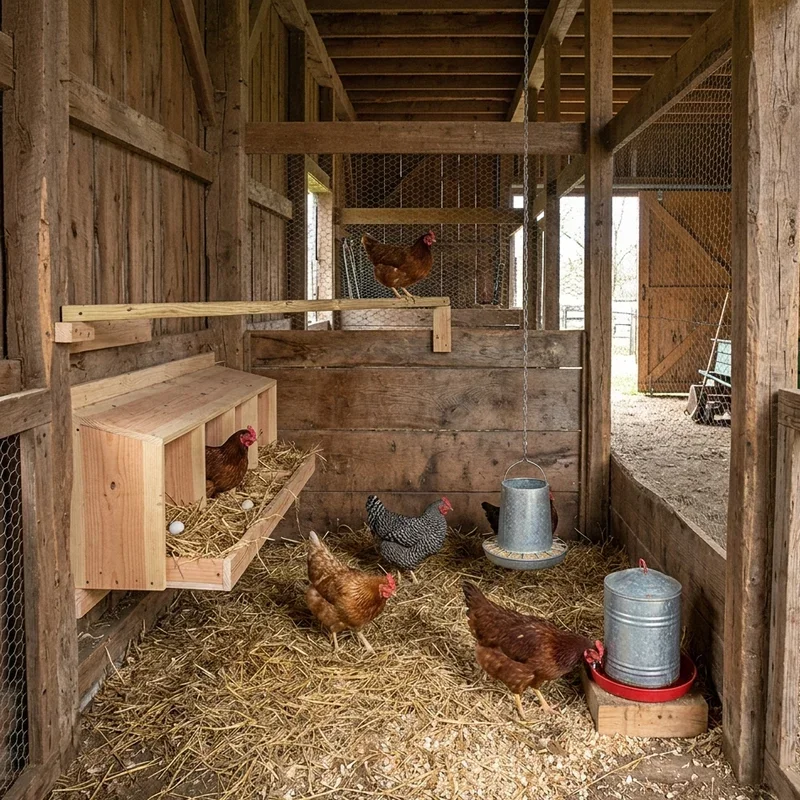
Repurpose practically through stall transformation design execution that existing structure provides while converting unused horse or livestock stalls into chicken quarters throughout efficient repurposing. Modify existing stalls adding chicken-specific features that adapted structures enable through transformed function throughout converted spaces. Install wire mesh over open sections preventing escape that secure enclosure provides through contained chickens throughout prevented flight. Maintain stall door function for easy access and management that preserved hardware enables through functional entry throughout convenient doors. Add roosting bars and nesting boxes within stall dimensions that complete furnishing provides through equipped housing throughout comprehensive setup. Appreciate stalls' solid construction requiring minimal modification throughout easy conversion.
4. Mobile Interior Coop
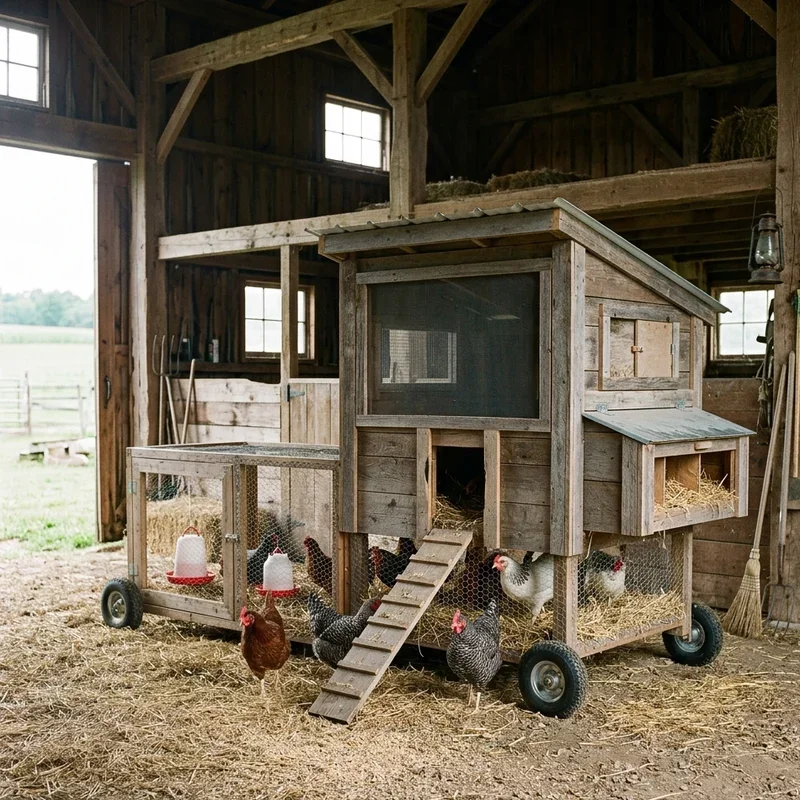
Mobilize flexibly through mobile interior coop creation that wheeled structure provides while enabling repositioning within barn as needs change throughout adaptable placement. Build coop sections on wheels or casters that mobile hardware enables through moved housing throughout relocated coops. Position mobile coops in optimal barn locations that flexible placement provides through adjusted positioning throughout optimized location. Move coops for cleaning, barn maintenance, or seasonal adjustment that relocation capability enables through adaptive management throughout flexible operation. Lock wheels when stationary ensuring stable housing that secured positioning provides through stable coops throughout prevented rolling. Appreciate mobile coops' adaptability to changing farm needs throughout responsive design.
5. Multi-Level System
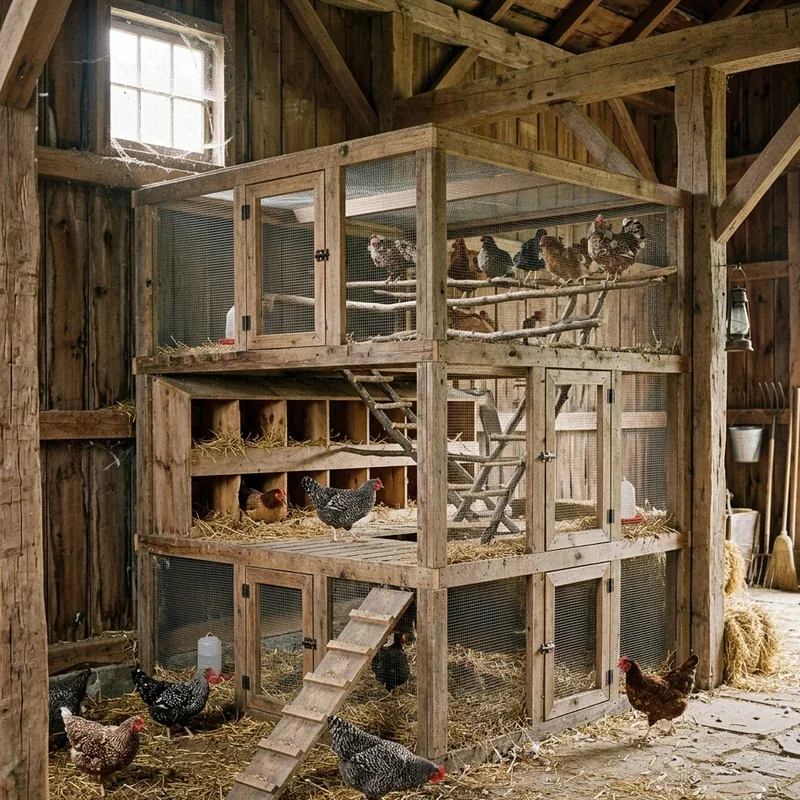
Stack efficiently through multi-level system creation that vertical construction provides while maximizing chicken capacity within limited barn floor space throughout expanded housing. Build multiple tiers of chicken housing that stacked construction enables through increased capacity throughout multiplied space. Connect levels with ramps allowing chicken movement between floors that vertical access provides through navigable climbing throughout accessible levels. Ensure adequate headroom on each level that proper spacing requires through comfortable standing throughout sufficient height. Design for easy cleaning access on all levels that maintenance consideration provides through cleanable tiers throughout hygienic design. Appreciate multi-level systems' dramatic space multiplication throughout efficient capacity.
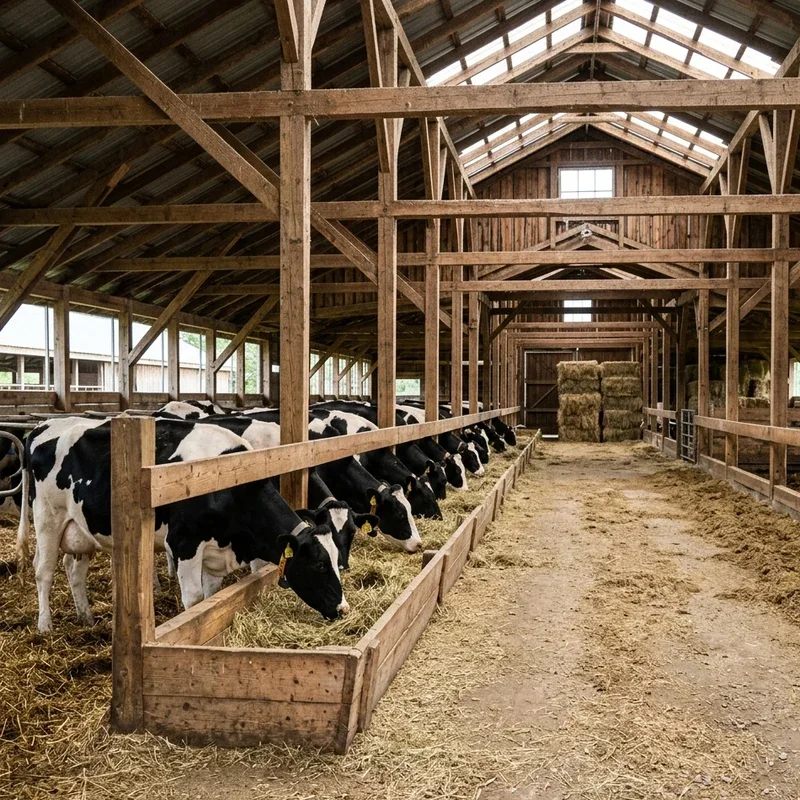
6. Shared Space Integration
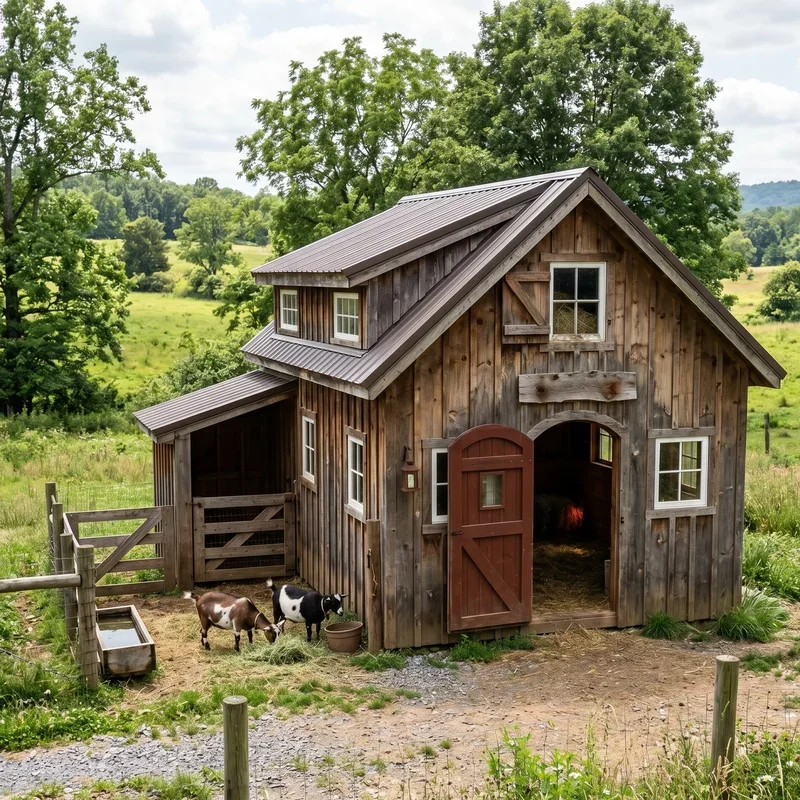
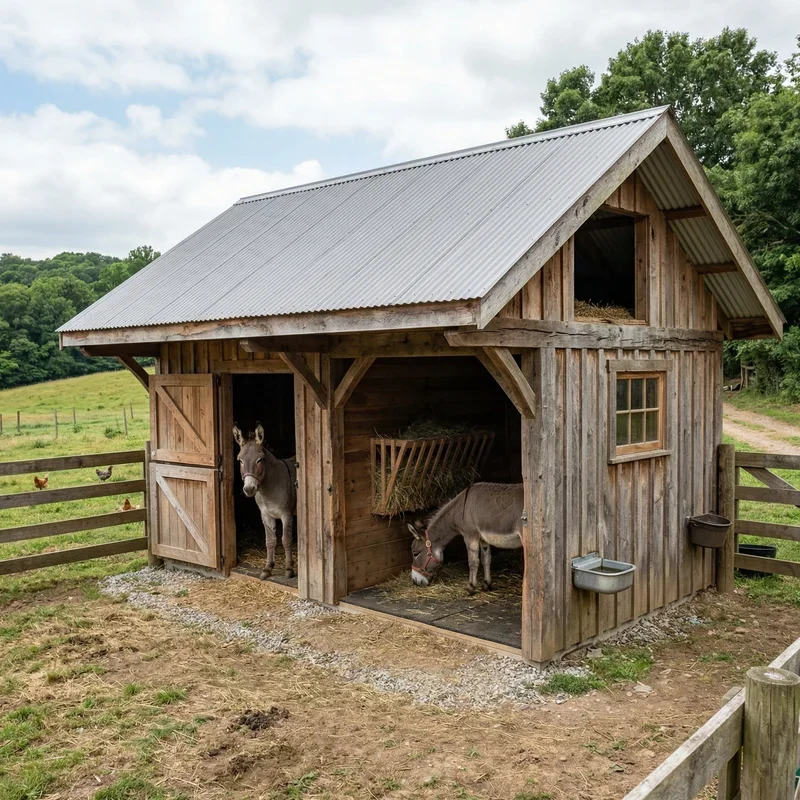
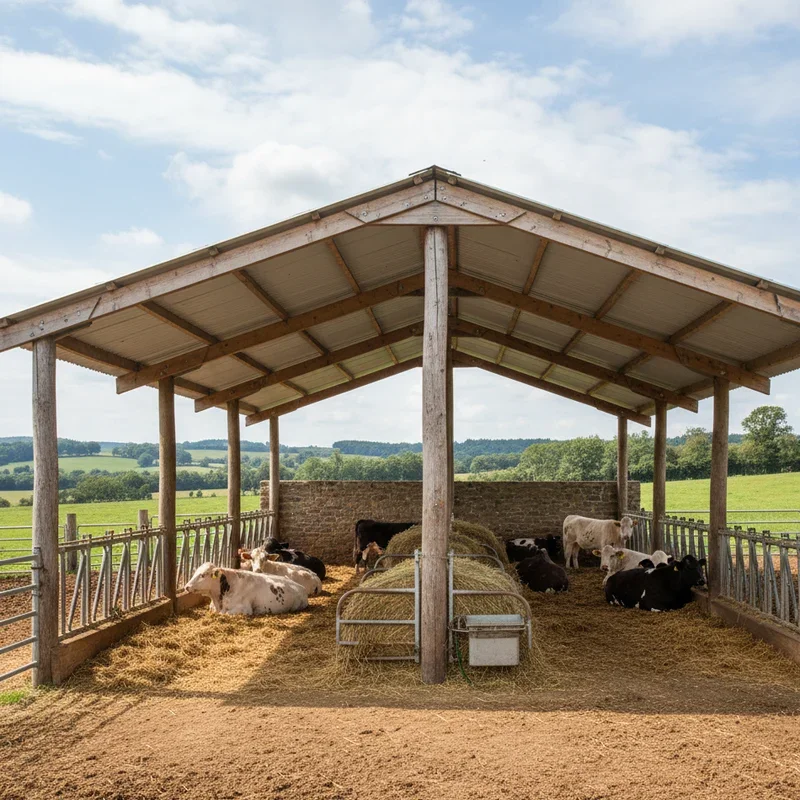
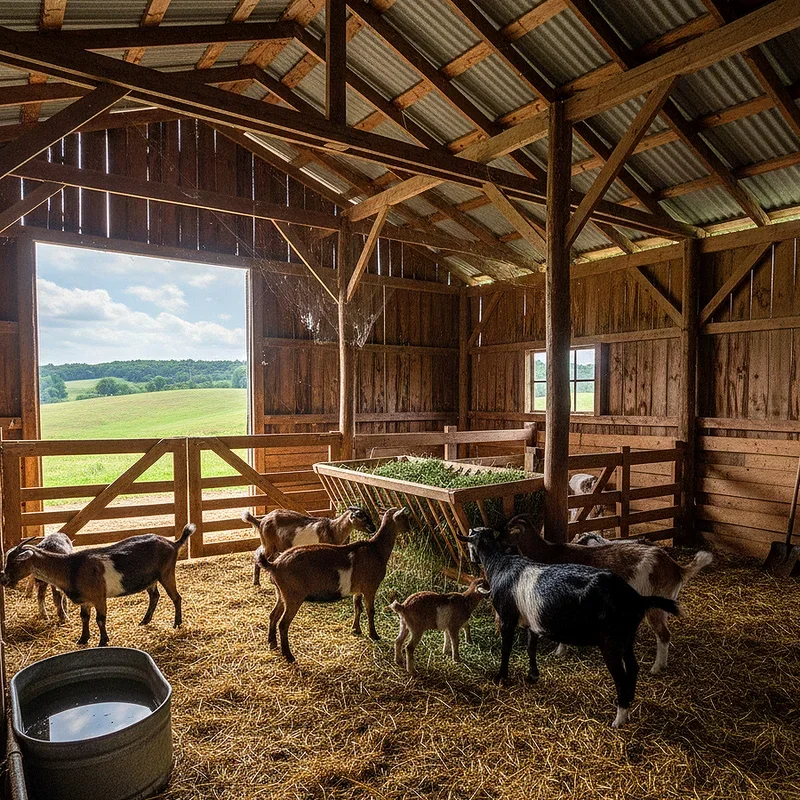
Integrate harmoniously through shared space arrangement creation that cohabitation design provides while allowing chickens to share barn areas with other animals safely throughout combined housing. Designate chicken zones within larger animal areas that defined sections enable through understood boundaries throughout marked territories. Install barriers preventing larger animals from crushing chickens that protective division provides through safe cohabitation throughout protected poultry. Consider beneficial relationships like chickens cleaning up spilled feed that symbiotic function enables through mutual benefit throughout helpful partnership. Monitor shared space dynamics ensuring peaceful coexistence that observation requires through safe integration throughout watched interaction. Appreciate shared spaces' efficient land and building use throughout consolidated farming.
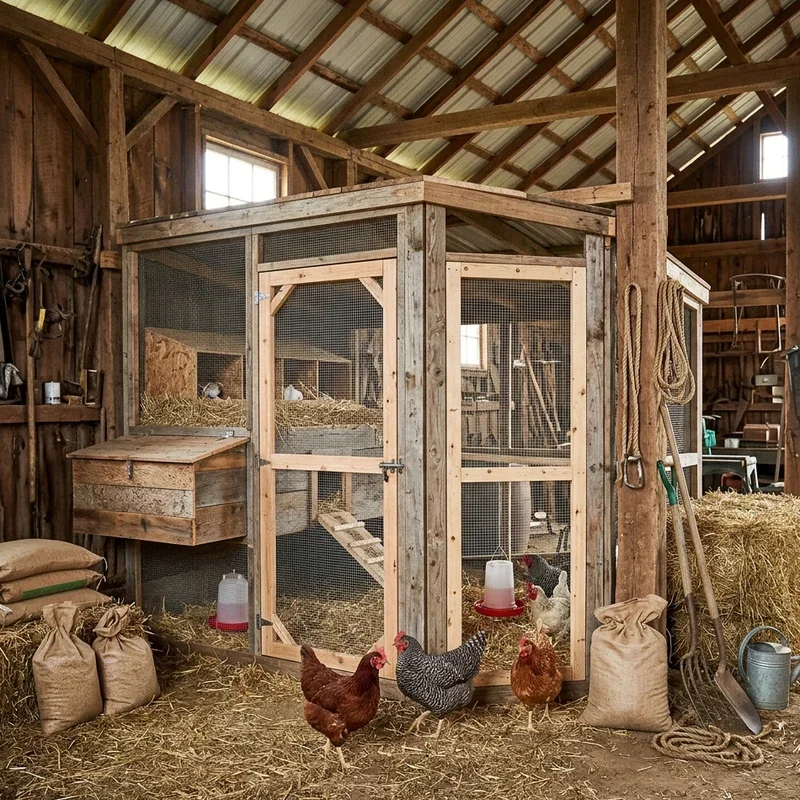
7. Climate Control Benefits
Benefit thermally through climate control advantage recognition that barn protection provides while sheltering chickens from temperature extremes better than standalone structures throughout moderated conditions. Leverage barn's thermal mass moderating temperature swings that building physics provides through stabilized climate throughout reduced extremes. Share heating systems during winter if barn includes climate control that existing infrastructure enables through distributed warmth throughout shared heating. Benefit from summer shade barn structures provide that solar blocking enables through cooled housing throughout reduced heat. Add supplemental heating only for extreme cold rather than primary heating that reduced needs enable through efficient supplementation throughout minimized energy. Appreciate barns' superior climate moderation throughout protected flocks.
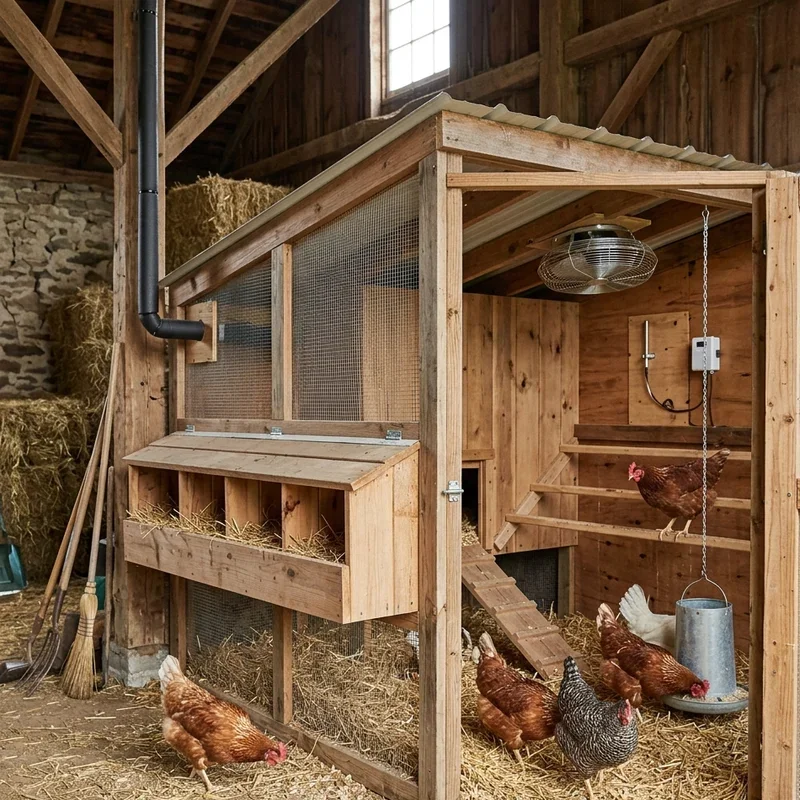
8. Predator-Proof Sections
Protect completely through predator-proof section creation that secure construction provides while adding barn's protection to dedicated chicken defenses throughout layered security. Reinforce chicken areas with hardware cloth rather than chicken wire that stronger material enables through resistant barriers throughout secure mesh. Seal all gaps and openings predators might exploit that comprehensive sealing provides through eliminated entry throughout blocked access. Install secure latches raccoons cannot manipulate that predator-proof hardware enables through locked doors throughout secured openings. Consider barn cats as additional predator deterrent that natural protection enables through present hunters throughout discouraged entry. Appreciate barns' existing walls providing first predator defense throughout protected perimeter.
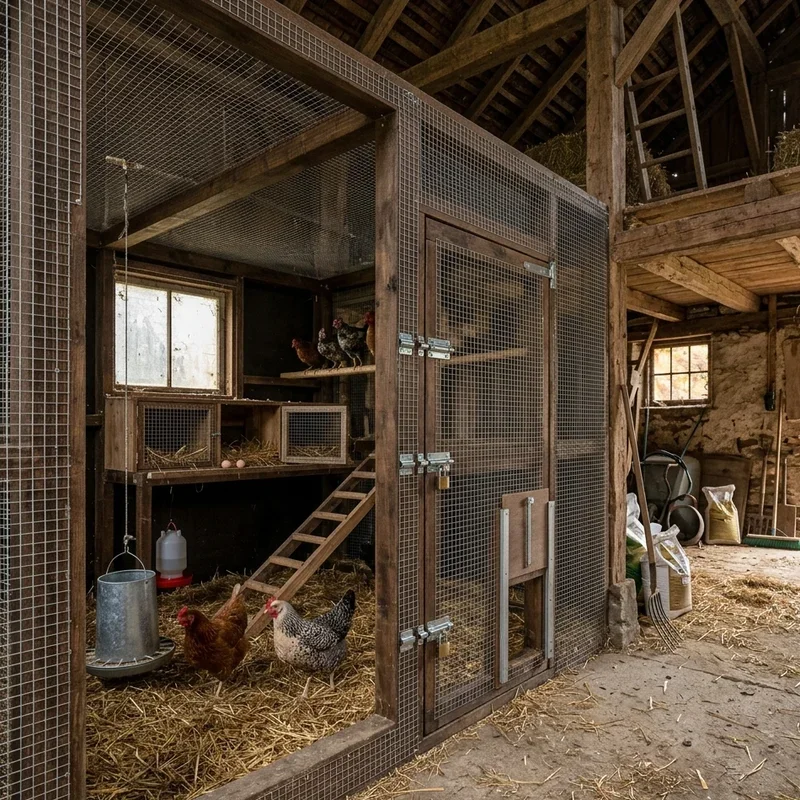
9. Nesting Box Arrangements
Nest conveniently through nesting box arrangement planning that egg-laying support provides while positioning boxes for easy collection and comfortable laying throughout functional placement. Install nesting boxes at comfortable heights for both chickens and collectors that accessible positioning enables through easy use throughout convenient height. Provide one nesting box per four to five hens that appropriate ratio enables through adequate availability throughout sufficient boxes. Position boxes in darker, quieter barn sections that calm environment enables through peaceful laying throughout undisturbed nesting. Design external collection access reducing disturbance during gathering that outside access enables through non-intrusive collection throughout respected privacy. Appreciate proper nesting arrangements' impact on egg production throughout supported laying.
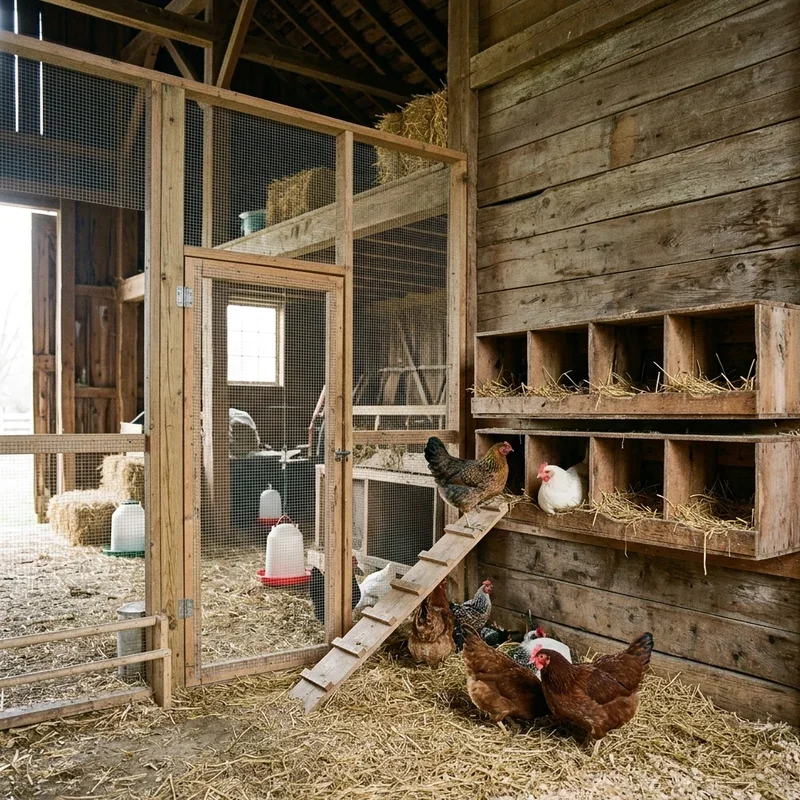
10. Roosting Bar Systems
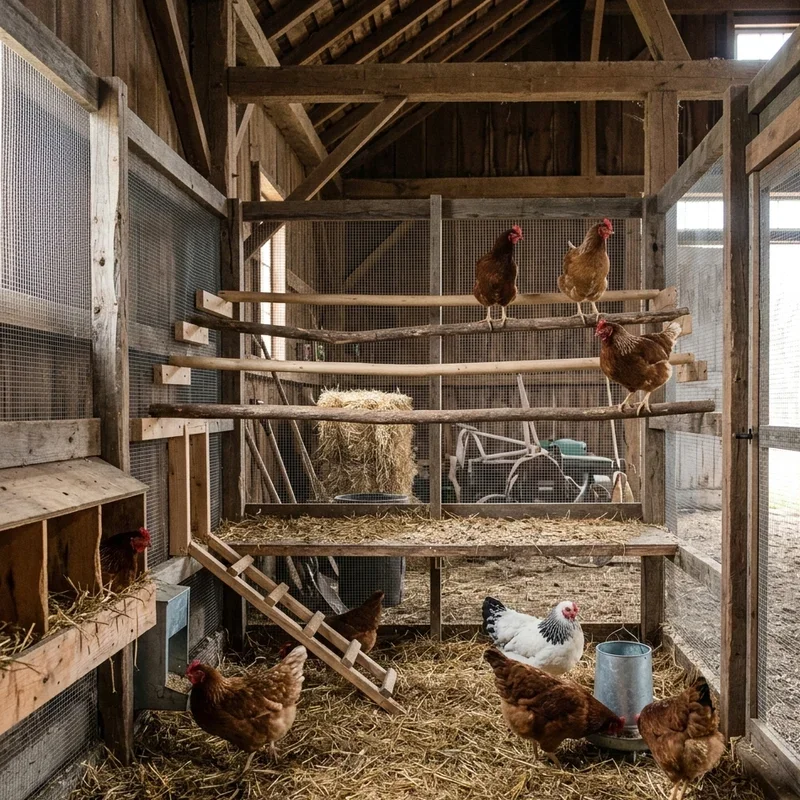
Roost comfortably through roosting bar system installation that sleeping perches provide while giving chickens instinctive elevated sleeping positions throughout natural resting. Install roosting bars higher than nesting boxes preventing box sleeping that proper positioning enables through correct use throughout appropriate behavior. Provide eight to ten inches of roosting space per chicken that adequate room enables through comfortable sleeping throughout sufficient perching. Position bars allowing dropping collection beneath that waste management enables through efficient cleaning throughout hygienic design. Choose appropriate bar width for comfortable gripping that sized perches enable through secure roosting throughout stable sleeping. Appreciate proper roosting systems' importance for chicken wellbeing throughout healthy flocks.
11. Feed and Water Stations
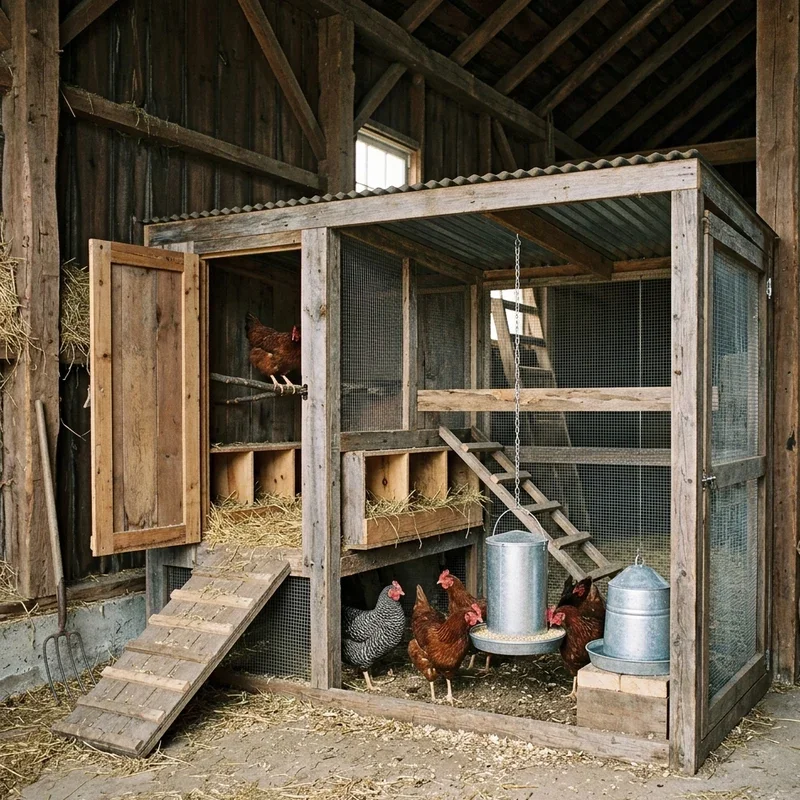
Supply conveniently through feed and water station setup that nutrition access provides while establishing efficient feeding systems within barn-based coops throughout sustained nourishment. Position feeders preventing contamination from droppings that elevated placement enables through clean feed throughout protected nutrition. Install waterers providing constant fresh water access that continuous supply enables through available hydration throughout maintained freshness. Consider automatic systems reducing daily maintenance that self-filling equipment enables through reduced chores throughout simplified management. Protect feed from barn pests and other animals that secure storage provides through preserved supplies throughout protected feed. Appreciate proper feeding station design's impact on flock health throughout nourished chickens.
12. Ventilation Considerations
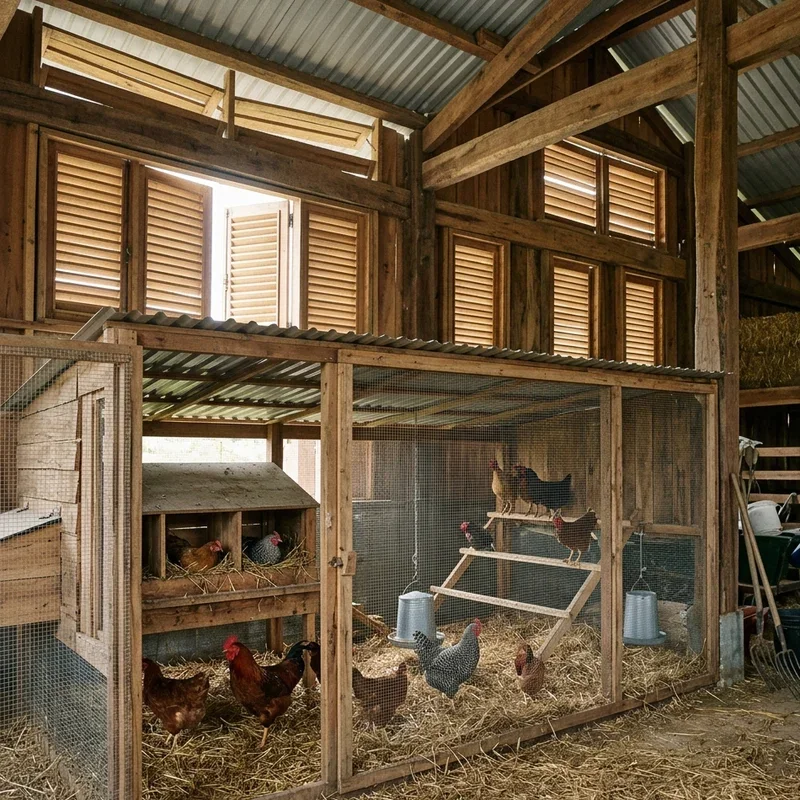
Ventilate properly through ventilation system consideration that air quality requires while preventing ammonia buildup from droppings within enclosed barn spaces throughout healthy air. Ensure adequate air exchange without creating harmful drafts that balanced flow enables through fresh air throughout draft-free ventilation. Utilize barn's existing ventilation systems when adequate that shared infrastructure enables through leveraged equipment throughout existing airflow. Add supplemental fans if barn ventilation proves insufficient that enhanced circulation enables through improved flow throughout increased exchange. Position coop areas avoiding stagnant air corners that strategic placement enables through natural flow throughout better ventilation. Appreciate ventilation's critical importance for respiratory health throughout protected breathing.
13. Lighting Requirements
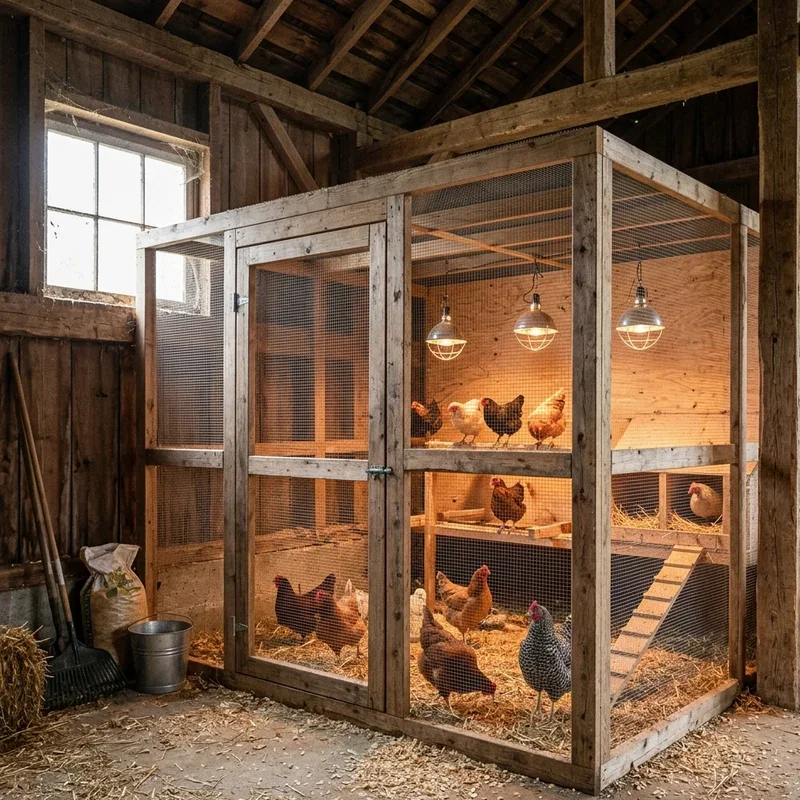
Illuminate appropriately through lighting requirement planning that egg production influences while providing necessary light exposure for consistent laying throughout regulated illumination. Provide fourteen to sixteen hours of light daily for optimal laying that appropriate duration enables through maximized production throughout supported laying. Utilize barn windows for natural lighting when possible that daylight access enables through free illumination throughout natural light. Add supplemental artificial lighting extending short winter days that electric lighting enables through extended exposure throughout maintained duration. Position lights illuminating entire chicken area evenly that comprehensive coverage provides through uniform brightness throughout consistent lighting. Appreciate lighting's significant impact on egg production throughout influenced laying.
14. Easy Cleaning Design
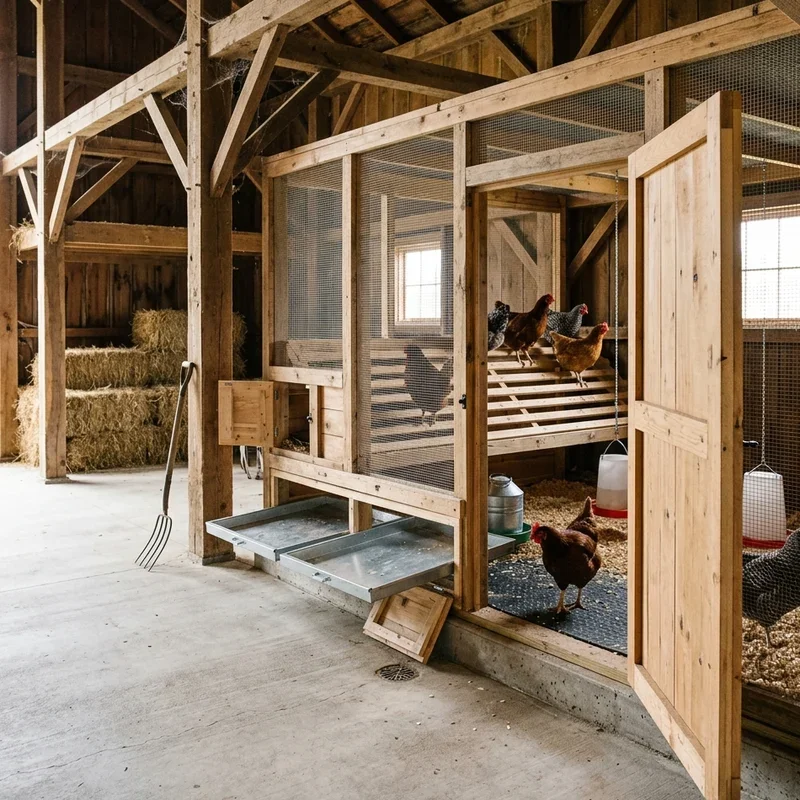
Clean efficiently through easy cleaning design incorporation that maintenance access provides while enabling thorough sanitation within barn-based coop configurations throughout hygienic management. Design floors sloped toward drains if plumbing available that graded surfaces enable through directed drainage throughout efficient flow. Include removable droppings boards simplifying waste collection that accessible trays provide through easy removal throughout simplified cleaning. Size access points allowing easy entry with cleaning equipment that adequate openings enable through equipment access throughout convenient entry. Choose smooth surfaces resisting waste adhesion that easy-clean materials provide through simple wiping throughout reduced scrubbing. Appreciate cleaning efficiency's impact on flock health throughout sanitary conditions.
15. Expansion Planning Layout
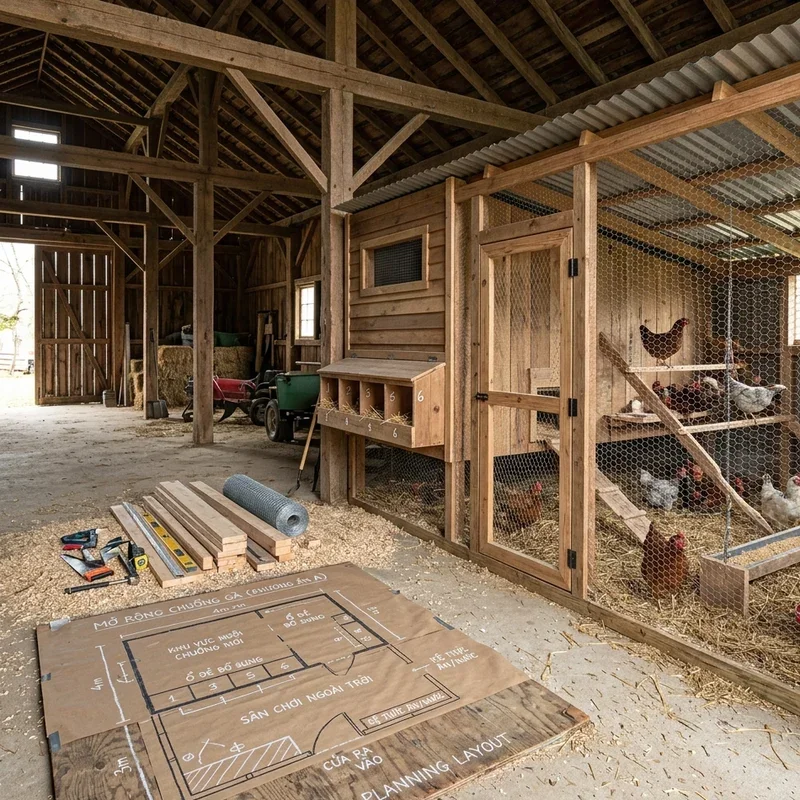
Plan growth through expansion layout consideration that future scaling provides while designing initial coop installations allowing flock increases throughout scalable systems. Leave adjacent barn space available for future expansion that reserved area enables through growth room throughout expansion potential. Design modular systems adding sections as flocks grow that scalable construction enables through incremental expansion throughout progressive growth. Size infrastructure like feeders and waterers for intended maximum flock that oversized equipment enables through accommodated growth throughout supported expansion. Consider electrical and ventilation capacity for larger future flocks that infrastructure planning provides through supported scaling throughout adequate systems. Appreciate expansion planning's prevention of costly future modifications throughout prepared growth.
Conclusion
Chicken coops inside barns maximize existing infrastructure while providing superior protection and integrated farm management that efficient operations require throughout smart agricultural practices. These fifteen ideas demonstrate remarkable variety within barn-based poultry housing, from simple corner partitions to elaborate multi-level systems that different barn configurations and flock sizes accommodate appropriately throughout scalable solutions. The key lies in adapting barn characteristics to chicken needs, understanding that successful integration requires attention to ventilation, predator protection, and cleaning access throughout thoughtful design. Consider your specific barn layout and farming goals when selecting approaches that effective integration requires for healthy, productive flocks throughout successful poultry keeping. The investment in barn-based coops leverages existing assets. Create your integrated chicken housing today.
Frequently Asked Questions
Q1: How much barn space do chickens need?
A: Allow minimum four square feet per chicken inside; more space reduces stress and behavioral problems.
Q2: Can chickens share barn space with other livestock?
A: Yes, with proper barriers; chickens often benefit from cleaning up spilled feed around livestock.
Q3: How do I prevent ammonia buildup in barn coops?
A: Ensure adequate ventilation, maintain dry bedding, and clean droppings regularly preventing harmful accumulation.
Q4: Do barn chickens still need outdoor access?
A: Outdoor access improves health and egg quality; consider attached runs or supervised free-ranging.
Q5: What's the best flooring for barn chicken coops?
A: Concrete with deep bedding offers durability and easy cleaning; dirt floors work with proper management.
Stay up to date with our latest ideas!