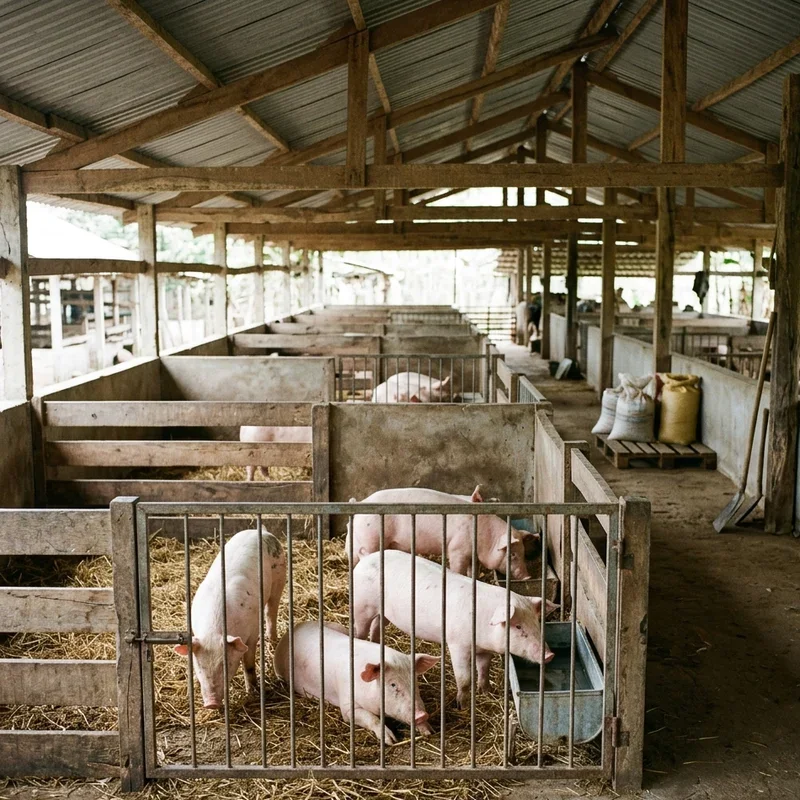
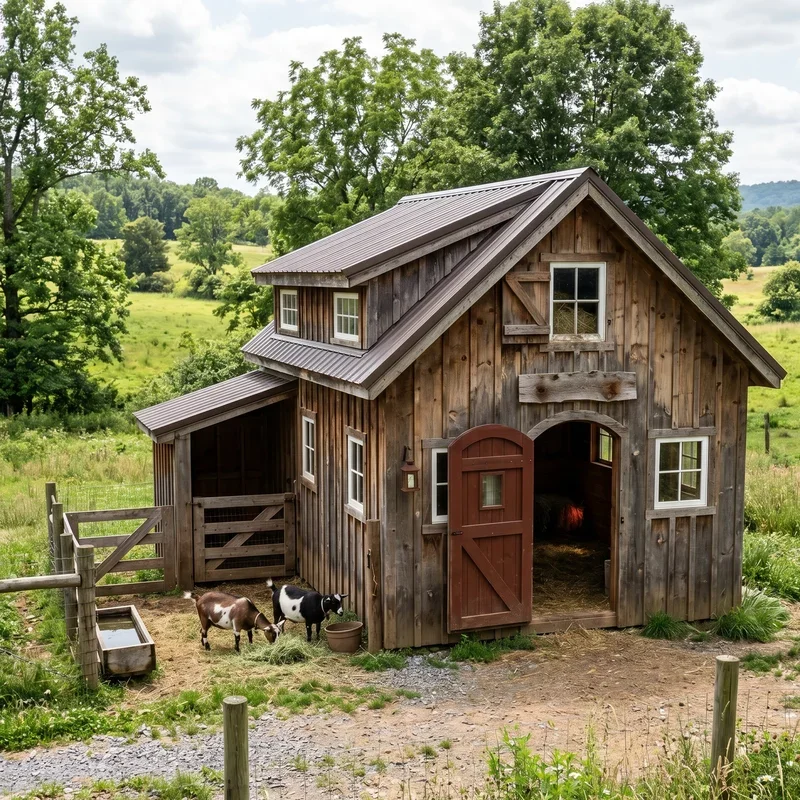
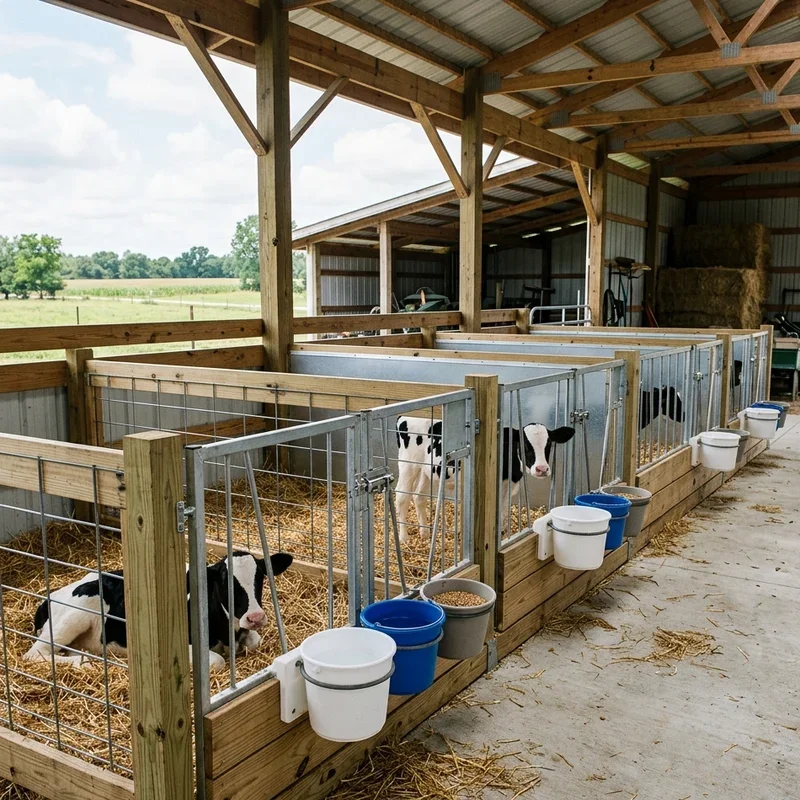
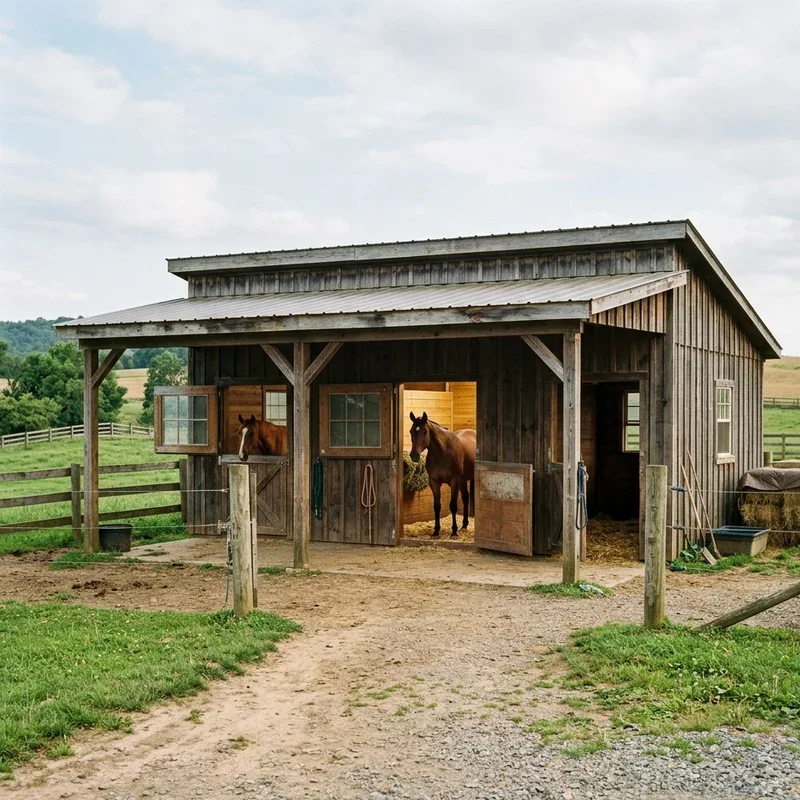
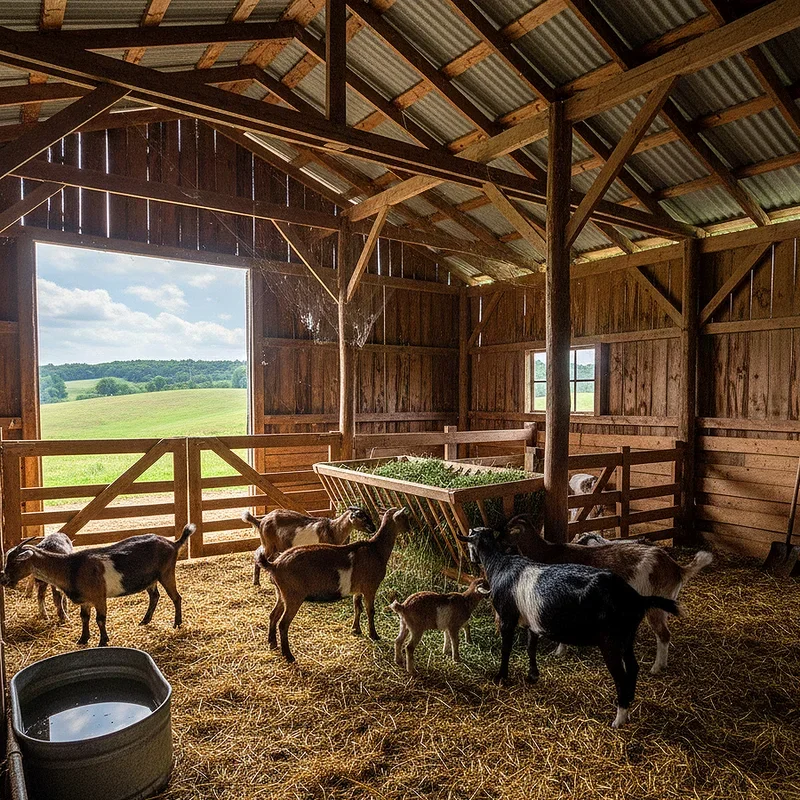
Tired of scrubbing your barn? These 15 barn flooring ideas make cleaning faster, cut maintenance headaches, and keep your animals safer.
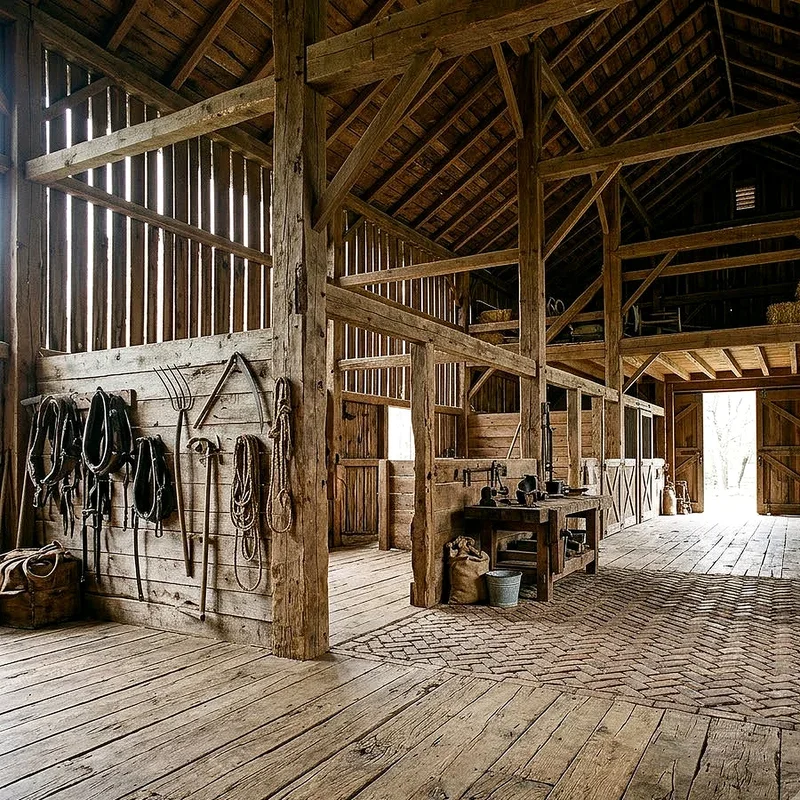
Let's be honest about barn floors for a second. Nobody walks into a barn and says, "Wow, gorgeous substrate." Yet that forgotten surface under your boots decides how much of your Saturday disappears into a wheelbarrow. A bad floor drinks up urine like a sponge, hides odor, chews through bedding, and turns into a skating rink the moment somebody spills a water bucket. A good one? It practically cleans itself while you sip coffee. Whether you keep three goats, a dozen horses, or a tractor and forty bales of hay, the right flooring pays you back in saved hours, healthier hooves, and fewer vet calls. So grab your gloves. Here are fifteen practical barn flooring ideas, the honest trade offs of each, and how to match them to the way you actually work.
1. Compacted Clay Floors
Clay held up barns long before anyone sold flooring out of a catalog, and there's a reason your grandparents trusted it. A properly packed clay floor gives natural cushioning underfoot, which stays kind to legs and joints, and it drains slowly enough that urine doesn't sit on the surface staring back at you. Cleaning stays refreshingly simple: strip the soiled top layer, toss it on the compost heap, and tamp fresh clay into the low spots every few months. Think of it as a garden bed that needs turning rather than a countertop that needs scrubbing. The catch? Clay demands steady attention in wet climates, and a pawing horse can dig a crater by Tuesday. Still, for comfort at a low price, clay keeps earning its place.
2. Broom Finished Concrete Slabs
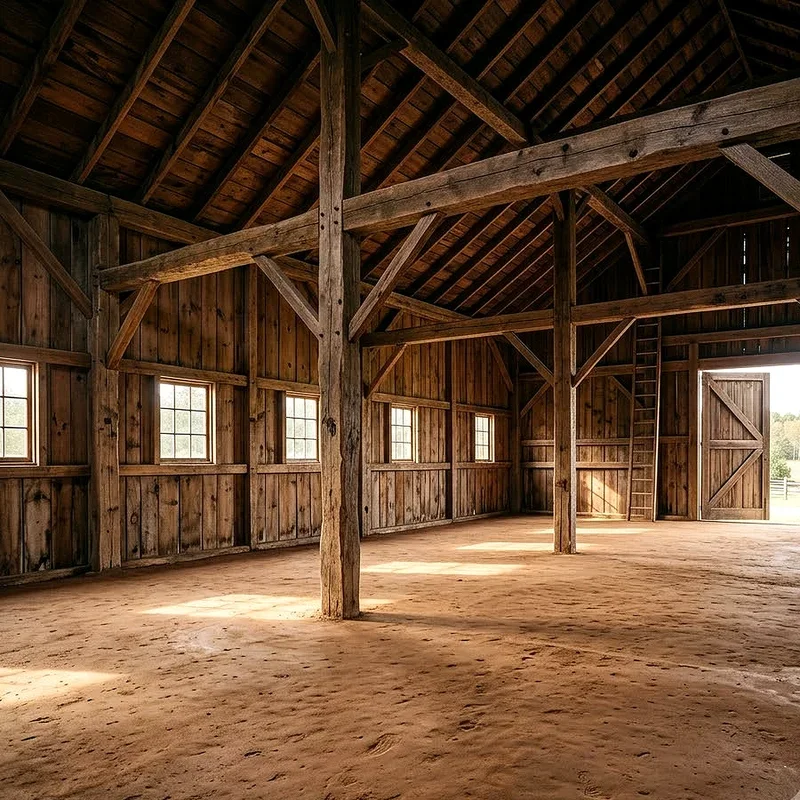
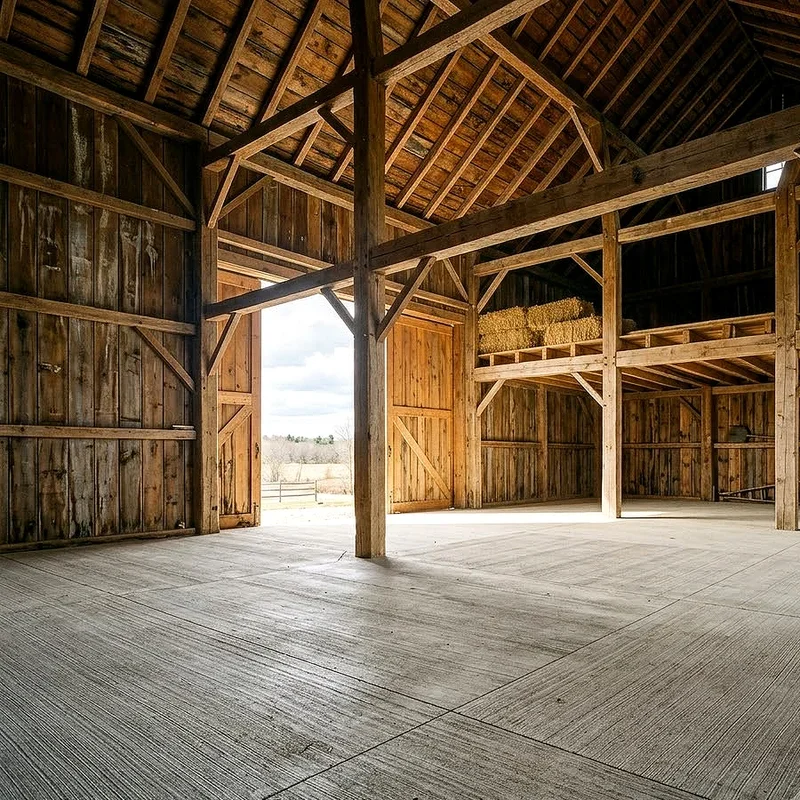
Concrete gets a bad reputation because people picture a cold, slick garage floor, but a broom finished slab changes the whole story. The contractor drags a stiff broom across wet concrete, leaving fine ridges that grip hooves and boots even when water runs across them. You get a sealed, non porous surface that refuses to absorb urine, hide bacteria, or feed rodents, and you can hose it down in minutes instead of digging for an hour. Imagine the difference between wiping a plate and scraping a cast iron pan. That's concrete versus dirt. The trade off is hardness, so you'll want mats or deep bedding wherever animals stand for long stretches. For aisles, feed rooms, and equipment bays, though, concrete is close to unbeatable.
3. Heavy Rubber Stall Mats
Rubber mats sit right in the sweet spot between comfort and easy cleaning, which explains why they show up in nearly every serious barn. Laid over concrete or a firm compacted base, thick mats cushion joints, insulate against cold, and create a surface that manure lifts off cleanly instead of grinding into. You'll slash bedding costs too, often by half, because you no longer need six inches of shavings to soften the ground. Cleaning means a quick sweep, an occasional pull up, and a hose down underneath every few months to stop moisture from sneaking in. Weight is the honest downside, since a single mat can top a hundred pounds, but that same weight keeps everything flat and stubbornly in place.
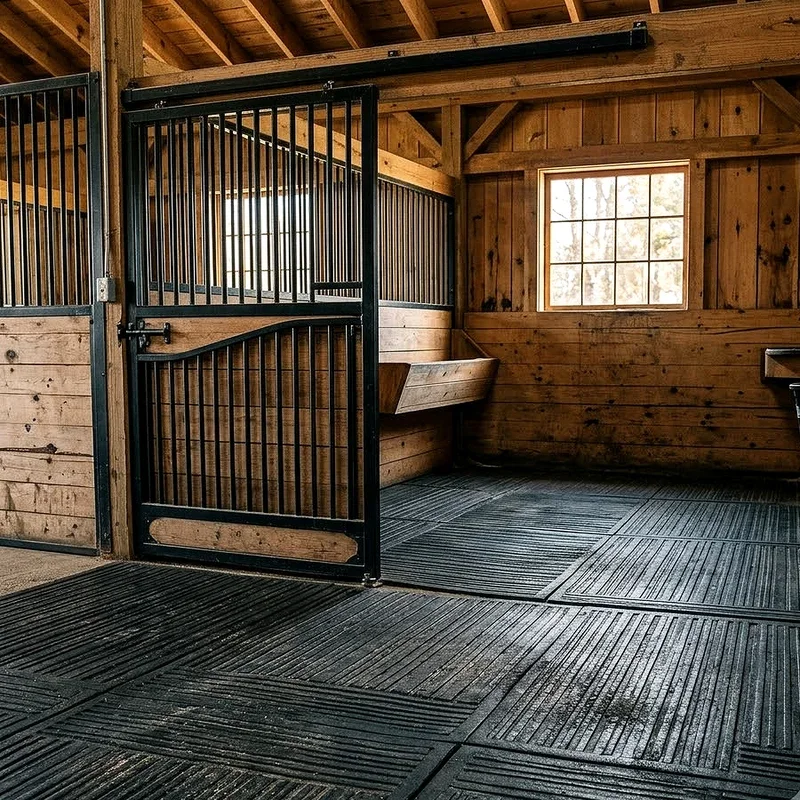
4. Interlocking Rubber Pavers
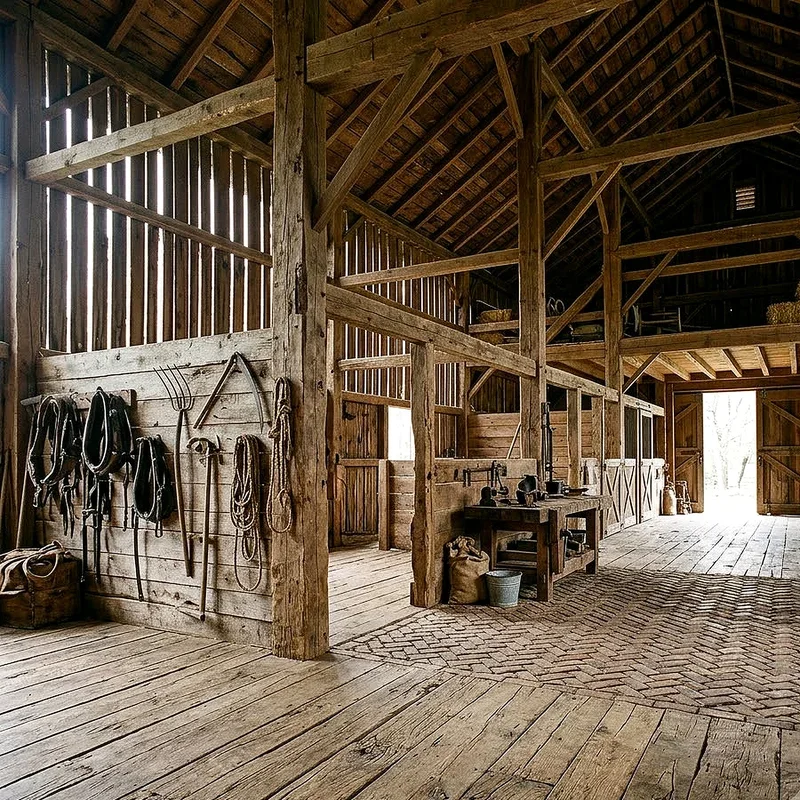
If wrestling hundred pound mats sounds like a bad time, interlocking rubber pavers offer the same idea in bite sized pieces. Each tile locks into its neighbor like a puzzle, so the finished floor behaves as one continuous sheet while any single piece can be popped out and replaced. Damage one corner near a gate? Swap that tile instead of rebuying an entire mat. The seams do collect grit, so run a broom along them weekly and pull a few tiles seasonally for a proper rinse. Pavers cost more per square foot than plain mats, and installation takes patience, but they shine in odd shaped stalls, wash areas, and trailer loading zones where a rectangle simply refuses to fit the space you actually have.
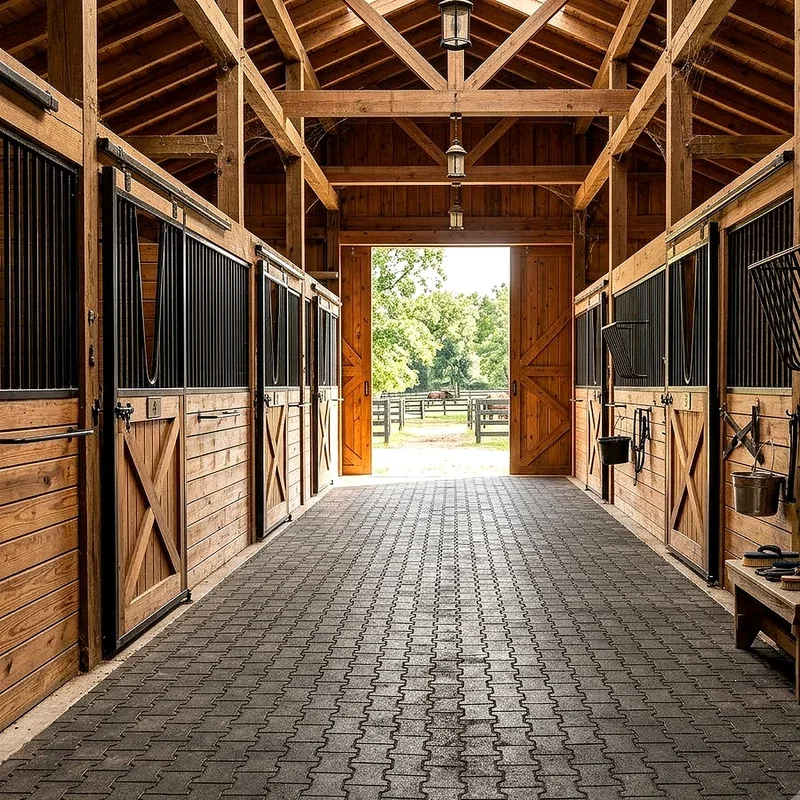
5. Seamless Poured Rubber Flooring
Here's the premium option, and it's genuinely lovely to work on. A crew mixes rubber granules with binder and pours the material directly over your prepared base, then trowels it smooth so there isn't a single seam, joint, or crack anywhere. Nothing seeps underneath, nothing hides in a gap, and cleaning becomes a matter of scraping and hosing the way you'd rinse a kitchen counter. The cushioning is excellent for older animals and anything recovering from injury, and a well installed floor can outlast twenty years of daily traffic. The price tag stings up front, no question about it, and repairs require a professional. Yet barns running at full capacity often find the labor savings alone cover the difference within a handful of years.
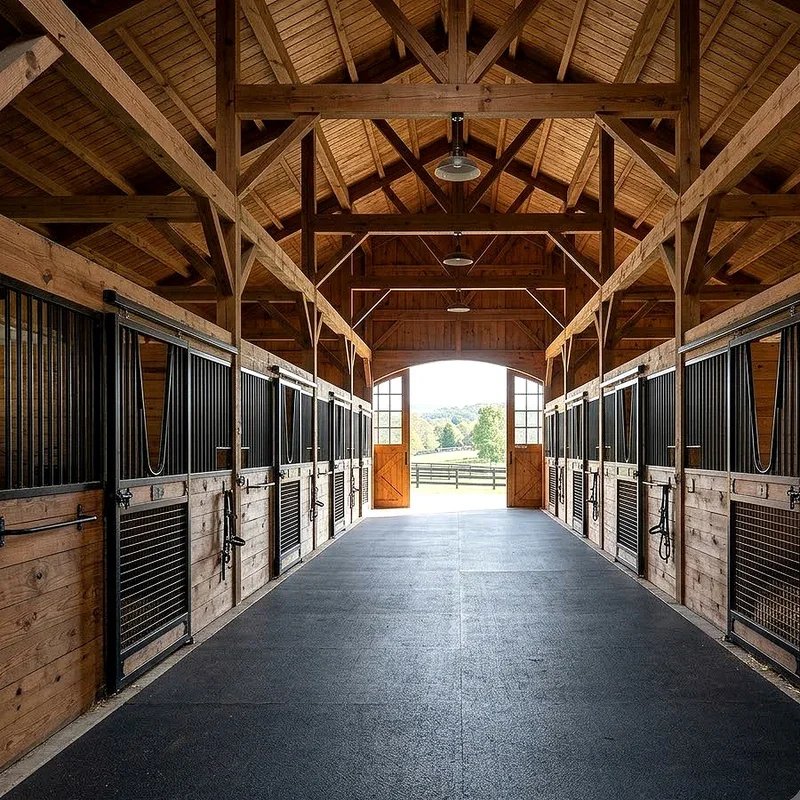
6. Crushed Gravel and Stone Dust
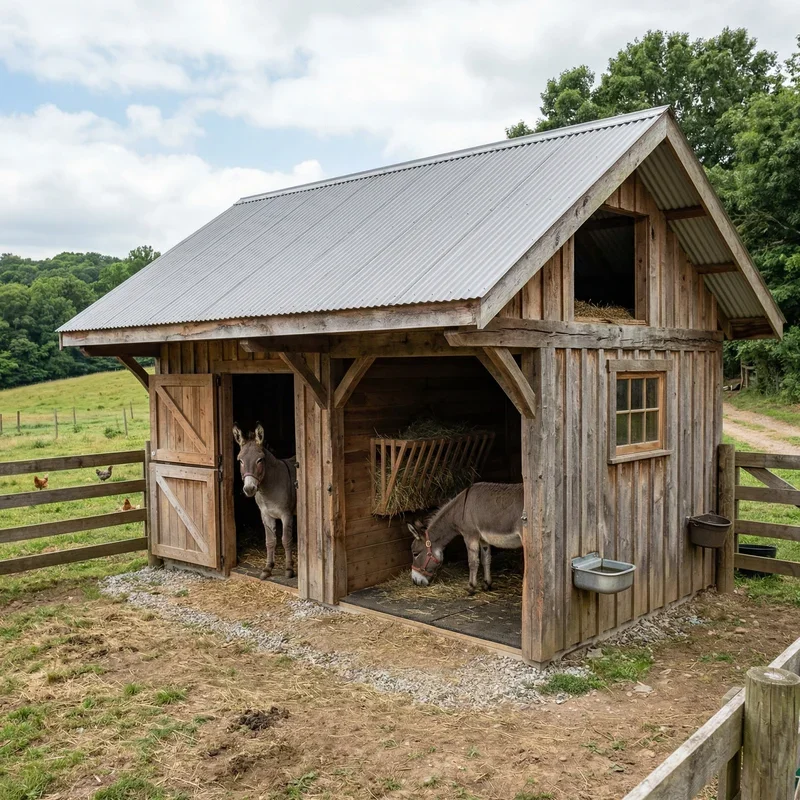
Drainage is the whole point here, and crushed gravel delivers it beautifully. Angular stone packs together and locks tight, unlike round pea gravel, which rolls away underfoot like marbles on a tile floor. Cap the base with stone dust or screenings and you get a firm, slightly forgiving surface that lets liquid vanish downward instead of puddling around hooves. Maintenance means raking high spots back into the hollows, adding fresh material once or twice a year, and skimming manure off the top. You won't scrub anything, ever. The honest limitation is that fine bedding mixes into the gravel over time, so gravel works best in run in sheds, paddock shelters, and high traffic doorways rather than bedded stalls.
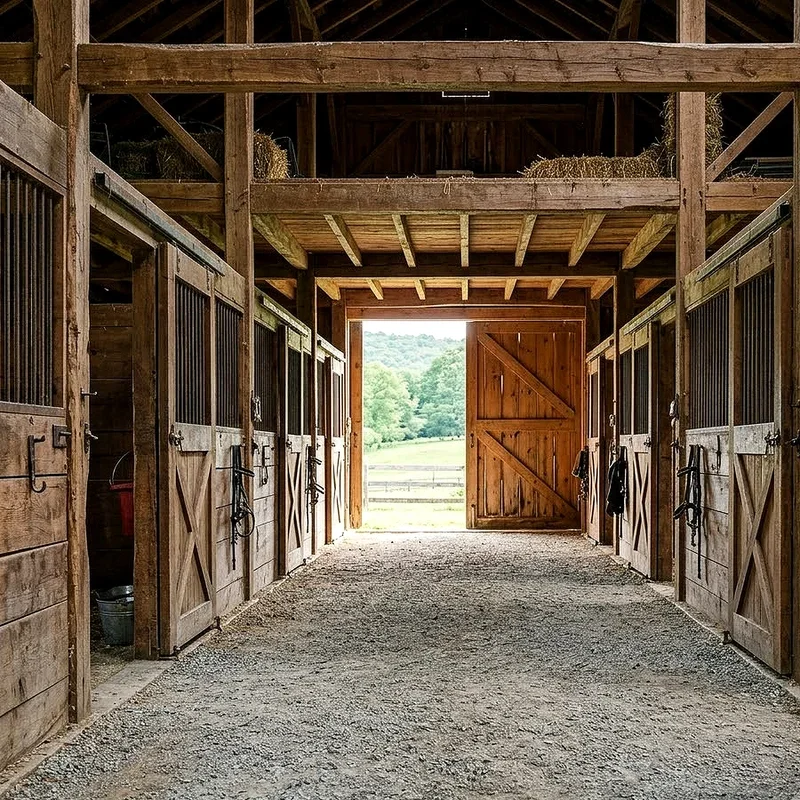
7. Limestone Screenings
Limestone screenings deserve their own mention because they behave differently from plain gravel once water and pressure go to work. The fine particles bind together as they compact, creating a surface almost as firm as pavement yet still slightly yielding, a bit like a well groomed running track. Better still, limestone naturally neutralizes acidity, so it fights ammonia odor rather than trapping it the way bare soil does. You clean by scraping the top and topping up a thin layer once or twice a season. The trade off is dust in dry weather, which matters if your animals have sensitive lungs, and the surface will soften during a long soaking rain unless you build proper drainage underneath from the beginning.
8. Porous Asphalt Floors
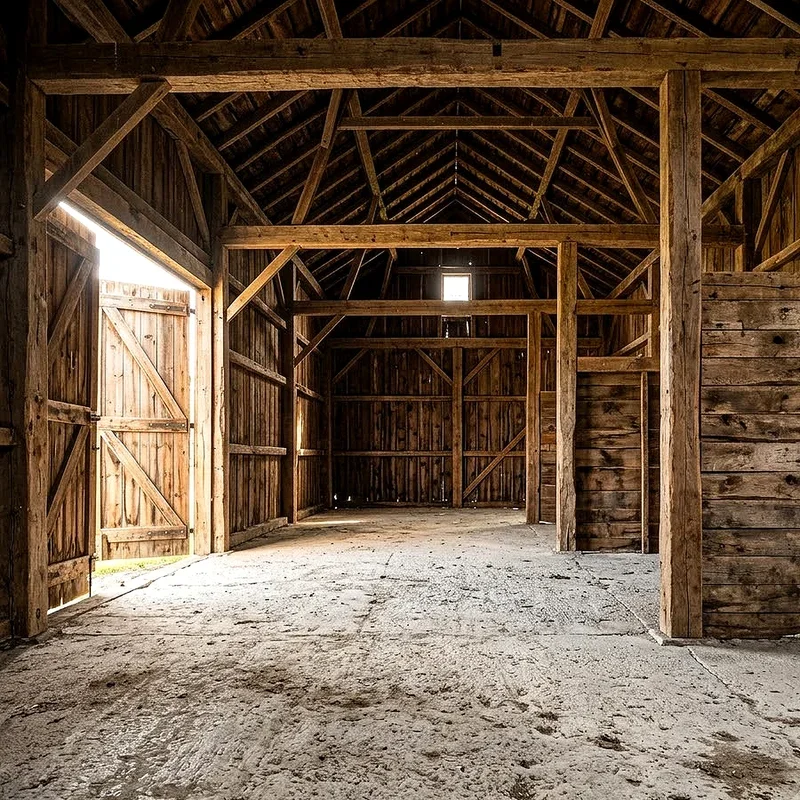
Porous asphalt feels like the underrated compromise nobody mentions at the feed store. It gives you a firm, stable, sealed feeling surface similar to concrete, yet the open mix lets liquid drain straight through into the gravel bed below instead of pooling on top. Compared with concrete, it costs less, goes down faster, and has enough give to stay easier on joints, which matters for animals standing twelve hours a day. Cleaning is a straightforward sweep and rinse. So what's the catch? Asphalt softens in serious summer heat, and heavy equipment can dent it, so keep the tractor on a concrete pad. For sheltered aisles and covered run ins, though, it quietly does a fine job.
9. Wood Plank Flooring
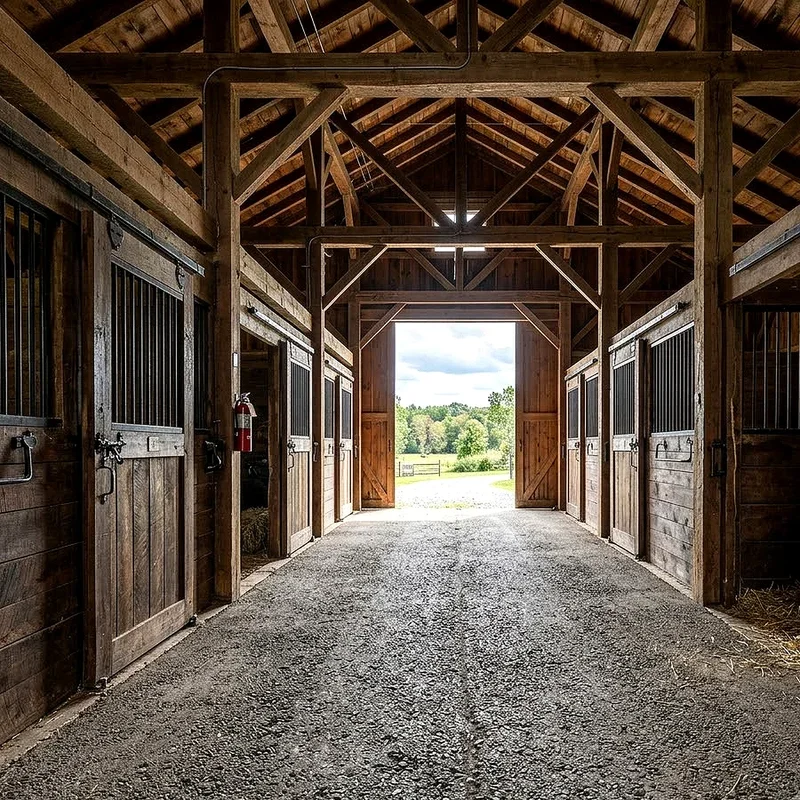
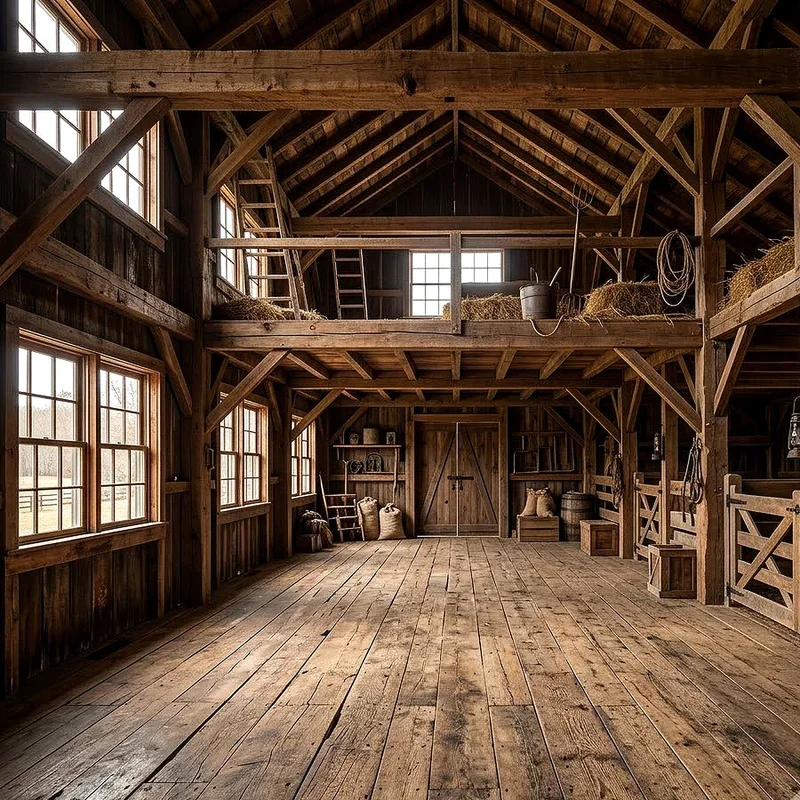
Wood brings warmth that no synthetic material quite matches, and in older barns it's often already there under decades of dust. Thick oak or pressure treated planks laid over joists offer springy, comfortable footing that stays noticeably warmer than concrete through winter. Sweeping is easy, and for hay storage or upper lofts wood is hard to beat. Be realistic about the downsides though, because wood absorbs urine like a paper towel and rots from underneath where you'll never see it coming. Seal it, ventilate the space below, and inspect boards yearly by tapping for soft spots. Honestly, wood shines in tack rooms, walkways, and lofts, while stalls usually deserve something that shrugs off moisture instead of drinking it.
10. Plastic Grid Systems with Gravel Fill
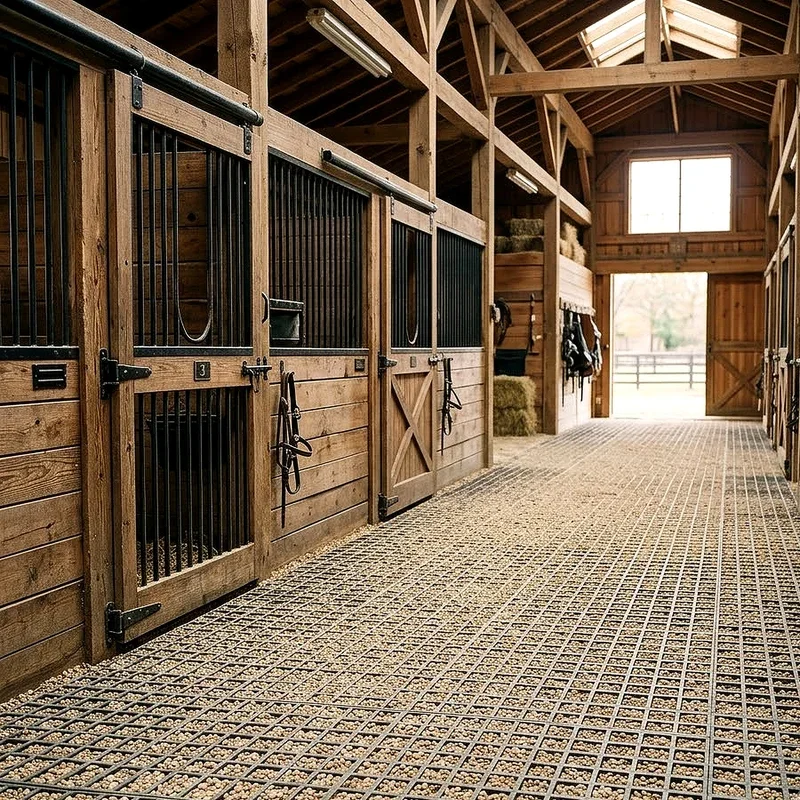
Picture a honeycomb of tough plastic cells laid across your base and packed with gravel or sand. That's the whole concept, and it solves gravel's most annoying flaw. The grid stops material from migrating, so your carefully leveled floor doesn't drift toward the doorway every time a horse spins around. Drainage stays excellent, the surface remains firm without turning rock hard, and mud simply stops forming even after three straight days of rain. Cleaning means scraping the top and occasionally refilling cells that sit low. Installation takes real prep work, since the base has to be level and compacted first, but grids transform gateways, wash areas, and paddock entrances that used to swallow boots whole.
11. Sand Bedding Over a Solid Base
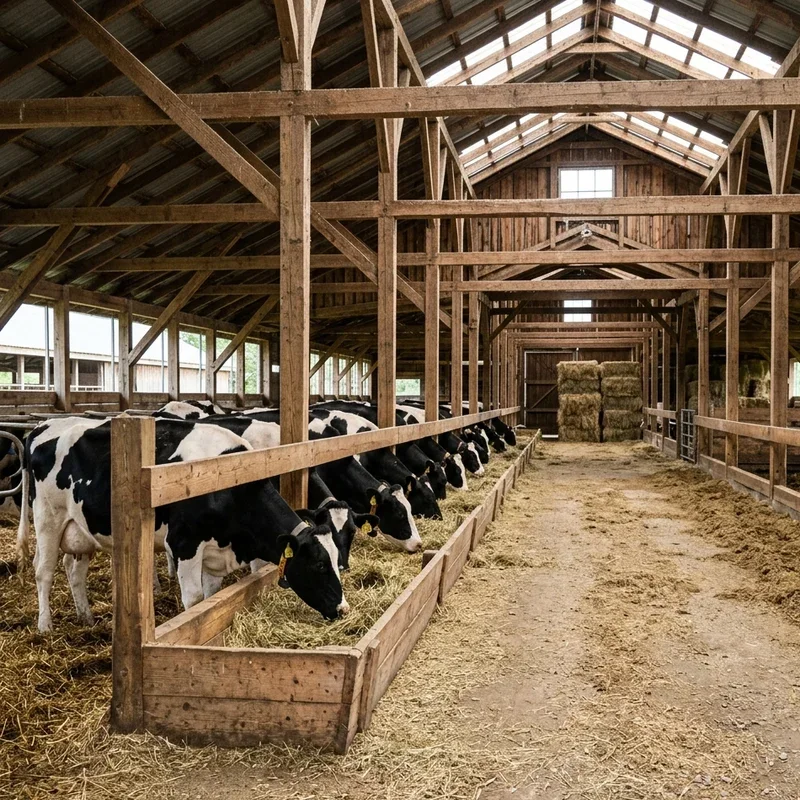
Sand feels wonderful for animals, particularly dairy cattle, because it stays loose, dry, and inhospitable to the bacteria that cause udder infections. Laid several inches deep over compacted gravel or concrete, it drains quickly and cushions like a beach rather than a sidewalk. Cleaning is genuinely easy: rake out the soiled clumps, level the rest, and top up weekly. Where's the catch? Sand is heavy, it works its way into every drain and manure spreader you own, and animals that eat off the floor can ingest enough to cause colic. Use clean, washed, medium grit sand, keep feed in elevated racks, and this old fashioned choice remains one of the most hygienic options available.
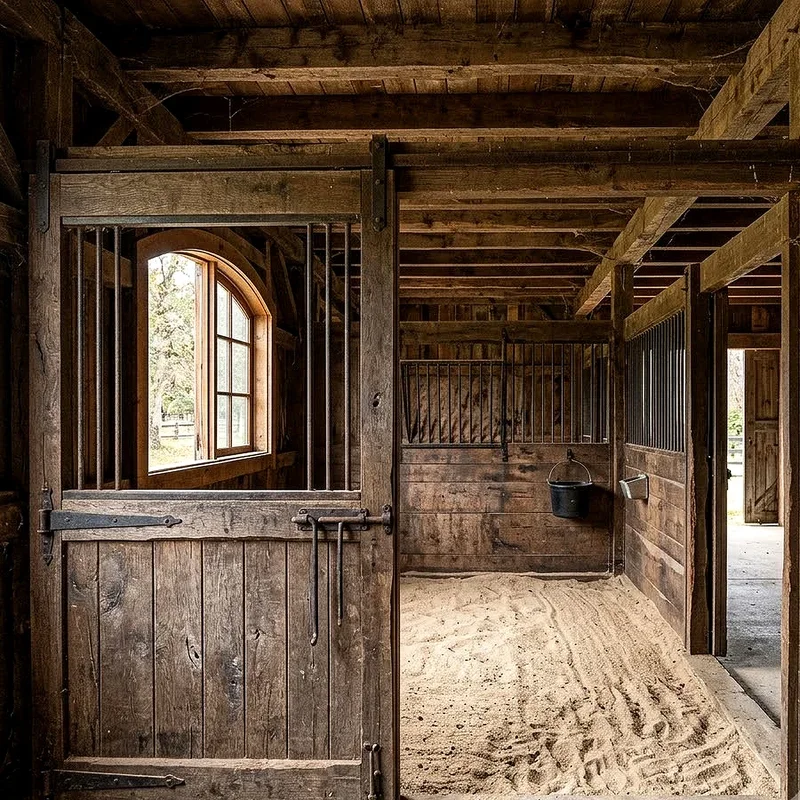
12. Epoxy Coated Concrete for Wash Bays and Tack Rooms
Some corners of a barn take constant water, soap, and chemicals, and ordinary concrete slowly loses that fight. Epoxy coating seals the slab under a hard, glossy, waterproof skin that shrugs off shampoo, disinfectant, hoof oil, and everything else you spill. Cleaning drops to the easiest level in the entire barn: squeegee, rinse, done in under five minutes. Add an anti slip aggregate to the topcoat, because bare epoxy turns treacherous the instant it gets wet, and nobody wants to explain that particular fall. The coating needs reapplication every several years under heavy use, and the concrete beneath must be bone dry during installation. For wash bays, feed rooms, and tack rooms, it's a genuine upgrade.
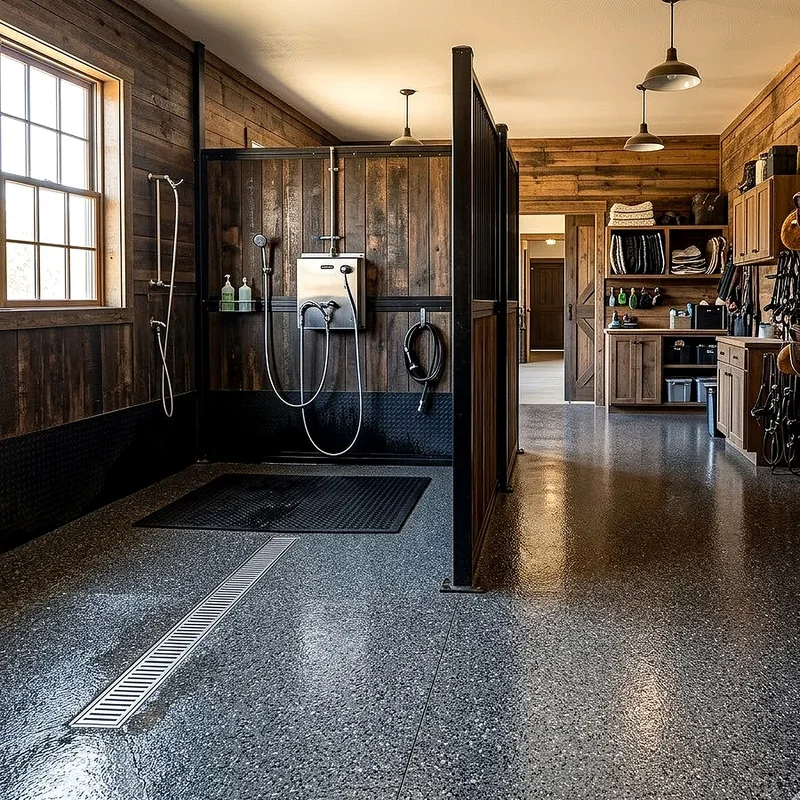
13. Geotextile Fabric Base Layers
Geotextile fabric isn't the floor you see, and that's precisely why so many barn owners skip it and regret it later. Rolled out between subsoil and your gravel or sand, this tough permeable cloth stops the two layers from mixing, which is exactly how a perfectly good gravel floor becomes a mud pit in eighteen months. Water still passes straight through, but your expensive stone stays where you put it instead of sinking quietly into the earth. Think of it as the underlayment beneath a nice hardwood floor, unglamorous and absolutely essential. Maintenance is basically zero once installed. If you're building any loose fill floor from scratch, spending a little here saves rebuilding the whole thing later.
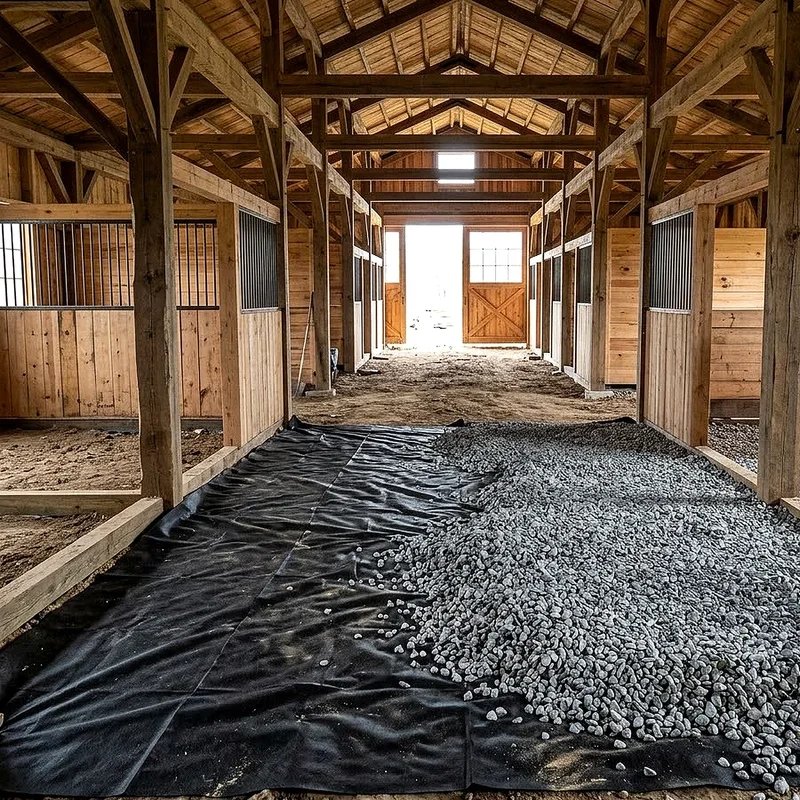
14. Sealed and Textured Aisle Concrete
Your aisle takes more traffic than anywhere else in the barn, so it deserves a surface built for punishment. Sealed concrete with a deliberate texture, whether stamped, scored, or finished with a non slip additive, handles wheelbarrows, hooves, water, and the occasional dropped tool without flinching. The sealer blocks moisture and stains from soaking in, so manure wipes up instead of leaving a permanent shadow, and a quick hose down at the end of chores resets everything. Reseal every few years and you're set. Just resist the temptation to go smooth and shiny for looks, because a slick aisle is one spooked animal away from a very expensive lesson in physics.
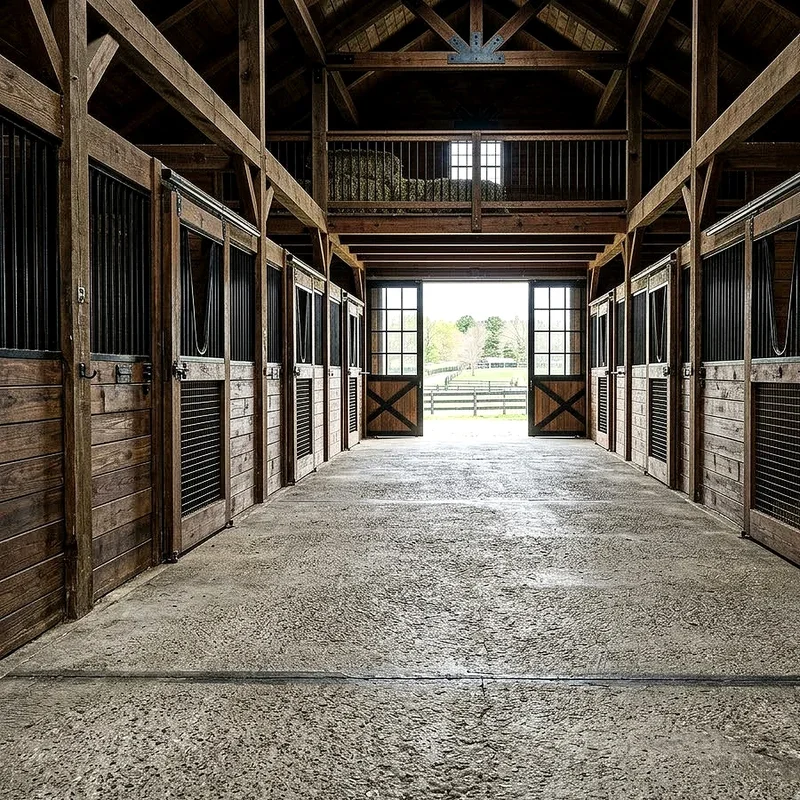
15. A Mixed Zone Flooring Plan
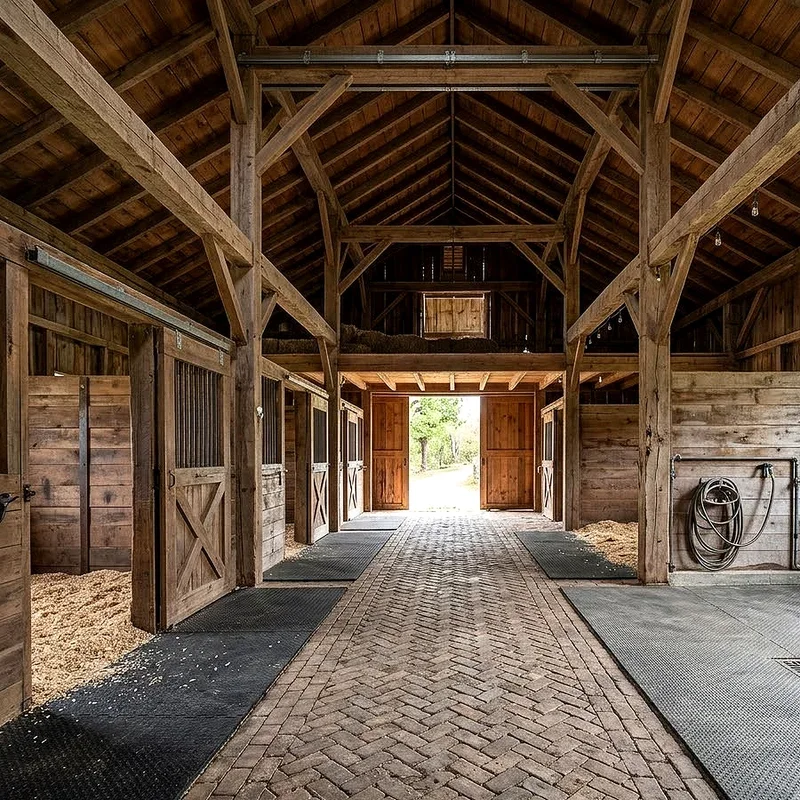
Here's the idea that ties the other fourteen together: stop hunting for one perfect floor. The best barns use different materials in different zones, the way a house uses tile in the bathroom and carpet in the bedroom. Textured concrete runs down the aisle, rubber mats cushion the stalls, epoxy seals the wash bay, gravel with a grid handles the doorway, and wood warms the tack room. Each surface does the job it's genuinely good at, and you stop compromising everywhere at once. Mapping your barn this way costs nothing but an afternoon with a notepad. Walk through, note where water collects, where animals stand longest, and where you swear most. Your floor plan will practically write itself.
Conclusion
Barn floors rarely get the credit they deserve, yet they quietly decide how long your chores take and how sound your animals stay. There's no universal winner here. Clay comforts, concrete cleans, rubber cushions, gravel drains, and each one shines in the right spot. Start by watching how water moves through your barn and where your animals actually spend their hours, then choose materials zone by zone instead of forcing one answer everywhere. Build a proper base, add drainage, and maintain what you install. Do that, and your floor gives back time every single morning.
Read next: 15 Simple Horse Barn Ideas for Functional Farm Spaces
Frequently Asked Questions
Q1: What is the cheapest barn flooring option for a tight budget?
A: Compacted clay costs the least upfront but needs regular tamping, leveling, and seasonal top ups.
Q2: How often should I lift and clean rubber stall mats?
A: Pull and rinse underneath every three to six months to stop trapped moisture and odor.
Q3: Does concrete flooring hurt horses' legs over time?
A: Bare concrete does, so always add rubber mats or deep bedding wherever animals stand.
Q4: Which barn flooring works best in constantly wet, rainy climates?
A: Gravel with geotextile fabric and grid confinement drains fastest and resists turning into mud.
Q5: Can I install barn flooring myself without hiring professionals?
A: Mats, pavers, and grids are DIY friendly; concrete, epoxy, and poured rubber need pros.
Stay up to date with our latest ideas!