Discover 15 interior dog door ideas that blend into your décor, boost your pup's freedom, and keep your home looking polished.
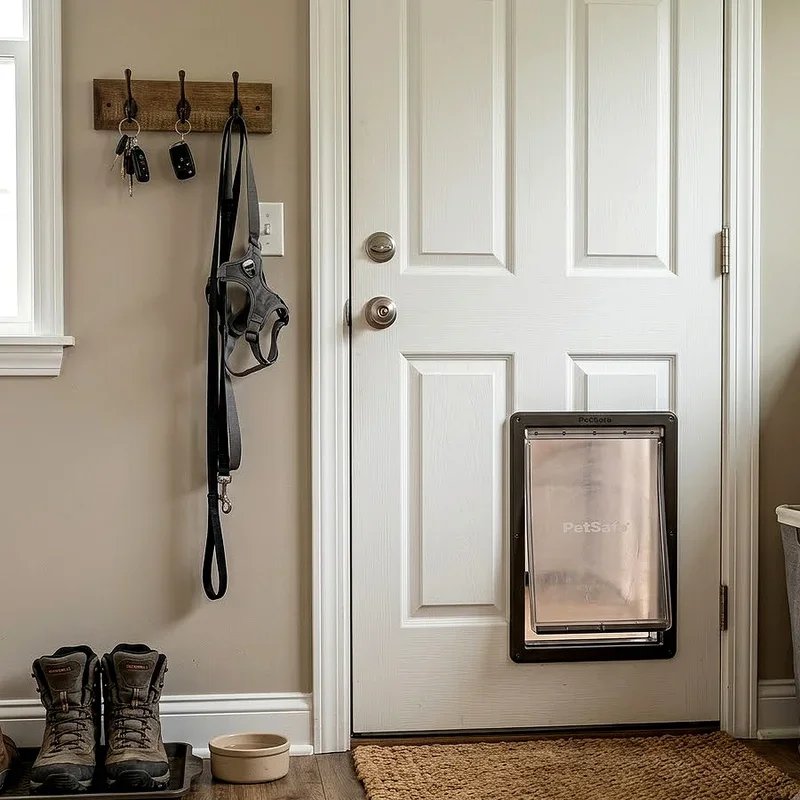
Let's be honest, you did not buy that beautiful solid wood door so your dog could scratch a moon crater into it. Yet here we are, standing up from the couch for the fifth time in an hour because somebody wants to check the bedroom, then the laundry room, then the bedroom again. An interior dog door fixes that dance. It hands your pup a private hallway through the house while you keep your seat, your sanity, and your paint job. The trick is choosing a design that looks intentional instead of improvised. Below you will find fifteen ideas that treat the opening like a design feature, not an apology.
1. Classic Panel Inserts Painted to Match the Door
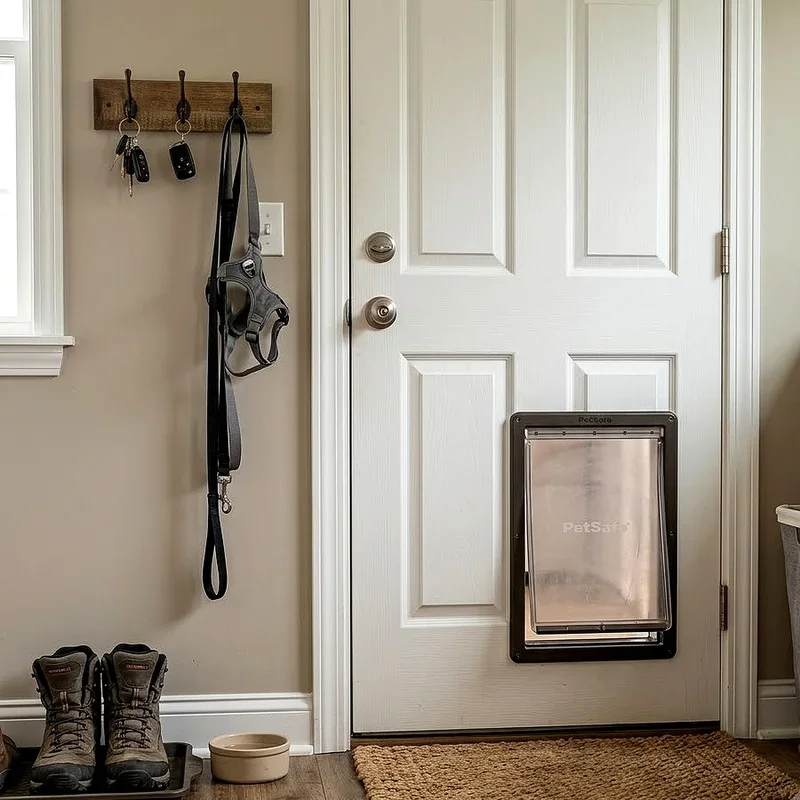
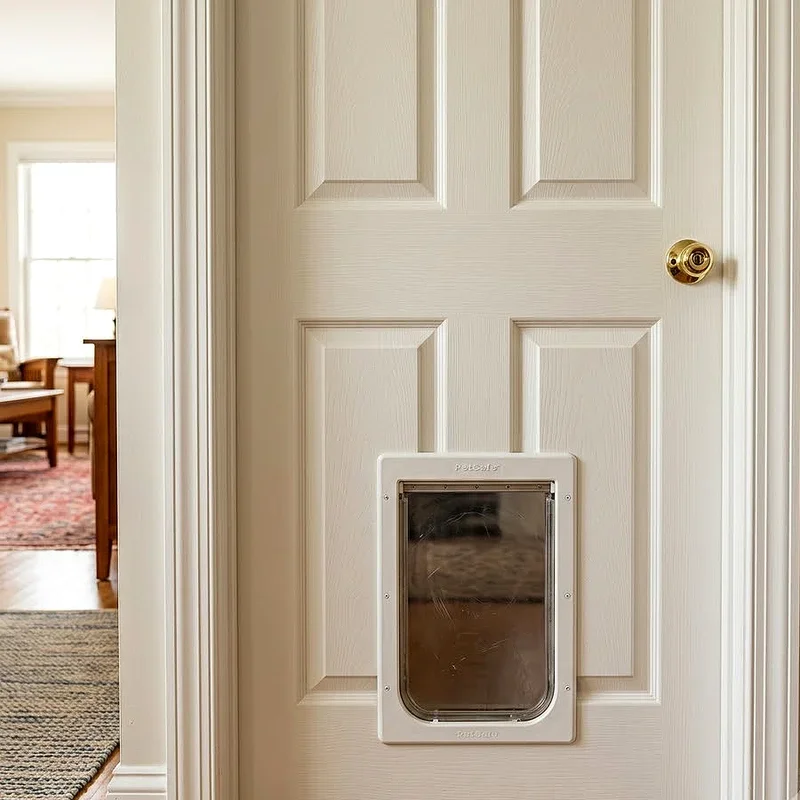
Start with the simplest idea, then dress it up properly. A standard flap kit drops into the lower panel of almost any interior door, and the whole job takes one afternoon with a jigsaw and a steady hand. What separates a polished result from a rental grade eyesore is finish work. Prime the plastic frame, paint it in the exact shade of the door, and caulk the seam so no white line peeks through. For stained wood, order a wood grain trim or wrap the frame in thin veneer. Six panel doors work especially well because the existing molding already frames the opening for you. Why spend hundreds on a door and then let a factory white rectangle ruin the whole look? Twenty dollars of paint fixes that forever.
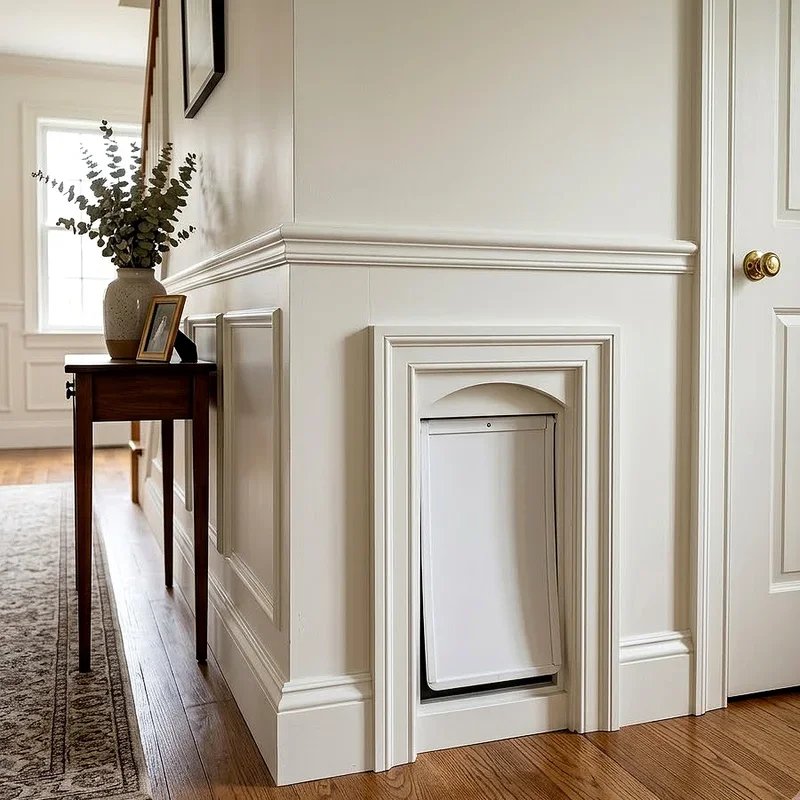
2. Built In Wall Openings That Vanish Into the Trim
Instead of cutting into a door slab, carve the opening straight through a wall and frame it like a miniature doorway. Wrap the edges in the same baseboard and casing you already use, then paint everything one continuous color. The result reads like architecture rather than an accessory, almost as if the builder planned it in 1940. Designers love this approach because the eye skips right over it, registering only a rhythm of trim along the hallway. You can add a small header detail, a rounded corner, or even picture rail molding above it. Ask your contractor to confirm the wall is not load bearing before anyone picks up a saw. Done well, guests notice the opening once, smile, and never mention it again.
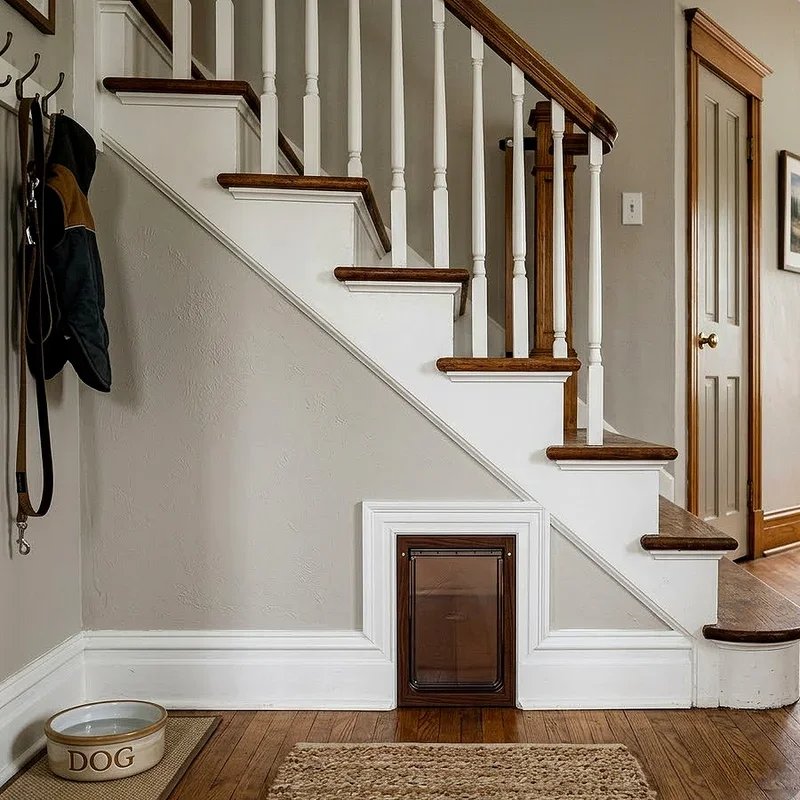
3. Hidden Passages Tucked Beneath the Staircase
That dead space under your stairs already collects vacuum attachments and old wrapping paper, so why not give part of it to the dog? Cut a low opening into the side panel and you create a passage that leads into a cozy den, a storage closet, or the room beyond. Some homeowners go further and build a full nook inside, complete with a cushion, a small light, and a nameplate above the arch. It feels like a wizard's cupboard, only cheerier and with more fur. Because staircases usually sit in circulation zones, your dog gains a shortcut that shortens trips across the house. Keep the threshold flush so nobody trips, and finish the interior with wipeable paint. Suddenly your most awkward square footage becomes everyone's favorite feature.
4. Toe Kick and Cabinet Base Openings in the Kitchen
Kitchen cabinets hide a surprising amount of usable space behind the toe kick, and that narrow strip makes a brilliant route for small dogs. A cabinet run that backs onto a pantry or mudroom can host a discreet passage cut through the base, letting your pup slip between rooms without crossing the cooking zone. Cabinetmakers can panel the opening so it matches the door fronts exactly, complete with the same stain or lacquer. Some families combine the passage with a pull out feeding drawer, keeping bowls off the floor until mealtime. Is it fussy? A little. Is it gorgeous? Absolutely. Just keep the route away from ovens and dishwashers, since heat and steam make poor neighbors for a curious nose that investigates everything at ankle height.
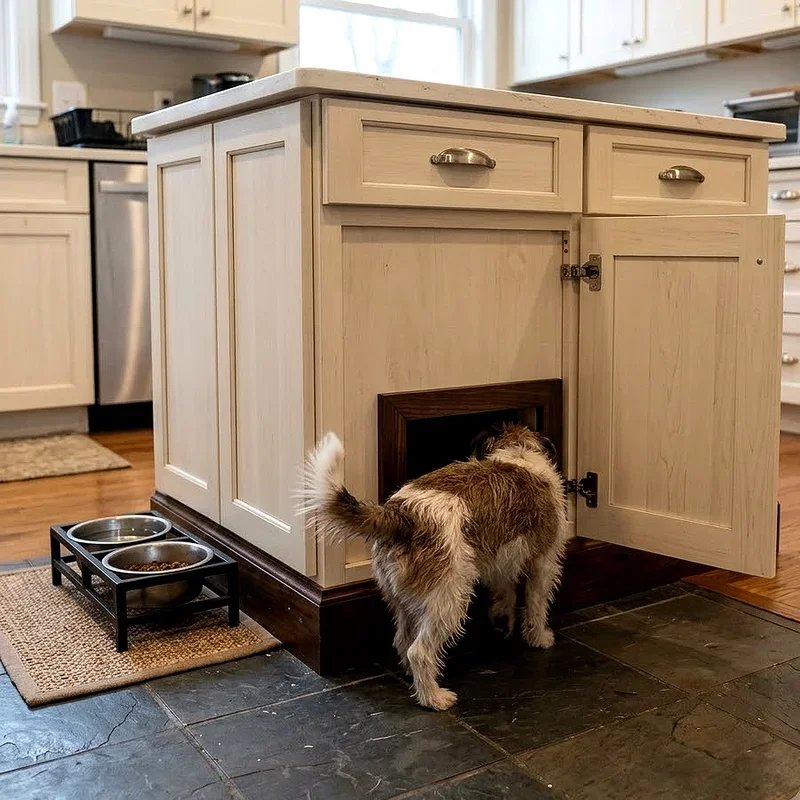
5. Laundry Room Doorways That Hide the Feeding Station
The laundry room is the unsung hero of pet friendly design, a tucked away space where crumbs, water splashes, and litter never bother anyone. Put a flap in that door and your dog gains around the clock access to food, water, and a crate without the mess migrating into your living room. Mount the opening low, line the floor with a washable mat, and store kibble in a sealed bin on a low shelf. Because laundry doors usually stay shut anyway, the flap solves a problem that would otherwise force you to prop things open. Add a wall hook for the leash and a towel rack for muddy paw cleanups. It turns one small room into a full service pet suite that nobody has to look at.
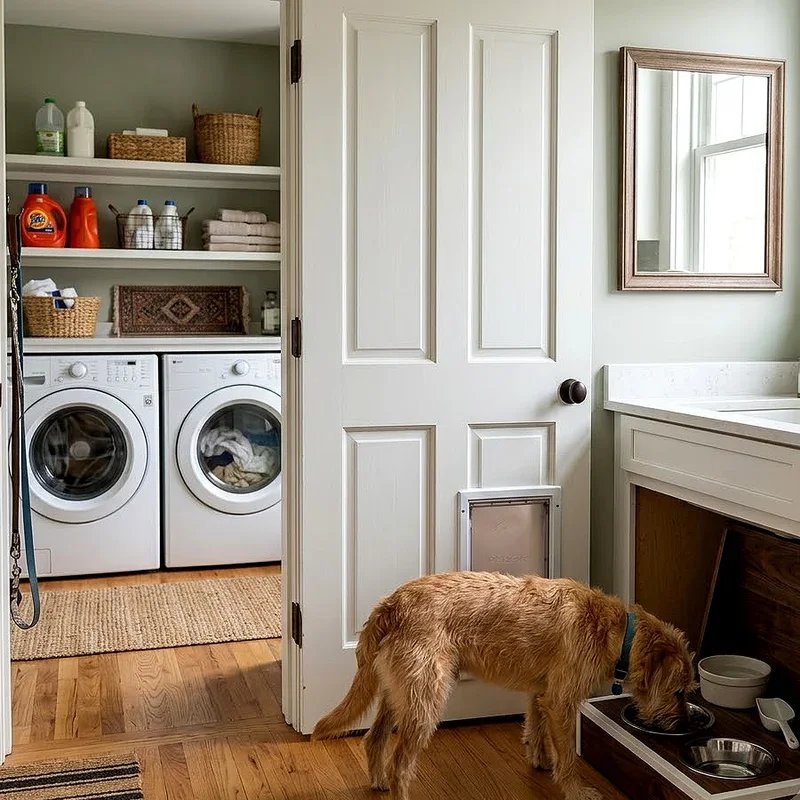
6. Arched Openings With Storybook Cottage Charm
Square holes are practical, but arches are charming, and charm is exactly what sells this idea to a skeptical spouse. A gently curved opening in a hallway wall or pantry partition reads like a Tudor cottage detail scaled down for a spaniel. Pair it with plaster edges, a limewash finish, or a brick surround and the whole thing looks like it belongs in the English countryside. You can even carry the curve into a matching arch elsewhere in the room so the shape feels deliberate rather than random. Contractors build these with flexible track or a plywood template, so the cost stays modest. Want extra personality? Paint the interior of the tunnel a bold contrasting shade. Your dog will not care, but every visitor will ask about it.
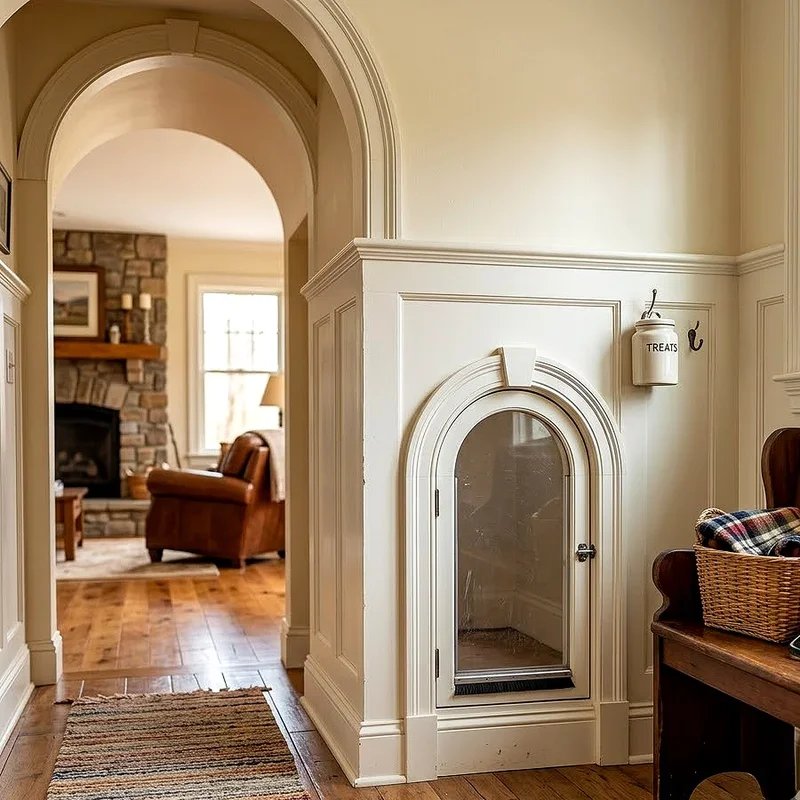
7. Glass Panel Doors With Flaps for Pups Who Need Sightlines
Some dogs do not fear closed doors so much as blindness behind them. If your pet paces whenever you disappear, consider a French door or a door with a glass insert plus a flap in the lower rail. Now your dog can see you folding laundry and decide that following you is optional. Tempered safety glass handles enthusiastic paws, and frosted or reeded panels offer privacy while still passing light. Interior designers call these doors visual connectors, which is a fancy way of saying rooms feel bigger when you can see through them. The combination works beautifully in home offices, where you want quiet without a barricade. Ever notice how anxiety drops the moment mystery disappears? Dogs experience that too, and glass delivers it cheaply.
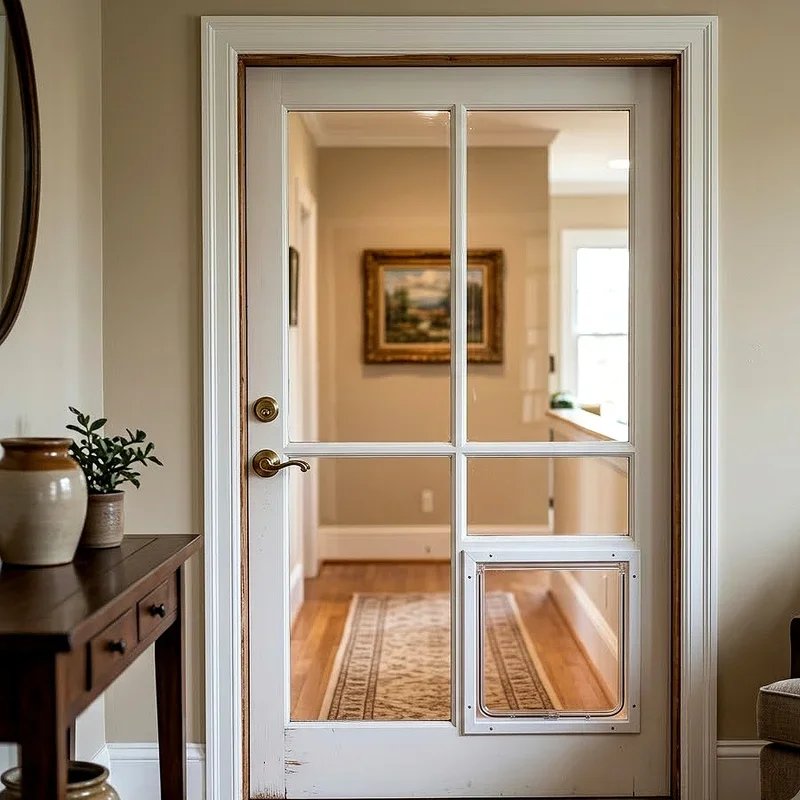
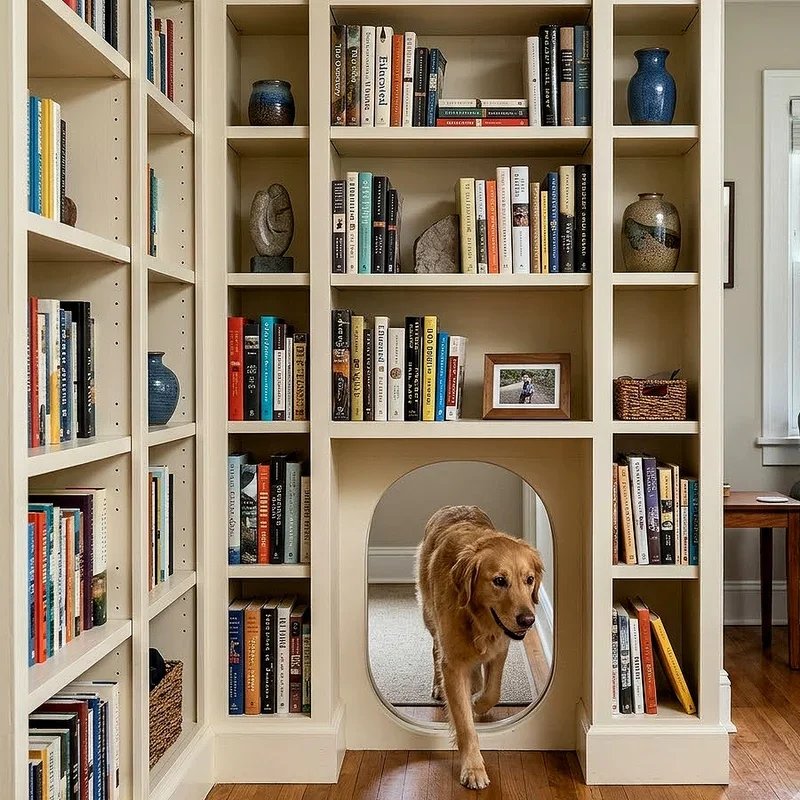
8. Bookshelf Openings That Double as Display Space
Built in shelving usually runs wall to wall, which makes it a perfect host for a hidden passage. Sacrifice the bottom cubby, cut through the back panel, and your dog gets a tunnel that looks like part of the cabinetry. Style the shelves above with books, ceramics, and a trailing plant, then place a cushion inside the opening so it doubles as a reading nook for your pup. It has the same appeal as a secret door in an old library, minus the candlestick lever. Painted millwork in a deep green or navy makes the cubby feel intentional rather than accidental. Add a picture light overhead and the whole arrangement photographs beautifully. Your dog gets shelter, you get storage, and the room gains a talking point.
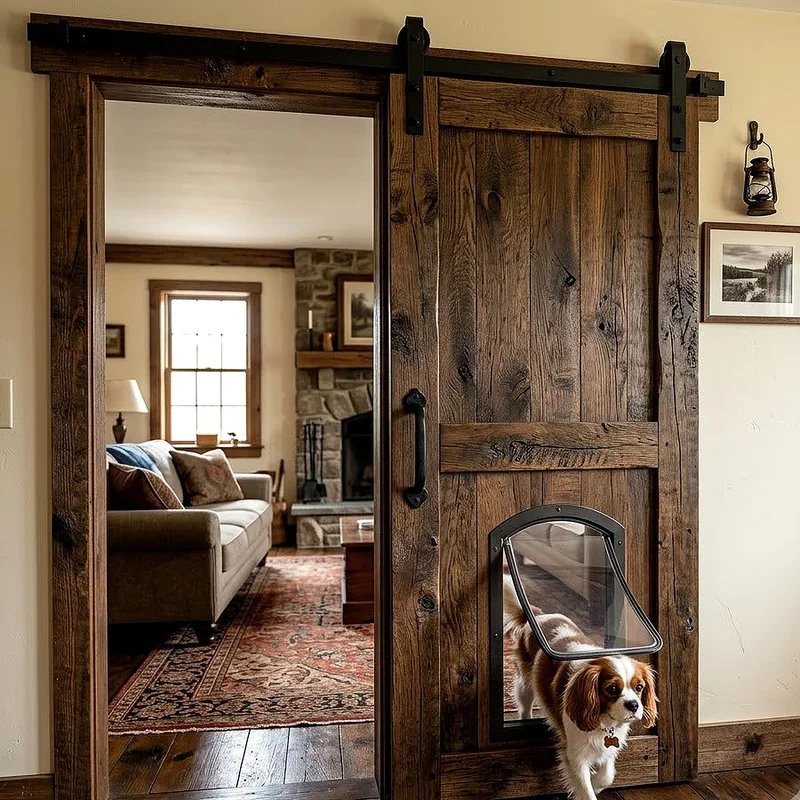
9. Barn Door Cutouts for Farmhouse and Rustic Rooms
Sliding barn doors look great until you realize your dog cannot budge one. A cutout solves that instantly, and the chunky plank construction gives you plenty of material to work with. Frame the opening with reclaimed wood, add wrought iron corner brackets, and the passage looks like it came from an actual stable rather than a big box store. Because barn doors hang in front of the wall instead of inside a jamb, you keep the flap fully accessible even when the door slides open. Pair it with a hanging rope pull and a leather flap for a workshop vibe. One caution worth remembering: barn doors sway, so install a floor guide. A door that swings while your dog passes through teaches him to avoid it forever.
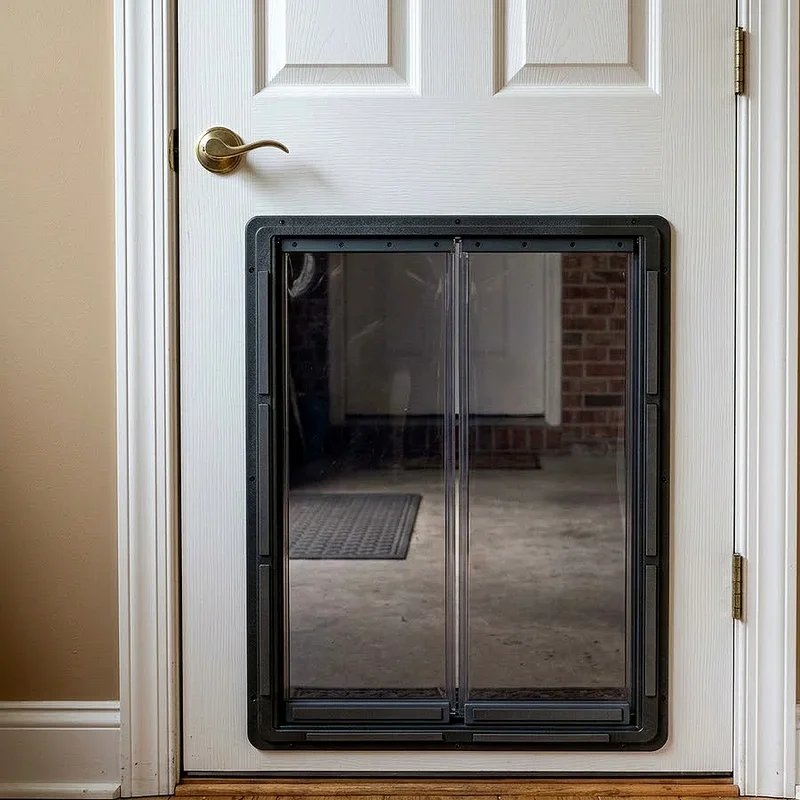
10. Magnetic Dual Flaps That Block Drafts, Smells, and Noise
Style matters, but so does a flap that actually stays closed. Magnetic closures snap the panel back into its frame after every pass, sealing the opening against kitchen smells, litter odors, and the cold air that creeps up from basements. Look for dual flap designs with a small air pocket between panels, which insulate the way double glazed windows do. Weather stripping around the tunnel kills rattling, and a heavier vinyl flap muffles sound better than a thin one. If your dog uses the door dozens of times daily, this upgrade keeps your utility bills from noticing. Nervous dogs may need the magnets weakened at first, since a stiff flap feels like a wall. Start loose, then tighten once confidence grows.
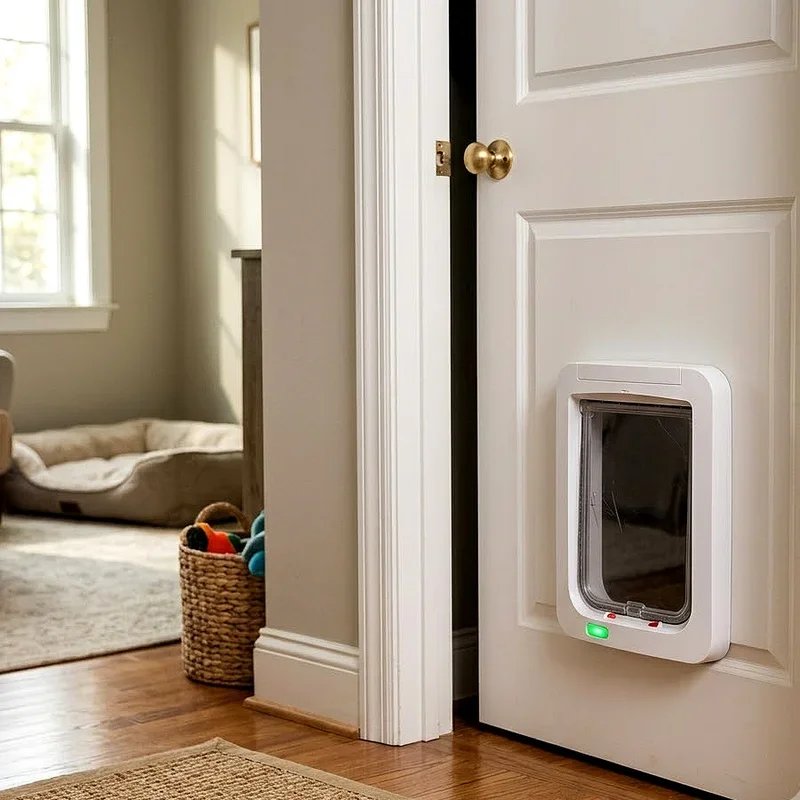
11. Microchip Smart Doors for Multi Pet Households
Live with a cat who steals dog food, or a dog who raids the litter box? Then a selective entry door becomes less of a gadget and more of a peace treaty. These units read your pet's existing microchip or a small collar tag, then unlock only for approved animals. Some models track how often each pet passes through, which gives you an early warning when an older dog starts moving less. Battery life usually runs several months, and the units mount into doors, walls, or cabinet panels. Yes, they cost more than a basic flap, and yes, they hum faintly when unlocking. But controlling who goes where without installing baby gates across your hallway feels like a genuine upgrade to daily life.
12. Basement and Utility Tunnels Hidden in Plain Sight
Basement doors take abuse anyway, so they make low risk candidates for your first cutout. A flap here lets your dog reach a crate, a cooling concrete floor in summer, or a quiet corner kept far from guests. Install a sturdy self closing flap, because basement stairs plus an open hole invites drafts and tumbles. Safety first: add a small landing or a gate at the top if the stairs start immediately behind the door, since dogs in a hurry misjudge the first step. Finish the frame in the same semi gloss as the door and nobody notices it from the hallway. Utility rooms work similarly, giving pets access to corners nobody visits. Why fight over territory when the house already has spare rooms going unused?
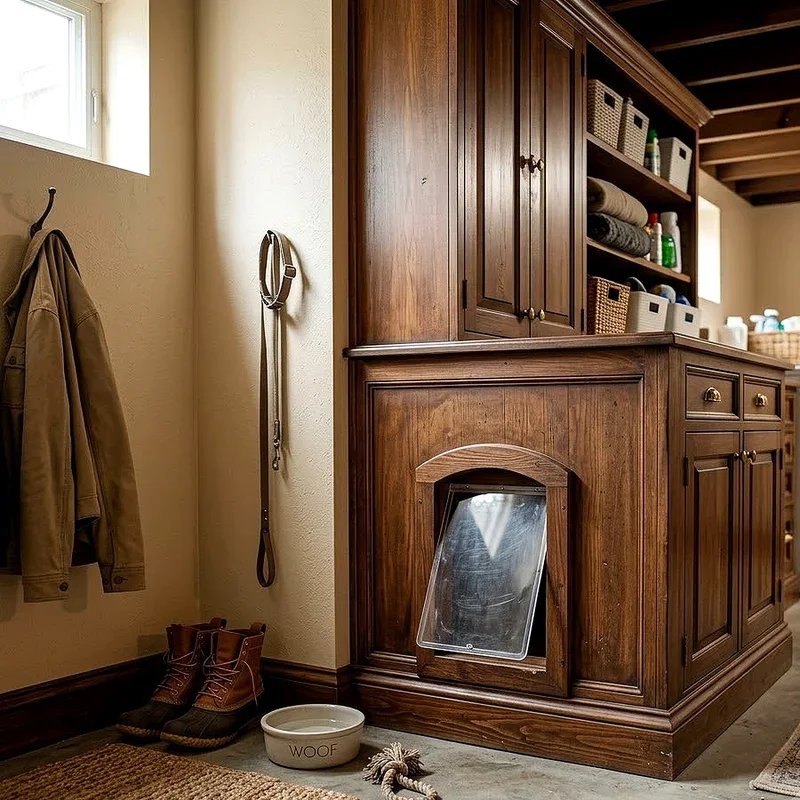
13. Mudroom Bench Passages With Storage Built Above
A mudroom bench already sits at the perfect height, so hollow out the section closest to the wall and run a tunnel straight through to the garage side or hallway beyond. Above it you keep cubbies for boots, baskets for hats, and hooks for leashes, which means the passage steals no usable storage at all. Line the tunnel with beadboard or tile so wet paws never swell the plywood. Many families add a shallow drawer underneath for towels, turning the bench into a full grooming station. It is the multitasker of pet friendly design, the mudroom equivalent of a Swiss army knife. Choose a durable enamel paint in a mid tone color, because this corner of the house collects mud faster than any other.
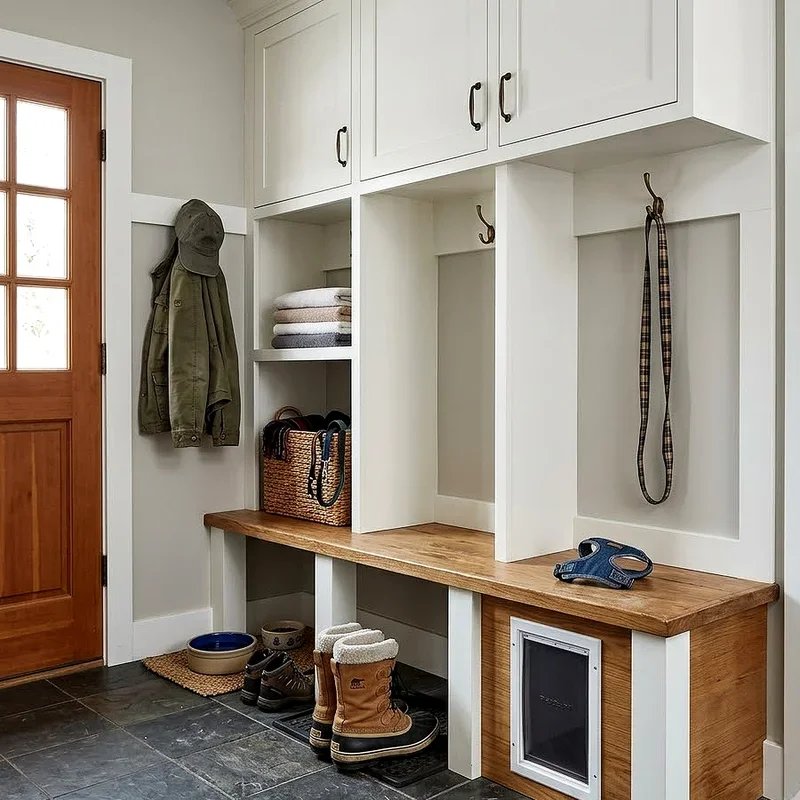
14. Curtain and Fabric Flaps That Renters Can Remove
Not everyone can take a jigsaw to the landlord's woodwork, and thankfully you do not have to. Tension mounted frames, over the door brackets, and freestanding pet gates with built in pass throughs all deliver the same convenience with zero permanent damage. Fabric flaps hung from a slim rod look softer than plastic and can match your curtains, cushions, or a favorite print. Choose washable canvas and weight the bottom hem so the panel falls back into place. For bedroom doors, a simple door stop that holds the gap at six inches works surprisingly well for small breeds. When you move, everything comes down in ten minutes and your deposit stays intact. Renting should not mean your dog lives behind closed doors.
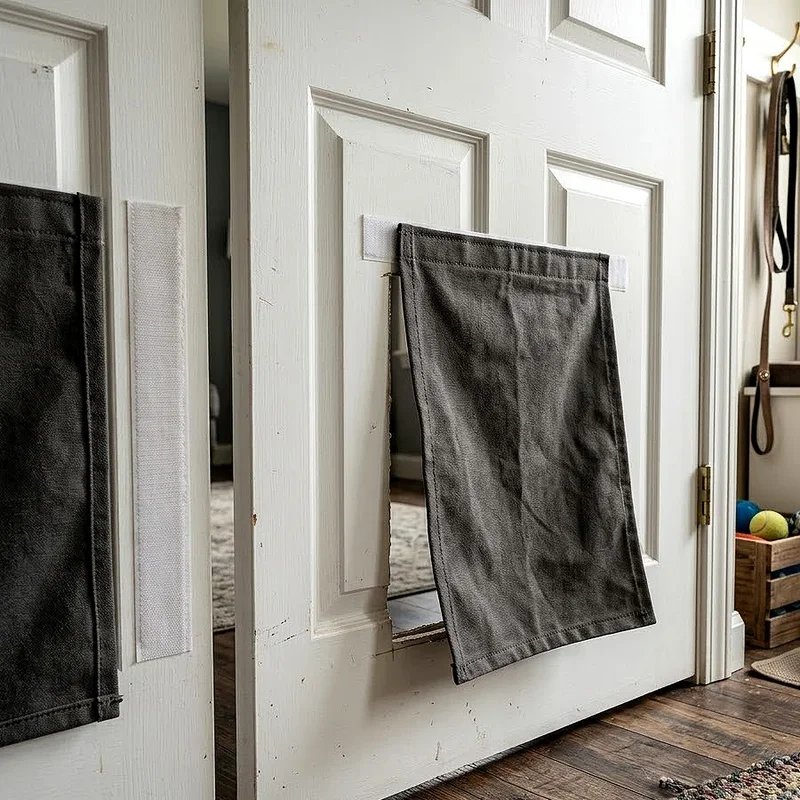
15. Wallpapered Tunnels and Tiny Lights That Turn Openings Into Art
Here is the finishing touch most people forget entirely. The inside of the tunnel is a surface, and surfaces deserve treatment. Paper it in a bold botanical print, tile it in glossy squares, or paint it a punchy coral that surprises anyone who crouches down for a look. Add a battery puck light or a slim LED strip along the top edge and the passage glows softly at night, which helps older dogs judge the opening. Some owners paint a tiny house number or the dog's name above the arch, like a doorway on a miniature street. These details cost almost nothing yet transform a functional hole into a deliberate design moment. Would you leave a hallway undecorated? Then treat this little corridor with the same respect.
Conclusion
An interior dog door solves a small daily annoyance in a way you feel immediately. Your pup roams freely, your doors stop collecting scratches, and you finish your coffee while it is still hot. The best installations look like they belong, whether that means a painted arch, a bookshelf tunnel, or a renter friendly fabric flap. Measure your dog at the shoulder, match your finishes carefully, and train with treats rather than pushing. Pick one idea, try it in a single doorway, and watch the whole household relax.
Read next: 15 Dog Birthday Present Ideas for a Special Celebration
Frequently Asked Questions
Q1: Can I install an interior dog door in a hollow core door?
A: Yes, most kits include a frame that supports hollow core doors and seals cut edges neatly.
Q2: Will an interior dog door reduce my home's resale value?
A: Rarely, since interior doors and drywall patches cost little to repair before listing your home.
Q3: How high should the dog door opening sit?
A: Set the flap bottom level with your dog's chest, usually two inches above elbow height.
Q4: Do interior dog doors work for cats too?
A: Absolutely, though microchip models prevent dogs from raiding litter boxes or stealing the cat's food.
Q5: How long does training a nervous dog usually take?
A: Most dogs learn within two weeks when you use treats, patience, and gradually lowered flaps.
Stay up to date with our latest ideas!