Discover 15 stylish cat litter room ideas that hide the box, kill odors, and keep your home looking gorgeous and guest ready.
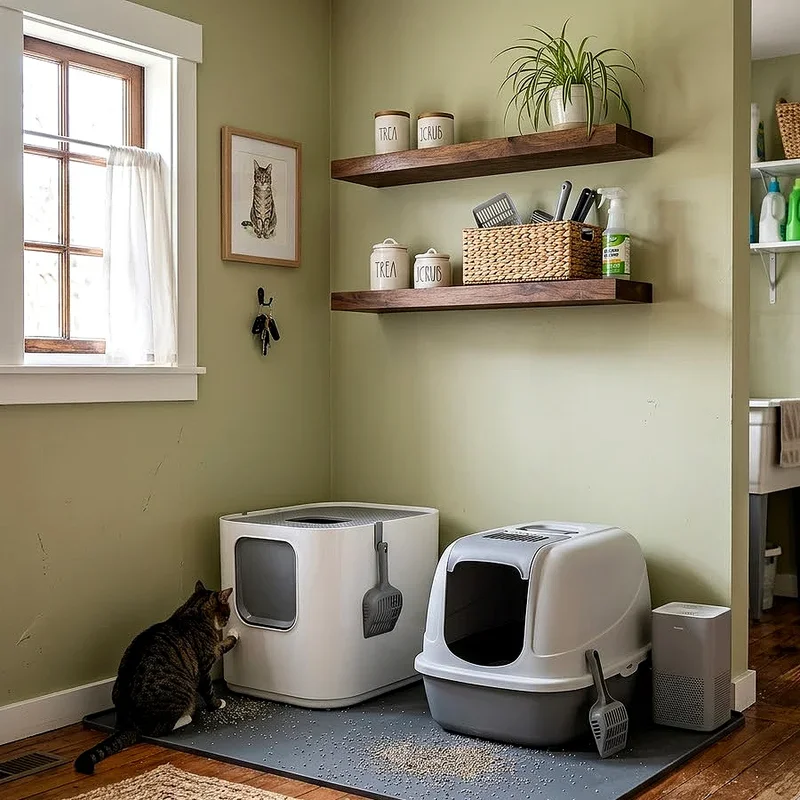
Let's be honest for a second. You love your cat with your whole chest, but you do not love the plastic box sitting in the corner of your living room like an uninvited guest. I have been there. For years my litter box lived beside the bookshelf, and every single visitor pretended not to notice it while absolutely noticing it. The good news? A litter area can be tucked away, ventilated, easy to clean, and honestly kind of beautiful. Think of it as giving your cat a private powder room instead of a public restroom. In this guide, I am walking you through fifteen practical, design friendly ideas that work in tiny apartments and big houses alike.
1. Turn a Spare Closet Into a Private Litter Nook
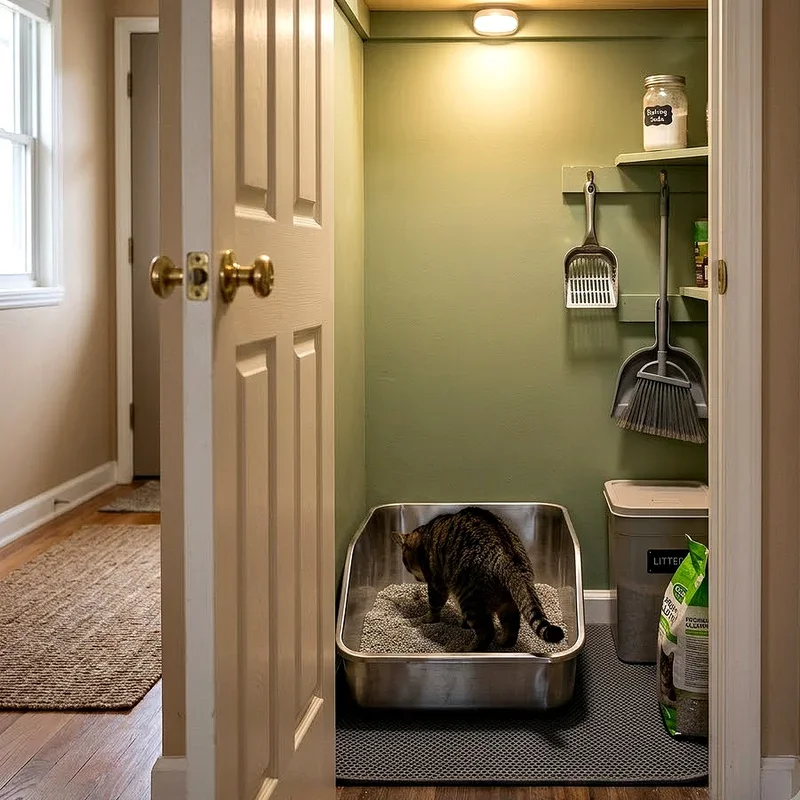
My spare closet sat empty for years, stuffed with junk I never touched, so I handed it over to my cat and never looked back. You remove the door, cut a neat archway into the lower panel, and suddenly you own a private bathroom nobody notices. Cats adore that tucked away feeling, kind of like how we prefer a stall over an open room, and those closet walls trap stray litter instead of letting it scatter across your floors. Add a small shelf above for scoops, bags, and backup litter, then paint the interior a shade that echoes your hallway. Want it truly invisible? Keep the original door and cut the opening into the side panel instead, so guests only see ordinary storage. Simple, cheap, genuinely transformative.
2. Hide the Box Inside a Stylish Cabinet
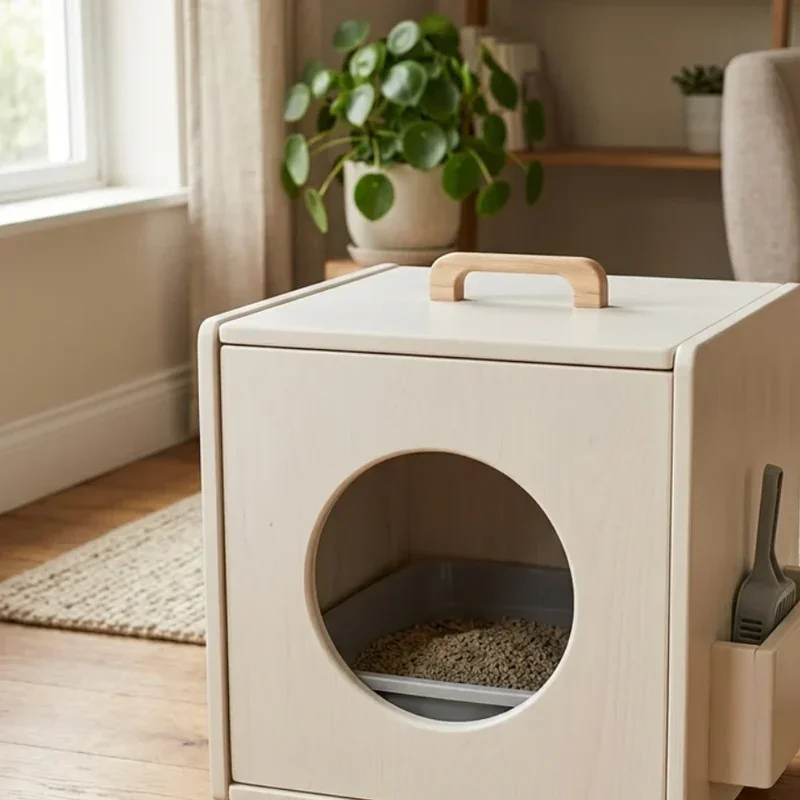
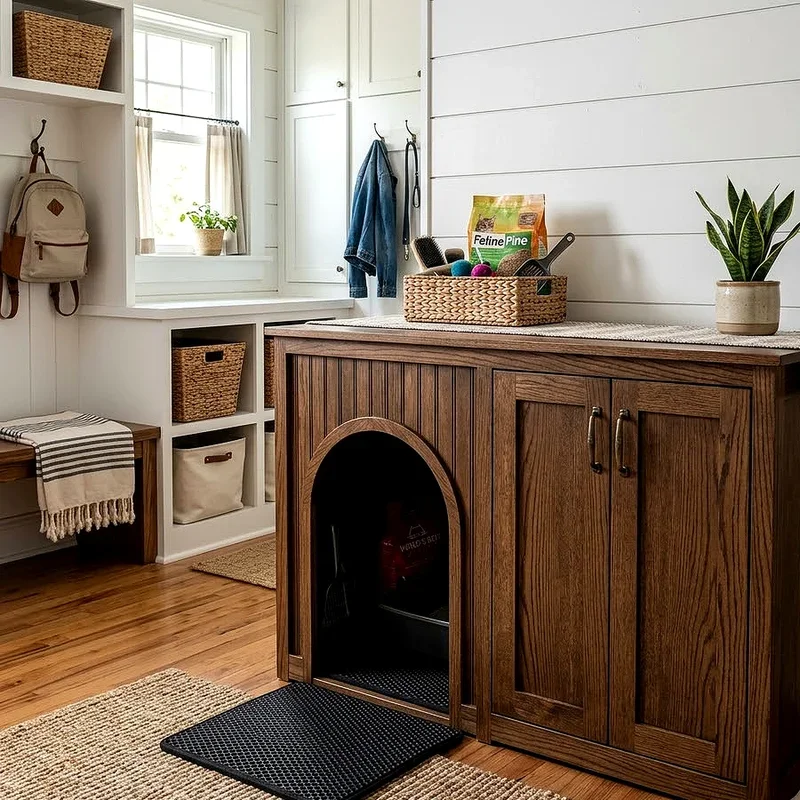
Here is the trick that fooled every friend who walked into my apartment last spring. I bought a plain wooden cabinet, cut a six inch oval into one side, and slid the litter box inside like a magician hiding a rabbit. From the outside, it reads as a console table holding a lamp and a stack of books. Inside, your cat enjoys total privacy and the mess stays contained. You can buy purpose built furniture now, but honestly a thrifted cabinet costs half as much and looks warmer. Just make sure the interior measures at least twenty four inches wide so your cat can turn around comfortably. Line the bottom with peel and stick vinyl, because wood soaks up moisture and odor like a sponge. Nobody wants that.
3. Carve a Cutout in Your Bathroom Vanity
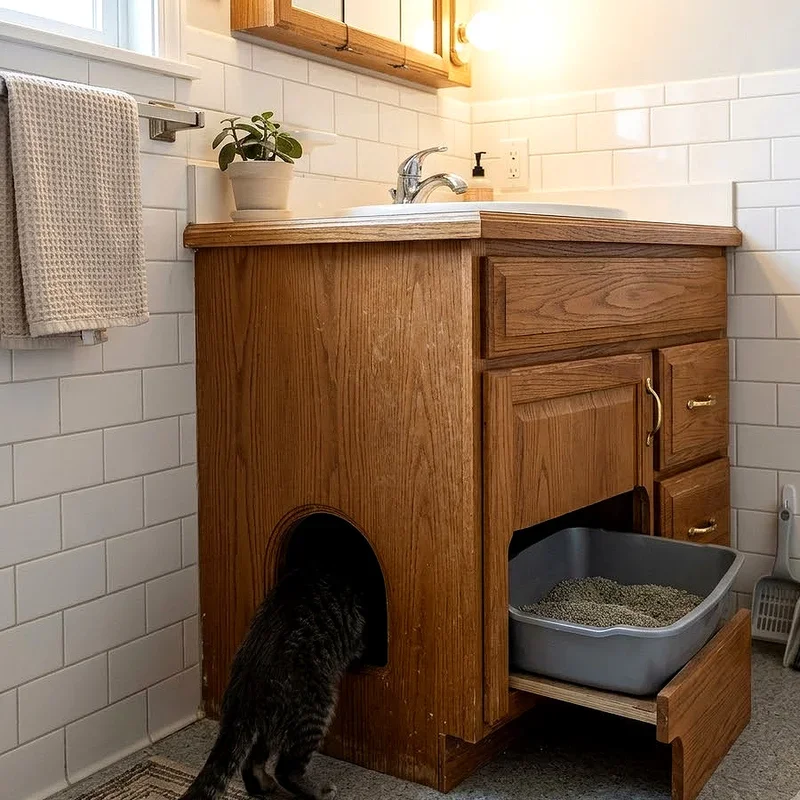
Think about it: your bathroom already handles moisture, odors, and easy to mop flooring, so why fight that logic? The cabinet beneath your sink usually wastes half its space on pipes and a lonely bottle of cleaner. Cut a cat sized opening into the door or the toe kick, clear out the left side, and you have built the most sensible litter room in the house. I did this with a jigsaw and a Saturday afternoon, and the sanding took longer than the cutting. Keep the plumbing side sealed off with a thin plywood divider so curious paws stay safe. Because the bathroom fan already runs, odor barely registers. Add a cheap LED strip inside, and your cat will not stumble around in the dark at three in the morning.
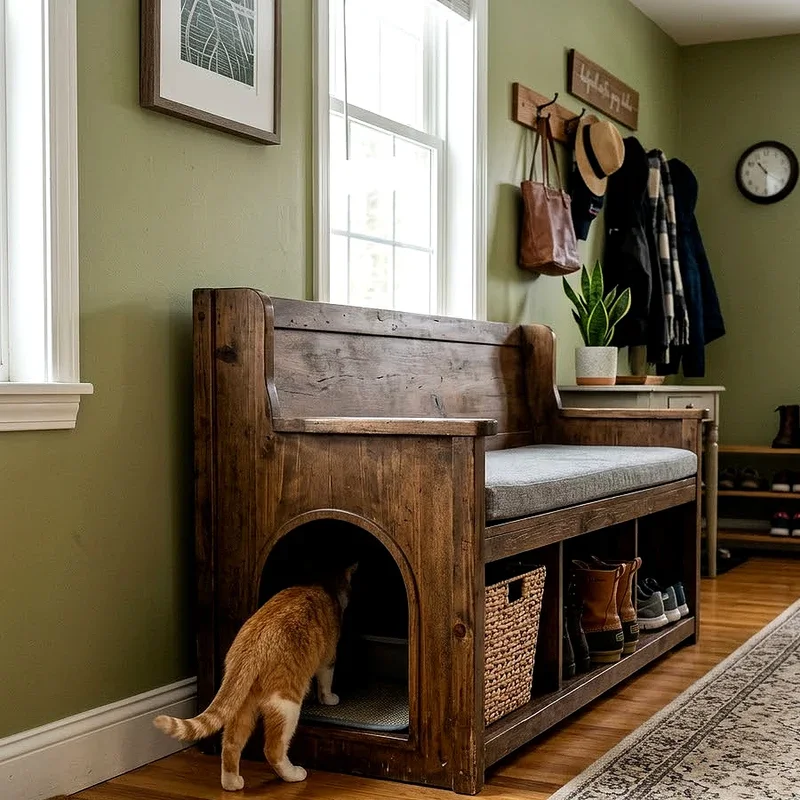
4. Use an Entryway Bench With a Secret Side Entrance
Entryways work overtime already, so let yours pull one more shift. A storage bench with a hollow base becomes a perfect litter hideaway once you cut an arched entrance into the end panel facing the wall. You sit on top pulling on your shoes, and your cat handles business below, completely unbothered. Sounds odd? It works beautifully because the bench sits against a wall where nobody lingers, and the hinged lid makes scooping ridiculously easy. I recommend lining the interior with a shallow plastic tray so spills never reach the wood. Choose a bench built from solid pine rather than particleboard, since cheap board swells the moment anything damp touches it. Toss a cushion on top, and honestly nobody will ever guess what lives underneath.
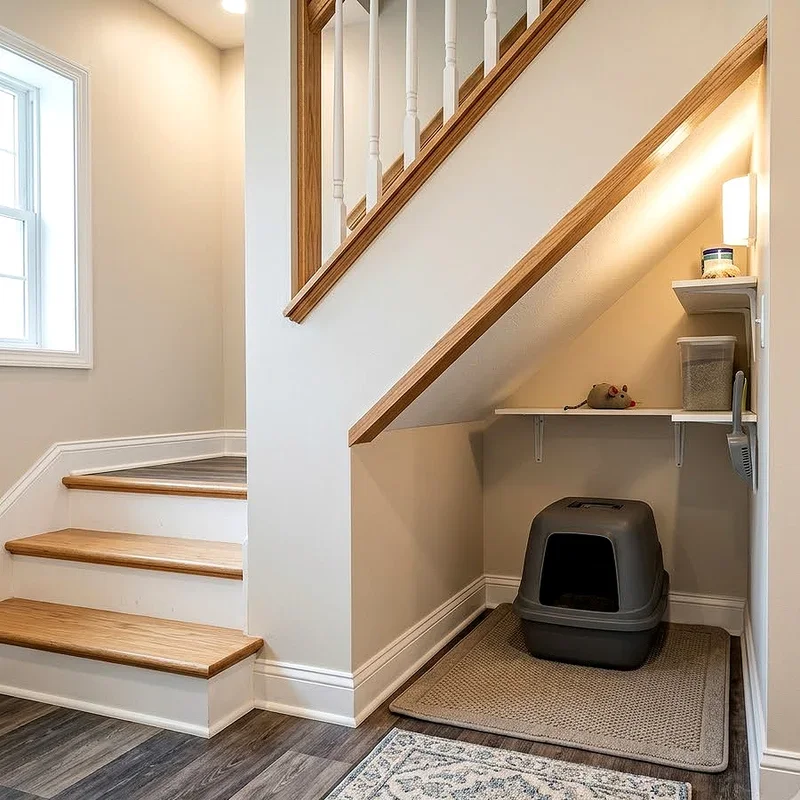
5. Claim the Dead Space Under Your Stairs
That awkward triangle under your staircase collects vacuum cleaners, broken umbrellas, and regret. Why not convert it into the coziest cat bathroom in the house? The sloped ceiling barely matters, because your cat only needs about eighteen inches of headroom near the entrance. Frame a small arched doorway, drywall the interior, paint it a moody charcoal, and install a simple pull down blind you can drop while guests visit. I added a strip of tile flooring so sweeping takes ten seconds flat. Some folks trim the opening with molding that matches their baseboards, which makes the whole thing look architectural rather than improvised. Your cat gains a den like retreat, and you finally stop losing socks to that black hole under the stairs. Everybody wins here.
6. Go Vertical With a Tall Cabinet Setup
Small apartment? Then stop thinking sideways and start thinking upward. A tall, narrow cabinet lets you stack function like a layer cake: litter box on the bottom, ramp or small platform in the middle, and supply storage up top behind closed doors. Cats naturally climb, so a raised entrance hole about twelve inches off the floor feels totally normal to them while blocking curious dogs and toddlers completely. I used a slim wardrobe unit, added a plywood shelf, and cut an entry on the side panel. The vertical footprint measures barely fifteen inches deep, which means it slides into corners that no ordinary cabinet could handle. Add soft close hinges, because slamming doors startle cats and nobody enjoys a spooked cat sprinting through the kitchen.
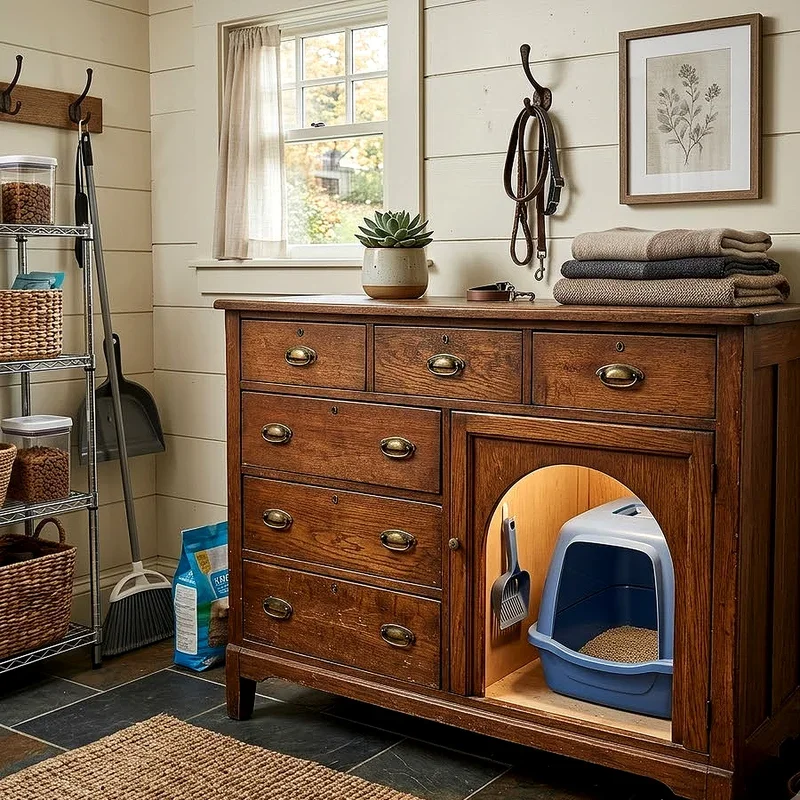
7. Repurpose an Old Dresser or Sideboard
Thrift stores overflow with battered dressers that cost less than dinner for two, and they make gorgeous litter cabinets once you gut the lower drawers. Pull out the drawer slides, remove the internal dividers, and you suddenly own a hollow chamber ready for a covered box. Keep the top drawers functional for storing scoops, liners, deodorizing granules, and brushes. I refinished mine in a soft sage green, swapped the hardware for brass pulls, and it now anchors my hallway like a genuine piece of furniture. Cutting the entrance into the back panel rather than the front keeps the facade perfectly intact, which honestly looks slicker. Seal every interior surface with polyurethane first, because vintage wood drinks up odors and you cannot undo that mistake later.
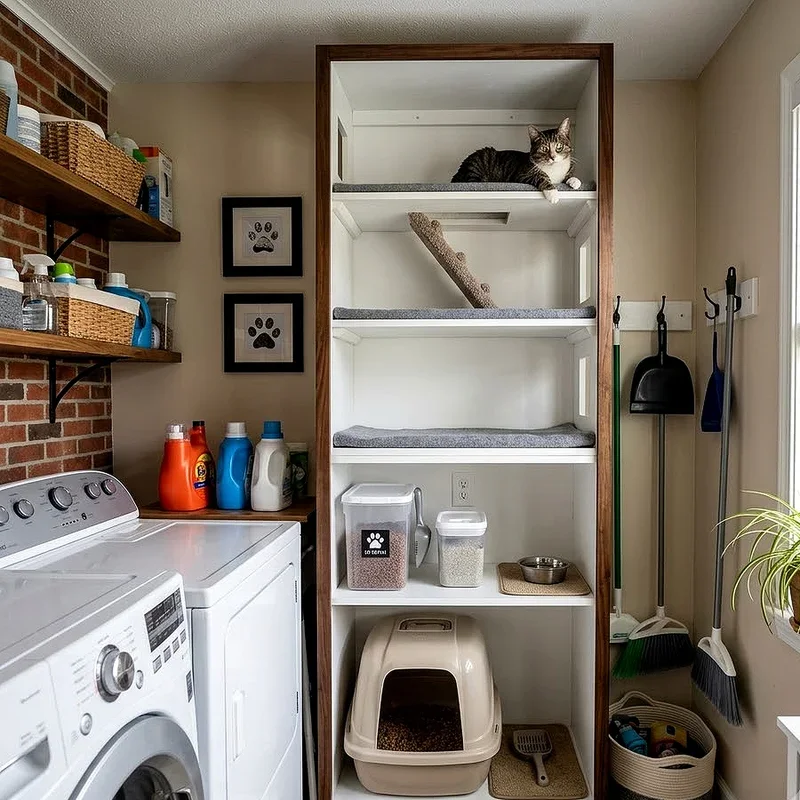
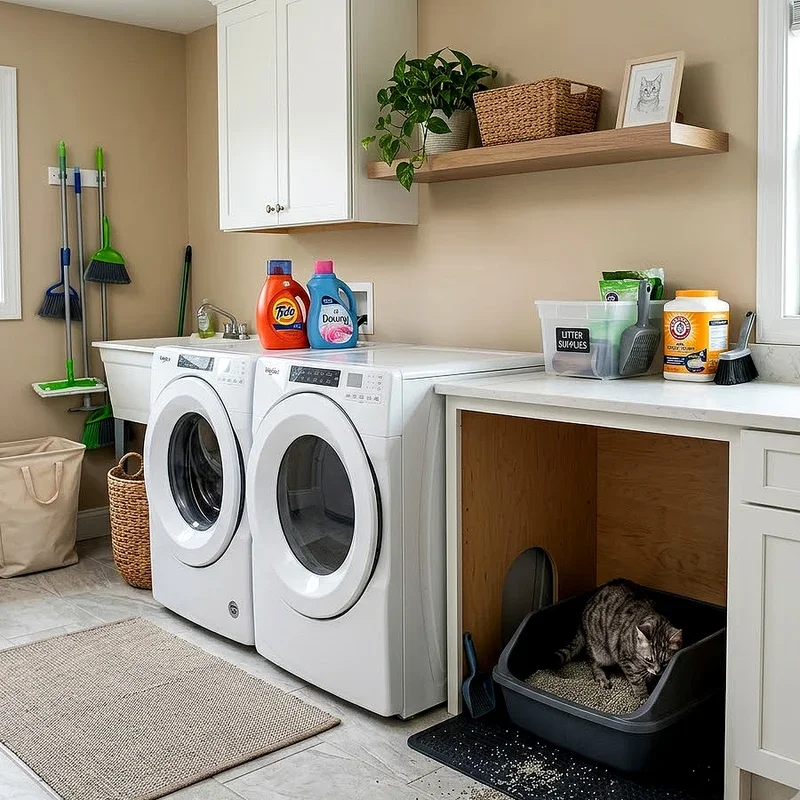
8. Build a Laundry Room Litter Zone
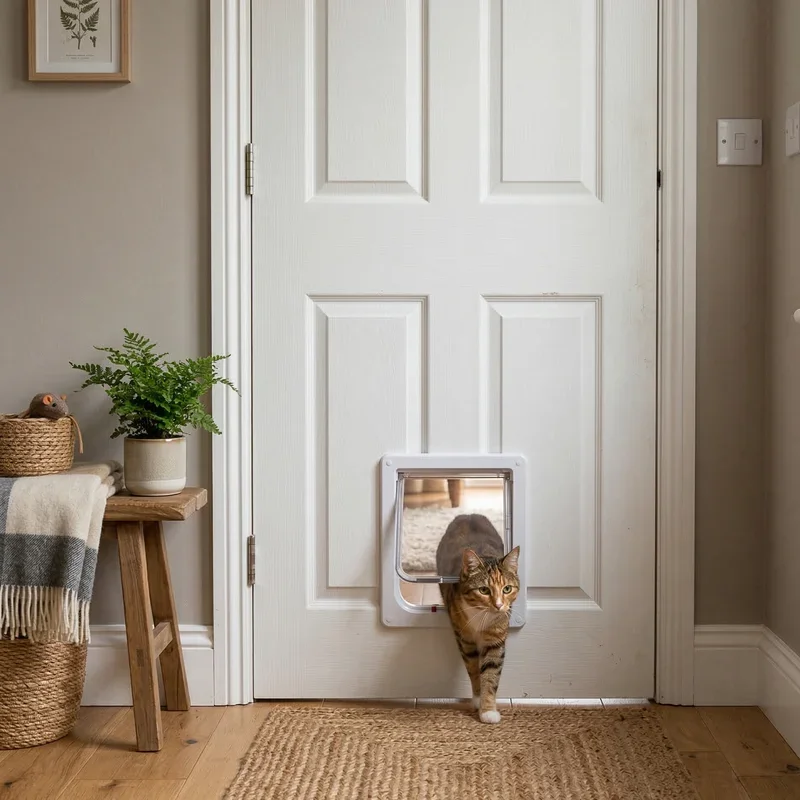
Laundry rooms already tolerate lint, detergent spills, and a slightly chaotic energy, so adding a litter station changes nothing about the vibe. The flooring usually handles water, a drain often sits nearby, and ventilation typically exists. Tuck the box beneath a folding counter or beside the machines, then mount a wall shelf above holding supplies in matching baskets. I installed a cat door in the laundry room door itself, which means the space stays shut while my cat comes and goes freely. One caution though: running machines vibrate and rumble, and some cats find that genuinely unsettling. Watch your cat's behavior for a week before committing. If she hesitates at the doorway or avoids the box, move the setup somewhere calmer instead.
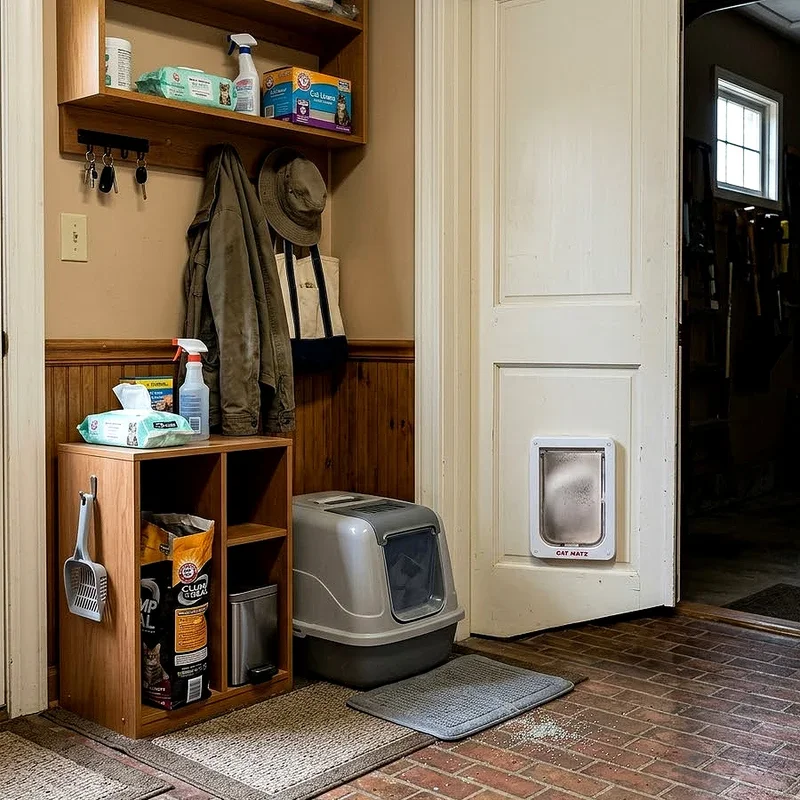
9. Install a Pet Door to the Garage or Mudroom
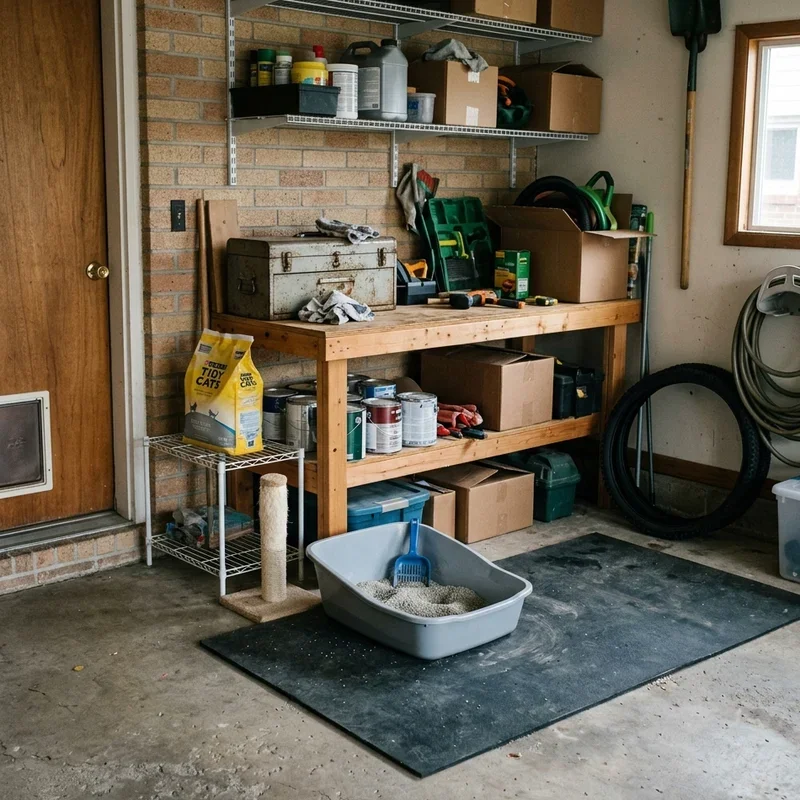
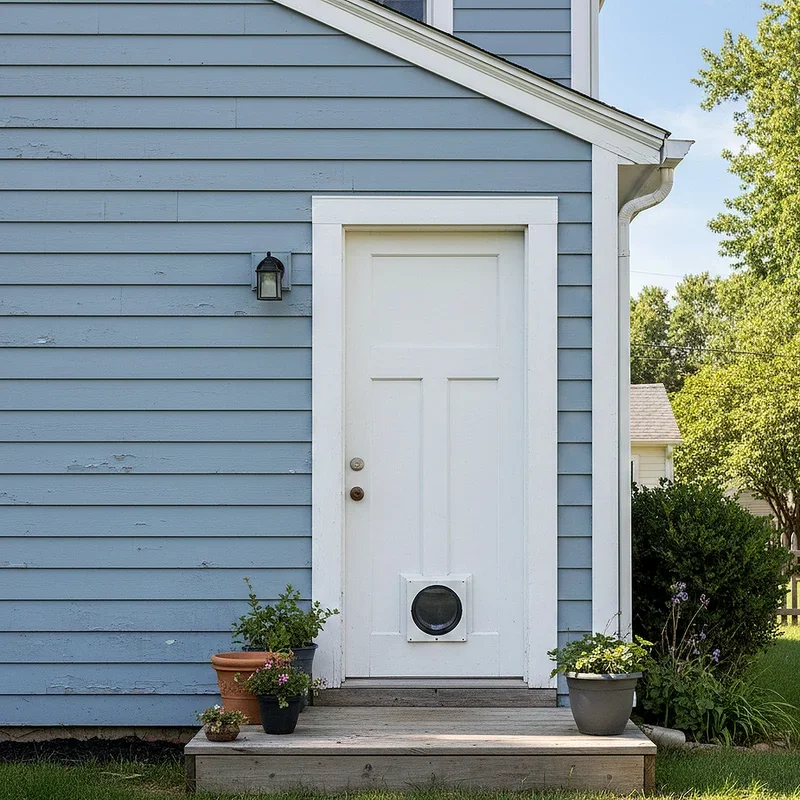
Want the litter box completely out of your living space? Cut a small pet door through an interior wall or door leading into the garage, mudroom, or basement. Your cat walks through whenever nature calls, and your living room stays fresh as a daisy. I framed the opening with trim so it looks intentional rather than hacked, and I chose a flap with a magnetic seal to block drafts and smells. Temperature matters here, so skip this idea if your garage bakes in summer or freezes in winter. Add a heated pad or insulated panel if conditions get harsh. Place the box away from car exhaust and chemicals, obviously. Once set up, this becomes the lowest maintenance solution on the entire list.
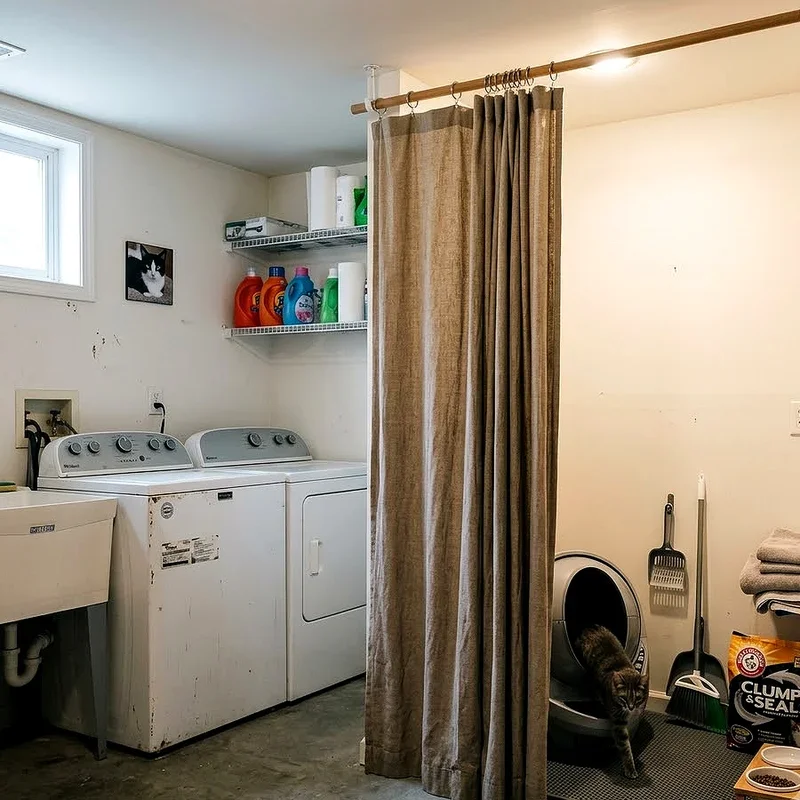
10. Screen It Off With a Divider or Curtain
Not everyone owns a saw, and not every renter can cut holes in cabinetry. So here is the renter friendly answer: screen the box instead of enclosing it. A folding rattan divider, a tall woven basket turned on its side, or a simple linen curtain hung from a tension rod all block sightlines instantly. I used a three panel screen in my old studio, and it cost me twenty dollars at a yard sale. The beauty lies in airflow, because open screening lets odor dissipate rather than concentrate the way sealed cabinets sometimes do. Cats appreciate the visual privacy without feeling trapped in a box within a box. Choose washable fabric, keep the panels a few inches off the floor, and sweep behind weekly.
11. Choose Washable Wallpaper and Moisture Proof Paint
Design people skip this step constantly, then wonder why their pretty litter nook smells sour after six months. Porous surfaces absorb ammonia, plain and simple. Treat the walls around your litter zone the way you would treat a shower surround: semi gloss or satin paint, mildew resistant primer, and vinyl wallpaper that wipes clean with a damp cloth. I lined the lower eighteen inches of my closet nook with peel and stick tile, and stray granules now brush right off. Darker colors hide dust better than white, though white shows problems early, which some people prefer. Whatever you choose, seal the seams. One weekend of prep saves you from stripping and repainting later, and your nose will thank you every single day.
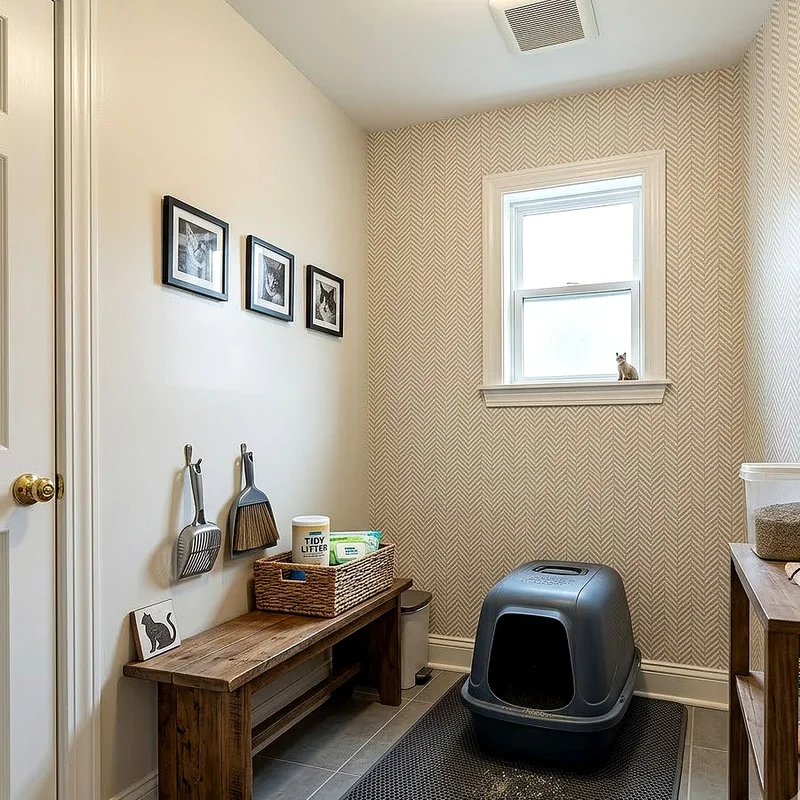
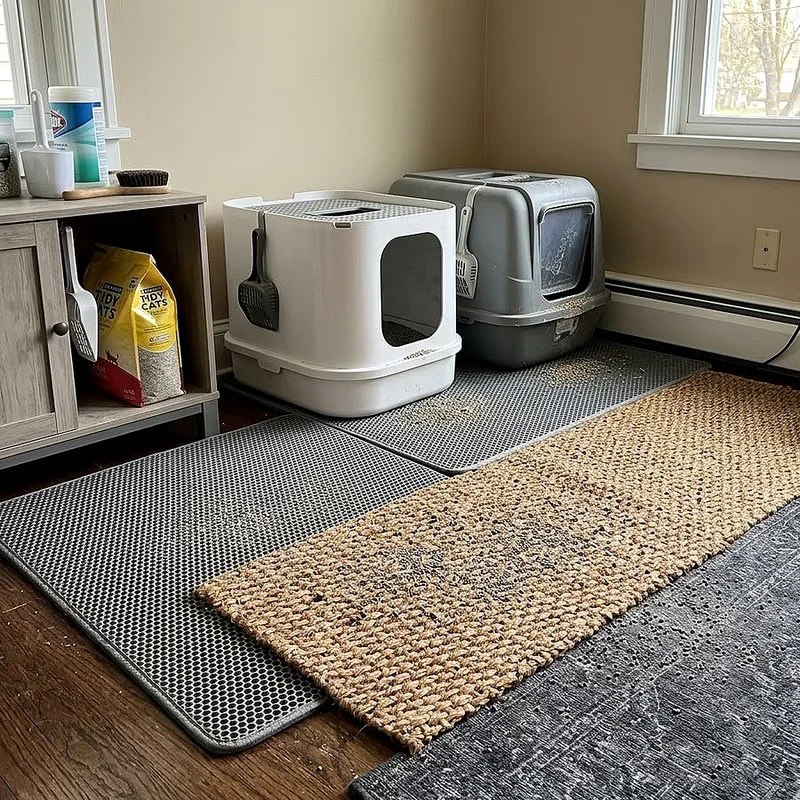
12. Layer Mats and Rugs That Trap Every Stray Grain
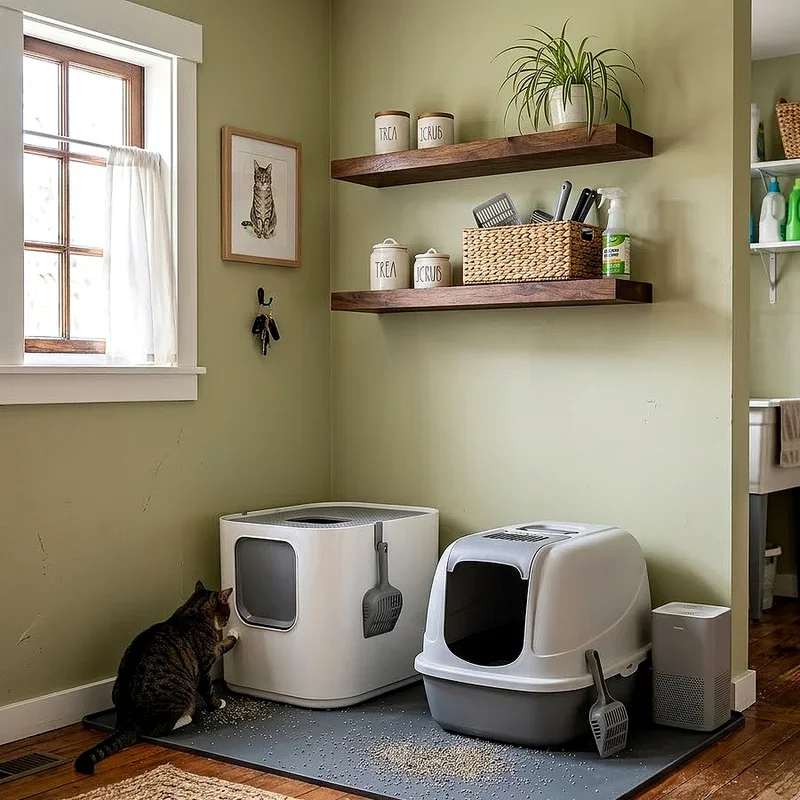
Litter tracking drives people absolutely wild, and honestly I understand the rage. You scoop diligently, then step on a gritty crumb in the kitchen at midnight. The fix involves layering, not a single miracle mat. Start with a honeycomb trapping mat directly at the box entrance, because those little chambers swallow granules like a sand trap. Then add a low pile washable rug just beyond it as a second checkpoint. I keep a handheld vacuum hanging on a hook nearby, which turns cleanup into a fifteen second task rather than a chore I postpone. Avoid shaggy rugs entirely, since litter burrows deep and refuses to leave. Rubber backing matters too, otherwise the mat slides every time your cat launches out.
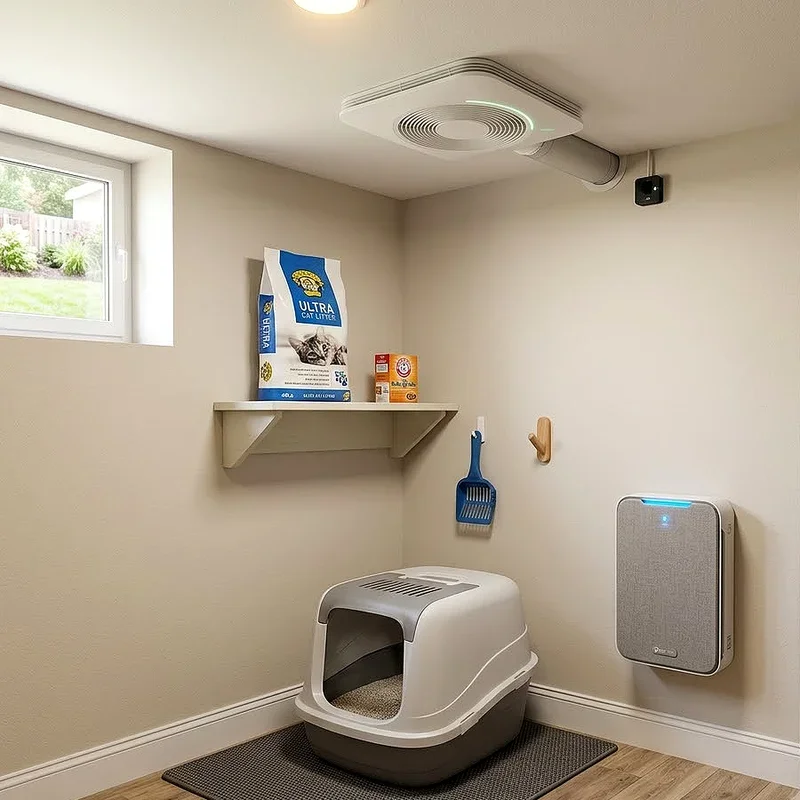
13. Add Quiet Ventilation and Smart Odor Control
Enclosing a litter box without ventilation creates a stuffy little chamber, and your cat notices long before you do. Would you use a bathroom with no window and no fan? Exactly. I installed a small, whisper quiet USB fan inside my cabinet, aimed to pull air out through a vented grille near the top. Carbon filters mount easily behind decorative cane panels, and they scrub odor without perfuming the room. Skip heavily scented sprays, because strong fragrances irritate feline noses and can push cats to avoid the box entirely. Baking soda mixed into the litter works quietly and cheaply. Most importantly, scoop daily, since no ventilation system on earth outperforms basic maintenance. Airflow plus routine equals a room that smells like nothing at all.
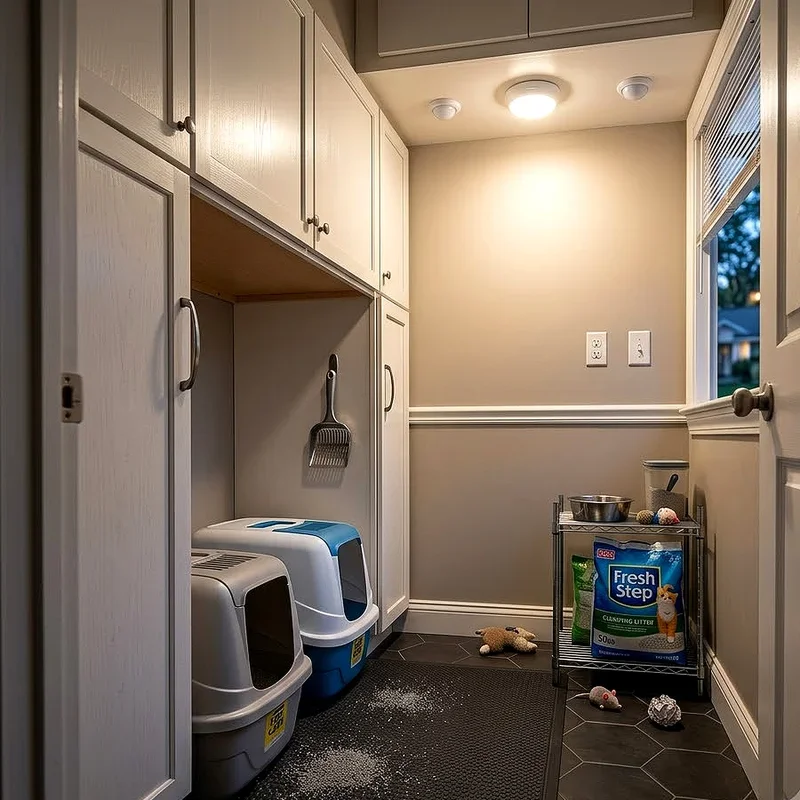
14. Light the Space With Motion Sensor Fixtures
Cats see well in dim conditions, but they cannot see in total blackness, and a pitch dark cabinet feels like a cave with unknown corners. Older cats especially hesitate when they cannot judge the box edge clearly. I stuck a rechargeable motion sensor puck light inside my closet nook, and the change surprised me. My senior cat started using the box more confidently within days. Battery operated strips work anywhere without wiring, and warm white light feels gentler than harsh blue tones. Position the fixture so it illuminates the box interior without glaring directly into your cat's eyes. Bonus for you: scooping at night becomes genuinely easy instead of a guessing game with a phone flashlight balanced on your shoulder
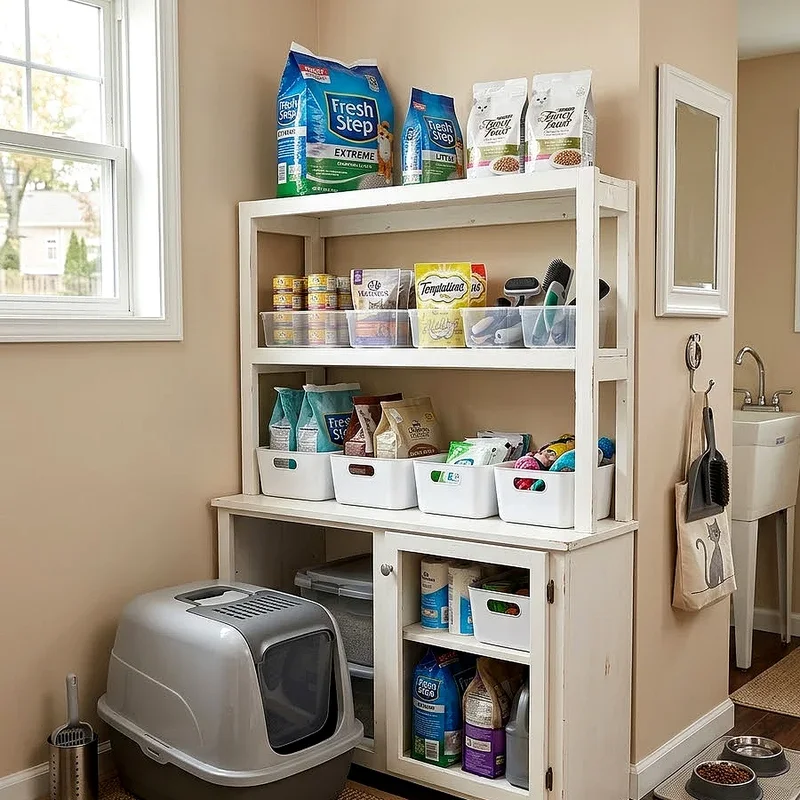
15. Create a Full Litter Station With Supply Storage
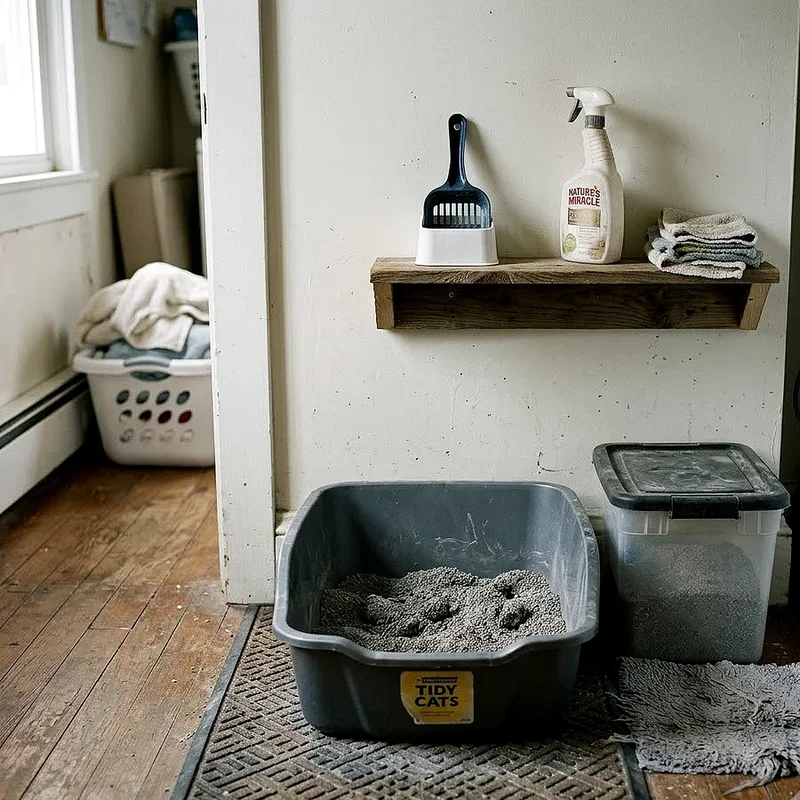
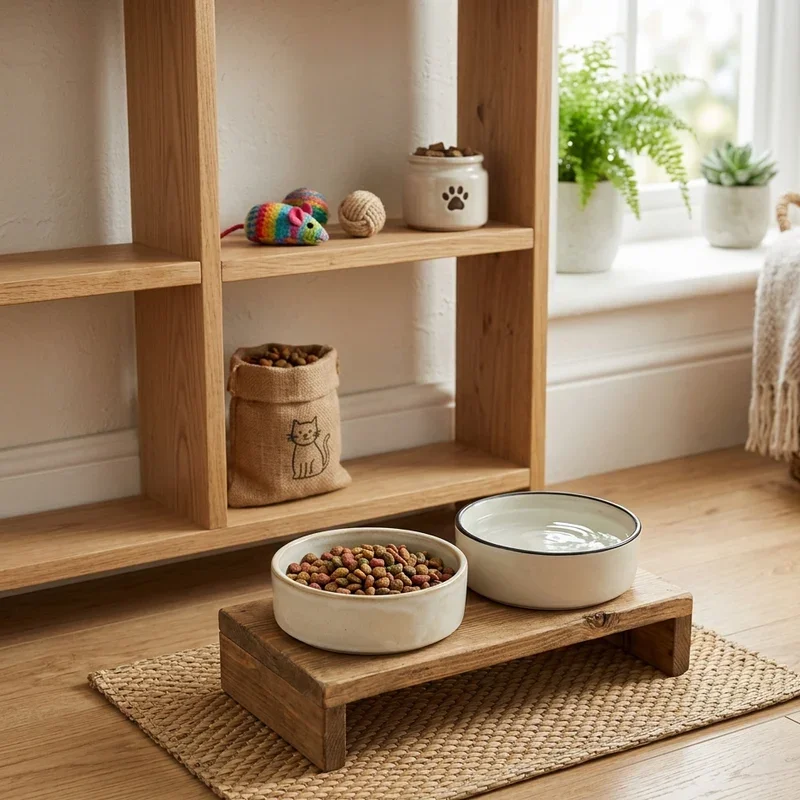
Why stop at hiding the box when you could build a complete command center? A proper litter station keeps everything within arm's reach, which makes daily scooping so frictionless that you actually do it. Mount a narrow shelf above holding a lidded litter bin, a waste pail with a sealing lid, a scoop in a wall hook, and a stack of liners in a basket. I added a small roll of paper towels and a spray bottle of enzyme cleaner too. Matching containers turn the whole setup from cluttered corner into something that looks curated on purpose. Think of it as a coffee bar, except for cat maintenance. Organized systems get used consistently, and consistency is what keeps your home smelling clean.
Conclusion
Your cat deserves a bathroom that feels safe, and you deserve a home that looks like adults live there. The beautiful thing? Those two goals never actually conflict. Whether you convert a closet, carve out a vanity, or simply hang a curtain, the principle stays identical: give your cat privacy, ventilation, and easy access, then style the surroundings to match your taste. Start with one small change this weekend and see how it feels. You might be shocked how much lighter your living room looks once that plastic box finally disappears from view.
Frequently Asked Questions
Q1: How much space does a hidden litter cabinet really need inside?
A: Aim for twenty four inches wide, eighteen deep, so your cat turns comfortably.
Q2: Will my cat refuse to use an enclosed litter room?
A: Some do initially, so introduce it slowly and keep the old box temporarily.
Q3: Can I put the litter box in my kitchen?
A: Avoid kitchens entirely for hygiene reasons and because food and waste never mix well.
Q4: How often should I scoop a hidden litter box setup?
A: Scoop daily without exception, because enclosed spaces concentrate odor much faster than open ones.
Q5: What flooring works best inside a litter nook area?
A: Peel and stick vinyl or tile, since both wipe clean and resist moisture damage.
Stay up to date with our latest ideas!