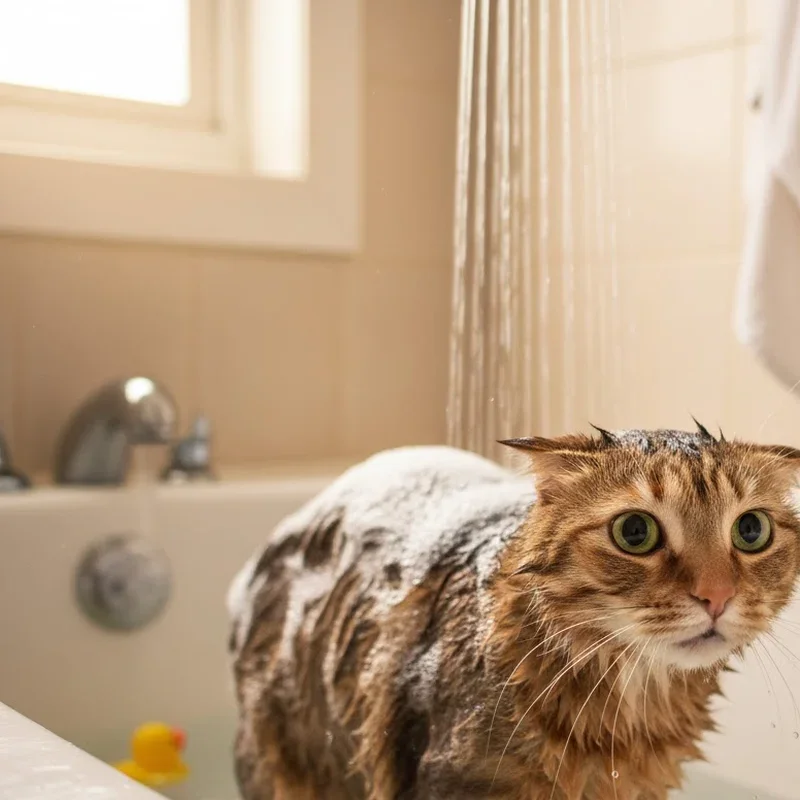
Why Is My Cat Licking My Blanket? Common Reasons
Discover why is my cat licking my blanket with common reasons explained. Learn what this behavior means and when to be concerned.
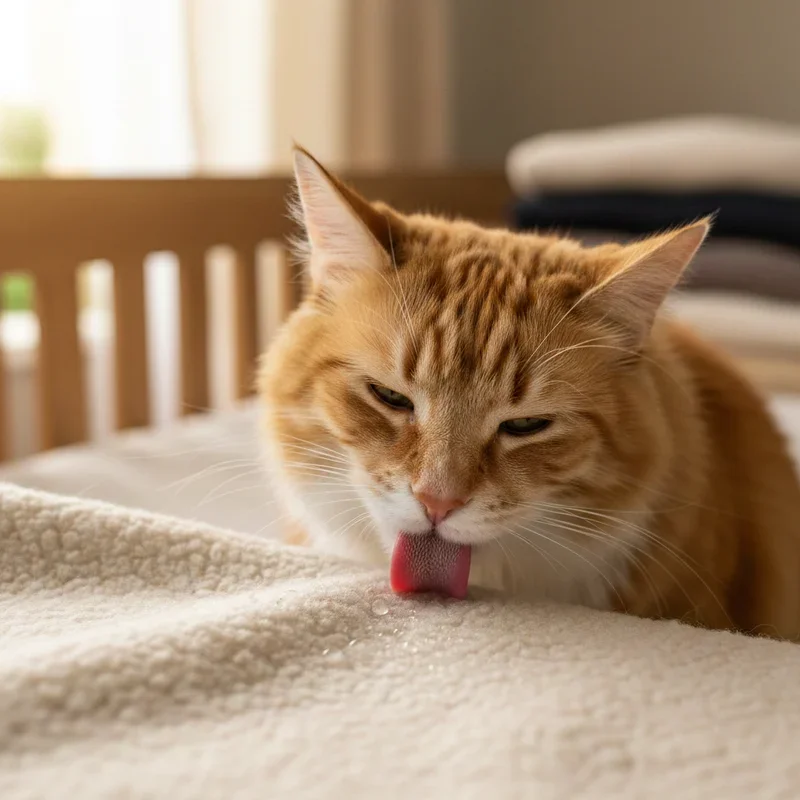
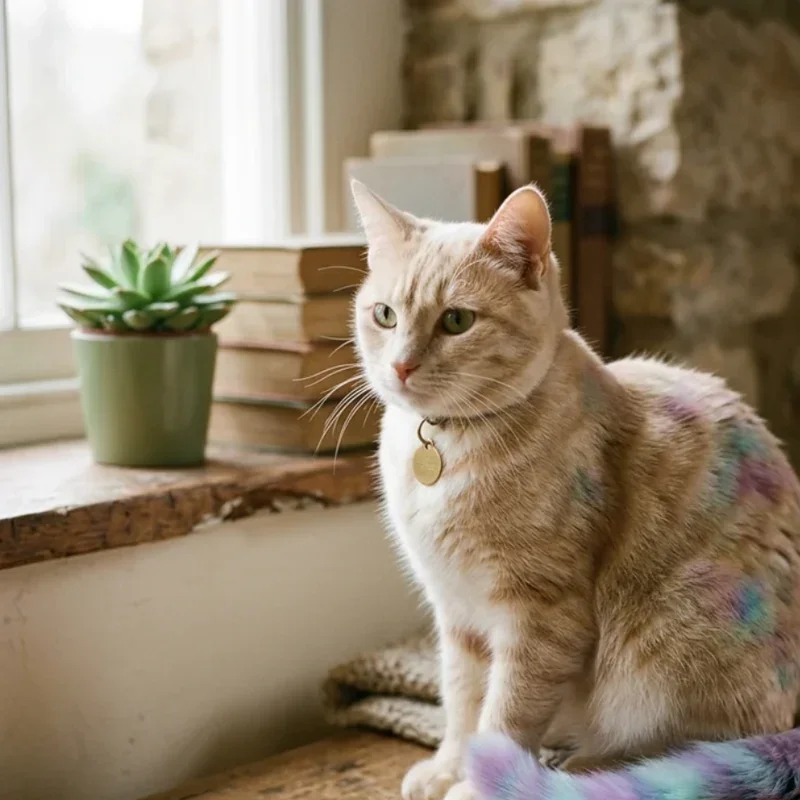
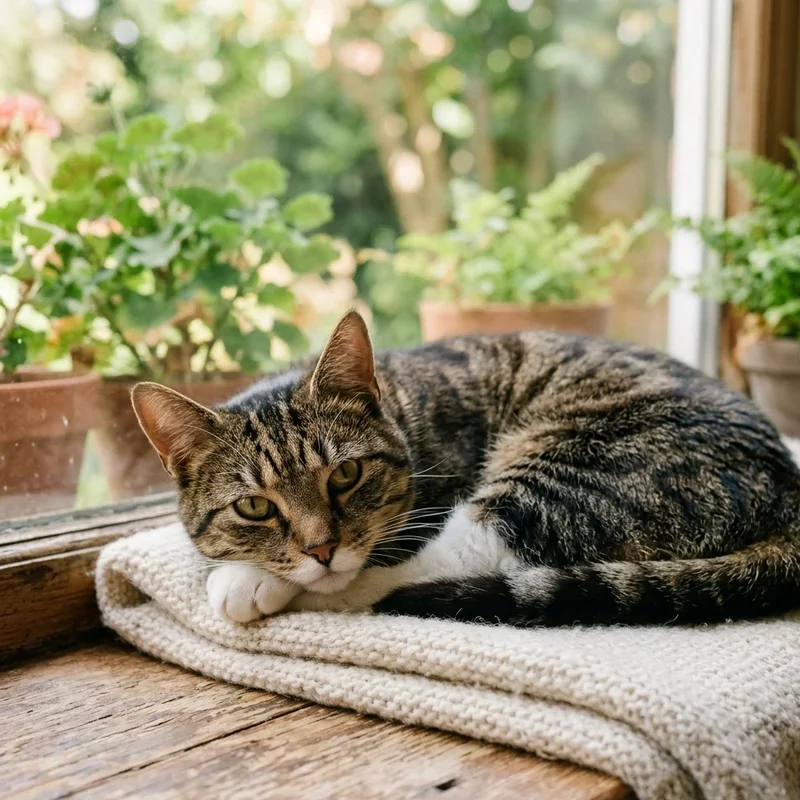
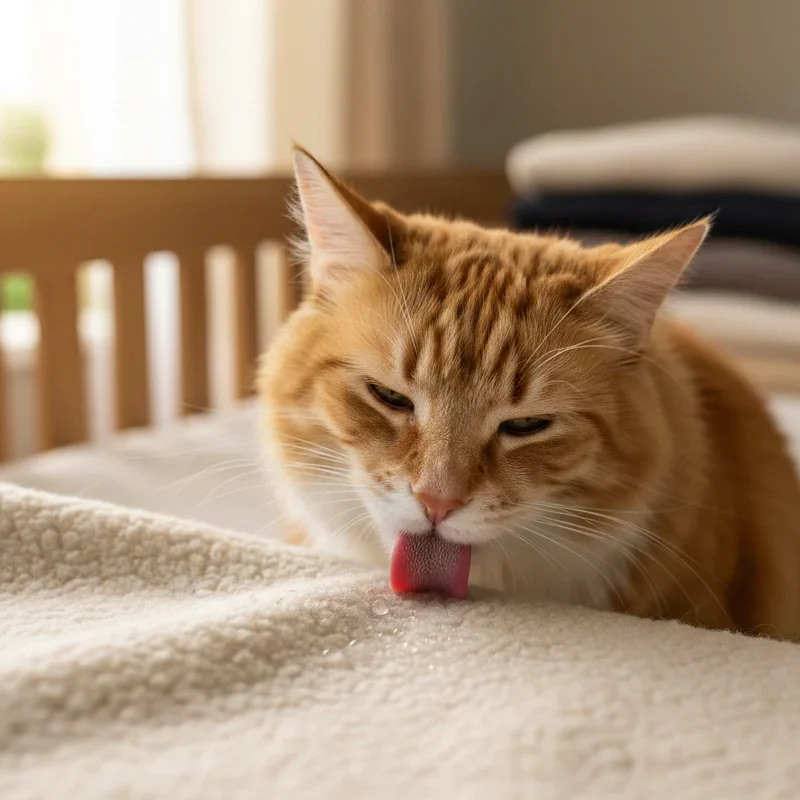
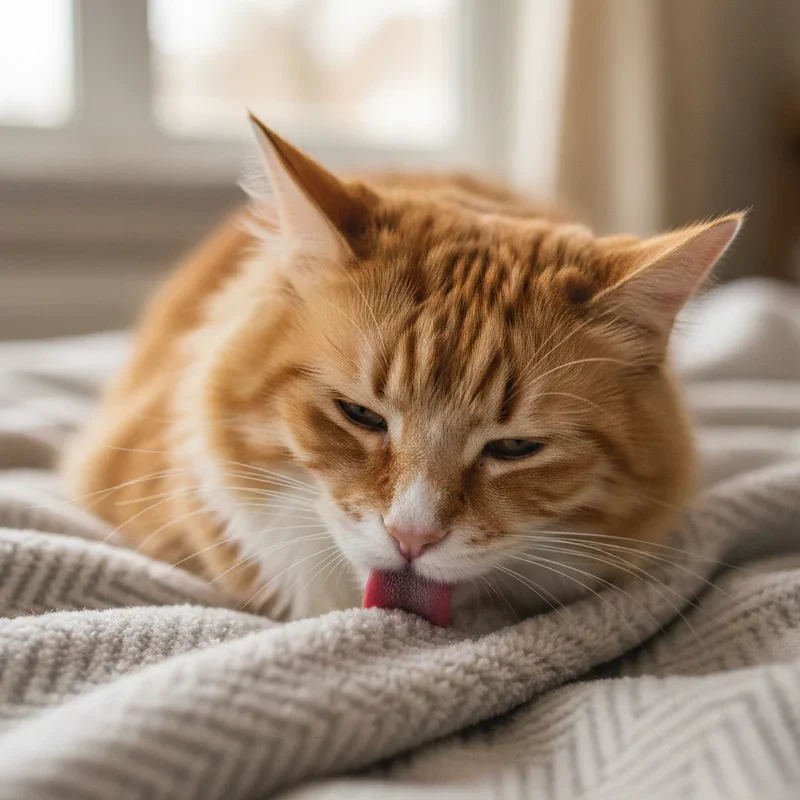
You're settling in for a cozy evening on the couch, wrapped in your favorite blanket, when you notice something peculiar. Your cat has joined you, but instead of simply curling up for a nap, they're enthusiastically licking your blanket like it's the most delicious thing they've ever encountered. Their tongue goes back and forth, back and forth, creating that distinctive rough sandpaper sound that makes you wonder what on earth is going through their fuzzy little head.
If you've witnessed this scene play out in your own home, congratulations. You've joined the club of confused cat owners trying to decode one of feline kind's many mysterious behaviors. And trust me, you're definitely not alone in scratching your head about this one.
Cats do plenty of weird things that leave us humans utterly baffled. They knock items off tables for seemingly no reason, zoom around the house at three in the morning like tiny furry race cars, and yes, they lick blankets with dedication that would be impressive if it weren't so strange.
Understanding why is my cat licking my blanket requires diving into the fascinating world of feline psychology, instincts, and behavior patterns. This seemingly odd habit can stem from various causes, some perfectly normal and harmless, others potentially signaling underlying issues that deserve attention.
Whether your cat performs this ritual occasionally or has turned your favorite throw into their personal licking station, knowing what's behind the behavior helps you respond appropriately. So let's unravel this fuzzy mystery together and figure out what's really going on when your cat treats your blanket like a lollipop.
The Comfort Connection
For many cats, blanket licking ties directly to comfort-seeking behaviors rooted in kittenhood.
Early Weaning Effects
Kittens who were separated from their mothers too early often develop oral fixations that persist into adulthood. In the wild and in ideal domestic situations, kittens nurse for about eight to twelve weeks before weaning naturally occurs.
When this process gets interrupted prematurely, kittens miss out on crucial comfort experiences associated with nursing. The rhythmic suckling motion provides more than nutrition. It creates deep feelings of security, warmth, and bonding with mom.
Fast forward to adulthood, and these cats may seek similar comfort through blanket licking. The soft texture and repetitive motion recreate some of those early nursing sensations, providing a sense of security they were denied as youngsters.
Self-Soothing Mechanisms
Much like humans who bite their nails or twirl their hair when stressed, cats develop their own self-soothing behaviors. Blanket licking often serves this exact purpose.
The repetitive motion triggers the release of endorphins in your cat's brain, creating pleasant, calming sensations. When your cat feels anxious, stressed, or simply needs to unwind, licking a soft surface provides immediate relief.
Think of it as your cat's version of comfort eating or stress relief. The behavior itself isn't necessarily problematic. It's simply their way of managing emotions and finding their happy place.
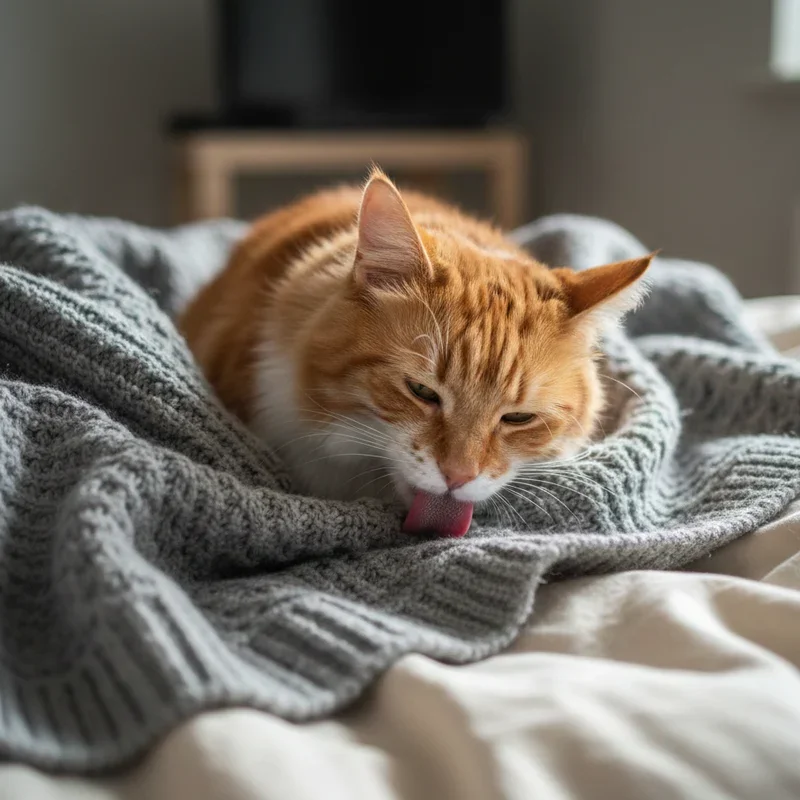
Why Is My Cat Licking My Blanket? Common Reasons Related to Scent
Cats experience the world largely through smell, and your blanket is absolutely loaded with fascinating scents.
Your Scent Provides Comfort
Your blanket carries your personal scent, which to your cat represents safety, familiarity, and love. By licking the blanket, your cat reinforces their connection to you even when you're not immediately available for snuggles.
Cats possess an incredibly powerful sense of smell, far superior to human olfactory capabilities. They can detect subtle scent molecules we'd never notice. Your blanket, having spent time wrapped around you, becomes saturated with your unique smell.
Licking deposits your cat's own scent through saliva while simultaneously allowing them to "taste" your presence. It's a bonding activity, albeit a slightly strange one from our perspective.
Territorial Marking
Cats mark their territory through various methods, including rubbing, scratching, and yes, licking. By leaving their saliva on your blanket, your cat claims it as part of their domain.
This behavior says something like "this comfortable, wonderful-smelling thing belongs to me now" in cat language. It's actually quite flattering when you think about it. Your cat values your blanket enough to officially incorporate it into their territory.
Texture Temptations
The physical properties of blankets play a significant role in this licking phenomenon.
Fabric Appeal
Certain blanket materials seem to trigger licking behavior more than others. Fleece, wool, and fuzzy microfiber fabrics appear particularly irresistible to many cats.
These textures may remind cats of their mother's fur or simply feel pleasant against their tongues. The softness and slight resistance create interesting sensations that some cats find genuinely enjoyable to experience.
Pay attention to which blankets attract your cat's attention most. You might notice patterns in their preferences that reveal texture as a primary motivator.
Temperature Factors
Cats seek warmth constantly, and blankets often retain your body heat long after you've moved. Licking a warm, soft surface combines multiple pleasant sensations simultaneously.
The warmth triggers comfort responses while the licking provides its own satisfaction. It's a multi-sensory experience that ticks several boxes on your cat's list of enjoyable activities.
Nutritional Considerations
Sometimes blanket licking indicates something missing from your cat's diet or health needs.
Pica Possibilities
Pica describes the condition where animals crave and consume non-food items. While licking differs from actually eating blanket material, persistent or obsessive licking might signal pica tendencies.
Cats with pica may progress from licking to chewing to actually ingesting fabric, which creates serious health risks. Intestinal blockages from swallowed material can be life-threatening emergencies.
If your cat's licking seems compulsive or they've started chewing and swallowing blanket fibers, veterinary consultation becomes essential.
Mineral Deficiencies
Some experts suggest that blanket licking could indicate nutritional deficiencies, particularly minerals. While research on this connection remains limited, anecdotal evidence suggests some cats reduce fabric licking when dietary improvements occur.
Evaluating your cat's diet with your veterinarian ensures they're receiving complete nutrition. High-quality cat food formulated for their life stage should meet all nutritional requirements.
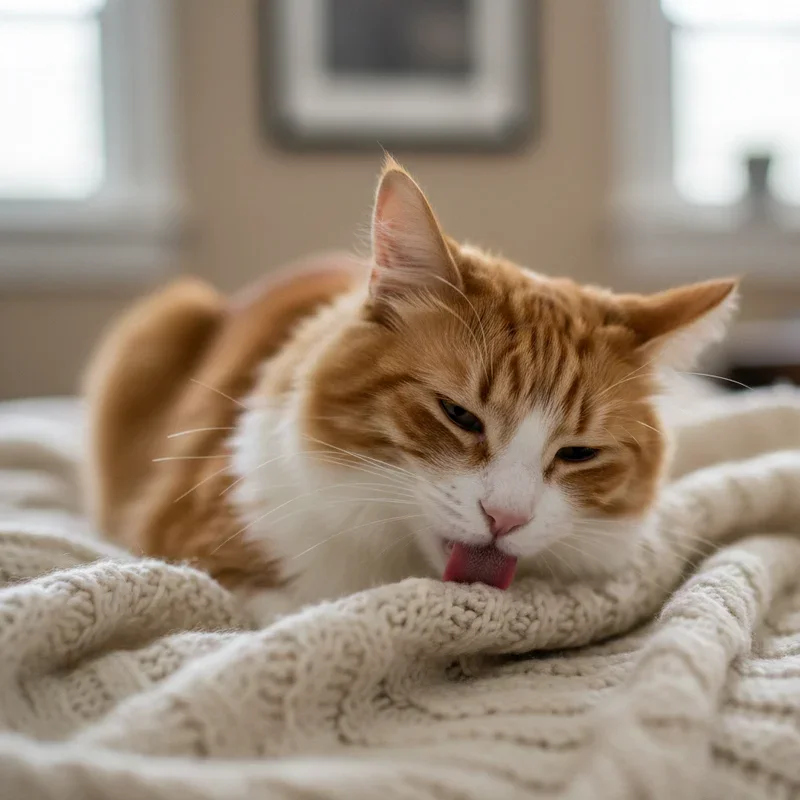
Why Is My Cat Licking My Blanket? Common Reasons Linked to Stress
Environmental factors significantly influence this behavior in many cats.
Anxiety Manifestations
Anxious cats often develop repetitive behaviors as coping mechanisms. Blanket licking can serve as a stress outlet, similar to how anxious humans might pace or fidget.
Changes in household routine, new pets or family members, moving to a new home, or even rearranging furniture can trigger anxiety in sensitive cats. These seemingly small disruptions feel major to creatures who thrive on predictability.
If blanket licking appeared suddenly or increased dramatically, consider what environmental changes might have caused stress. Addressing the underlying anxiety often reduces the compulsive behavior.
Boredom Relief
Indoor cats especially can develop behaviors that stem purely from boredom. Without adequate stimulation, cats create their own entertainment, and blanket licking might fill that void.
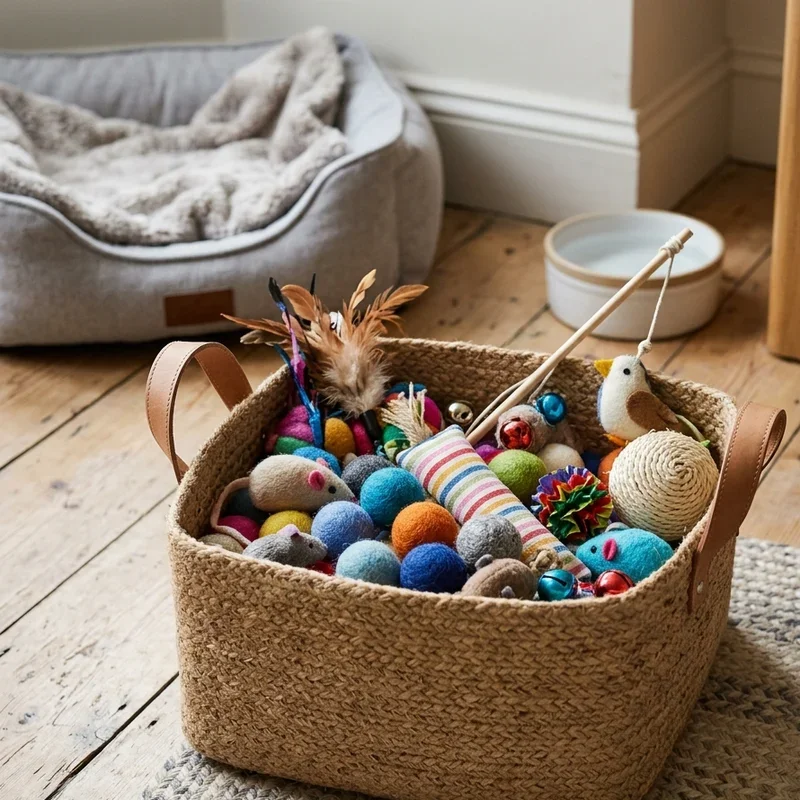
An under-stimulated cat may turn to repetitive behaviors simply because there's nothing more interesting to do. Interactive toys, regular play sessions, puzzle feeders, and environmental enrichment can redirect this energy toward healthier outlets.
Medical Considerations
Occasionally, blanket licking signals underlying health issues worth investigating.
Dental Problems
Cats with dental pain or oral issues sometimes lick soft surfaces as a response to mouth discomfort. The gentle texture of blankets might soothe sore gums or irritated oral tissues.
Watch for other signs of dental problems including difficulty eating, drooling, pawing at the mouth, or bad breath. Regular dental checkups catch issues before they become serious.
Gastrointestinal Issues
Some cats lick non-food items when experiencing nausea or digestive discomfort. The behavior might represent an attempt to settle an upset stomach or respond to internal sensations they don't understand.
Persistent licking combined with changes in appetite, vomiting, or litter box habits warrants veterinary attention to rule out gastrointestinal problems.
Skin Conditions
Though it seems counterintuitive, cats with skin irritation sometimes redirect their grooming behavior toward objects rather than their own bodies. If your cat can't adequately relieve itchiness through normal grooming, they might transfer that behavior to blankets.
Examine your cat for signs of skin problems including excessive scratching elsewhere, hair loss, redness, or flaky skin.
When to Worry About Blanket Licking
Most blanket licking falls within normal cat behavior, but certain signs suggest consulting your veterinarian.
Red Flags to Watch
Obsessive licking that interferes with normal activities like eating, sleeping, or playing indicates potential compulsive disorder. Cats should be able to stop licking when distracted by food, play, or interaction.
Progression from licking to chewing or swallowing fabric requires immediate attention due to blockage risks. Similarly, if licking produces bald spots on blankets from excessive attention, the behavior has crossed into concerning territory.
Sudden onset or dramatic increases in established licking behavior sometimes signals underlying medical issues worth investigating.
Normal Variations
Occasional blanket licking, especially when settling down for sleep or when you've just wrapped yourself in the blanket, typically represents harmless comfort-seeking.
Cats who lick briefly, can easily be redirected, and show no other behavioral concerns generally don't need intervention. Some cats simply enjoy this activity as part of their personal quirks.
Managing the Behavior
If blanket licking bothers you or concerns you for your cat's wellbeing, several approaches can help.
Environmental Modifications
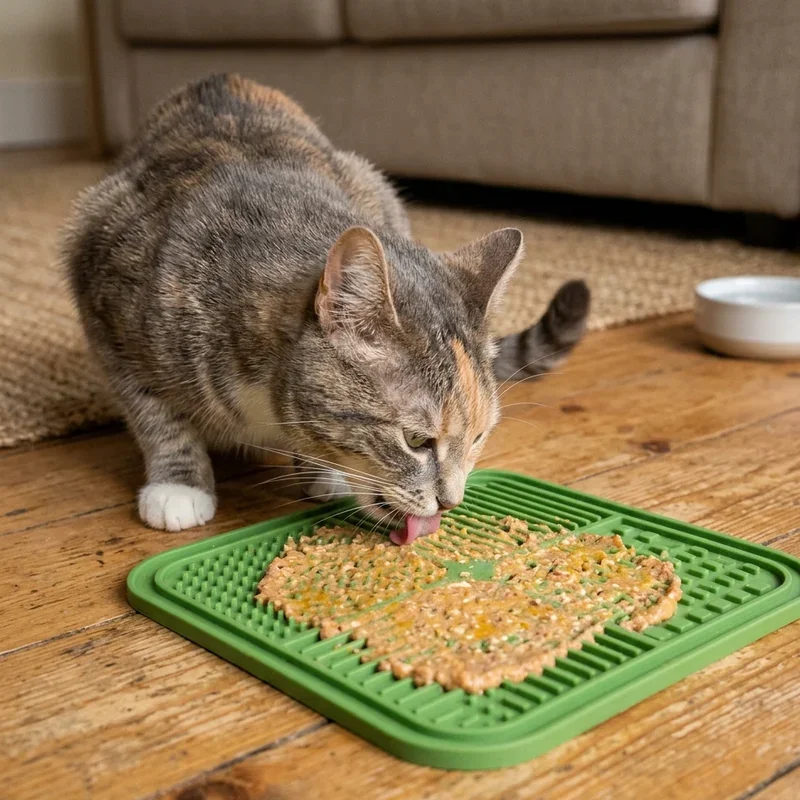
Remove particularly tempting blankets from accessible areas if the behavior seems excessive. Providing alternative textures through appropriate cat beds or designated comfort items can redirect the behavior.
Interactive toys and increased playtime reduce boredom-related licking. Puzzle feeders add mental stimulation that might decrease compulsive behaviors.
Stress Reduction
Address any environmental stressors you've identified. Maintain consistent routines, provide safe hiding spaces, and use calming products like pheromone diffusers if your cat seems anxious.
Gradual introductions to any household changes help sensitive cats adjust without developing problematic coping behaviors.
Veterinary Consultation
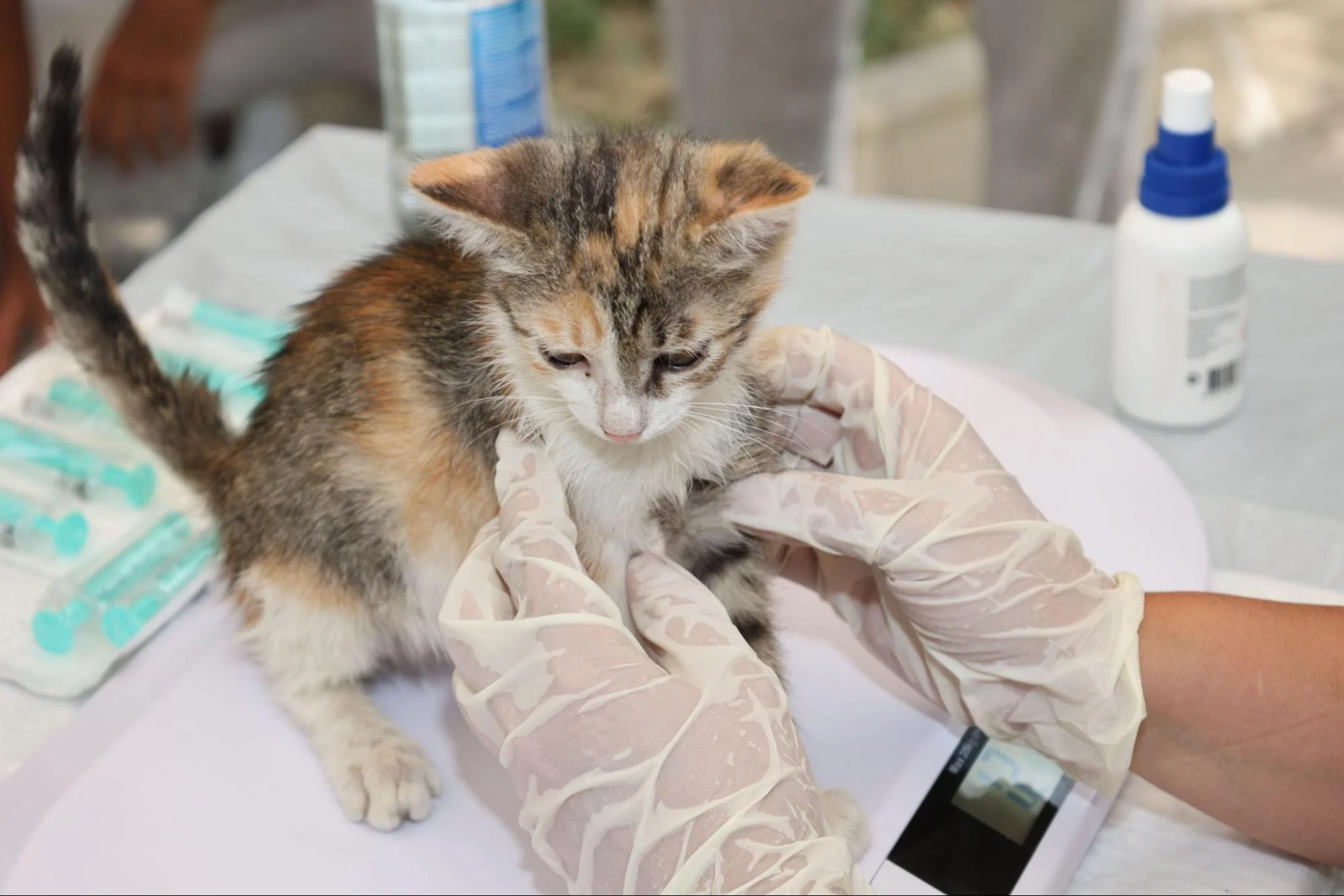
When home management doesn't resolve concerning behavior, your veterinarian can evaluate for underlying medical or behavioral conditions. Anti-anxiety medications sometimes help cats with severe compulsive behaviors.
A thorough examination rules out physical causes while behavioral consultation provides tailored management strategies.
Conclusion
Understanding why is my cat licking my blanket reveals fascinating insights into feline psychology, comfort-seeking behaviors, and the complex inner lives of our furry companions. Whether rooted in early weaning experiences, scent attraction, texture preferences, or stress responses, this quirky habit typically represents harmless self-soothing rather than serious concern. Monitoring for obsessive patterns while providing appropriate alternatives ensures your cat stays healthy and happy while indulging their blanket fascination.
Read next: 15 DIY Cat Tower Ideas for Stylish and Fun Pet Spaces
Frequently Asked Questions
1.Is blanket licking dangerous for cats?
Occasional licking is harmless, but swallowing fabric creates serious intestinal blockage risks requiring veterinary attention.
2.Should I stop my cat from licking my blankets?
Only intervene if behavior seems obsessive, causes fabric damage, or indicates underlying stress or health issues.
3.Why does my cat only lick certain blankets?
Cats often prefer specific textures like fleece or blankets carrying your scent for comfort-related reasons.
4.Can blanket licking indicate my cat is hungry?
Rarely, though nutritional deficiencies or pica might manifest through unusual licking behaviors worth investigating.
5.Do all cats lick blankets or is mine weird?
Many cats exhibit this behavior to varying degrees, so your cat definitely isn't alone in this habit.
Stay up to date with our latest ideas!