Why Does My Cat Lick My Feet? Common Reasons
Discover why does my cat lick my feet with common reasons explained. Learn what this behavior means and how to respond appropriately.
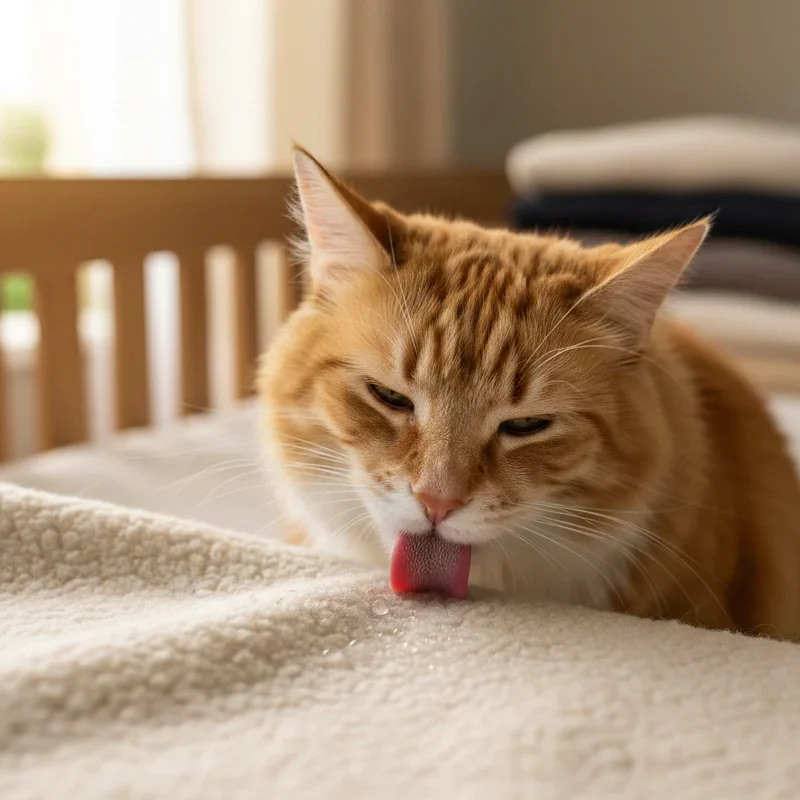
You're relaxing on the couch after a long day, feet propped up, maybe watching your favorite show, when suddenly you feel it. That unmistakable sandpaper sensation of your cat's tongue going to town on your toes. It tickles, feels a little weird, and honestly makes you wonder what on earth is going through your feline friend's head.
If this scenario sounds familiar, congratulations, you've joined the club of countless cat owners who've experienced this peculiar form of feline affection. It's one of those behaviors that makes you tilt your head and think, "Is this normal? Why feet of all places?"
Here's the thing about cats. They're wonderfully bizarre creatures with behaviors that often leave us scratching our heads. From knocking things off tables for seemingly no reason to fitting themselves into impossibly small boxes, cats march to the beat of their own drum. And apparently, that drum sometimes involves licking human feet.
Understanding why does my cat lick my feet involves diving into the fascinating world of feline psychology, instincts, and communication styles. What seems random or gross to us often carries significant meaning in the cat world.
This comprehensive guide explores all the reasons behind this toe-targeting behavior. From showing affection to seeking attention, from marking territory to simple curiosity about interesting smells, we'll uncover the motivations driving your cat's fascination with your feet.
Ready to decode this mysterious feline behavior? Let's get to the bottom of it.
The Power of Scent
Cats experience the world largely through their noses, and your feet are surprisingly interesting from their perspective.
Your Feet Are a Scent Wonderland
Let's be honest here. Feet produce a lot of scent, and that's exactly what makes them fascinating to cats.
Human feet contain roughly 250,000 sweat glands that produce moisture throughout the day. This moisture carries your unique personal scent in concentrated form. To a cat's highly sensitive nose, your feet tell an entire story about where you've been, what you've walked on, and even your emotional state.
Cats possess an olfactory system far superior to ours. They have around 200 million scent receptors compared to our measly five million. Your feet essentially present a sensory buffet that your cat finds irresistible to investigate.
Information Gathering Through Taste
Licking takes scent investigation to the next level.
Cats have something called the Jacobson's organ, or vomeronasal organ, located in the roof of their mouth. This specialized organ processes chemical information that regular smelling can't capture.
When your cat licks your feet, they're transferring scent molecules to this organ for deeper analysis. It's like they're reading a detailed report about you rather than just skimming the headlines.
This behavior isn't gross from their perspective. It's actually sophisticated information gathering that helps them understand their environment and their favorite human better.
Why Does My Cat Lick My Feet? Common Reasons Related to Affection
Much of this behavior comes down to love and bonding.
Grooming as Social Bonding
In the cat world, grooming each other represents one of the highest forms of affection.
Cats who live together in bonded pairs or groups regularly groom one another. This behavior, called allogrooming, strengthens social bonds and demonstrates trust between cats.
When your cat licks your feet, they're essentially including you in their social grooming rituals. They're treating you like a fellow cat, which is actually quite the compliment from a species known for being selective about their companions.
Your feet might get special attention simply because they're accessible. When you're sitting or lying down, your feet are right at cat level, making them easy targets for affectionate grooming sessions.
Returning the Favor
Cats often reciprocate care that they receive.
You feed your cat, provide shelter, pet them, and generally take care of their needs. Your cat recognizes this care, even if they have their own unique ways of showing appreciation.
Licking your feet might be their way of grooming you back, contributing to the relationship as they understand it. They're returning the care you provide through the lens of feline behavior.
This reciprocal grooming reinforces the bond between you, even if the sensation of cat tongue on feet isn't exactly what you'd choose.
Showing Trust and Vulnerability
Feet-licking behavior indicates your cat feels completely safe with you.
When cats groom, they're somewhat distracted and vulnerable. They're focused on the grooming activity rather than watching for threats. Choosing to groom you, especially in a relaxed home environment, shows your cat trusts you completely.
The fact that they approach your feet without hesitation demonstrates comfort and security in your relationship.
Attention-Seeking Behavior
Sometimes the motivation is simpler than deep emotional bonding.
Wanting Interaction
Cats learn what behaviors get results, and feet-licking definitely gets attention.
Your cat has probably noticed that licking your feet produces an immediate reaction. You might laugh, pull your feet away, or start interacting with them in some way. From their perspective, mission accomplished.
This learned behavior becomes self-reinforcing. Lick feet, get attention. It's a simple equation that clever cats figure out quickly.
Breaking the Ice
Some cats use feet-licking as a conversation starter.
Maybe they want to play, or perhaps it's approaching dinner time. Instead of meowing incessantly, which some cats find undignified, they use physical interaction to initiate communication.
The feet-licking gets your attention, and then they can lead you toward their food bowl or toy stash. It's a calculated first move in getting what they want.
Boredom Relief
Understimulated cats find creative ways to entertain themselves.
Indoor cats especially may develop quirky behaviors when they need more mental and physical stimulation. Your feet moving under a blanket or wiggling while you sit become interesting objects to investigate.
The licking might simply be something to do when they're feeling a bit bored and want interaction or entertainment.
Why Does My Cat Lick My Feet? Common Reasons Involving Territory
Cats are territorial creatures, and your feet play into this instinct.
Marking You as Theirs
Licking deposits your cat's scent onto you.
Cats have scent glands in their mouths, and saliva carries their personal scent signature. When they lick your feet, they're essentially marking you as belonging to their territory.
This might sound possessive, but it's actually another form of claiming you as part of their family unit. They're announcing to any other cats who might investigate that you're already spoken for.
Reinforcing Social Bonds
Scent mingling strengthens the sense of shared territory.
When cats in a group groom each other, they create a communal scent that identifies them as belonging together. Your cat licking your feet blends your scents in a way that reinforces your connection.
This shared scent provides comfort and familiarity. Your cat recognizes the combined scent and feels secure knowing their human carries their mark. For individuals who rely on emotional support cats, this deep, scent-based bond is precisely what grounds them, offering profound sensory comfort during moments of anxiety or stress.
Claiming the Accessible Parts
Feet represent the most reachable territory on your body.
Your cat can't exactly groom your head or back without significant effort. But your feet? Those are right there at floor level, perfectly positioned for claiming.
The accessibility makes feet prime real estate for territorial marking behavior.
Textural and Taste Appeal
Sometimes the explanation is purely sensory.
Interesting Textures
The skin on feet differs from other body parts.
Feet have thicker, more textured skin than arms or faces. This different texture might feel interesting or satisfying against your cat's tongue.
Some cats seem to enjoy the tactile sensation of licking feet specifically, perhaps finding the texture particularly engaging.
Salt Content
Sweat contains salt, and some cats find salt appealing.
The salt concentration on feet, being high-sweat-producing areas, might taste interesting or even pleasant to cats. Some cats actively seek out salty tastes.
This doesn't mean your cat is licking feet purely for the taste, but the salt content might make the activity more enjoyable when combined with other motivations.
Residual Scents
Your feet carry traces of everywhere you've been.
Grass, carpet, outdoor surfaces, other animals you might have encountered, all leave scent traces on your feet. Your cat might be investigating these intriguing foreign smells.
The novelty of these scents could make feet-licking a form of exploration and information gathering about the outside world.
Behavioral Considerations
Understanding context helps interpret this behavior correctly.
Normal Versus Excessive
Occasional feet-licking is typically harmless.
Most cats who lick feet do so briefly and intermittently. It's part of their regular interaction pattern with their humans and doesn't indicate any problems.
However, excessive or obsessive licking might signal underlying issues. Compulsive behaviors in cats sometimes indicate stress, anxiety, or medical problems.
If your cat seems unable to stop licking, targets your feet obsessively, or shows other behavioral changes, consulting a veterinarian makes sense.
Reading Body Language
Context clues help interpret your cat's motivations.
A relaxed, purring cat licking your feet is showing affection. A cat who pounces aggressively then licks might be playing. A cat who seems agitated while licking might need attention or have unmet needs.
Observe your cat's overall demeanor, not just the licking behavior in isolation.
Your Response Matters
How you react shapes future behavior.
If you want to discourage feet-licking, calmly redirect your cat to another activity. Provide a toy or initiate play to satisfy their need for interaction.
Harsh reactions might confuse or stress your cat, potentially damaging your bond.
If you don't mind the licking, there's no harm in allowing it. Many cat owners find it endearing once they understand the positive motivations behind it.
When to Be Concerned
Most feet-licking is harmless, but certain patterns warrant attention.
Excessive Licking
Obsessive behavior suggests underlying issues.
Cats who lick compulsively, whether feet, objects, or themselves, might be experiencing anxiety, stress, or medical problems.
Excessive licking can also cause skin irritation on you or hair loss on them. Both outcomes indicate the behavior has become problematic.
Sudden Behavioral Changes
New licking habits in cats who never showed interest before might signal something.
Sudden behavioral changes in cats often indicate medical issues or environmental stressors. If feet-licking appears out of nowhere, consider what else might have changed.
A veterinary checkup can rule out physical causes for behavioral changes.
Accompanying Symptoms
Watch for other signs of problems.
Changes in appetite, litter box habits, activity levels, or overall demeanor alongside new licking behaviors suggest something worth investigating.
Cats are masters at hiding discomfort, so any behavioral changes deserve attention.
Managing the Behavior
Whether you want to encourage or discourage feet-licking, strategies exist.
If You Want It to Stop
Redirection works better than punishment.
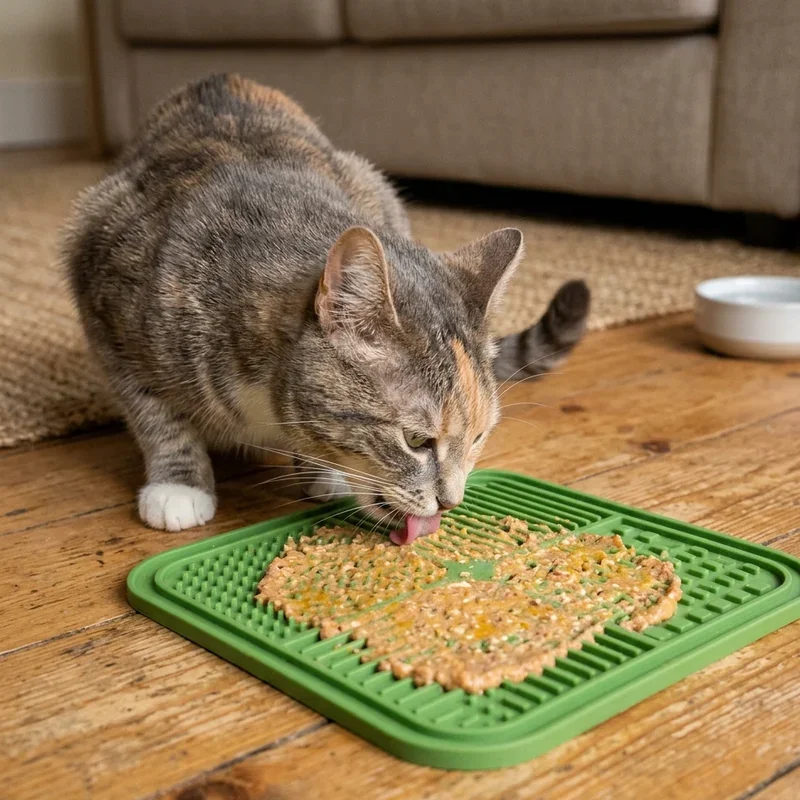
Keep your feet covered or elevated when your cat approaches. Provide alternative activities like play or puzzle feeders to satisfy their need for interaction.
Consistent redirection teaches your cat that other activities are more rewarding than feet-licking.
If You Don't Mind
Let your cat enjoy this bonding ritual.
There's nothing harmful about allowing feet-licking if you don't find it unpleasant. It strengthens your bond and satisfies your cat's social instincts.
Just ensure your feet are clean enough that your cat won't ingest anything harmful, like lotion residue or cleaning products.
Environmental Enrichment
Active cats often reduce quirky behaviors.
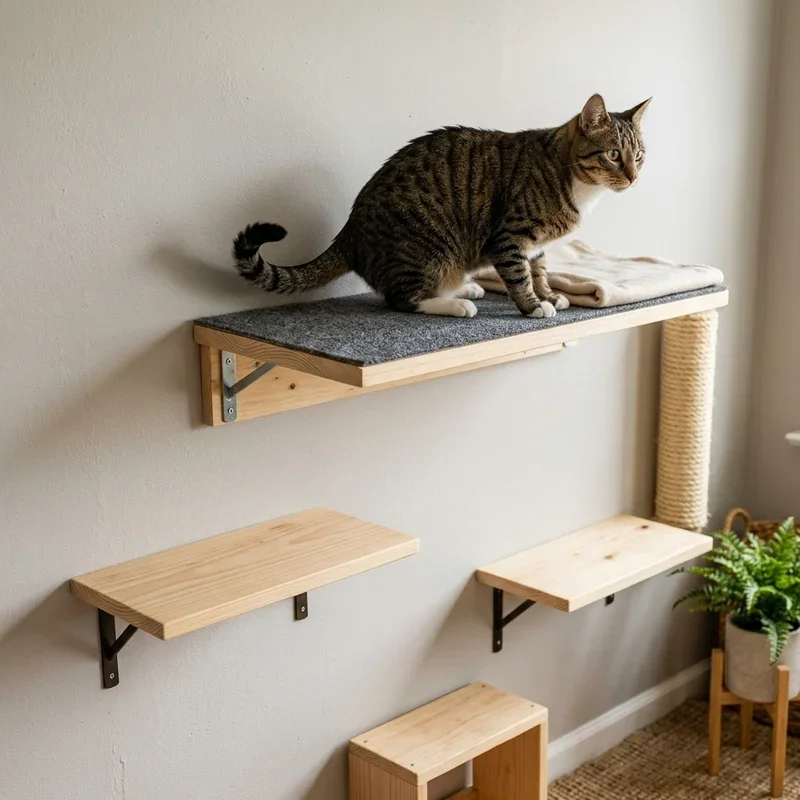
Providing adequate play, climbing spaces, puzzle feeders, and social interaction gives cats appropriate outlets for their energy and curiosity.
Well-stimulated cats are less likely to develop obsessive behaviors of any kind.
Conclusion
Understanding why does my cat lick my feet reveals the complex communication methods cats use to bond with their humans. From gathering scent information and showing affection to marking territory and seeking attention, this quirky behavior serves multiple purposes in your cat's world. While occasionally ticklish or surprising, feet-licking typically represents positive feelings from your feline companion. Embrace it as a sign of your special bond, or gently redirect if you prefer other forms of feline affection.
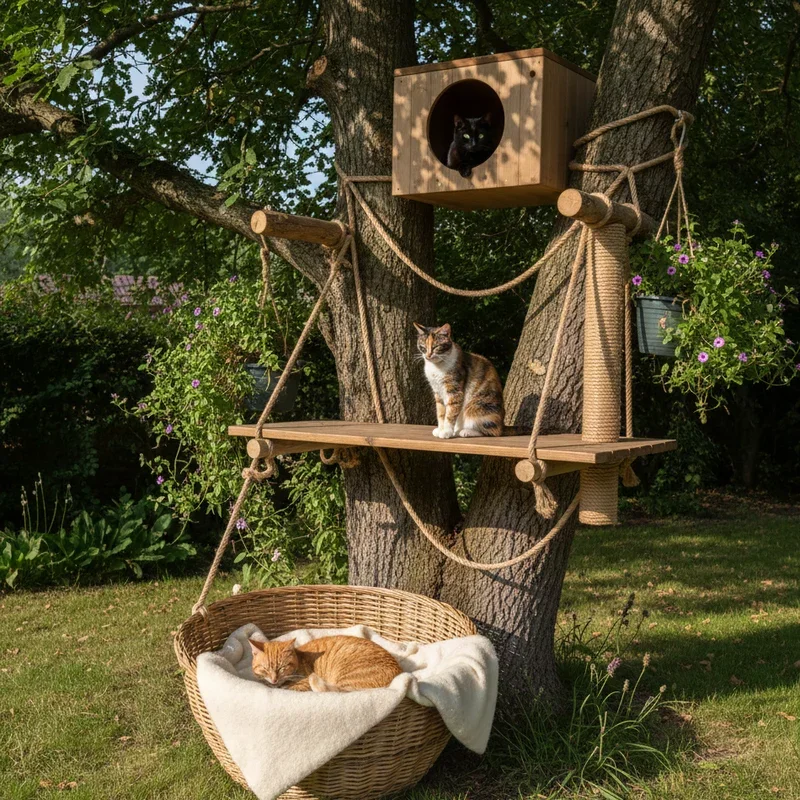
Read next: 15 Outdoor Cat Perch Ideas for Safe Backyard Exploration
Frequently Asked Questions
1.Is it safe for my cat to lick my feet regularly?
Generally safe unless your feet have lotion, medication, or chemicals that could harm your cat.
2.Why does my cat prefer licking my feet over other body parts?
Feet are accessible at cat level and produce concentrated scent that cats find interesting and informative.
3.Should I stop my cat from licking my feet?
Only if you find it unpleasant, as the behavior typically indicates affection and bonding.
4.Does feet-licking mean my cat sees me as their territory?
Yes, cats often mark their humans through licking, claiming you as part of their social group.
5.Why does my cat only lick my feet after I exercise?
Increased sweat produces more salt and concentrated scent that cats find particularly interesting to investigate.
Stay up to date with our latest ideas!