15 Cat Climbing Wall Ideas to Upgrade Your Kitty’s Space
Transform your home with 15 creative cat climbing wall ideas. Give your feline friend the ultimate vertical playground they deserve today.
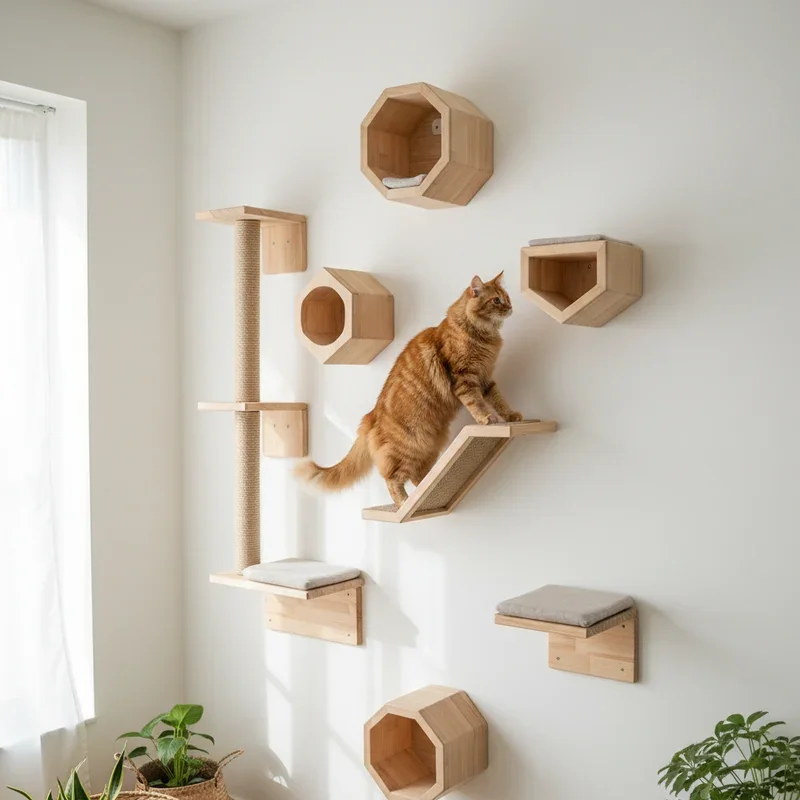
Ever watched your cat stare longingly at the ceiling, plotting their next gravity-defying adventure? Our feline friends are natural-born climbers, and denying them vertical space is like telling a fish it can't swim! If you've noticed your kitty scaling curtains, leaping onto refrigerators, or perching atop door frames, they're practically begging for a proper climbing wall. Think of it as creating a feline amusement park right in your living room. Unlike dogs who roam horizontally, cats view the world in three dimensions, and they need vertical territory to truly thrive. A cat climbing wall isn't just fancy decor; it's essential enrichment that satisfies your pet's instinctual needs while saving your furniture from becoming an improvised jungle gym. You're about to discover fifteen incredible ways to transform your walls into a kitty wonderland. From budget-friendly DIY solutions to sophisticated designer installations, these ideas will revolutionize how your cat experiences your home. Whether you live in a cozy apartment or a spacious house, there's a perfect climbing wall solution waiting for you. Ready to become your cat's favorite human? Let's explore these amazing vertical spaces that'll have your furball purring with joy!
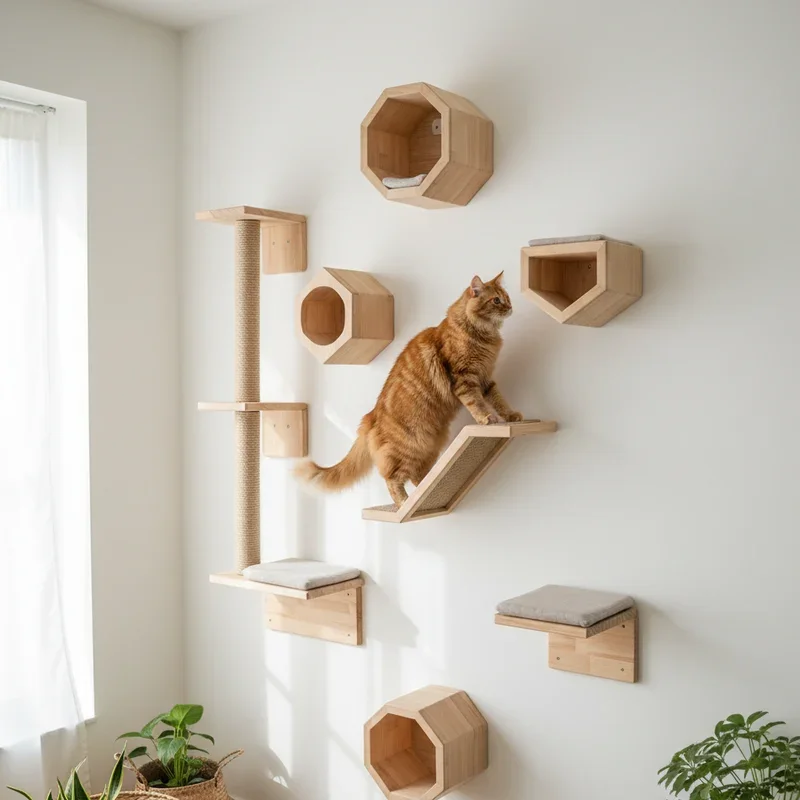
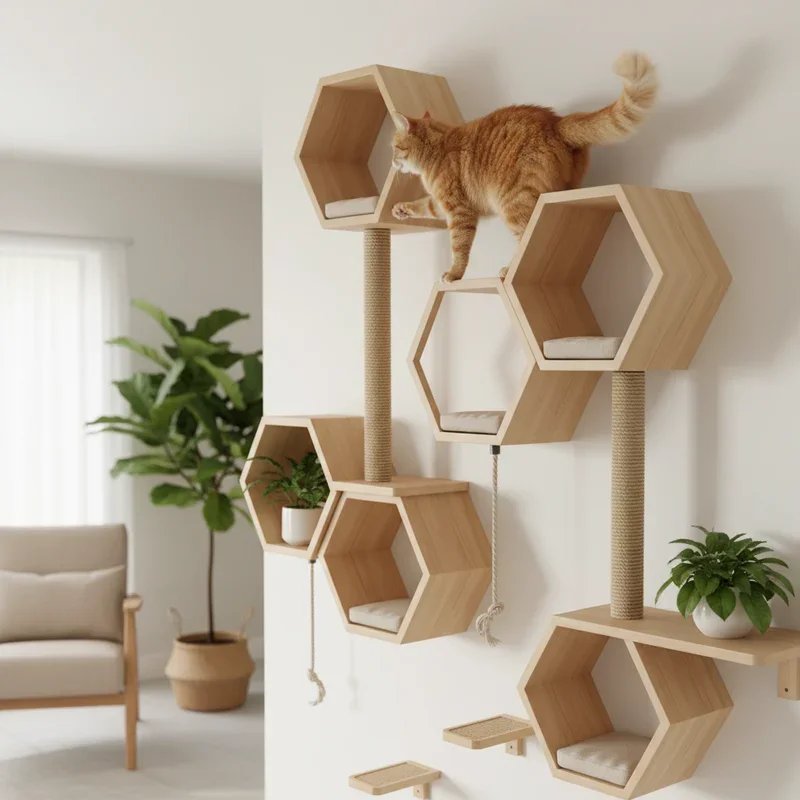
1. Floating Hexagon Shelf System
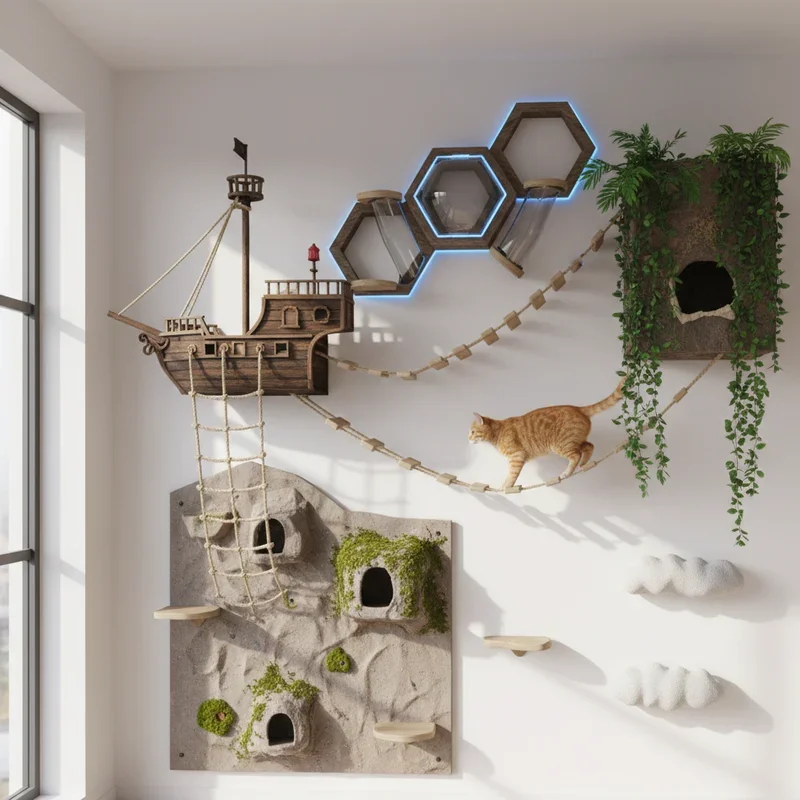
Geometric shelves create a stunning visual display while giving your cat an exciting maze to navigate! These honeycomb-shaped platforms can be arranged in countless patterns, allowing you to customize based on your wall space and artistic vision. Your cat will love hopping between these modern perches, and you'll appreciate how they double as contemporary home decor. Install them at varying heights to create an engaging vertical pathway that challenges your kitty's athletic abilities. The beauty of hexagon shelves lies in their versatility; you can start with a few and expand your design over time. Choose shelves with carpeted or padded surfaces to ensure your cat's comfort during rest periods. This design works exceptionally well in living rooms or home offices where style matters as much as function.
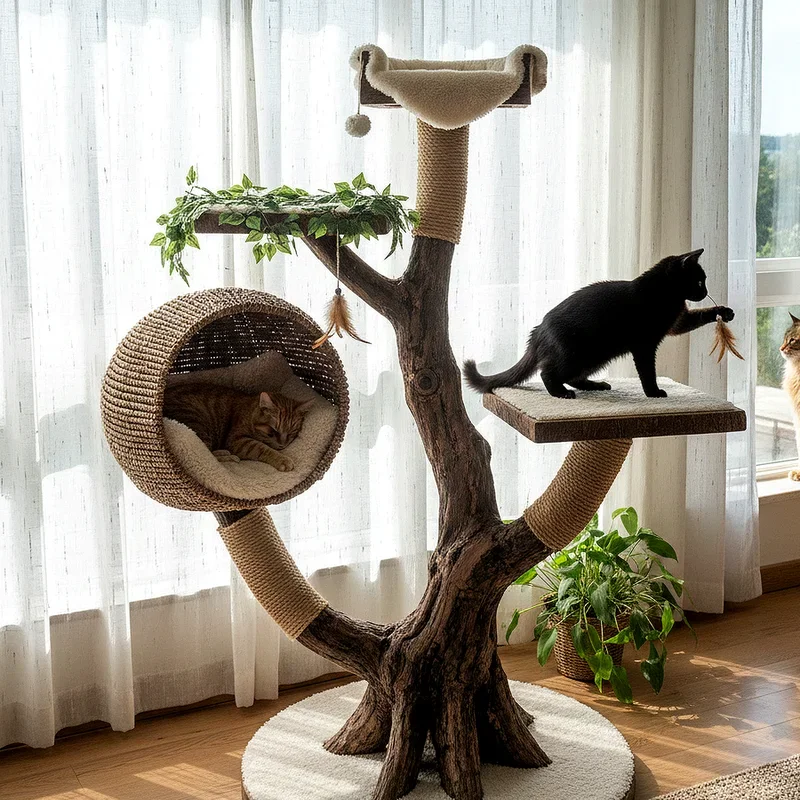
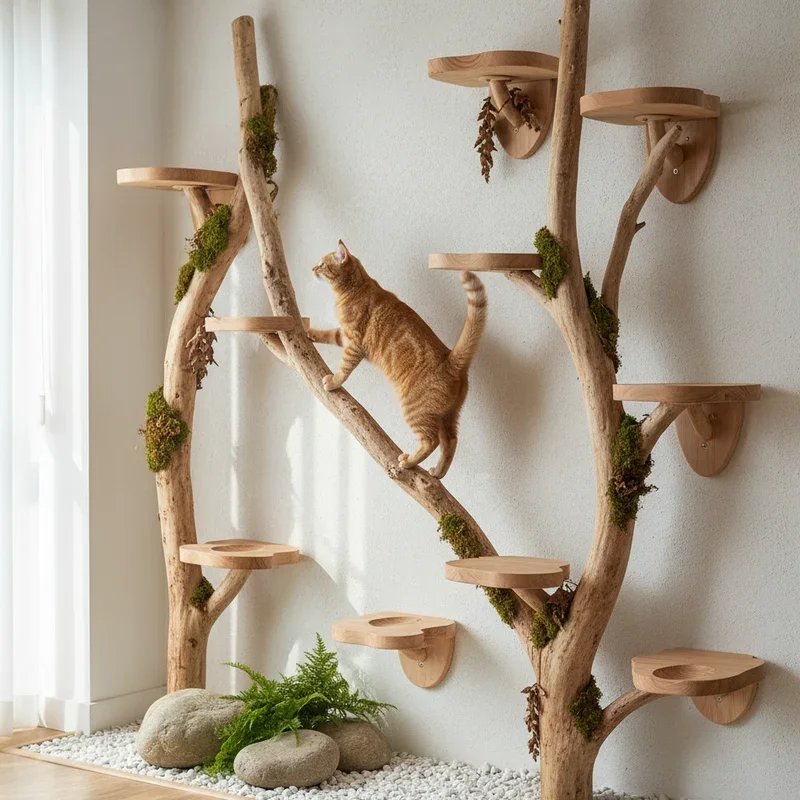
2. Natural Wood Branch Installation
Bring the outdoors inside with real tree branches mounted securely to your wall! This organic approach creates an authentic climbing experience that appeals to your cat's wild instincts. Source sturdy branches from fallen trees, ensuring they're properly cleaned, dried, and treated for indoor use. The irregular shapes and natural textures provide excellent grip for your cat's claws while adding rustic charm to your space. Position branches at strategic angles to create a challenging climbing route that mimics trees in nature. You can incorporate small platforms between branches for resting spots, making this a functional yet beautiful addition. This design particularly suits homes with natural or farmhouse-style decor, seamlessly blending pet furniture with your aesthetic vision.
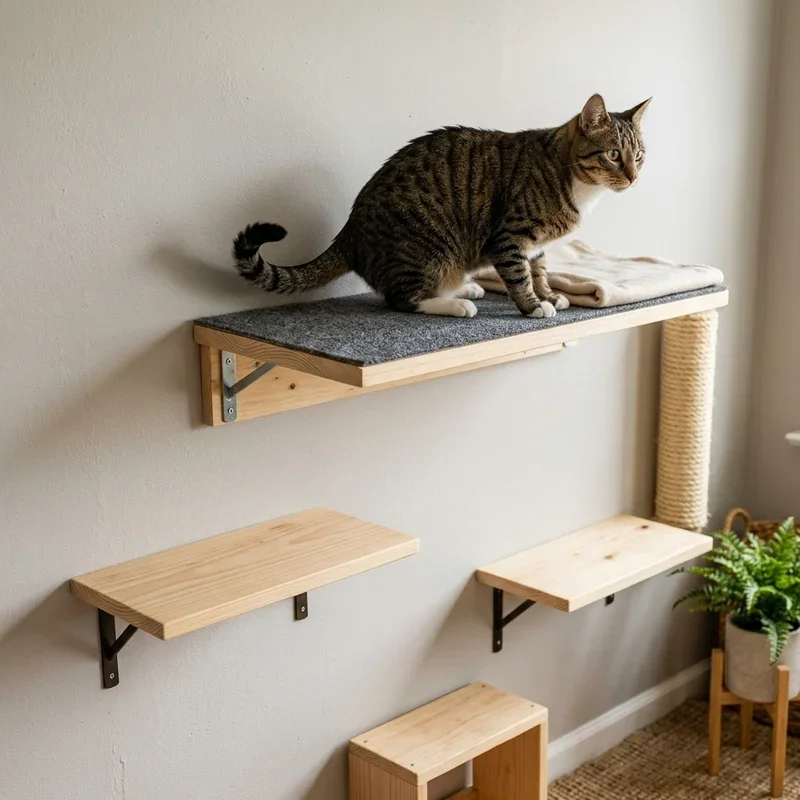
3. Minimalist Wall-Mounted Steps
Sometimes simplicity speaks volumes! Clean, rectangular steps mounted in a staggered pattern offer your cat a straightforward climbing experience without visual clutter. These streamlined platforms work perfectly in modern or Scandinavian-style homes where less is more. Choose neutral colors that complement your walls, or make a bold statement with contrasting hues. Space the steps appropriately based on your cat's age and jumping ability; kittens and senior cats need closer spacing. The minimalist approach makes installation and maintenance incredibly easy, and you can adjust the configuration whenever you want a fresh look. Add a cushioned top to each step for extra comfort during lounging sessions, transforming simple stairs into cozy observation decks.
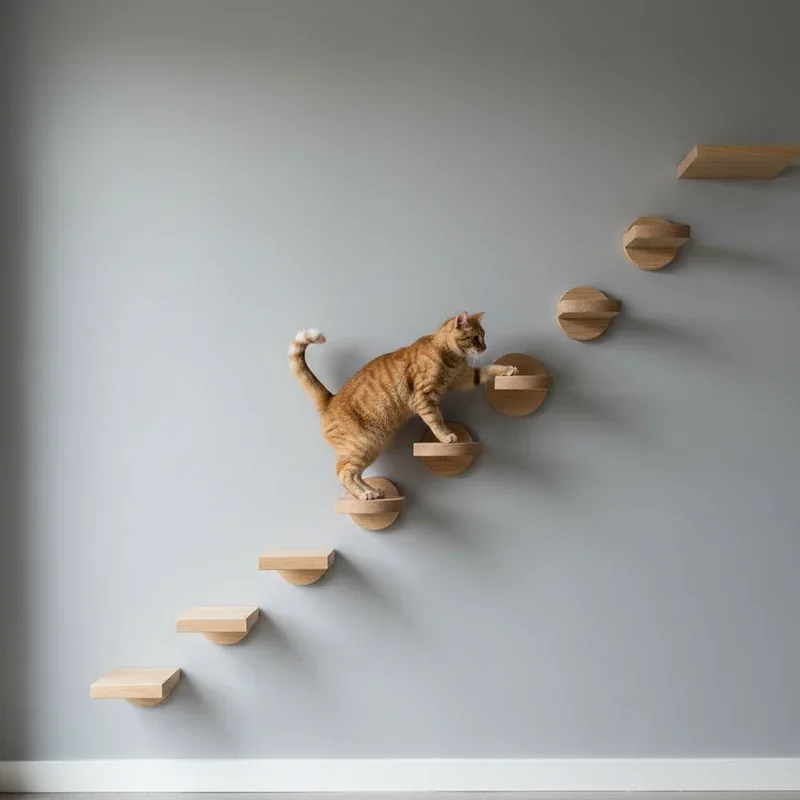
4. Carpeted Climbing Pole Network
Create a vertical playground using carpet-wrapped poles connected at various heights! This classic design provides excellent scratching surfaces while supporting your cat's climbing adventures. Install multiple poles extending from floor to ceiling, connecting them with horizontal platforms or tunnels. The carpeted texture gives your cat superior grip and satisfies their scratching instincts, potentially saving your furniture. Consider using different carpet colors or patterns to create visual interest and define separate climbing zones. Tension-mounted poles work great for renters, requiring no permanent wall damage. Position poles near windows or high-traffic areas where your cat enjoys supervising household activities. This versatile system can grow and evolve as you add more poles and accessories, creating an ever-changing environment your cat won't outgrow.
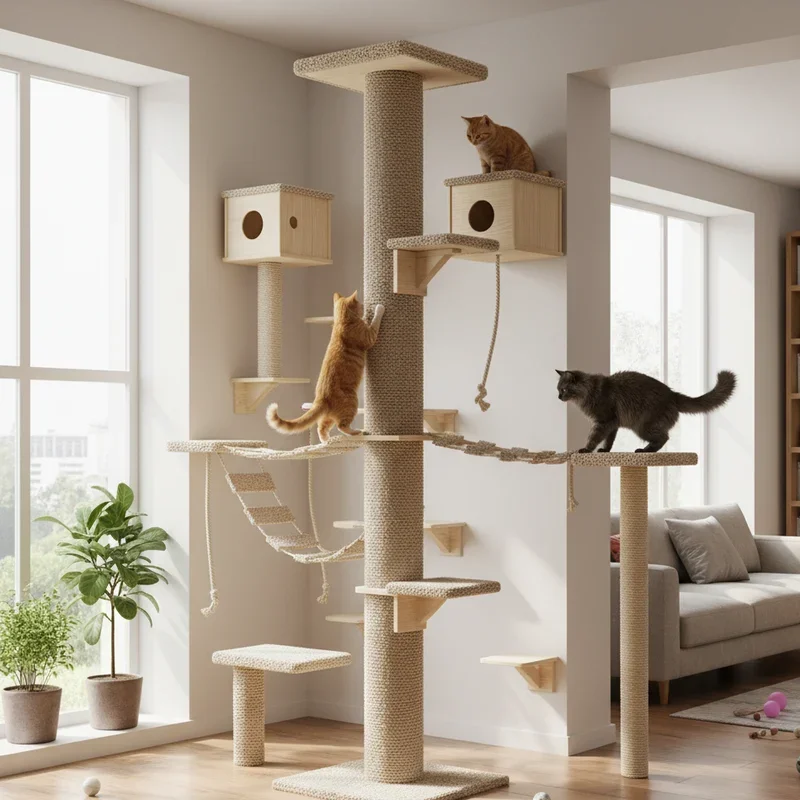
5. Corner-Mounted Spiral Design
Transform neglected corners into thrilling spiral staircases for your adventurous feline! Corner installations maximize vertical space without consuming valuable wall real estate. Design a helical pathway using curved shelves or platforms that wind upward, creating a dramatic focal point. This design particularly benefits smaller spaces where every square foot matters. Your cat will enjoy the circular route, which adds variety to their climbing experience compared to straight vertical paths. Include landing platforms at different heights where your kitty can pause, survey their domain, or simply relax. The spiral design also creates interesting shadows and architectural interest, making it a conversation starter. Consider adding a plush bed or hammock at the top as the ultimate reward for your cat's climbing effort.
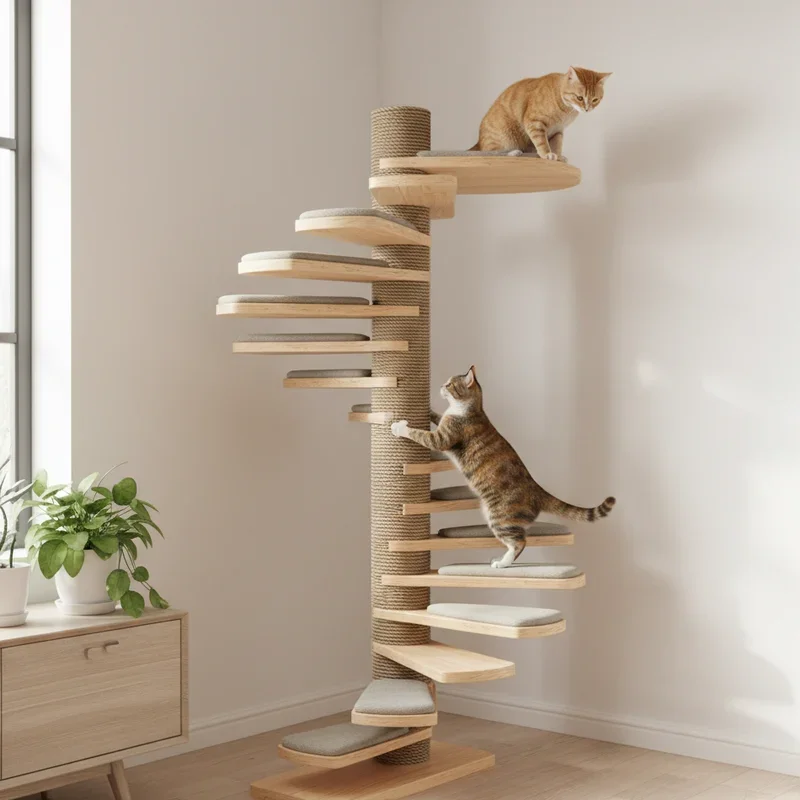
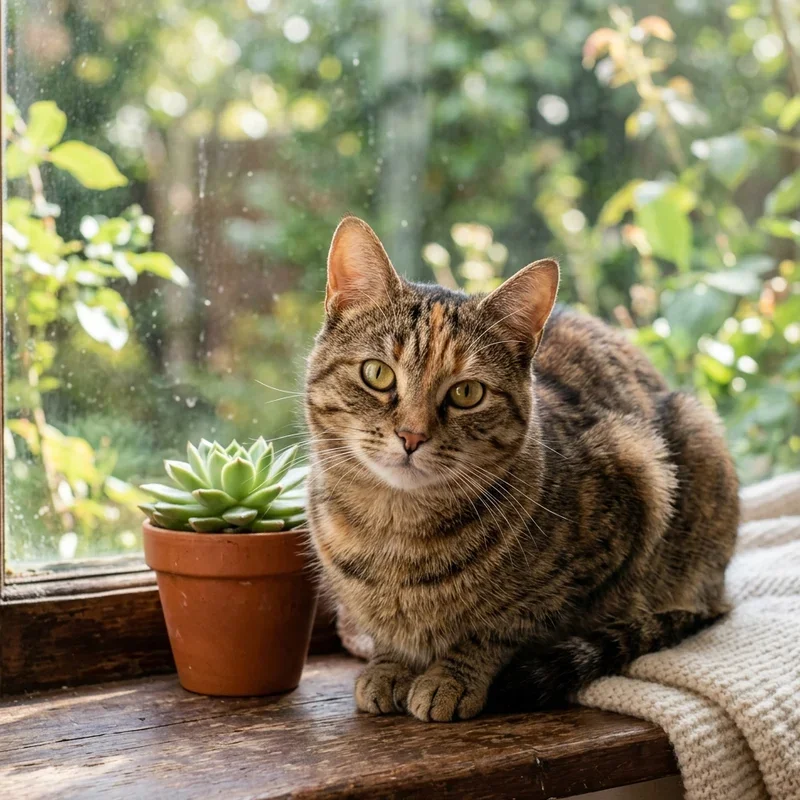
6. Window Perch Integration
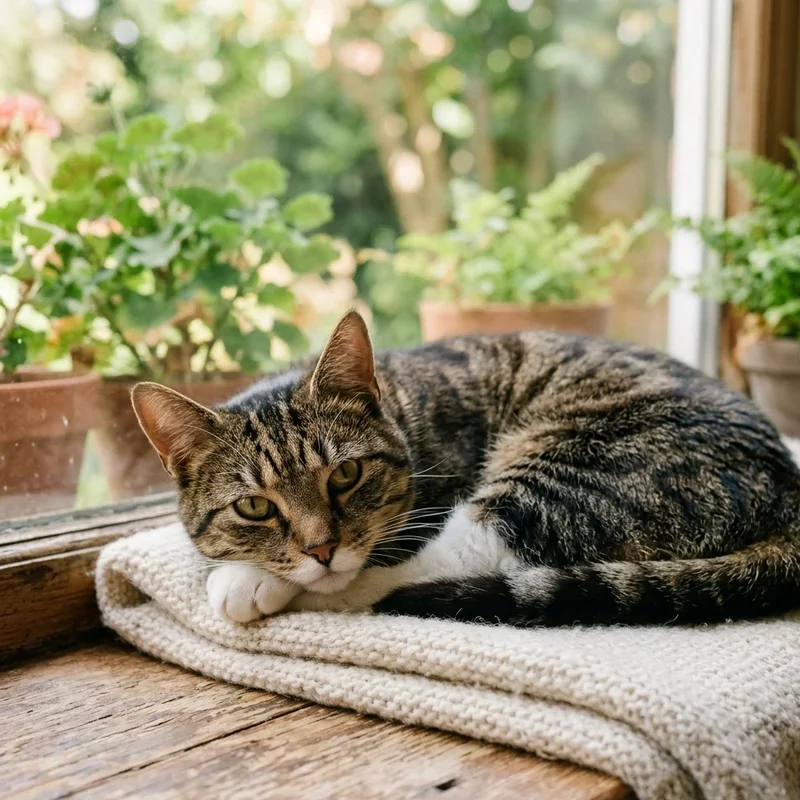
Combine climbing walls with window perches for the ultimate cat entertainment system! Create a pathway leading to strategically placed window seats where your cat can watch birds, pedestrians, and outdoor activities. This integration satisfies both climbing instincts and your cat's natural curiosity about the outside world. Install sturdy shelves leading up to a padded window platform, ensuring it can support your cat's weight comfortably. Consider the sun's path when positioning perches; most cats appreciate warm, sunny spots for afternoon naps. Adding a small shelf or basket below the window perch creates storage for cat toys or treats. This design provides physical exercise climbing up and mental stimulation from window watching, addressing multiple enrichment needs simultaneously.
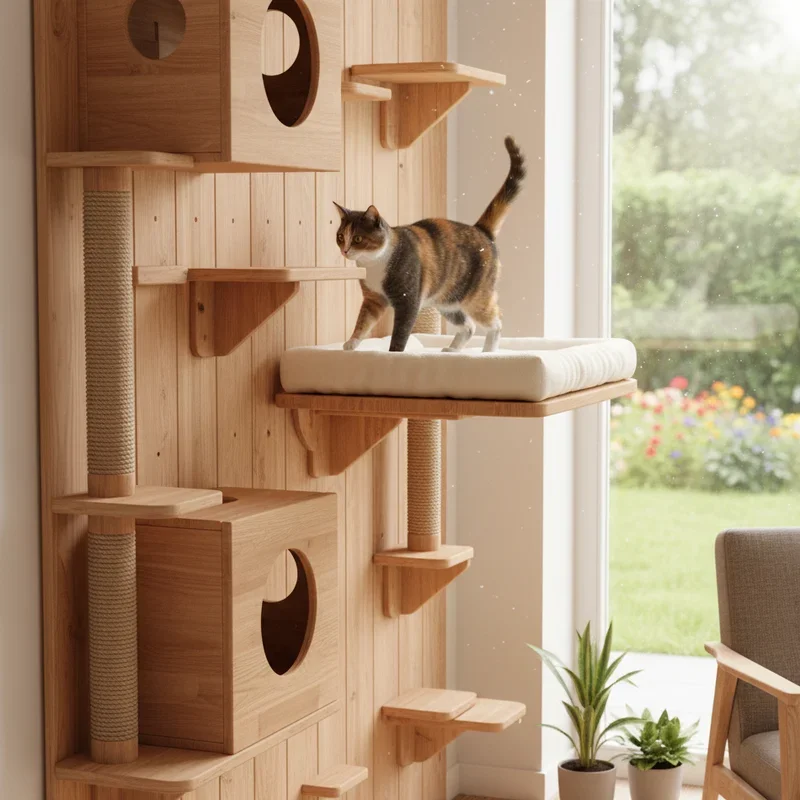
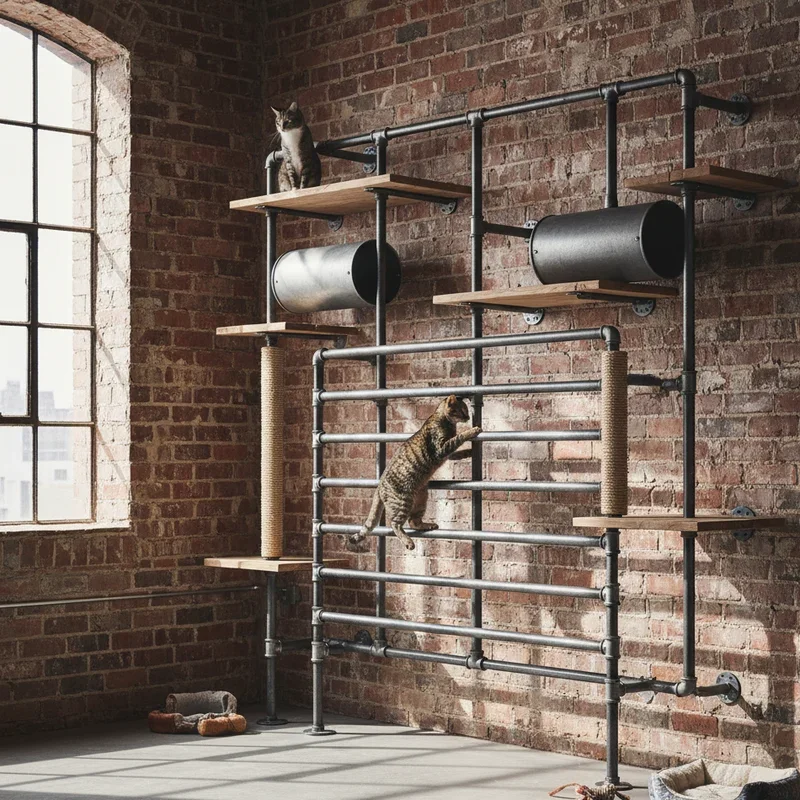
7. Industrial Pipe Framework
Embrace urban chic with an industrial-style climbing structure using metal pipes and wooden platforms! This robust design combines strength with contemporary aesthetics, perfect for loft-style apartments or modern homes. Use standard plumbing pipes to create a framework, adding wooden boards or platforms where your cat can perch. The raw, unfinished look of metal pipes adds edgy character to your space while providing unmatched durability. Paint pipes black for a sophisticated look, or leave them silver for authentic industrial vibes. This design easily supports multiple cats simultaneously, making it ideal for multi-cat households. The modular nature allows you to reconfigure or expand your setup whenever inspiration strikes. Include pipe-mounted scratching posts or dangling toys to increase interactivity and engagement.
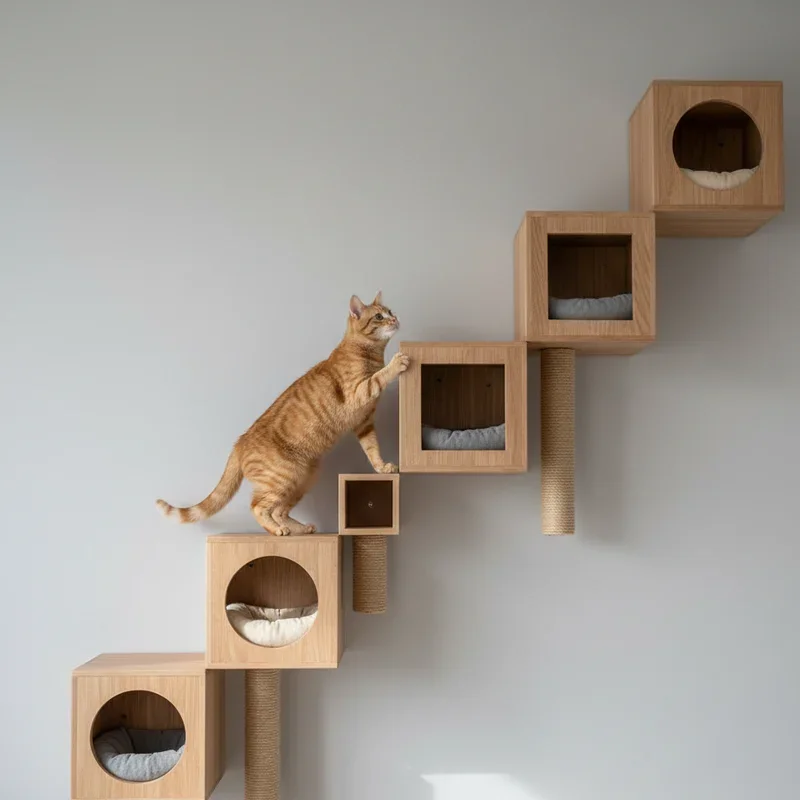
8. Modular Cube Configuration
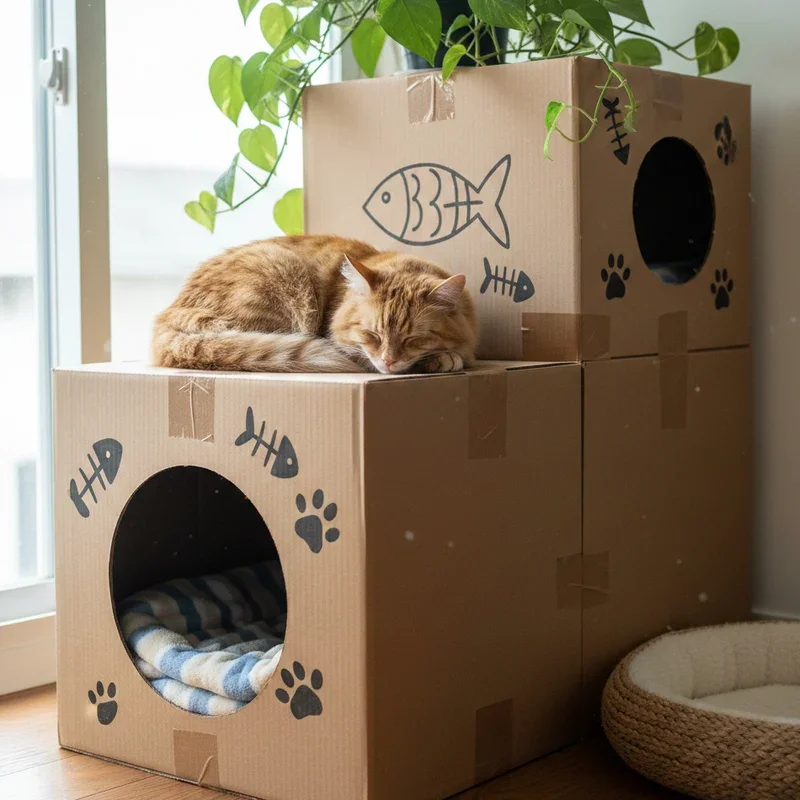
Think of these as building blocks for your cat's vertical world! Cube-shaped boxes can be arranged, stacked, and rearranged in countless configurations. Some cubes can be enclosed with single openings for private hideaways, while others remain open as platforms. This flexibility lets you create custom designs that fit your specific wall dimensions perfectly. Your cat will appreciate the variety of spaces, some for climbing, others for hiding, and several for surveying. Choose cubes in complementary colors to create cohesive designs or mix bold hues for playful aesthetics. The modular approach means you can start small and expand gradually as budget allows. Lightweight materials make installation manageable, and you can easily relocate cubes if you move or redecorate your home.
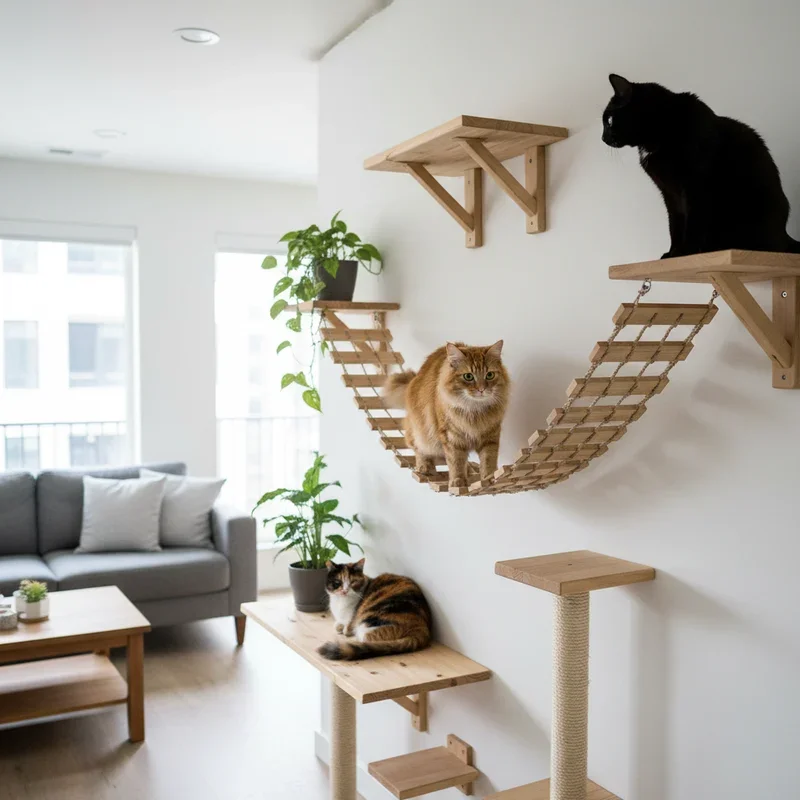
9. Rope Bridge Walkway
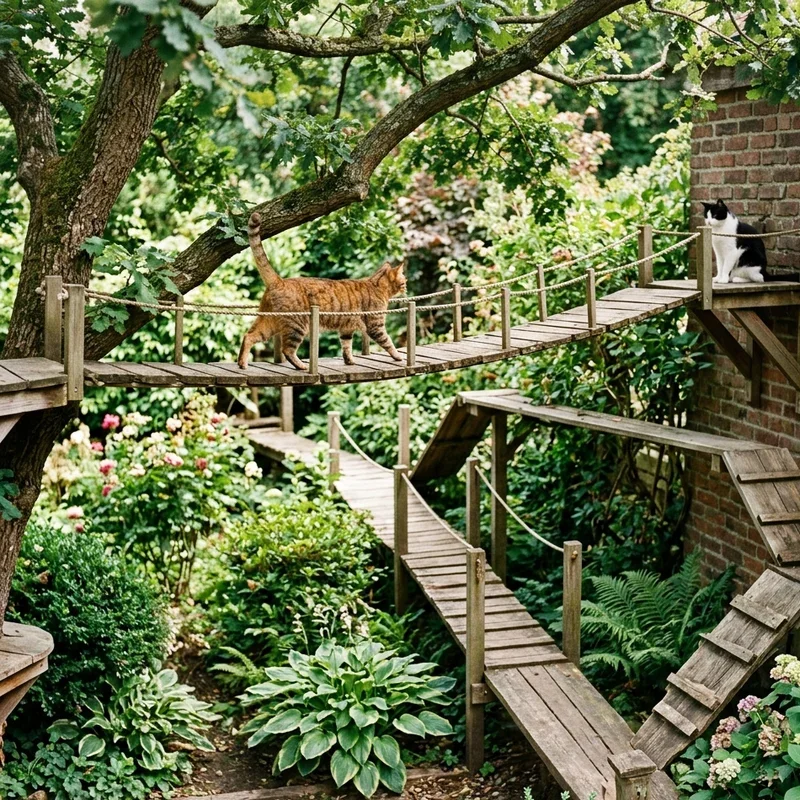
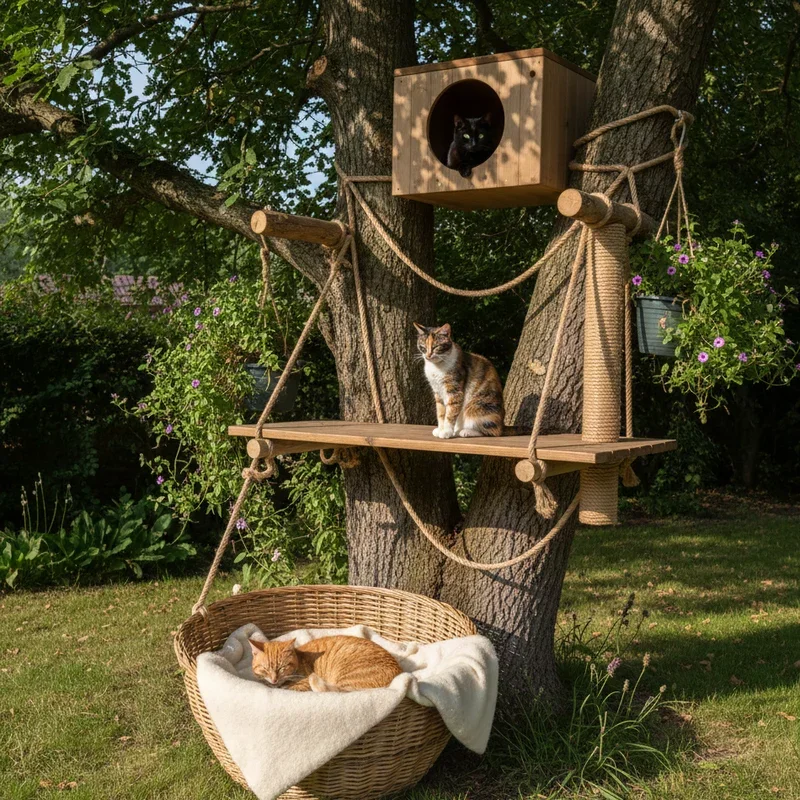
Add adventure with suspended rope bridges connecting various climbing stations! These swaying pathways challenge your cat's balance and coordination while providing thrilling transit options. Install sturdy mounting points on opposite walls, stretching rope or chain bridges between platforms. Most cats find the slight movement exciting rather than scary, though timid kitties might need encouragement initially. Use sisal rope for authentic nautical aesthetics and excellent claw grip. Consider adding wooden slats across rope bridges to create easier walking surfaces for nervous cats. This design element adds visual drama and movement to your climbing wall, making it captivating to watch. Position bridges at moderate heights initially, then add higher ones as your cat gains confidence in their aerial highway system.
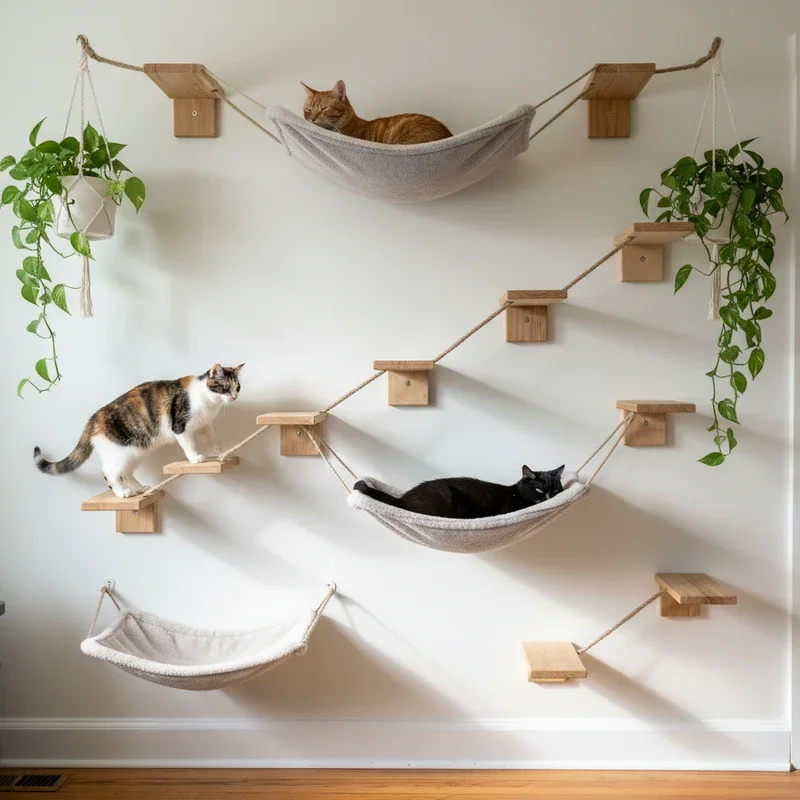
10. Hammock Rest Stations
Every adventurer needs rest stops! Incorporate fabric or mesh hammocks between climbing elements where your cat can lounge comfortably. These suspended beds provide unique resting spots that cats absolutely adore. Choose breathable fabrics that support your cat's weight while remaining comfortable for extended napping sessions. Position hammocks near windows or in warm spots where your cat naturally gravitates. Some cats prefer enclosed hammock styles that provide security, while others enjoy open designs with panoramic views. Install hammocks at various heights to create a multi-level resort atmosphere. The gentle swaying motion some hammocks provide can be soothing for anxious cats. Easy to remove for washing, hammocks maintain cleanliness better than permanent platforms, making them practical and cozy additions.
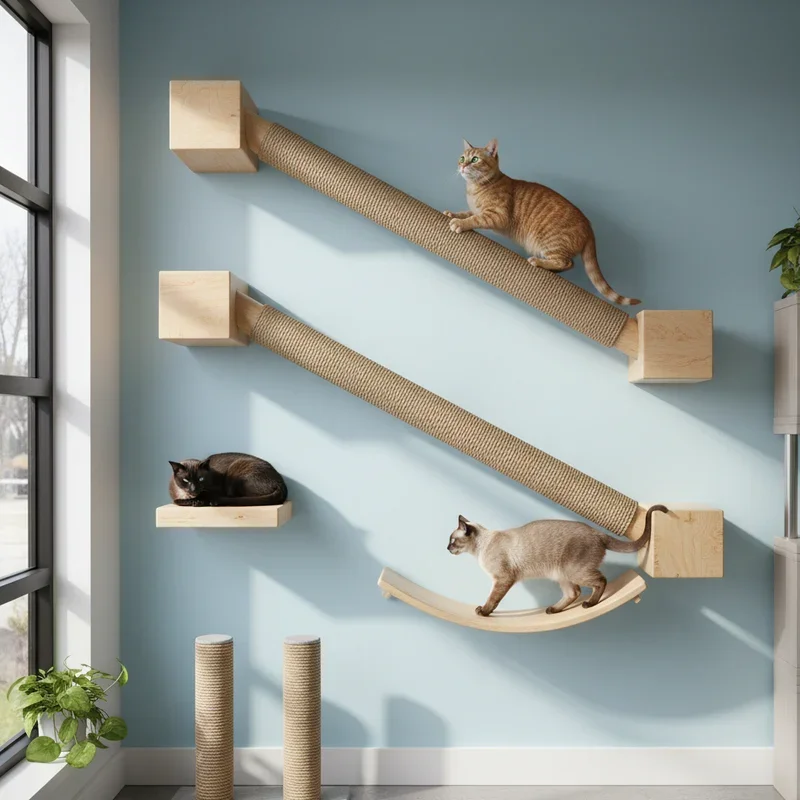
11. Sisal-Wrapped Climbing Posts
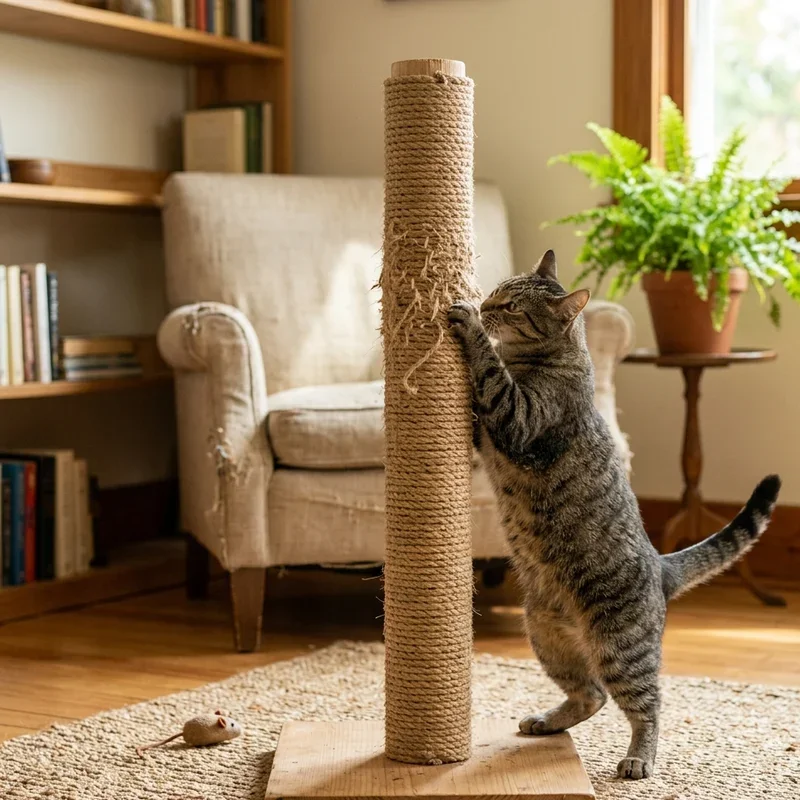
Give your cat premium scratching surfaces while they scale their vertical domain! Cover climbing posts entirely in sisal rope, creating irresistible scratching opportunities throughout the climbing journey. This dual-purpose design satisfies scratching urges and provides secure footing for climbing adventures. The natural fiber texture appeals to cats' instincts and lasts longer than carpet alternatives. Vary post diameters to accommodate different scratching preferences and angles. Position sisal posts strategically near platforms where cats naturally pause, encouraging regular scratching in appropriate locations. The neutral color of natural sisal complements most decor styles while keeping the focus on functionality. Replace sections of sisal as they wear rather than entire posts, making maintenance economical and sustainable over time.
12. Floating Ladder Design
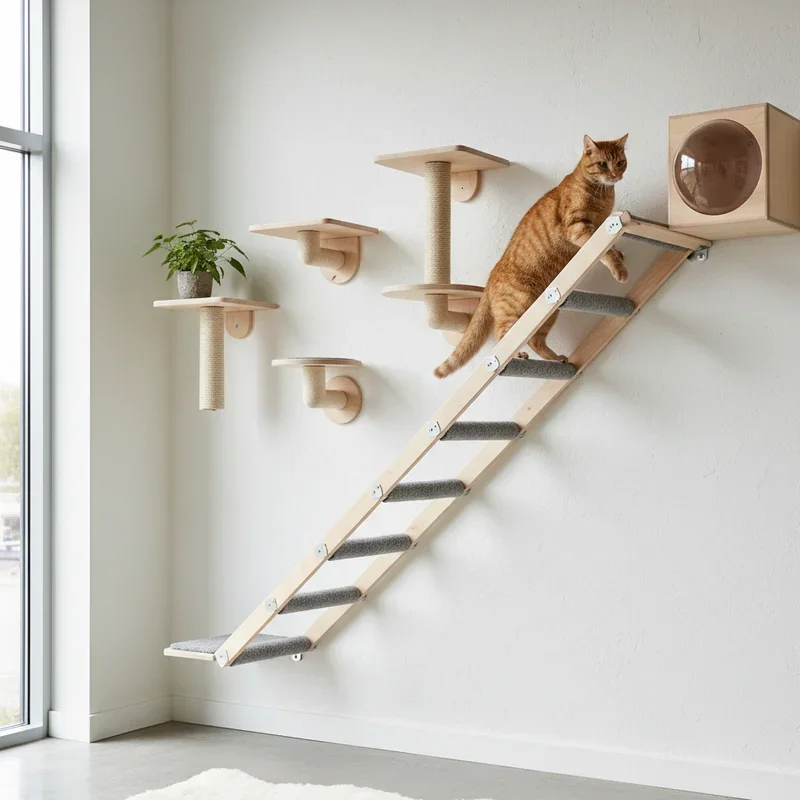
Create the illusion of a ladder ascending your wall using individual rungs or steps! This design mimics traditional ladders but mounts directly to walls, providing clear pathways upward. Space rungs appropriately based on your cat's size and agility, ensuring comfortable hopping between levels. The open design maintains visual lightness, preventing your wall from appearing cluttered or overwhelmed. Paint rungs to match your walls for subtle integration or choose contrasting colors for bold statements. This design works exceptionally well in narrow spaces like hallways where traditional furniture wouldn't fit. Add cushioned pads to upper rungs where your cat might rest during their ascent or descent. The straightforward installation makes this an excellent DIY project for beginners in cat furniture construction.
13. Multi-Level Condo Complex
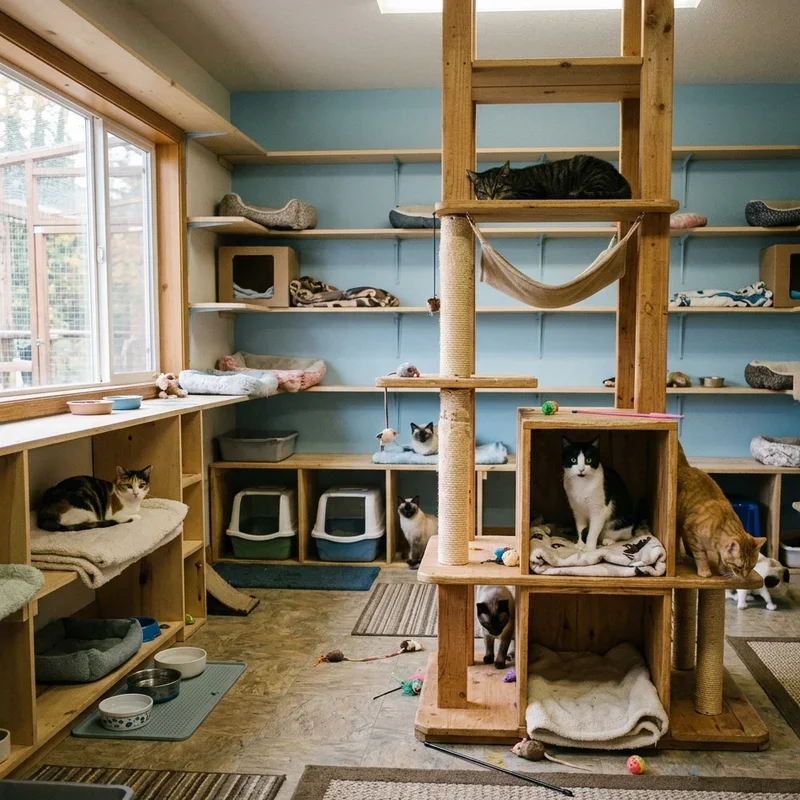
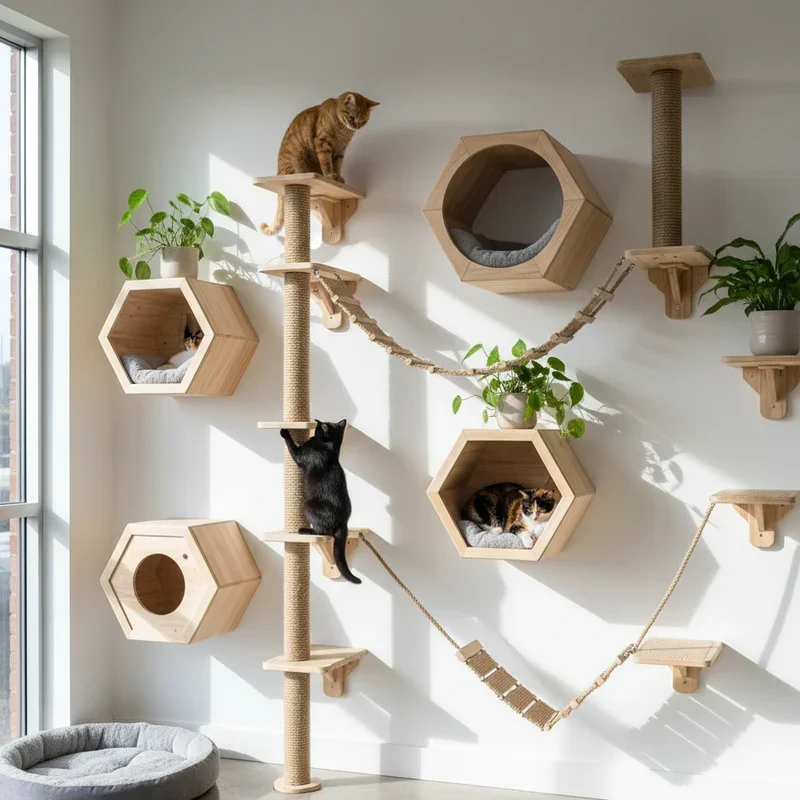
Design a comprehensive cat apartment building on your wall! This elaborate system includes enclosed cubby holes, open platforms, scratching posts, and connecting walkways all integrated into one cohesive structure. Think of it as vertical real estate development exclusively for felines. Create distinct zones for different activities: sleeping quarters, observation decks, and play areas. The enclosed spaces provide security for nervous cats while open platforms appeal to confident climbers. Cover different surfaces with varied materials like carpet, wood, and sisal to maintain sensory interest. This all-inclusive design particularly benefits multi-cat households by providing multiple territorial zones, reducing conflicts over favorite spots. While requiring more initial investment and installation effort, comprehensive condos become permanent fixtures that serve your cats for years.
14. Wall-to-Ceiling Cat Highway
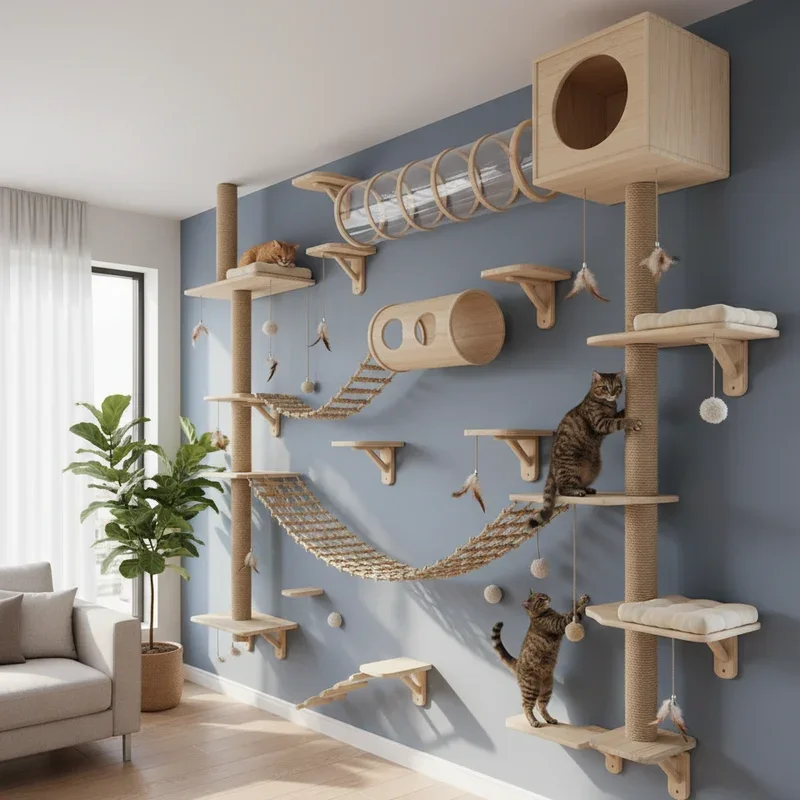
Transform an entire wall into a continuous pathway from floor to ceiling! This ambitious design creates a complete circuit your cat can travel endlessly. Install platforms, bridges, and ramps creating circular routes with no dead ends. Your cat can climb to the ceiling, traverse across, descend on the opposite side, and repeat for hours of entertainment. This design provides maximum exercise opportunities and territorial satisfaction for energetic cats. Include rest stations throughout the highway for breaks during extended journeys. The continuous nature prevents bottlenecks in multi-cat homes, allowing smooth traffic flow. Consider the structural support needed for ceiling-mounted elements, ensuring everything is secure and safe. This impressive installation becomes a stunning architectural feature that showcases your dedication to feline happiness.
15. Custom Themed Adventure Wall
Why settle for basic when you can create a themed wonderland? Design your climbing wall around specific concepts: jungle safari, castle ramparts, space station, or underwater scene. Paint backgrounds, add themed decorations, and choose accessories that complement your chosen adventure. This approach transforms functional pet furniture into engaging art installations. Your cat won't care about themes, but you'll enjoy the creative expression and visual cohesion. Themed walls photograph beautifully, perfect for sharing your creative cat parenting on social media. Choose themes that complement your home's existing decor for seamless integration. Include themed names for different sections, making it fun to describe where your cat is lounging. This personalized approach shows your unique bond with your feline companion.
Conclusion
Creating a cat climbing wall transforms your home into a feline paradise while satisfying your pet's natural instincts. These fifteen ideas offer something for every budget, skill level, and aesthetic preference. Whether you choose minimalist steps or elaborate themed adventures, your cat will appreciate the vertical enrichment. Remember, the best climbing wall adapts to your cat's unique personality and your space limitations. Start small, observe what your cat enjoys, and expand gradually. Your kitty's happiness and your creative satisfaction make every effort worthwhile!
Read next: 15 Cat Room Ideas for a Cozy, Stylish Pet Space
Frequently Asked Questions
Q1: How high should I install cat climbing wall elements?
Most cats safely navigate elements up to ceiling height; start lower for kittens or seniors.
Q2: What materials are safest for cat climbing walls?
Use solid wood, sturdy brackets, and non-toxic finishes; avoid cheap plastics that might break unexpectedly.
Q3: Can I install climbing walls in rental properties?
Yes! Use tension-mounted poles or adhesive strips designed for temporary installation without permanent wall damage.
Q4: How much weight should cat wall shelves support?
Each shelf should support at least 25-30 pounds to safely accommodate most cats and their jumping impact.
Q5: Do multiple cats need separate climbing walls?
Not necessarily; design walls with multiple paths and rest spots to prevent territorial conflicts and bottlenecks.
Stay up to date with our latest ideas!