9 Best Pet Insurance Plans for Puppies in 2026
Protect your pup’s health and your wallet. Discover the 9 best pet insurance plans for 2026 to cover vaccines, surgeries, and hereditary conditions.

A puppy's first year brings more vet visits than most owners expect. Routine checkups begin almost straight away. Vaccinations follow over several months. Many puppies are also microchipped, dewormed, or spayed and neutered before their first birthday. Those costs can add up quickly.
Timing matters just as much as price. Most insurers will not cover conditions that appear before a policy starts. A simple skin allergy or an ear infection can stay on your dog's medical record for years. Buying cover early gives you the best chance of avoiding exclusions later.
Not every policy suits a young puppy. Some plans focus on accidents and illnesses only. Others offer wellness add-ons that help pay for vaccines, flea and tick prevention, annual exams, or other routine care. Waiting periods, reimbursement rates, and hereditary condition cover also vary from one insurer to another.
This guide compares nine of the best pet insurance providers for puppies in 2026. Each one is assessed on preventive care options, waiting periods, hereditary condition cover, claims experience, pricing, and overall value during a puppy's first year.
The best pet insurance for puppies at a glance
Best for the puppy wellness bill: Lemonade
Best for hereditary conditions from day one: ASPCA Pet Health Insurance
Best for uncapped coverage on a growing dog: Healthy Paws
Best for paying the vet at the counter: Trupanion
Best for owners with exotic pets too: Nationwide Pet
Best cheap starter policy: Pets Best
Best for puppy dental trouble: Embrace
Best for breed-blind pricing: Pumpkin
Best for a dog you'll insure for 20 years: Spot
Puppy plans start around $20 a month. The figures below assume a $5,000 annual limit, a $500 deductible and 80% back on a mixed-breed dog. A French Bulldog or a Bernese Mountain Dog costs more from the first quote.
Best for the puppy wellness bill: Lemonade
Waiting periods: no accident waiting period, 14 days for illnesses, 30 days for Orthopedic conditions
Preventive care: Routine Vet Care and Routine Vet Care Plus packages, available as add-ons
Hereditary conditions: covered when no symptom predates the policy
Pros:
The Plus package covers the exact puppy-year line items: unlimited wellness exams, vaccines, spay or neuter surgery, microchipping, and flea and tick prevention
Signup takes about 90 seconds in the app, so you can be covered before the breeder's paperwork is filed
Diagnostics, surgery, hospitalization and prescriptions all belong to the base policy
Cons:
Preventive coverage carries its own price, and the base plan on its own pays nothing toward vaccines or a neuter
Nothing that showed a symptom before the start date is ever covered, which is a hard rule with no appeal
A new puppy generates a stack of receipts long before it generates a crisis, and Lemonade Pet is the plan that recognizes the difference. Its Routine Vet Care Plus package reimburses the vaccine series, the spay or neuter, the microchip and the monthly parasite prevention, which together account for most of what a first-year owner spends. The speed matters too. You can bind a policy in the parking lot of the breeder or the shelter, which puts the waiting-period clocks in motion before your dog has ever seen a vet. That six-month cruciate ligament wait, the one that torpedoes claims for adult dogs, is a non-issue for an eight-week-old: it will expire years before your dog is heavy enough or fast enough to tear anything.
Price: from $10 a month for the base accident-and-illness policy, with preventive packages priced on top. Bundling with a Lemonade renters or home policy takes 10% off, and a second pet takes another 5%.
Best for hereditary conditions from day one: ASPCA Pet Health Insurance
Waiting periods: 14 days for every condition, orthopedic included
Preventive care: two tiers of optional preventive coverage
Hereditary conditions: hereditary, congenital and behavioral all covered in the base plan
Pros:
Hip dysplasia, elbow dysplasia and other inherited conditions clear their waiting period in a fortnight rather than half a year
Behavioral treatment (destructive chewing, separation anxiety) sits in the standard policy
30-day money-back guarantee if the paperwork disappoints you
Cons:
Claim reimbursement drags, and service quality varies from one owner to the next
Premiums escalate as the dog ages, so the cheap first-year quote isn't the number you'll pay at six
Bring home a purebred and you've bought a genetic risk profile along with the dog. German Shepherds get hips, Cavaliers get hearts, Bulldogs get airways. ASPCA covers inherited conditions in the base policy and applies the same 14-day clock to everything, which means a puppy is fully protected against its own pedigree inside two weeks. Rivals park those same claims behind a six-month orthopedic wait.
Price: quote-based, tracking close to the category average for a young dog. Multi-pet discount of 10%.
Best for uncapped coverage on a growing dog: Healthy Paws
Waiting periods: 15 days accidents and illness; hip dysplasia up to 12 months
Preventive care: none offered
Hereditary conditions: covered, including hip dysplasia, if you enroll the dog young
Pros:
Every plan pays without an annual or lifetime ceiling, which is the coverage that matters if a young dog develops something catastrophic
Claims clear in about two business days from a photo uploaded in the app
Unlimited video vet consults through Airvet, which new owners lean on hard
Cons:
No wellness product exists, so every vaccine, exam and neuter comes out of your pocket
Hip dysplasia can sit behind a 12-month wait, the longest orthopedic clock in this group
Healthy Paws makes sense for owners who plan to pay routine care themselves and want the ceiling removed on everything else. Parvo, a swallowed corn cob, a congenital heart defect found at four months: none of those bills negotiate with an annual cap. The trade is that puppy-year spending, the one bracket you can predict to the dollar, gets no help at all.
Price: quote-based, positioned below most carriers offering uncapped payouts.
Best for paying the vet at the counter: Trupanion
Waiting periods: 5 days accidents, 30 days illness
Preventive care: none offered
Hereditary conditions: covered, along with advanced dentistry
Pros:
Participating hospitals bill Trupanion at the counter through VetDirect Pay, so a $5,000 emergency never reaches your credit card
The per-condition deductible gets paid once and never again for that condition across the dog's life
Pricing is set by the dog's age at enrollment, which rewards signing up a puppy
Cons:
Pricing crowns this field, well above every other plan here
Routine care isn't sold at any tier, and the illness clock runs a full month
Puppies swallow things. A foreign-body surgery in month four runs $3,000 to $7,000, and Trupanion settles that bill with the hospital instead of refunding you weeks afterward. For a household without a deep emergency fund, that changes what care is possible. Its 30-day illness clock is the slowest in this group, so bind the policy the day the dog arrives.
Price: quote-based, at the premium end. Plans for dogs tend to land between $60 and $90 a month.
Best for owners with exotic pets too: Nationwide Pet
Waiting periods: vary by plan tier
Preventive care: whole-pet and wellness plan tiers available
Hereditary conditions: covered under the broader plan tiers
Pros:
The only major carrier that also insures birds, reptiles and other exotics, so one account covers a mixed household
Any vet, anywhere, including specialists and emergency hospitals
Existing Nationwide members take 5% off
Cons:
Enrollment and renewal restrictions have changed in recent years, and members report benefits shifting underneath them
The claims process runs on legacy rails and moves slower than the app-first carriers here
Nationwide is the oldest name in the category and the only one that will cover the parrot in the next room. For a puppy on its own, the case is thinner. Claims move at the pace of a traditional insurer, and the plan changes at renewal have generated real frustration among long-standing members.
Price: quote-based, with reimbursement paid after an annual deductible.
Best cheap starter policy: Pets Best
Waiting periods: 2 days accidents, 14 days illness, 6 months cruciate ligament
Preventive care: two tiers of optional routine-care coverage
Hereditary conditions: covered when not pre-existing; curable pre-existing conditions can qualify once healed
Pros:
Enrollment opens at seven weeks, among the earliest in the category
Nine dollars a month buys accident-only cover, the cheapest way to protect a puppy against a swallowed object
Curable pre-existing conditions (a kennel cough, a UTI) can come back into coverage once the dog has been symptom-free
Cons:
Renewal increases dominate the complaints in its review base, and they compound across a dog's life
Payouts arrive late, and reviewers describe claims getting rejected
Seven weeks is the earliest most owners can bind a policy anywhere, and Pets Best hits that mark. The curable pre-existing rule is the underrated feature for puppy buyers, since the shelter cough your dog arrived with need not haunt the policy forever. The price you sign at, though, is the beginning of a long upward curve.
Price: $9 a month for the accident-only tier; illness coverage starts near $36.
Best for puppy dental trouble: Embrace
Waiting periods: 0 to 2 days accidents (by state), 14 days illness, 6 months orthopedic
Preventive care: Wellness Rewards, a budgeted routine-care allowance
Hereditary conditions: breed-specific and congenital conditions covered when not pre-existing
Pros:
Dental illness reimbursed to $1,000 a year, and the carrier asks for no dental exam beforehand
Wellness Rewards works as a spending allowance rather than a claims process, which suits a year of small receipts
Each claim-free year knocks $50 off the deductible, and healthy puppies file few claims
Cons:
Denied claims and disputes over coverage limits recur across its reviews
Hip dysplasia, patellar luxation and IVDD all sit behind a half-year clock, which matters for small breeds
Retained puppy teeth, a canine snapped on a rock, early gingivitis: dental trouble arrives in the first two years more often than owners expect, and most policies exclude it outright. Embrace pays. The shrinking deductible suits a puppy too, since a healthy young dog banks claim-free years while that figure walks down toward zero.
Price: quote-based, mid-market, with Wellness Rewards carrying its own charge.
Best for breed-blind pricing: Pumpkin
Waiting periods: 14 days for all conditions
Preventive care: preventive packs, offered as a separate non-insurance product
Hereditary conditions: covered at no extra cost, along with dental illness
Pros:
No breed restrictions at all, so a Rottweiler puppy doesn't get penalized for its ancestry
Flat 90% reimbursement on every plan, with no tier to second-guess
Cons:
Premiums land well above the value carriers, and a puppy quote reflects that
The preventive product isn't insurance, which surprises owners who assumed it was part of the policy
Pumpkin charges the same 90% back whatever your dog is, and covers inherited conditions with no surcharge, which is unusual for a carrier that also accepts high-risk breeds. Its 4.8 out of 5 on Trustpilot is the strongest standing in this group. The monthly figure reflects every bit of it.
Price: quote-based, toward the premium end. Young dogs tend to start near $30 a month.
Best for a dog you'll insure for 20 years: Spot
Waiting periods: 14 days accidents and illness
Preventive care: two tiers of optional preventive add-ons
Hereditary conditions: covered when not pre-existing; microchip and behavioral treatment included
Pros:
Enrolls dogs from eight weeks old with no upper age limit, so the policy you buy now can follow the dog to 21
Microchip implantation and behavioral treatment come inside the plan rather than as extras
Cons:
Renewal pricing creeps up each year, which compounds across a long dog life
Owners report confusion over the reach of its exclusions
The point of insuring a puppy is that you never have to shop again. Spot never ages your dog out, which means the policy you bind at eight weeks is the policy that covers the arthritis at thirteen. The microchip coverage is a small, practical win in a year full of small, practical expenses.
Price: quote-based, value tier, with limits running up to unlimited.
What the best pet insurance for puppies costs now, and at ten
Puppy premiums are the low point of a curve that only goes one direction.
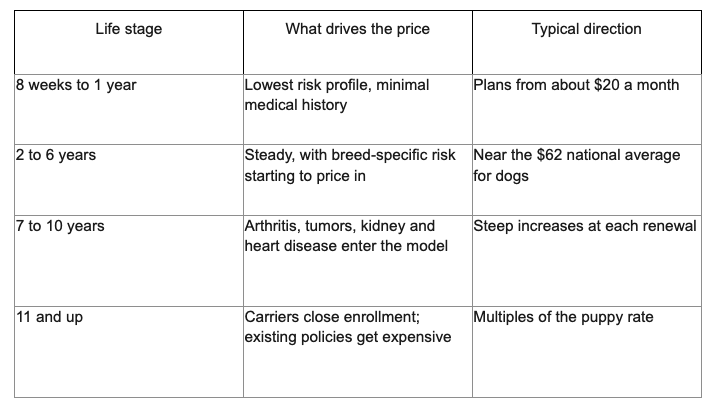
The point of that table is the entry price, and the exclusions you dodge by enrolling before a vet chart exists. Annual spending on a dog reaches $4,272 once routine care is included, and the decision you make in week one sets how much of that total you shoulder alone.
Which pet insurance for puppies is worth buying in 2026
The best pet insurance for puppies is the one you can activate before your dog meets a veterinarian. Lemonade takes the top spot because it does both halves of the job a puppy year demands: a 90-second signup that beats the first vet chart, and a preventive package that reimburses the vaccines, the neuter, the microchip and the parasite prevention that make up most of what you'll spend before your dog's first birthday. ASPCA is the stronger call for a purebred with known hereditary risk, since its 14-day clock covers hips and elbows while rivals stall for six months. Trupanion is worth the premium for anyone who couldn't absorb a $5,000 foreign-body surgery on a credit card. Pick one this week. The cheapest, cleanest policy your dog will ever qualify for is the one you buy today, and it gets worse from here.
Stay up to date with our latest ideas!