15 Duck Pool Ideas for Happy Backyard Ducks
Discover 15 duck pool ideas for happy backyard ducks that provide essential water access, entertainment, and healthy living environments your flock genuinely loves.
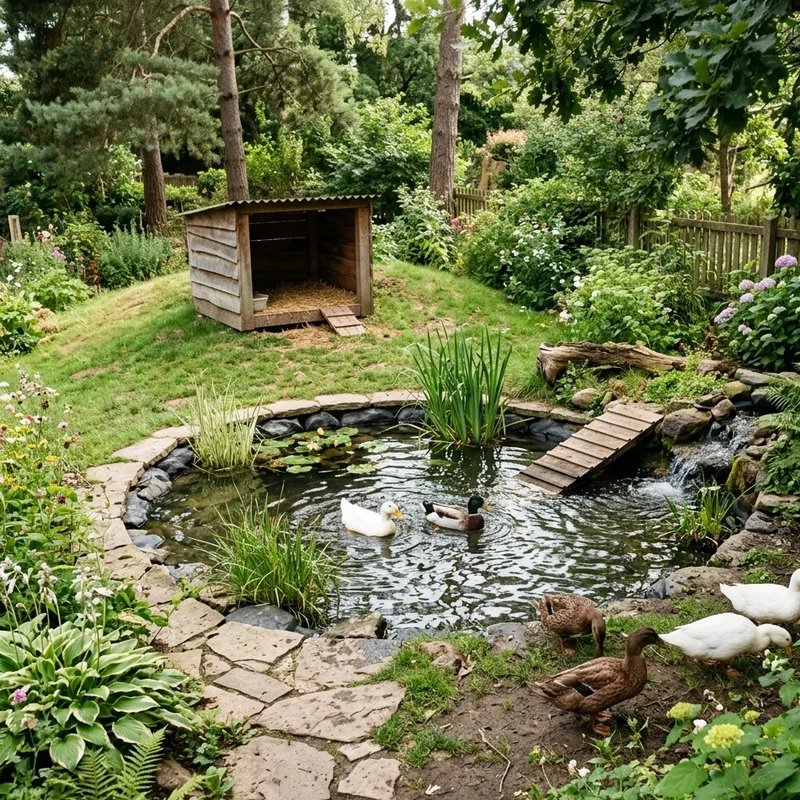
A duck pool transforms backyard duck keeping from basic poultry management into a genuinely enriching, joy-filled experience that benefits both the ducks and the humans who love watching them splash enthusiastically throughout every day. Have you ever watched ducks discover fresh clean water for the first time and witnessed that explosive, utterly uncontainable joy that only a duck experiencing its natural element can express so perfectly? That infectious happiness makes providing excellent water access one of the most rewarding duck keeping decisions any backyard farmer ever makes throughout the experience. Think of a duck pool as both infrastructure and entertainment system combined into one essential feature every flock genuinely needs. These fifteen inspired ideas create perfect duck water environments always.
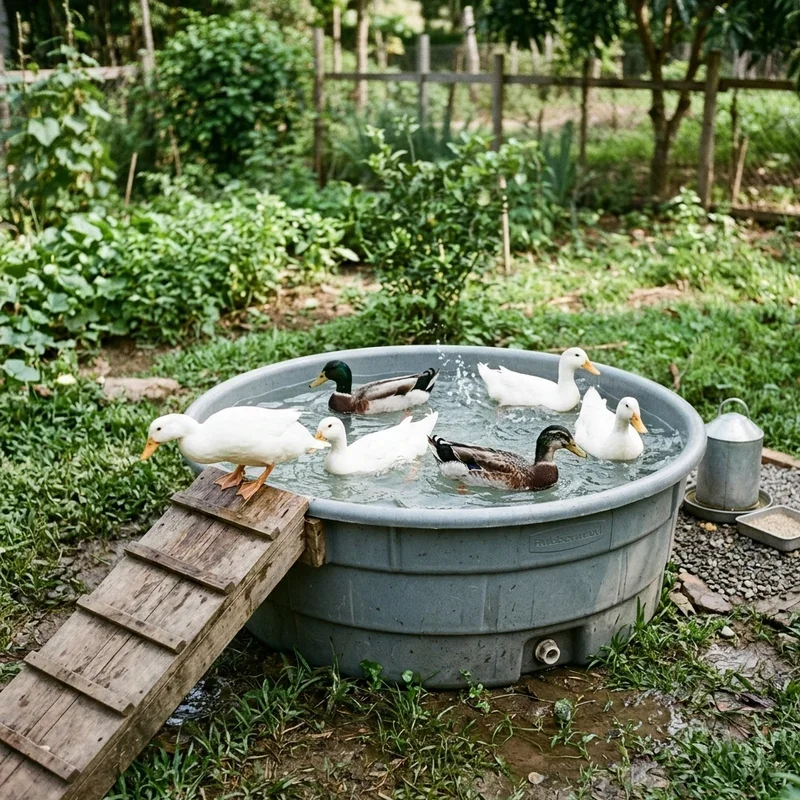
1. Simple Plastic Stock Tank Pool
A simple plastic stock tank pool provides the most immediately accessible, genuinely effective, and surprisingly durable duck water solution available to backyard duck keepers at every experience level throughout their farming journey. Stock tanks work like oversized bathtubs specifically designed for agricultural animals, combining practical water containment with the durability required for enthusiastic daily duck use. Select oval or round poly stock tanks in 50 to 150 gallon capacities depending on your flock size, ensuring every duck can access water simultaneously without crowding or competition throughout. Elevate tanks slightly on concrete blocks allowing you to install a simple drain plug at the base for easy water changing. Add a ramp or step using pressure-treated lumber allowing ducks comfortable entry and exit at both pool edges always.
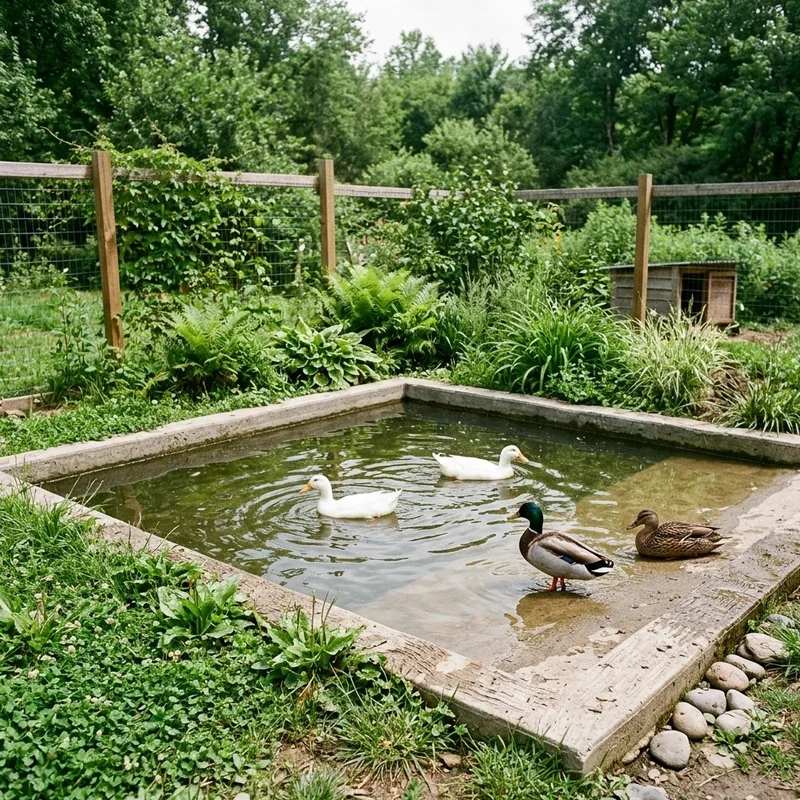
2. Concrete Lined Duck Pond
A concrete lined duck pond creates a permanent, genuinely beautiful water feature that serves your flock for decades while contributing positively to your backyard's overall landscape aesthetic throughout every season. Concrete ponds work like swimming pools built specifically for ducks, providing a durable water environment that withstands the enthusiastic activity of even large, energetic duck breeds throughout. Excavate a pond depression measuring four to six feet in diameter and twelve to eighteen inches deep, applying chicken wire reinforcement before pouring concrete for structural integrity throughout. Form gentle sloped entry points on at least two sides allowing ducks to walk comfortably in and out without jumping. Apply waterproof concrete sealer after full curing, and install a central drain for manageable water changing throughout the year always.
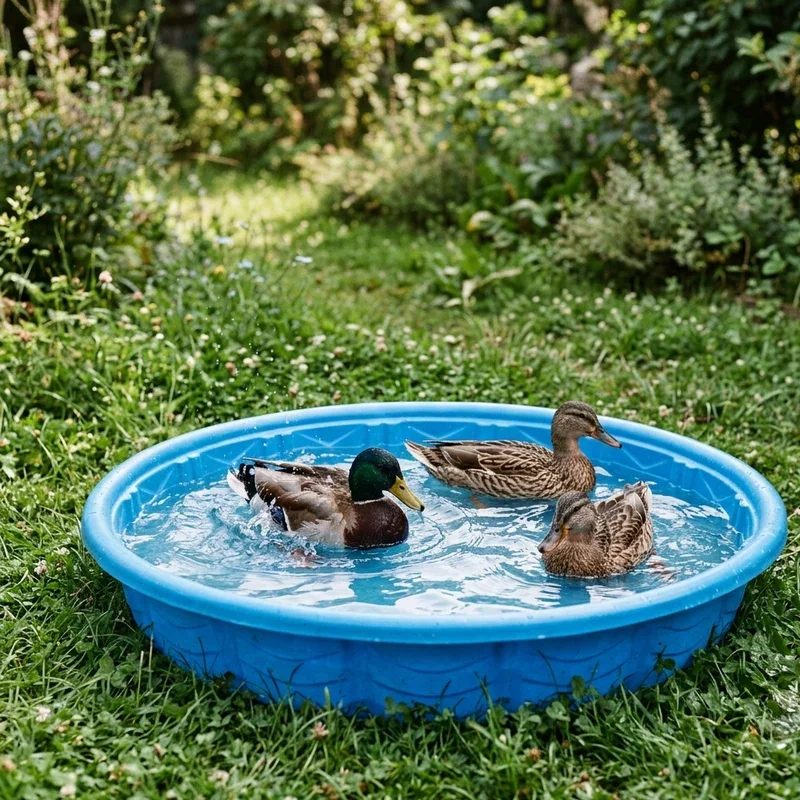
3. Kiddie Pool Easy Setup
A kiddie plastic kiddie pool provides the most budget-friendly, immediately available duck water solution imaginable, getting your flock into water within hours of your decision to improve their water access throughout the backyard environment. Kiddie pools work like duck pools for the impatient keeper who wants happy ducks today rather than after a construction project concludes beautifully. Select larger rigid plastic kiddie pools measuring at least four feet in diameter providing adequate space for multiple ducks bathing simultaneously without territorial crowding. Position on a slightly graded area allowing you to tip the pool for drainage rather than scooping water out manually throughout cleaning sessions. Create entry ramps using landscape bricks stacked to a gentle incline alongside smooth wooden boards allowing easy duck access always.
4. Raised Wooden Frame Pool
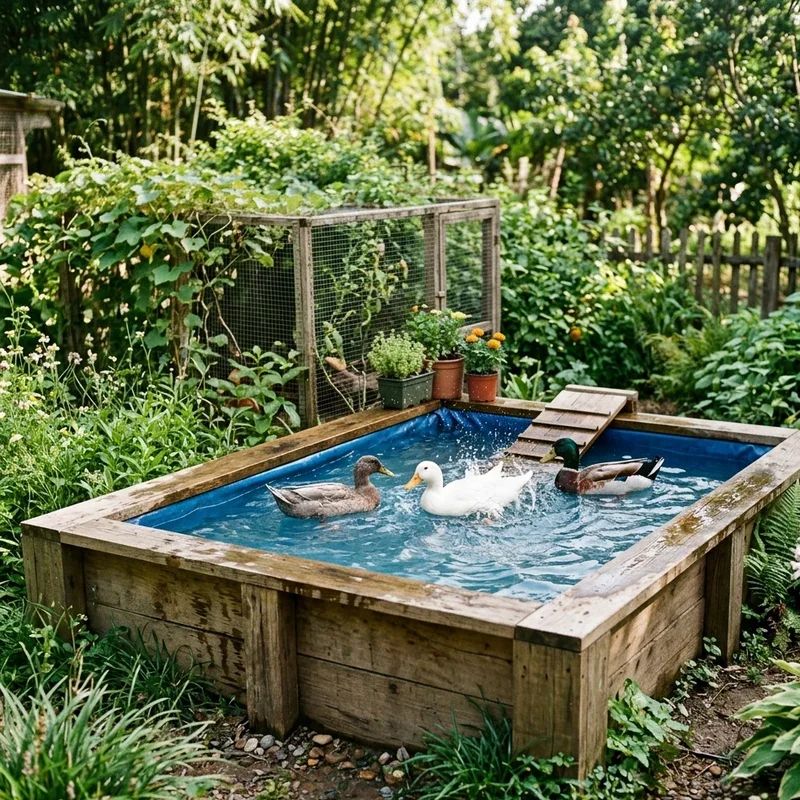
A raised wooden frame pool combines practical water containment with attractive garden aesthetic, using pressure-treated lumber or naturally rot-resistant cedar to construct a above-ground pool frame that looks intentionally designed rather than haphazardly arranged throughout the backyard. Wooden frame pools work like raised garden beds applied to the concept of duck water provision with pleasing functional elegance. Build a square or rectangular frame using four by four posts and two by six board walls, lining the interior with a durable EPDM pond liner or heavy-gauge polyethylene sheeting secured over the wooden edges with wooden trim strips. Size the frame generously at minimum four by four feet providing adequate swimming space for a small flock of three to six ducks throughout daily use. Install a drain port always.
5. Recirculating Filter Pool System
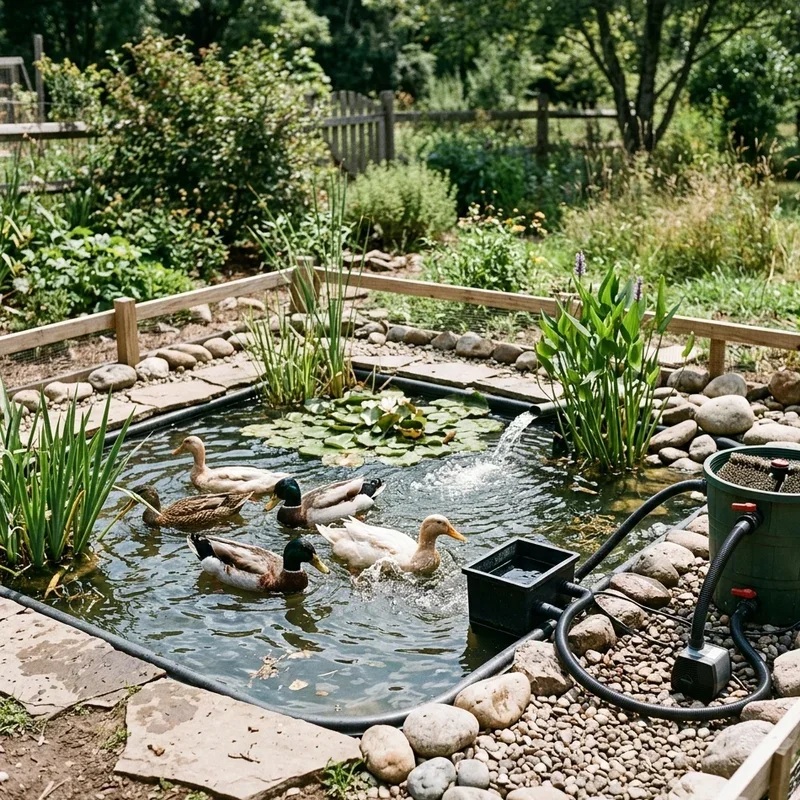
A recirculating filter pool system transforms the chronic challenge of maintaining clean duck water into a manageable, semi-automated process using pump and filtration technology to continuously process the considerable waste load that active duck flocks generate throughout every swimming session. Filtered pool systems work like miniature water treatment facilities dedicated exclusively to your duck flock's aquatic enjoyment and health maintenance throughout. Install a submersible or external pond pump with capacity matching your pool volume, routing water through a biological and mechanical filter system before returning cleaned water to the main pool. Include a UV sterilizer in the circuit for additional pathogen reduction since duck water carries significant bacterial loads compared to ornamental fish ponds throughout regular operation. Clean filter media weekly for effective performance always.
6. Natural Earthen Duck Pond
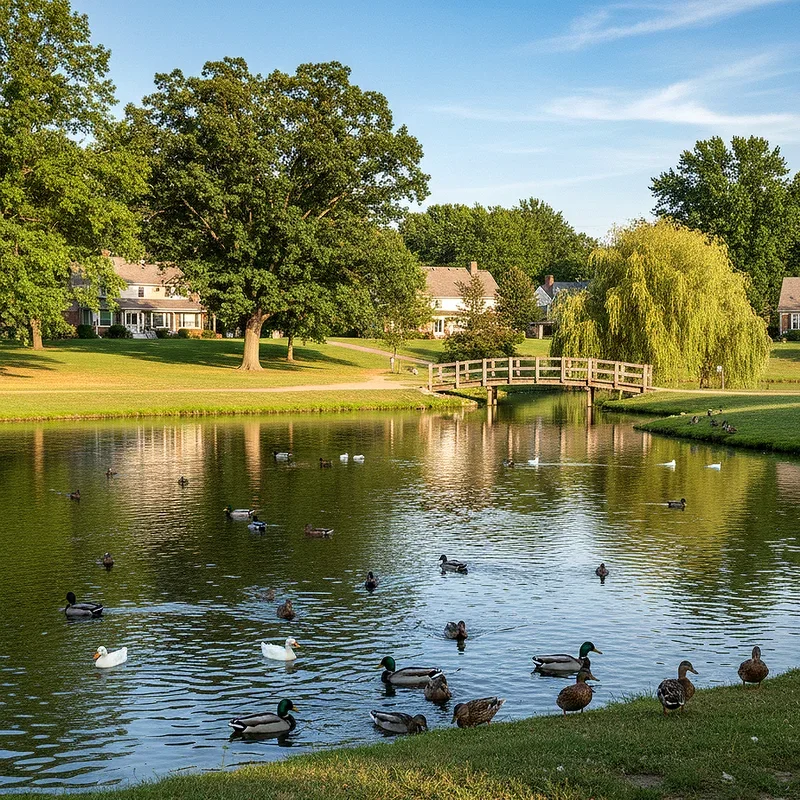
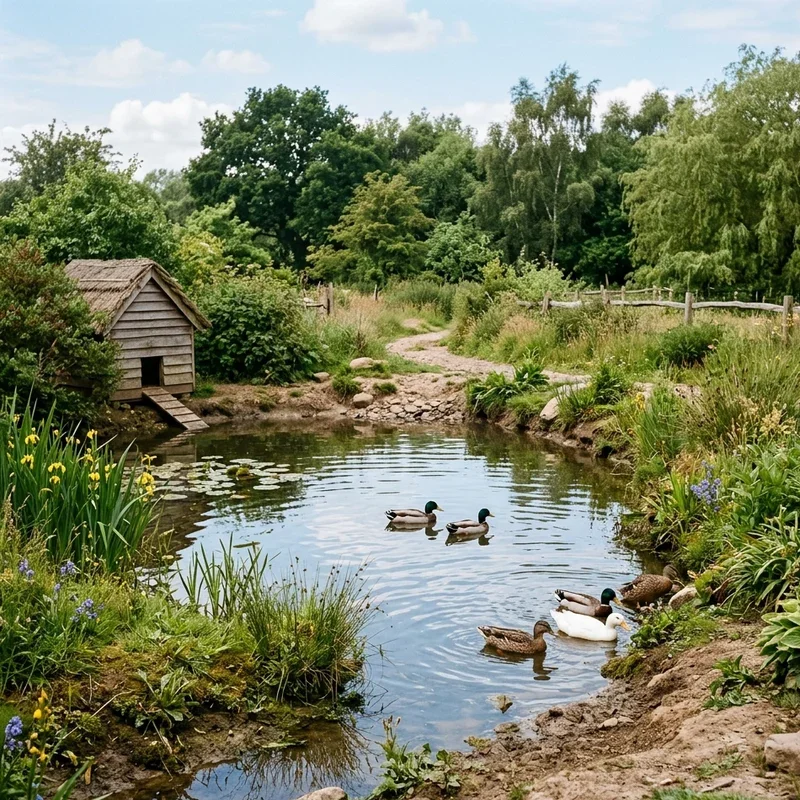
A natural earthen duck pond creates the most ecologically integrated, visually authentic water feature for backyard duck keeping, allowing your flock access to a living water environment complete with emergent vegetation, natural substrate exploration, and the genuine sensory richness of a real pond throughout. Earthen ponds work like borrowing a piece of natural wetland ecosystem for your backyard duck keeping operation beautifully. Excavate a natural pond depression using gentle sloped banks on all sides providing safe duck entry and exit throughout. Line with a bentonite clay layer or install a flexible pond liner before adding a thin layer of natural soil substrate allowing aquatic plant establishment. Plant emergent vegetation around the pond edges using cattails, sedges, and water iris providing natural habitat enrichment throughout. Monitor water quality regularly always.
7. IBC Tote Conversion Pool
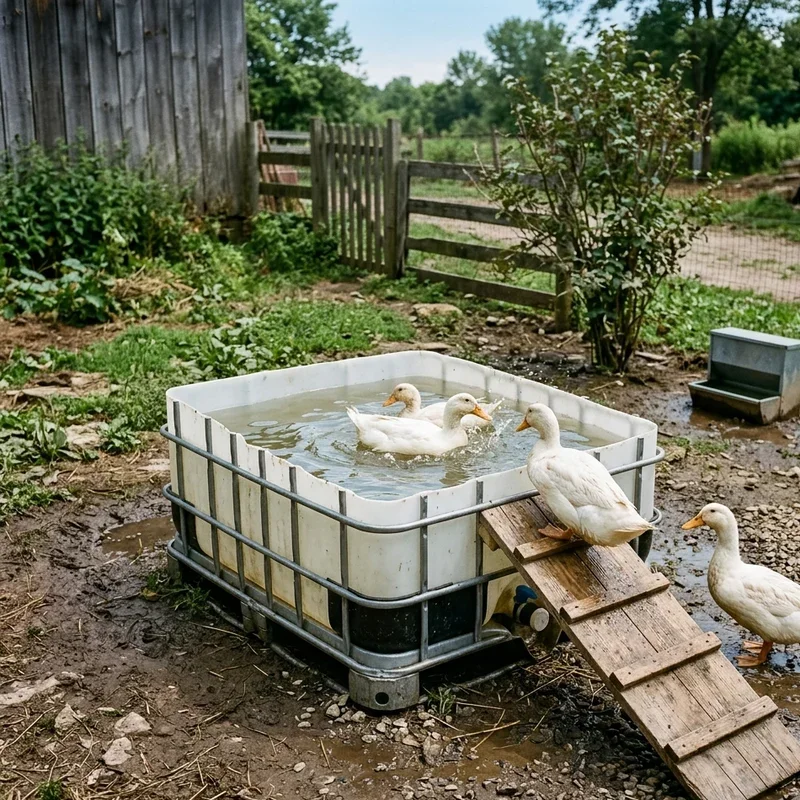
An IBC tote conversion pool repurposes the ubiquitous intermediate bulk container into an excellent large-capacity duck pool, providing 275 to 330 gallons of water volume in a durable, food-grade plastic container that costs a fraction of purpose-built alternatives throughout the duck keeping market. IBC tote pools work like industrial water storage technology repurposed for agricultural duck keeping purposes with remarkable practical effectiveness. Cut the IBC tote horizontally at approximately eighteen inches from the bottom using an angle grinder or reciprocating saw, creating a substantial shallow pool with excellent capacity for larger flocks throughout daily use. Smooth all cut edges thoroughly preventing sharp plastic injuries to duck feet during entry and exit. Install a drain valve using the tote's existing lower outlet port for convenient water changes always.
8. Sloped Entry Accessibility Pool
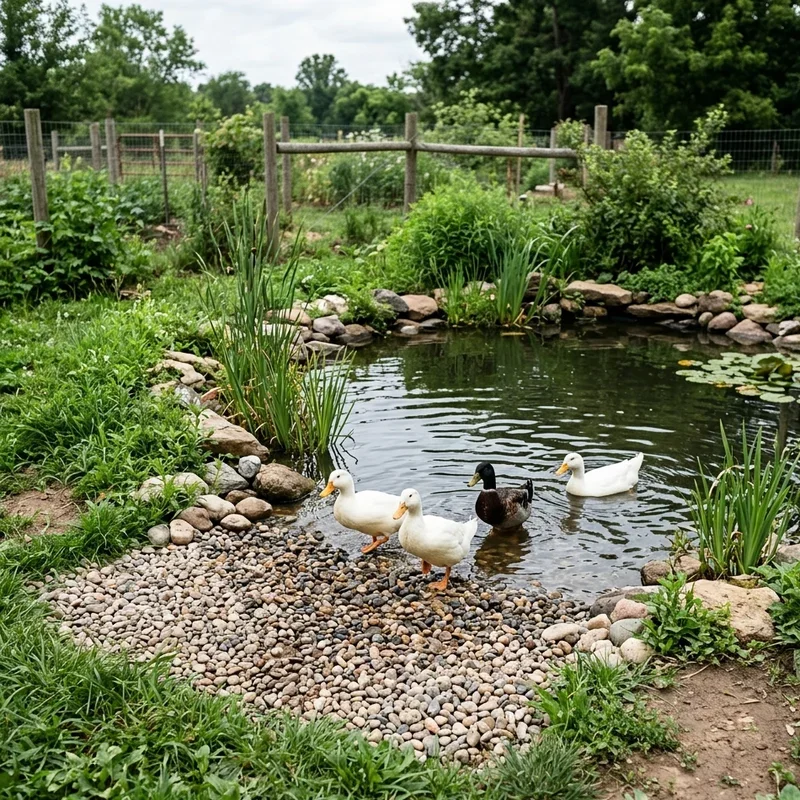
A sloped entry accessibility pool prioritizes duck safety and independent water access by designing the entry and exit experience specifically around duck anatomy, ensuring every flock member including smaller ducklings and older ducks can safely enter and exit without assistance throughout every day. Accessibility-focused pools work like thoughtfully designed architecture specifically scaled for avian users who cannot safely jump into or out of vertical-sided containers. Grade the pool entry using concrete, rubber matting, or textured stepping stones creating a continuous gentle slope from ground level down into the water on at least two opposing pool sides. Ensure the slope gradient remains below thirty degrees providing confident, slip-resistant duck footing throughout wet entry and exit procedures. Use non-slip materials preventing falls during the critical transition between dry land and water surface always.
9. Shaded Pergola Pool Setup
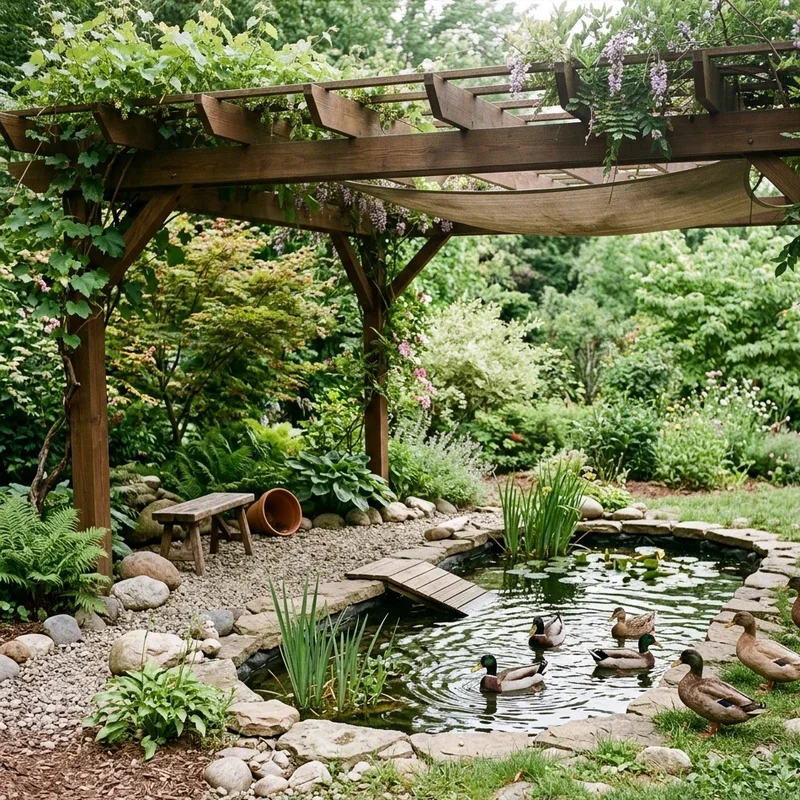
A shaded pergola pool setup positions the duck pool beneath a purpose-built or existing overhead shade structure, protecting the water from direct sunlight that accelerates algae growth and raises water temperatures to potentially uncomfortable levels during warm summer months throughout. Shaded pool setups work like installing a natural umbrella over your duck flock's favorite summer destination for everyone's mutual benefit throughout. Build a simple four-post pergola structure over the pool area using pressure-treated lumber and shade cloth or polycarbonate roofing providing fifty to seventy percent sun filtration throughout the hottest daylight hours. Incorporate the pergola into an attractive garden design by training climbing vines including hops, grapes, or jasmine over the structure creating living shade that also provides visual beauty throughout. Ensure adequate airflow preventing humidity buildup always.
10. Decorative Garden Duck Pond
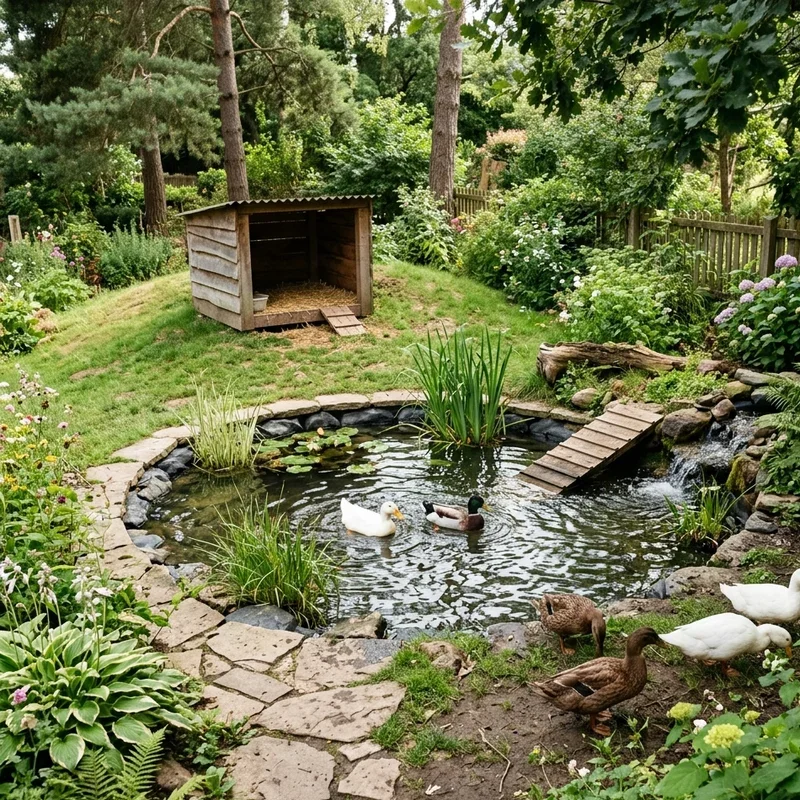
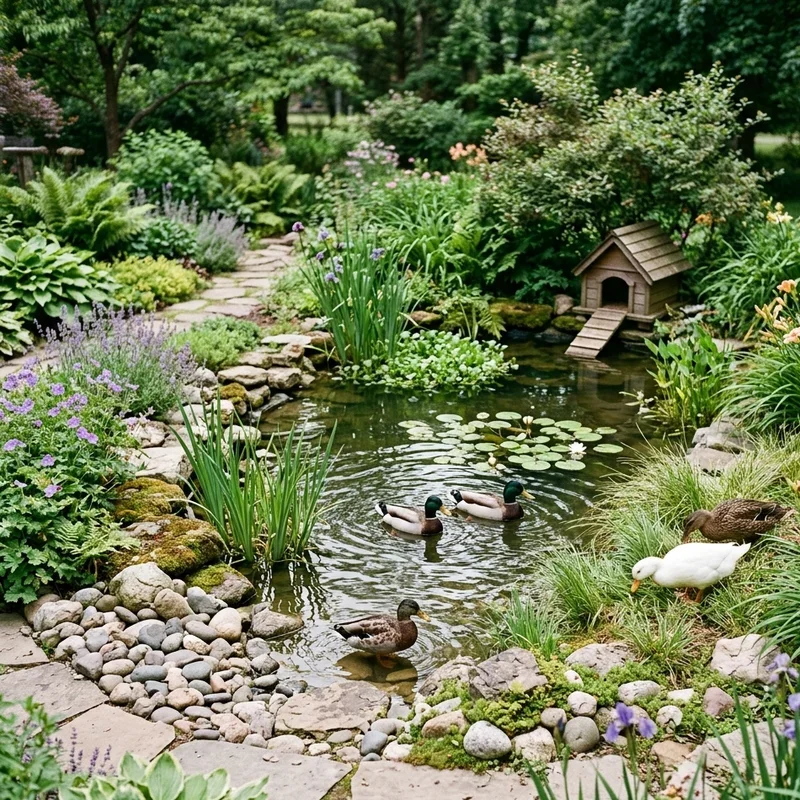
A decorative garden duck pond balances the practical requirements of duck water provision with genuine landscape design aesthetics, creating a water feature beautiful enough to anchor the backyard garden's design while simultaneously serving the functional needs of your resident duck flock throughout every season. Decorative duck ponds work like having the best of both worlds, a working farm element and a beautiful garden feature coexisting harmoniously throughout the property. Design the pond with irregular natural edges rather than rigid geometric shapes, using large natural stones to define the perimeter and create visual weight throughout the surrounding landscape. Plant heavily around the pond edges with ornamental grasses, water iris, and perennial flowers that tolerate occasional duck foot traffic while providing attractive habitat context. Include a small waterfall or fountain feature always.
11. Drainable Clean Pool Design
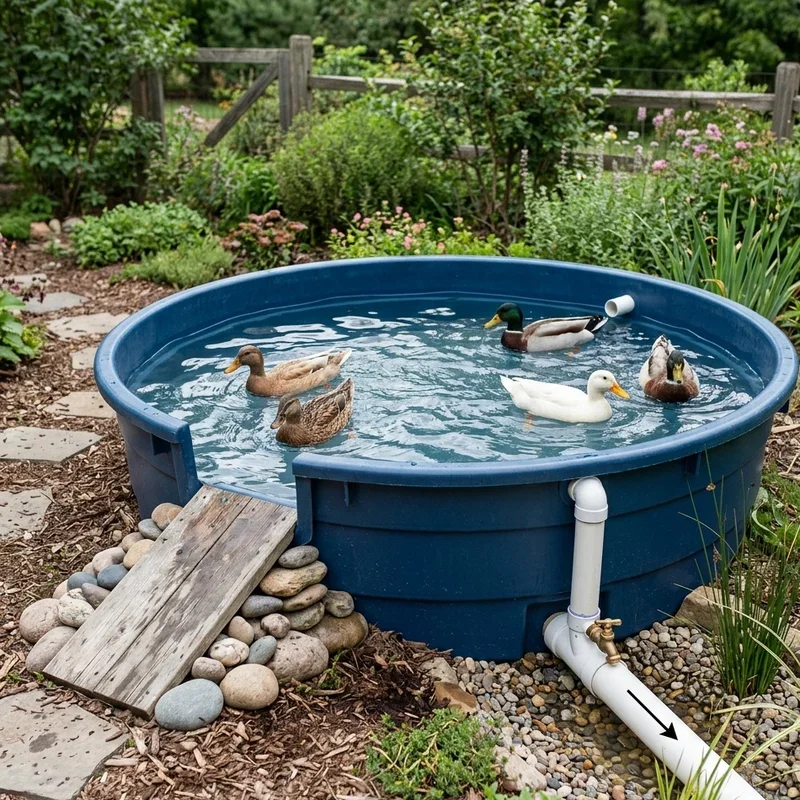
A drainable clean pool design solves duck keeping's most persistent maintenance challenge by incorporating convenient, efficient drainage directly into the pool's fundamental structure, making the water changing process simple enough to complete daily rather than treating it as an occasional major undertaking throughout the week. Drainable pools work like well-designed plumbing systems for duck happiness infrastructure, where function follows thoughtful engineering rather than afterthought accommodation. Install a two-inch threaded drain port at the absolute lowest point of the pool floor, connecting to a drain pipe routed toward a nearby garden bed, drain field, or collection area where the nutrient-rich water benefits plants rather than creating muddy problem zones throughout. Use a ball valve for convenient single-handed operation during daily drainage procedures. Position the pool on a slight grade always.
12. Multi-Level Cascading Pool
A multi-level cascading pool creates the most visually spectacular and behaviorally enriching duck water environment available, using connected pools at different elevations to create a flowing water system where ducks can choose between still lower pools and actively flowing upper sections throughout their daily activities. Cascading pool systems work like miniature river systems with pools and falls providing the variety of water environments ducks explore in natural habitats throughout the wild. Construct two or three connected pools at descending elevations, linking them with small waterfall features or channel connections that move water continuously from the highest to lowest pool position. Install a return pump moving water from the bottom pool back to the top pool completing the recirculating circuit throughout. Stock the lowest pool deepest for active swimming always.
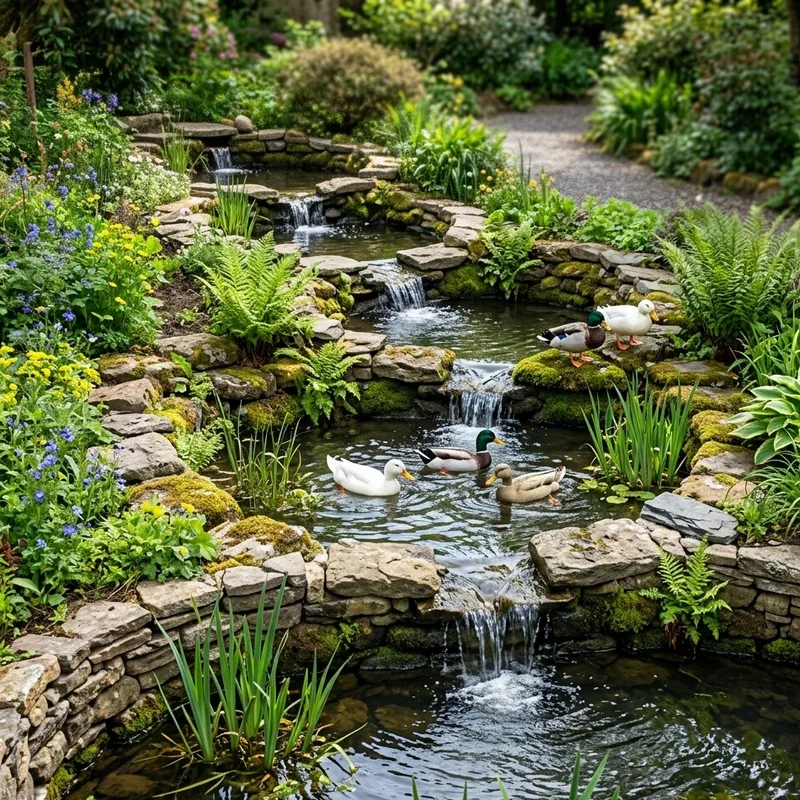
13. Duck Pool with Surrounding Run
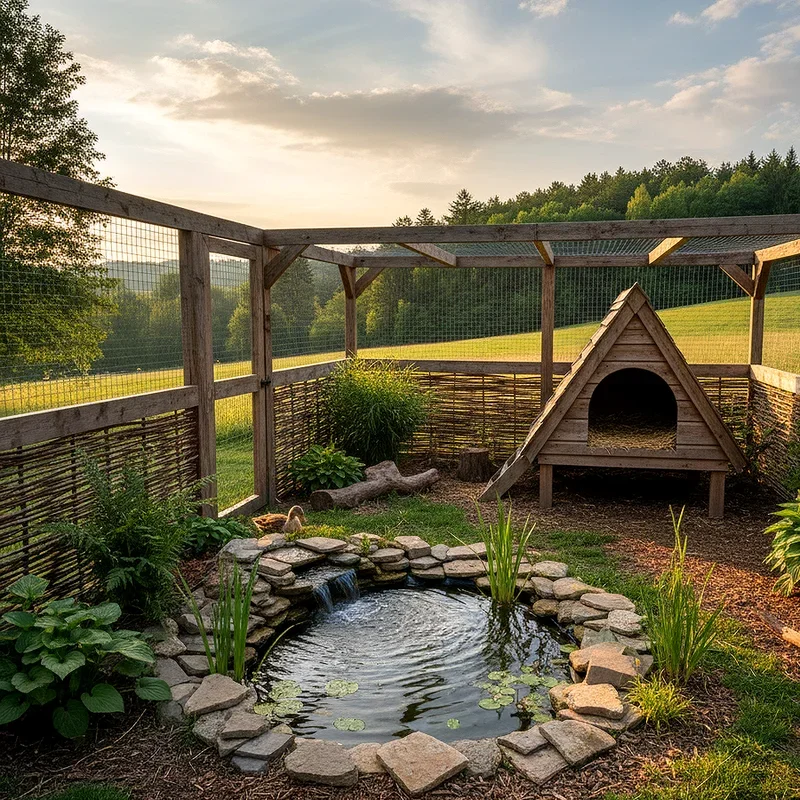
A duck pool with an integrated surrounding run creates a complete enclosed duck enrichment environment combining essential water access with sufficient dry land space, predator protection, and behavioral enrichment opportunities that support comprehensive flock wellbeing throughout every hour of supervised or unsupervised outdoor access. Pool and run combinations work like complete duck lifestyle centers rather than single-purpose water provision structures throughout. Construct a predator-proof welded wire enclosure with buried apron preventing digging entry, sizing the run at minimum twenty square feet per duck beyond the pool footprint throughout. Position the pool centrally within the run allowing duck access from all sides while maintaining adequate dry land area for preening, foraging, and resting activities following swimming sessions. Include shelter, feeding stations, and enrichment items throughout always.
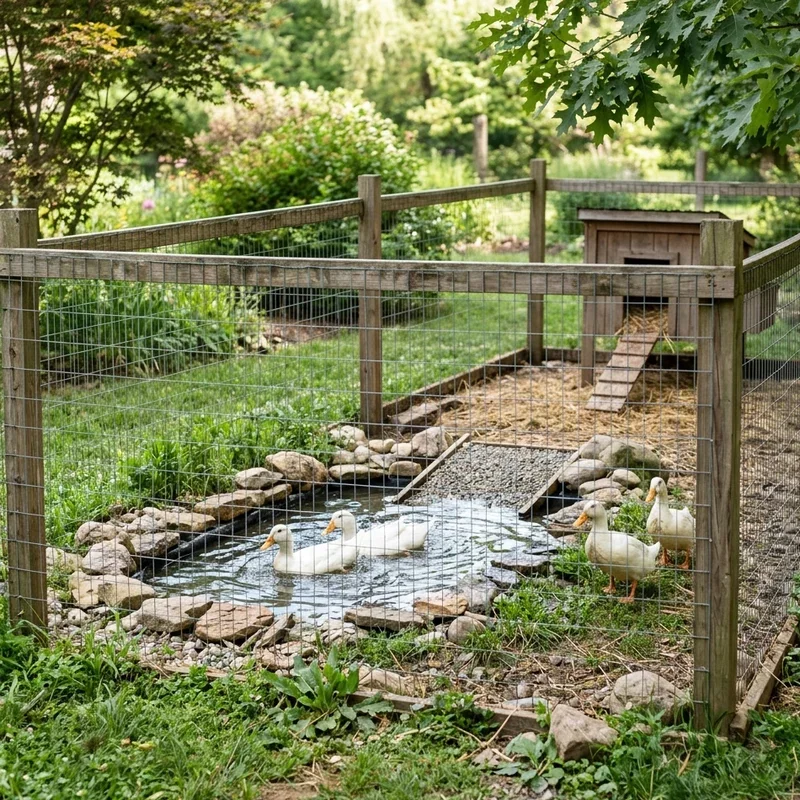
14. Solar Powered Pump Pool System
A solar powered pump pool system brings sustainable energy technology to duck pool maintenance, using photovoltaic panels to power water circulation and basic filtration without requiring electrical infrastructure connection that many rural or backyard duck keeping operations lack convenient access to throughout. Solar pool systems work like off-grid water treatment technology specifically calibrated for duck flock water quality maintenance throughout. Install a quality marine-grade solar panel in a high-sun position, connecting to a marine battery providing power storage for cloudy days and nighttime circulation operation when duck activity continues throughout the evening hours. Select pump capacity matched to your pool volume aiming for complete water turnover every one to two hours for effective water quality maintenance. Clean solar panels monthly for maximum efficiency always.
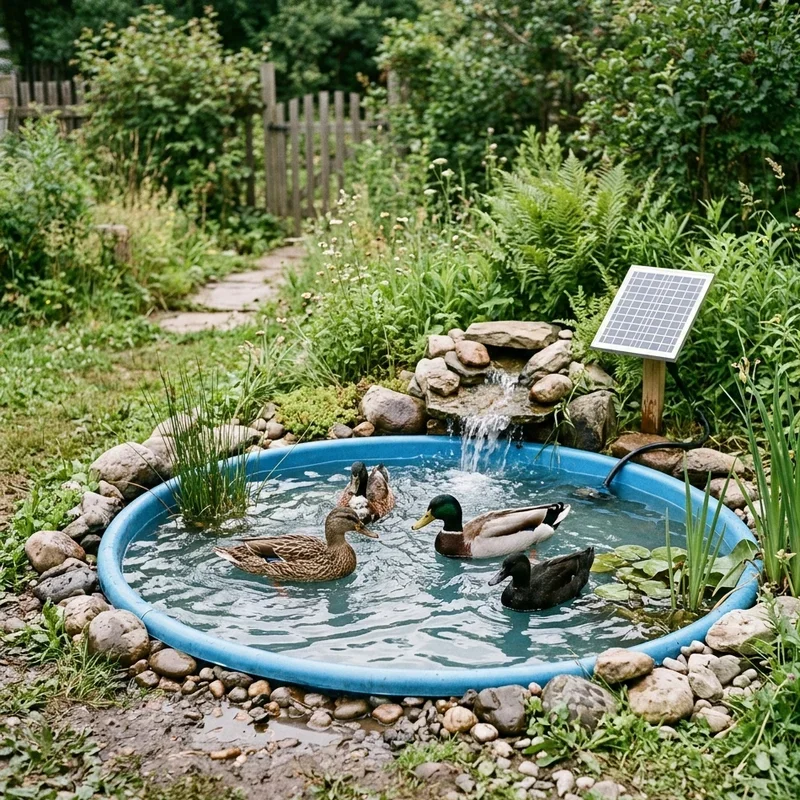
15. Winter Heated Duck Pool
A winter heated duck pool extends your flock's water access through freezing temperatures, using submersible or floating heater technology to maintain liquid water availability during the cold months when natural water sources become inaccessible and duck hydration requirements remain as critical as during warmer seasons. Heated duck pools work like cold-weather life insurance for duck flocks, ensuring the water access essential for their health and thermoregulation remains available regardless of ambient temperatures throughout winter. Install submersible livestock tank heaters or floating de-icer units specifically rated for poultry water applications, maintaining water temperature between forty and fifty degrees Fahrenheit preventing complete freezing without wasteful over-heating. Use GFCI-protected outdoor electrical outlets keeping all electrical components properly grounded throughout. Insulate pool sides with foam board always.
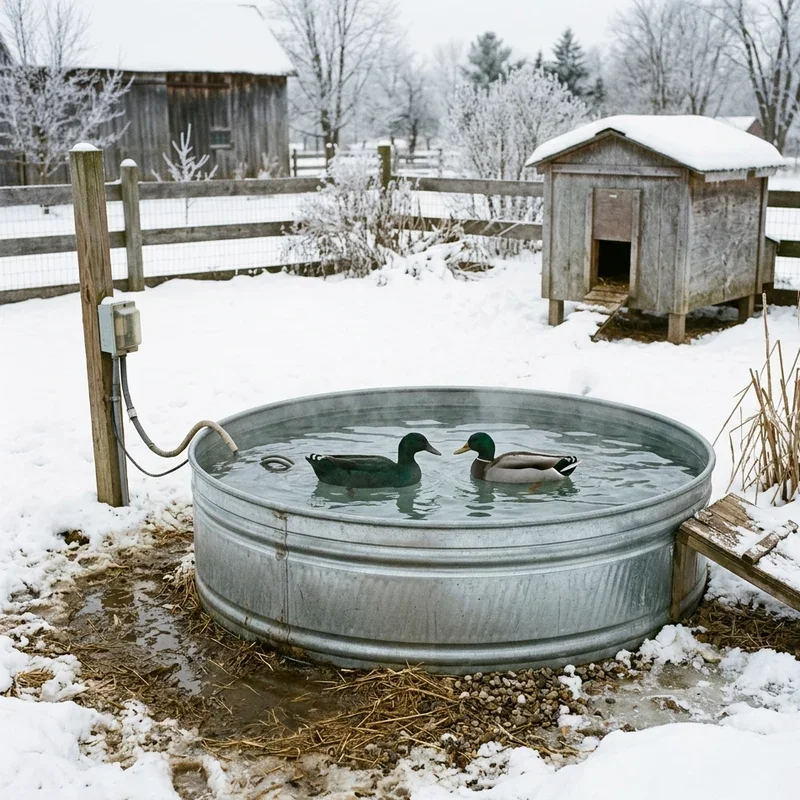
Conclusion
Duck pools transform backyard duck keeping from basic care into genuinely enriching husbandry that supports physical health, psychological wellbeing, and the natural behaviors that make ducks such wonderfully entertaining and deeply rewarding animals to keep throughout every season. These fifteen inspired ideas demonstrate that every backyard size, budget level, and duck flock configuration has a perfect pool solution worth implementing with genuine care and enthusiasm. Whether you choose a simple stock tank or an elaborate cascading system, every water investment pays dividends in duck happiness. Happy ducks make happy keepers. Start building your perfect duck pool today and watch your flock thrive magnificently always.
Read next: 15 Duck Pond Ideas for a Healthy and Happy Backyard Flock
Frequently Asked Questions
Q1: How often should I change the water in my backyard duck pool?
A: Change duck pool water daily for small pools or install filtration systems allowing every two to three day changes for larger installations.
Q2: What minimum pool size do I need for a small backyard duck flock?
A: Provide at minimum fifty gallons of water capacity per two to three ducks ensuring adequate space for simultaneous bathing throughout daily use.
Q3: Do backyard ducks require deep water or can shallow pools meet their needs?
A: Ducks need water deep enough to submerge their entire head for nasal cleaning but twelve to eighteen inches satisfies most breeds adequately throughout.
Q4: How do I prevent my duck pool area from becoming a muddy mess?
A: Install gravel drainage aprons around the pool perimeter, grade the surrounding area away from the pool, and use rubber mats effectively throughout.
Q5: Can I use the same water changing schedule year-round for outdoor duck pools?
A: Increase change frequency during summer heat that accelerates bacterial growth and reduce during winter when cold temperatures slow contamination rates naturally throughout.
Stay up to date with our latest ideas!