10 Cat Safe Houseplants: Nontoxic Indoor Greenery Guide
Discover the best houseplants safe for cats. Keep your feline friend healthy and happy with our ultimate guide to non-toxic, cat-friendly indoor plants.
Plenty of cat-safe houseplants grow happily indoors without putting your cat at risk, so having greenery in your home and keeping your pet healthy isn't a matter of choosing between two extremes. The trouble is that cats chew on whatever's in reach, and that habit sends a fair number of owners to the vet.
Plants are one of the top reasons for animal poisoning, and even a single curious nibble can quickly lead to unpleasant consequences. Learning to correctly identify houseplants is half the battle in protecting your pet. So here are 10 houseplants safe for cats, each one on the ASPCA's non-toxic list:
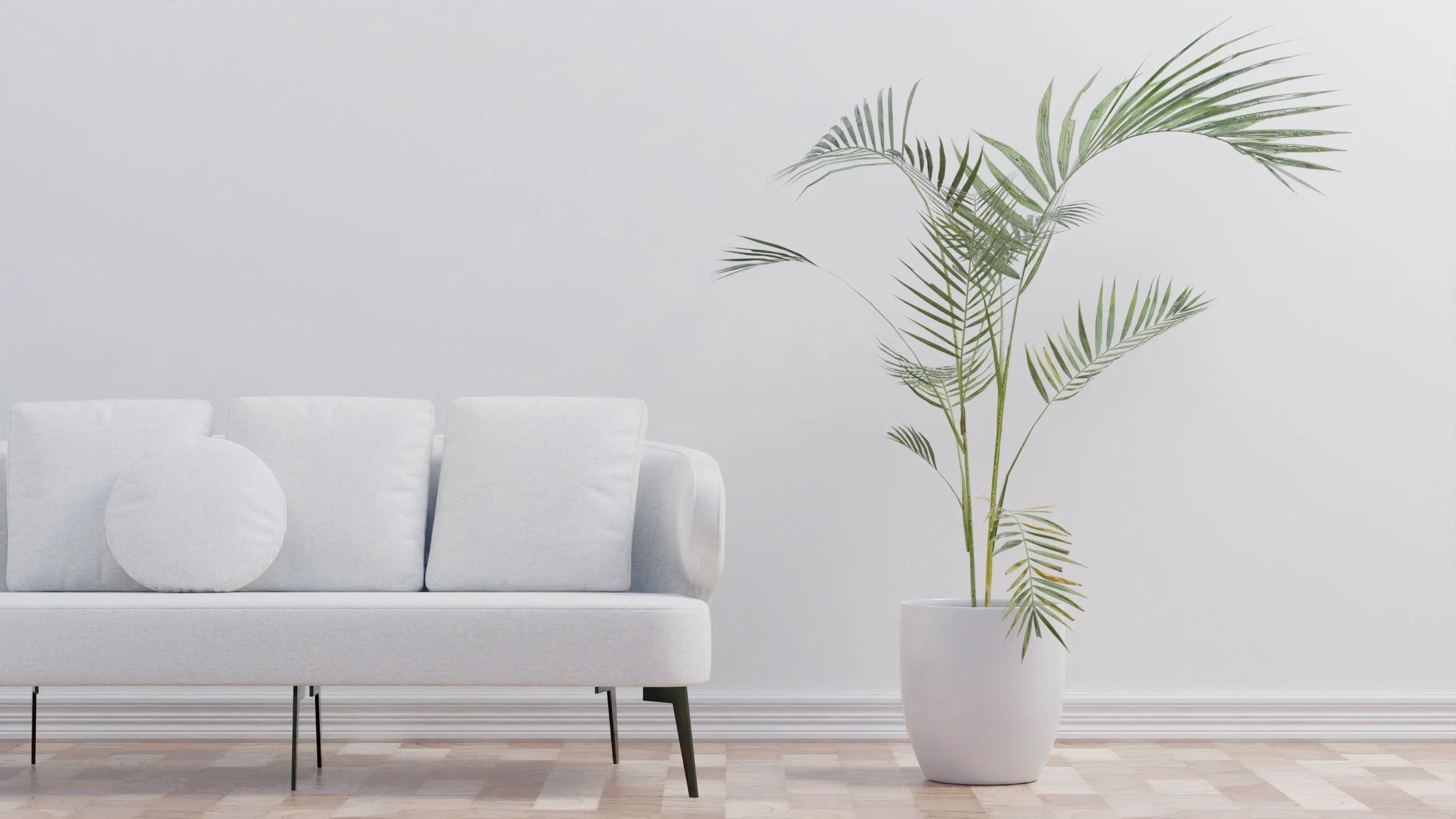
Parlor Palm
Spider Plant
Boston Fern
African Violet
Haworthia
Calathea
Watermelon Peperomia
Ponytail Palm
Phalaenopsis Orchid
Air Plants
1. Parlor Palm (Chamaedorea elegans)
The parlor palm is about as low-maintenance as houseplants get. It puts up with dim corners and won't sulk if you forget to water it for a week, which is why it's a go-to for beginners. The ASPCA classifies the Parlor Palm as a pet-friendly plant, non-toxic to dogs and cats. It grows slowly, maintains a neat shape, and only needs watering when the top few inches of soil become dry.
2. Spider Plant (Chlorophytum comosum)
There's a reason this one shows up in every other apartment. It scrubs the air and more or less raises itself. Spider plant thrives on neglect. The catch is that cats go nuts for the trailing shoots, so a hanging basket up high keeps the leaves bouncing where paws can't reach. Of all the indoor plants safe for cats, this is the easiest one to grow, even for a beginner. Water it when the top 2.5 cm of soil dries out.
3. Boston Fern (Nephrolepis exaltata)
A Boston fern brings that soft, droopy jungle look and stays off the danger list. One word of caution, though. While true ferns like the Boston fern are pet-safe, not all plants with "fern" in their name are non-toxic. Check the Latin name before you buy. It's thirsty for humidity, so mist it most days or set the pot on a tray of wet pebbles, and keep the soil moist without drowning it.
4. African Violet (Saintpaulia ionantha)
If you've been putting off buying flowers because of your cat, the African violet is your solution. The American Society for the Prevention of Cruelty to Animals (ASPCA) classifies the African violet as a pet-safe plant, non-toxic to dogs and cats. It blooms with purple, pink, and white flowers most of the year in adequate light. Few cat safe plants bloom like this. Water from below to prevent the fluffy leaves from rotting, and place it somewhere with bright, indirect sunlight.
5. Haworthia (Haworthia spp.)
Love the look of aloe but spooked by the toxicity? Haworthia is the stand-in. It's a squat little succulent that mimics aloe's spiky rosette without any of the danger, and the ASPCA has it down as non-toxic. Pot it in gritty soil, give it strong light, and water it now and then. Honestly, one of the more bulletproof cat safe houseplants for a bright sill.
6. Calathea (Goeppertia spp.)
Calathea is a true gem in the world of ornamental greenery, with striped and curled leaves that look hand-painted. Some varieties even fold at night. Calathea requires high humidity and warm temperatures, ranging from 18 to 27°C (64 to 80°F). Use distilled or rainwater, as tap water can cause crispy leaf edges. It requires a little attention, but the leaves are worth it. As for cat-friendly plants indoors, this is the one people stop and ask about.
7. Watermelon Peperomia (Peperomia argyreia)
This small, unusual-looking, and difficult-to-kill plant has silvery stripes that truly resemble watermelon rind. According to the ASPCA, the whole Peperomia genus is considered non-toxic to cats and other pets. The plant tolerates missed watering, so a week of neglect won't kill it. It looks beautiful on a tabletop or on a crowded shelf.
8. Ponytail Palm (Beaucarnea recurvata)
Despite its name, Beaucarnea recurvata isn't a palm at all. It's a succulent with a thick, bottle-shaped trunk and a fountain of curly leaves hanging from the top. It looks like it belongs in the desert, but it requires almost no care, as its swollen base stores water for weeks. It often makes lists of the best plants for cats simply because it's indestructible. A great choice if you tend to forget plants exist.
9. Phalaenopsis Orchid
Orchids are often thought of as capricious divas, but the moth orchid is simply adorable in comparison. The flowers bloom for months and are available in almost every color imaginable. Phalaenopsis is one of the few flowering houseplants that are safe for cats, so you won't be bothered by petals falling on the floor. Water it once a week, allow the water to drain completely, and keep it in bright, indirect light.
10. Air Plants (Tillandsia)
No pots, no soil, nothing to dig into. Air plants cling to driftwood, shells, or a wire frame on the wall. They often make lists of the best plants for cats because they don't require soil to be scattered or the container to be knocked over. Dip them in water once a week, shake off the drips, and that's the whole routine.
Popular Houseplants That Are Highly Toxic to Cats
A plant that gets Instagram likes doesn't necessarily indicate its safety. Some of the most popular houseplants are actually dangerous, and many owners are unaware of it. Choosing cat-safe plants instead of those listed below will keep your cat out of the emergency room:
Lilies (True Lilies & Daylilies)
Sago Palm (Cycas revoluta)
Pothos (Devil's Ivy)
Aloe Vera (Aloe vera)
Snake Plant (Sansevieria)
Lilies (True Lilies & Daylilies)
This is the one to memorize. Lily poisoning in cats can progress to kidney failure, and early symptoms are minimal. A dab of pollen, a torn leaf, even a sip from the vase can do it. People get them in bouquets and set them on the counter without a second thought.
Sago Palm (Cycas revoluta)
At first glance, this sounds like a cozy, tropical plant, but in reality, it's anything but. Sago palms are extremely toxic to cats and dogs, often resulting in death. Cycasin is found throughout the plant, with the highest concentration in the seeds, and it has a detrimental effect on the liver.
Pothos (Devil's Ivy)
You'll find pothos in nearly every home because it survives almost anything. However, it’s toxic to pets. Chew the leaf and the sap releases microscopic calcium oxalate crystals that scald the mouth, puff up the tongue, and turn swallowing into a chore.
Aloe Vera (Aloe)
It's great for sunburn in humans, but harmful to cats. The saponins it contains cause tremors, vomiting, and stomach upset. Quite unpleasant, given its reputation as a healing plant.
Snake Plant (Sansevieria)
A favorite plant in offices and bedrooms around the world. Cats can't resist the temptation to swat at its stiff, upright stems, but the plant contains numerous substances that make them nauseous and discourage their appetite. It's best to leave it at the store.
Why Do Cats Eat Houseplants?
Cats nibble leaves for all sorts of reasons. Sometimes they need fiber, sometimes the roughage helps them burp up a hairball, and sometimes they're just bored, and that wobbly green plant in the corner looks like a toy. You're not going to train the urge out of them, so the responsibility lands on you instead. That's why it's important to know what houseplants are safe for cats before anything new comes through the door.
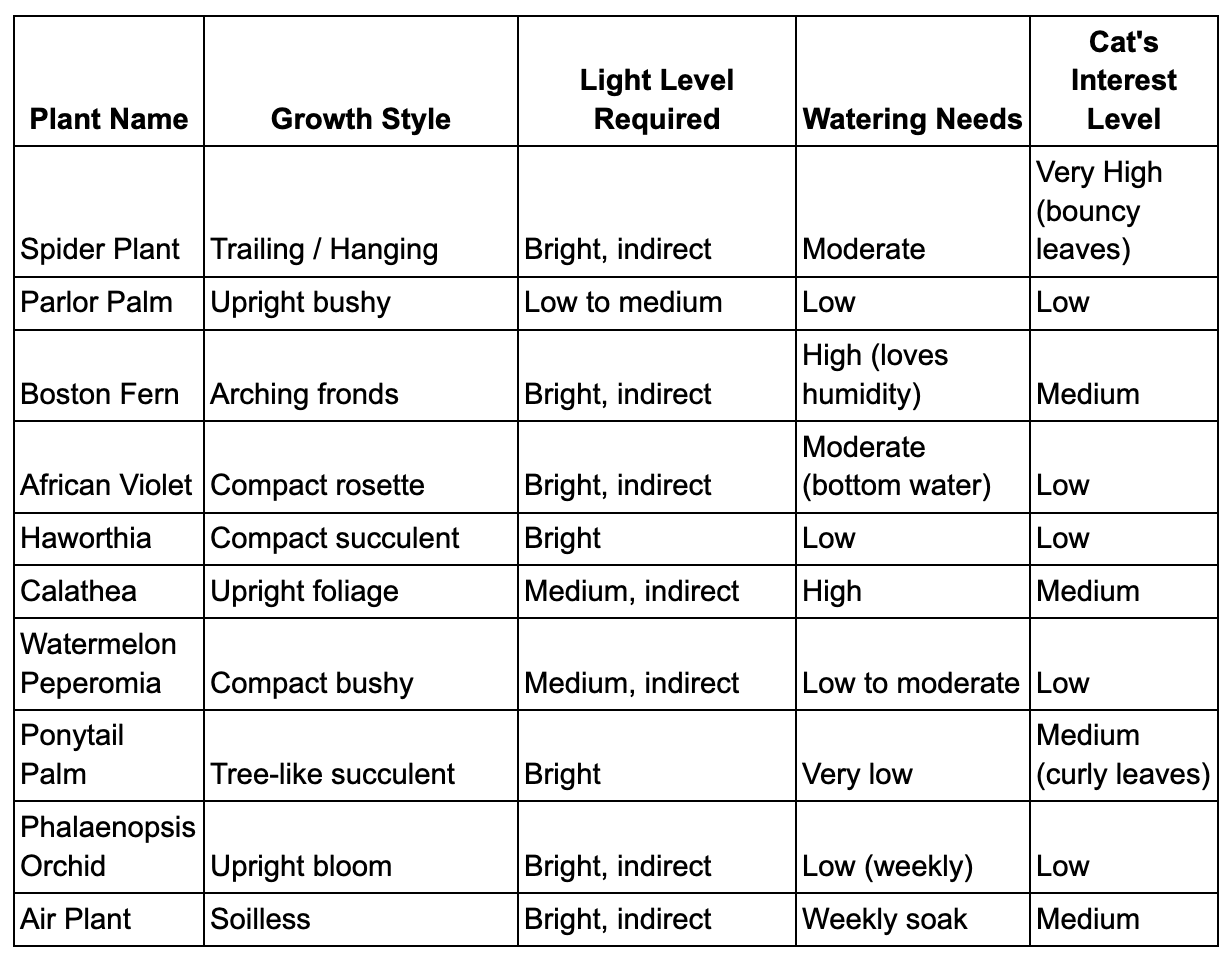
Comparison: Best Pet-Friendly Plants at a Glance
Safe doesn't mean identical. Lighting, watering, and care requirements for your cat vary greatly from one plant to another. The table below presents several houseplants that are safe for cats to help you find the right one for your home.
How to Keep Your Plants Out of Your Cat's Reach
Even a non-toxic plant can be torn apart by a bored cat, so the planting location is as important as the plant itself. The key is to ensure the plant is tall enough and heavy enough not to disturb the cat. The following small adjustments to the room's arrangement will solve most of the problem:
Hang the trailing ones. String spider plants and pothos-style growers up in macramé hangers or ceiling hooks, well past jumping height.
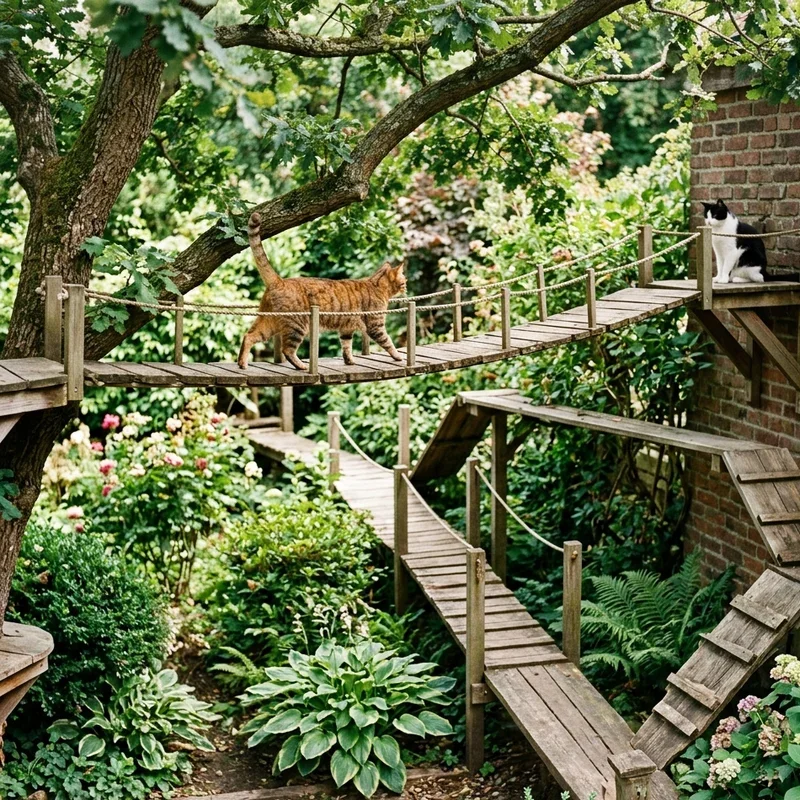
Go vertical with shelves. Run floating shelves up the wall and line them with greenery, so the whole display sits out of pouncing range.
Pick heavy pots. Terracotta and stone don't tip when a cat goes chasing a leaf, unlike lightweight plastic.
Group everything in one room. Cluster your plants in a single spot with a door you can shut when you're out of the house.
Even a setup made entirely of cat-safe plants indoors can become a mess when a lightweight pot falls over, and the soil ends up on the floor.
What to Do If Your Cat Eats an Unknown Plant
Stay calm, but move fast, because the first few minutes count. Among the most common plant poisoning symptoms in cats are vomiting, diarrhea, lethargy, excessive drooling, loss of appetite, and unusual behavior. Here's what to do:
Pull the plant away and clear any chewed pieces from your cat's mouth.
Check your cat for drooling, vomiting, wobbliness, or sudden flat-out lethargy.
Snap a clear photo of the plant and grab a leaf sample.
Call your vet or the poison hotline before you do anything else.
Keep your cat calm and contained while you wait for guidance.
Determining exactly what was eaten impacts your veterinarian's treatment. You can use a special identifier to recognize it. If you notice your cat has ingested a plant, contact your vet immediately or call the ASPCA (Animal Poison Control Center) at (888) 426-4435. Don't wait for the situation to resolve itself.
Conclusion
Greenery and a healthy cat can coexist perfectly, with a little preparation. There are plenty of houseplants safe for cats, so no one will be left with an empty apartment. Choose species with non-toxic names, avoid lilies and sago palms, and place attractive plants out of reach.
Stay up to date with our latest ideas!