15 Cichlid Fish Tank Ideas for Colorful Aquarium Setups
Discover 15 cichlid fish tank ideas for colorful aquarium setups that showcase stunning species, creative layouts, and thriving aquatic environments everyone admires.
Cichlid aquariums represent some of the most spectacularly colorful, behaviorally fascinating, and genuinely rewarding fish keeping experiences available to aquarium enthusiasts at every experience level throughout the hobby. Have you ever watched a male African cichlid displaying his iridescent blues and yellows in territorial rivalry and felt that immediate recognition that few other fish even come close to matching this species' extraordinary visual drama? That vibrant living color makes cichlid keeping one of the most visually rewarding aquarium pursuits imaginable. Think of a cichlid tank as a living color palette that rearranges itself continuously, each fish contributing unique chromatic intensity to the collective aquatic display throughout every observation. These fifteen inspired ideas create breathtaking cichlid setups always.
1. African Mbuna Cichlid Rocky Setup
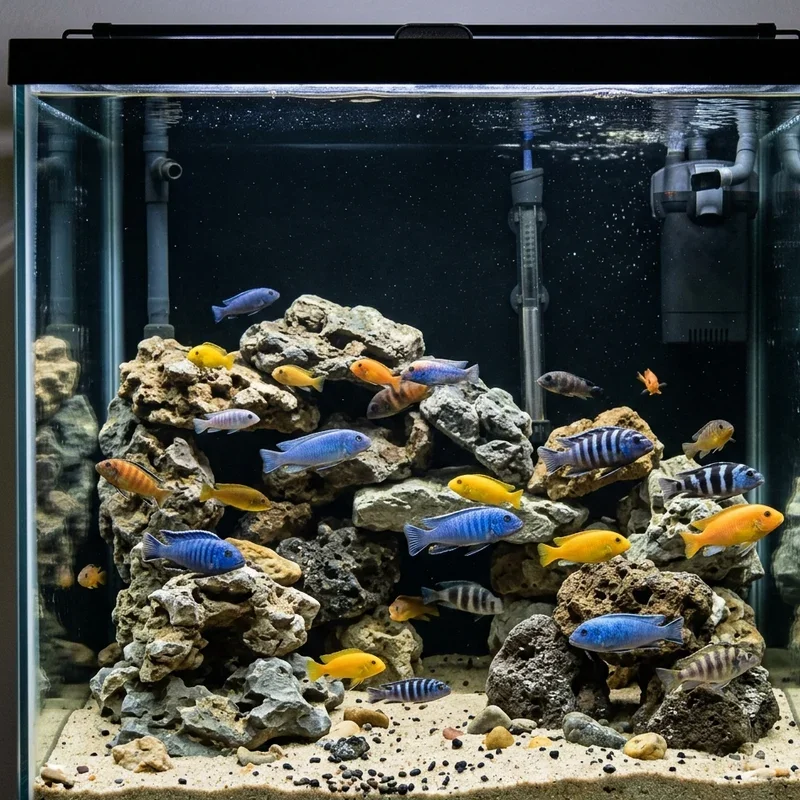
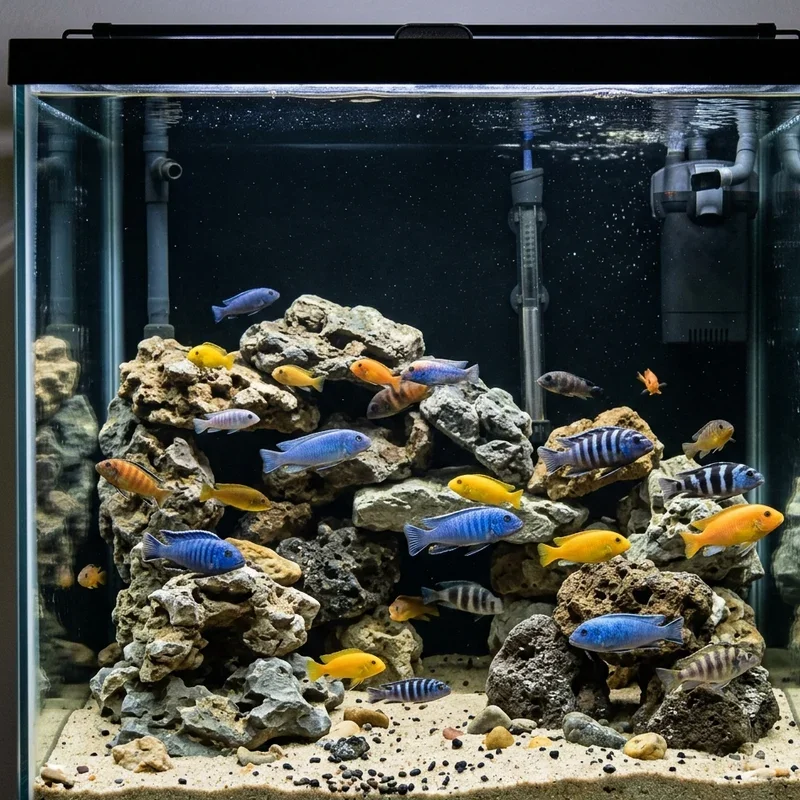
An African Mbuna cichlid rocky setup creates the most explosively colorful freshwater aquarium available, packing a tank with dozens of small, intensely pigmented rock-dwelling cichlids from Lake Malawi that transform every available inch of water column into living chromatic spectacle throughout. Mbuna setups work like hanging an animated painting in your living room where electric blues, blazing yellows, and vivid oranges constantly rearrange themselves throughout each viewing session. Fill a minimum 75-gallon tank with extensive stacked rockwork creating territories, caves, and hiding zones that manage aggressive behaviors by providing visual barriers throughout. Stock densely with twelve to twenty individuals from multiple species in odd ratios, preventing any single male from dominating aggression toward specific tank mates. Maintain high pH using aragonite substrate and crushed coral filtration always.
2. Peacock Cichlid Display Tank
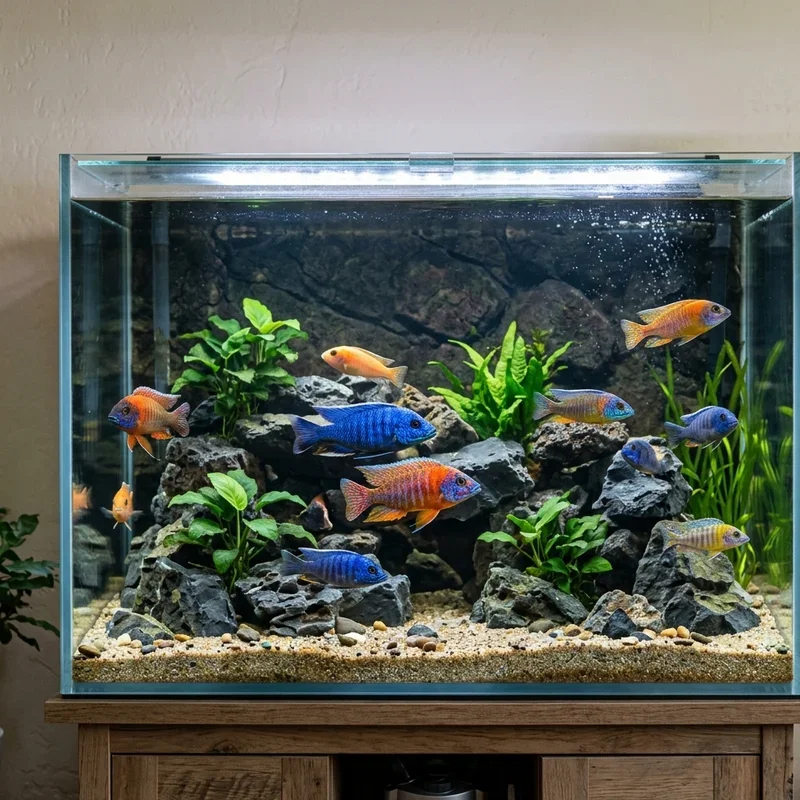
A peacock cichlid display tank showcases one of Lake Malawi's most breathtakingly beautiful cichlid groups in a setup specifically designed to display their extraordinary color expressions to maximum visual advantage throughout every angle of the aquarium. Peacock tanks work like museum galleries specifically curated around one stunning collection of living jewels, each fish a masterpiece of natural coloration beautifully. House a harem of three to five females around one dominant male Aulonocara species in a 55-gallon minimum setup, allowing the male to display his spectacular coloration in response to both female presence and tank territory throughout. Arrange sandy substrate with scattered rocks creating naturalistic habitat that encourages natural behavioral expressions including digging and cave exploration throughout. Use bright lighting enhancing color vibrancy and visibility always.
3. South American Dwarf Cichlid Planted Tank
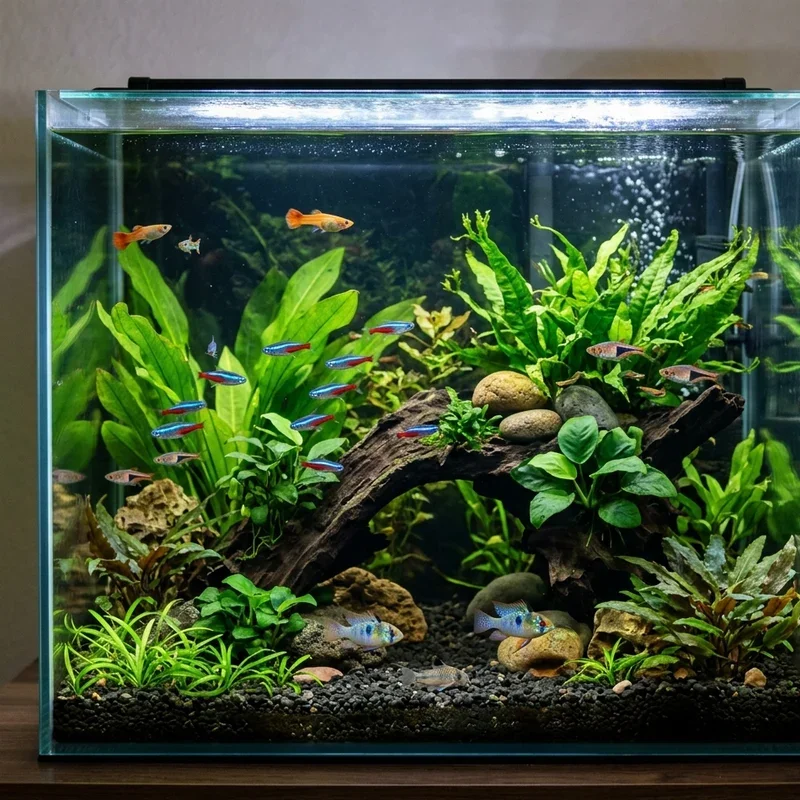
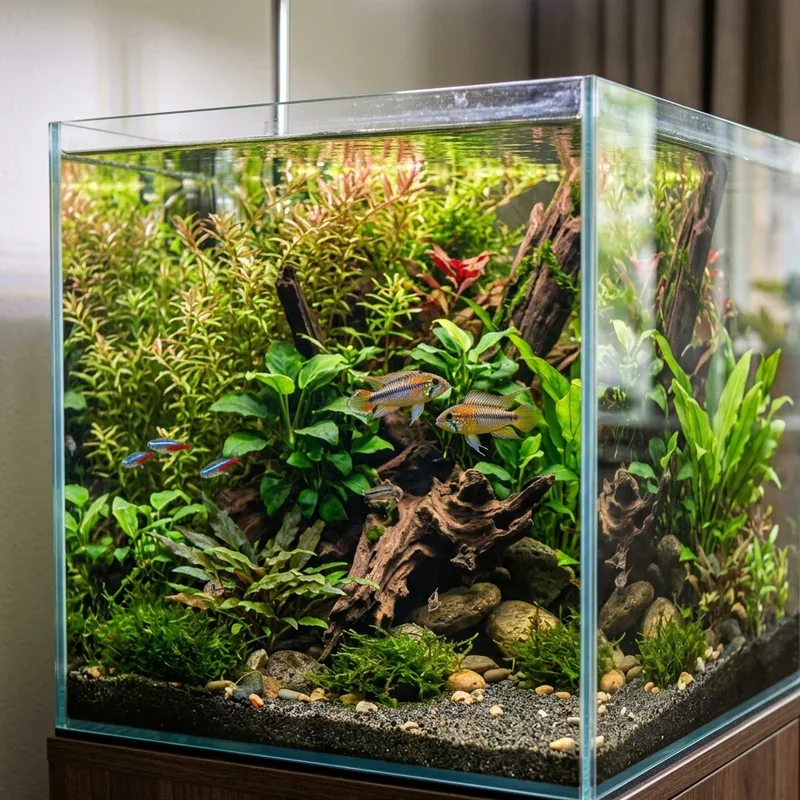
A South American dwarf cichlid planted tank combines the exquisite delicacy of small Apistogramma and Mikrogeophagus species with lush tropical planted tank aesthetics, creating a sophisticated aquascape where extraordinary fish and aquatic plants complement each other's beauty throughout every available space. Dwarf cichlid planted tanks work like nature paintings where fish and flora create an integrated composition more beautiful than either element achieves independently throughout. Choose Apistogramma cacatuoides, A. borellii, or German Blue Rams as stunning centerpiece species compatible with planted tank conditions and peaceful community tankmates throughout. Plant heavily using Amazon swords, Cryptocoryne varieties, and Vallisneria to provide natural territory boundaries and breeding sites for territorial dwarf cichlid behaviors. Maintain soft, slightly acidic water throughout always.
4. Oscar Cichlid Species Tank
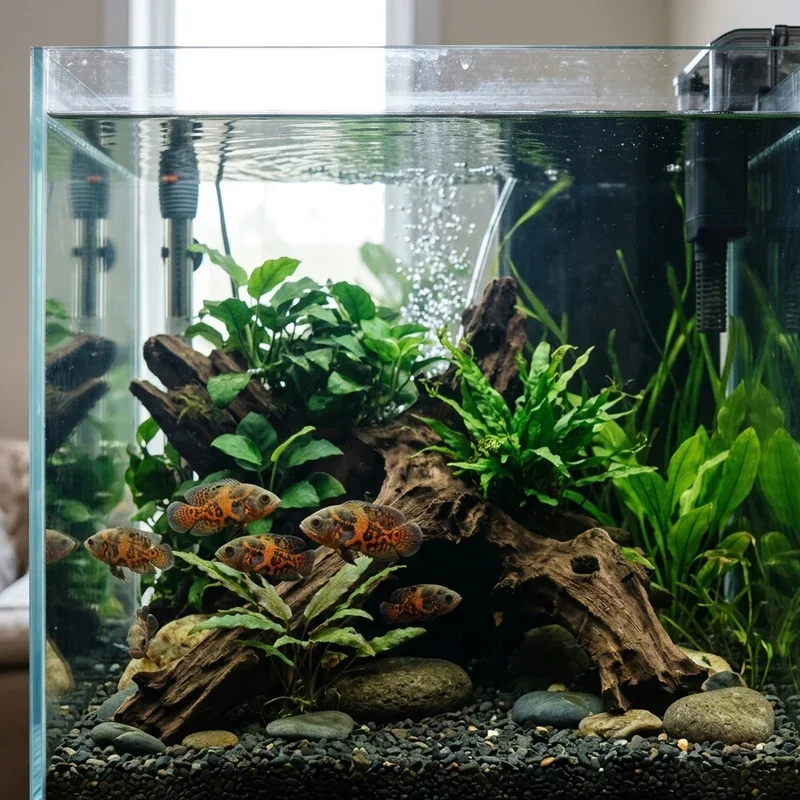
An Oscar cichlid species tank dedicates a large aquarium exclusively to one of the cichlid family's most personable and genuinely interactive species, allowing these intelligent fish to develop their remarkable personality traits without the tank management complications that mixing them with incompatible species creates throughout. Oscar tanks work like setting up a personal studio apartment for one particularly charismatic resident who rewards attentive care with remarkable behavioral engagement throughout. House a single Oscar or bonded pair in a minimum 75-gallon tank, understanding that individual Oscars grow to twelve inches requiring substantial filtration and regular water changes throughout their decade-plus lifespan. Provide large smooth stones, ceramic pipe caves, and durable plastic plants since Oscars rearrange and destroy most decorative elements enthusiastically throughout always.
5. German Blue Ram Community Tank
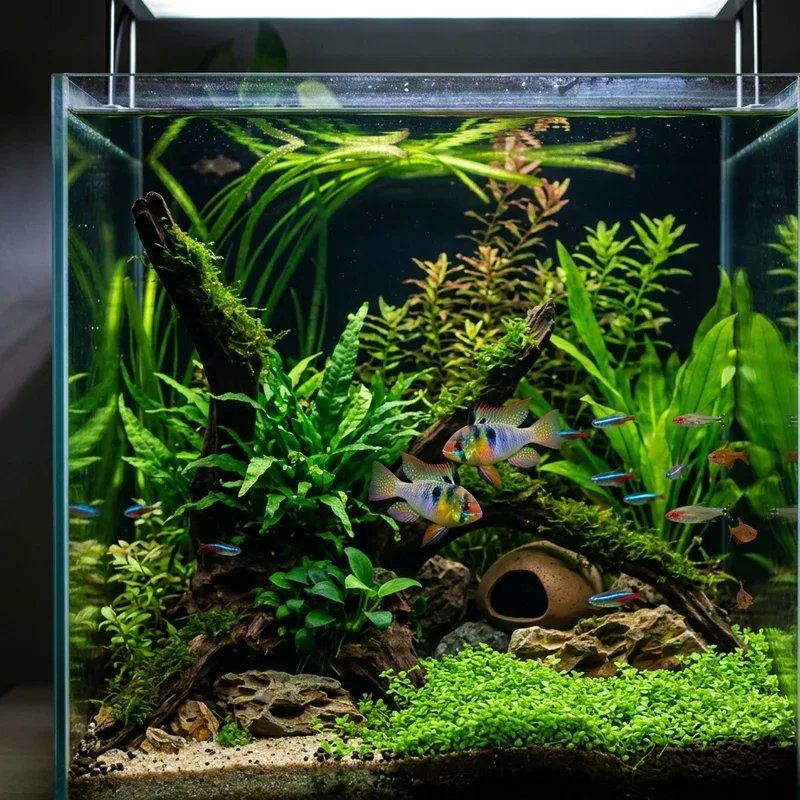
A German Blue Ram community tank pairs one of the cichlid world's most stunningly colored species with compatible peaceful community fish, creating a vibrant yet harmonious aquarium where the Rams' extraordinary blue-and-gold coloration serves as the visual focal point throughout the entire display. German Blue Ram tanks work like casting a supremely talented lead actor alongside a well-chosen supporting ensemble, everyone contributing while one unmistakably stars throughout. Maintain water temperatures between 82 and 86 degrees Fahrenheit that Rams require for optimal health and color expression, choosing tankmates including Cardinal tetras, rummy nose tetras, and Corydoras catfish that thrive within the same temperature range throughout. Plant heavily using Echinodorus, Cryptocoryne, and floating plants creating the subdued, shaded conditions Rams naturally prefer throughout always.
6. Tanganyikan Cichlid Biotope Setup
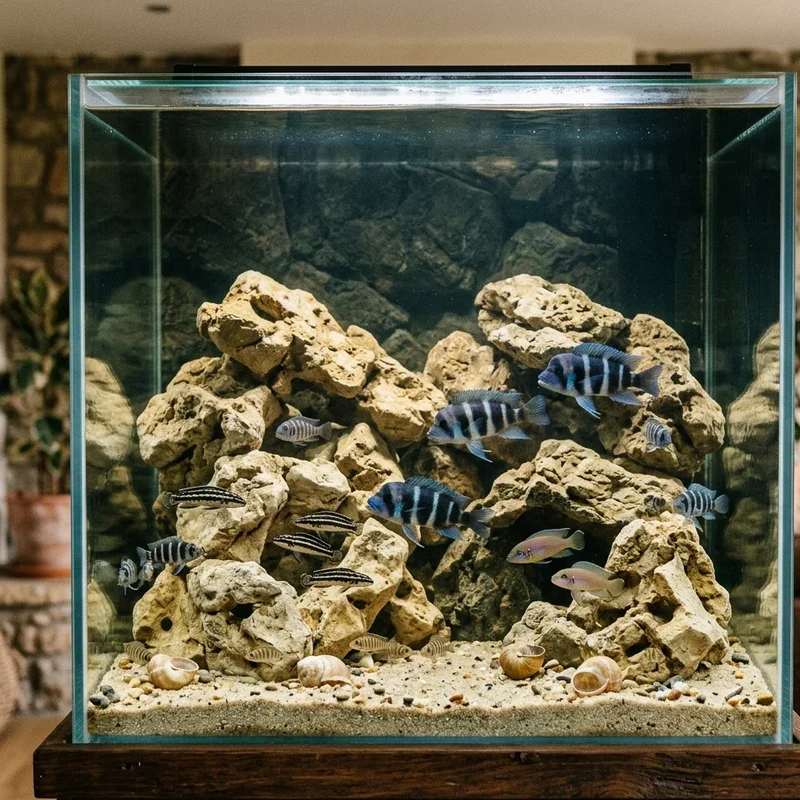
A Tanganyikan cichlid biotope setup recreates the unique geological and ecological character of Africa's deepest lake, creating an aquarium environment distinctly different from Lake Malawi setups and showcasing the extraordinary diversity of shell-dwelling, cave-dwelling, and open-water Tanganyikan species throughout. Tanganyikan biotopes work like documentary filmmaking in aquarium form, presenting authentic habitat recreation that teaches while delighting throughout every observation session. Scatter large shells including empty escargot or Neothauma shells across a sandy substrate for shell-dwelling Neolamprologus and Lamprologus species to inhabit and defend as personal territories throughout. Add flat slate rock formations creating cave systems for Julidochromis and Altolamprologus species throughout. Stock a single genus per territorial zone preventing inter-species aggression throughout the setup always.
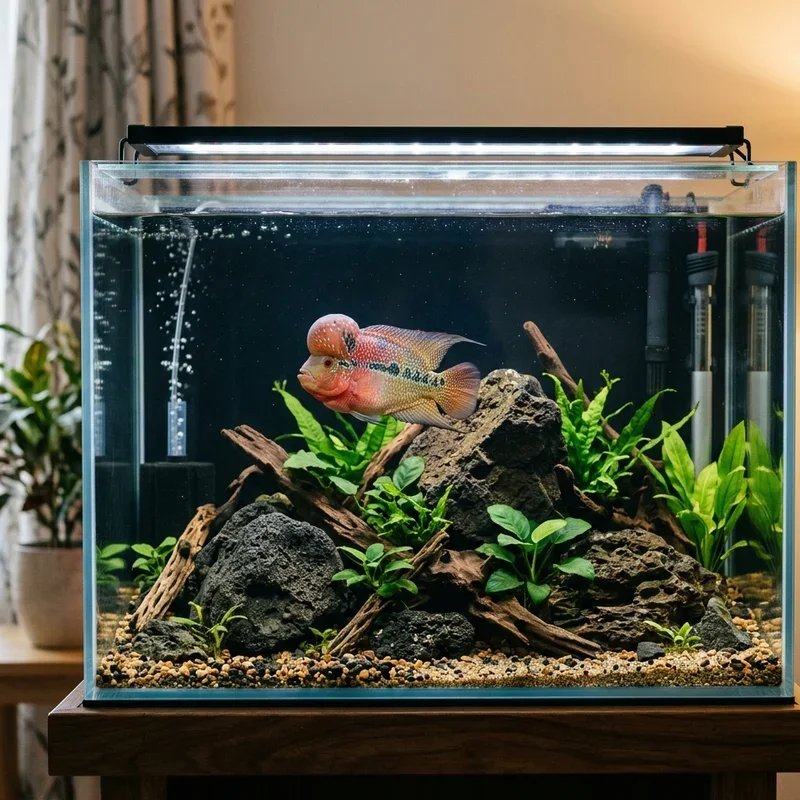
7. Flowerhorn Cichlid Single Specimen Tank
A Flowerhorn cichlid single specimen tank showcases one of the aquarium world's most extraordinarily individual cichlid varieties, dedicating a tank entirely to a single specimen whose unique genetic color pattern, prominent nuchal hump, and remarkably interactive personality deserve undivided display attention throughout. Flowerhorn tanks work like VIP suites designed for one extravagant personality who rewards exclusive attention with maximum entertainment value throughout. Provide a minimum 55-gallon aquarium for adult Flowerhorns, understanding these fish reach fourteen to sixteen inches requiring powerful filtration capable of processing their considerable waste output throughout. Include large smooth stones and ceramic pipe hiding spots satisfying the Flowerhorn's territorial instincts while keeping the tank display area maximally visible. Use bright lighting enhancing the distinctive red, blue, and pearl coloration always.
8. Discus Cichlid Planted Aquarium
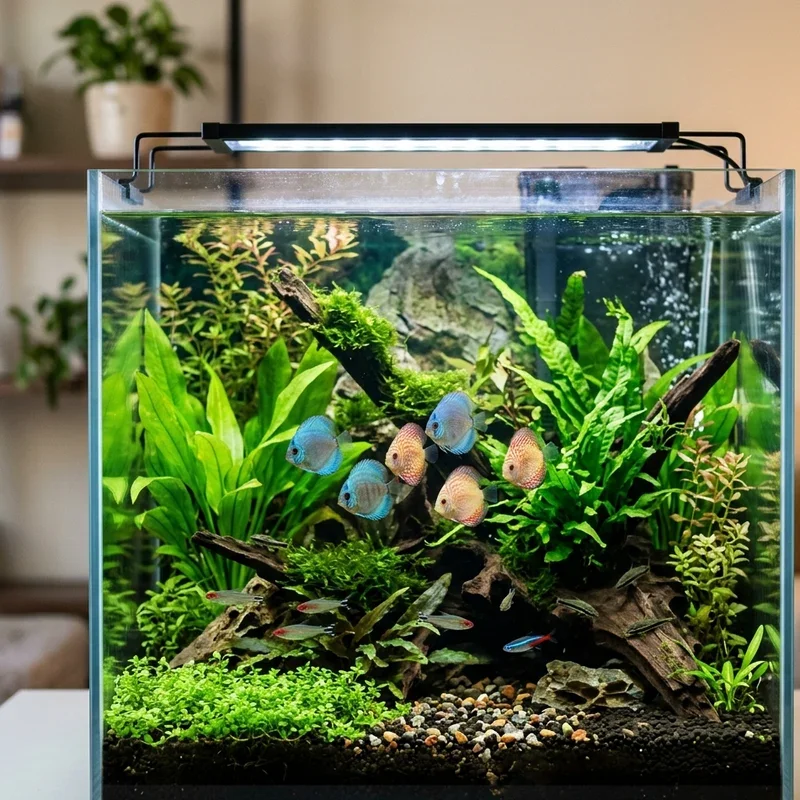
A discus cichlid planted aquarium represents the most technically demanding and visually rewarding cichlid setup available, combining the majesty of the king of freshwater fish with the natural beauty of a mature tropical planted aquarium in a setup requiring precise water chemistry management throughout. Discus planted tanks work like operating a fine dining restaurant where extraordinary standards must be maintained consistently for the experience to remain genuinely exceptional throughout. Maintain water temperatures between 84 and 88 degrees Fahrenheit, extremely soft water below five degrees of hardness, and near-neutral pH that Discus require for optimal health and the brilliant coloration that makes these fish legendary throughout the hobby. Select tall background plants accommodating Discus's body height with adequate swimming clearance throughout always.
9. Jewel Cichlid Breeding Tank
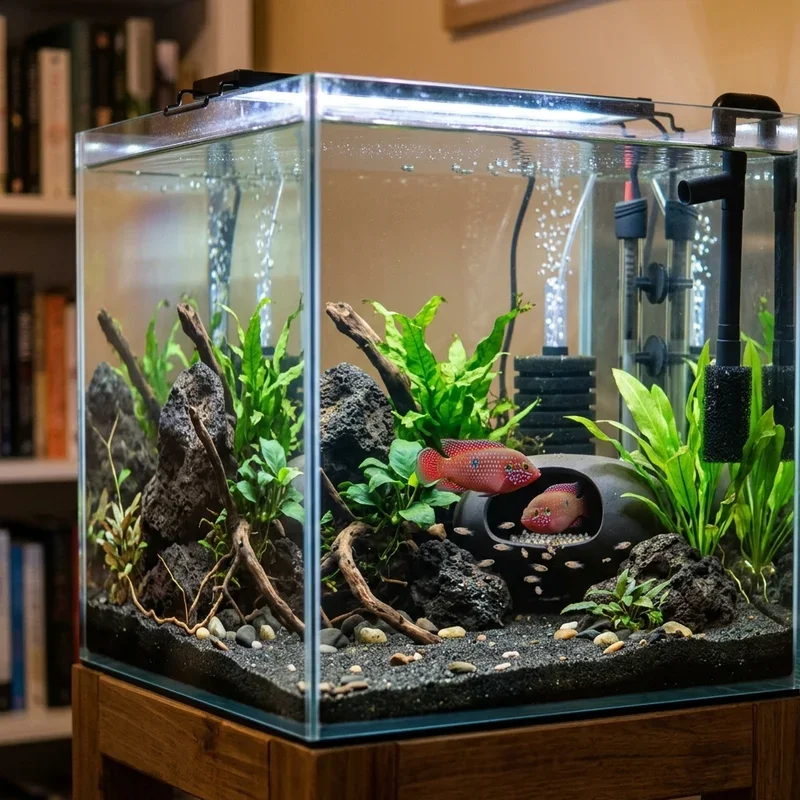
A jewel cichlid breeding tank creates a fascinating window into parental cichlid behavior, housing one of Africa's most dramatically red-colored cichlid species in a setup specifically designed to observe and support their remarkable biparental care behaviors throughout breeding cycles. Jewel cichlid breeding tanks work like behavioral research facilities where parental instinct produces some of aquarium keeping's most compelling observations throughout every breeding cycle. House a single established pair in a 40-gallon tank separated from other fish that would trigger excessive territorial aggression during breeding activities throughout the spawning period. Provide smooth flat stones and broad-leafed plants as spawning surfaces where the female deposits eggs for both parents to guard and fan throughout. Monitor the pair for compatibility issues after breeding concludes always.
10. Convict Cichlid Beginner Setup
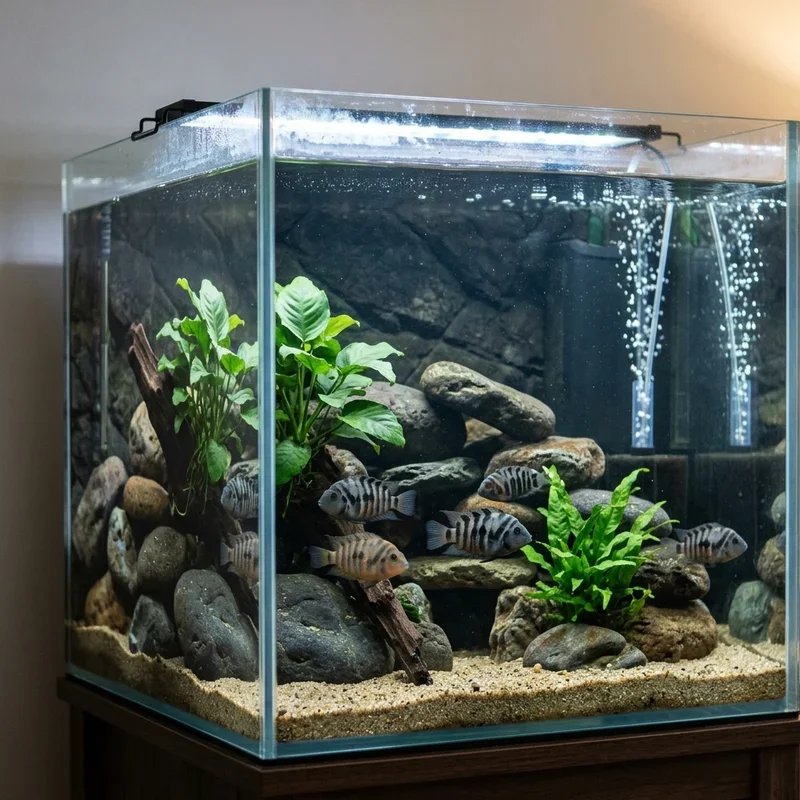
A convict cichlid beginner setup introduces new cichlid keepers to the family's behavioral complexity and parental care systems through one of the hobby's hardiest, most adaptable, and genuinely engaging cichlid species that tolerates beginner mistakes far more forgivingly than sensitive alternatives throughout. Convict tanks work like cichlid keeping's training wheels, providing the full behavioral experience with reduced technical sensitivity that builds confidence for future advanced setups throughout. House a single convict pair in a 30-gallon tank with excellent filtration, providing cave structures from clay pots, ceramic pipes, and flat rocks as breeding sites and territorial boundaries throughout. Appreciate the striking black-and-white barred pattern that gives this species its evocative common name throughout observation. Expect aggressive parental defense behavior during breeding cycles always.
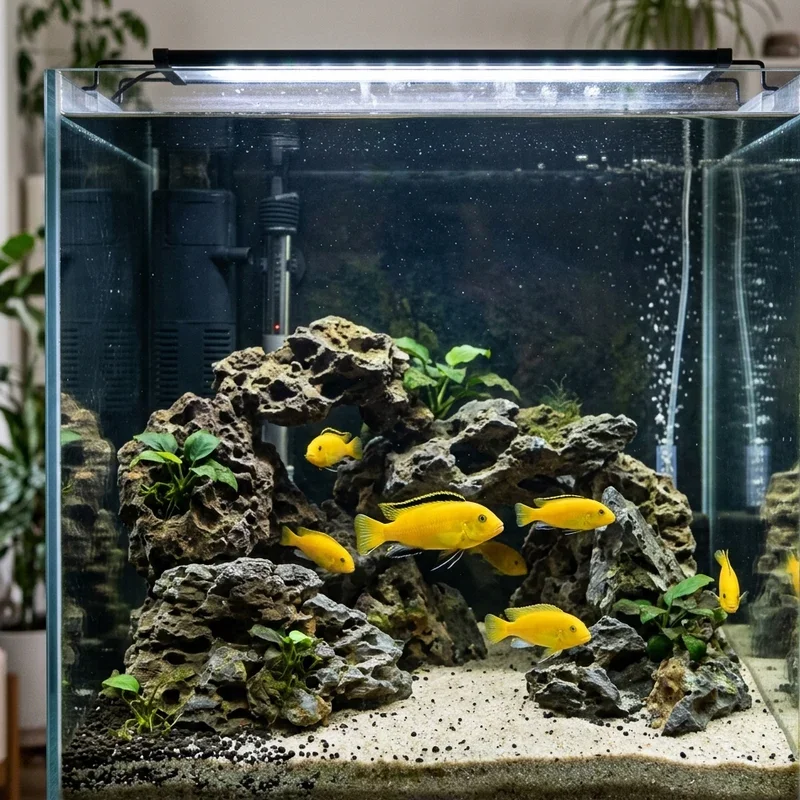
11. Electric Yellow Lab Cichlid Tank
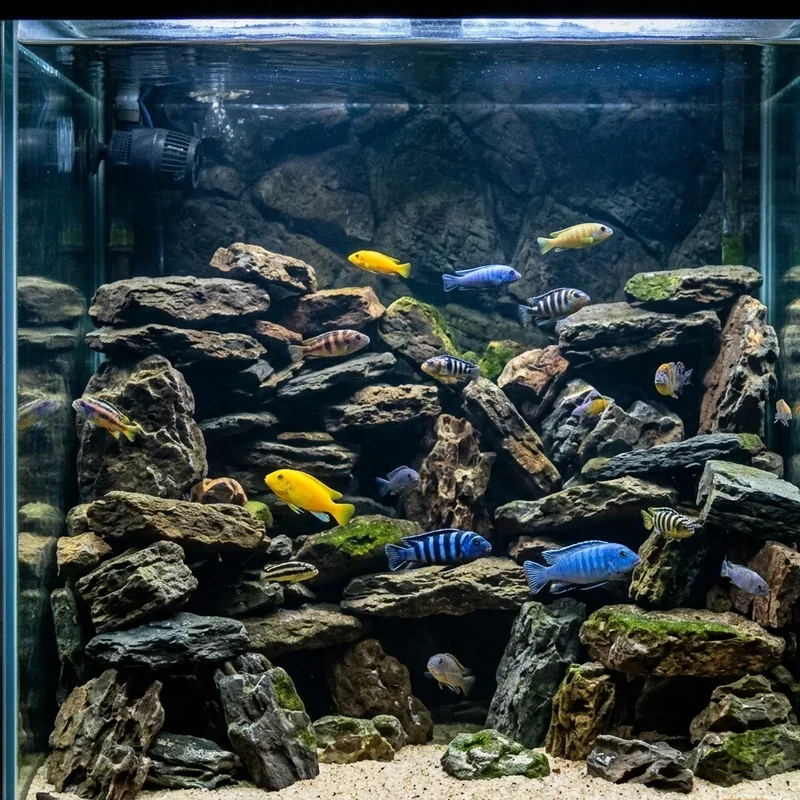
An electric yellow lab cichlid tank showcases one of Lake Malawi's most stunning and immediately recognizable species in a setup that maximizes the visual impact of their brilliantly saturated yellow coloration against carefully chosen contrasting background and hardscape elements throughout. Yellow lab tanks work like installing a collection of living sunshine within a glass boundary where every fish radiates genuine chromatic energy throughout the display. Fill a 55-gallon minimum tank with Labidochromis caeruleus exclusively or in compatible Mbuna combination, stacking limestone or Texas holey rock extensively to provide the cave territory that reduces aggression and encourages natural behavioral expression throughout. Use dark substrate contrasting dramatically with the electric yellow coloration, and position back lighting creating a backlit effect enhancing yellow color vibrancy always.
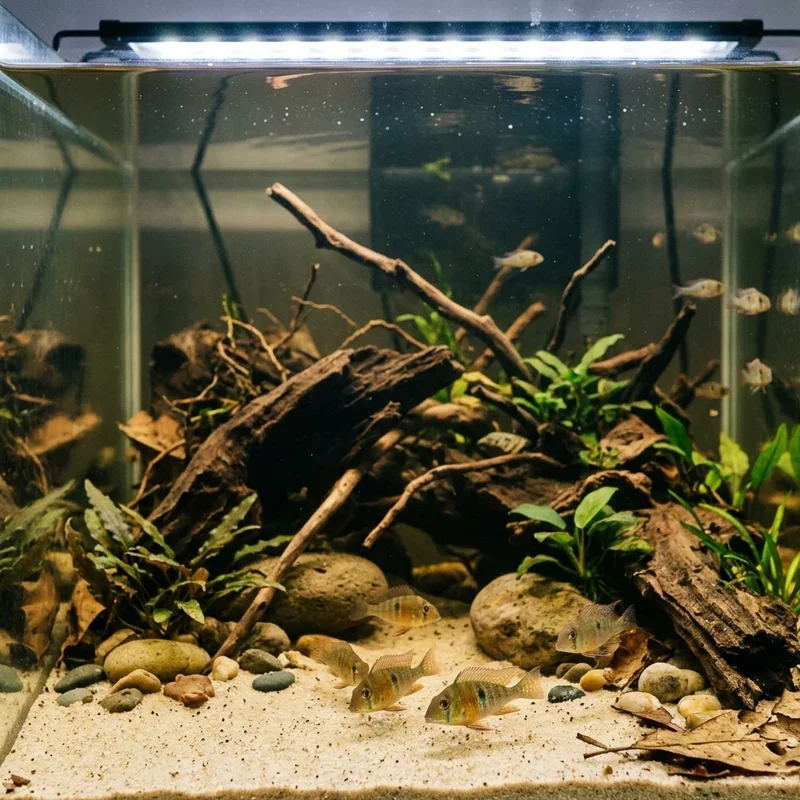
12. Geophagus South American Eartheater Setup
A Geophagus eartheater setup showcases one of South America's most behaviorally fascinating cichlid groups in a large tank designed around their distinctive substrate-sifting feeding behavior, creating an aquarium where constant searching, mouthful-taking, and sand-spitting creates endlessly mesmerizing activity throughout every observation session. Eartheater tanks work like watching a living documentary about specialized feeding adaptations made continuously visible throughout the aquarium throughout. Provide a deep fine sand substrate of minimum three inches depth allowing Geophagus species to fully engage their natural sifting behavior without stressing when substrate runs too shallow throughout feeding sequences. House a group of six to eight individuals managing the mild social aggression characteristic of this group through safety in numbers throughout. Include driftwood and leaf litter for water chemistry buffering always.
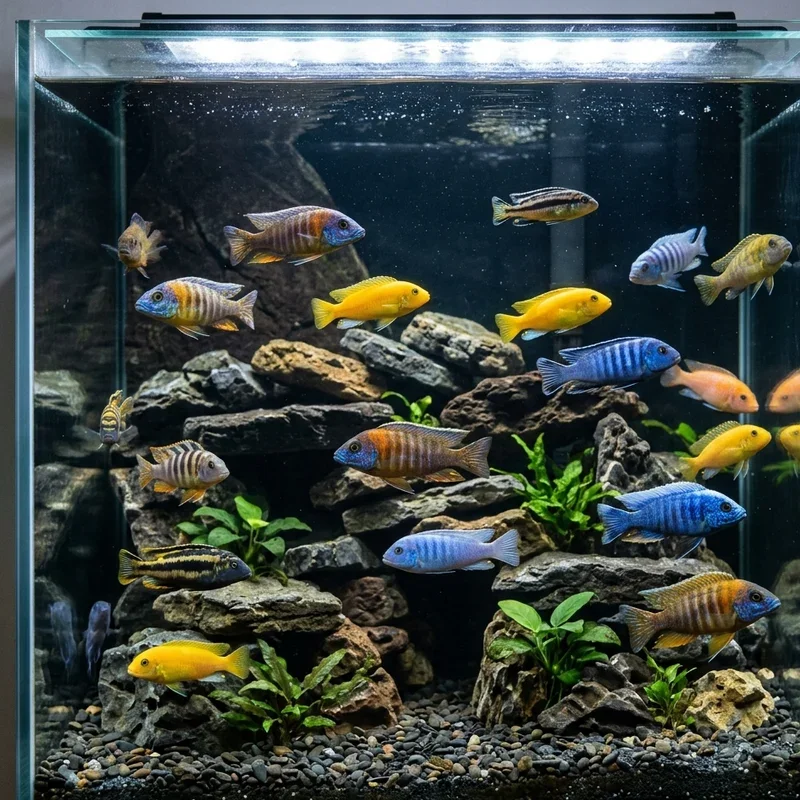
13. Cichlid Mixed African Community Tank
A mixed African cichlid community tank combines compatible species from Lake Malawi and Lake Victoria into one spectacular display aquarium, showcasing extraordinary diversity from Africa's cichlid-rich rift lake systems within a carefully managed stocking strategy that minimizes interspecies aggression throughout. Mixed African tanks work like curating a diverse musical ensemble where different voices create richer collective harmony than any single species achieves independently throughout the display. Stock a 90-gallon minimum tank combining compatible species including Copadichromis, Placidochromis, and Sciaenochromis from Malawi with Haplochromis from Victoria, choosing species with different color expressions to prevent hybridization and maximize visual diversity throughout. Use moderate rockwork with open swimming space satisfying both hap and Mbuna behavioral requirements throughout always.
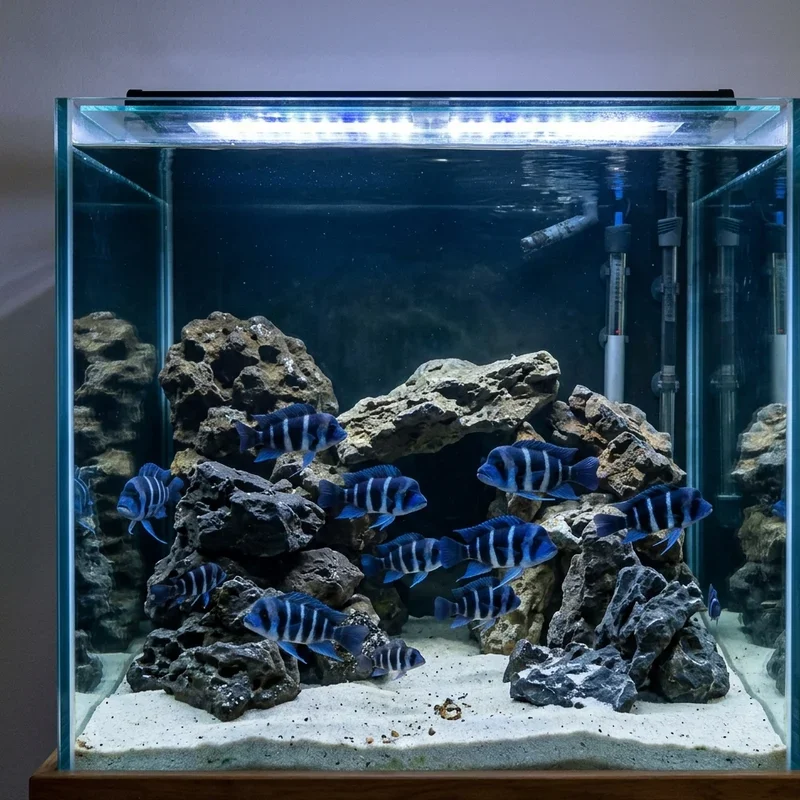
14. Frontosa Cichlid Deep Blue Setup
A Frontosa cichlid deep blue setup creates the most majestic and regal cichlid aquarium available, housing Lake Tanganyika's most impressively large and aristocratically beautiful cichlid species in a deep-water inspired setup that showcases their extraordinary blue-barred coloration and distinctive cranial hump throughout. Frontosa tanks work like maintaining a private audience chamber for aquarium royalty, the fish's commanding presence demanding appropriate spatial and aesthetic deference throughout. Provide a minimum 125-gallon tank for a group of six to eight Cyphotilapia frontosa, creating a small colony that shows the natural social behaviors these relatively slow-moving, deep-water cichlids display throughout. Use minimal decor with large smooth rocks and dim, blue-tinted lighting evoking deep lake conditions at depths exceeding thirty meters throughout always.
15. Central American Cichlid Biotope Tank
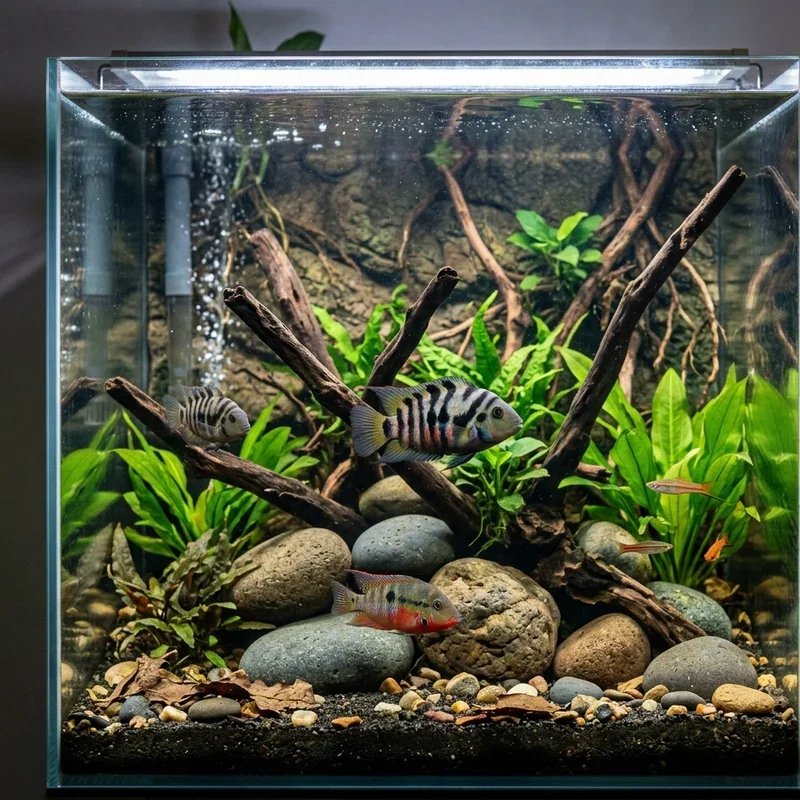
A Central American cichlid biotope tank recreates the rivers and lakes of Mexico, Guatemala, and Honduras where some of the cichlid family's most magnificently colored and behaviorally complex species evolved in habitats ranging from fast-moving mountain streams through warm lowland lakes throughout. Central American biotopes work like geographic portals transporting the viewer into habitats quite different from the African rift lakes that dominate cichlid keeping throughout the hobby. Feature spectacular species including Vieja synspila, Rocio octofasciata, and Thorichthys meeki in appropriate biotope groupings within a 125-gallon minimum aquarium providing adequate territory for these large, active cichlids throughout. Use river pebbles, fine sand, and driftwood representing authentic Central American river substrate profiles throughout. Maintain neutral to slightly hard water chemistry always.
Conclusion
Cichlid aquariums deliver the most colorful, behaviorally rich, and genuinely rewarding freshwater fish keeping experiences available to aquarium enthusiasts willing to invest in proper setup, appropriate species selection, and consistent water quality maintenance throughout their cichlid keeping journey. These fifteen inspired ideas demonstrate that every tank size, experience level, and aesthetic preference has a perfect cichlid setup concept worth pursuing with genuine enthusiasm and appropriate research investment throughout. Whether you choose brilliant Mbuna, elegant Discus, or majestic Frontosa, every cichlid species rewards dedicated care magnificently. Great cichlid tanks inspire great fishkeepers. Start planning your perfect colorful cichlid setup today always.
Read next: 15 Cute Fish Tank Ideas to Brighten Your Home Decor
Frequently Asked Questions
Q1: What minimum tank size do I need to successfully keep most cichlid species?
A: Most cichlid species require minimum 55 to 75-gallon tanks, with larger aggressive species needing 125 gallons or more for proper territorial management.
Q2: Can I keep different cichlid species from different African lakes together successfully?
A: Mixing Malawi and Tanganyikan species requires careful research since water chemistry needs differ significantly between the two lake systems throughout always.
Q3: Why do cichlids rearrange decorations and dig in my aquarium substrate constantly?
A: Cichlids dig and rearrange decorations as natural territorial and breeding behaviors reflecting their instinctive need to control and modify their environment throughout always.
Q4: How often should I perform water changes in an African cichlid aquarium?
A: Perform twenty-five to thirty percent water changes weekly in African cichlid tanks maintaining the water quality these active, high-metabolism fish require throughout consistently.
Q5: What is the most common reason cichlids fight aggressively in community aquarium setups?
A: Insufficient territory, too few females relative to males, and too little rockwork to create visual barriers cause most cichlid aggression problems in community tanks always.
Stay up to date with our latest ideas!