How Pet Homes Should Plan Robot Vacuum Cleaning Frequency
Learn how pet homes should plan robot vacuum cleaning frequency to manage pet hair, reduce allergens, and keep floors clean with minimal effort.
The best robot vacuum for pets is not just the model with strong suction or a pet hair brush type that looks good in a buying guide. It is the one you can run often enough for your pets, floors, shedding season, and allergy needs without turning dustbin emptying into another chore.
That is why many pet owners start shopping. Hair returns the same day you clean, litter tracks beyond the box, and carpeted rooms hold dander longer than hard floors. Before comparing models, build a cleaning frequency plan. It will tell you whether you need basic scheduling, repeated zones, automatic dust collection, larger dust bags, or stronger filtration.
Table of contents
The question most pet vacuum guides skip
How often should pet homes run a robot vacuum
How shedding season should change your schedule
How to plan zones for pet beds bowls carpets and doors
How the best robot vacuum for pets fits your routine
How to maintain filters brushes and dust bags
Conclusion
The question most pet vacuum guides skip
Many search results for pet robot vacuums focus on ranked models, suction numbers, and brush designs. Those details matter, but they rarely answer the question that decides daily satisfaction: how often does the robot need to run, and how much maintenance can you realistically do?
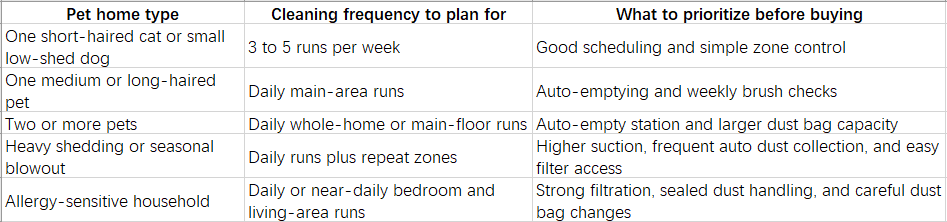
The short answer is that it depends on pet count, hair length, floor type, and allergy sensitivity, not brand or suction rating alone. A one-pet hard-floor home can usually get by with 3 to 5 runs a week and a quick brush check every week or two. A multi-pet home with rugs, or a home with a long-haired shedding pet and carpeted bedrooms, typically needs daily runs, a dock that empties itself automatically, and more frequent filter attention.
Focusing only on robot vacuums for dog hair vs cat hair can also be too narrow. Dog hair and cat hair behave differently on different surfaces, but the buying decision usually depends more on hair volume, hair length, and how often the robot can empty itself.
How often should pet homes run a robot vacuum
Use this as a starting point, then adjust after two weeks. If hair is visible by the next day, move the schedule up. If floors stay clean, reduce nonessential rooms.
The American Lung Association notes that vacuuming can help remove dust, allergens, and pet dander, but weak filtration can stir particles back into the air. The EPA's guidance on indoor biological contaminants recommends using a HEPA filter vacuum to help keep vacuumed dust from escaping back into the air. For pet homes, filtration only helps when the system stays clean, sealed, and maintained.
How shedding season should change your schedule
Shedding season is when a normal schedule starts to feel too light. If your dog leaves fur on the sofa after every nap or your cat's favorite window spot has a visible halo by afternoon, increase frequency before the floor looks messy.
The practical shift is straightforward. Run main living areas once daily. Schedule a second pass for pet beds, hallway rugs, and the door your dog uses most, ideally in the evening when hair from the day has settled. On carpeted floors where hair embeds, switch to the highest suction setting and run those zones at least once daily throughout peak shedding weeks. If your robot has automatic dust collection settings, use the shorter end of the available interval range, around 15 to 30 minutes, so hair does not compact in the bin between passes.
Anti-tangle brush design matters here, but it should not be the only deciding factor. It reduces one maintenance problem. It does not replace the need for frequent runs, a dock that handles hair volume, and a filter routine that keeps fine debris from building up.
How to plan zones for pet beds bowls carpets and doors
Pet homes are rarely messy evenly. A guest room does not need the same schedule as the feeding area or the rug by the back door. Start with these four zones and schedule each one separately.
Pet beds and nap spots
Pet beds and nap spots should get at least one dedicated vacuum-only run per day, since hair and dander build up fastest where pets rest most.
Food and water bowl areas
Food and water bowls benefit from a scheduled cleanup after morning and evening meals to prevent crumbs and tracked debris from spreading.
Entryways and dog doors
Entryways and dog doors need an extra pass after walks or on rainy days when outdoor debris tracks in.
Rugs and carpets
Rugs and carpets are worth scheduling separately from hard floors and should run on higher suction, since hair settles deeper into fibers and often needs more than one pass to clear.
This zone plan is the gap many ranking pages leave open. They may tell you which model has high suction, but not how a long-haired cat plus a hallway runner changes your weekly schedule. A good robot vacuum turns your map into a routine with room timing, repeat zones, carpet-focused suction, and no-go areas.
How the best robot vacuum for pets fits your routine
Once you know your schedule, product features become easier to judge. You are not buying automation in general. You are buying fewer interruptions in a home where hair, dander, and tracked debris keep coming back.
For high-shed homes that want the most hands-off setup, eufy Robot Vacuum Omni S2 is the strongest fit in this plan. It combines 30,000 Pa suction, DuoSpiral Detangle Brushes, app zones, and a UniClean Station that stores dust for up to 68 days. For homes with pets or children, eufy guidance recommends High cleaning intensity, Turbo or Max suction, and Standard automatic dust collection at 15 to 30 minute intervals when needed. Its filtration is designed to capture up to 99.99% of household allergens based on eufy lab data.
For pets that also leave messes on stairs, fabric surfaces, or carpeted spots the robot cannot reach, eufy Robot Vacuum Omni E28 adds the FlexiOne Portable Deep Cleaner into the station. It also offers 20,000 Pa suction, DuoSpiral Detangle Brushes, an all-in-one station, and Pet Mode.
If you are still comparing options, start with eufy's robot vacuums for pet hair collection. The useful question is which model matches the runs, zones, dust disposal, and filter care your home needs.
How to maintain filters brushes and dust bags
Automatic maintenance reduces daily work, but pet homes still need a rhythm. After heavy runs, check whether the robot bin fully emptied into the dock. Weekly, inspect the main brush, side brush, dustbin, and filter, especially during shedding season, and check the channel between the robot and its dock when a self-emptying base seems less effective. Replace dust bags, brushes, mop parts, and filters according to app reminders or the accessory guidance for your model. For allergy-sensitive homes, filtration is a maintenance issue as much as product spec. If someone has asthma or persistent allergy symptoms, use cleaning routines as part of a broader plan and follow guidance from a qualified health professional.
Conclusion
Pet homes should choose a robot vacuum by planning the routine first. Count the pets, note hair length, mark carpeted rooms, watch where crumbs and fur collect, and decide how sensitive your household is to dust and dander. That plan tells you whether you need occasional upkeep, daily cleaning, repeated zone runs, stronger filtration, or a dock that can handle frequent auto-emptying.
The best robot vacuum for pets keeps up without asking you to babysit the bin every day. For many pet owners, auto-emptying, larger dust bags, app zones, anti-tangle brush design, and filter reminders are what make the schedule sustainable.
Stay up to date with our latest ideas!