15 Koi Fish Pond Ideas to Enhance Your Backyard Oasis
Transform your backyard with stunning koi fish pond designs featuring waterfalls, bridges, natural filtration, and landscaping ideas.
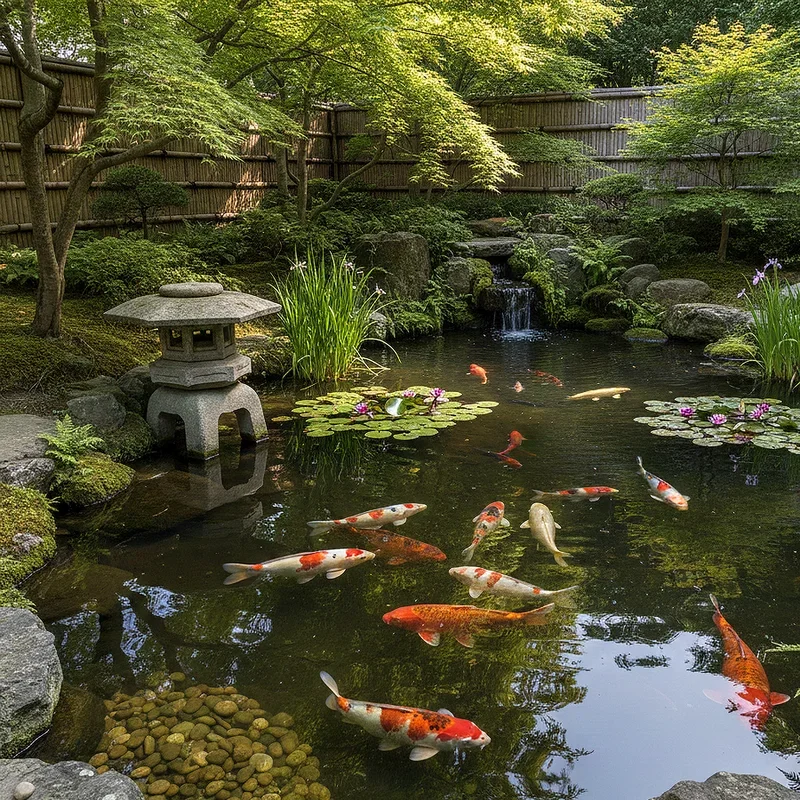
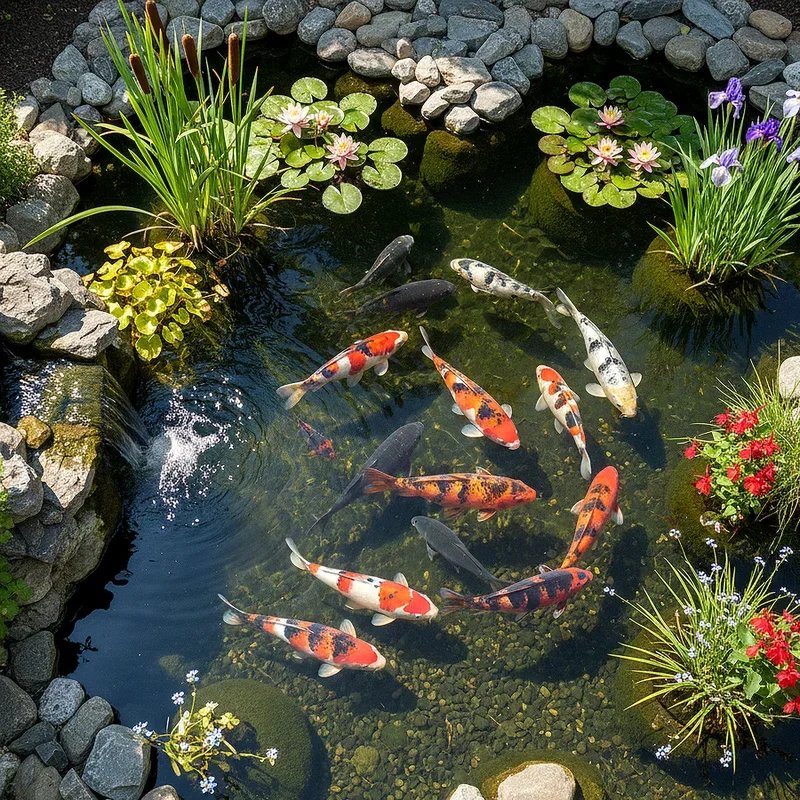
Have you ever dreamed of creating a tranquil retreat right in your own backyard? A koi fish pond offers more than just aesthetic appeal; it brings life, movement, and a sense of calm to any outdoor space. These graceful fish have captivated homeowners for centuries with their vibrant colors and peaceful presence. Whether you're working with a sprawling garden or a compact patio area, there's a koi pond design that can transform your space into a personal sanctuary. From traditional Japanese-inspired layouts to modern minimalist designs, the possibilities are endless. Creating the perfect koi pond involves careful planning, creative landscaping, and understanding what these magnificent fish need to thrive. Let's explore fifteen inspiring ideas that will help you design a backyard oasis where both you and your koi can flourish together.
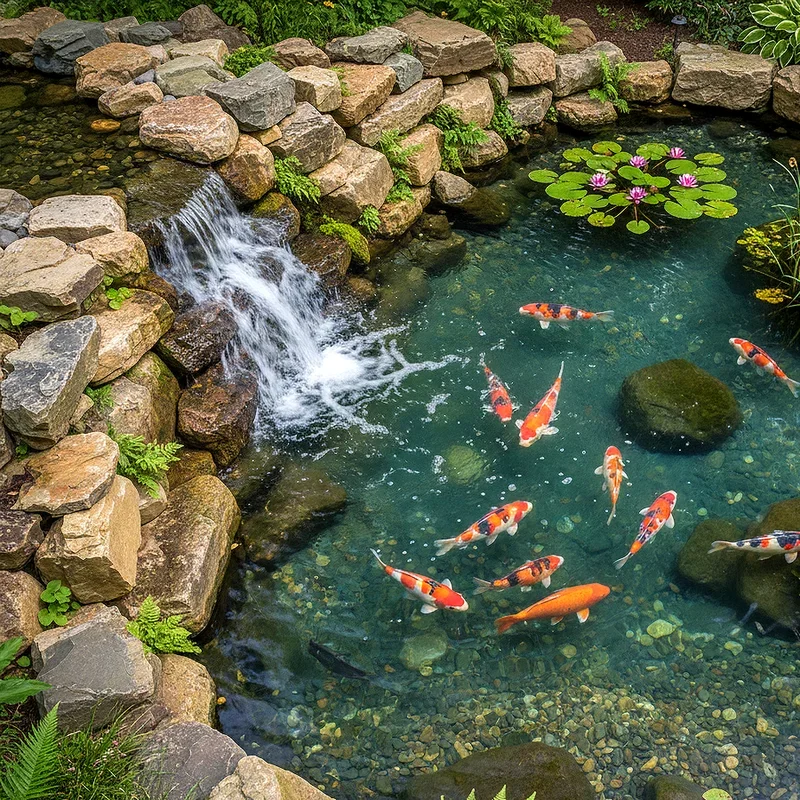
1. Natural Stone Waterfall Feature
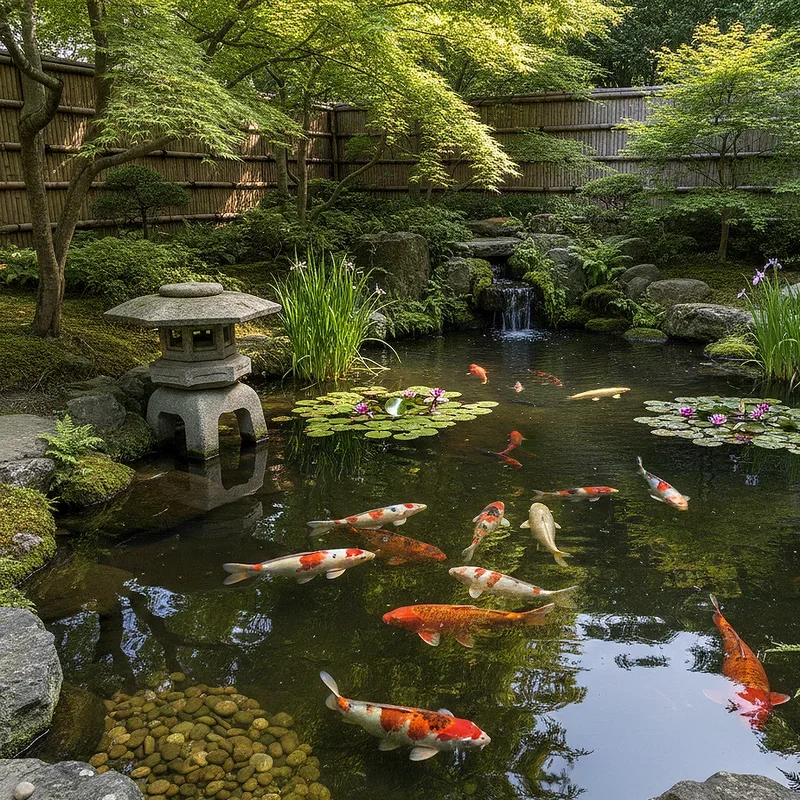
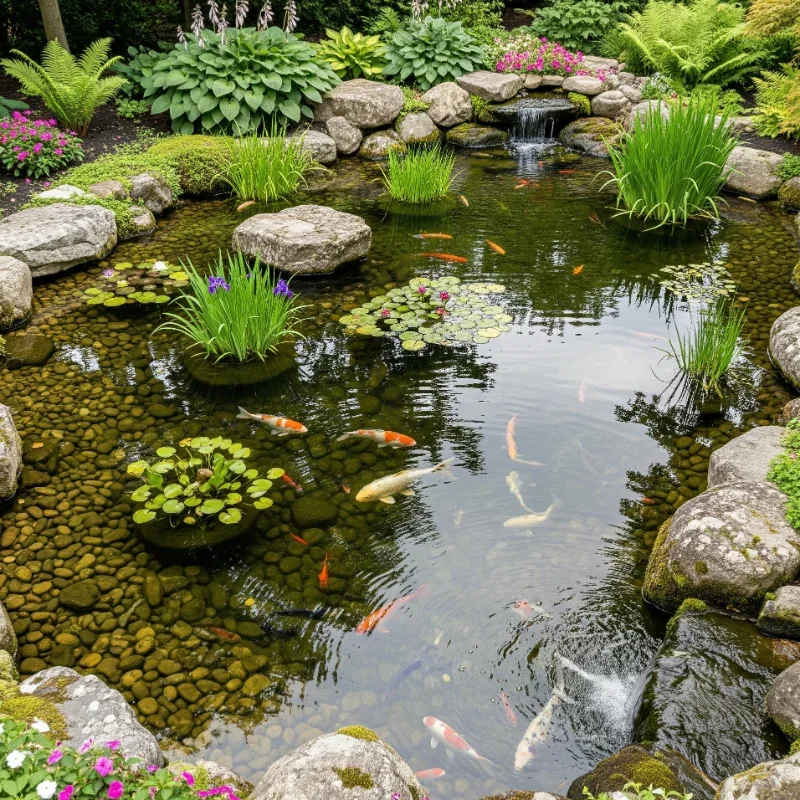
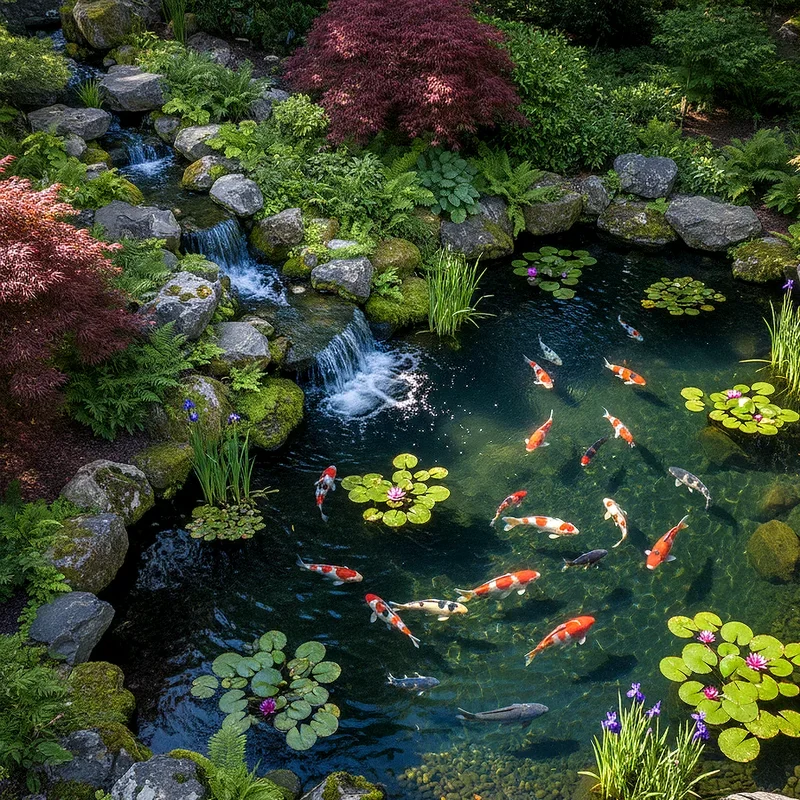
Adding a natural stone waterfall to your koi pond creates both visual interest and practical benefits for your fish. The cascading water increases oxygen levels, which koi absolutely love, while the soothing sounds create a peaceful atmosphere throughout your backyard. You can build waterfalls using stacked slate, river rocks, or granite boulders to achieve different aesthetic effects. The key is making it look like the waterfall has always been part of your landscape rather than an artificial addition. Consider the height and flow rate carefully, as too much turbulence can stress your koi, while gentle cascades provide the perfect balance. Position rocks strategically to create interesting water patterns and natural pools where water can collect before flowing down.
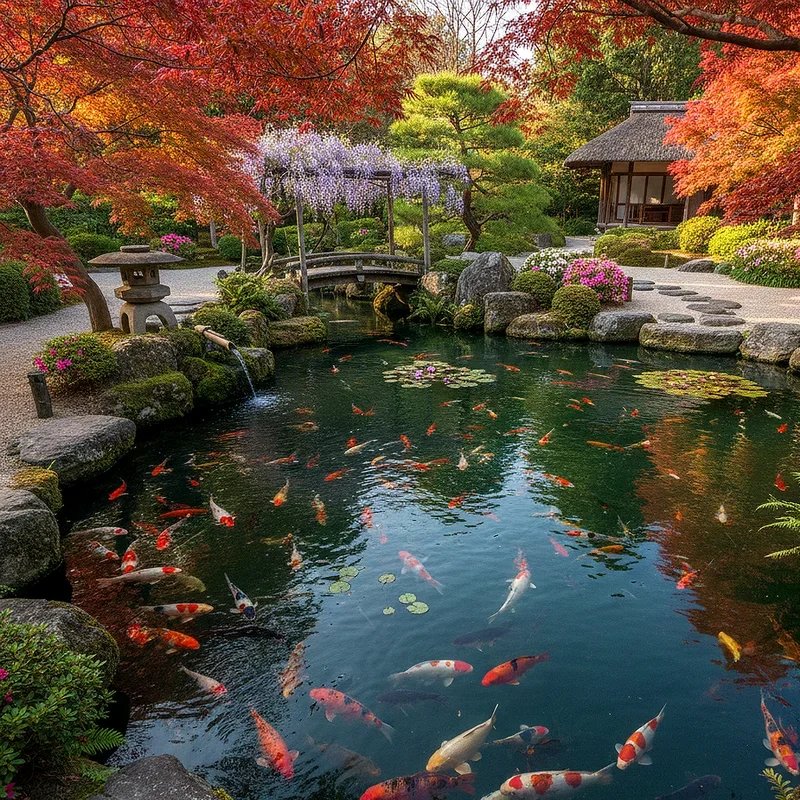
2. Japanese Garden Style Pond
Traditional Japanese koi ponds embody centuries of refined design principles that create harmony between water, stone, and living elements. These ponds typically feature irregular shapes that mimic natural bodies of water rather than geometric patterns. Incorporate elements like bamboo fountains, stone lanterns, and carefully pruned trees to complete the authentic aesthetic. The philosophy behind Japanese garden design emphasizes balance and tranquility, making it ideal for meditation spaces. Gravel paths, stepping stones, and strategically placed boulders guide visitors around the pond while maintaining the contemplative atmosphere. This style works beautifully in both large estates and smaller urban gardens when scaled appropriately to your available space.
3. Modern Geometric Design
Contemporary koi ponds embrace clean lines and geometric shapes that complement modern architecture and minimalist landscaping. Think rectangular pools with sharp edges, circular designs with concrete coping, or square ponds with metal accents. These designs often incorporate glass panels for underwater viewing, stainless steel water features, and architectural plantings like ornamental grasses. The modern approach focuses on creating a striking visual statement while still providing an optimal environment for your koi. Lighting plays a crucial role in these designs, with LED strips and spotlights highlighting the pond's architectural features after dark. This style appeals to homeowners who want their koi pond to feel like an extension of their contemporary home.
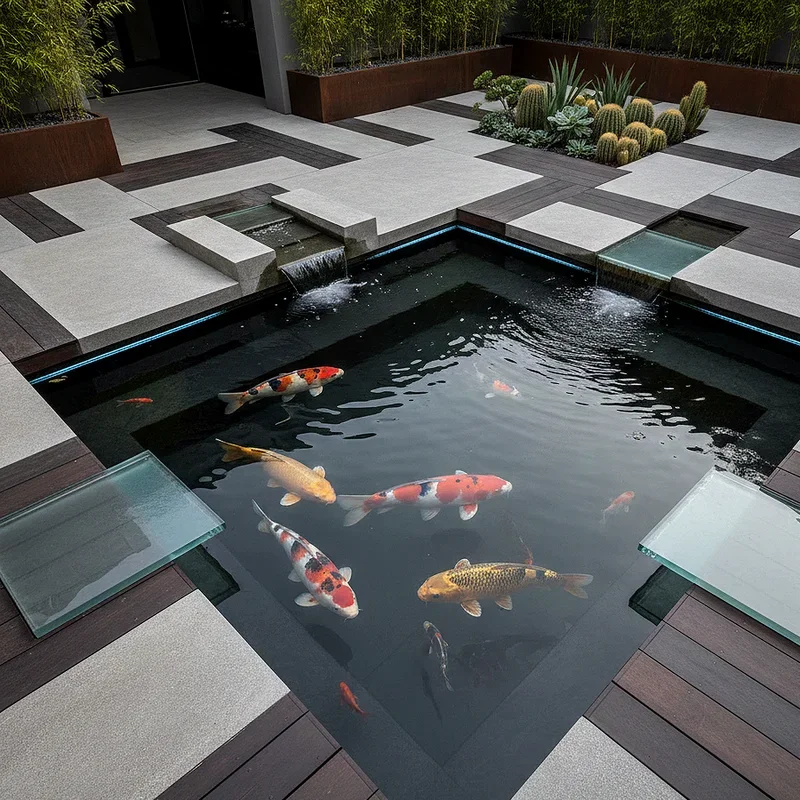
4. Raised Pond with Viewing Window
Elevating your koi pond above ground level and installing viewing windows transforms fish watching into an immersive experience. These raised structures put the water at a comfortable viewing height, eliminating the need to bend down to see your fish. The viewing window can be a single large panel or multiple smaller windows positioned at different heights for varied perspectives. This design works exceptionally well on sloped properties where the raised portion can be built into the hillside. The elevated structure also provides better protection from predators like herons and raccoons that might threaten your koi. Children especially love these windows, as they can observe the fish at eye level and watch their graceful movements up close.
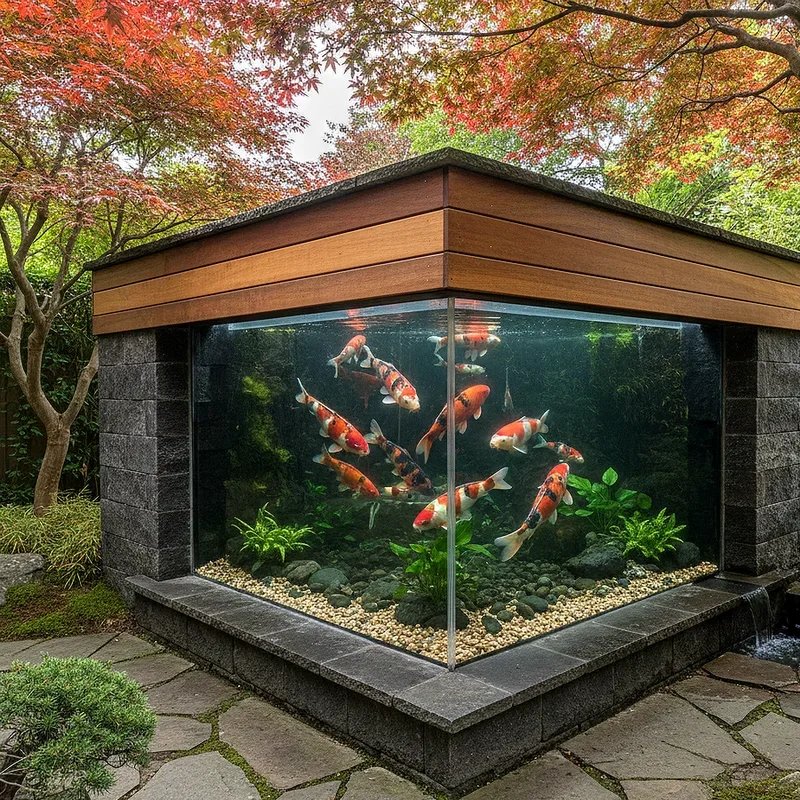
5. Multi-Level Cascading Pools
Creating a series of connected pools at different elevations adds dramatic visual impact and improves water quality through natural filtration. Water flows from the highest pool down through successive levels, each hosting its own koi population or serving specific functions. Upper pools can be smaller and shallower, perfect for young koi or quarantine purposes, while lower pools provide depth for adult fish. The cascading design naturally aerates the water as it flows between levels, reducing the need for mechanical aeration systems. Each level can feature different landscaping themes, creating diverse micro-environments within your overall design. This approach works particularly well on naturally sloped terrain where you can work with existing topography.
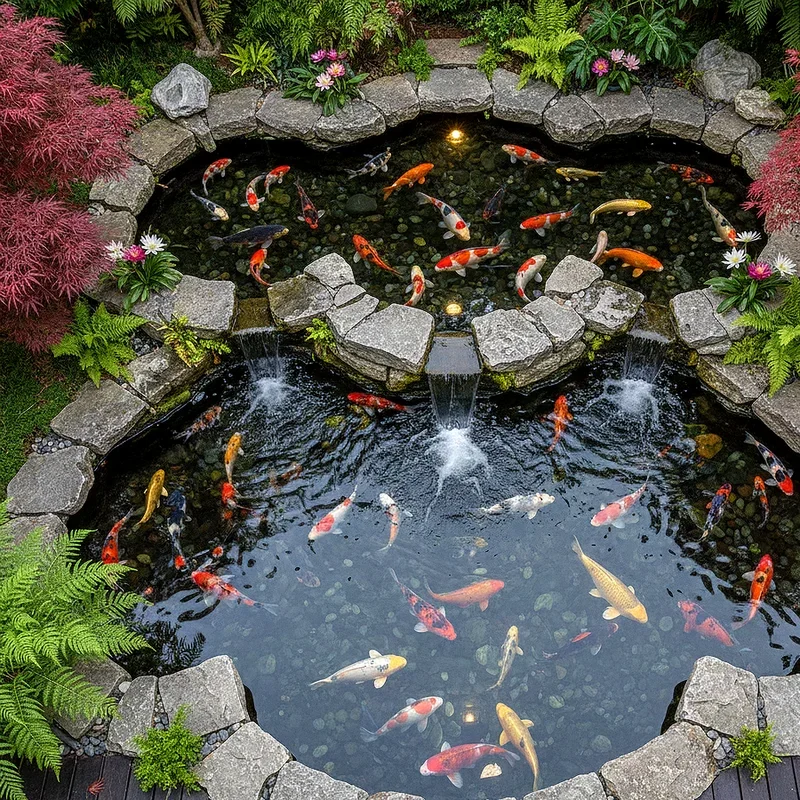
6. Bridge Over Pond Feature
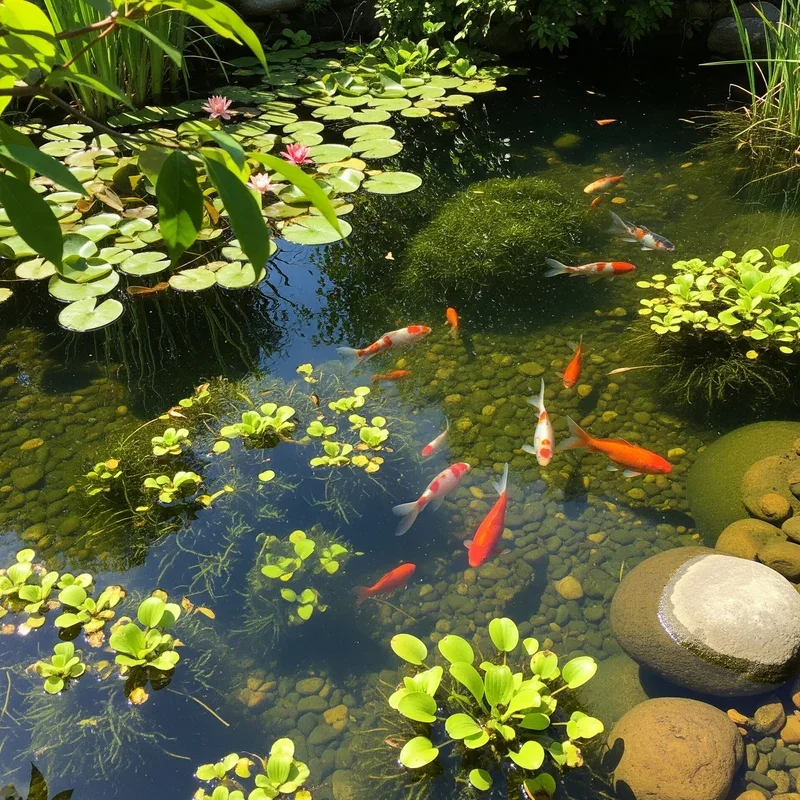
Installing a bridge over your koi pond creates a focal point while providing a unique vantage point for observing your fish from above. Bridges can range from simple wooden planks to elaborate arched structures inspired by traditional Japanese designs. The bridge serves both aesthetic and practical purposes, allowing you to access different areas of your yard without walking around the pond. Consider the bridge's height carefully, ensuring it provides adequate clearance for plants and doesn't create a hazard. Materials like cedar, redwood, or composite decking resist water damage and weathering better than standard lumber. Adding handrails not only improves safety but also creates opportunities for training climbing plants like wisteria or clematis around them.
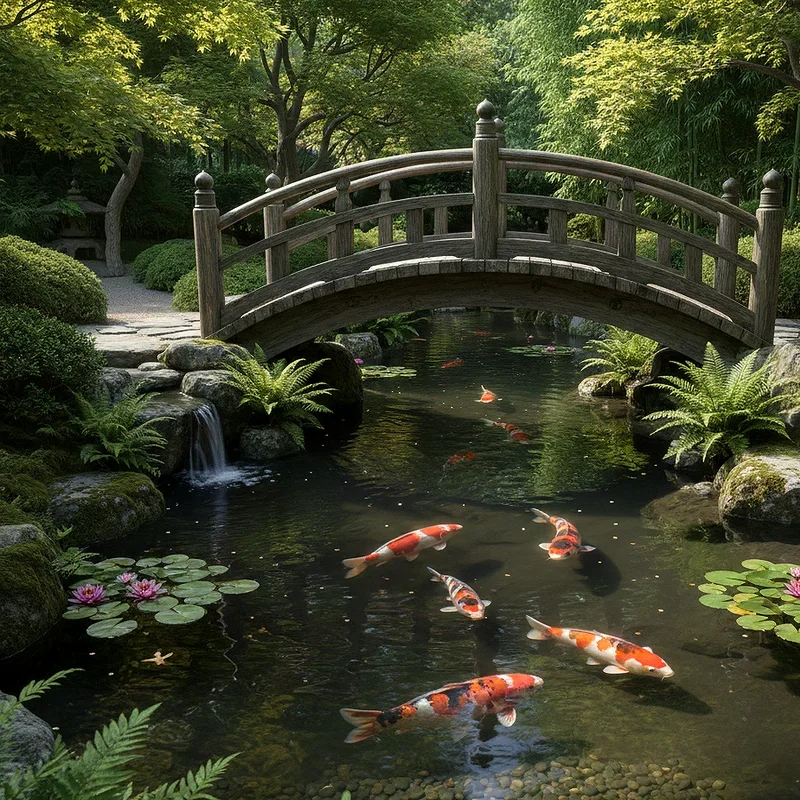
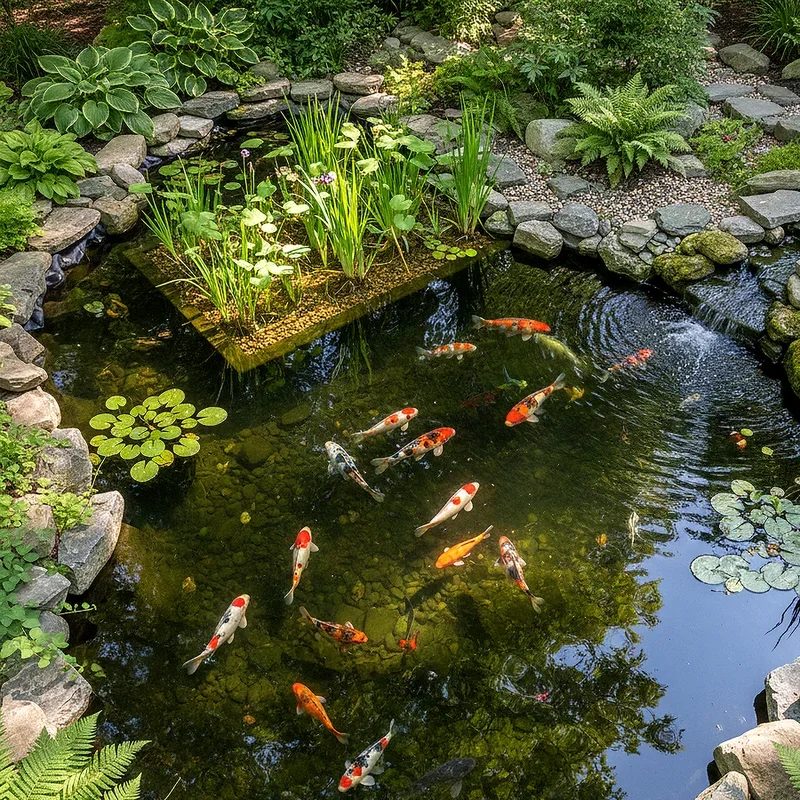
7. Integrated Bog Filter System
Bog filters combine natural filtration with beautiful aquatic plantings, creating a living ecosystem that keeps your koi pond water crystal clear. These shallow planted areas use gravel beds and aquatic plants to remove nitrates and other waste products through natural biological processes. The bog section typically connects to your main pond through underground piping, with water flowing through the plant roots before returning clean. Marginal plants like iris, cattails, and pickerel rush thrive in bog conditions while actively cleaning your water. This approach significantly reduces maintenance compared to traditional mechanical filters and creates additional habitat for beneficial bacteria. The planted bog area also softens the pond's edges and attracts butterflies and dragonflies to your backyard.
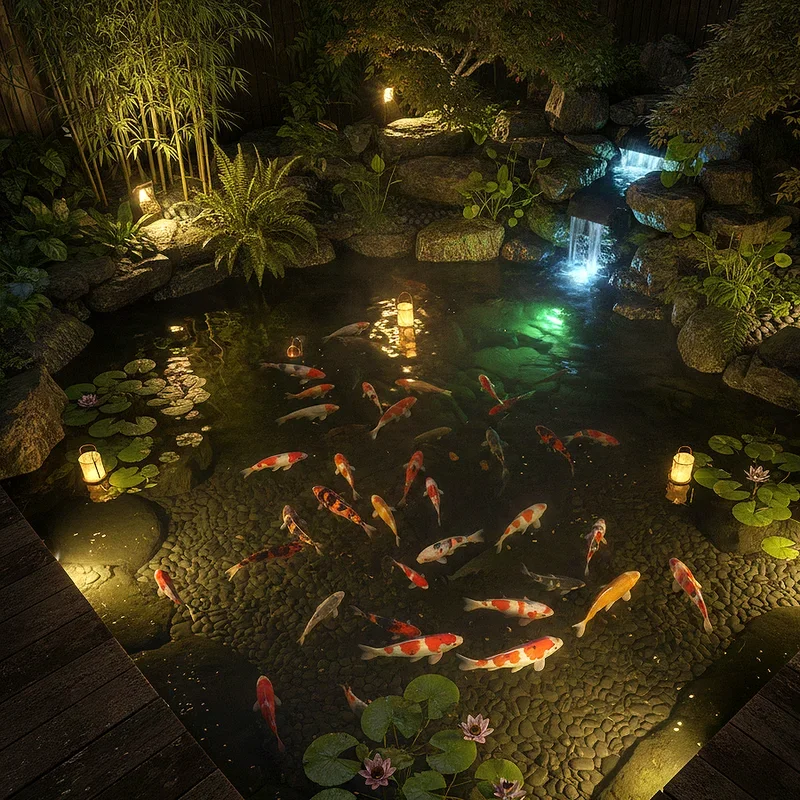
8. Night Lighting Illumination
Strategic lighting transforms your koi pond into a magical nighttime attraction that extends your outdoor living hours beyond sunset. Underwater LED lights illuminate your koi from below, making their colors appear more vibrant and creating dramatic shadows. Combine submerged lighting with spotlights aimed at waterfalls, bridges, and surrounding landscape features for a layered lighting effect. Modern LED systems offer color-changing options, allowing you to adjust the mood for different occasions or seasons. Position lights carefully to avoid creating glare on the water's surface, which makes viewing fish difficult and wastes energy. Solar-powered path lights around the pond's perimeter provide safety while creating a warm, inviting atmosphere that draws people outdoors after dark.
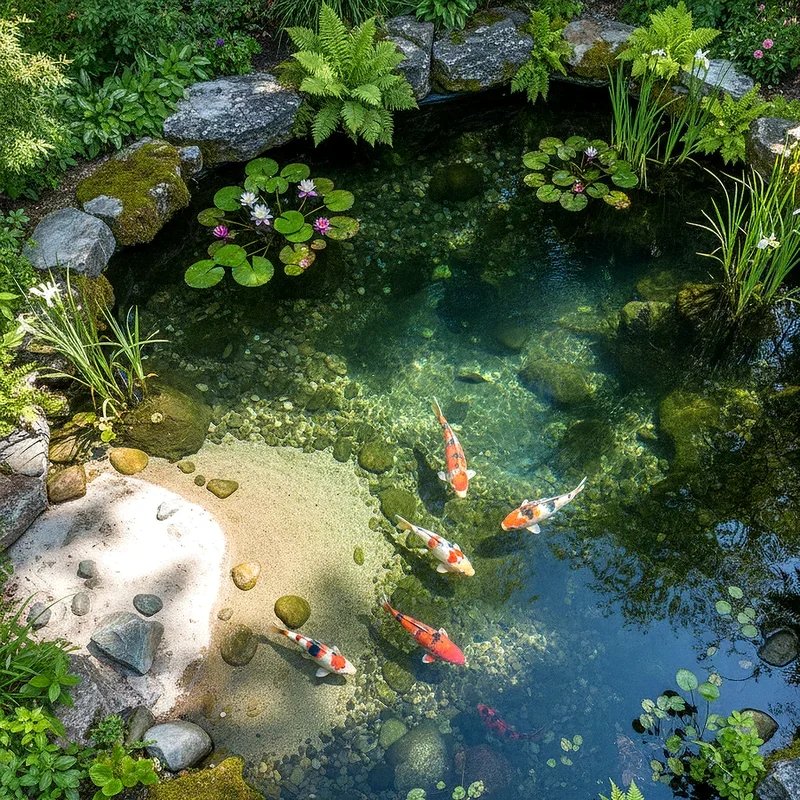
9. Shallow Beach Entry Area
Creating a gradual beach entry in one section of your pond makes maintenance easier and provides a safe area for smaller koi. This shallow zone typically uses smooth river pebbles or gravel to create a gentle slope from the pond's edge into deeper water. The beach area serves multiple purposes, including a convenient spot for entering the pond during cleaning and a natural-looking transition zone. Aquatic plants like dwarf cattails and marsh marigolds thrive in these shallow margins, creating habitat for beneficial insects and frogs. The varied depths accommodate different fish sizes and behaviors, as some koi enjoy swimming in shallow water where they can feel secure. This design element particularly appeals to families with children who want to interact safely with their pond.
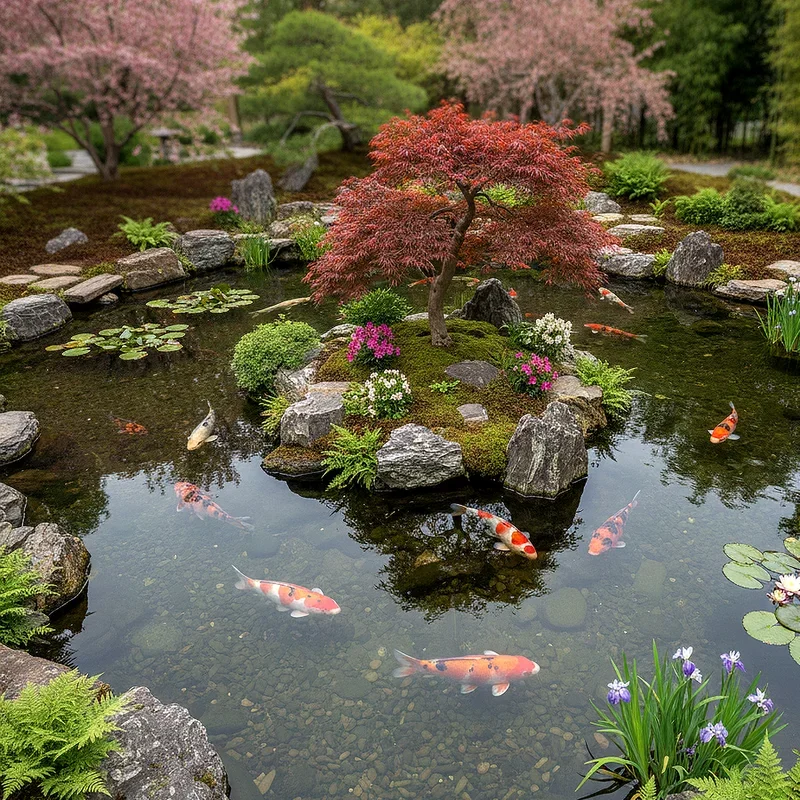
10. Island Feature in Center
Adding an island to the center of your koi pond creates visual interest while providing practical benefits for both fish and wildlife. The island can be a simple mound of rocks or an elaborate planted structure with trees and shrubs. Koi enjoy swimming around the island, which creates natural circulation patterns and prevents dead zones in your pond. Birds appreciate islands as safe resting spots where they can drink without fear of predators approaching from behind. You can plant the island with moisture-loving species like weeping willows, Japanese maples, or ornamental grasses that add vertical interest. Access the island via a small bridge or stepping stones to maintain plants and adjust features as your design evolves over time.
11. Stream Connection Design
Connecting your koi pond to a meandering stream extends the water feature throughout your landscape and creates a more naturalistic environment. The stream can start from a distant water source or recirculate from the pond itself, flowing through planted borders before returning. Varying the stream's width and depth creates different water velocities and sounds, from babbling brooks to quiet pools. Line the streambed with smooth river stones and boulders positioned to redirect flow and create interesting patterns. Plant moisture-loving perennials along the banks to soften edges and prevent erosion while providing shade and shelter. The extended waterway gives koi more space to explore and creates additional filtration as beneficial bacteria colonize the stream's surfaces.
12. Container Koi Pond Option
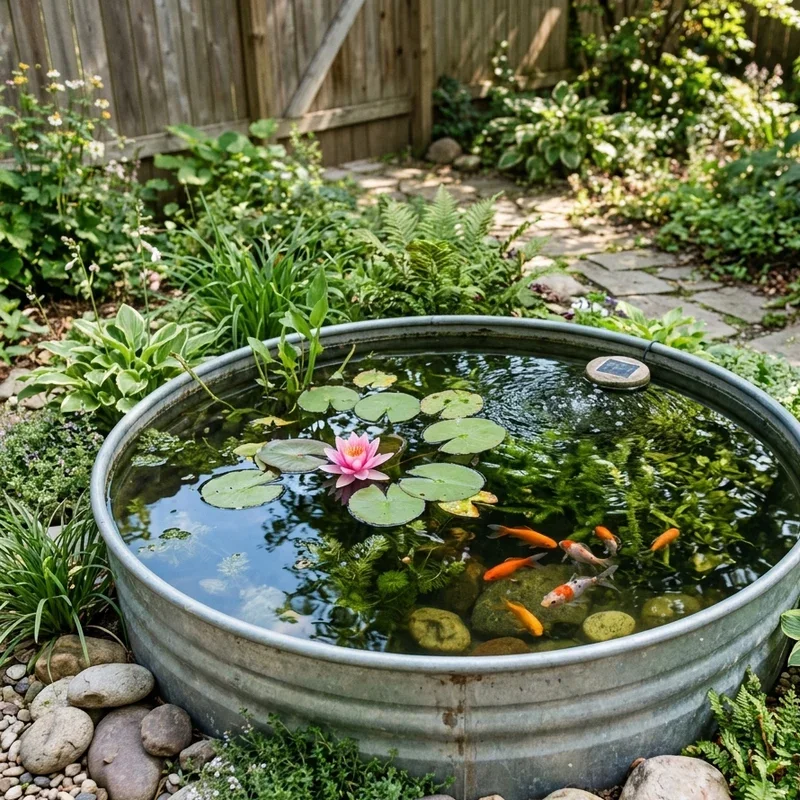
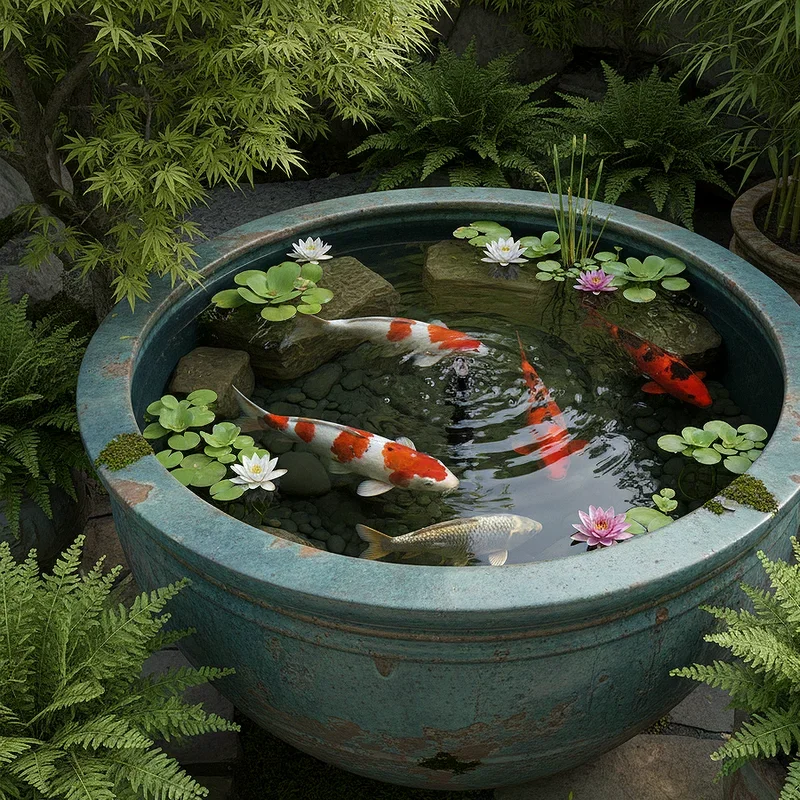
For those with limited space or rental properties, container koi ponds offer a portable alternative that still provides the joy of keeping these beautiful fish. Large stock tanks, wine barrels, or purpose-built resin containers can house several koi when equipped with proper filtration and aeration. Choose containers at least three feet deep to give koi adequate swimming room and protection from temperature extremes. Position your container pond where it receives partial shade to prevent overheating during summer months while still allowing you to enjoy watching your fish. This option works wonderfully on patios, decks, or balconies where traditional in-ground ponds aren't feasible. Container ponds also make excellent starter projects for people new to koi keeping who want to learn before committing to a larger installation.
13. Indoor Outdoor Integration
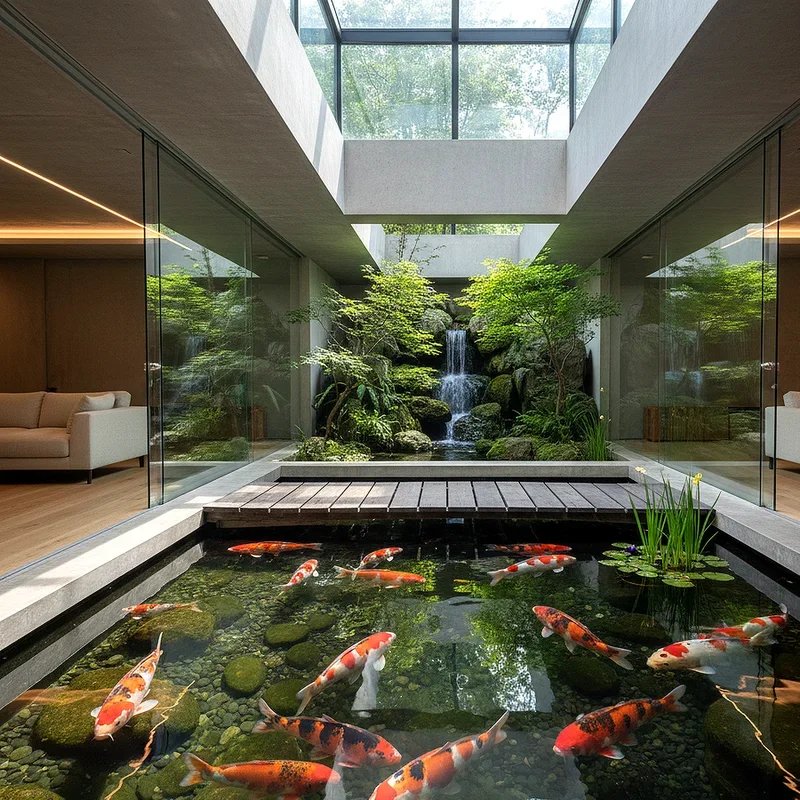
Designing your koi pond to extend from outside into an adjacent sunroom or conservatory creates year-round viewing opportunities regardless of weather. Large windows or glass walls separate the indoor and outdoor sections while maintaining visual continuity throughout the space. The indoor portion benefits from climate control, making it easier to maintain stable water temperatures that keep koi healthy and active. This integration requires careful waterproofing and structural engineering to prevent leaks and ensure the building can support the water's weight. The indoor section can house sensitive equipment like pumps and filters in a protected environment where they're easier to access for maintenance. This luxurious approach transforms your koi pond into a central feature of your home's living space rather than just an outdoor amenity.
14. Naturalistic Edge Planting
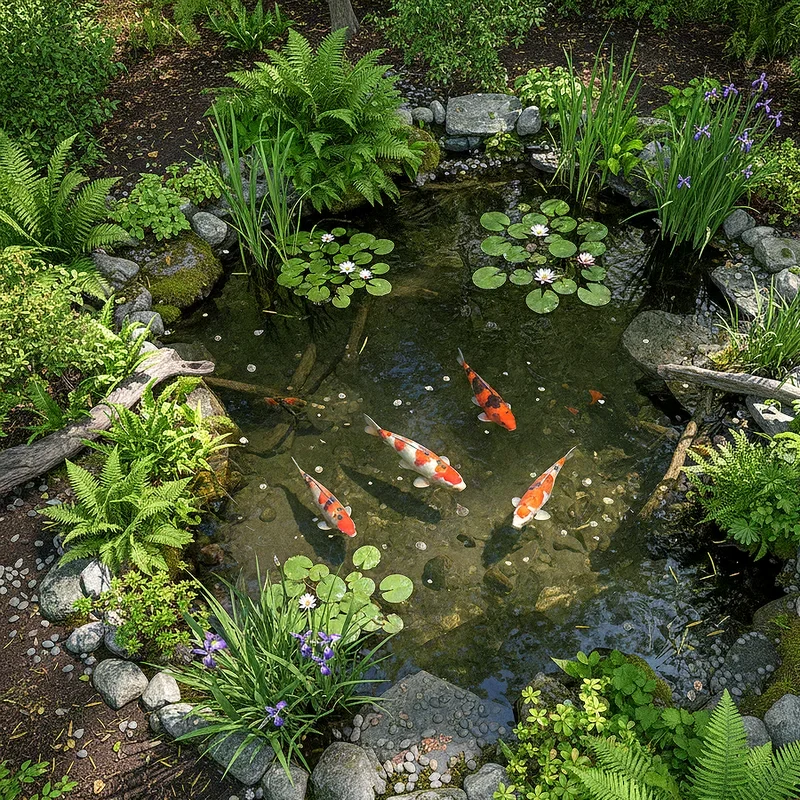
Softening your pond's edges with lush plantings creates a seamless transition between water and landscape while providing numerous benefits for your koi. Layer plants at different heights, from low-growing groundcovers to tall grasses and shrubs that frame your water feature. Choose species with varying bloom times to ensure year-round interest and color around your pond. Overhanging plants provide shade that helps control algae growth and keeps water temperatures more stable during hot weather. The planted edges also create hiding spots where koi feel secure, reducing stress and encouraging natural behaviors. Native plants attract beneficial insects and birds that contribute to a balanced ecosystem while requiring less maintenance than exotic species that might struggle in your climate.
15. Seasonal Water Garden Elements
Incorporating seasonal elements keeps your koi pond interesting throughout the year and allows you to celebrate different times with changing displays. Spring might feature floating planters with tulips and daffodils, while summer brings tropical water lilies in vibrant colors. Autumn calls for decorative grasses and colorful foliage plants that complement falling leaves, and winter can showcase evergreen arrangements and subtle lighting. Rotate decorative elements like floating lanterns, water-safe ornaments, or artistic sculptures to refresh your pond's appearance without major construction. Seasonal changes also apply to pond maintenance routines, with different feeding schedules and care requirements as temperatures fluctuate. This dynamic approach prevents your koi pond from becoming static and ensures there's always something new to appreciate in your backyard oasis.
Conclusion
Creating the perfect koi fish pond transforms your backyard into a living masterpiece that brings joy throughout the seasons. Whether you choose traditional Japanese aesthetics or modern geometric designs, the key lies in balancing beauty with functionality to keep your koi healthy and thriving. Each element you incorporate, from waterfalls and bridges to carefully selected plants and lighting, contributes to the overall harmony of your outdoor space. Remember that your pond will evolve over time as plants mature and you refine your design based on experience. Start with a solid plan, invest in quality materials and filtration, and don't be afraid to add personal touches that reflect your unique style and vision.
Read next: 15 Goldfish Pond Ideas for a Peaceful Outdoor Oasis
Frequently Asked Questions
Q1. How deep should a koi pond be for fish to survive winter?
A: Koi ponds should be at least three feet deep to prevent freezing during winter months.
Q2. Can you keep koi in a small backyard pond?
A: Yes, small ponds can house koi with proper filtration, though fewer fish are better.
Q3. What plants work best around koi ponds for natural filtration?
A: Water iris, cattails, and pickerel rush provide excellent natural filtration for koi ponds.
Q4. How many koi can you keep in a pond?
A: Plan for approximately 250 gallons of water per adult koi for optimal health and growth.
Q5. Do koi ponds require electricity to run pumps and filters?
A: Yes, most koi ponds need electricity for pumps, filters, and aeration systems to operate.
Stay up to date with our latest ideas!