15 Iguana Cage Ideas to Build a Better Lizard Enclosure
Discover 15 amazing iguana cage ideas! Build spacious enclosures with proper lighting, climbing areas, and heating for healthy, happy iguanas.
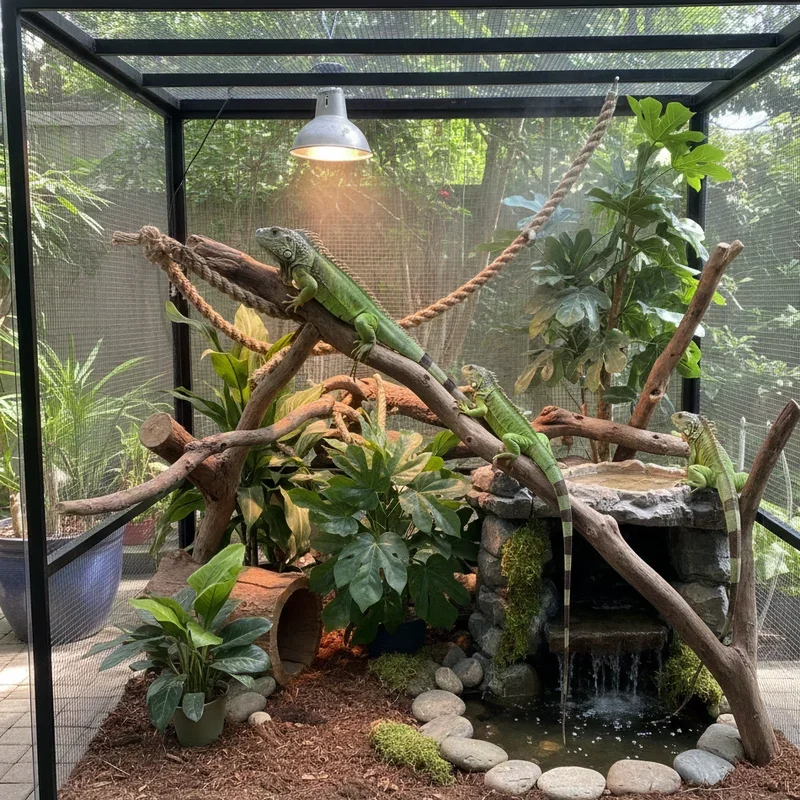
Is your iguana living in an enclosure that truly meets the needs of these magnificent tropical lizards, or are you housing a six-foot prehistoric-looking creature in a space designed for much smaller reptiles? Iguana care presents unique challenges that many new keepers underestimate, particularly regarding enclosure size and environmental requirements that standard pet store cages simply cannot provide. Think of your iguana's enclosure as their entire world compressed into whatever space you create, an environment that must replicate the warm, humid, climbing-rich habitats where these remarkable reptiles thrive in nature. The difference between adequate housing and excellent housing impacts everything from your iguana's physical development to their temperament, lifespan, and overall quality of life throughout the decades these animals can live with proper care. Most commercially available reptile enclosures fall dramatically short of adult iguana requirements, forcing dedicated keepers into custom builds, room conversions, or creative solutions that address their massive space needs. Whether you're planning for a juvenile destined to grow impressively large or upgrading an adult's current housing, proper enclosure design demands understanding specific requirements these arboreal lizards need. Ready to discover how thoughtful cage design transforms iguana keeping from basic survival into genuinely excellent husbandry? Let's explore these essential ideas!
1. Custom-Built Large Enclosures
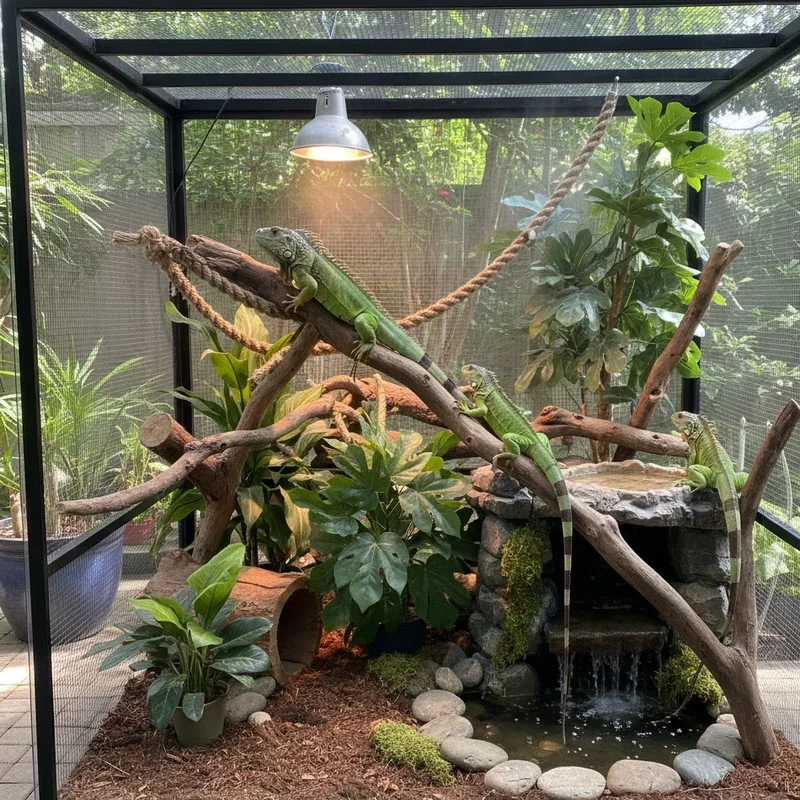
Address the fundamental space crisis through custom-built enclosures that provide the massive dimensions adult iguanas require for physical and psychological health! Standard pet store enclosures fall dramatically short of requirements, with adult green iguanas needing enclosures measuring at least 6 feet tall, 6 feet long, and 3 feet deep as absolute minimums. Custom construction using wood frames, PVC panels, or melamine enables creating appropriately sized habitats that commercial options simply don't provide at reasonable costs. Consider the significant undertaking custom building represents while recognizing that inadequate space guarantees health and behavioral problems regardless of other care excellence. These substantial projects demand planning for your iguana's adult size from the beginning rather than repeatedly upgrading as growth continues. The initial construction investment delivers decades of functional service while proper sizing enables the environmental complexity that promotes iguana wellbeing.
2. Room Conversion Habitat Ideas
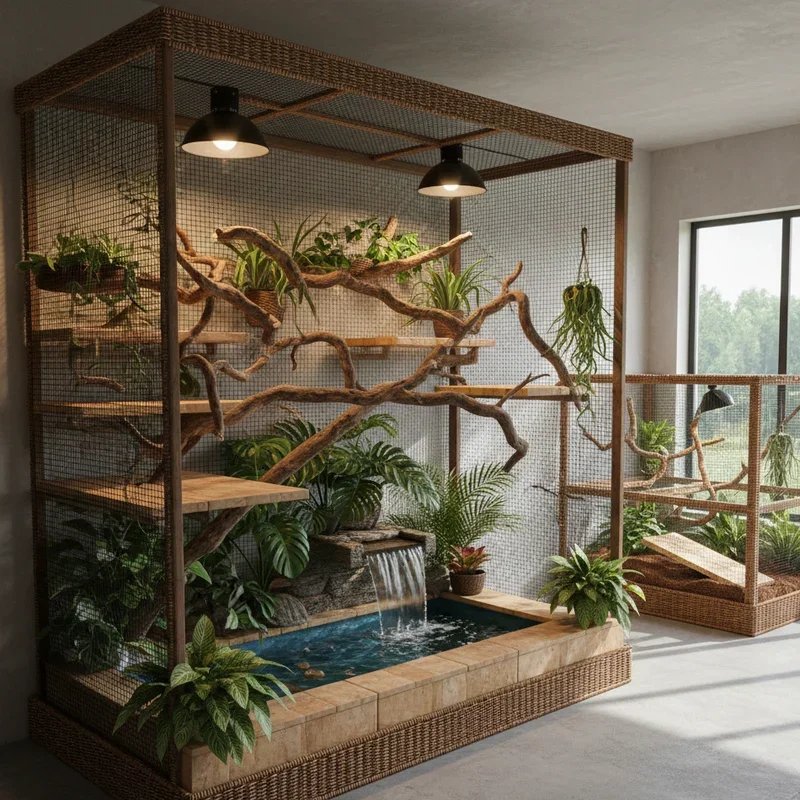
Provide ultimate space through room conversion projects that dedicate entire rooms to iguana habitation, creating free-roam environments impossible to replicate in any cage! These ambitious solutions transform spare bedrooms, closets, or purpose-built additions into climate-controlled iguana paradises where territorial boundaries extend to actual walls. Consider the commitment room conversion represents while acknowledging that space requirements sometimes exceed practical cage construction possibilities. The room format enables incorporating full-sized climbing structures, large water features, and environmental complexity that caged environments cannot match. These comprehensive solutions suit dedicated keepers whose iguana accommodation priorities justify significant home modifications while the enhanced welfare benefits demonstrate why serious keepers pursue such ambitious housing. Climate control, lighting, and humidity systems require room-scale planning while safe surfaces prevent the damage active iguanas inevitably cause.
3. Vertical Space Climbing Designs
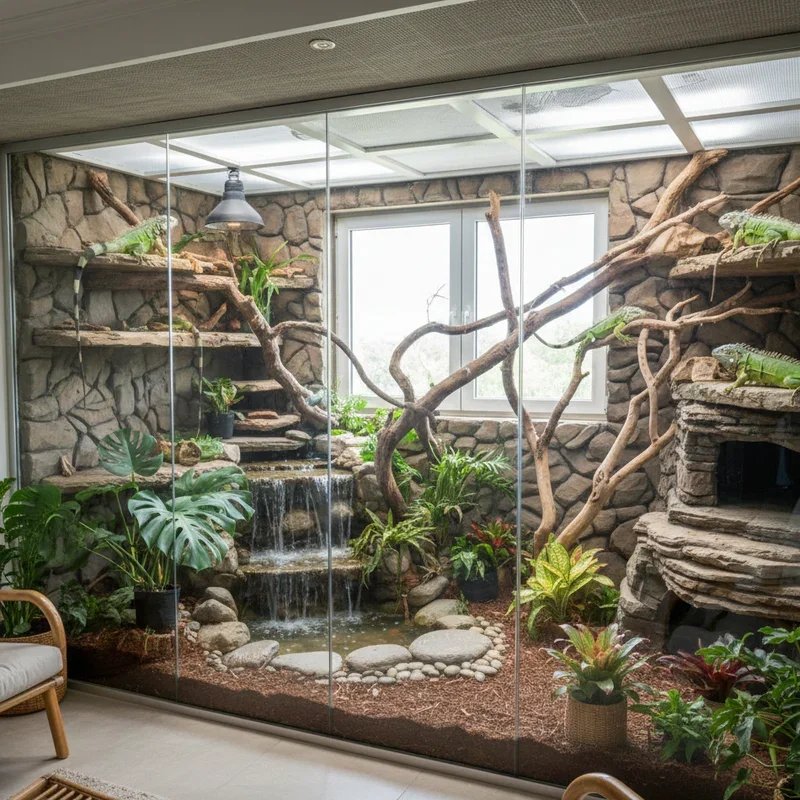
Honor arboreal instincts through vertical space designs that prioritize height over floor space, reflecting natural climbing behaviors that define iguana existence! Wild iguanas spend most time elevated in trees, making vertical climbing space more valuable than horizontal ground area for meeting psychological needs. Consider enclosure heights reaching ceiling limits while substantial climbing structures enable accessing entire vertical volumes effectively. The climbing focus requires sturdy branches, shelves, and platforms enabling safe navigation throughout height ranges while basking spots at various levels create essential temperature gradients. These height-prioritized designs demonstrate understanding of arboreal nature while the climbing complexity provides enrichment that ground-focused enclosures cannot achieve. Position the strongest climbing branches supporting basking areas where iguanas spend significant time while varied routes enable exercise and territorial behavior expression.
4. UVB Lighting Proper Placement
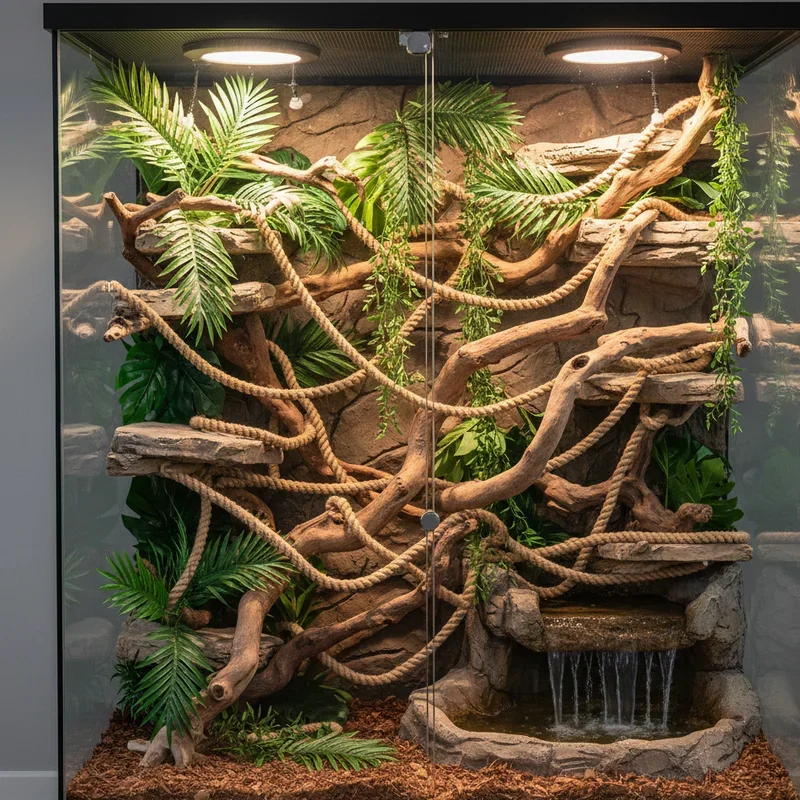
Support essential metabolic processes through UVB lighting placement that provides the radiation iguanas require for calcium metabolism and overall health! Without adequate UVB exposure, iguanas develop metabolic bone disease causing devastating skeletal deformities, weakness, and shortened lifespans regardless of dietary calcium supplementation. Consider mercury vapor bulbs providing combined heat and UV, or dedicated high-output fluorescent fixtures covering basking areas where iguanas absorb essential radiation. Position UVB sources within manufacturer-recommended distances ensuring proper exposure intensity while replacing bulbs according to schedules since UV output diminishes before visible light fails. These essential lighting elements represent non-negotiable enclosure requirements rather than optional enhancements while proper positioning ensures iguanas actually receive intended benefits during natural basking behaviors. Combine UVB with appropriate heat sources creating complete basking zones meeting all thermoregulation requirements simultaneously.
5. Basking Zone Temperature Gradients
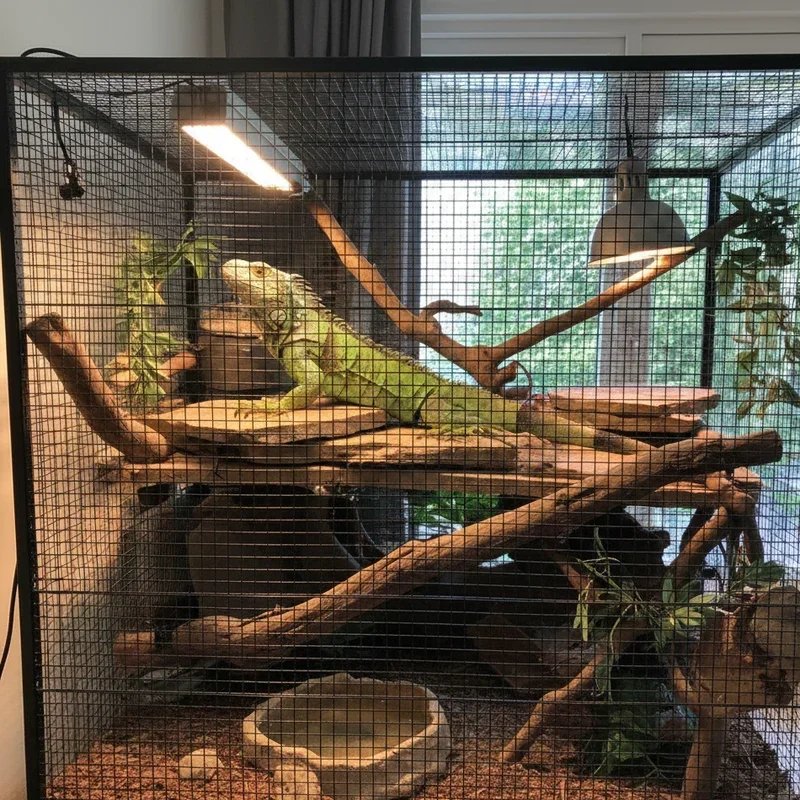
Enable proper thermoregulation through basking zone designs that create temperature gradients where iguanas self-regulate body temperature by moving between warm and cool areas! Basking spots should reach 95-100°F while ambient enclosure temperatures range from 80-85°F during day, dropping slightly at night. Consider multiple basking areas at different temperatures enabling fine-tuned thermoregulation while the gradient concept requires cool zones iguanas access when overheated. The temperature differential proves essential for digestion, immune function, and overall metabolic health while inadequate basking temperatures cause serious health consequences regardless of other care quality. Monitor temperatures using reliable thermometers positioned throughout enclosures rather than single-point measurements that miss gradient variations. These foundational requirements demonstrate that iguana care demands understanding their ectothermic physiology while proper heating enables the biological processes keeping iguanas healthy.
6. Humidity Control Systems
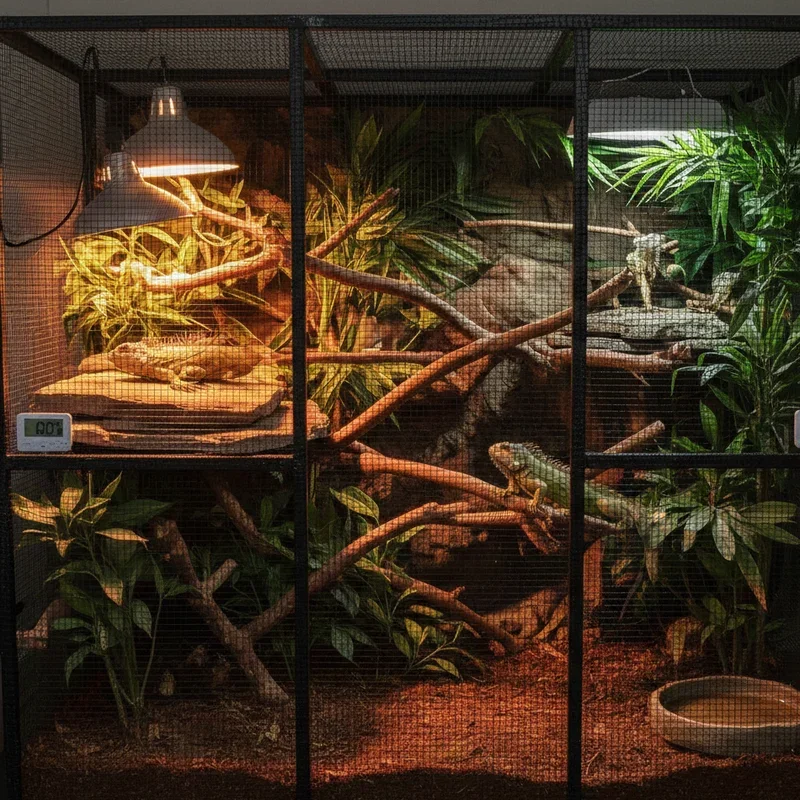
Maintain tropical moisture levels through humidity control systems that replicate the humid environments iguanas evolved within! These tropical lizards require humidity levels between 65-80% for proper shedding, respiratory health, and overall wellbeing while inadequate humidity causes retained sheds, respiratory infections, and chronic health problems. Consider automated misting systems providing regular humidity increases, large water features contributing ambient moisture, and substrate choices that maintain humidity without becoming waterlogged. The humidity challenge increases with enclosure size while proper ventilation must balance moisture retention against stagnant air that promotes bacterial growth. Monitor humidity using reliable hygrometers positioned throughout enclosures rather than single measurements that miss variations across different zones. These environmental requirements demonstrate that iguana enclosures function as controlled ecosystems rather than simple containers while proper humidity management prevents common health issues affecting improperly housed iguanas.
7. Branch and Shelf Climbing Networks
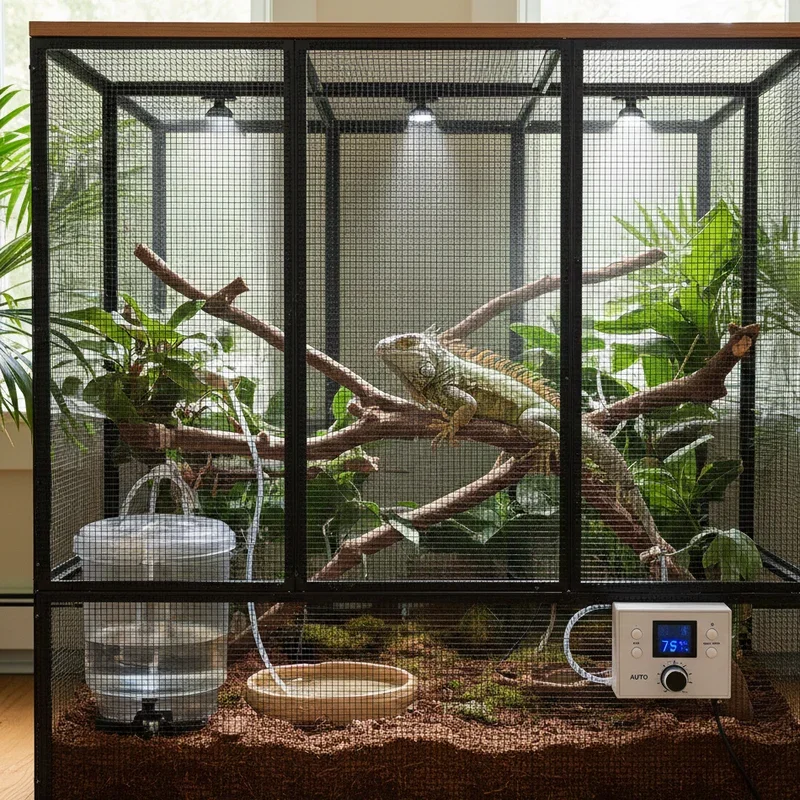
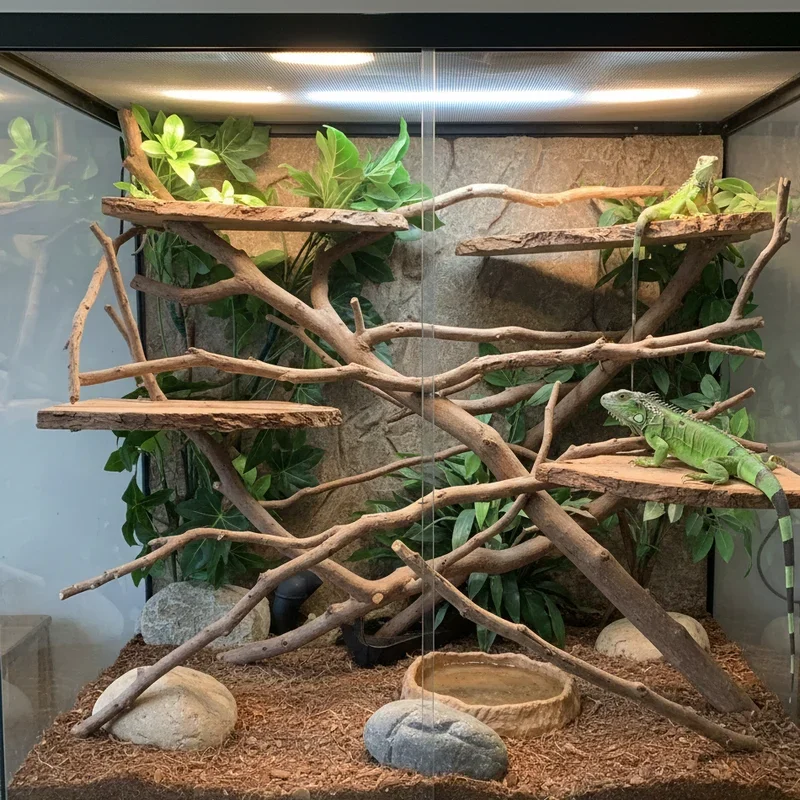
Create three-dimensional environments through branch and shelf networks that enable climbing, basking, and territorial behavior expression throughout enclosure volumes! Natural branches provide textured surfaces for proper claw wear while varied diameters exercise different grip strengths maintaining foot health. Consider hardwood branches including oak, maple, and fruit woods while avoiding toxic species and properly securing all climbing structures against collapse under substantial iguana weight. The network concept requires interconnected routes enabling navigation throughout entire enclosures while dead-end branches frustrate natural movement patterns. Position thickest branches supporting primary basking areas where iguanas spend extended time while varied heights enable accessing different temperature zones. These essential elements demonstrate that enriched environments significantly impact iguana welfare while the climbing complexity provides exercise and mental stimulation that bare enclosures cannot offer.
8. Waterproof Substrate Considerations
Address inevitable moisture through waterproof substrate considerations that protect enclosure structures from humidity damage while providing appropriate flooring for iguana habitation! The high humidity requirements combined with water features and inevitable waste create challenging moisture management that inappropriate materials cannot withstand. Consider waterproof liner materials beneath substrates while raised platforms enable cleaning without substrate disturbance. The substrate selection itself ranges from simple newspaper and tile through naturalistic soil mixes depending on aesthetic preferences and maintenance tolerances. Avoid loose substrates posing impaction risks if accidentally ingested while the moisture-resistant properties prevent mold growth that endangers both iguanas and enclosure materials. These practical considerations demonstrate that iguana enclosure construction requires understanding the demanding environmental conditions these habitats must maintain while material selection significantly impacts long-term durability and maintenance requirements.
9. Soaking Pool Integration
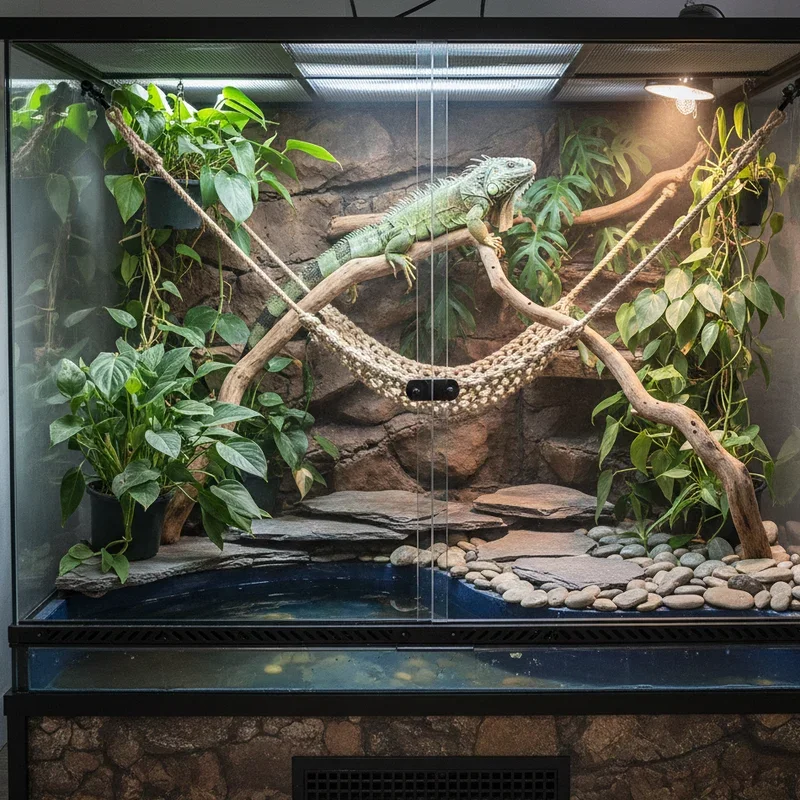
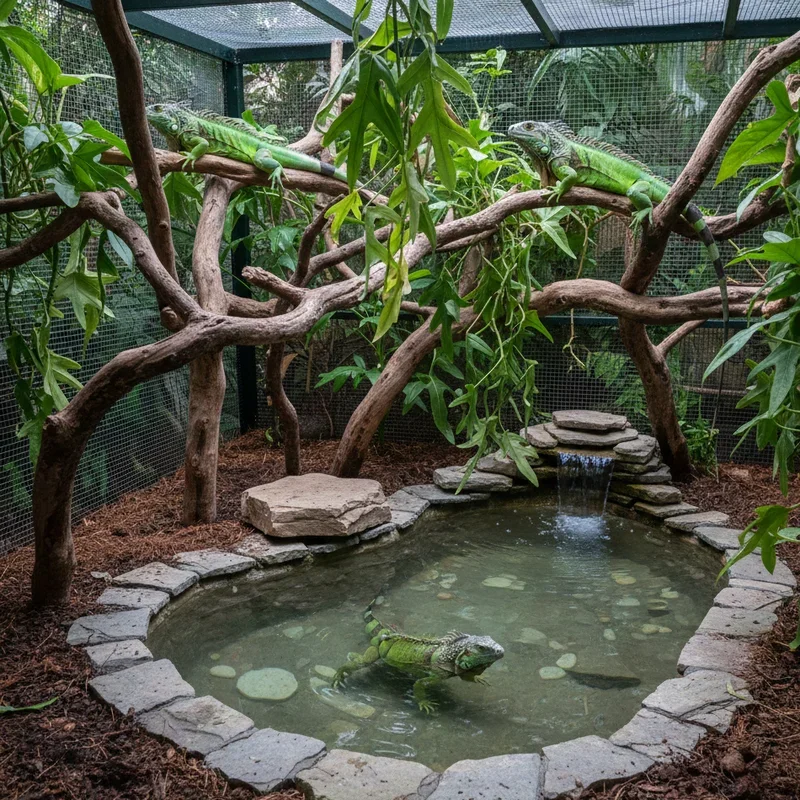
Support hydration and shedding through soaking pool integration that provides water areas where iguanas bathe, drink, and facilitate proper skin shedding! These water features should accommodate your iguana's full body submersion while the shallow depth enables easy entry and exit without drowning risks. Consider removable pools simplifying cleaning and water changes while positioning avoids contamination from basking area waste. The soaking behavior serves multiple functions including hydration, thermoregulation during overheating, and softening skin before shedding cycles while inadequate water access causes dehydration and retained sheds. Size pools appropriately for adult iguanas since growth dramatically increases space requirements while the water volume contributes beneficial humidity to enclosure environments. These essential features demonstrate that water plays central roles in iguana health while proper pool design addresses multiple care requirements simultaneously.
10. Feeding Station Setups
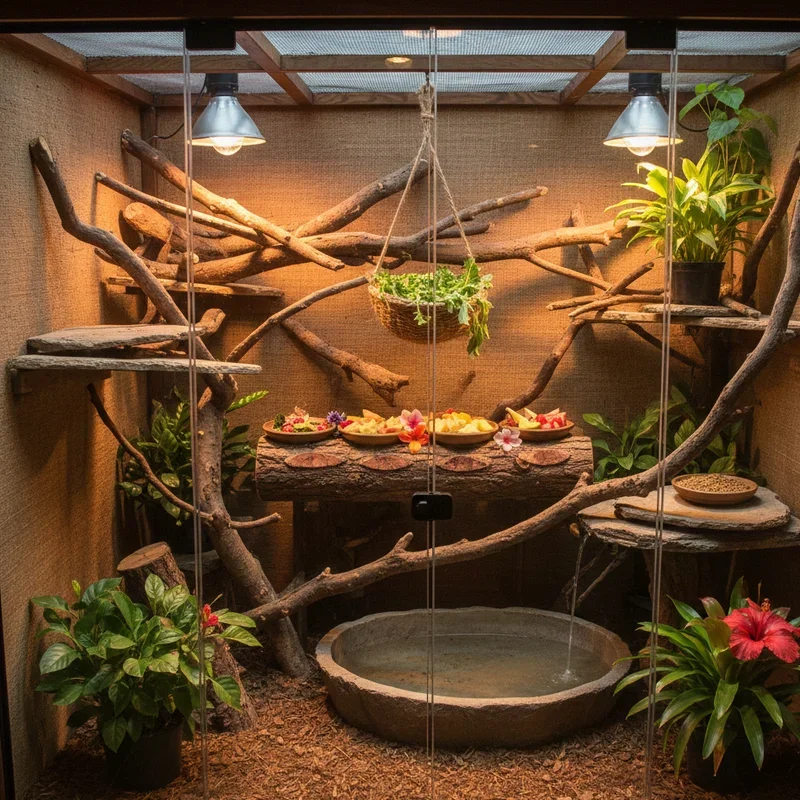
Establish organized nutrition through feeding station setups that present food attractively while simplifying the daily fresh produce preparation iguana diets require! Elevated feeding platforms prevent substrate contamination while the designated locations train iguanas to anticipate meals in consistent areas rather than random enclosure positions. Consider shallow dishes enabling easy food access while the elevated positioning suits arboreal feeding preferences natural to these tree-dwelling lizards. The station concept requires daily fresh vegetable offerings since iguanas need consistent access to appropriate nutrition while the organized presentation encourages consumption that scattered feeding may discourage. Position feeding stations in easily accessible locations simplifying daily maintenance routines while placement away from basking areas prevents rapid food deterioration from heat exposure. These practical considerations demonstrate that iguana nutrition requires thoughtful presentation alongside proper food selection while organized feeding supports consistent dietary intake.
11. Ventilation System Planning
Maintain air quality through ventilation system planning that provides fresh air circulation while preserving the humidity and temperature levels iguanas require! Stagnant air promotes bacterial and fungal growth creating respiratory infection risks while excessive ventilation removes essential humidity faster than systems can replace it. Consider screen top sections enabling air exchange, low-wattage fans promoting circulation without creating drafts, and balanced intake and exhaust preventing dead air zones. The ventilation challenge intensifies in large enclosures where air volumes increase while humidity maintenance becomes more difficult. Monitor air quality while adjusting ventilation rates balancing fresh air needs against environmental parameter preservation. These engineering considerations demonstrate that iguana enclosures function as controlled environments requiring thoughtful system design while proper ventilation prevents common health issues affecting poorly ventilated habitats.
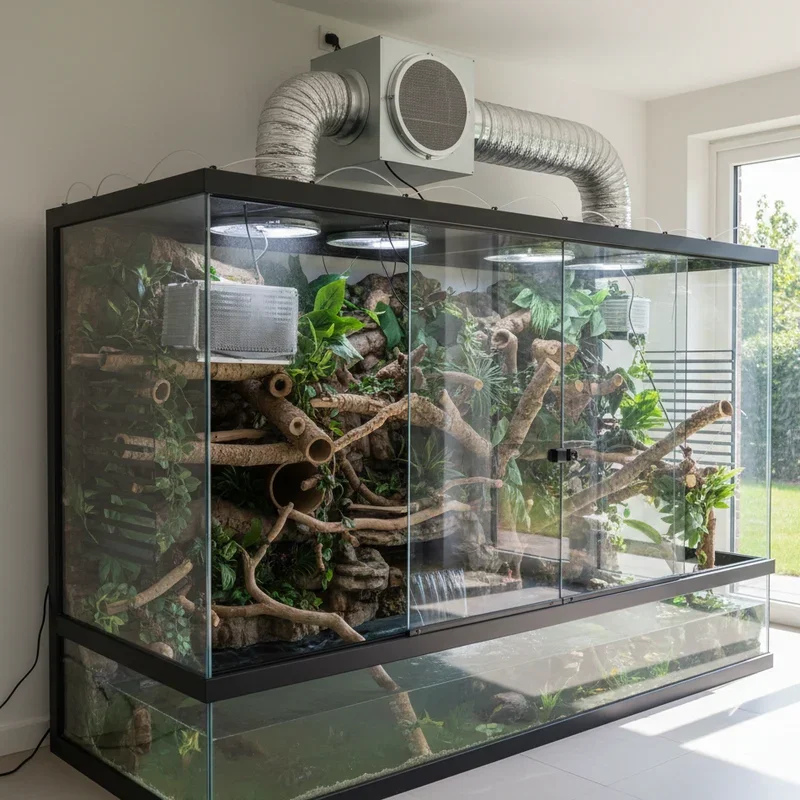
12. Multi-Level Platform Designs
Maximize usable space through multi-level platform designs that create functional surfaces throughout vertical enclosure volumes! Platforms at various heights provide resting areas, basking spots, and movement pathways while the multi-level concept creates three-dimensional living space from two-dimensional floor areas. Consider platform materials that clean easily while textured surfaces prevent slipping and provide claw exercise. The level arrangement should enable easy climbing access while basking platforms receive appropriate lighting and heating. Position platforms creating natural circulation routes that encourage movement and exercise while dead-end arrangements frustrate normal behavioral patterns. These structural elements demonstrate that thoughtful platform design significantly increases effective enclosure capacity while the varied levels enable behavioral diversity impossible in single-level arrangements.
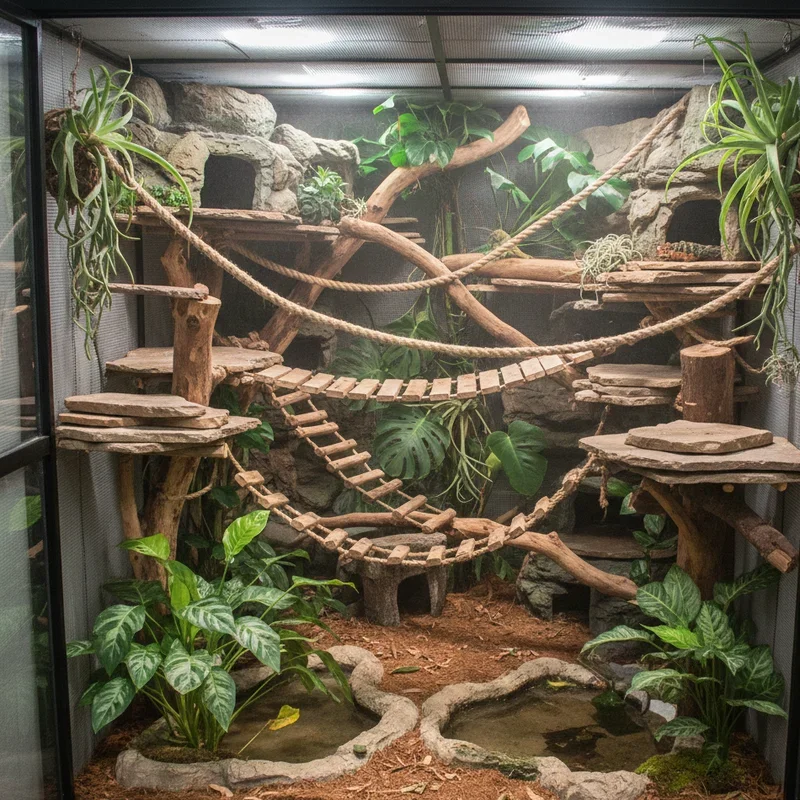
13. Safe Material Selection
Protect iguana health through safe material selection that ensures enclosure components pose no toxicity or injury risks! Many common construction materials release harmful fumes, contain toxic substances, or present physical hazards that appropriate material choices avoid. Consider non-toxic wood sealants, food-grade plastics, and hardware without sharp edges or small parts posing ingestion risks. The material question extends to plants, substrates, and decorations where toxic species endanger iguanas who may sample unfamiliar items. Research all materials before installation while ensuring sealants and finishes fully cure before iguana introduction. These safety considerations demonstrate that enclosure construction requires understanding potential hazards while proper material selection prevents poisoning and injury that inappropriate choices risk.
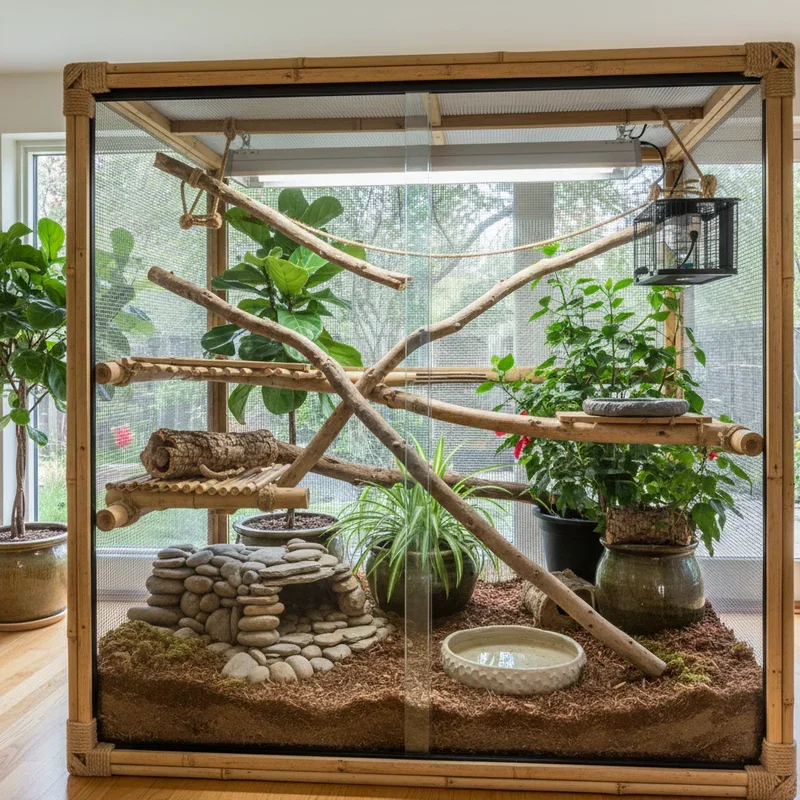
14. Outdoor Enclosure Options
Provide natural benefits through outdoor enclosure options that enable supervised access to unfiltered sunlight and fresh air when weather permits! Natural sunlight provides UVB spectrum quality that artificial sources cannot perfectly replicate while outdoor exposure offers enrichment benefits indoor environments lack. Consider secure outdoor enclosures preventing escape and predator access while climate appropriateness determines when outdoor access proves beneficial versus harmful. The outdoor option suits climates with extended warm seasons while supplementary heating may extend usable periods in moderate climates. Monitor temperatures carefully since iguanas cannot escape inadequate conditions within enclosed spaces while shade availability prevents dangerous overheating. These expanded options demonstrate that excellent iguana care may include outdoor components while proper security and supervision ensure safety during enriching outdoor experiences.
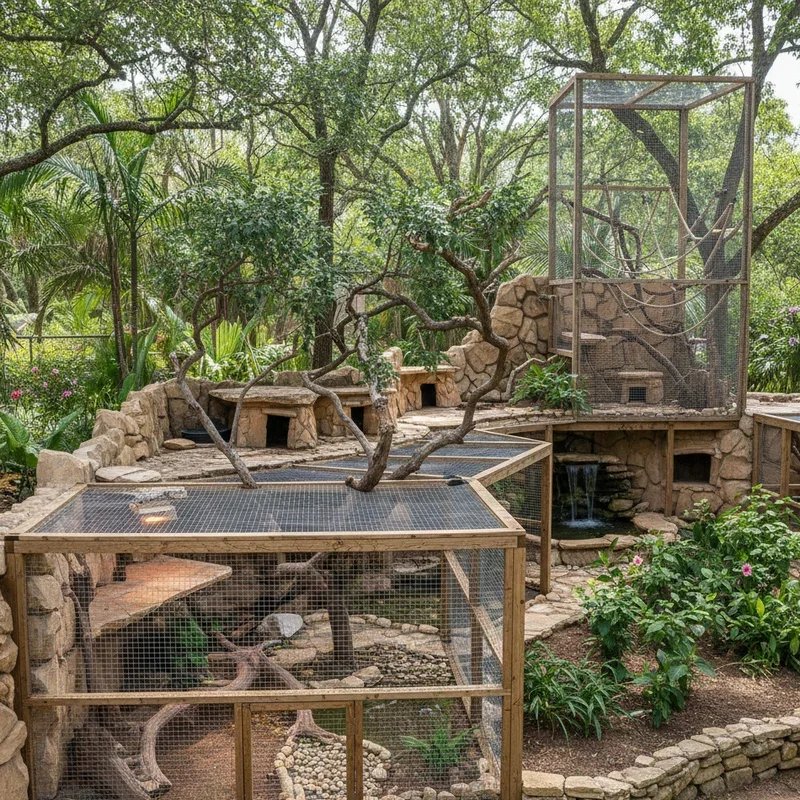
15. Bioactive Substrate Systems
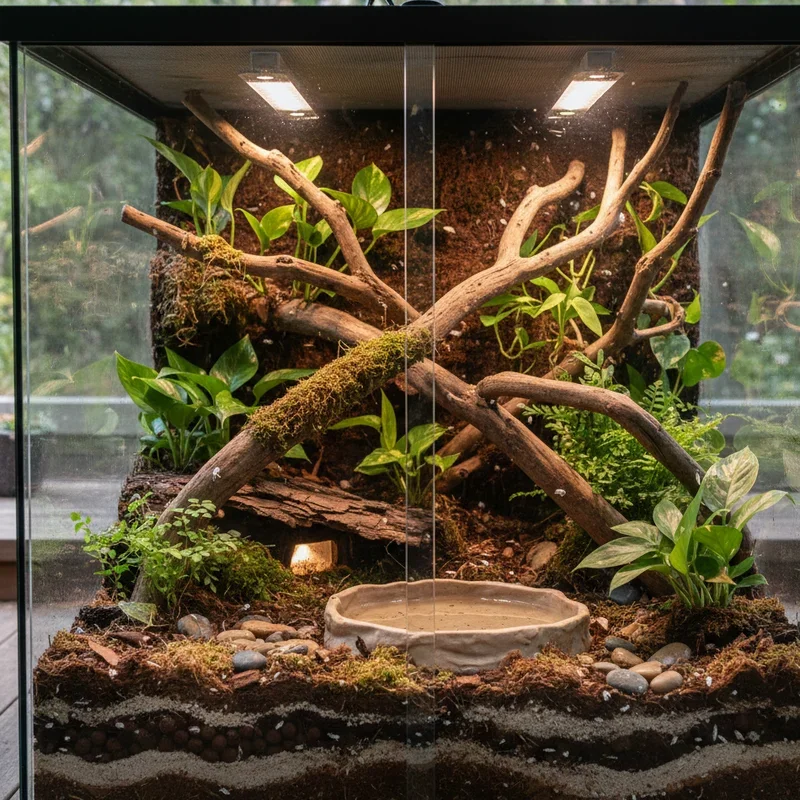
Create self-maintaining ecosystems through bioactive substrate systems that establish living soil communities processing waste naturally! These advanced setups incorporate beneficial bacteria, springtails, isopods, and appropriate plants creating miniature ecosystems that reduce maintenance requirements while providing naturalistic environments. Consider the commitment bioactive systems require for establishment while the ongoing benefits include reduced cleaning frequency and enhanced environmental naturalism. The living soil processes waste, maintains humidity, and creates enriching environments where iguanas interact with natural substrate rather than sterile alternatives. These sophisticated approaches demonstrate that advanced keepers create genuine ecosystems rather than simple enclosures while the biological processes support iguana health through multiple mechanisms beyond basic containment.
Conclusion
Iguana enclosure design transforms basic reptile keeping into genuine husbandry where thoughtfully created habitats support the complex needs these impressive lizards require for decades of healthy companionship. From massive custom builds to sophisticated bioactive systems, these ideas address the complete range of requirements that excellent iguana care demands. The investment in proper enclosure design returns through healthier iguanas, better temperaments, and the satisfaction of providing genuinely excellent care for these remarkable prehistoric-looking creatures. Whether building first enclosures or upgrading existing setups, proper design rewards attention through transformed iguana welfare. Now assess your current housing and start planning the habitat your scaled companion truly deserves!
Read next: 15 Hamster Cage Ideas for a Cozy Little Home
Frequently Asked Questions
Q1: How big should an adult iguana enclosure be?
A: Adult green iguanas need minimum enclosures of 6 feet tall, 6 feet long, and 3 feet deep.
Q2: What temperature should an iguana basking spot reach?
A: Basking spots should reach 95-100°F while ambient temperatures maintain 80-85°F during daytime hours.
Q3: How do I maintain proper humidity for iguanas?
A: Use automated misting systems, large water features, and humidity-retaining substrates; maintain 65-80% humidity levels consistently.
Q4: Can I keep an iguana in a glass aquarium?
A: Glass aquariums are inadequate for adult iguanas; custom enclosures meeting size requirements are essential for health.
Q5: What branches are safe for iguana enclosures?
A: Oak, maple, and fruit tree branches are safe; avoid cedar, pine, and chemically treated wood entirely.
Stay up to date with our latest ideas!