15 Salamander Tank Ideas for Cool Setups
Discover 15 creative salamander tank ideas to build the perfect habitat. From naturalistic setups to minimalist designs, create a thriving home.
Have you ever watched a salamander glide through water with such grace that it feels like witnessing a tiny aquatic ballet? These fascinating amphibians deserve homes that match their mysterious charm and unique needs. Creating the perfect salamander tank isn't just about tossing some rocks and water together. It's about crafting an environment where these incredible creatures can thrive, hunt, and showcase their natural behaviors. Whether you're a seasoned herp keeper or just starting your amphibian journey, the right tank setup makes all the difference. From dramatic waterfalls to serene moss gardens, the possibilities are endless when you combine creativity with proper husbandry. Ready to transform that empty glass box into a salamander paradise? Let's explore fifteen innovative tank ideas that'll inspire your setup.
1. The Classic Naturalistic Paludarium
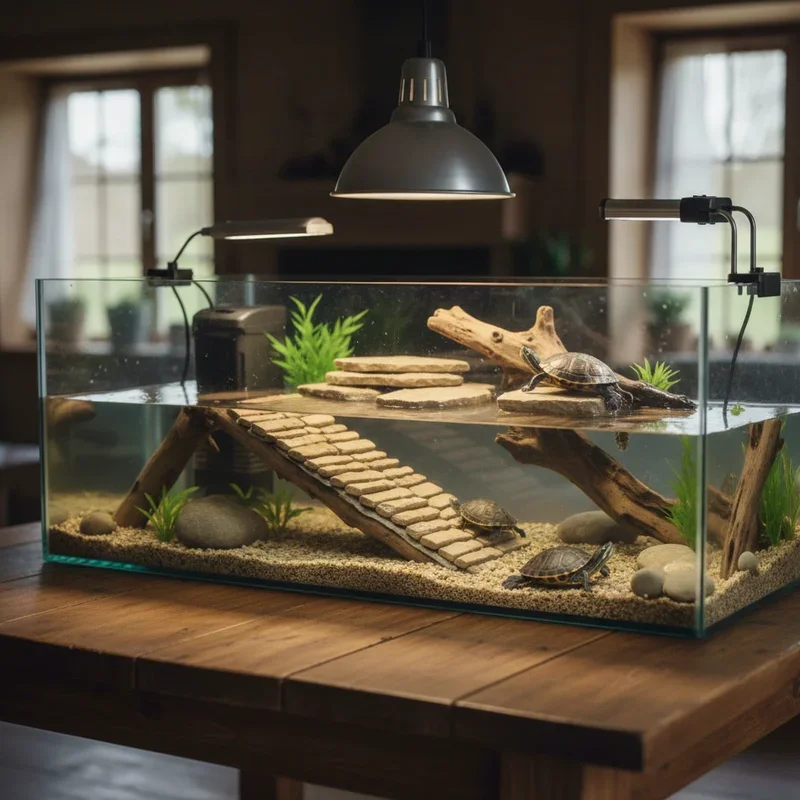
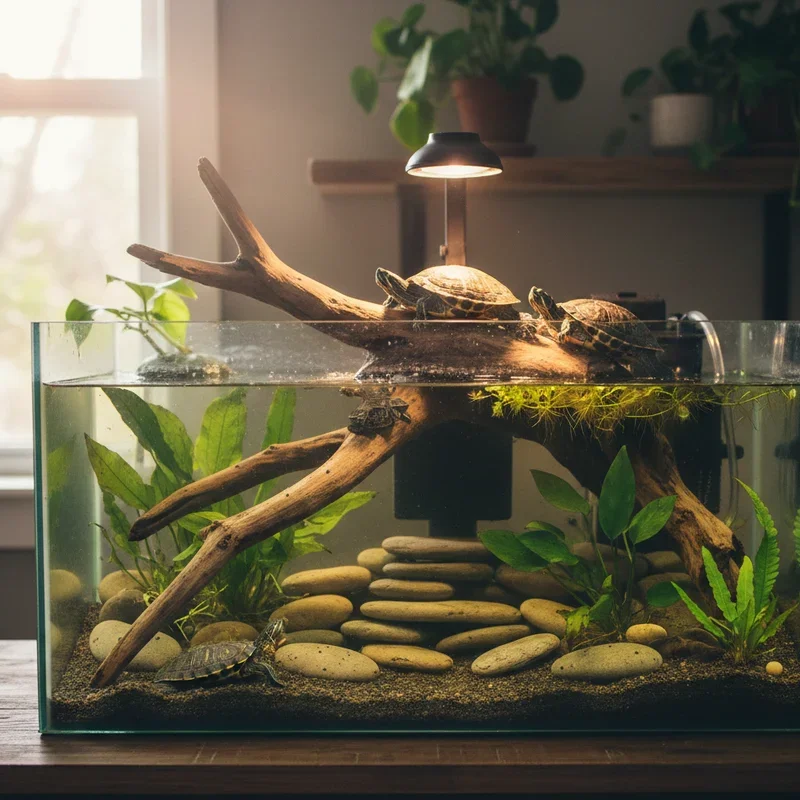
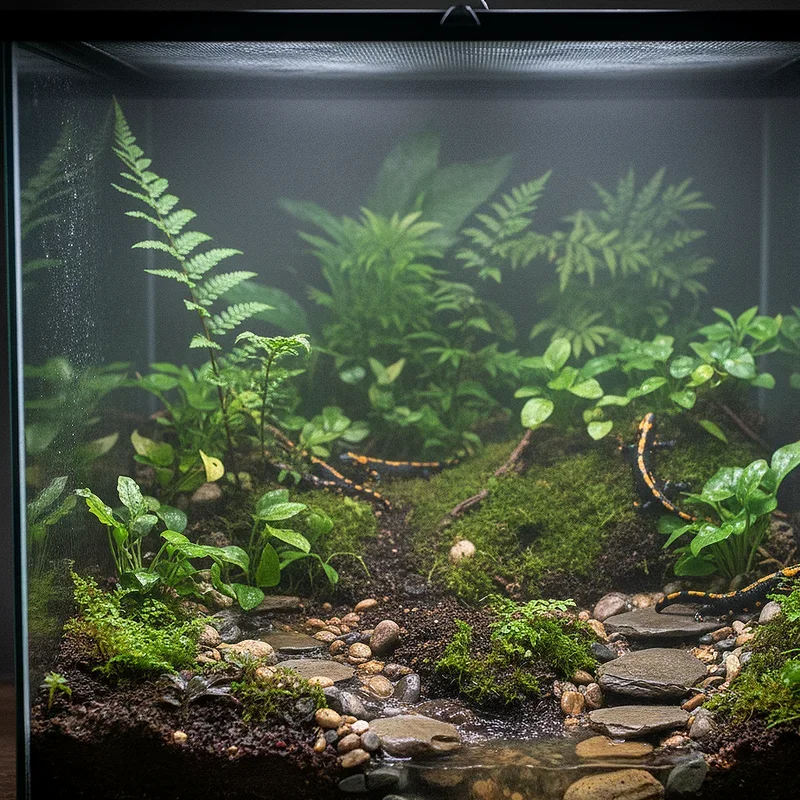
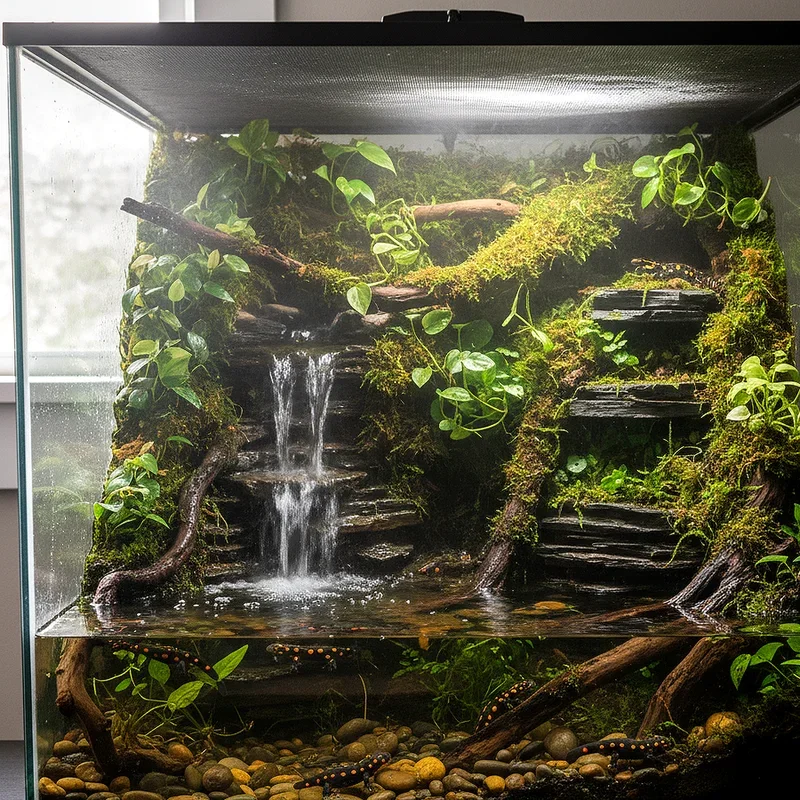
Imagine recreating a slice of forest floor right in your living room where land seamlessly transitions into water. The naturalistic paludarium combines terrestrial and aquatic zones, giving your salamander options to explore both worlds as nature intended. Dedicate roughly sixty percent to land area with plenty of live plants like pothos and ferns that thrive in humidity. The water section should be deep enough for swimming but accessible with gradual slopes using smooth river rocks. This setup mimics stream edges where many salamander species naturally hunt and rest. Install a gentle filter to keep water pristine without creating strong currents that stress your amphibian. The beauty here lies in watching your salamander choose its preferred microhabitat throughout the day. This versatile approach works wonderfully for semi aquatic species.
2. Minimalist Aquatic Setup
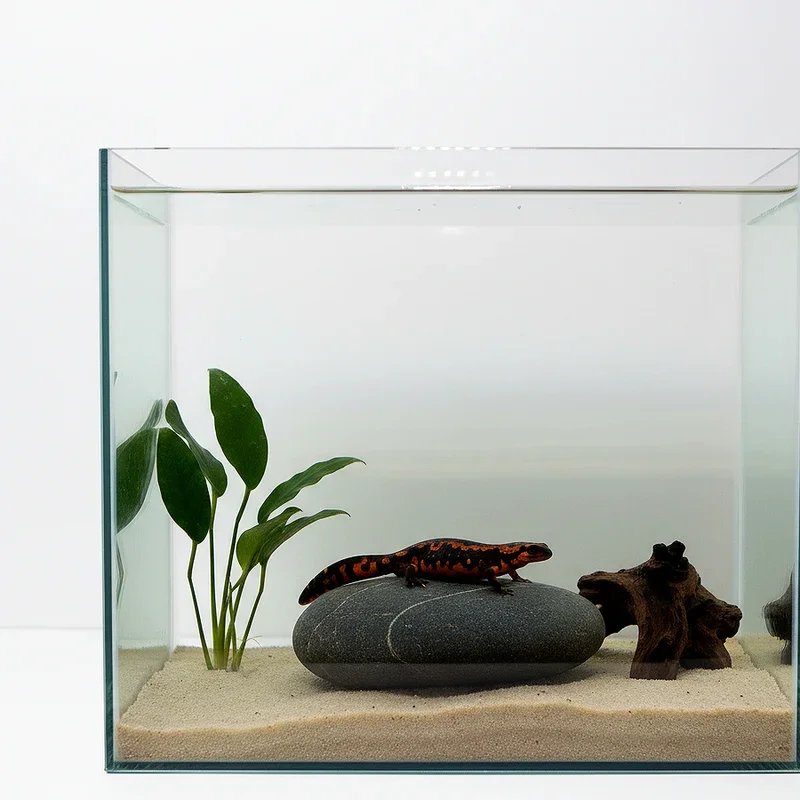
Sometimes less truly is more, especially when housing fully aquatic salamander species like axolotls or mudpuppies that rarely venture onto land. This streamlined approach focuses on water quality and swimming space without unnecessary decorations that complicate maintenance. Create a clean environment using fine sand substrate that won't damage delicate gills, a few smooth hiding spots like PVC pipes or ceramic caves, and perhaps one or two hardy aquatic plants like java fern. The minimalist design makes water changes incredibly efficient while giving you crystal clear views of your salamander's behavior and health status. Strong filtration becomes your best friend here, keeping ammonia and nitrites at zero without creating excessive water movement. Your salamander gets ample room to cruise around while you enjoy easy maintenance.
3. Woodland Terrarium Design
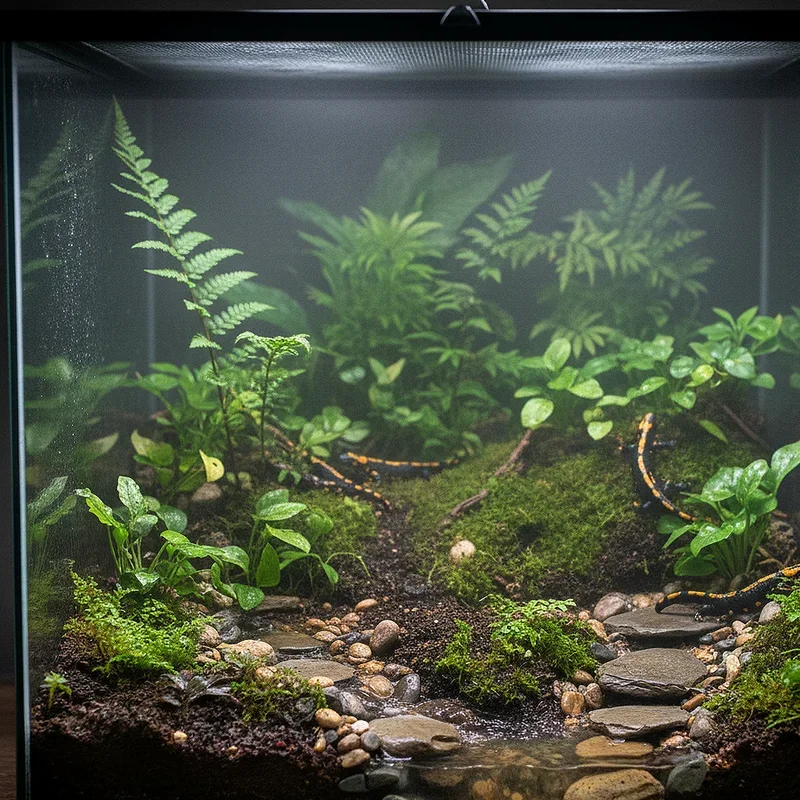
Step into an enchanted forest vibe by creating a predominantly terrestrial setup perfect for land dwelling salamanders like tiger salamanders or spotted salamanders. Layer your substrate starting with drainage material, then separation mesh, followed by a moisture retaining mix of coconut coir and sphagnum moss that stays damp but never waterlogged. Incorporate plenty of leaf litter, bark pieces, and rotting wood that provide hiding spots while encouraging beneficial microfauna to establish. A shallow water dish sunk into the substrate gives your salamander access to hydration and soaking opportunities without dominating the landscape. Live plants such as small ferns and creeping fig add oxygen and maintain humidity naturally while creating that authentic woodland atmosphere. This setup requires careful attention to moisture gradients since salamanders need damp environments.
4. The Waterfall Feature Tank
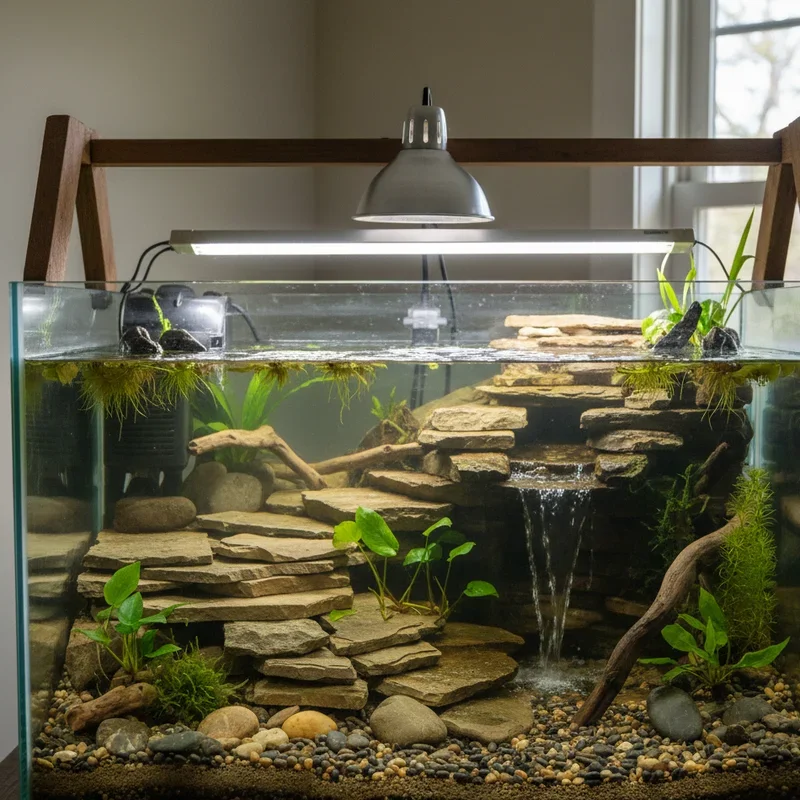
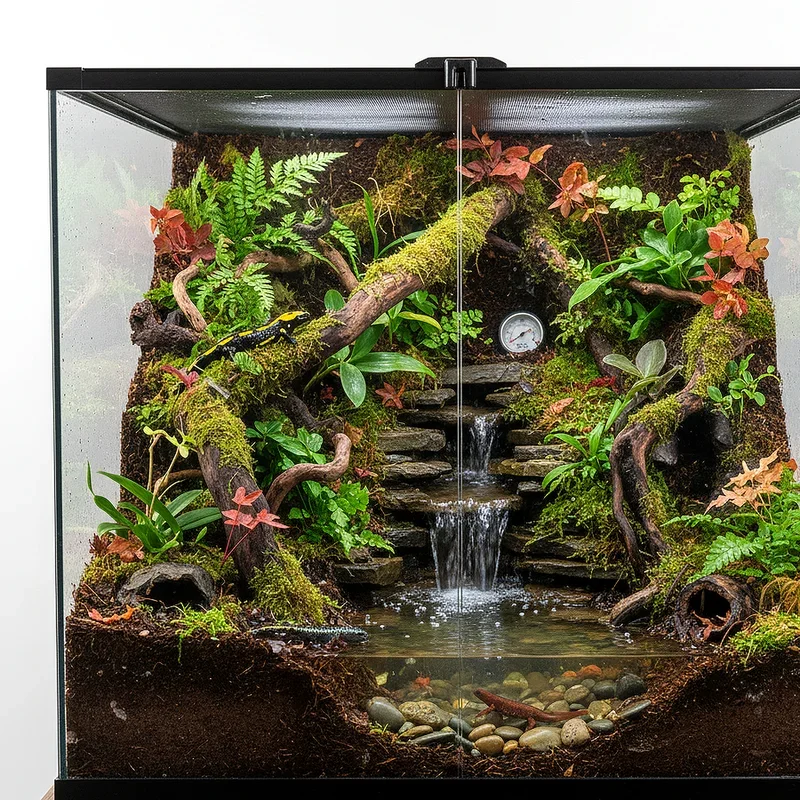
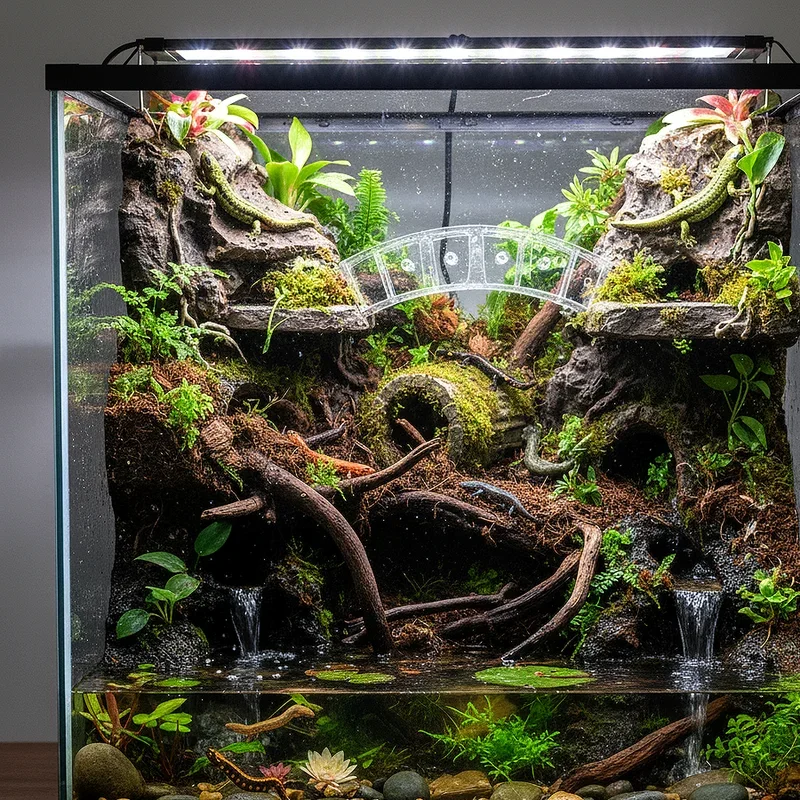
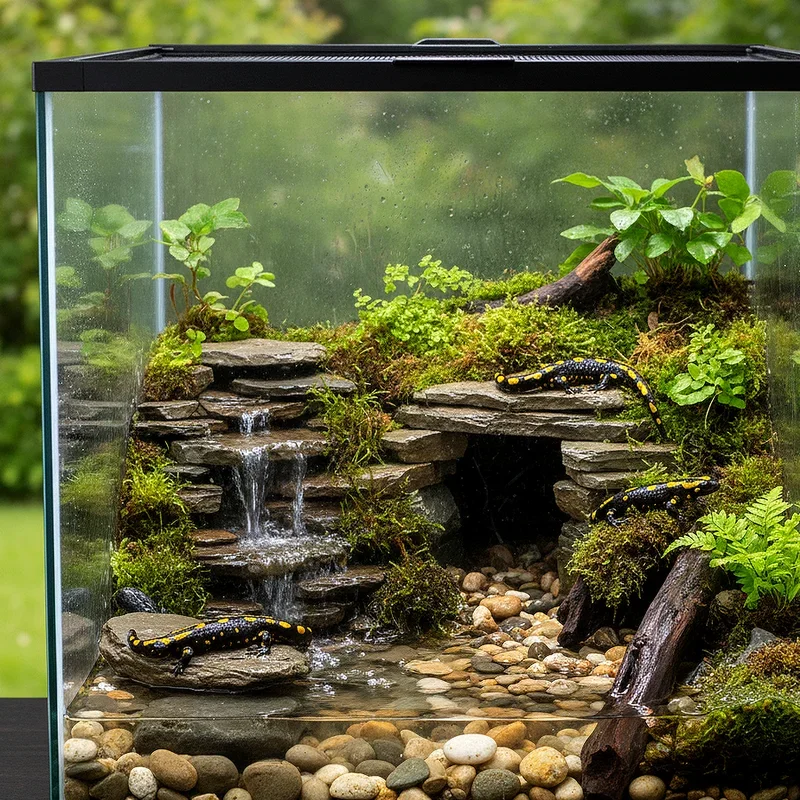
Nothing captivates quite like the sight and sound of moving water cascading over rocks while your salamander explores beneath the flow. Installing a waterfall feature creates visual drama while serving practical purposes like water circulation and oxygenation. You'll need a submersible pump rated appropriately for your tank size, flexible tubing hidden behind background materials, and carefully stacked rocks creating the waterfall structure without toppling risks. The falling water should be gentle rather than forceful, since salamanders prefer calm conditions over raging torrents. Position the feature so it creates one active zone while leaving quieter areas where your salamander can retreat when seeking calm. The constant water movement prevents stagnation and helps maintain consistent humidity throughout the enclosure. This setup works beautifully for species that appreciate flowing water habitats.
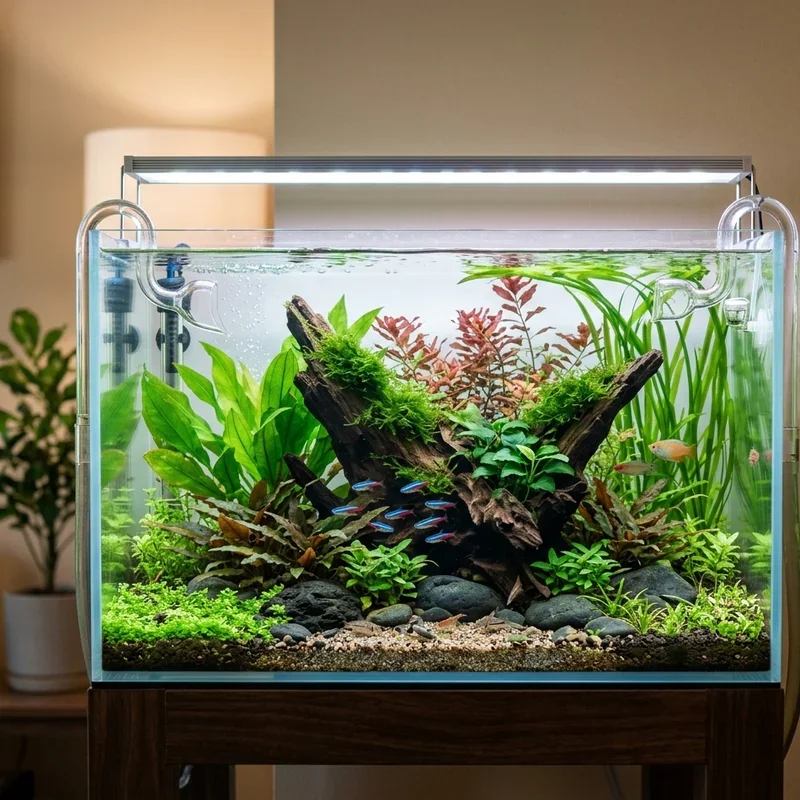
5. Bioactive Substrate System
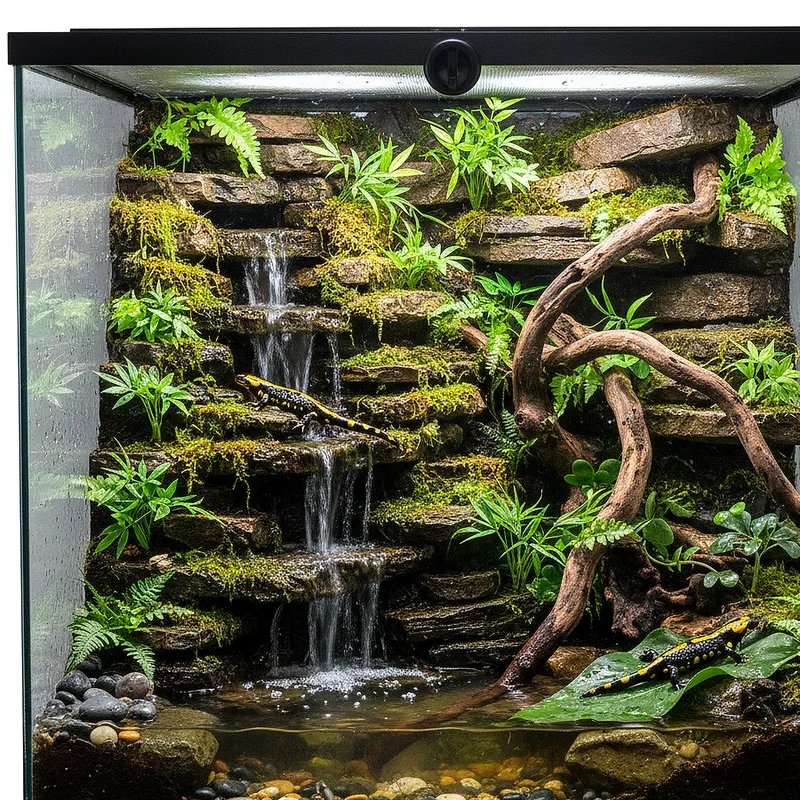
Why clean your tank constantly when you can let nature do the heavy lifting through a bioactive substrate system? This approach introduces beneficial organisms like springtails and isopods that consume waste products and decompose organic matter, creating a self sustaining ecosystem. Start with a deep substrate layer of at least four inches using an organic soil mix topped with leaf litter and moss. The cleanup crew establishes colonies that process salamander waste and uneaten food before harmful bacteria can proliferate. You'll still need to spot clean occasionally, but major substrate changes become unnecessary for months or even years. Live plants integrate perfectly into bioactive systems, using waste products as fertilizer while adding oxygen and maintaining humidity. This setup requires patience during the establishment phase as microfauna populations grow.
6. Rocky Mountain Stream Habitat
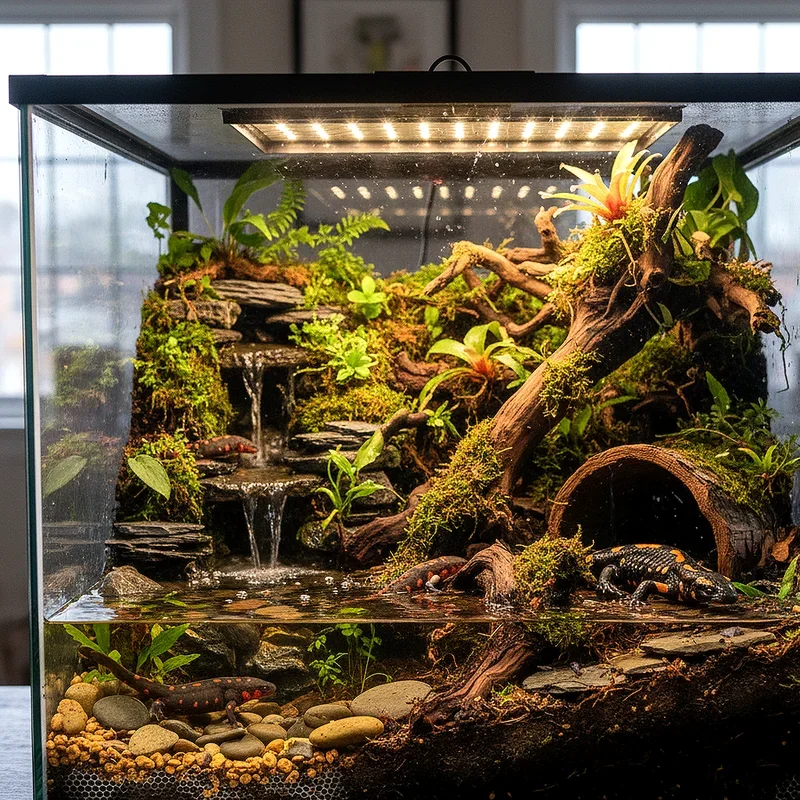
Recreate the cool rushing streams of mountain habitats where certain salamander species thrive in oxygen rich water flowing over smooth stones. This setup emphasizes water quality and temperature control using an aquarium chiller if your room temperature runs warm. Arrange smooth river rocks of varying sizes to create current breaks and hiding spots while maintaining open swimming lanes. A powerhead or canister filter output creates gentle current that mimics natural stream flow without overwhelming your salamander with excessive force. The predominantly aquatic environment needs minimal land area, perhaps just a basking rock breaking the water surface. Live aquatic plants like anubias attached to rocks add natural filtration while softening the hardscape aesthetic. This specialized setup works perfectly for species adapted to cool flowing water like hellbenders.
7. Moss Garden Paradise
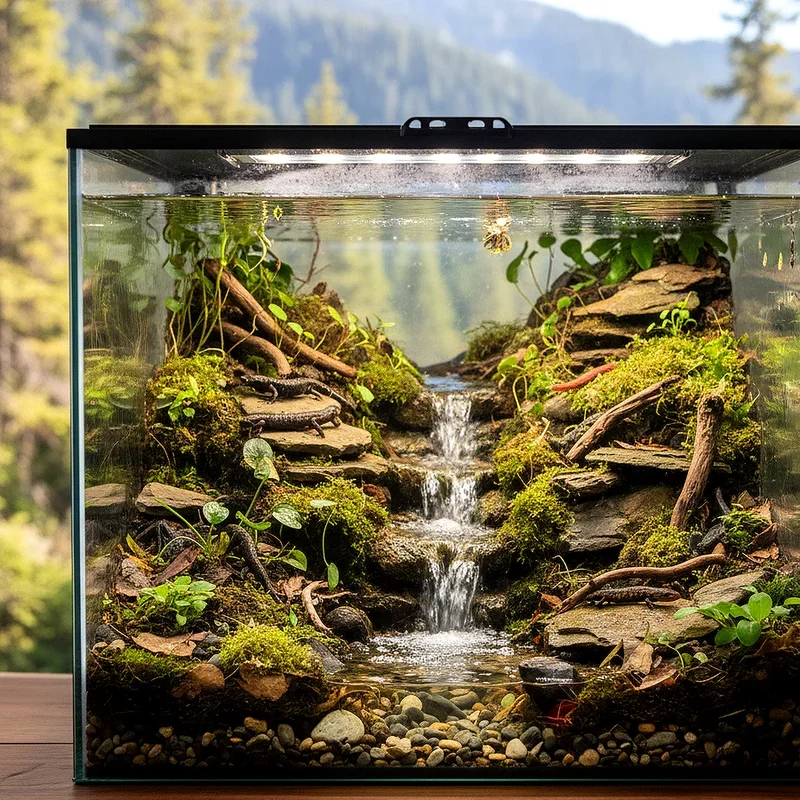
Transform your salamander tank into a lush green sanctuary by making various moss species the star of your design. Mosses thrive in the same humid conditions salamanders require, creating a symbiotic relationship that benefits both plants and animal. Cultivate different moss varieties including sheet moss for ground cover, cushion moss for texture, and mood moss for visual interest across surfaces. The dense moss coverage retains moisture beautifully while providing soft substrate your salamander can burrow beneath or rest upon comfortably. Incorporate smooth stones and wood pieces as structural elements that moss will eventually colonize, creating an increasingly naturalistic appearance over time. Misting becomes part of your routine to keep moss vibrant while maintaining the humidity levels salamanders need for healthy skin. This setup delivers incredible aesthetic appeal with relatively simple maintenance.
8. The Japanese Inspired Setup
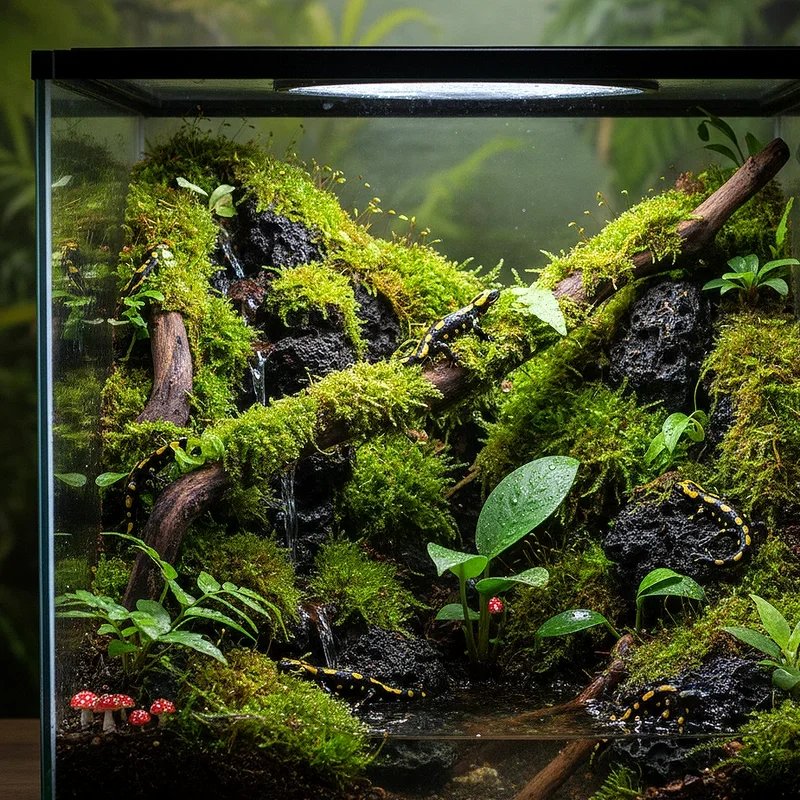
Bring zen aesthetics to salamander keeping by incorporating Japanese garden principles into your tank design with clean lines and intentional empty space. This approach emphasizes simplicity and natural beauty using carefully selected elements like weathered driftwood, smooth river stones arranged artfully, and perhaps a single elegant plant like a small bamboo cutting. The minimalist philosophy creates a calming environment for both salamander and observer while making maintenance straightforward. You might include a shallow water feature that flows over stone in a controlled manner, adding movement without chaos. The Japanese concept of wabi sabi celebrating imperfection and impermanence fits perfectly with living enclosures that evolve over time. Negative space becomes as important as filled areas, giving your salamander room to be the focal point rather than competing with excessive decoration.
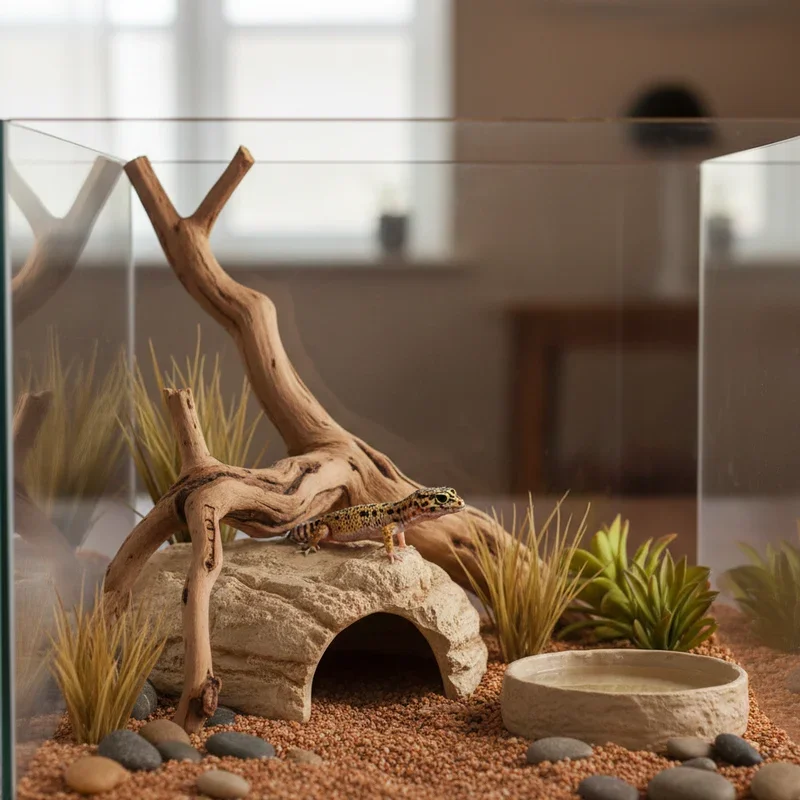
9. Cave and Hideaway Haven
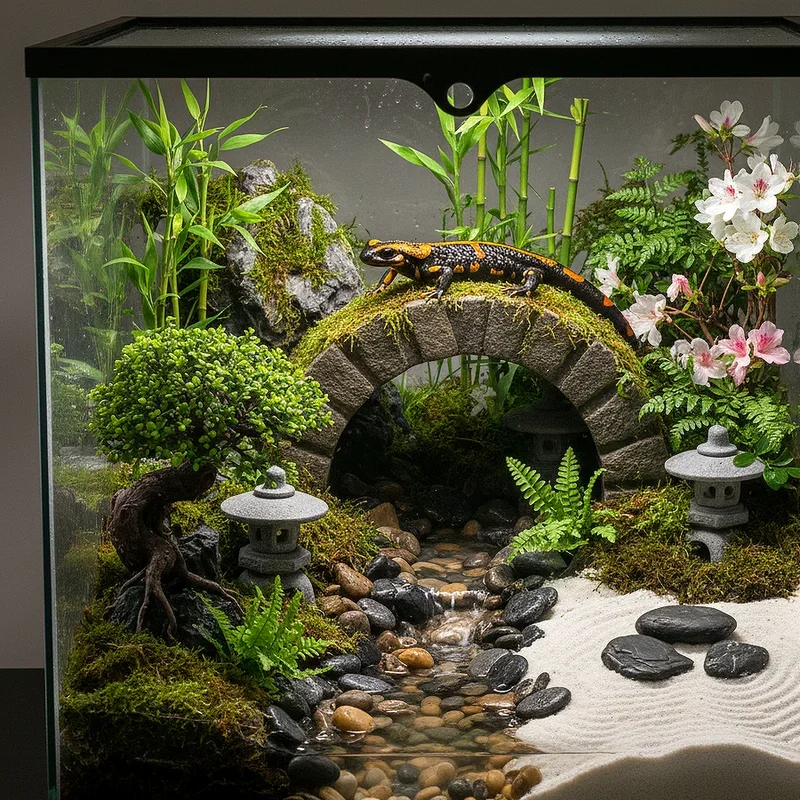
Some salamander species are naturally secretive and spend daylight hours hidden in rocky crevices or underground burrows emerging only at night to hunt. Honor these nocturnal preferences by creating a cave focused setup offering multiple secure retreats throughout the enclosure. Stack flat rocks carefully to form stable cave structures or use commercial reptile caves positioned strategically around the habitat. The goal is providing so many hiding options that your salamander feels perpetually secure rather than exposed and stressed. Include caves at various elevations and in both wet and dry zones depending on your species' needs for environmental variety. Cork bark tubes, overturned planters, and buried PVC pipes all serve as excellent hideaways that salamanders readily adopt. While this setup means you'll see your pet less frequently during casual observation, it promotes natural behavior patterns.
10. Seasonal Temperature Zones
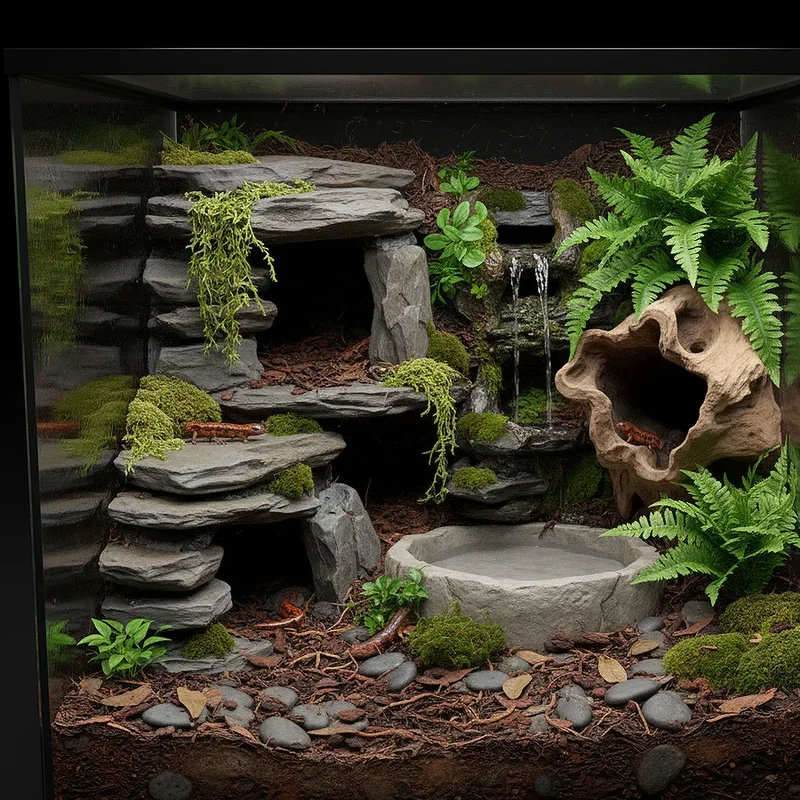
Create distinct temperature gradients within your tank allowing your salamander to thermoregulate by moving between warmer and cooler areas as needed. This approach mimics natural environments where animals choose microhabitats based on metabolic needs throughout the day. Position one end of the tank near a cooling source while the opposite end remains closer to room temperature, creating a range your salamander can navigate. Deeper water areas naturally stay cooler than shallow sections or land areas, adding vertical temperature variation to horizontal gradients. Using temperature guns to map your tank helps ensure gradients are appropriate rather than extreme, avoiding dangerous hot spots or cold zones. This setup becomes especially important for species with specific temperature requirements or those experiencing seasonal breeding triggers tied to temperature fluctuations. Your salamander demonstrates natural behaviors like morning basking.
11. Planted Aquatic Environment
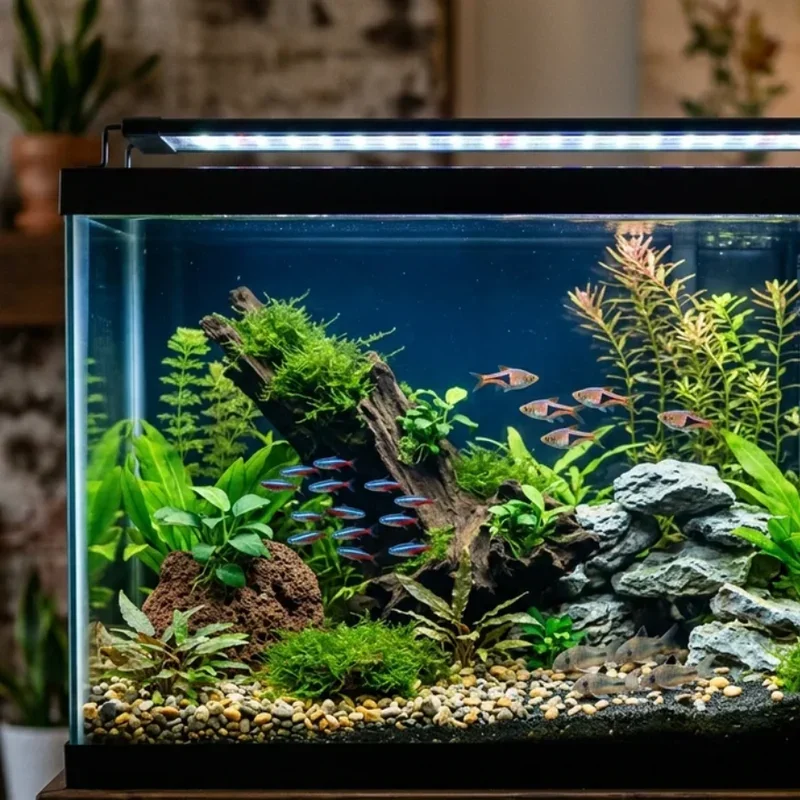
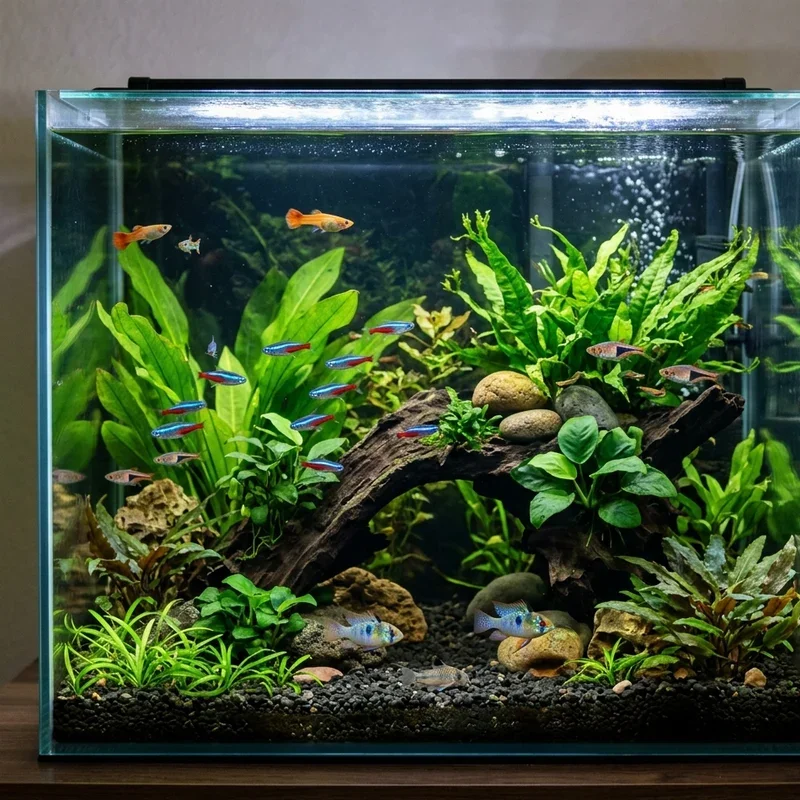
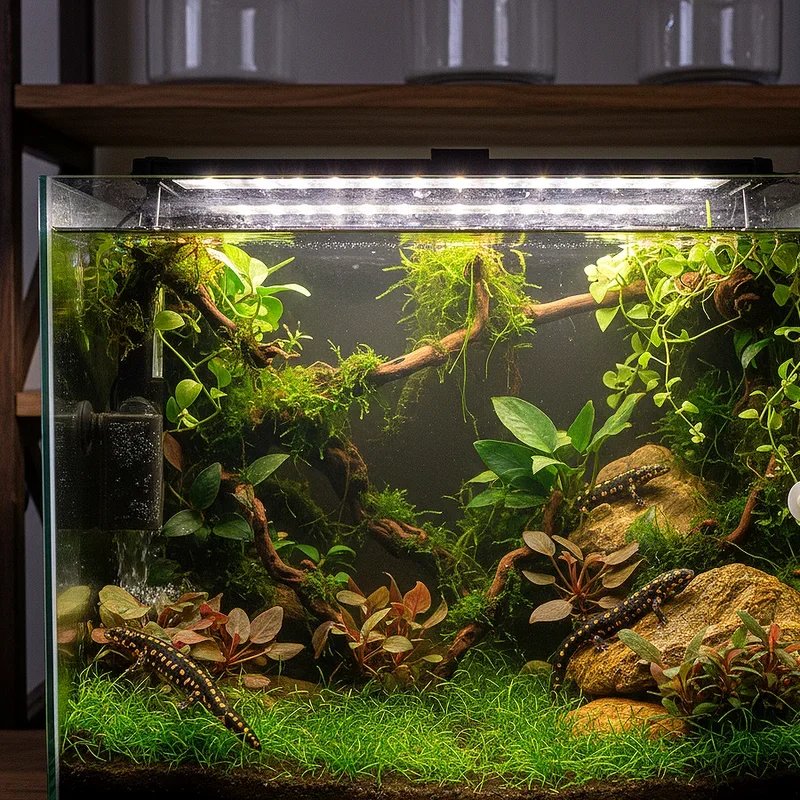
Transform your salamander's water zone into a thriving aquatic garden using live plants that improve water quality while creating naturalistic beauty. Hardy species like java moss, anubias, amazon sword, and java fern tolerate the lower light conditions salamanders prefer while absorbing nitrates and providing oxygen. Root systems create additional hiding spots and exploration opportunities as your salamander weaves through planted areas during nocturnal hunting sessions. The living plants establish beneficial bacteria on their surfaces that contribute to biological filtration beyond mechanical filtration alone. You'll need appropriate substrate for rooted plants like eco complete or fluorite mixed with sand in planted zones. Low intensity LED lighting promotes plant growth without disturbing light sensitive salamanders or encouraging excessive algae. This approach requires slightly more knowledge about plant care including occasional fertilization and trimming.
12. Multi Level Exploration Tank
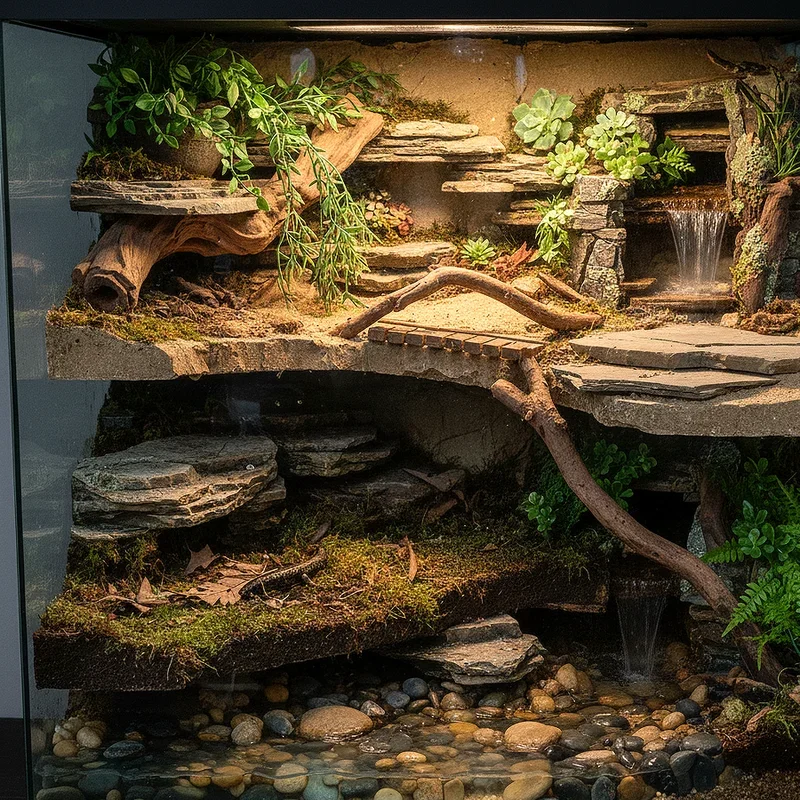
Why limit your salamander to a single plane when you can create vertical interest using multiple levels connected by ramps and ledges? This three dimensional approach maximizes usable space in your enclosure while encouraging natural climbing and exploration behaviors some species exhibit. Build platforms at different heights using smooth materials that provide secure footing and won't abrade sensitive salamander skin. Connect levels with gentle slopes rather than steep climbs since salamanders aren't agile climbers but appreciate modest elevation changes. Each level might offer different features like a shallow pool on one, a moss bed on another, and perhaps hiding caves on a third layer. The multi level design creates visual interest for observers while giving your salamander choices about how to use its environment throughout daily activity cycles.
13. Fog and Misting System Setup
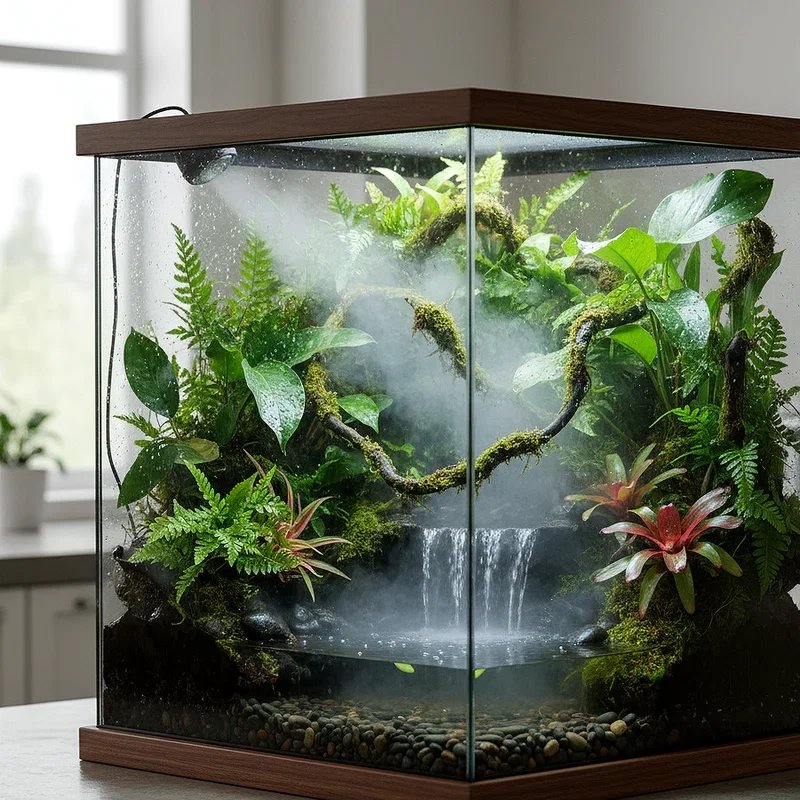
Recreate the misty mountain habitats certain salamander species call home by installing automated misting or fogging systems that maintain perfect humidity levels. Ultrasonic foggers produce cool mist that drifts through your enclosure creating atmospheric conditions while keeping humidity in the ideal seventy to eighty percent range. Programmable misting systems spray fine water droplets on schedules matching your salamander's natural environment and moisture needs. These automated systems prevent the humidity swings that result from manual misting alone which can stress amphibians sensitive to environmental fluctuations. The consistent moisture benefits both your salamander's skin health and any live plants in the setup that thrive under humid conditions. You'll want to include adequate ventilation preventing stagnant air even within this humid environment since salamanders need fresh air circulation.
14. The Brook and Pebble Design
Channel the gentle streams and pebble bottomed brooks where many salamander species naturally occur using smooth rounded stones as your primary substrate material. Select pebbles large enough that your salamander cannot accidentally ingest them during feeding but small enough to create a naturalistic streambed appearance. Arrange stones to create shallow areas, deeper pools, and gentle slopes that add environmental complexity and visual appeal. Water flowing gently across pebbles creates pleasing sounds while oxygenating the water and preventing stagnant conditions from developing. The smooth stones are easy to clean by simply stirring and vacuuming during water changes, making maintenance relatively straightforward. This design works beautifully for species that naturally inhabit rocky streams and brooks where they hunt among stones for aquatic invertebrates. Include some larger flat stones breaking the water surface.
15. Low Maintenance Beginner Setup
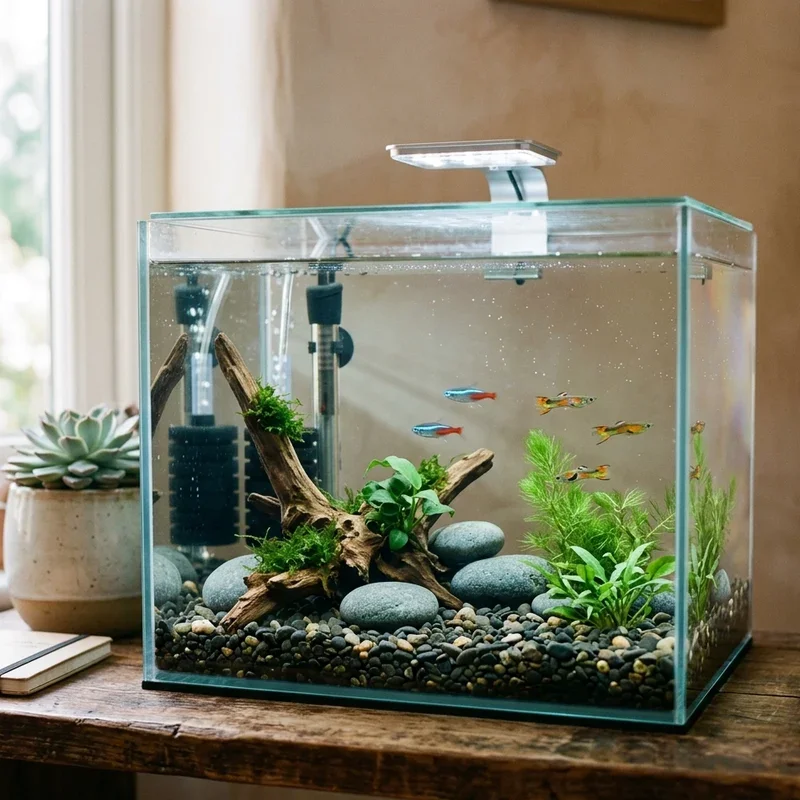
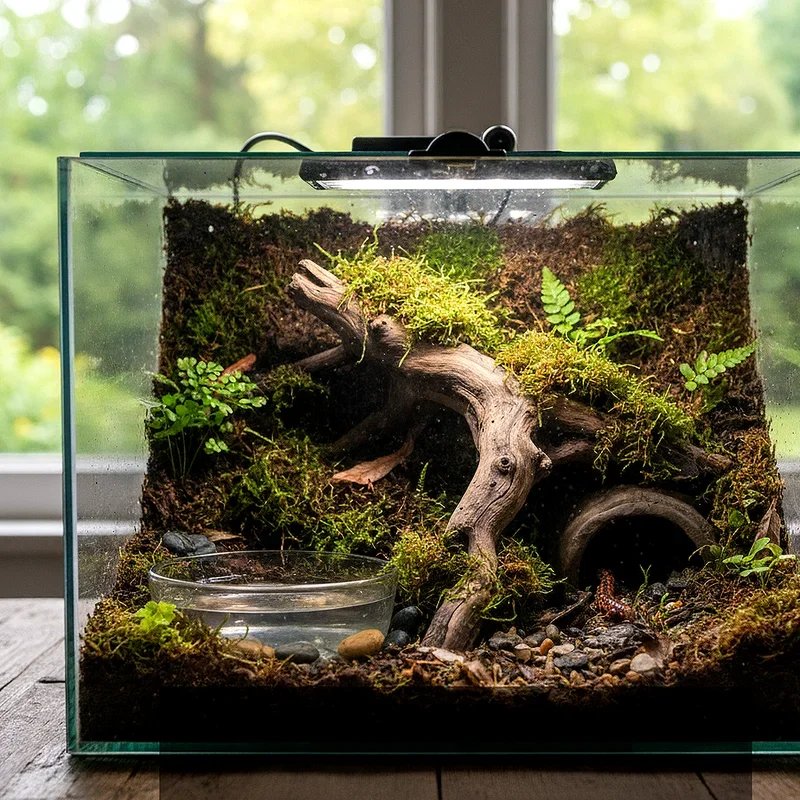
Starting your salamander keeping journey doesn't require elaborate setups with dozens of components and complicated maintenance schedules. This straightforward approach focuses on meeting basic needs reliably using simple equipment and easy care practices perfect for newcomers. Use a basic glass aquarium with a secure screen lid, simple sponge filter providing mechanical and biological filtration, and artificial decorations like plastic plants and commercial hides that clean easily. Paper towel substrate might seem boring but it allows you to monitor waste and change substrate in seconds while preventing impaction risks. A shallow water dish and hiding spot cover the essentials while you learn your specific species' preferences and behaviors. This minimalist approach lets you focus on mastering fundamentals like temperature control, humidity management, and feeding routines without getting overwhelmed.
Conclusion
Creating the perfect salamander habitat combines art and science in equal measures, balancing your creative vision with your pet's biological needs. Whether you choose elaborate naturalistic designs or simple functional setups, success comes from understanding your specific salamander species and maintaining consistent environmental conditions. These fifteen ideas provide jumping off points for your imagination, but the best setup is always one that keeps your salamander healthy while fitting your lifestyle and maintenance capabilities. Don't be afraid to experiment and adjust as you learn what works for both you and your amphibian companion. Your salamander's behavior will tell you when you've nailed the setup.
Read next: 15 Small Fish Tank Ideas That Are Easy to Maintain
Frequently Asked Questions
Q1: What size tank do most salamanders need?
A: Most salamanders thrive in 20 gallon tanks minimum, though larger species may require 40 gallons or more.
Q2: Can I use tap water in my salamander tank?
A: Use dechlorinated tap water or treated water as chlorine and chloramine harm salamanders and beneficial bacteria.
Q3: How often should I clean a salamander tank?
A: Spot clean daily, change twenty percent of water weekly, and deep clean monthly depending on your setup.
Q4: Do salamanders need special lighting?
A: Most salamanders prefer low light conditions and don't require UVB lighting like reptiles typically need.
Q5: Can multiple salamanders live together?
A: Same species of similar size can cohabitate if given adequate space, but monitor for aggression or competition.
Stay up to date with our latest ideas!