15 Aquatic Turtle Tank Ideas to Upgrade Care Spaces
Discover 15 amazing aquatic turtle tank ideas! Create stunning habitats with basking areas, filtration systems, and natural designs your turtle will love.
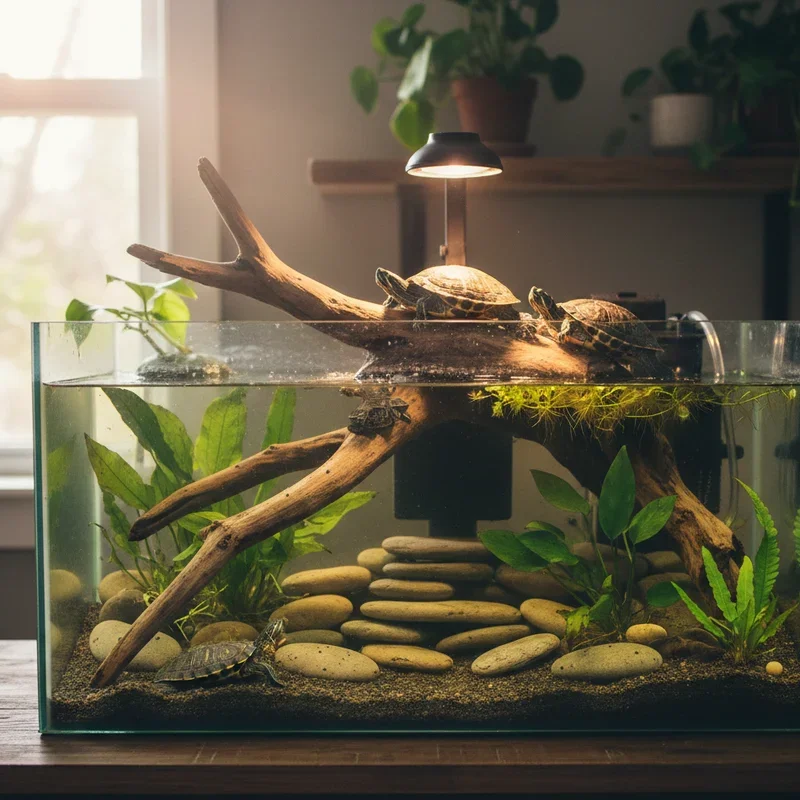
Is your aquatic turtle living in a bare tank with basic equipment, or have you created the thriving ecosystem these fascinating reptiles truly deserve? Aquatic turtle care extends far beyond simple water and food, requiring thoughtfully designed habitats that address their unique needs for swimming space, basking areas, proper lighting, and water quality management. Think of your turtle tank as an entire world compressed into glass walls, a complete environment where your shelled companion spends their entire life swimming, basking, hunting, and exploring. The difference between a basic setup and a properly designed habitat impacts everything from your turtle's physical health to their behavioral enrichment and overall quality of life. These remarkable creatures can live for decades with proper care, making habitat investment genuinely worthwhile for the years of companionship they provide. Whether you're upgrading an existing setup or planning a new turtle habitat from scratch, the options for creating stunning, functional environments have never been more accessible or exciting. Ready to discover how proper tank design transforms basic turtle keeping into rewarding aquatic husbandry? Let's explore these inspiring ideas!
1. Large Tank Size Foundations
Establish proper care foundations through appropriately sized tanks that provide the swimming space aquatic turtles require for physical health and mental wellbeing! The general rule requires ten gallons of water per inch of turtle shell length, meaning adult red-eared sliders need 75-125 gallon tanks minimum. Larger tanks maintain water quality more easily while providing swimming exercise that prevents shell deformities and muscle weakness common in undersized habitats. Consider tank dimensions carefully, prioritizing horizontal swimming space over height for species that aren't strong vertical swimmers. The initial tank investment significantly impacts long-term turtle health while larger volumes simplify water parameter maintenance that small tanks make challenging. Upgrade tank sizes proactively as turtles grow rather than waiting until cramped conditions affect health visibly.
2. Above-Tank Basking Platform Designs
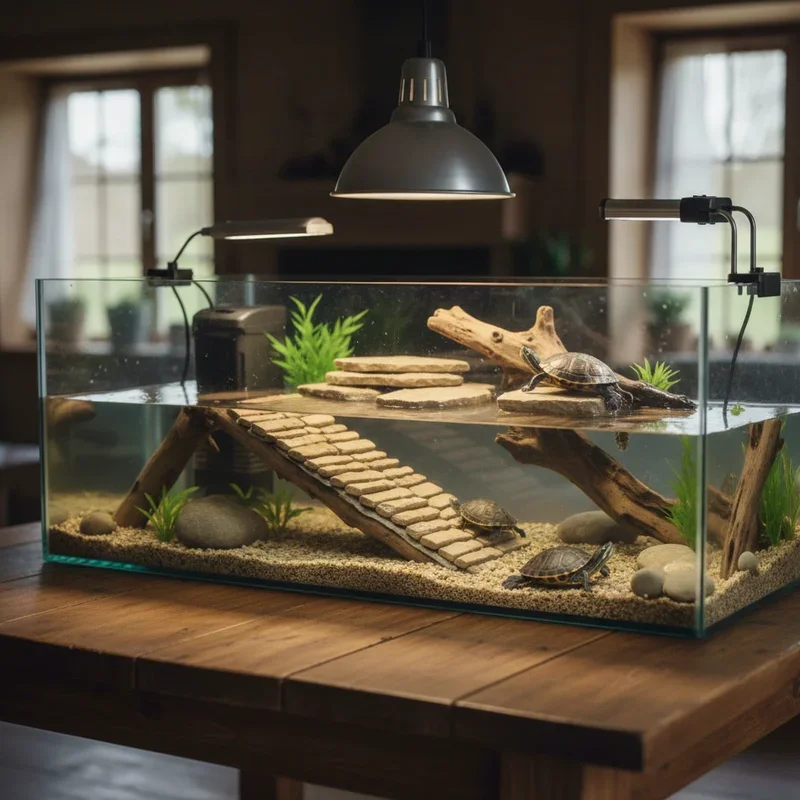
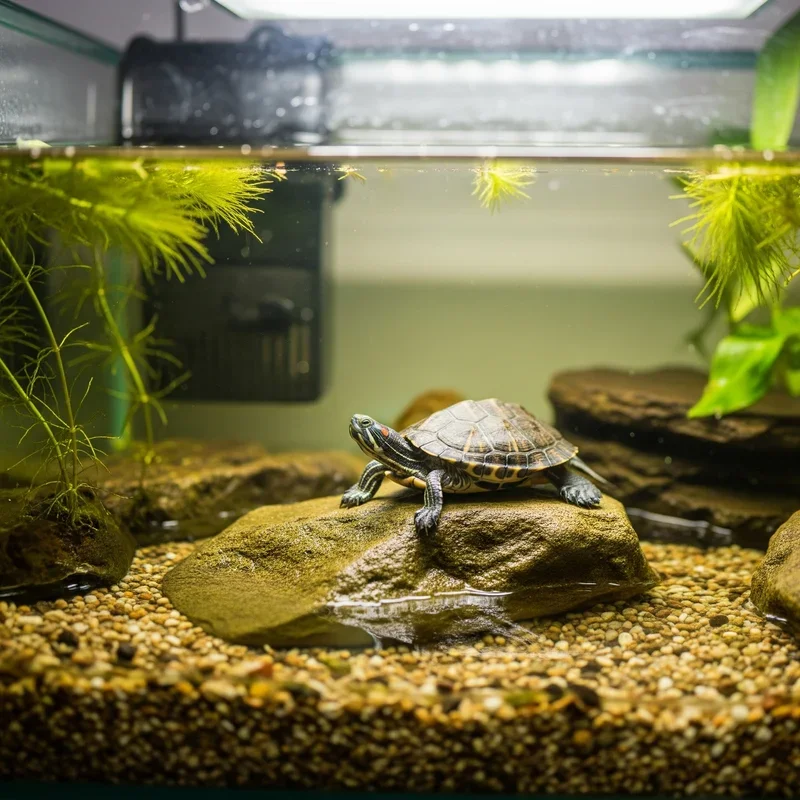
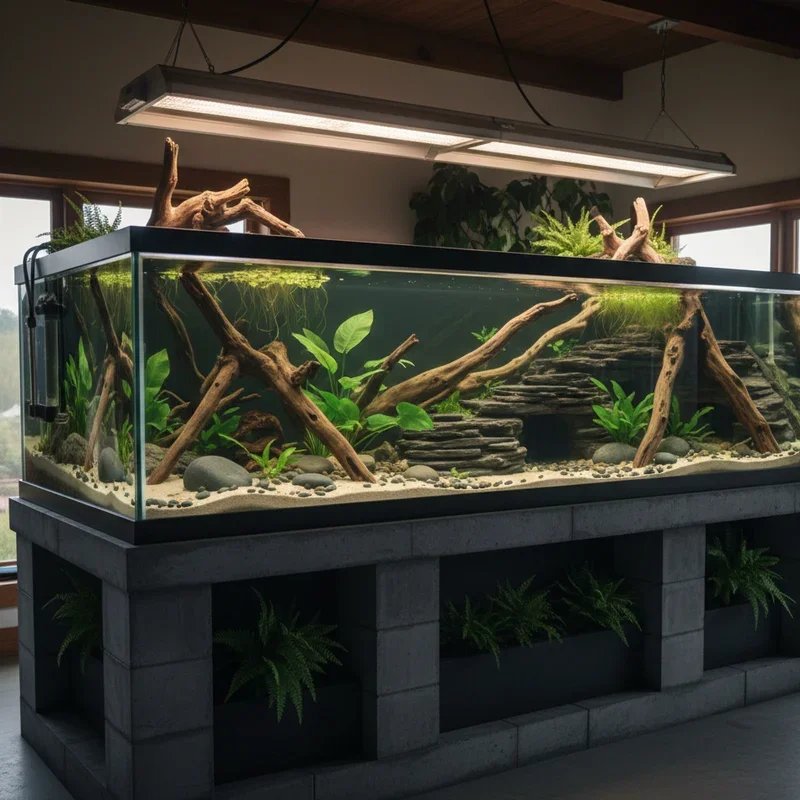
Maximize swimming space through above-tank basking platforms that position dry areas above water surfaces rather than consuming valuable swimming volume! These innovative designs attach to tank rims, extending basking surfaces beyond tank footprints while keeping entire water volumes available for swimming. Consider commercial topper designs, custom mesh setups like a heavy-duty red sea reefer lid configuration modified for specialized multi-tier access, or DIY constructions using egg crate, acrylic, or sealed wood materials. The above-tank approach solves the constant trade-off between basking space and swimming area that traditional in-tank platforms create. These elevated basking zones provide proper thermoregulation opportunities while the increased water volume supports better filtration efficiency and swimming exercise. Position platforms beneath appropriate lighting while ensuring easy turtle access through ramps or steps from water surfaces.
3. Canister Filtration Powerful Systems
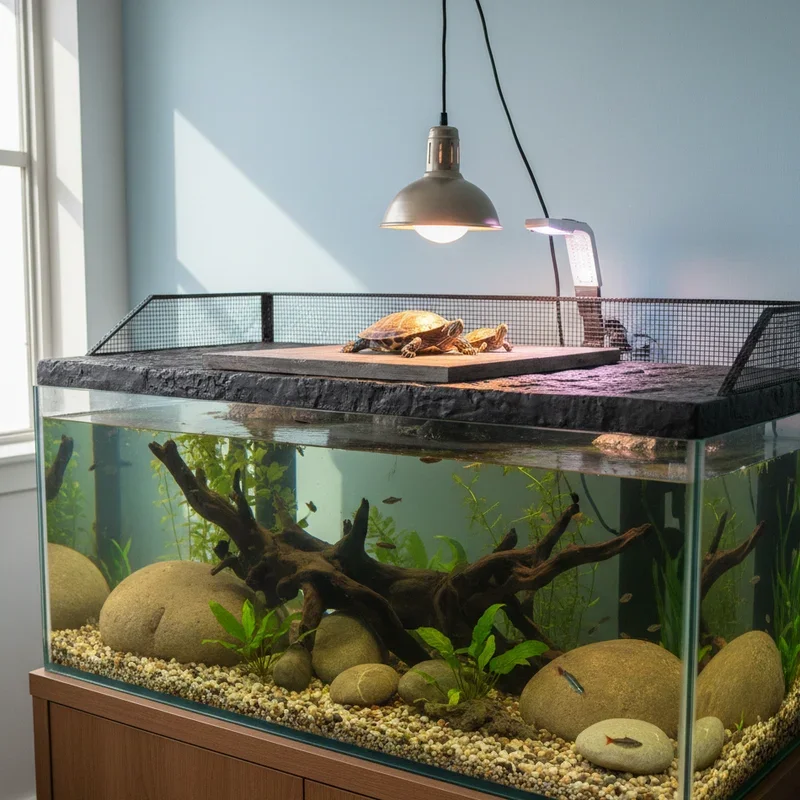
Maintain crystal-clear water through canister filtration systems that handle the heavy bioload aquatic turtles produce far beyond what fish create! These powerful external filters process water through multiple media stages including mechanical, biological, and chemical filtration addressing the substantial waste turtles generate. Consider filters rated for two to three times your actual tank volume, acknowledging that turtle waste loads demand filtration capacity exceeding standard fish tank calculations. The external canister format keeps equipment outside tanks, maximizing interior space while the powerful circulation maintains water quality that internal filters struggle to achieve. Quality canister systems represent essential investments for serious turtle keepers whose water quality priorities extend beyond minimal survival requirements. Position intake and output for optimal circulation throughout entire tank volumes.
4. Natural Planted Aquarium Setups
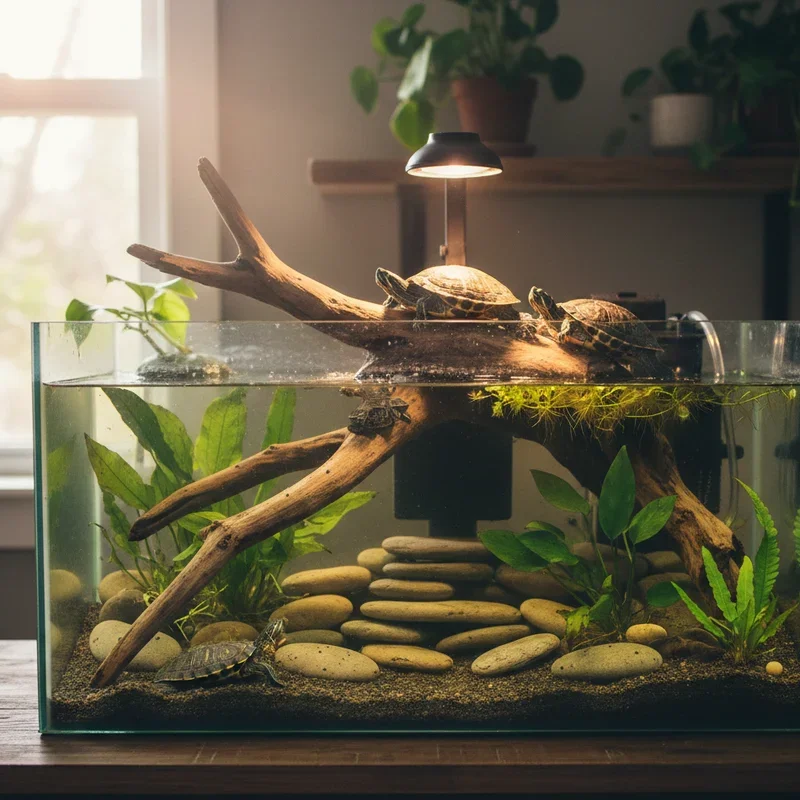
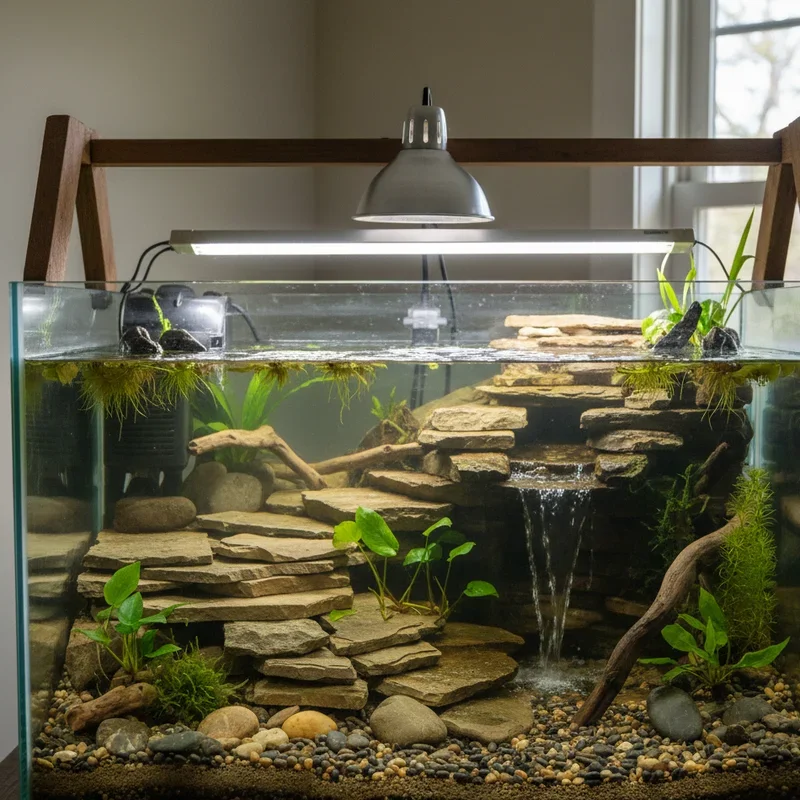
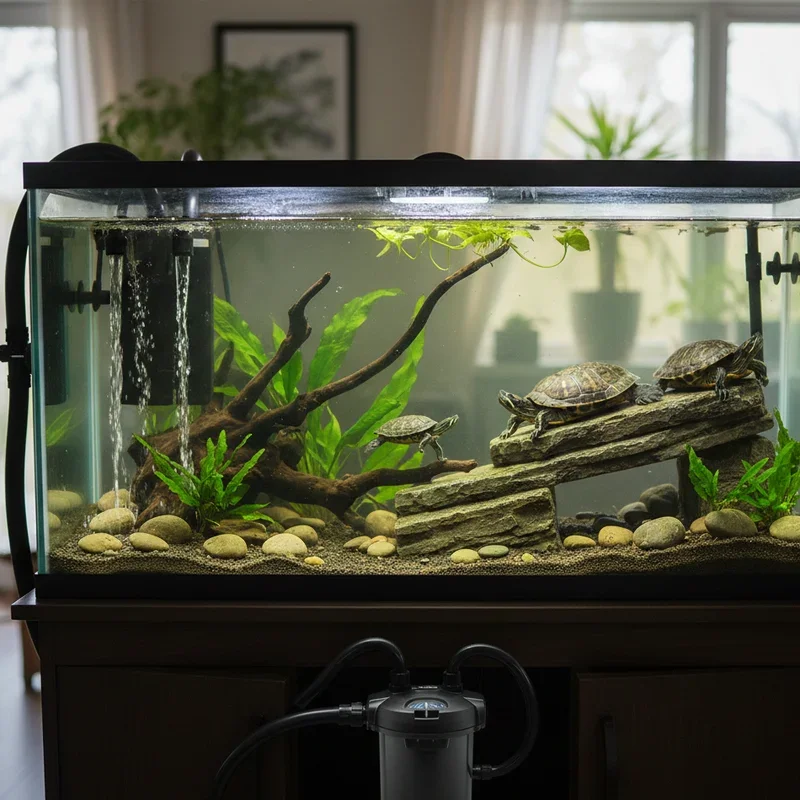
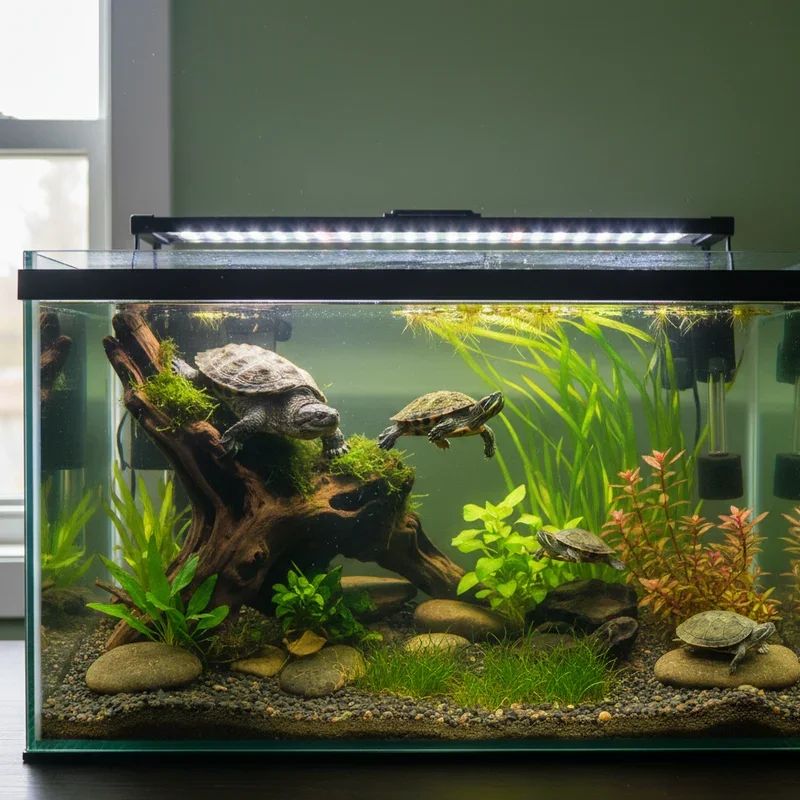
Create living ecosystems through planted tank setups that provide biological filtration, visual beauty, and enrichment despite the challenges turtles present to aquatic plants! Certain hardy species including anubias, java fern, and water sprite survive turtle habitation while others become expensive salads quickly consumed. Consider planting heavily in protected areas or accepting partial plant consumption as enrichment while replacing consumed plants periodically. The natural planted aesthetic transforms sterile turtle tanks into vibrant ecosystems while living plants contribute genuine water quality benefits through nutrient absorption. These biological additions require balancing lighting needs for plant growth against algae promotion while turtle-safe species selections prevent toxic plant exposure. Natural setups demonstrate that turtle tanks can achieve aquascaping beauty despite the challenges these messy reptiles present.
5. UV Lighting Essential Arrangements
Support proper shell and bone development through UV lighting arrangements that provide the UVB exposure aquatic turtles require for calcium metabolism! Without adequate UVB, turtles develop metabolic bone disease causing soft shells, deformities, and shortened lifespans regardless of dietary calcium supplementation. Consider mercury vapor bulbs providing both heat and UV, or separate UVA/UVB fluorescent fixtures covering basking areas where turtles absorb essential radiation. Position UV sources at manufacturer-recommended distances ensuring proper exposure intensity while replacing bulbs according to schedules since UV output diminishes before visible light fails. These essential lighting elements represent non-negotiable habitat requirements rather than optional enhancements while proper positioning ensures turtles actually receive intended benefits. Combine UV lighting with basking heat sources creating complete basking zones meeting all thermoregulation requirements.
6. Floating Dock Basking Solutions
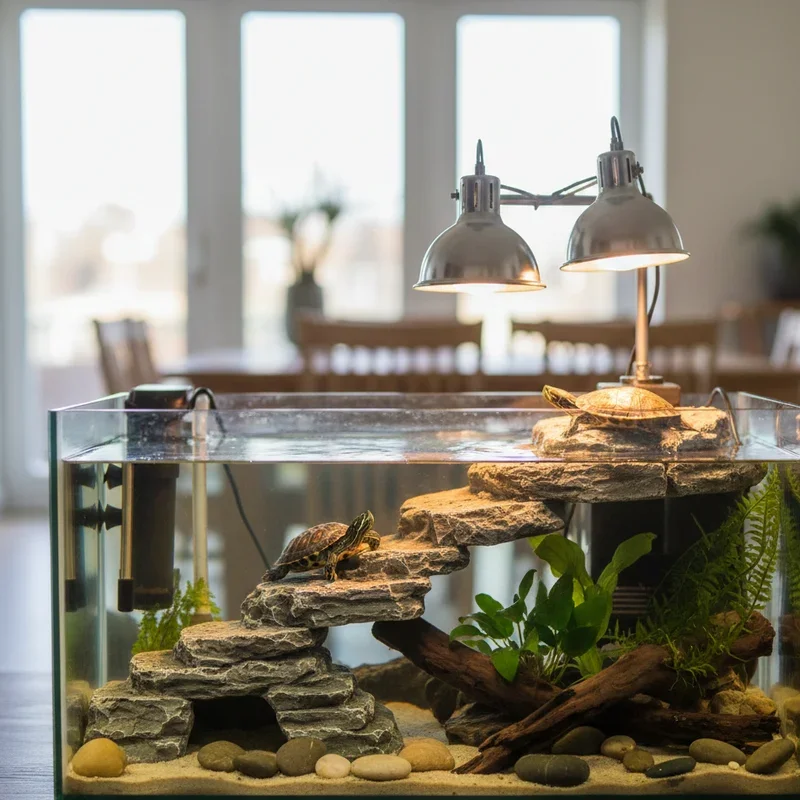
Provide accessible basking through floating dock platforms that rise and fall with water levels, ensuring consistent basking access regardless of evaporation or water changes! These buoyant surfaces adjust automatically to water level fluctuations while the floating design eliminates the fixed-height limitations that stationary platforms create. Consider commercial floating docks designed specifically for turtle habitation or DIY constructions using foam, sealed wood, or buoyant materials. The self-adjusting nature simplifies water level management while the accessible ramp angles enable easy turtle climbing from any water depth. Floating solutions suit tanks where water levels vary regularly while the stable basking surfaces provide secure footing for proper thermoregulation behavior. Position floating docks beneath heating and UV lighting while ensuring adequate surface area for your turtle's full shell exposure.
7. Underwater Cave Hiding Spots
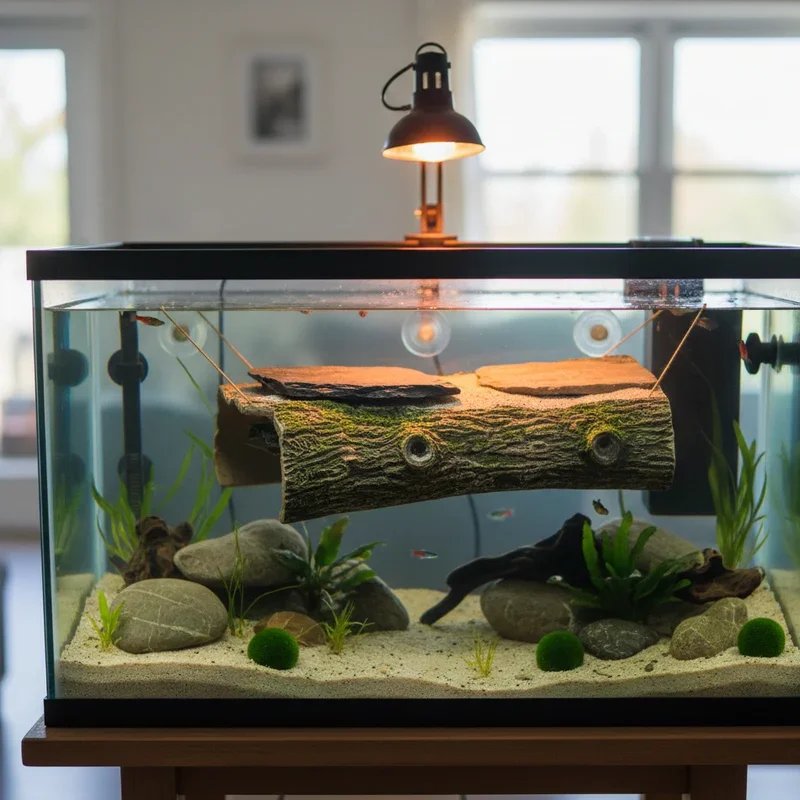
Address security needs through underwater cave structures that provide hiding spots where turtles retreat from perceived threats and rest between activities! These sheltered spaces reduce stress by enabling escape from open exposure while the hiding behavior represents natural turtle responses present in wild habitats. Consider natural rock formations, aquarium decorations, or DIY PVC structures providing appropriately sized hiding opportunities. The cave environments suit turtles displaying shy behaviors while even confident individuals benefit from refuge options during adjustment periods or stressful situations. These enrichment additions demonstrate that turtle care extends beyond physical needs into psychological wellbeing considerations while the visual interest enhances tank aesthetics alongside functional benefits. Position caves in cooler tank zones where resting turtles avoid unnecessary heat exposure.
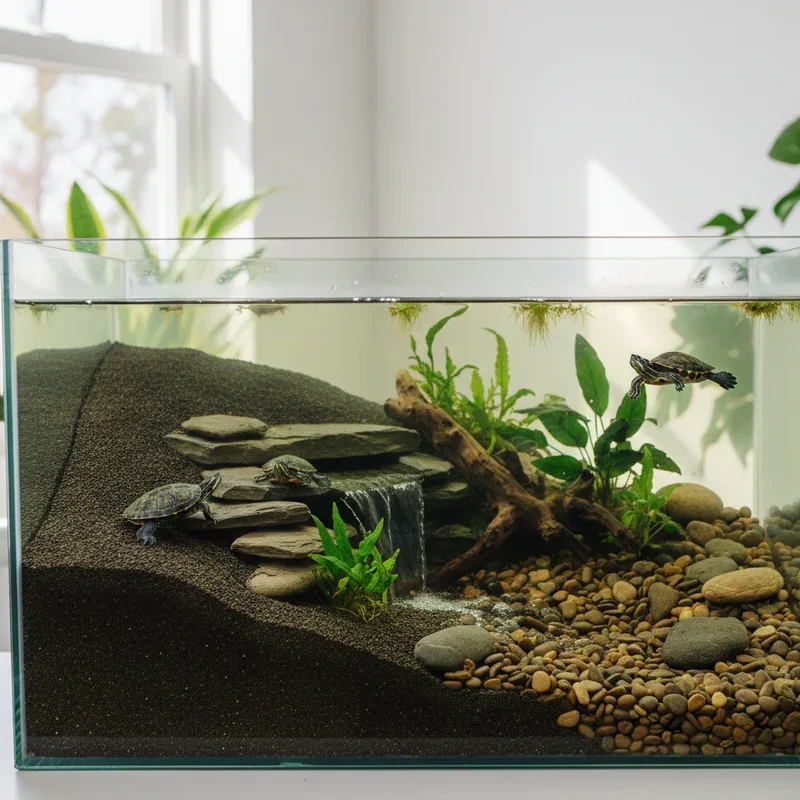
8. Substrate Selection Considerations
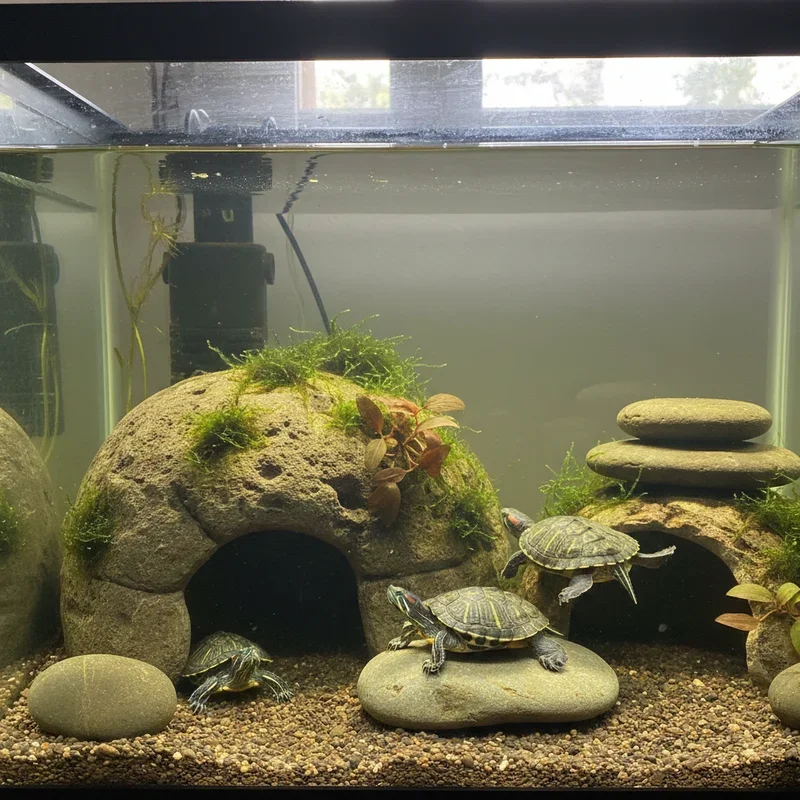
Choose appropriate substrates through careful consideration of safety, aesthetics, and maintenance requirements that different bottom materials present! Large river rocks prevent accidental ingestion while bare bottoms simplify cleaning at the cost of natural aesthetics. Sand substrates create naturalistic appearances but risk impaction if turtles consume significant quantities while the fine particles complicate waste removal. Consider your specific turtle species, tank maintenance preferences, and aesthetic priorities when selecting substrate approaches. The safest option remains bare-bottom or large rocks that turtles cannot swallow while planted setups may require rooting substrates beneath protective rock layers. These foundation decisions impact long-term maintenance routines while substrate-related health problems represent preventable issues through appropriate material selection.
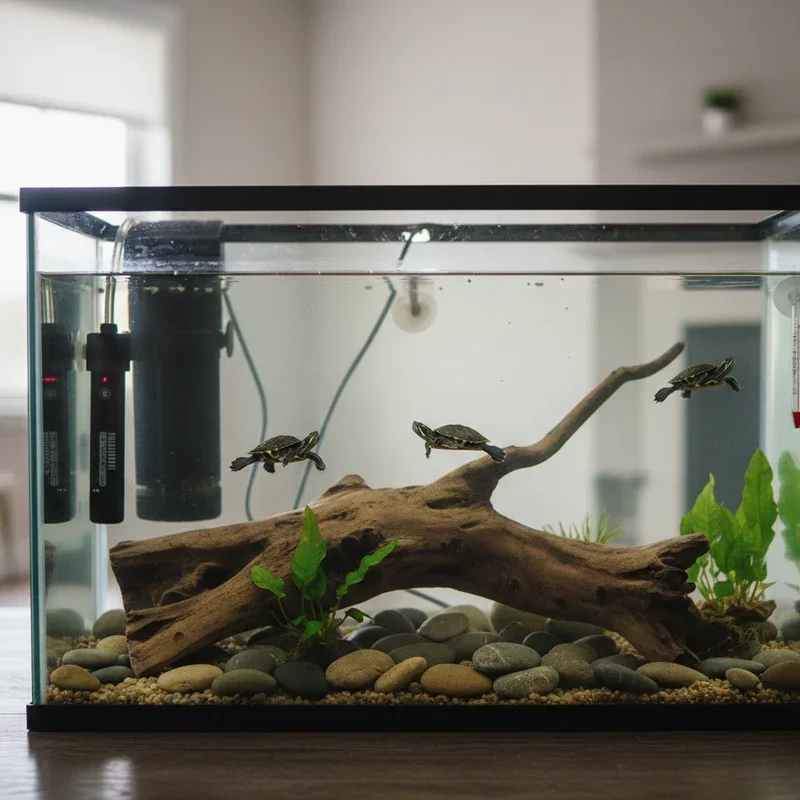
9. Water Heating Proper Systems
Maintain appropriate water temperatures through reliable heating systems that keep aquatic environments within species-specific ranges regardless of ambient room temperatures! Most aquatic turtles require water temperatures between 75-82°F depending on species while consistent temperatures prevent the immune suppression that temperature fluctuations cause. Consider submersible heaters with protective guards preventing turtle burns or external inline heaters eliminating in-tank equipment hazards entirely. The heating capacity should match tank volume while redundant heater setups prevent dangerous temperature drops if single heaters fail. These essential systems represent baseline care requirements rather than optional enhancements while thermostatic controls maintain consistent temperatures automatically. Monitor water temperatures regularly using reliable thermometers positioned away from heater outputs for accurate readings.
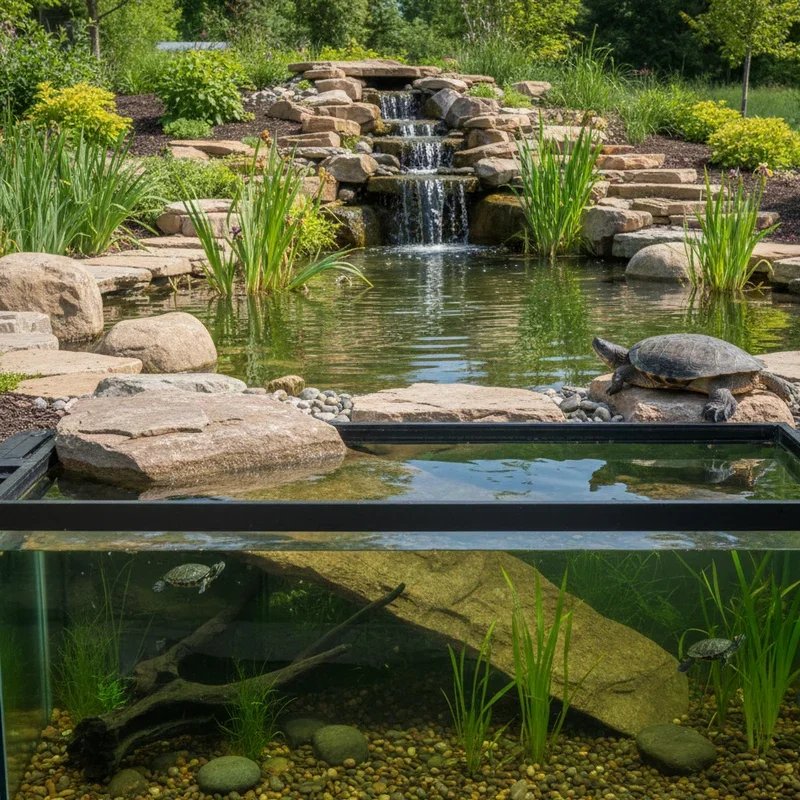
10. Outdoor Pond Habitat Options
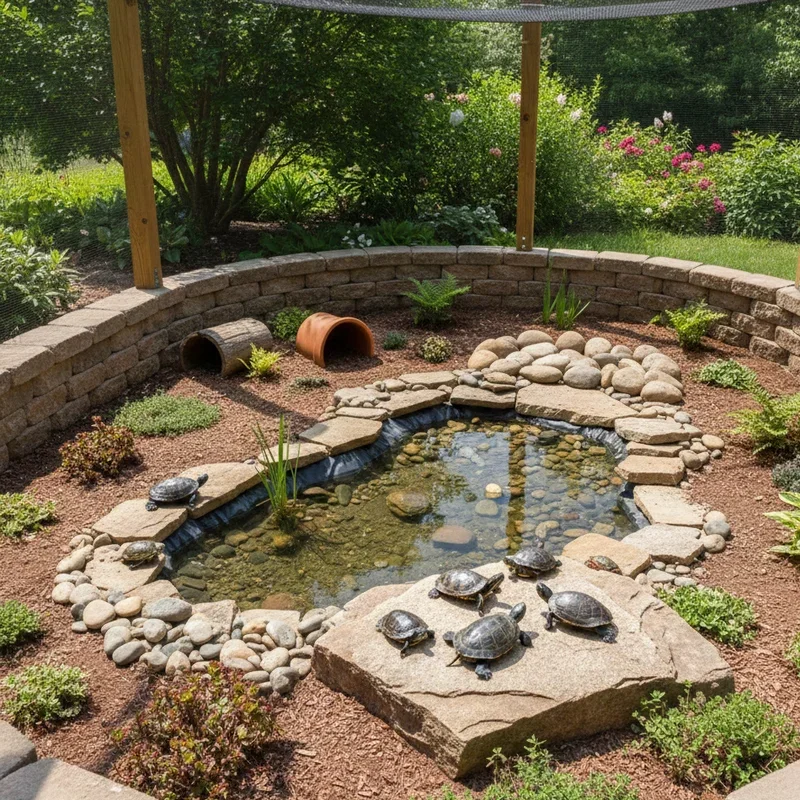
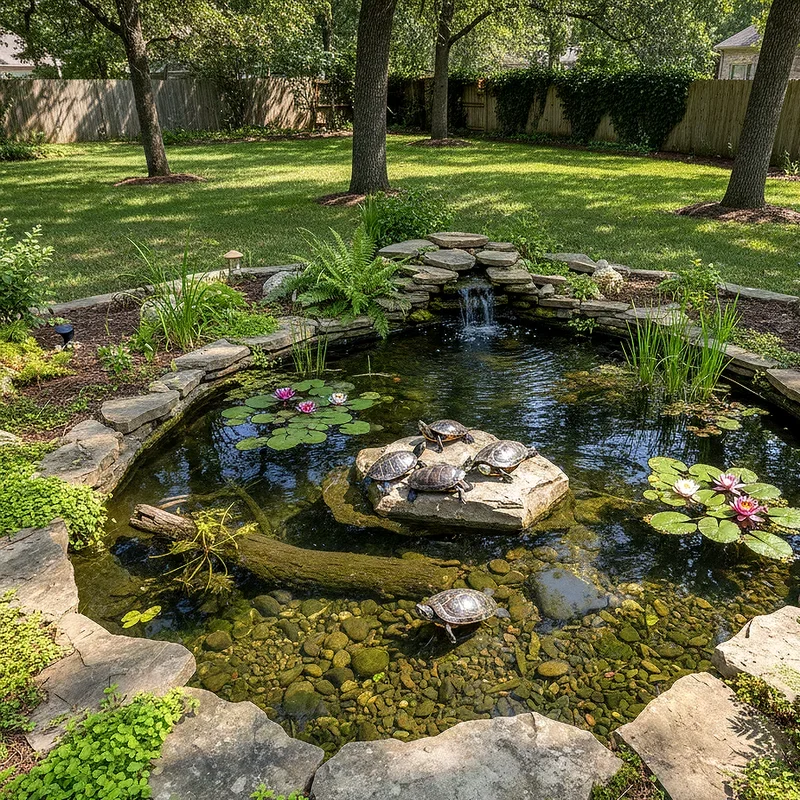
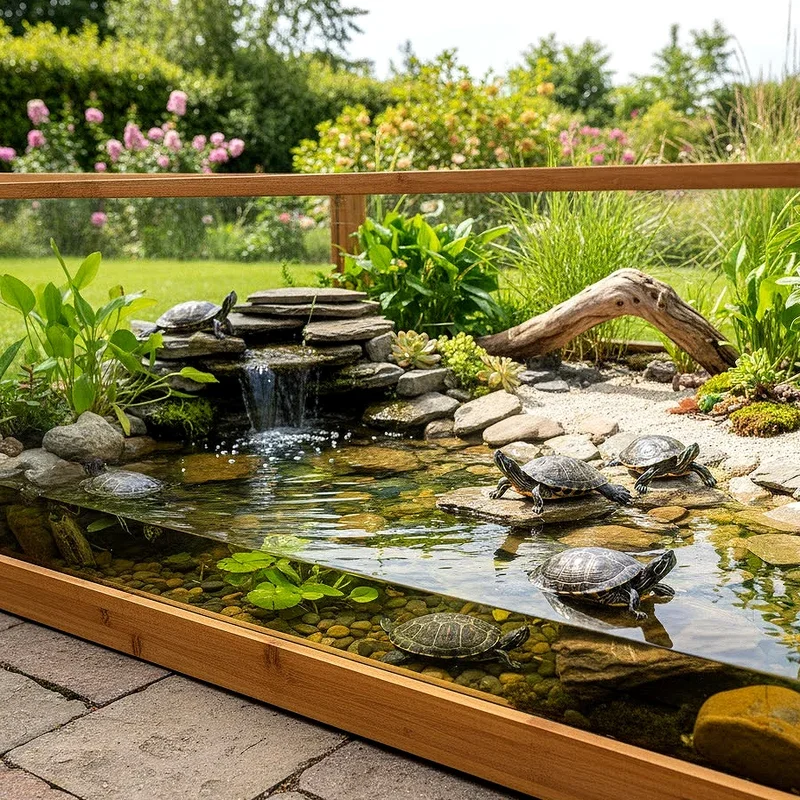
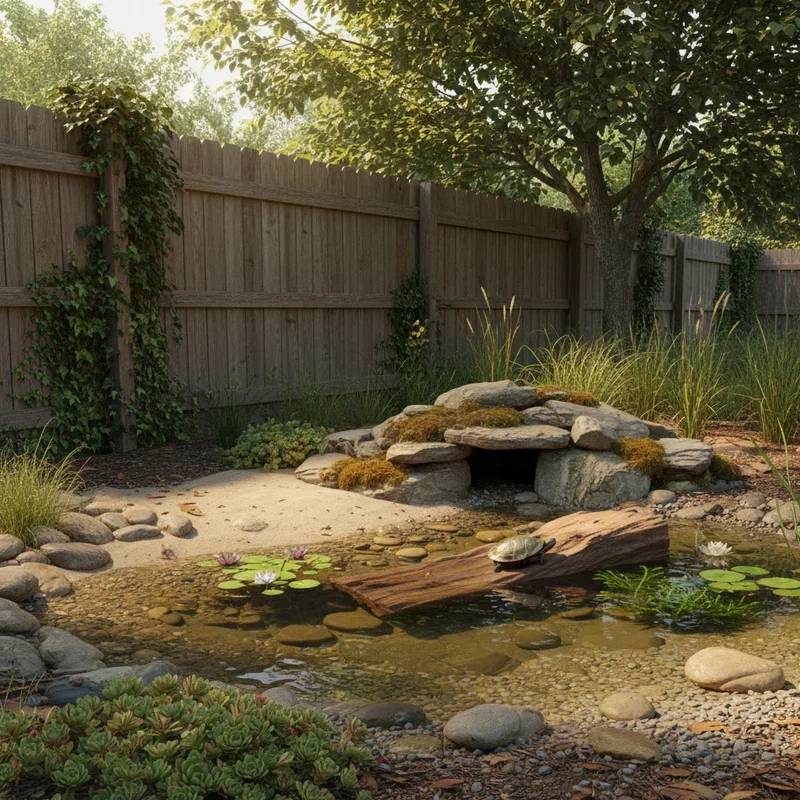
Provide ultimate habitat experiences through outdoor pond setups that offer space, natural lighting, and environmental enrichment impossible to replicate indoors! Properly designed turtle ponds enable natural behaviors including seasonal variations, natural UV exposure, and expansive swimming territories that even large indoor tanks cannot match. Consider pond security preventing escapes and predator access while climate appropriateness determines whether ponds serve as permanent or seasonal habitats. The outdoor approach suits owners with appropriate yard space and climate conditions while the enhanced habitat quality benefits turtle health and behavior significantly. These substantial investments deliver unparalleled habitat quality for species suited to outdoor keeping while proper planning addresses security, temperature, and predation concerns. Supplement natural conditions with basking platforms and hiding areas creating complete outdoor ecosystems.
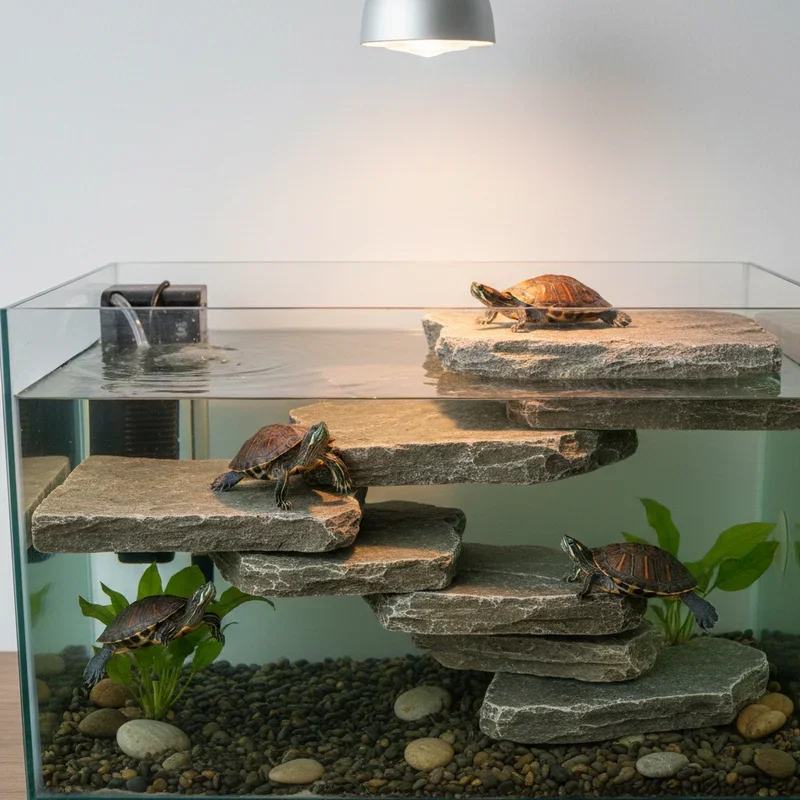
11. Multi-Level Swimming Zones
Create engaging environments through multi-level designs that establish varied swimming depths and exploration opportunities throughout tank volumes! Tiered rock formations, varying substrate depths, and strategically placed decorations create distinct zones where turtles experience environmental variety during daily activities. Consider shallow hunting areas alongside deeper swimming zones while vertical structures enable climbing enrichment that flat tanks cannot provide. The environmental complexity stimulates natural behaviors including exploration, hunting, and territory establishment while the varied depths accommodate different activity preferences. These enrichment-focused designs transform monotonous tank interiors into engaging environments that support physical and mental turtle health simultaneously. Position zone transitions thoughtfully, ensuring easy turtle navigation between different depth areas throughout the habitat.
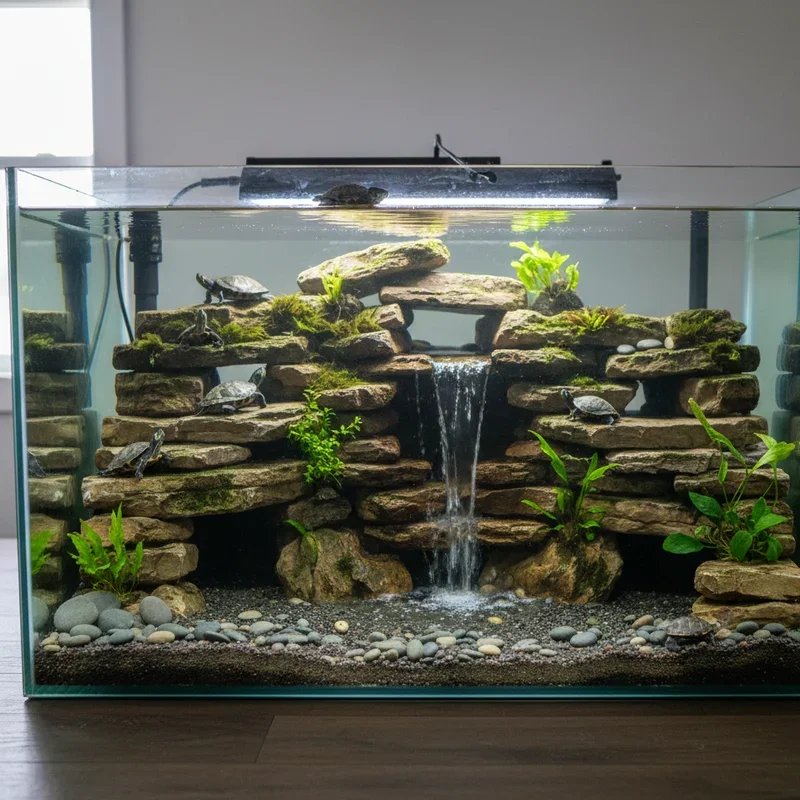
12. Natural Rock Formations
Anchor tank aesthetics through natural rock formations that provide basking surfaces, hiding spots, and visual interest simultaneously! Aquarium-safe rocks including slate, granite, and river stone create naturalistic appearances while their substantial weight prevents turtle rearrangement that lighter decorations suffer. Consider rock arrangements creating caves, basking platforms, and visual barriers that break up open tank spaces into distinct areas. The natural materials suit turtle habitats while the permanent weight enables stable structures that active turtles cannot easily displace. These foundational elements establish tank character while serving multiple functional purposes beyond mere decoration. Test rock selections ensuring aquarium safety while arrangements prevent trapping hazards that could endanger swimming turtles.
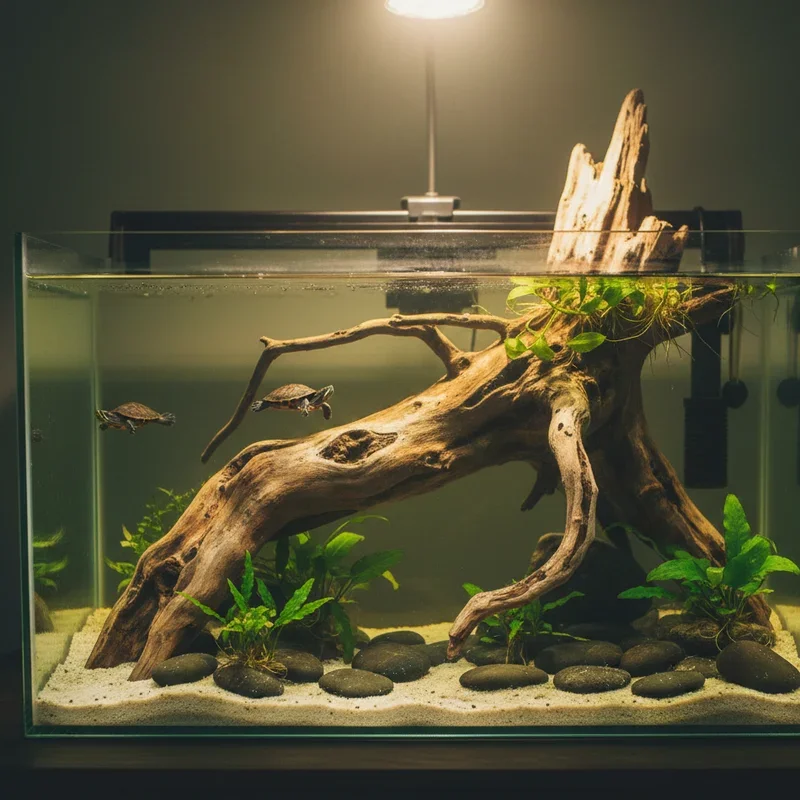
13. Driftwood Aquascaping Elements
Add organic character through driftwood elements that provide climbing surfaces, visual interest, and beneficial tannin release creating naturalistic water conditions! These natural wood pieces create striking focal points while the climbing opportunities enable behavioral enrichment beyond simple swimming. Consider aquarium-safe driftwood varieties properly cured before tank placement while the released tannins may slightly color water with beneficial compounds. The organic aesthetic complements natural tank designs while the varied textures and shapes create unique environments impossible to replicate with manufactured decorations. These characterful additions demonstrate commitment to naturalistic habitat design while the functional climbing surfaces serve enrichment purposes alongside aesthetic contributions. Secure driftwood positioning prevents floating or shifting that could trap turtles beneath displaced pieces.
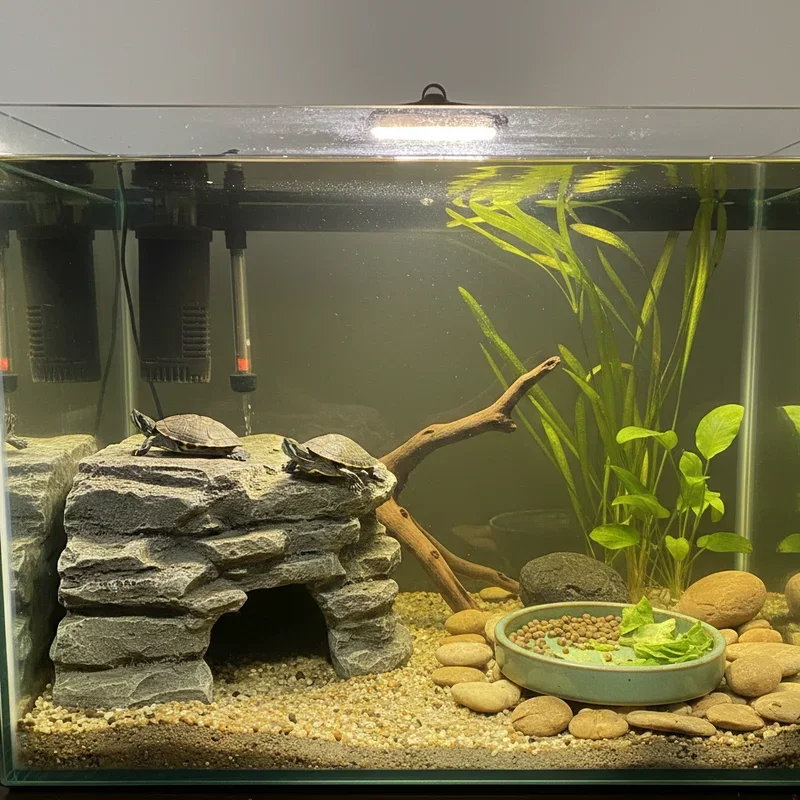
14. Feeding Station Designated Areas
Establish cleaner habits through designated feeding stations that concentrate food debris in specific tank zones simplifying waste management! These purpose-designed areas might include separate feeding containers, specific tank corners, or removable feeding platforms where meals occur before waste disperses throughout tank volumes. Consider removing turtles to separate feeding containers keeping primary habitats cleaner while this approach also enables accurate food intake monitoring. The designated feeding approach reduces primary tank maintenance frequency while contained debris simplifies cleanup compared to scattered food particles. These practical considerations demonstrate that thoughtful tank management extends beyond initial setup into ongoing maintenance optimization. Establish consistent feeding locations training turtles to anticipate meals in designated areas rather than random tank locations.
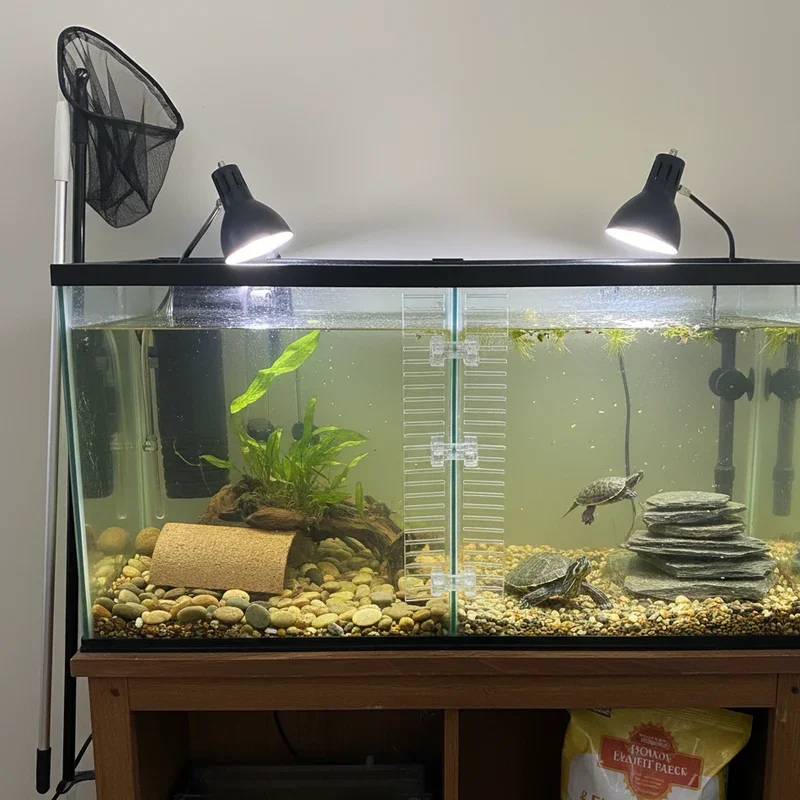
15. Tank Divider Management Solutions
Address multi-turtle challenges through tank divider solutions that enable shared water volumes while preventing aggression between incompatible individuals! These physical barriers create separate territories within single tank systems, reducing equipment costs while managing social conflicts that cohabitation creates. Consider dividers for quarantine purposes, size-mismatched turtles, or known aggressive individuals whose behavior threatens tankmates. The shared filtration and heating systems serve both sides while physical separation prevents the injuries territorial disputes cause. These management tools enable keeping multiple turtles responsibly while space or budget limitations prevent separate complete systems. Position dividers ensuring both sections receive adequate filtration flow, heating, and lighting access throughout divided spaces.
Conclusion
Aquatic turtle tank design transforms basic reptile keeping into rewarding husbandry where thoughtfully created habitats support thriving pets for decades of companionship. From proper tank sizing to natural planted aesthetics, these ideas address the complete range of requirements that healthy turtle keeping demands. The investment in quality habitat design returns through healthier turtles, easier maintenance, and the satisfaction of providing genuinely excellent care for these fascinating long-lived reptiles. Whether upgrading existing setups or planning new habitats, proper design rewards attention through transformed turtle health and behavior. Now assess your current habitat and start planning the upgrades your shelled companion deserves!
Read next: 15 Turtle Terrarium Ideas for a Cozy and Natural Habitat
Frequently Asked Questions
Q1: What size tank does an adult aquatic turtle need?
A: Plan ten gallons per inch of shell length; adult red-eared sliders typically need 75-125 gallon tanks minimum.
Q2: How often should I change turtle tank water?
A: Perform 25-50% water changes weekly; proper filtration reduces frequency while maintaining consistent water quality throughout.
Q3: Can I keep live plants with aquatic turtles?
A: Yes, hardy species like anubias and java fern survive; accept some consumption as enrichment and replace eaten plants.
Q4: What temperature should turtle tank water be?
A: Most aquatic turtles need water temperatures between 75-82°F; basking areas should reach 85-95°F for thermoregulation.
Q5: Do aquatic turtles need a basking area?
A: Yes, basking areas are essential for thermoregulation, shell drying, and UVB absorption preventing metabolic bone disease.
Stay up to date with our latest ideas!