15 Guinea Pig Habitat Ideas for Happy Pets
Transform your guinea pig's living space with creative habitat ideas that promote health, happiness, and natural behaviors for your beloved pet.
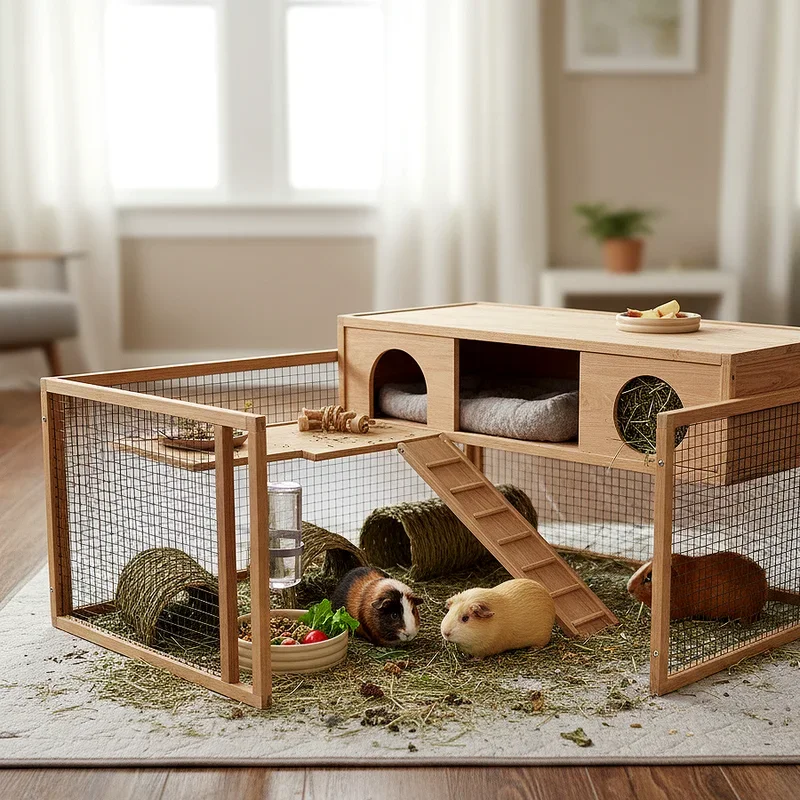
Creating the perfect home for your guinea pig goes far beyond simply placing a cage in the corner of your room. Have you ever wondered what makes your furry friend truly happy? These adorable creatures deserve a living space that mirrors their natural instincts and provides endless opportunities for exploration and comfort. Think of their habitat as more than just a cage—it's their entire world, their playground, and their sanctuary all rolled into one. From spacious floor plans to creative hideaways, the possibilities are limitless. Whether you're a first-time owner or looking to upgrade your current setup, these habitat ideas will help you create a space that keeps your guinea pig healthy, entertained, and genuinely content every single day.
1. Go Big with a Spacious C&C Cage
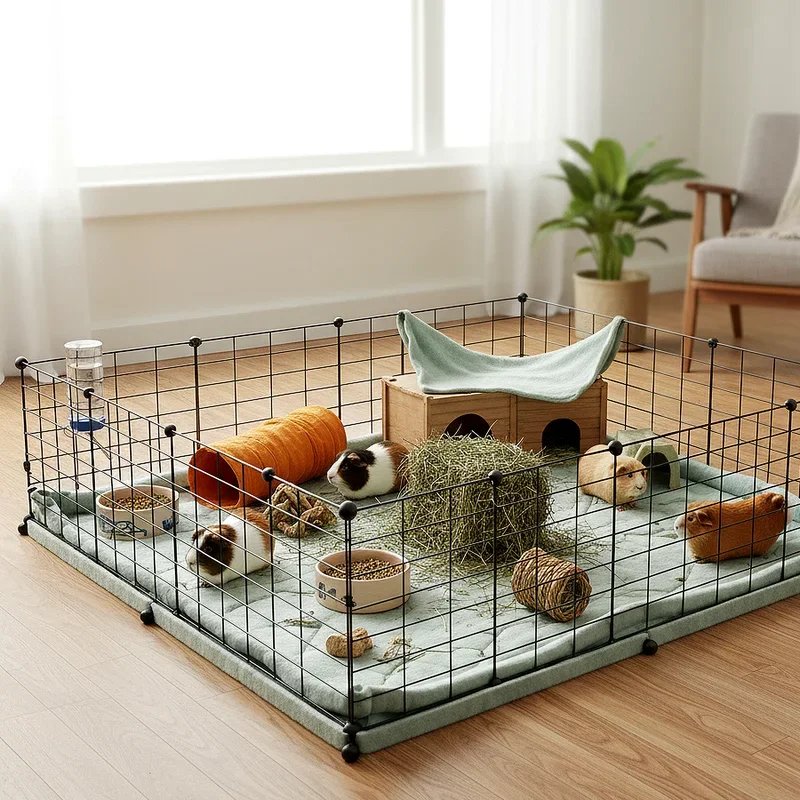
Space matters tremendously when it comes to guinea pig happiness. C&C cages, which stand for cubes and coroplast, offer customizable solutions that far exceed traditional pet store cages. These modular designs allow you to create expansive living quarters that give your pets room to popcorn, run, and explore freely. A single guinea pig needs at least 7.5 square feet, but more is always better. Two guinea pigs require a minimum of 10.5 square feet, and you should add more space for each additional pig. The beauty of C&C cages lies in their flexibility—you can expand them as your family grows or rearrange them to fit your available space. Plus, they're elevated off the ground, making cleaning easier. Your guinea pigs will thank you with joyful wheeks.
2. Create Multiple Levels with Ramps and Platforms
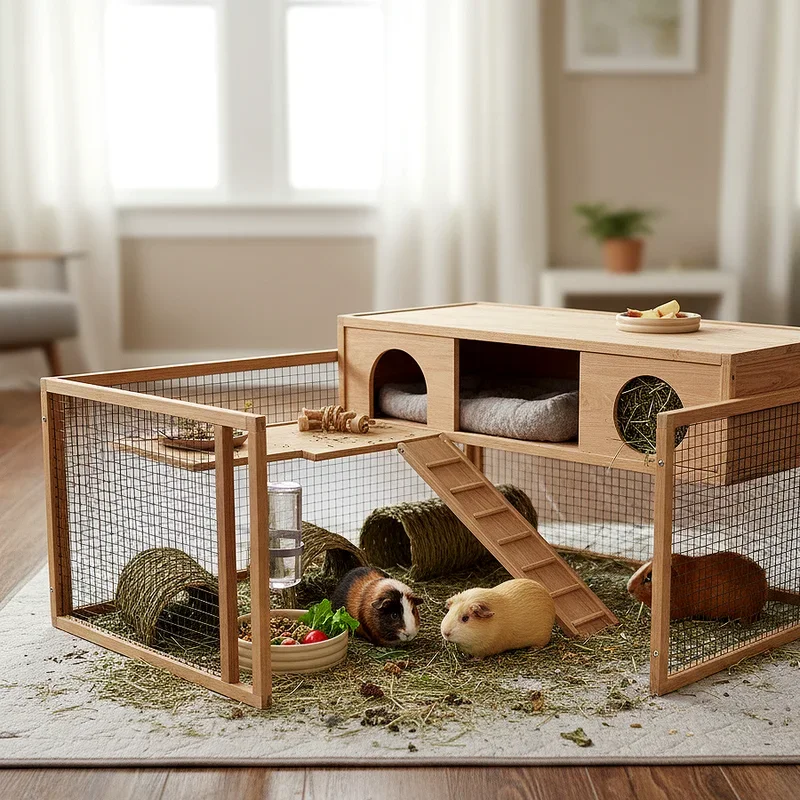
Why settle for a single-story home when your guinea pigs can enjoy a multi-level mansion? Adding ramps and platforms introduces vertical space that encourages exercise and exploration. Guinea pigs love having different vantage points to survey their territory, and elevated platforms provide perfect spots for napping or observing their surroundings. When installing ramps, ensure they have a gentle slope with sides to prevent falls, and cover them with carpet or fabric for better grip. The platforms themselves should be sturdy enough to support your pet's weight and wide enough for comfortable lounging. This vertical design creates distinct zones for different activities. Your guinea pigs might choose the upper level for sleeping and the lower level for eating, naturally organizing their space throughout the day.

3. Add Cozy Hideouts for Privacy and Security
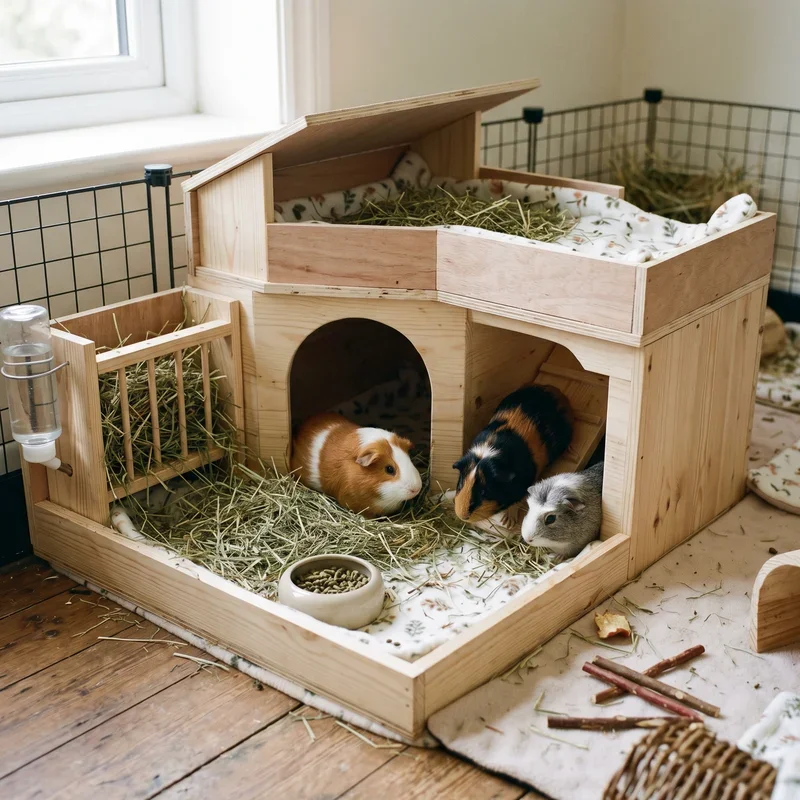
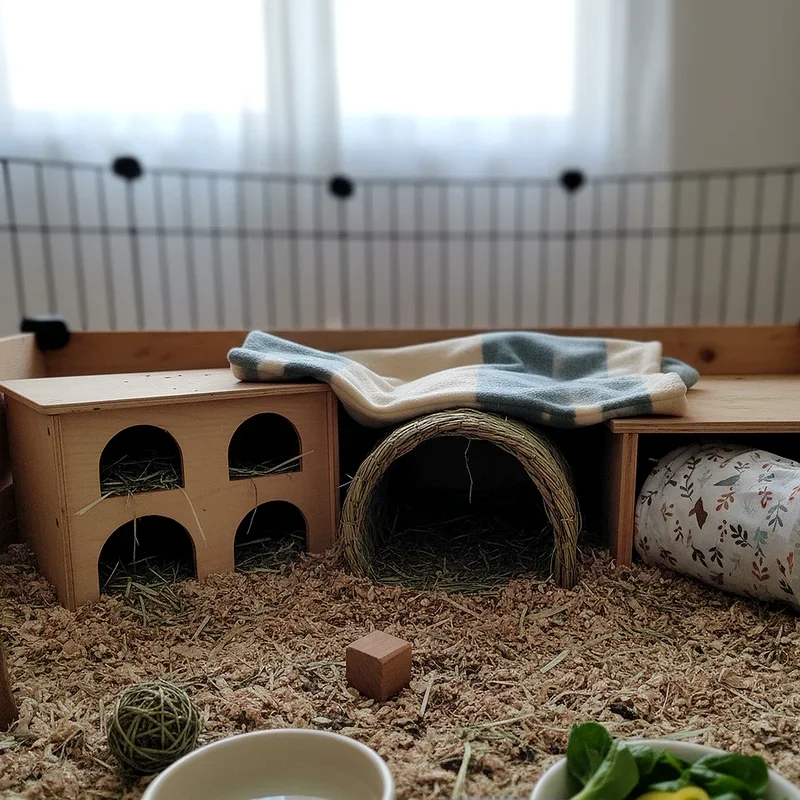
Every guinea pig needs a safe retreat where they can escape and feel protected. In the wild, these prey animals instinctively seek cover from potential predators, and domesticated guinea pigs retain this natural inclination. Providing multiple hideouts throughout their habitat reduces stress and gives them security when they need quiet time. Choose hideouts with at least two exits so your guinea pig never feels trapped inside. Wooden houses, fabric tunnels, and plastic igloos all make excellent options. Position hideouts in different areas of the cage to create private zones where shy or subordinate guinea pigs can retreat without confrontation. You'll notice your pets spending considerable time in these cozy spots, especially during the day when they naturally rest and recharge their energy levels.
4. Install a Hay Rack for Clean Feeding
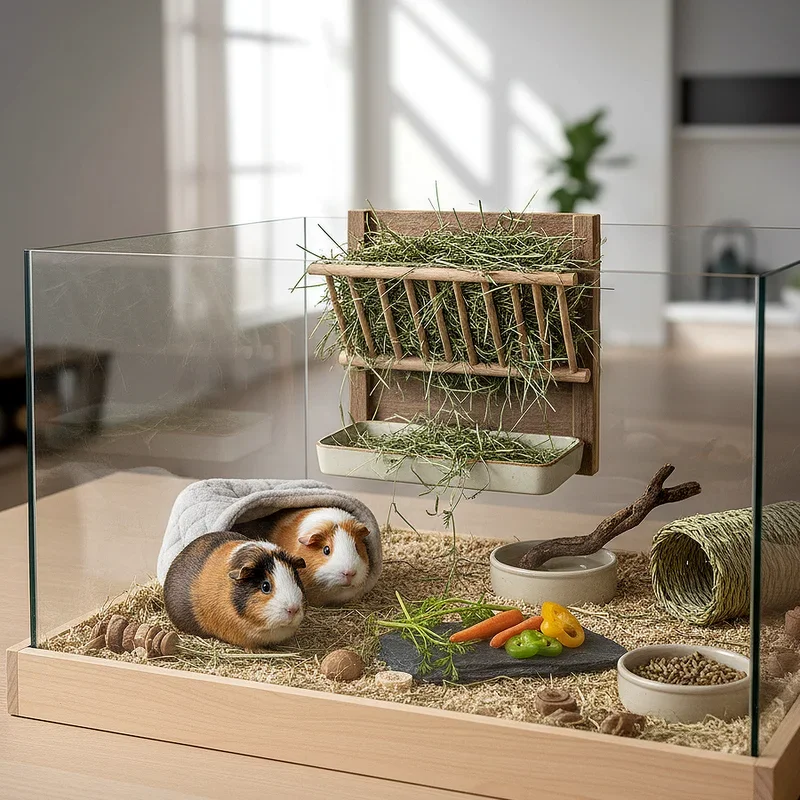
Hay forms the cornerstone of a healthy guinea pig diet, making up about eighty percent of their daily intake. Installing a hay rack keeps this essential food clean, dry, and readily accessible while preventing it from becoming soiled bedding. Wall-mounted hay racks save valuable floor space and encourage natural foraging behaviors as your guinea pigs pull hay through the bars. Choose a rack positioned at a comfortable height where your pets can easily reach without straining. Metal hay racks are durable and easy to sanitize, while woven grass versions add naturalistic appeal. Fill the rack daily with fresh timothy hay, and watch your guinea pigs contentedly munch throughout the day and night. This setup promotes better dental health through constant chewing while keeping the habitat much tidier.
5. Include a Digging Box for Natural Behavior
Guinea pigs possess innate digging instincts that deserve an appropriate outlet in captivity. Creating a designated digging box satisfies this natural behavior while protecting the rest of your habitat setup. Use a shallow plastic container filled with safe materials like shredded paper, child-safe play sand, or organic soil without fertilizers or chemicals. Some guinea pigs go absolutely crazy for digging opportunities, burrowing enthusiastically and tossing material everywhere with pure joy. Others might be more reserved, gently pawing and exploring the texture. Either way, this enrichment activity provides mental stimulation and physical exercise. Place the digging box in a corner where scattered material won't disrupt feeding areas. Supervise initially to ensure your guinea pig doesn't ingest the digging medium excessively and enjoys it safely.

6. Set Up a Foraging Station
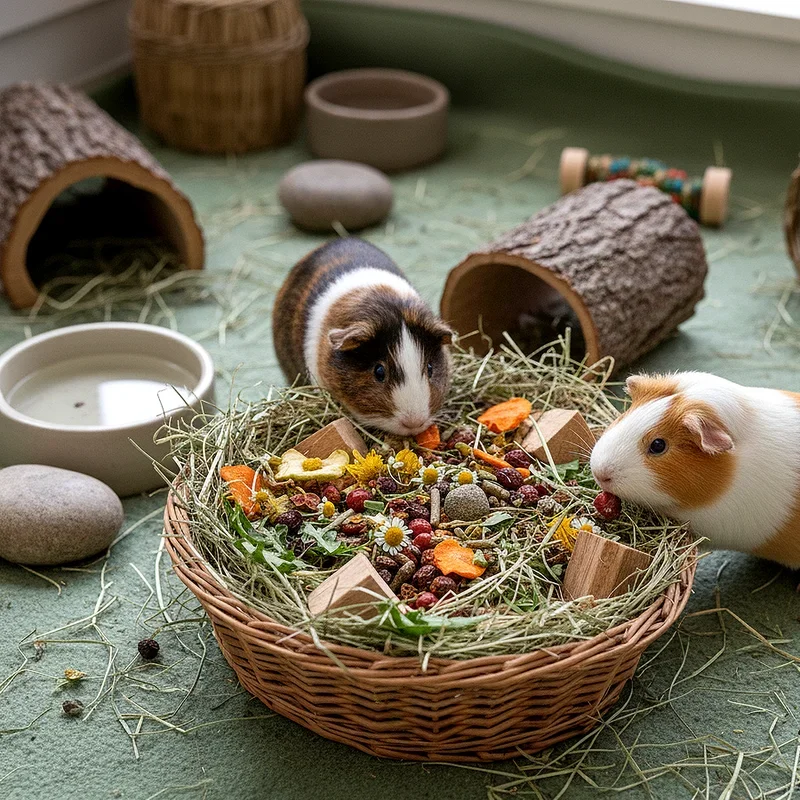
Transform mealtime into an engaging activity by creating a foraging station that challenges your guinea pig's problem-solving abilities. In nature, these animals spend hours searching for food, and captive guinea pigs benefit from similar mental stimulation. Scatter vegetables and herbs throughout their habitat, hide pellets inside paper bags, or stuff greens into toilet paper tubes. You can purchase puzzle feeders designed for small animals or craft your own using cardboard boxes with cut-out windows. This approach slows down eating, prevents boredom, and encourages natural behaviors that keep your guinea pig mentally sharp. Rotate different foraging challenges to maintain novelty and interest. Your guinea pigs will eagerly anticipate feeding time, sniffing and searching with determination. This enrichment strategy combats obesity while making meals infinitely more interesting and rewarding.
7. Provide Soft Fleece Bedding for Comfort
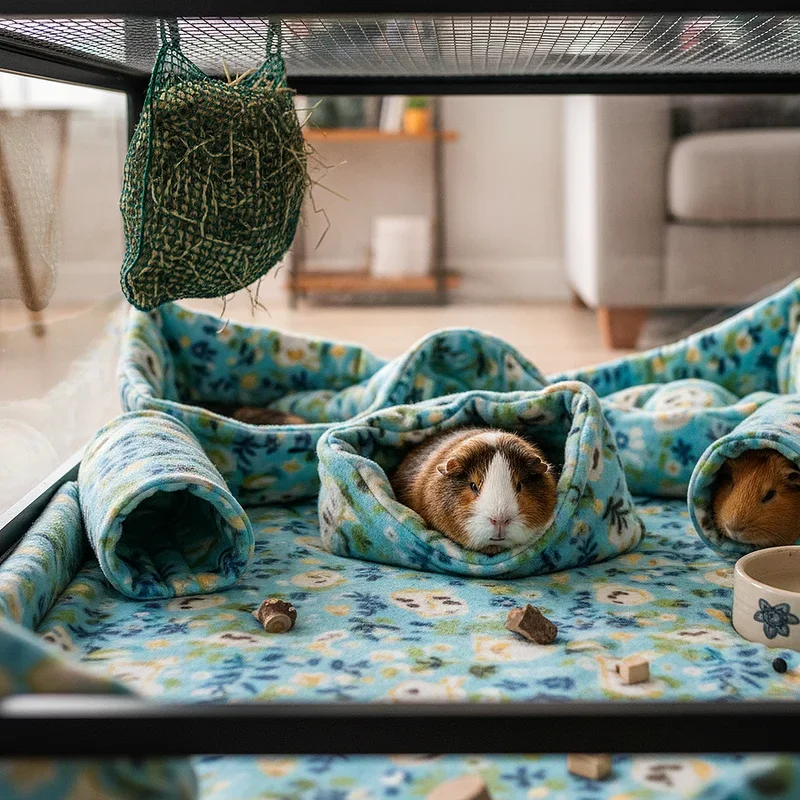
Fleece bedding has revolutionized guinea pig care, offering a comfortable, sustainable, and cost-effective alternative to disposable options. High-quality fleece wicks moisture away from the surface, keeping your guinea pigs dry while absorbent layers underneath capture liquids. This bedding choice eliminates dust, making it ideal for guinea pigs with respiratory sensitivities. Choose fleece specifically designed for guinea pigs, which comes pre-washed and ready to wick properly. Layer it over absorbent pads or towels for maximum effectiveness. Your guinea pigs will appreciate the soft surface under their feet, and you'll love the reduced ongoing costs. Fleece comes in countless colors and patterns, allowing you to personalize your habitat aesthetically. Washing is straightforward—shake off debris, rinse, and machine wash without fabric softener for best results.
8. Create a Safe Outdoor Play Area
Fresh air and natural sunlight benefit guinea pigs immensely when provided safely. Designing an outdoor play area gives your pets opportunities to graze on grass, feel sunshine, and experience environmental enrichment. Use a secure playpen or create a portable enclosure with proper protection from predators, including hawks from above. Never leave guinea pigs unattended outdoors, and always provide shaded areas where they can escape direct sunlight. Check the grass for pesticides, fertilizers, or toxic plants before allowing grazing. Outdoor time should occur during mild weather—guinea pigs are sensitive to temperature extremes, thriving between sixty and seventy-five degrees Fahrenheit. Bring them inside if temperatures climb too high or drop too low. Watch your guinea pigs transform during outdoor sessions, excitedly exploring new textures and nibbling fresh vegetation with enthusiasm.

9. Add Tunnels for Exploration and Exercise
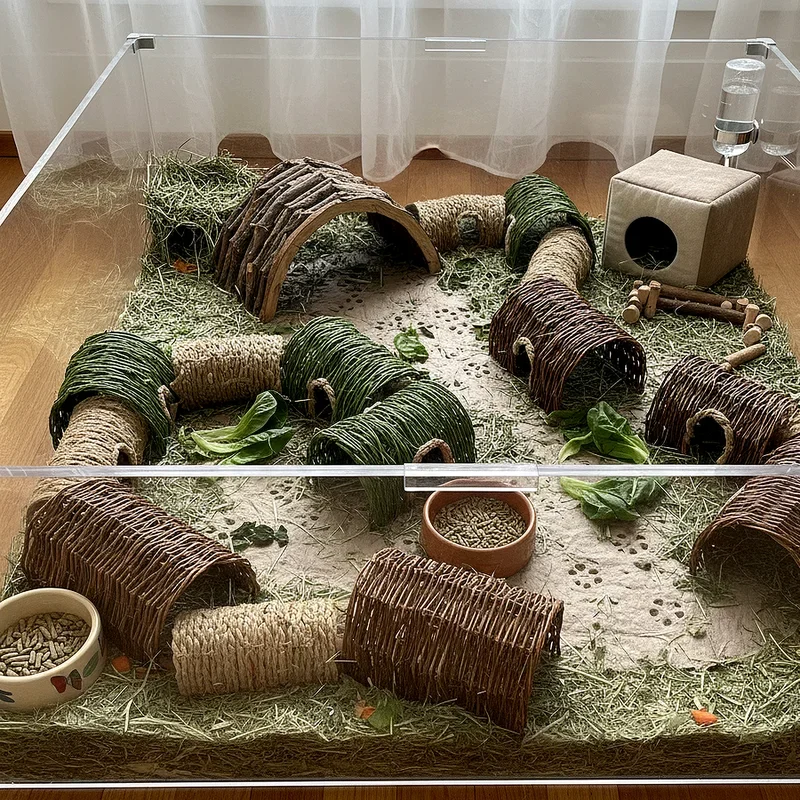
Tunnels satisfy your guinea pig's instinctive desire to travel through covered pathways while providing excellent exercise opportunities. These accessories come in various materials including fabric, plastic, wood, and woven grass, each offering unique benefits. Fabric tunnels are lightweight and collapsible for easy storage, while wooden versions are sturdy and satisfy chewing urges. Arrange tunnels throughout the habitat to create an interconnected system that encourages running and exploration. Your guinea pigs will zip through these passages during evening activity periods, their little feet pattering rhythmically as they navigate their tunnel network. Position tunnels to connect different habitat zones, making them functional pathways rather than just toys. Some guinea pigs enjoy pushing through hanging fabric tunnel entrances, while others prefer open-ended designs they can see completely through for security.
10. Include Chew Toys and Wooden Accessories
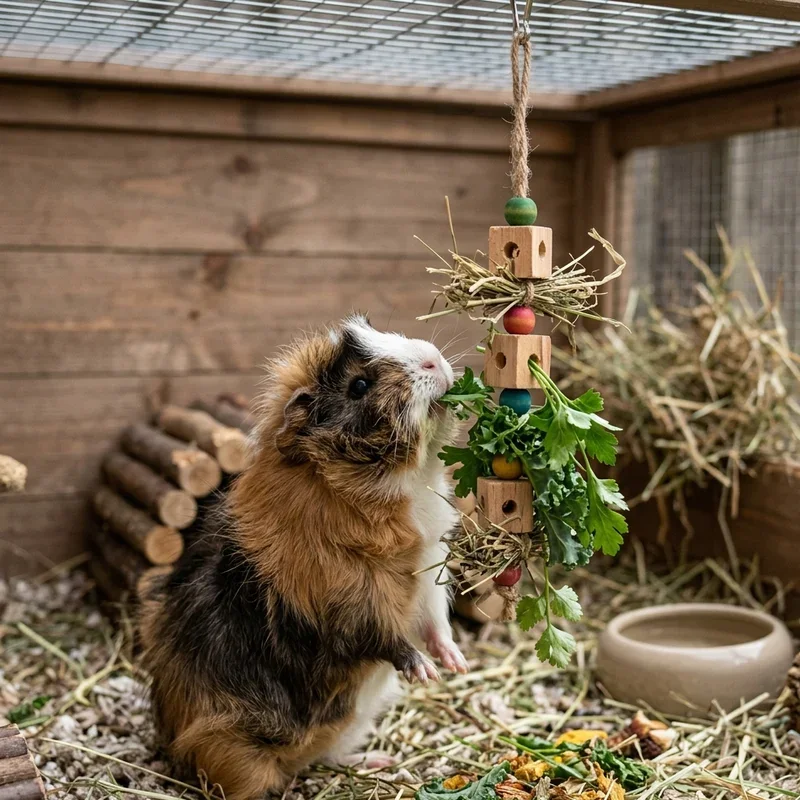
Guinea pig teeth grow continuously throughout their lives, making appropriate chewing opportunities absolutely essential for dental health. Wooden accessories serve dual purposes—providing necessary tooth wear while offering entertainment and enrichment. Choose untreated wood from safe species like apple, willow, or kiln-dried pine, avoiding cedar and treated lumber that contain harmful chemicals. Offer wooden bridges, chew sticks, blocks, and hanging toys that your guinea pigs can gnaw to their heart's content. Some guinea pigs are aggressive chewers who demolish wooden toys quickly, while others nibble more delicately. Either way, this natural behavior must be accommodated. Rotate chew toys regularly to prevent boredom and introduce new textures and shapes. Watch for toys becoming splintered or small enough to pose choking hazards, replacing them immediately.

11. Design a Kitchen Area for Organized Feeding
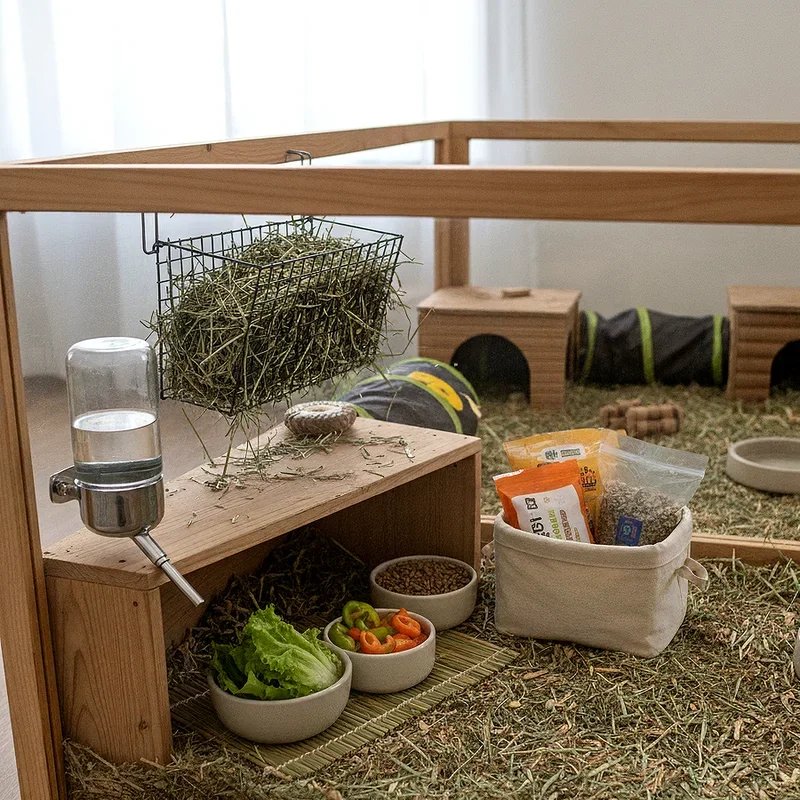
Establishing a dedicated feeding zone streamlines care routines while teaching your guinea pigs where meals appear consistently. Designate one habitat area as the kitchen, positioning water bottles, food bowls, and vegetable dishes together. Use ceramic bowls heavy enough to prevent tipping, and choose designs your guinea pigs cannot climb into and soil. This organized approach makes cleaning easier and helps you monitor food consumption more accurately. Your guinea pigs will quickly learn to congregate in the kitchen area at feeding times, wheeling excitedly when they hear you approaching. Keep the kitchen away from sleeping areas to maintain hygiene and establish distinct zones for different activities. Consider placing an absorbent mat under bowls to catch spills and keep surrounding areas much cleaner for everyone involved.
12. Install Proper Lighting for Day-Night Cycles
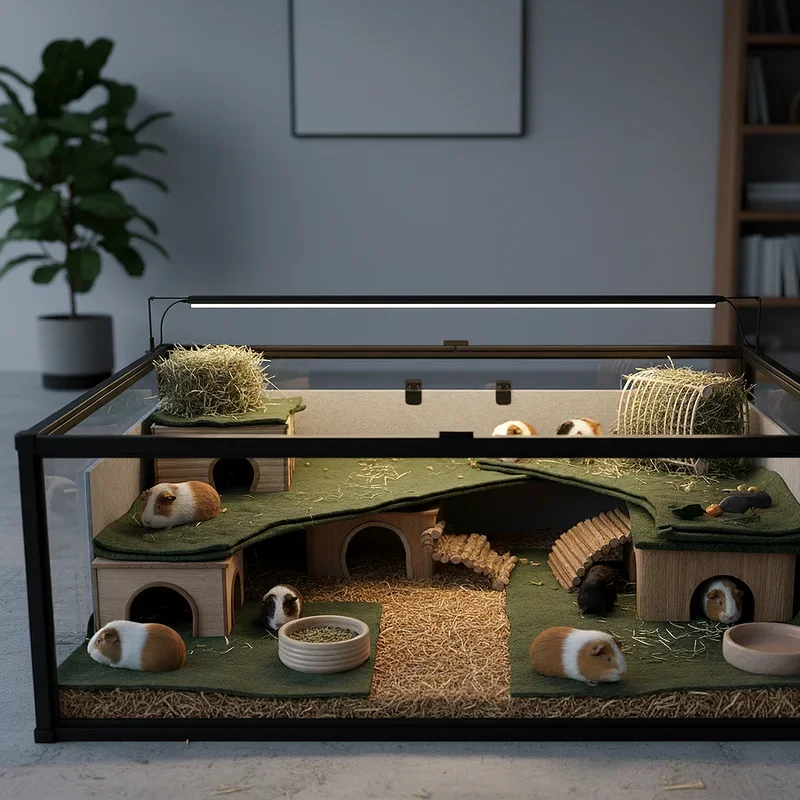
Guinea pigs are crepuscular creatures, meaning they're most active during dawn and dusk, but they still require proper lighting to regulate their natural circadian rhythms. Position their habitat near natural light sources without direct sunlight exposure, which can cause overheating. If natural light is insufficient, supplement with full-spectrum lighting on a timer that mimics natural day-night cycles—approximately twelve hours of light and twelve hours of darkness. Proper lighting affects your guinea pig's mood, activity levels, and overall health significantly. Avoid sudden transitions between light and dark; gradual changes feel more natural and less stressful. Never place cages directly beside windows where temperature fluctuations and draft exposure create health risks. Observe your guinea pigs' behavior patterns to understand their preferred activity times, and respect their need for complete darkness.
13. Add a Water Bottle Station with Backup
Constant access to fresh, clean water is absolutely non-negotiable for guinea pig health. Install at least one water bottle per two guinea pigs, positioning them at comfortable drinking heights. Glass bottles are heavier and less prone to tipping than plastic alternatives, though both work effectively when properly secured. Place a backup water source in case the primary bottle malfunctions, preventing dehydration emergencies. Check bottles daily to ensure proper function—sometimes ball bearings stick, cutting off water flow without obvious signs. Wash bottles thoroughly every few days to prevent bacterial growth and algae formation. Some guinea pigs prefer drinking from shallow bowls, though these soil more quickly and require more frequent changing. Position water sources away from bedding areas to minimize contamination and maintain cleanliness throughout the habitat space.
14. Create a Comfortable Temperature-Controlled Space
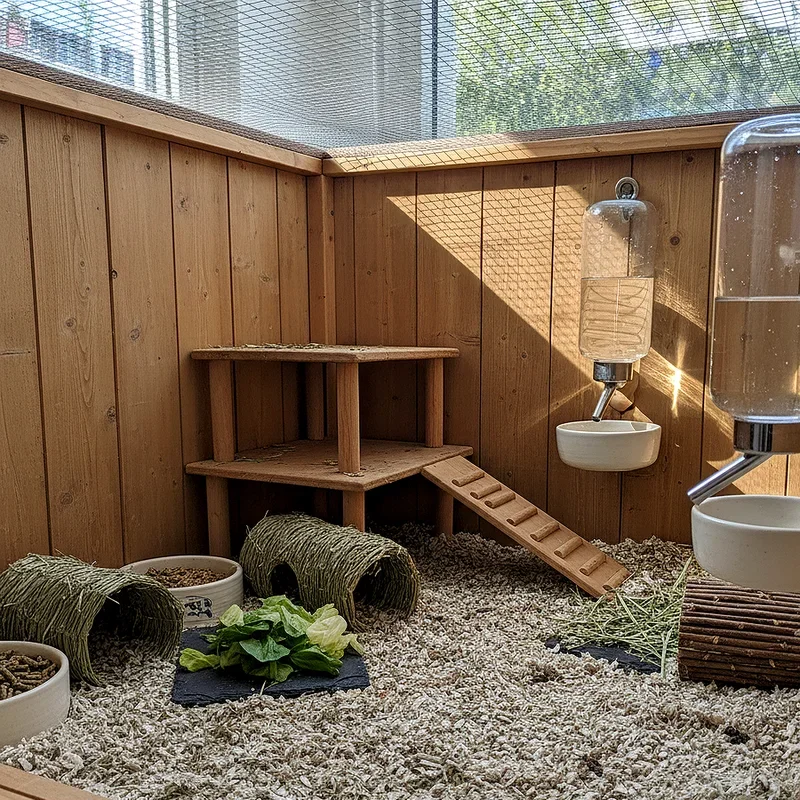
Guinea pigs are remarkably temperature-sensitive creatures who cannot tolerate extreme heat or cold. Maintain their habitat between sixty and seventy-five degrees Fahrenheit for optimal comfort and health. Position cages away from heating vents, air conditioning units, drafty windows, and direct sunlight that creates hotspots. During summer, provide ceramic tiles where guinea pigs can lie to cool down, and use fans for air circulation without direct drafts. Never use heat lamps, which pose burn and fire risks. In winter, ensure habitats remain warm enough without overheating—guinea pigs prefer cooler temperatures than most humans find comfortable. Monitor for temperature stress signs including lethargy, rapid breathing, or huddling behavior. Consider the room's humidity levels too, as excessive moisture promotes respiratory issues while extreme dryness irritates delicate airways unnecessarily.
15. Include Interactive Toys and Enrichment Items
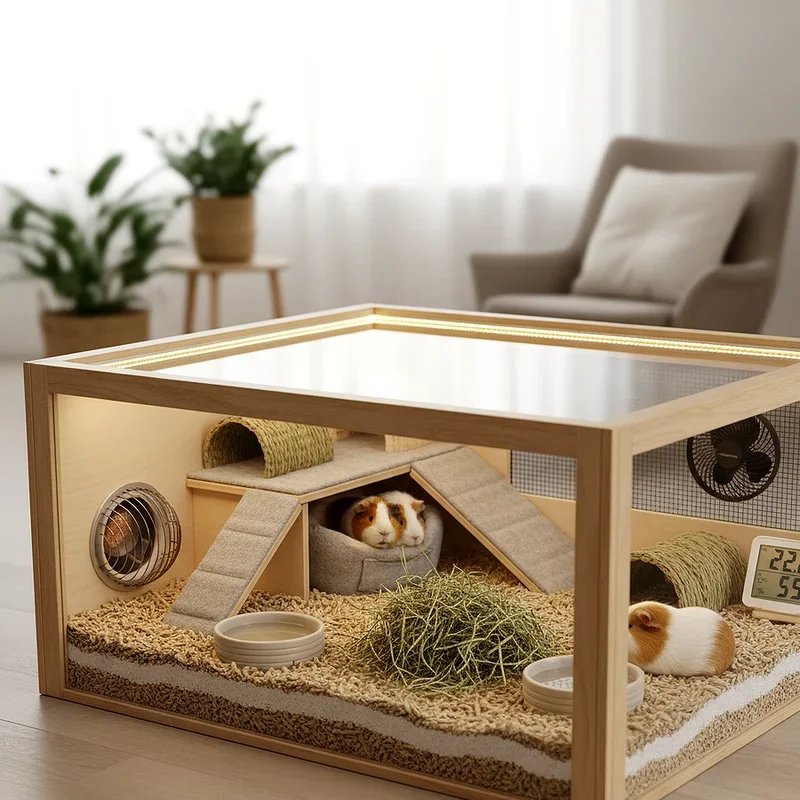
Mental stimulation ranks equally important as physical exercise for maintaining happy, healthy guinea pigs. Interactive toys challenge their intelligence while preventing boredom that leads to destructive or repetitive behaviors. Offer treat balls that dispense pellets when rolled, cardboard boxes with multiple entrances, and crinkly tunnels that make interesting sounds. Guinea pigs enjoy pushing lightweight toys around their habitat, investigating new objects, and solving simple puzzles. Rotate toys weekly to maintain novelty and interest—what seems boring today might fascinate them next month after a break. DIY enrichment works wonderfully too: stuff hay into paper bags, create obstacle courses from household items, or hide vegetables throughout the habitat. Watch your guinea pigs' preferences emerge as some gravitate toward physical toys while others prefer foraging challenges and mental stimulation activities.
Conclusion
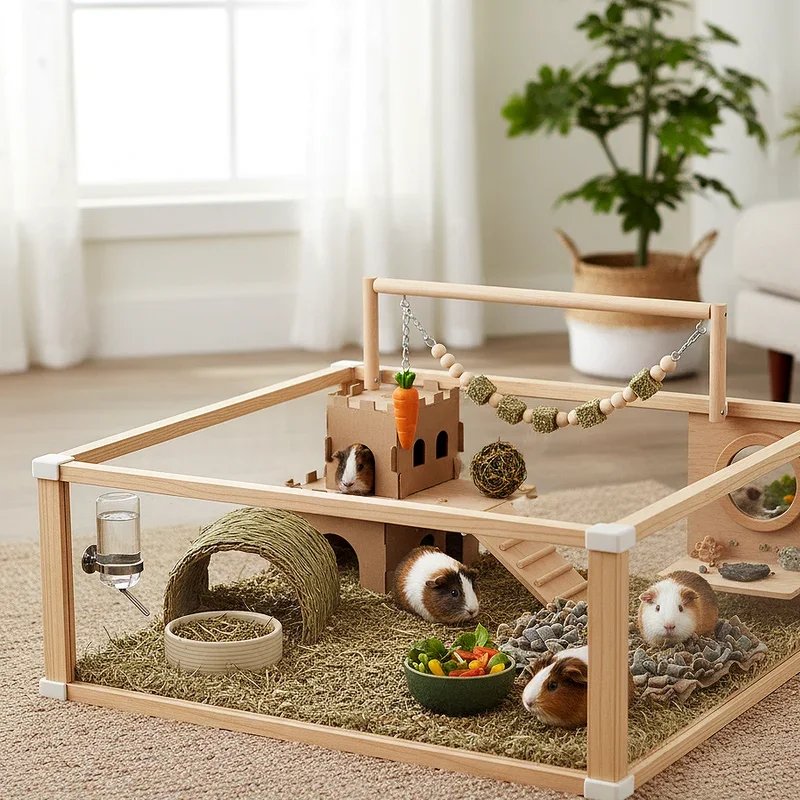
Designing an exceptional guinea pig habitat requires thoughtful planning, creativity, and genuine commitment to your pet's wellbeing. By implementing these fifteen habitat ideas, you create an environment where your guinea pig doesn't just survive but truly thrives. Remember that each guinea pig has unique preferences, so observe your pet's behaviors and adjust accordingly. The investment you make in their living space directly translates to their quality of life, happiness, and longevity. Start with the basics, then gradually incorporate additional features as you learn what your guinea pig enjoys most. Your reward will be a confident, active, joyful companion who popcorns with excitement and wheeks with genuine contentment in their thoughtfully designed home.
Read next: 15 Guinea Pig Bedding Ideas for Comfort and Cleanliness
Frequently Asked Questions
Q1: How large should a guinea pig habitat be for two guinea pigs?
A: A minimum of 10.5 square feet is required, though more space significantly improves quality of life.
Q2: Can guinea pigs live happily in outdoor habitats year round?
A: No, guinea pigs are temperature sensitive and require climate controlled indoor environments for safety.
Q3: How often should I clean my guinea pig's habitat completely?
A: Deep clean weekly, with daily spot cleaning to remove soiled bedding and uneaten fresh food.
Q4: Do guinea pigs need companions or can they live alone happily?
A: Guinea pigs are social animals who thrive with same species companions and become lonely alone.
Q5: What bedding type is safest and most comfortable for guinea pigs?
A: Fleece bedding or paper-based bedding are safest, avoiding cedar and pine shavings completely.
Stay up to date with our latest ideas!