Crafting Custom, Safe Enrichment Toys for Your Furry Friend
Learn how to craft custom, safe enrichment toys for your furry friend to encourage play, reduce boredom, and support your pet's physical and mental well being.
Every pet parent knows the familiar, slightly disheartening cycle: you spend twenty dollars on a brightly colored, supposedly "indestructible" toy, bring it home to your eagerly waiting dog or cat, and watch in horror as it is completely dismantled within ten minutes. Your living room floor is suddenly covered in a snowstorm of polyester stuffing, and the squeaker has been expertly surgically removed.
Alternatively, perhaps you have a highly intelligent breed—like a Border Collie or a Siamese cat—who solves every store-bought puzzle toy in seconds and then stares at you, demanding a greater challenge.
Our pets are unique individuals with highly specific preferences, chew styles, and intelligence levels. Yet, the pet toy industry largely operates on a one-size-fits-all model. If you are tired of wasting money on generic toys that fail to engage your furry friend safely, it might be time to take matters into your own hands. Welcome to the world of bespoke pet enrichment, where crafting custom toys from home is revolutionizing how we play with our companions.
The Mental Health Crisis in Our Living Rooms
Before diving into how to create your own toys, it is crucial to understand why enrichment matters. Vets and animal behaviorists increasingly point to boredom as the root cause of destructive pet behaviors. Chewing furniture, excessive barking, and over-grooming are often signs of an under-stimulated mind.
Pets, particularly dogs and cats, are hardwired to hunt, forage, and problem-solve for their food. When we hand them their meals in a standard metal bowl, we deprive them of that mental workout.
The Store-Bought Shortfall: Commercial slow-feeders and puzzle toys are great, but they are static. Once a clever pet learns the "trick" to the puzzle, the mental stimulation drops to zero. It becomes just another tedious step between them and their kibble.
The Custom Solution: By designing your own toys, you can continuously iterate on the complexity. If your dog masters a puzzle, you can simply adjust the design to make it slightly more challenging, keeping their brain actively engaged week after week.
The Desktop Toy Factory
Creating personalized, safe, and engaging toys is no longer science fiction. By bringing modern fabrication tools into your home, you can transform your desk into a personalized pet workshop. Utilizing a desktop 3D printer allows you to design and manufacture custom enrichment tools that are tailored perfectly to your pet's exact size, jaw strength, and cognitive level.
Imagine being able to measure your dog’s favorite treats and printing a dispenser that releases them at the exact rate you choose. Or designing a lightweight, aerodynamically perfect fetch toy for a senior dog with sensitive teeth. You are no longer limited by what is in stock at the local pet superstore; you are limited only by your imagination.
Safety First: Understanding Materials
When it comes to our pets, safety is the ultimate priority. You cannot simply use any plastic to create a chew toy. Ingesting brittle plastic shards or toxic chemicals is a severe health hazard. Therefore, understanding material science is the most important step in DIY pet crafting.
When fabricating items for animals, you must carefully select your filament. Not all plastics are created equal in the eyes of a heavy chewer.
Important Safety Guidelines for DIY Pet Toys:
Avoid Brittle Plastics: Materials like standard PLA or resin can shatter under the pressure of a dog's jaw, creating sharp edges.
Embrace Flexible Materials: Look into TPU (Thermoplastic Polyurethane). It is highly flexible, durable, and acts remarkably like commercial tough-rubber toys. It yields under pressure rather than cracking.
Food-Safe Considerations: If the toy will dispense food or be heavily mouthed, ensure the material is non-toxic. Furthermore, 3D printed objects have microscopic layer lines that can harbor bacteria, so any food-contact toys should be designed to be easily scrubbed and regularly sanitized.
Supervision is Key: No toy is 100% indestructible. Whether store-bought or home-made, you should always supervise your pet during play to ensure they aren't tearing off and swallowing large chunks.
Project Ideas to Get You Started
If you are ready to start upgrading your pet's playtime, here are a few highly effective enrichment projects you can create at home:
1. The Custom Topographical Slow Feeder
For the dog that inhales their dinner in four seconds flat, a custom slow feeder is a lifesaver. You can design a bowl with intricate, raised geometric patterns tailored perfectly to the size of your dog’s snout. A flat-faced Pug needs a very different slow-feeder landscape than a long-snouted Greyhound.
2. Modular Treat Puzzles
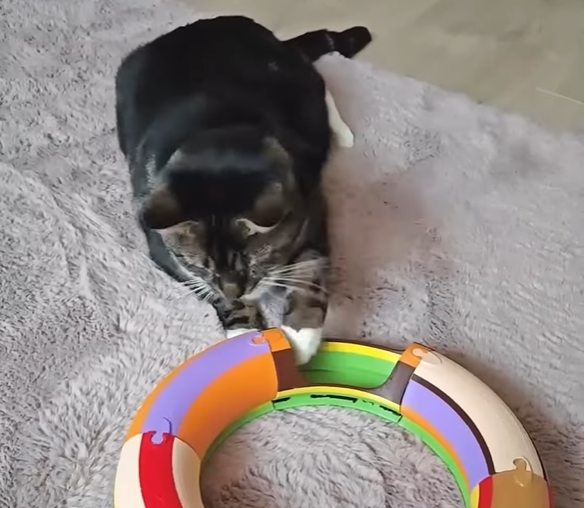
Start by designing a simple slider puzzle where your pet has to move a block to reveal a treat. Because you control the manufacturing, you can design the base to accept new, more difficult modules. As your pet gets smarter, you simply print a more complex locking mechanism and snap it onto the existing toy.
3. Ergonomic Cat Wands and Attachments
Cats can be notoriously picky about their toys. Some prefer feathers, others prefer crinkly plastics, and some just want to chase a small, unpredictable object. You can design custom attachments for a wand toy that mimic the exact erratic, fluttering movement your specific cat goes crazy for, keeping their predatory instincts sharp.
Strengthening the Bond
At the core of pet ownership is a profound bond built on care and mutual affection. Taking the time to observe your pet’s habits, identify what brings them joy, and actively create something uniquely for them is the ultimate expression of that love. By crafting bespoke enrichment toys, you aren't just saving money on chewed-up plushies—you are actively investing in their cognitive health, their happiness, and the beautifully unique relationship you share.
Stay up to date with our latest ideas!