15 Crested Gecko Enclosure Ideas for Healthy Happy Pets
Discover 15 crested gecko enclosure ideas to create the perfect habitat. Transform your pet's home with these creative, healthy setup tips.
Have you ever watched your crested gecko explore its enclosure and wondered if you could make it even better? These charming little creatures deserve living spaces that mirror their natural rainforest homes, and creating the perfect habitat is easier than you might think. Whether you are a first time gecko parent or a seasoned reptile enthusiast looking to upgrade, the right enclosure setup can transform your pet's quality of life dramatically. Think of it like designing a tiny jungle paradise where your gecko can climb, hide, and thrive. In this comprehensive guide, we will walk you through fifteen incredible enclosure ideas that will keep your crested gecko healthy, active, and genuinely happy. From naturalistic bioactive setups to creative DIY solutions, these ideas will inspire you to create something truly special for your scaly friend.
1. Naturalistic Bioactive Terrarium Setup
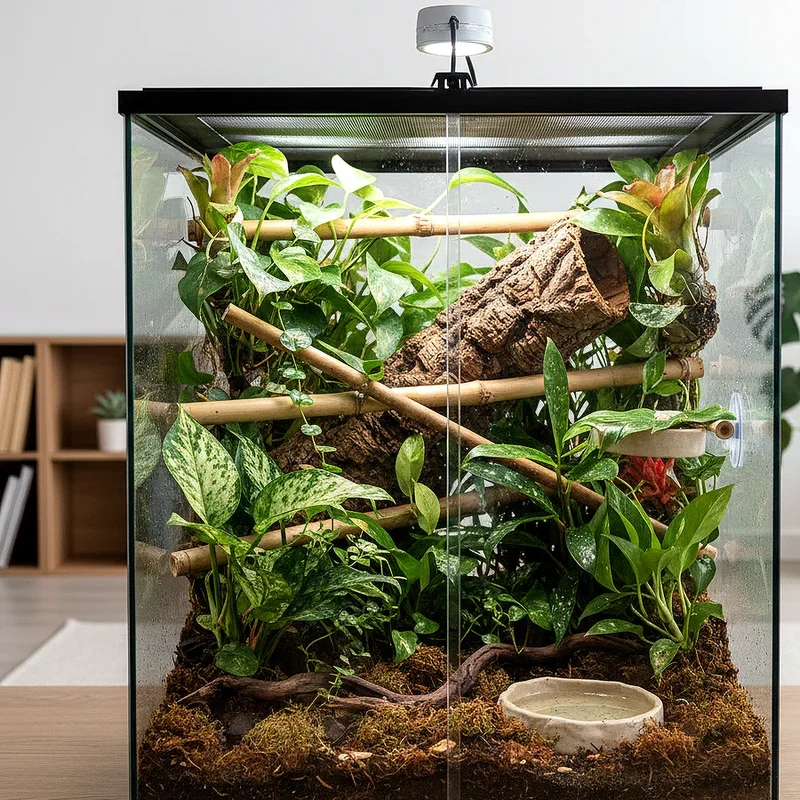
Creating a bioactive terrarium is like building a self sustaining ecosystem right in your living room. This setup includes live plants, beneficial bacteria, and cleanup crew insects like springtails and isopods that break down waste naturally. Your crested gecko benefits from a habitat that mimics its wild environment while you enjoy reduced maintenance responsibilities. The key components include a drainage layer of clay balls, mesh separation, organic soil mix, and leaf litter on top. Many gecko owners find that their pets become more active and display natural behaviors in bioactive setups. The initial investment might seem higher, but the long term rewards include healthier geckos and a stunning living display piece. This approach represents the gold standard in reptile keeping today.
2. Vertical Cork Bark Paradise
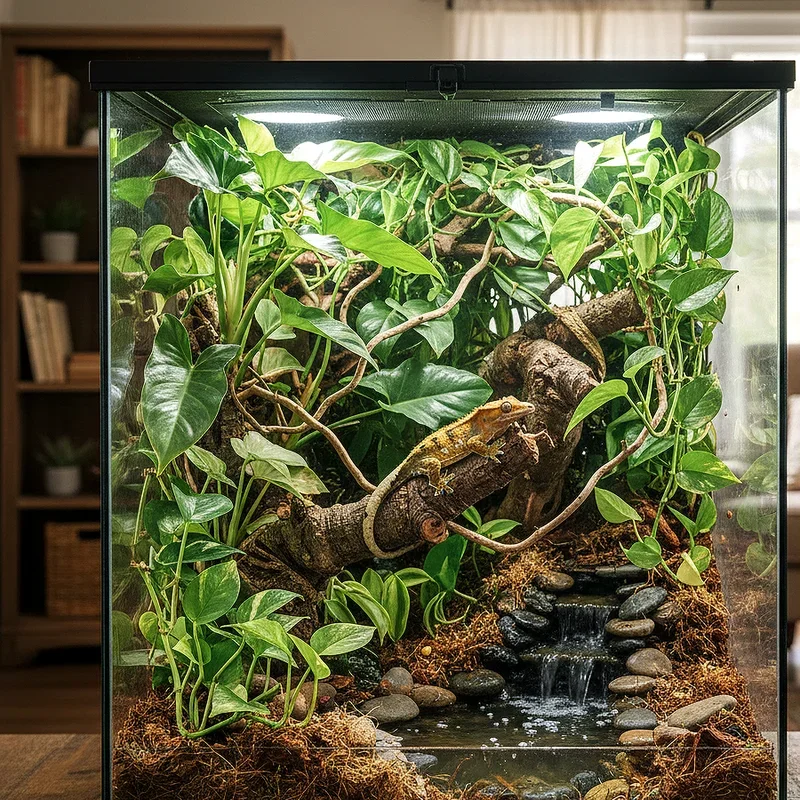
Cork bark serves as the ultimate climbing surface for your crested gecko because it mimics the tree bark they would encounter in New Caledonia. You can arrange multiple pieces vertically to create highways and rest stops throughout the enclosure. The textured surface provides excellent grip for those sticky toe pads, and the natural crevices offer hiding spots that make your gecko feel secure. Position larger flat pieces against the back glass to create a stunning natural backdrop that doubles as functional climbing space. Curved cork tubes work perfectly as hiding caves where your gecko can sleep during the day. The material also helps maintain humidity by absorbing and slowly releasing moisture into the air. Your gecko will thank you for this natural paradise.
3. Live Plant Jungle Environment
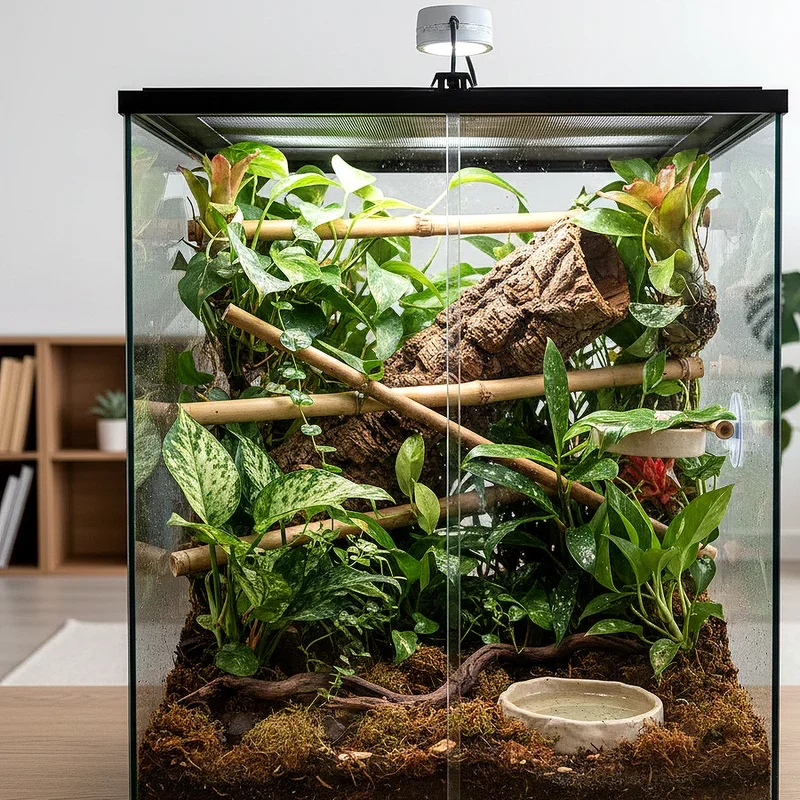
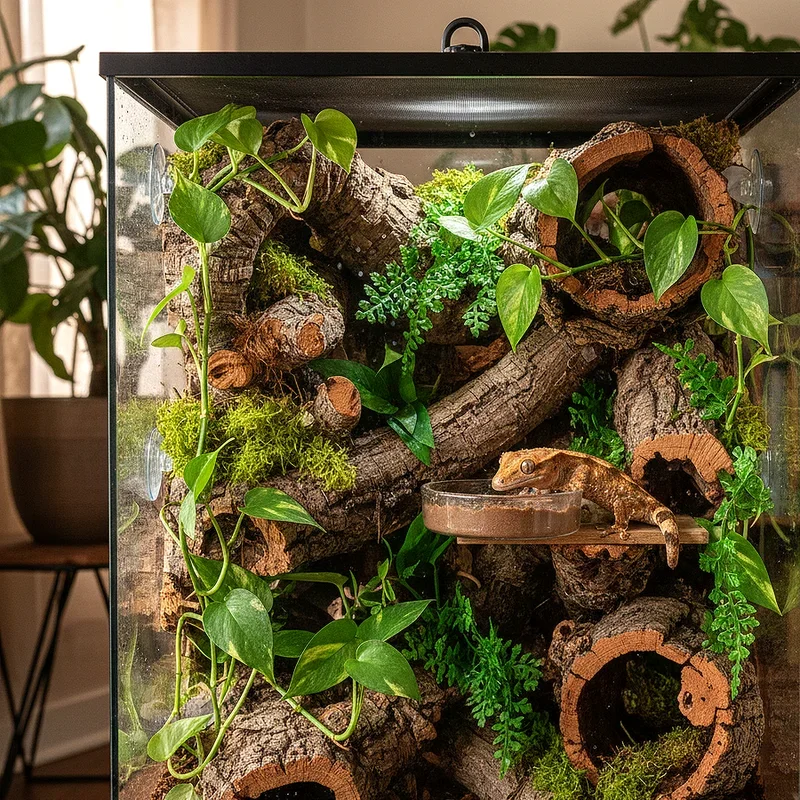
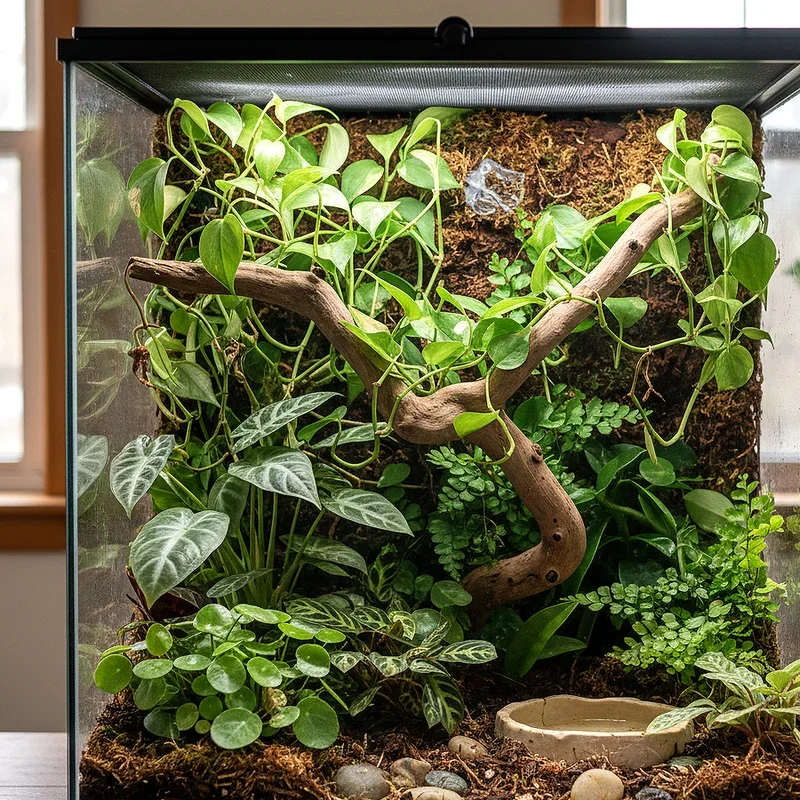
Pothos, bromeliads, and ficus plants transform any enclosure into a lush jungle that your crested gecko will absolutely adore. Live plants provide more than just aesthetic appeal because they help regulate humidity levels and offer countless perching opportunities. Your gecko will love weaving through broad leaves and resting on sturdy branches while feeling completely hidden from view. Choose hardy species that can tolerate the warm, humid conditions crested geckos require, and avoid anything toxic or easily crushed. Pothos remains the most popular choice because it grows quickly and tolerates low light conditions beautifully. Snake plants and dracaenas also work wonderfully as structural elements in larger enclosures. The investment in real plants pays dividends through improved air quality and natural behavior stimulation.
4. Minimalist Modern Enclosure Design
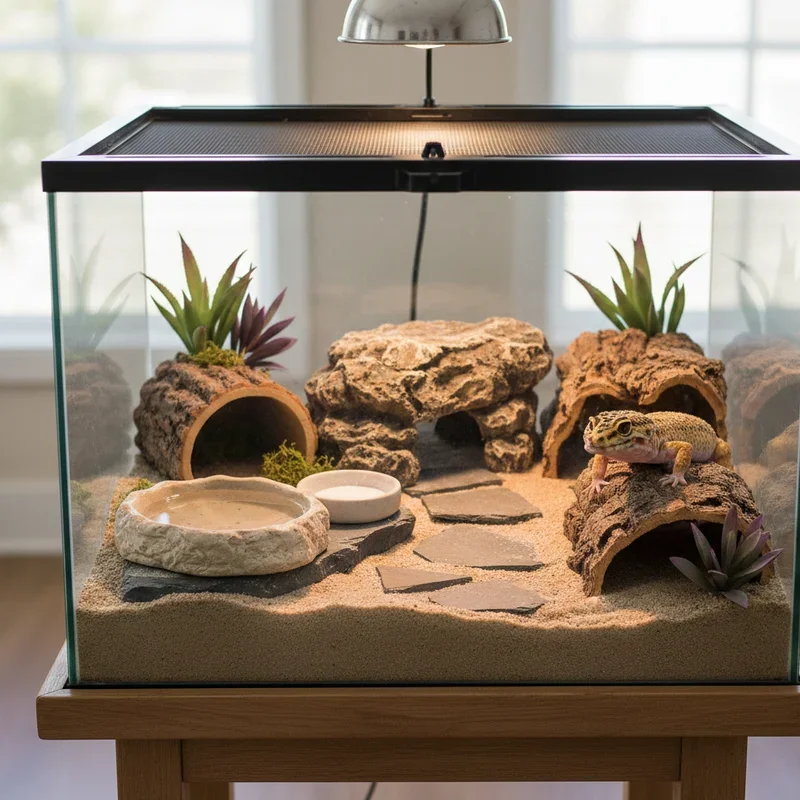
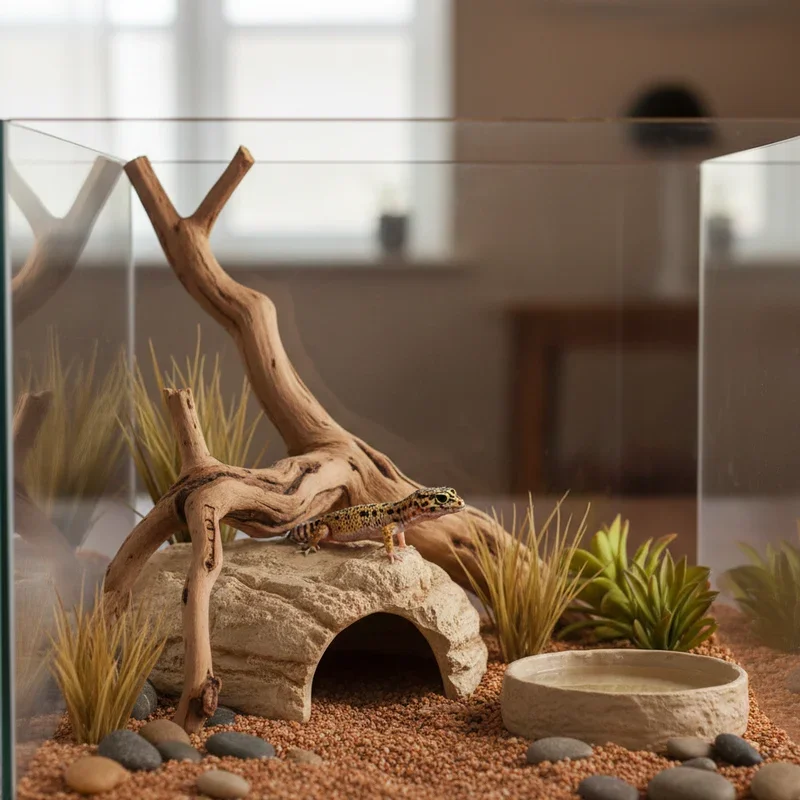
Sometimes less truly becomes more when designing a crested gecko habitat that emphasizes cleanliness and visibility. A minimalist approach uses paper towel substrate, artificial plants, and simple climbing structures for easy maintenance. This style works particularly well for breeders managing multiple animals or new keepers learning the basics of gecko husbandry. You can still provide adequate climbing opportunities and hiding spots without the complexity of a naturalistic setup. The key is ensuring you maintain proper humidity through regular misting despite the simpler setup. Many veterinarians actually recommend minimalist enclosures for sick geckos or new arrivals during quarantine periods. Clean lines and easy access make health monitoring straightforward while still keeping your gecko comfortable and content in its space.
5. Tropical Rainforest Replica
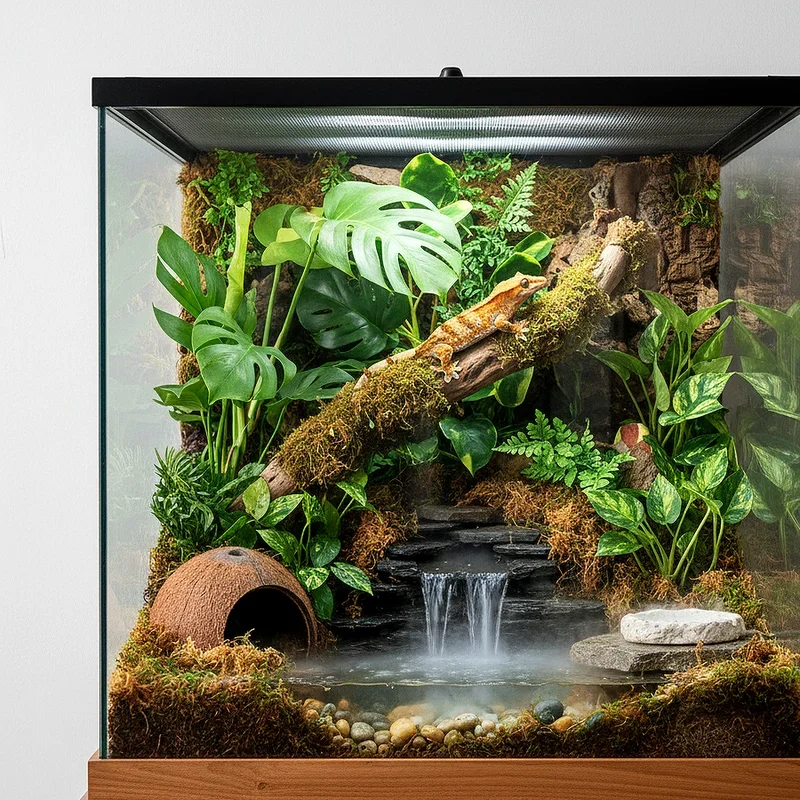
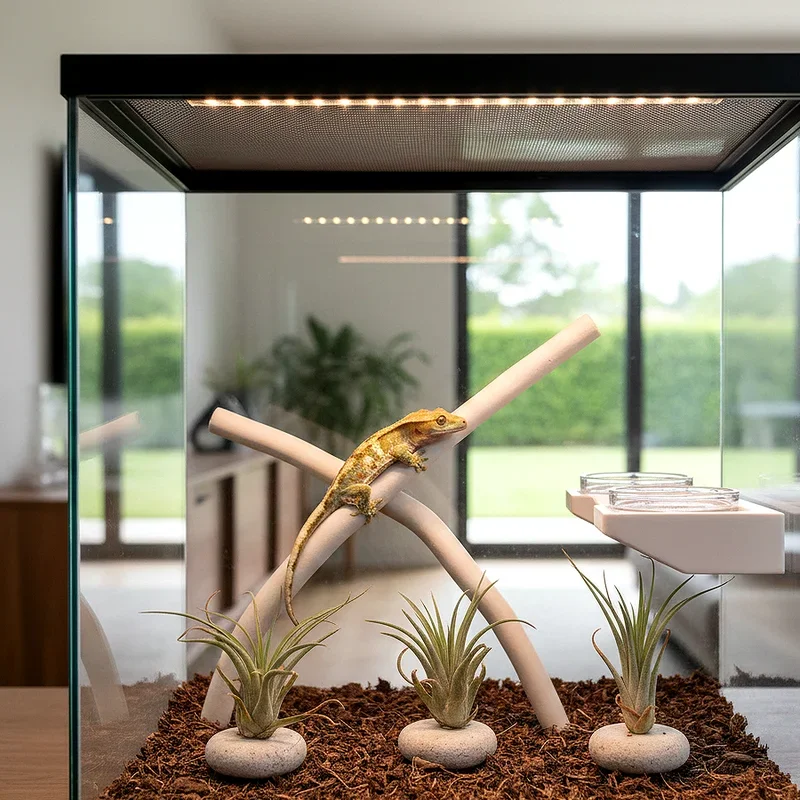
Imagine recreating the humid forests of New Caledonia right inside your crested gecko enclosure with authentic tropical elements throughout. This design incorporates multiple plant species, varying humidity zones, and temperature gradients that mimic the wild precisely. You would include broad leafed plants for sleeping spots, dense foliage for security, and open areas for hunting and exploring. The forest floor features leaf litter, moss patches, and perhaps a small water feature that maintains ambient humidity naturally. Overhead, branches crisscross to create an aerial highway system your gecko will use nightly during its active hours. This approach requires more planning and maintenance but produces the most natural behaviors in your pet. Watching a gecko thrive in such an environment feels incredibly rewarding.
6. Multi Level Climbing Haven
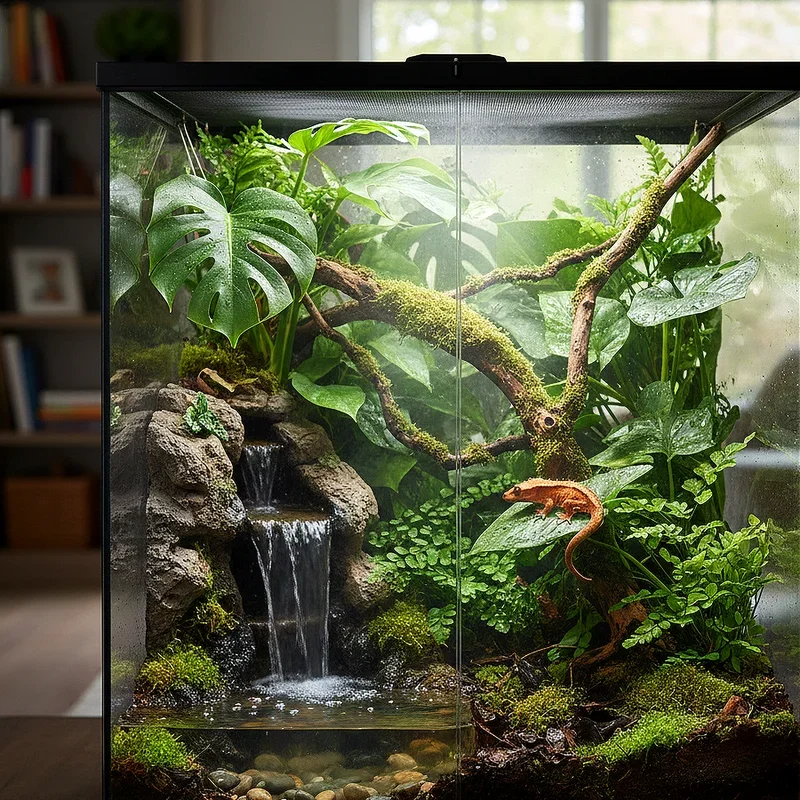
Crested geckos are arboreal creatures that spend most of their lives climbing, so why not maximize vertical space with multiple platforms and levels? This design creates distinct zones at different heights using shelves, ledges, and horizontal branches throughout the enclosure. Your gecko will patrol these levels nightly, choosing different spots based on temperature and humidity preferences at various times. Install platforms at the top for basking under ambient lighting and lower platforms near humidity sources for shedding support. Magnetic ledges make feeding time convenient while encouraging natural hunting behaviors as your gecko climbs to find food. Vary the materials between natural wood, cork, and artificial platforms to create interesting textures and visual appeal. This setup keeps your gecko physically active and mentally stimulated.
7. Coconut Fiber Substrate System
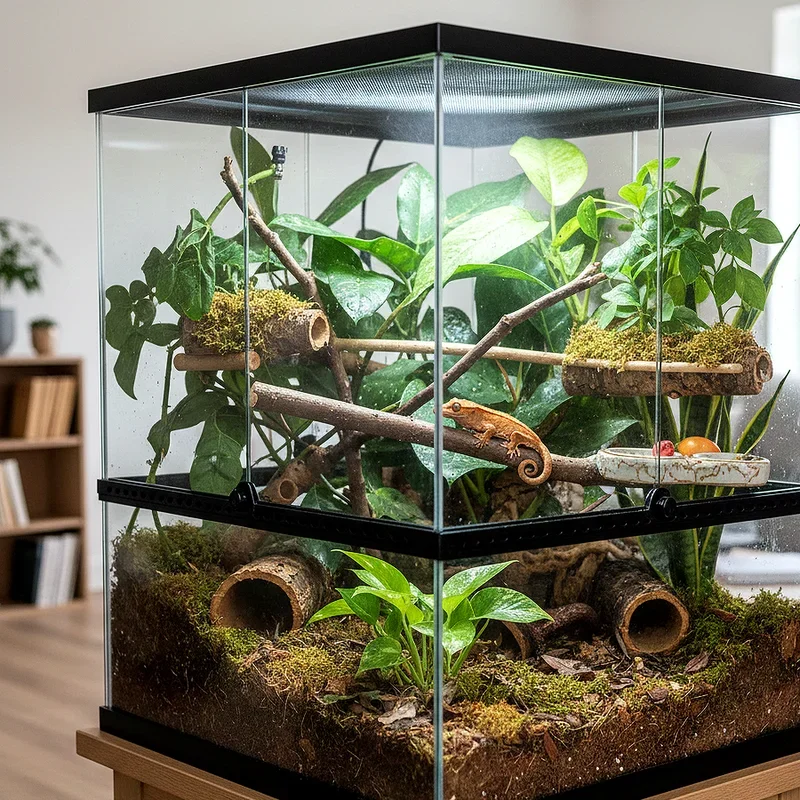
Coconut fiber substrate offers the perfect foundation for any crested gecko enclosure because it holds moisture excellently without becoming waterlogged. This natural material comes from processed coconut husks and provides a soft, safe surface if your gecko takes an unexpected tumble from climbing structures. The fiber helps maintain humidity levels between sixty and eighty percent, which crested geckos absolutely need for proper health and shedding. You can mix it with sphagnum moss for even better moisture retention in drier climates or seasons. Layer it about two to three inches deep to allow for natural digging behaviors and moisture regulation throughout the substrate. Many keepers appreciate how coconut fiber resists mold growth compared to other organic substrates available today. Regular spot cleaning keeps this substrate fresh for months between complete changes.
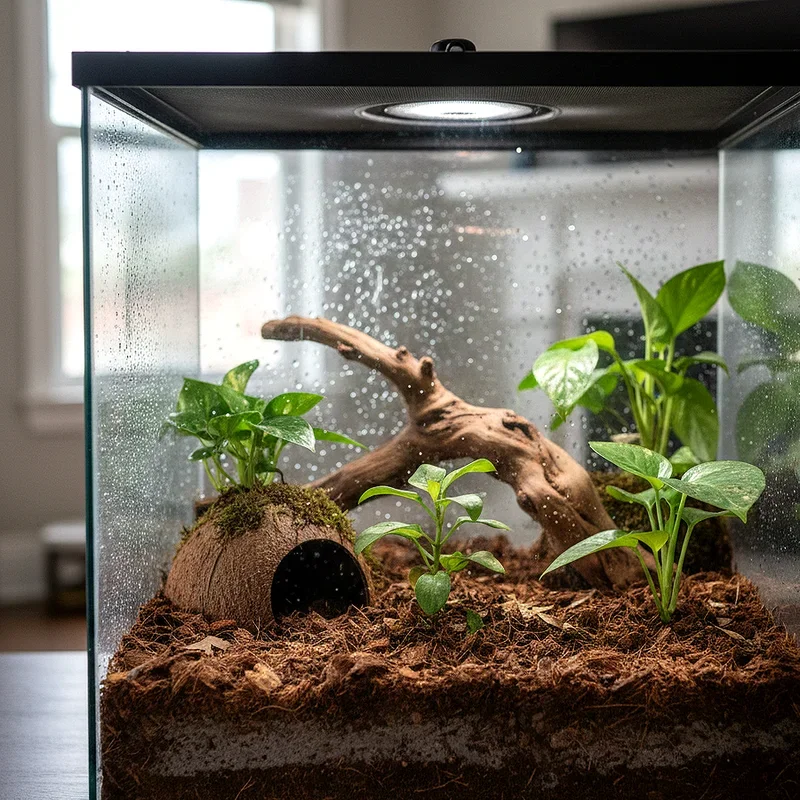
8. LED Lighting Ambiance Setup
Proper lighting does more than just illuminate your crested gecko enclosure because it establishes natural day and night cycles crucial for health. LED systems offer energy efficiency and programmable options that simulate sunrise and sunset transitions beautifully. Your gecko does not require UVB lighting like some reptiles, but ambient lighting helps regulate its circadian rhythm and activity patterns effectively. Choose fixtures that produce gentle white or slightly warm toned light rather than harsh bright options that stress nocturnal animals. Some keepers add dim blue or red nighttime viewing lights to observe their geckos during active hours without disturbing them significantly. Position lights outside the enclosure or protected by covers to prevent burns from curious climbing geckos investigating everything new. Smart timers eliminate the guesswork and ensure consistent lighting schedules.
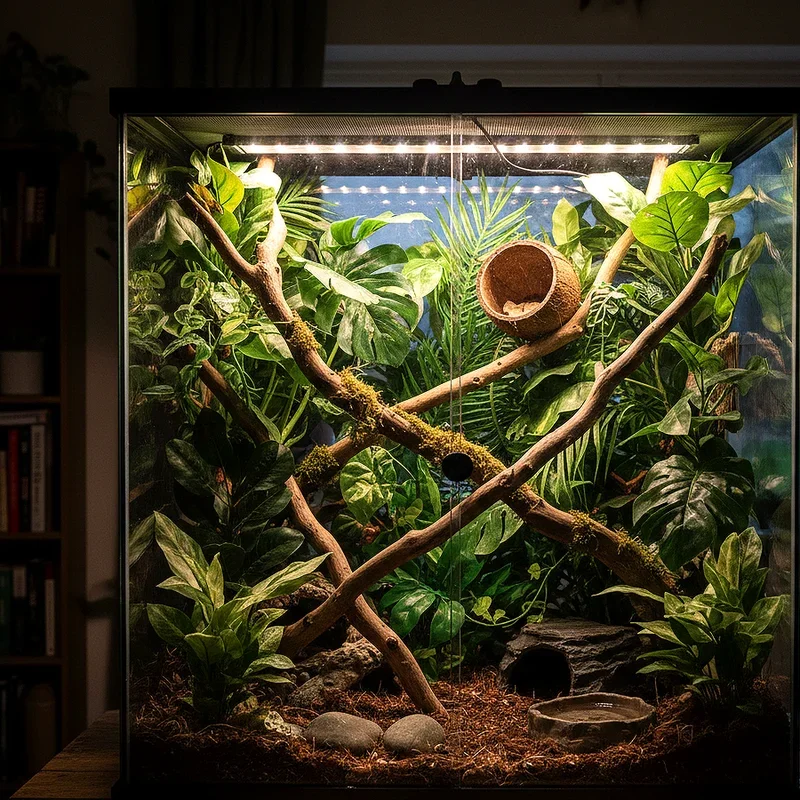
9. Waterfall and Humidity Feature
Adding a small waterfall feature transforms your crested gecko enclosure into a stunning display piece while serving practical humidity functions simultaneously. The constant water movement increases ambient humidity naturally and provides drinking water that many geckos prefer over standing dishes. You can purchase ready made reptile waterfalls or build custom features using aquarium pumps and natural stone arrangements creatively. Position the feature where water splashing reaches plant leaves, mimicking the morning dew your gecko would drink in nature. Ensure the water remains shallow throughout to prevent any drowning risk, as crested geckos are not strong swimmers by any means. Regular cleaning prevents bacterial growth in the water reservoir, which could cause health issues if neglected over time. The gentle trickling sound adds peaceful ambiance to your room as well.
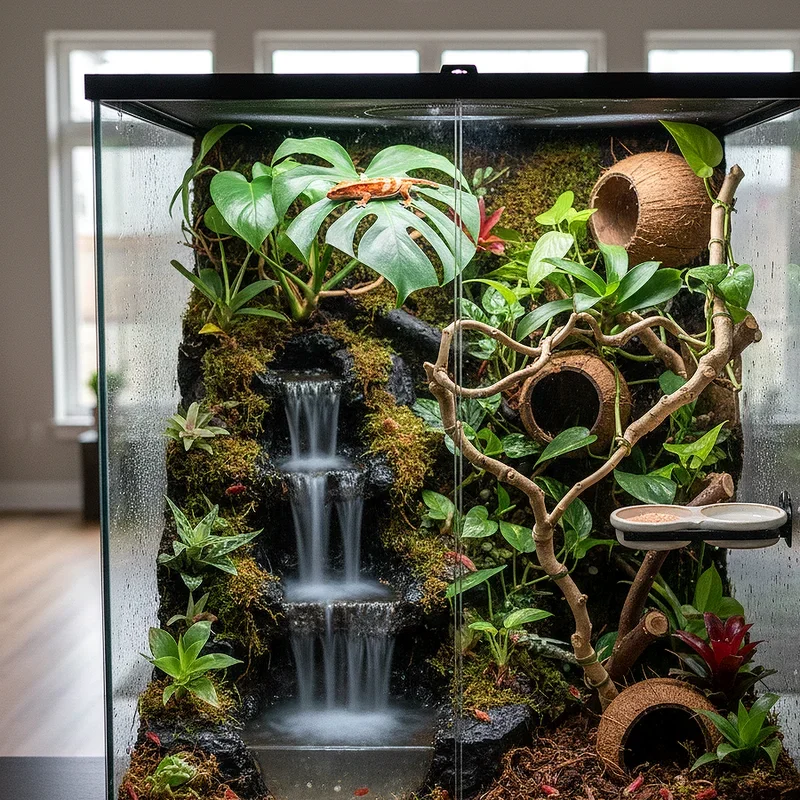
10. Branch Network Climbing Structure
Nothing satisfies a crested gecko quite like an extensive network of branches creating pathways throughout its entire enclosure space. You can use natural branches from safe tree species like oak, maple, or grapevine after proper sanitization through baking or boiling. Arrange branches at various angles, creating both horizontal highways and diagonal climbing challenges that exercise your gecko thoroughly. Connect multiple pieces using aquarium safe silicone to create stable structures that will not shift during enthusiastic climbing sessions. Position thicker branches near the enclosure top where your gecko will likely establish favorite sleeping spots during daylight hours. Thinner branches work well near the bottom where leaves and foliage provide additional cover and security feelings. This setup encourages the natural arboreal behaviors that keep crested geckos physically and mentally healthy.
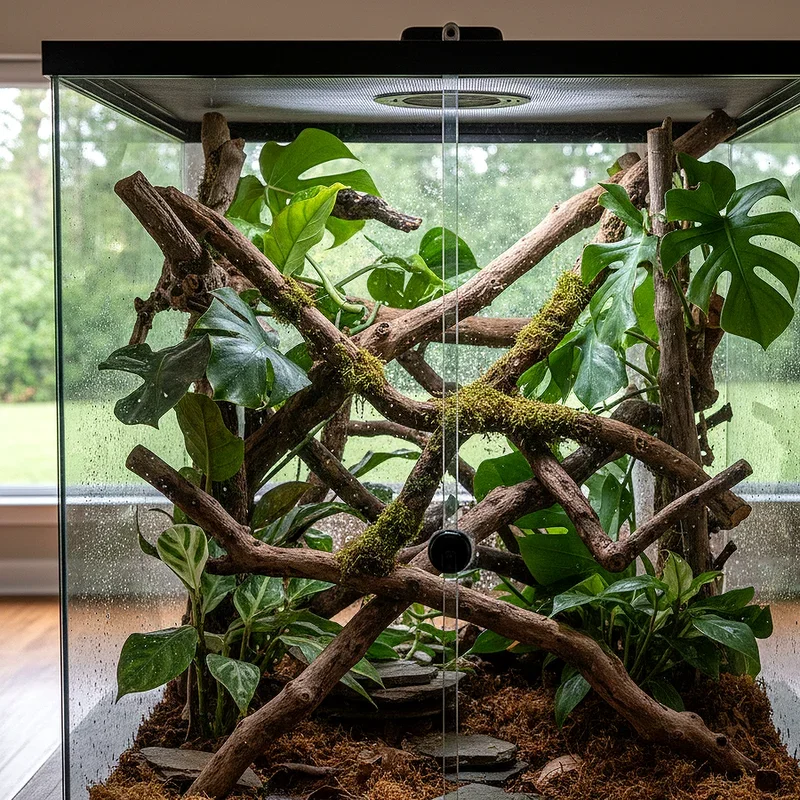
11. Magnetic Feeding Ledge Installation
Magnetic feeding ledges revolutionized crested gecko keeping by allowing elevated food placement that mimics natural foraging behaviors perfectly. These clever devices attach through the glass using strong magnets, letting you position food cups anywhere in the enclosure easily. Your gecko will quickly learn where dinner appears, climbing eagerly to its designated feeding station each evening after lights dim. The elevated position keeps food cleaner than floor placement and encourages the climbing activity crested geckos need for health. Many ledges accommodate multiple cups, allowing you to offer different food varieties or water simultaneously at various heights. You can reposition them regularly to encourage exploration and prevent your gecko from becoming lazy about movement. The convenience of refilling cups without reaching deep into the enclosure also reduces stress during feeding time.
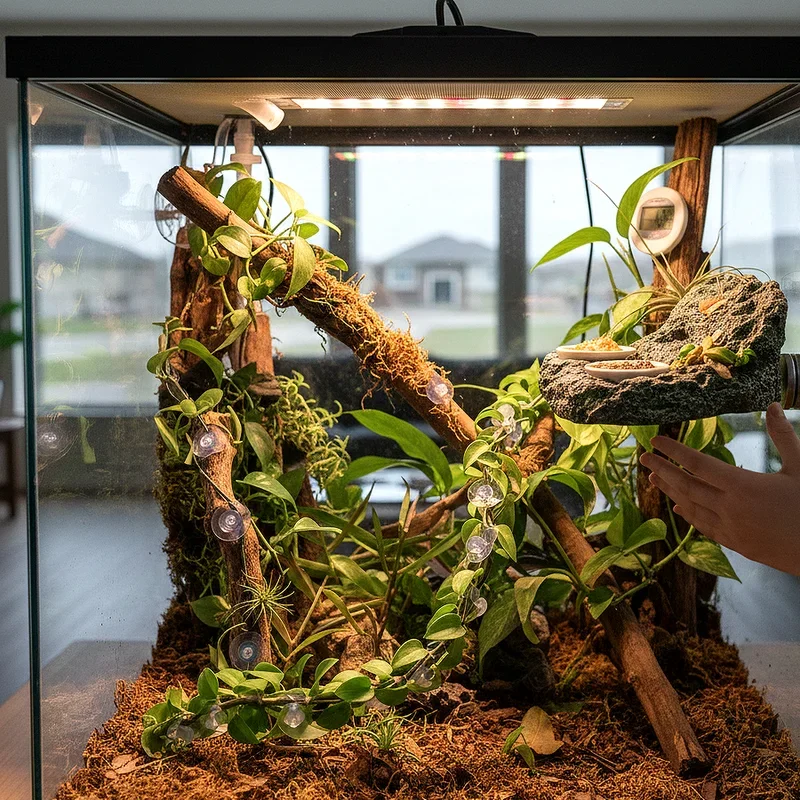
12. Hide Box Collection Arrangement
Every crested gecko needs multiple hiding options distributed throughout its enclosure to feel truly secure and reduce stress levels. Think of hides as your gecko's bedroom, office, and vacation home combined into essential furniture pieces it requires daily. Cork bark tubes, coconut shell halves, and commercial reptile caves all work wonderfully when positioned at different heights and humidity zones. Your gecko will select different hides based on temperature preferences, shedding needs, and general mood throughout each day. Place at least one hide near the warm top area and another in a cooler, more humid lower region for options. Observing which hides your gecko prefers reveals valuable information about its comfort and health status over time. Proper hiding opportunities directly impact stress levels, feeding responses, and overall wellbeing in captive crested geckos significantly.
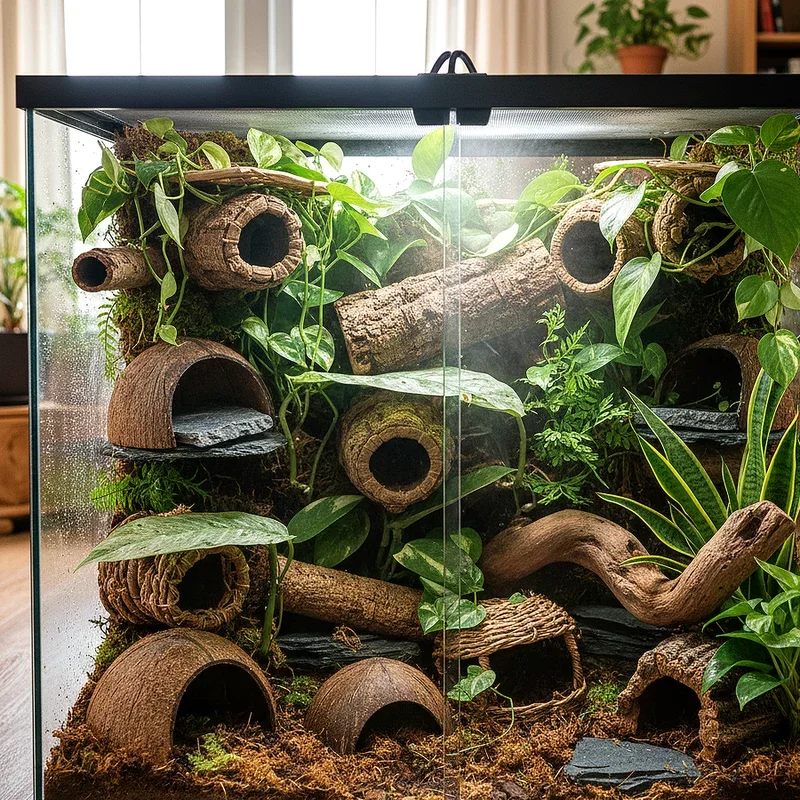
13. Moss Wall Moisture System
Creating a living moss wall along the back of your enclosure serves both aesthetic and functional purposes for your crested gecko. The moss absorbs water during misting sessions and releases moisture slowly throughout the day, stabilizing humidity levels naturally. Your gecko will rest against the soft moss surface, which helps with shedding by keeping skin hydrated during this vulnerable process. You can attach sheet moss or create a planted wall using mesh backing and sphagnum moss base for growing live species. Popular choices include java moss, mood moss, and various tropical species that thrive in humid enclosure conditions without much fuss. The green backdrop creates stunning visual depth while providing additional climbing texture your gecko will genuinely appreciate. Mist the wall directly during humidity maintenance for best moisture distribution throughout the entire enclosure space.
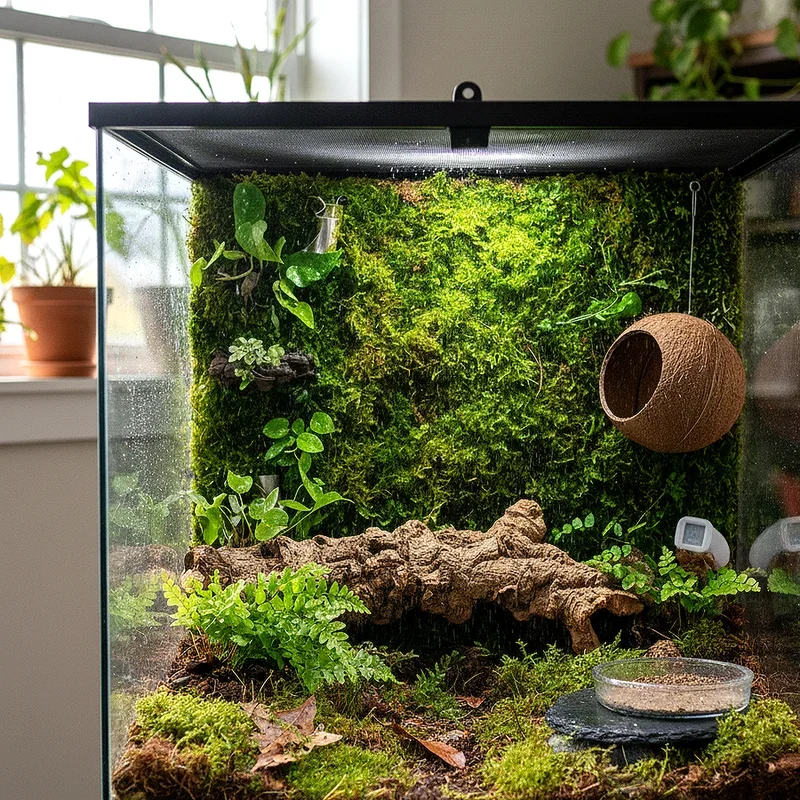
14. Budget Friendly DIY Enclosure
You do not need expensive equipment to create a wonderful habitat because creativity and research stretch limited budgets effectively. Start with a basic glass aquarium turned vertically, adding a screen lid conversion kit for proper ventilation and access conveniently. Dollar store plants, cleaned outdoor branches, and homemade hides from food containers work surprisingly well when assembled thoughtfully together. The key is ensuring all materials are reptile safe without harmful chemicals, sharp edges, or small parts that could cause problems. Paper towel substrate eliminates initial soil costs while you save for upgraded naturalistic options later when finances allow improvement. Online reptile communities share countless DIY tutorials for building backgrounds, hides, and climbing structures from inexpensive everyday materials readily available. Your gecko cares more about function than price tags, so focus on meeting needs before aesthetics.
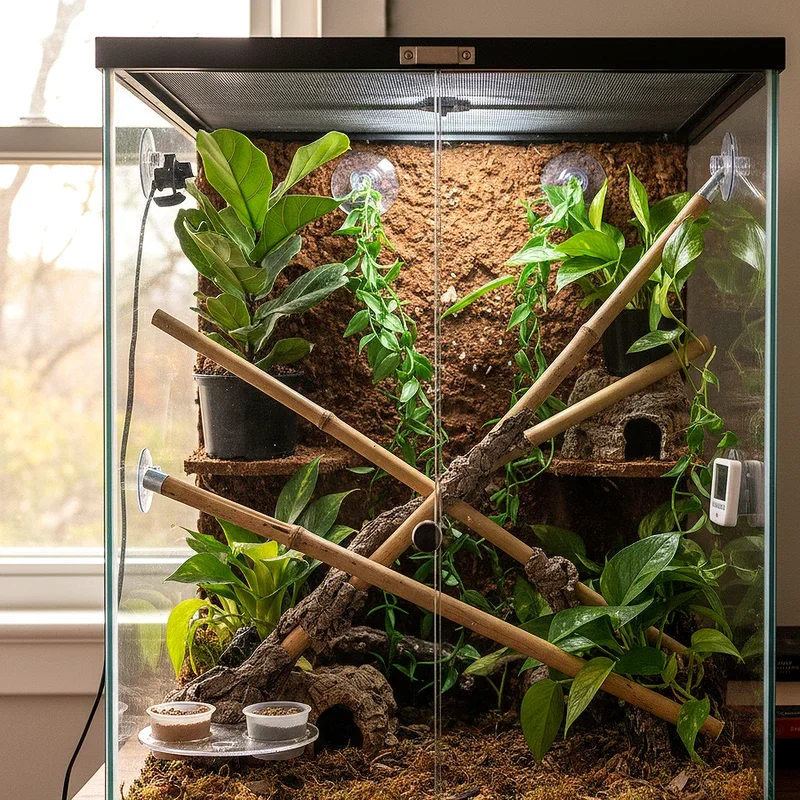
15. Quarantine and Hospital Tank Setup
Every responsible gecko keeper maintains a simple quarantine enclosure for new arrivals or sick animals requiring isolated observation and treatment. This setup prioritizes cleanliness and monitoring over elaborate decoration, using paper towel substrate and minimal furnishings for easy daily inspection. You need just enough climbing space and hiding spots to prevent stress while allowing clear visibility of your gecko's condition and behavior. Keep this enclosure separate from your main collection to prevent potential disease transmission between animals during quarantine periods. The smaller space also makes administering medications easier and tracking food consumption more accurate for health assessment purposes. Thirty to ninety days of quarantine protects your established pets from parasites, infections, or illnesses that new geckos might carry unknowingly. This boring looking enclosure might save your beloved pets' lives someday.
Conclusion
Creating the perfect crested gecko enclosure combines art, science, and genuine love for these remarkable little creatures. Whether you choose an elaborate bioactive paradise or a practical minimalist setup, your gecko will thrive when you meet its fundamental needs for climbing, hiding, and proper humidity. Remember that the best enclosure is one you can maintain consistently while providing your pet with enrichment and security every single day. Start with basics if you are new, then gradually upgrade as you learn your gecko's preferences and your skills improve. Your crested gecko depends on you for everything, so invest the time and creativity to make its home truly special.
Read next: 15 Gecko Terrarium Ideas for Every Setup
Frequently Asked Questions
Q1. What size enclosure does an adult crested gecko need?
A: Adult crested geckos require minimum eighteen by eighteen by twenty four inch vertical enclosures.
Q2. How often should I mist my crested gecko enclosure?
A: Mist your enclosure twice daily to maintain humidity between sixty and eighty percent.
Q3. Can I house multiple crested geckos together?
A: Females can cohabitate carefully, but males fight and should always be housed separately.
Q4. What temperature should a crested gecko enclosure maintain?
A: Keep temperatures between seventy two and seventy eight degrees Fahrenheit, avoiding extremes always.
Q5. Do crested geckos need UVB lighting in their enclosure?
A: UVB is optional but beneficial for calcium metabolism and overall health when provided correctly.
Stay up to date with our latest ideas!